Marketing is about values. Nike didn't call me and sell me this in a catalog. I bought this swoosh cuz it's ingrained in my soul.
You know, when when you have a product that really resonates with with customers, the word of mouth uh grows like wildfire. Welcome to the Marketing Max show. Now, let's dive in.
How can you give free giveaways that'll actually help you capture new revenue no matter what sort of business you're in? And what the heck is vibe marketing and should you be paying attention to it? What does it all mean?
Those are two things we're going to be touching on in today's episode of the Marketing Max Show. Welcome back. We were off last week, but if you haven't met us yet, I'm Logan.
I'm joined by obviously Max uh the the uh primary host of the show the namesake. That's the word I was looking for. The show namesake.
Uh Max, how you doing today, man? I'm actually having a really good day. One of the better days I've had in weeks.
So nice. I'm in a good mood. See if we can deliver some good content or do something fun on this.
Absolutely. Speaking of that, if you're new to the show, you probably haven't heard about our 5-second bet, which is essentially that we we want to bet you that you're going to get something good out of this episode. So, we're going to give you 5 seconds to hit subscribe on YouTube or hit follow on Apple or follow or subscribe on any platform you're listening to us on.
And if by the end of the episode you haven't gotten at least one takeaway, you can go to marketingmax onx and uh let him know that it was terrible and you can unfollow us. So, we'll count it down as we normally do. Give you 5 seconds to hit that subscribe or follow button.
So, five 4 3 2 1. All right, time is up and we're ready to jump into it. As I alluded to in the open, the first thing we want to talk about is kind of a cool example of marketing and pricing strategy from a football team, I think in North Carolina, and what can we learn from that?
So, we're going to dive into one of our growth hacks and then we're going to get on to trending topics with Vibe Marketing. But, Max, kind of set the stage. What was this football uh team doing and kind of set the stage there?
And then we'll talk about applications. Yeah. So, there's this uh college, I actually don't know if it's in North or South Carolina.
It's called Coastal Carolina. And I'm pretty sure this golfer that I really don't like, but that was a big golfer for a long time named Dustin Johnson went to Coastal Carolina. Um, I think they're like lower level D1 and they have a football team and they announced yesterday that from now on this season or or this upcoming season all concessions meaning popcorn, hot dogs, beer, uh I don't actually don't know if beer, but pop uh you know Coca-Cola, soft drinks, pretzels, those big juicy pretzels are all going to be completely free at all home games.
At all home games. And I immediately messaged Logan. I said, "Logan, we have to talk about this on the podcast.
" Because I think a lot of people are so one-dimensional when it comes to their offer. They're so here's my offer. This is the price and this is what you get for it, and this is the outcome of working with us.
And if you if you watch the show a lot, you know that I talk a lot about outcomes, right? You have to talk about the best, juiciest, most sought-after outcome your product or service delivers that your target audience wants. Mhm.
Right? So, you know, I've seen a lot of ad agencies in the past, they say like, "We focus on your ads so you can focus on your business. " Right?
Like they think that their target audience is struggling with focusing on ads. They want someone to just do it for them. But is that really the juiciest thing that you could possibly have?
Right? really the is the juiciest thing you could possibly say to your target audience to get them to buy or at least to get them to book a call. In the case of Coastal Carolina, what they realized was there's probably a lot of local people who might want to come to a game, might not want to come to a game, but you know, people joke a lot about when you go to the movies, it's not just now 20 bucks to see a movie.
By the time you get out of the movie, you bought the popcorn for 10 bucks and the this for, you know, the the big slushy for 12 and this and that. family of four, we can drop a $100 at the movies between tickets, concessions. Um, you know, it's like we got to just get the big popcorn in case we want that refill.
You know, it all adds up, man. Yeah. So, I I think what what they're doing here is they're tapping into something that maybe not all of their target demo, right, would would use as a reason to buy a ticket and come to a game.
But what maybe a good amount, a good chunk of people who would potentially even ever consider going to a game care about, right? like their core fans care about the team. They care about the players.
They care about the the fun and the thrill of watching a football game. Yeah. But what other people might care about is maybe they're penny pinching and they want to save money.
But more importantly, like if I'm a college kid on campus, right, or if I'm the parent of a college kid who goes there, you know, hey, I'll get I'll get a free drink. Like I'll get a free popcorn. Like I I'll have a different experience.
And so I think this kind of strategy can be applied to any business on planet Earth. Literally any business on planet Earth. And more importantly, the pro tip of this is I wouldn't be surprised if they actually are increasing the average cost of a ticket in order to kind of offset the cost of giving away all the concessions for free.
Yeah, absolutely. Um, for folks who want to check this out, uh, I think it's a post. I got it pulled up from Joe Pompiano.
That's my best, uh, guess at the pronunciation of his now last name. I think I got it close. And you were right.
It's so, uh, they get four items per concession. They can get four items per concession visit. Hot dogs, nachos, popcorn, and fountain drink.
So maybe beer's off the list, but like that covers, you know, a lot of people in the concessions that they would normally buy or at least say, "Hey, this is worth it. I'm not just getting like a free small thing of popcorn, something like that, right? " And to your point, this to me is about like testing out a different offer.
It doesn't mean a different service, right? If we think about applying this to B2B SAS or to a marketing agency, something like this doesn't mean that you're introducing something brand new, but to your point earlier, you can offer the you can provide the same service, the same deliverables, the same value, and hopefully the right outcomes, right? I love your point there.
And you've even given me feedback on some of our landing pages at Business Builders and those were the first words out of your mouth, not outputs, it's outcomes. And I was talking with our team about that as we were doing some account management stuff earlier. But that aside, I think the crux here is you can reposition or repackage an offer for the exact same things.
They're not introducing anything new. They've been selling football tickets and selling popcorn and nachos and fountain drinks and whatever else was on that list of four I mentioned 30 seconds ago that I can't remember. They've been doing that forever, but they're repackaging it into a different offer.
And so I think if you think in terms of that then you can think about how you apply that to a service-based business or SAS business or whatever. Right. 100%.
100%. And I think what a lot of people get afraid to do particularly when it comes to that pro tip where I mentioned like you could raise the cost right to kind of offset the the cost of giving it away for free is they're always afraid to raise their prices. And I I think it works in the opposite here or or it might work in your favor here to say, you know, if there's something that you're currently charging as an add-on.
So, let's say uh you are a software business and you have uh three different packages. You have a a pro, a teams, and an enterprise, right? If you're increasing the cost of your pro, take a feature from your enterprise plan and throw it in with the pro when you announce the increase of the cost or in the cost of the the the pro plan, if I'm making sense.
So, uh, if it's currently 10 bucks a month now for the pro plan, and you get a bunch of extra features for 20 bucks a month. Say, hey, the the pro plan is the pro plan is now going up to $12 a month, but we're also adding these two features, these three features, this one major feature that we know you guys wanted. Uh, you know, get in now before the price goes up.
And I think it could apply to to software with the example I just gave. I think it could apply to um to to agencies, right? If you upsell, hey, you know, we'll do an extra two blog articles for you a month.
like why not just increase the cost and throw in the two blog articles a month or if you want you can do what's called an LTO a limited time offer and say hey if you sign up this month right creating some sense of urgency you we we throw in what's normally the 3k package we do that for you in month one for the 2k package so I think there's a lot of very clever ways to to do your pricing to increase overall revenue and bottom line profit yeah dude I love that and it reminds me of conversation I had yesterday so um For those who have been following the show, they probably know, hey, I am director of growth at Business Builders. We're a marketing agency ourselves, but I also head up a community of about 400 or more. We're over 400 now.
I can say that and not hedge my bets. 400 plus digital marketing agencies called uh agency builders. We just had our annual event uh last week.
And I was chatting with one of the guys that we brought in as a speaker. His name is Chris Dubois. He's he does some um consulting with agencies around their offers and he was walking me through basically something like what you just said uh Max but with a little spin on it.
So he said when they when he was part of an agency and they were proposing websites, they would do kind of a good, better, best, right? And we do the same thing at Business Builders right now, right? There's so much psychology around packaging and pricing things in threes and setting, you know, the middle tier, um, you know, at a certain point where that becomes the no-brainer.
And what he said is they would do that, but then what they would do is they would take some of the items from the top tier. They would include it in the middle tier as uh what they call the like testimonial only offer. And so they would say, "Hey, you can get some of these key features of the the top package that are going to deliver these results for only a little bit more.
In exchange, we're going to do you're going to agree to a video testimonial, a quote, you know, maybe a LinkedIn post about, you know, our agency afterward. And one, they sold more of that hire package, so it increased revenue. They gave away the things that were easiest for them to produce, but drove the biggest outcomes.
So that's the other thing to think about here is when you're thinking about kind of playing with these value equations of how you price and package things. Don't think that what's valuable to you is necessarily valuable to the client. Sometimes the things that are least valuable to you, meaning doesn't cost you much to do, are most valuable for the client.
And that's actually where the sauce is because that's where the margin is, right? We don't want to give away things that cost us a lot to do. We want to give away things that are valuable to the client because that's where the results and the profit margin are.
And so I thought that was another example to share from uh our community at Agency Builders where you could do kind of some of this creative packaging even if you're selling website builds, not popcorn and football tickets. I love love love that example. I gave a software example.
You gave an agency example. There's an ecom example in there somewhere that's probably a million times easier than those two because with ecom, gift with purchase is one of the best promos and offers you ever have, right? But it's it's not just, hey, spend a hundred bucks and get free shipping.
It's like, hey, this week only, uh, buy our shirts, buy our hats, and get a limited edition, you know, free t-shirt or whatever. And that stuff works so so so so so so so well. Insanely well.
I I know from experience. I managed, you know, tens of million dollar tens of millions of dollars of ad spend for e-commerce brands over the course of my career. Drven hundred million dollars in attributable revenue just for e-commerce brands.
Now I'm really focused on the the B2B side of things. But yeah, I mean like it it just really goes to show you you can get clever, you can get creative with your pricing, you can figure out free things to give or the example you give, I thought that was so clever. where I was like in my mind if I was selling websites.
I have a buddy that sells websites um for 2500 bucks a pop. There's no good, better, best. It's always 2500 bucks.
Okay. And no matter what and they always deliver it, I think is in it's in 48 hours. That's like their deal.
2500 bucks, 48 hours unlimited unlimited revisions, right? And it's so clever. And my thought was like, man, it'd be so cool to say on the website like it's $5,000 for the website, but if you promise to give us a video testimonial, it's $2,500 bucks.
And so they feel like they're getting a big deal and they feel like they're do they're giving a little bit of their time in exchange for $2,500 off what is $5,000, right? Or what is perceived value at y $5,000. And so you've heard of this term.
I I actually this is one of the few things I picked up in one of those marketing classes I learned in college or any business class I own in college, but this concept of like mark up to mark down, right? So, if you're going on sale or if you're coming out the gate with a sale and a and a t-shirt's 100 bucks and you're going to give it 20% off sale, call it 200 bucks and say that it's 50% off. You're going to sell a lot more tickets or a lot a lot more t-shirts.
So, I think like there's so many so many so many ways to play these pricing games. And you know, I I I think everyone listening, it's really really really imperative that you just spend 15 minutes alone or with someone on your team or even with Chachi PT as as your thinking partner here and figure out, you know, how you can make your offer more attractive while increasing topline without giving away too much of the bottom line. Yeah, man.
Great examples. And I I can think of a t-shirt brand um True Classic is a online uh like men's clothing brand that I got kind of turned on to better fitting and stuff like that. And they always do this like you go to check out and it's like well if you just spend $5 more you get a free threepack of white t-shirts to go with the other ones that you're getting or whatever it is.
And that kind of shows you like oh you just got to get to this level. Um, the other thing I was thinking about is, you know, one of the u kind of instore retail brands that makes me think of stuff's always on sale has been J C Penney, but it's like I don't think they got the idea of marking up to mark down because I think they've been like not doing well for several years. So maybe they only got the markdown part of it.
Uh, anyway, with that being said, all right, we rounded it out from SAS to agency to ecom. We we touched on this uh this new phrase. Maybe it's new to you.
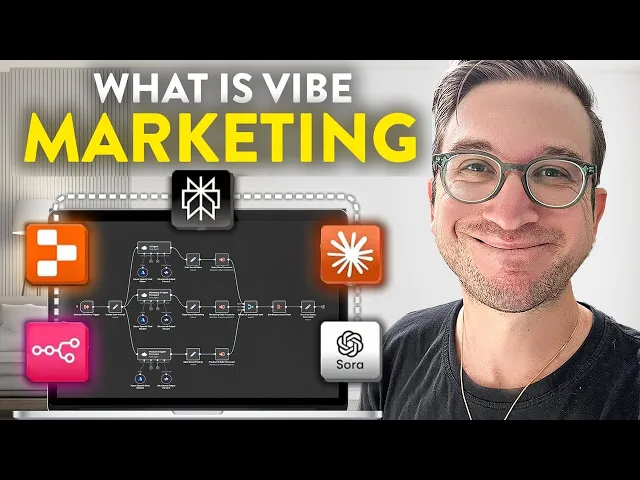
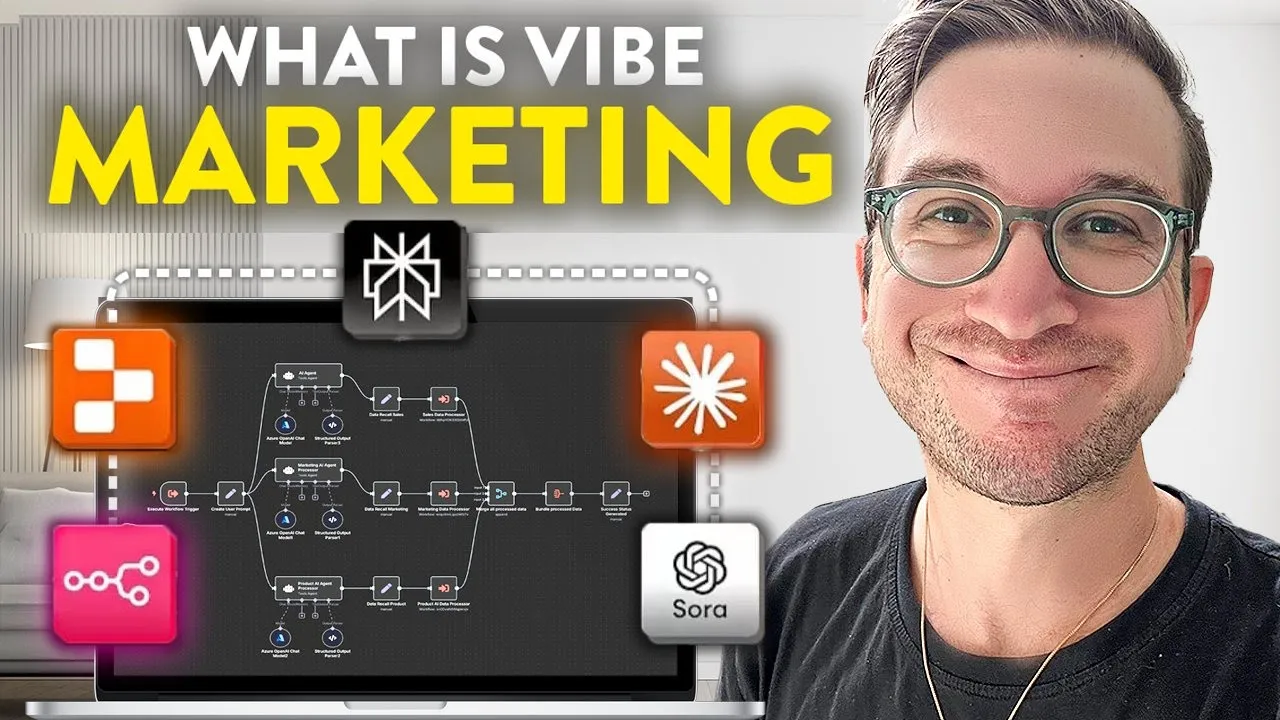
I heard it a little bit before Max, you mentioned it in our conversation before we hopped on. Vibe marketing. What the heck is vibe marketing?
Unpack that new term to a lot of listeners today, man. Well, yeah. I mean, as a guy that's obsessed with Twitter and spends a lot of his life, literally like an hour to two hours every day on on on Twitter or X, a couple weeks ago, someone came out with this term called vibe coding, which essentially means you come up with an idea, you crack open a beer or you crack open a joint or whatever it is that's your fancy.
You turn on some music that you love and you pull up one of these tools. The two most popular ones that I know are called bolt. dev, like BT.
Bolt. dev. dev and lovable.
I think it's lovable. ai or lovable. dev.
And these tools basically will build an application, a software application for you from scratch in hard code in seconds. They call it prompt to software or prompt to app or whatever. Like you just write it and it'll have a fully functioning product for you ready to go.
Yeah. I've seen this in action. Jay, our founder over at Business Builders, the first one to kind of show us this internally.
It was like I think one of his first applications was he was sitting with his wife and they homeschool their kids and it was like, "Hey, what's what's something that you have to do as a homeschool parent that is frustrating that maybe we could build an app for? " Well, I got to organize kids assignments and you got to package all that up to submit it once a year to the state or something like that. He's like, "Okay.
" So he took that conversation that he recorded I think on chat GPT and then put that into I think Bolt and within you know an hour or so with login credentials with the UI that he wanted he just prompted uh Bolt to write a web-based application bought a domain name and you could literally go there and start using the tool within you know an hour or two of this conversation of hey what's a problem we could maybe build some software for. That is mind-blowing to hear, but I've also seen it happen multiple times now on Twitter. A lot of people have shown the same thing where like in literally an afternoon, right, they've made an app and gotten a product live.
I now follow the founder of Lovable, which has raised, I think, 10 or$20 million on LinkedIn, and his thing for the last week has been sharing screenshots from people who say, "I just invested in a startup that built their whole MVP and their whole product on the back of Lovable or 100% with Lovable. Yeah. Turned it into a real revenue producing business and now I'm an investor and they're valued at $10 million or whatever it is.
" So this this is mindblowing from from tiny scale to like you know home use application to the foundation of a brand new startup that's about to hit the market like this is a big thing that's covering all parts of the market. So that's vibe coding. So then vibe marketing how what's the relation there?
What's the parallel? Yeah. So, when I read it, my first thought was like, man, I got to come out with a tweet or a LinkedIn post or we got to do a podcast or something and I got to be the guy to coin the term vibe marketing because it's just a matter of time.
Then, because I have a 7-week old baby and don't have a lot of time for work these days, I didn't get around to it. And this guy that I admire, Greg Eisenberg, who has like 400 something thousand followers on Twitter and has hundreds of thousands of followers now on on YouTube, uh was the first person I saw to really coin the term vibe marketing and and and really talk about it. And what he's saying vibe marketing is, which just makes all the sense in the world, is essentially using AI to find your target prospects, reach out to your target prospects, create lead magnets for you.
Basically using AI to do a lot of the stuff that you're already doing that that a human is already doing, right? In the same way that devel uh that that vibe coding is basically have replacing a fullscale development team with AI, he's saying that you could basically do that now with marketing. And I wholeheartedly 100 million thousand% disagree.
Couldn't disagree more with this concept that you can basically replace a whole marketing team with AI. Mhm. You could certainly have AI create a lead magnet for you.
You can certainly use a handful of AI tools to consistently every day find your target prospect and automatically create a customized first line based on where they went to school or what their experience is or go find them on Instagram and see that they have a kid and say, "Hey, like loved your post about your vacation with whatever. " That's kind of creepy, but a lot of AI is doing this now for the first line of the email. Oh, by the way, instead of talking about your kid, uh, do you need accounting software?
Like, you know, there there's a 100% emails that are a speaking of which and it's not a speaking of which. I got one the other day that was like, "Hey, Logan, you got a really great recommendation on LinkedIn from Laura D'Angelo, who's a former co-worker, and that's great. And by the way, are you looking to book appointments with business leaders?
" I'm like, "How is that? That is not There is no segue there. There is no chill at all.
There's no segue. There's no chill. " That's that's the new tagline for the show.
No segue, no chill. But that's that's me and you, man. Segue, too.
I think where a lot of people think that that will work is they like they hope that you recognize that they're not just sending the same copy and paste template. They hope that you recognize that they actually checked out your profile and found something unique, right? But that is also all AI, right?
An AI crawls your LinkedIn page, finds the thing, punches that into the first line, and then sends the email. So, and it creates a different to back to your point earlier, it creates a different output like, oh yeah, maybe you did some more work, but it doesn't create a different outcome. It doesn't help me solve a problem any better.
It doesn't like So, like what you said in the beginning still applies to this freaking conversation, too. Anyway, keep going. No, no, no, no.
Yeah. Yeah. No, 100%.
But I I just think that the the level of AI tools for marketing are not there yet. And the the the destination is completely different. When you sit down to build a software application, the destination is having a final product that you can go to market with, right?
That you can give to customers, accept money in exchange for, and then continue to improve. That's not what marketing is at all. Marketing is consistently building trust and educating your target audience on why they should buy from you and why you're the more trusted option and why they should spend money with you instead of your competitors, right?
You can certainly use AI tools to do like I said things in that journey, right? But the definition is way less defined for marketing. And that's why I don't think Vibe marketing is a thing.
Yes, Vibe Marketing. I can turn on my Sonos over here and I can blast music and I can crack a beer open, gluten-free beer, because I'm gluten-ree. Only never found one good gluten-free beer in my life, but I can crack a beer open and I can have any AI tool.
There's a million of them now that can create a lead magnet for me to use as a post on LinkedIn to say, "Hey, you know, if you want my five steps to accomplish XYZ, comment max and I'll DM it to you right now. " You certainly do that one thing, but you can't go from start to finish on marketing. And I know if Greg Eisenberg read this or saw this, he would completely disagree.
And he would have 17 tools all bandated together with Zapier, but you just can't in marketing. You literally just can't because every day there's a different thing that you need to be doing to build trust and to build uh affinity with your target audience that they know that when they are ready to buy, you are that target person, right? you're you're the trusted target person that they're going to spend money with.
Yeah. And so I'm all I'm all about AI. I'm all about using tools to increase profit margins.
Uh make your team do more, right, with with less. I'm all about saving time. I certainly use chat GPT as a thought buddy, I like to call it, as I explained earlier, like as as a, you know, as as a co-writer uh to help me think of taglines and everything else.
But AI is not good enough. You see it all the time on Twitter and you see it all the time on LinkedIn. You can tell so freaking quickly who's just copying and pasting stuff from Chat GBT or cloud and and pasting it in to LinkedIn and and that's the post.
That's not the stuff that goes viral at all. At all. And in the same way that you know when when cold email first got started, it worked exceptionally well.
Exceptionally exceptionally well, right? We had the we had we had the knob to turn up the volume like we never had before, right? 100%.
But it but it worked really well because it wasn't oversaturated and it was and it still felt like this person like was reaching out to me, right? But now everyone does it. So the trust factor for that medium has gone down significantly because it just got commoditized.
It's the same thing with content right now. It's the same thing with lead magnets. It's the same thing with all sort of generic ass marketing content and assets.
We can use Vibe marketing and we can use AI tools to create marketing assets but the distribution nearly impossible to do with AI nearly impossible to automate. And again with Vibe coding there is a destination. This is an app that I can go live with.
Right? It shouldn't be called Vibe Marketing. It should be called Vibe Marketing Assets because you can use these tools to create the asset, the lead magnet, the LinkedIn post, the cold email, but the entire strategy, the strategy, the distribution, the analyzing of the distribution and of the assets to see what's working, what's not working, and then changing the inputs, as we talked about before, inputs and outputs.
that at least as of today, early April 2025, is not a thing. And you can say, "Max, here's this tool that does X, Y, and Z, and I'm going to say, use it for a month and tell me if it actually does what you say. " Mhm.
Because all of my entrepreneur friends that are obsessed with AI, when I ask them, "What tool do you actually use on a day-to-day or week to week basis that you're happy to pay money for? " It's like nothing outside of Chachi, PT, and Cloud. Mhm.
There's all these tools, all these hype around it. These videos go viral, everyone's obsessed. Oh my god, this is amazing.
Oh my god, look at this. Look, look at what it can do. But then when you actually do it, yeah, I will tell you, I tried a tool.
I won't name them by name because I don't want to throw anybody under the bus, but it basically said that like it could take a content outline and like automatically format an ebook. like pull in the right stock photography, format it the right way, make a pull quote big on this page. Like, okay, that seems like really good.
Like, if I've got content that's a, you know, a laborintensive, timeintensive thing to turn that into, you know, a well-designed, you know, several slide deck or multi-page ebook. Um, should we be creating long ebooks? That's another question.
But that aside, I was like, this is kind of cool. Give it a try. It really did not do, you know, what I thought it was going to do.
Now, the flip side, I just recently tried chat GPT's new image generation. Holy cow, what that can produce with very little prompting. There is a there is a lot there.
But that is a specific asset. Asking chat GPT, I'm trying to reach this persona. What's going to resonate with them?
Now, can you train a custom GPT or a Claude project with some of the best stuff out there with like frameworks to use, for instance, of how to script a YouTube video, right? There are lots of people who have put out free content or paid courses on here's what it takes to to win on YouTube. Here's how you create a hook.
here's how you follow like the quadruple a formula which I've heard before of like attention agitation um action and something else but some formula like that for like a video framework right I think it's like AI like attention interest I don't know something else something like that but like the point is right like you can use you can use AI to say hey I'm writing some I'm writing a script on this here are my inputs those sorts of things. Um, but AI is not going to be the thought leader. It's going to be the thought partner.
It's going to be the implementation accelerator. Right? To say that it's going to do everything, I think, is an overstatement.
And that's, you know, within our agency, I'm looking at Slack over here. We have a whole AI channel where we're chatting about, hey, we tested this for a client. This helped us create a new lead magnet really quickly where we would have had to handcode that for two weeks before.
Um we got a site live because we used um you know bolt over here for for something. Um like we're doing all that. We're leaning into AI.
But I think anyone who's saying you should run from the robots because they're going to replace us or you should just give up your job to the robot because barking means they're going to replace us. No. Learn to drive the robots.
learn which robots are valuable for what tools and kind of think of it as like, you know, you're you're Iron Man and the AI is the suit, but you still need the person in the suit. So, I may be mixing metaphors there, but that's the best roboty I could come up with on the fly. Man, if you're worried about AI taking your job, I will tell you AI itself will not take your job, but someone who knows AI better than you will take your job.
I would agree. 100%. The the biggest difference between Vibe coding and Vibe marketing is again Vibe coding has a destination, right?
It has a like like there's an outcome. It's it's you put some prompts in the oven, you flip the meat over, you flip the whatever it is in the the pie over a couple times. You don't flip pie, but you get my point.
And then you pull it out and you have something you can eat, right? Marketing is not that way. at all.
Never will be. Never, ever, ever will be. So that's why you can use Vibe Marketing to create the asset, but you can't use Vibe Marketing to get to an end point, an end destination.
You will never be able to. So, do I think Vibe Marketing is the future of marketing? No.
I think to your point, I like that word accelerator. It's just an accelerator to help you get to the next kind of checkpoint on the journey faster. Right.
Yeah. And I just want to clarify for for folks like what I think both Max and I are saying is that you should not take this and say, "Okay, Vibe Marketing is not a thing. I don't need to worry about AI uh at all.
" No, you should be learning AI. You should be learn how to build your first custom GPT. If you haven't done that, you should definitely be on at least the $20 a month chat GPT plan and you should be using it and find out what it's good at, what it's not.
Those things are going to change, but figure that out for now and where you can use it, right? Because it is going to make you more powerful. But, um, just trying to let AI do everything or bury your head in the sand and say AI can't do anything.
Both of those, like there's a ditch on both sides of the road. There's usually kind of safety in that middle ground. And I think that's what we're, you know, for lack of a better term, preaching today.
I don't think we're preaching to anybody, but that's what we're saying. Awesome. I love that analogy, the uh ditches on the side of the road, and there's middle ground in the middle.
Reminds me of one of my favorite shows, miniseries ever called Band of Brothers. I just kind of rewatched Band of Brothers and uh man, really puts you right in the in the middle of that [ __ ] But yeah, there's there's definitely safety in the middle. Don't overindex on AI, but certainly stick around and and play around as much as you possibly can afford to.
Yeah, absolutely. Awesome, man. Well, hey, after a week off, I think we came back with uh some really good content.
Let us know, did we did uh did we win the the bet that we made at the beginning of the episode? Are you going to stay subscribed? Uh follow, let us know down in the comments or hit maxup on xmarketingmax or hit me up on LinkedIn.
I'm pretty easy to find Logan Lyles. You can connect with us there. And other than that, we'll see you next week.
Cheers. Thanks for listening to the Marketing Max show. It takes me and my team hours to produce it every single week, but it only takes you 15 seconds to hit that share button and text it to a friend, drop it in the Slack group, or share it on Twitter, Facebook, Instagram, or any of your favorite social platforms.
I appreciate you taking the time to check out my content. Have an awesome day.