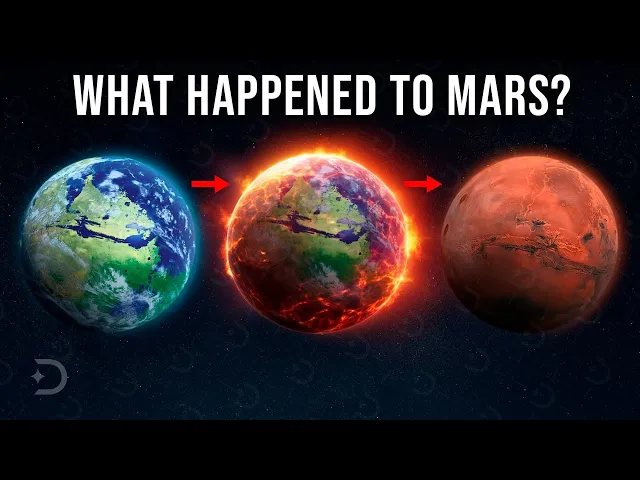
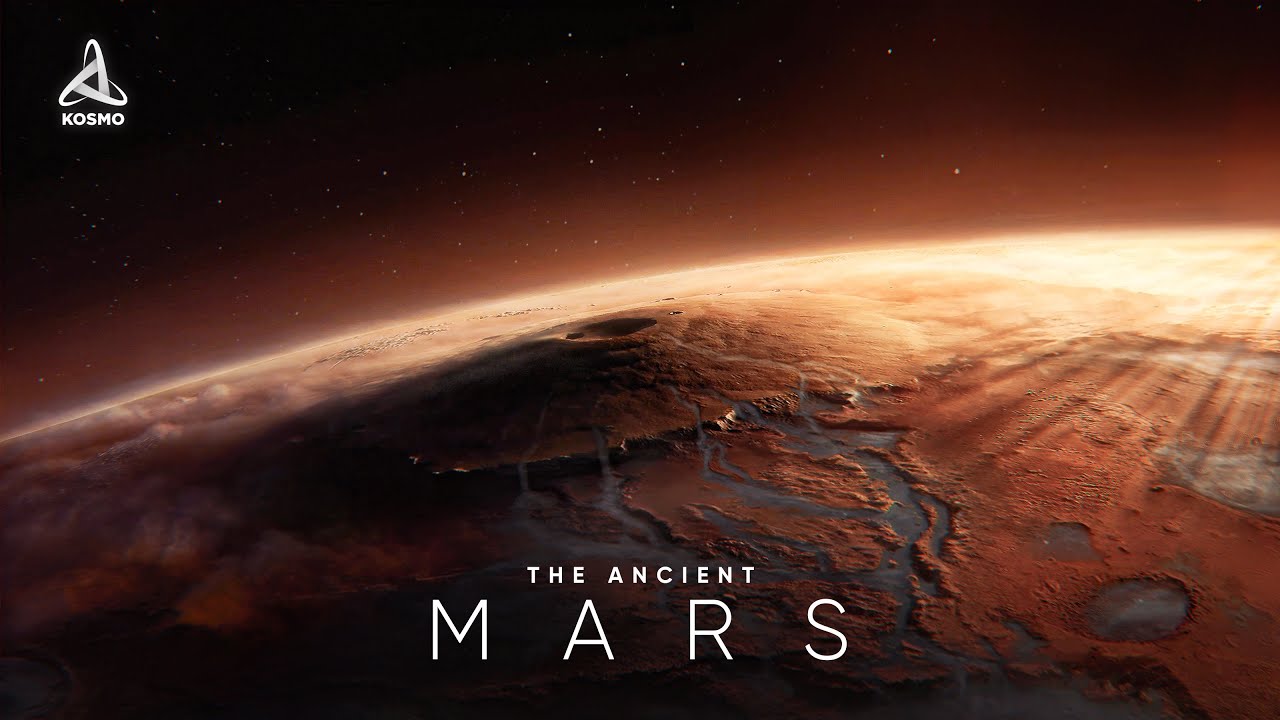
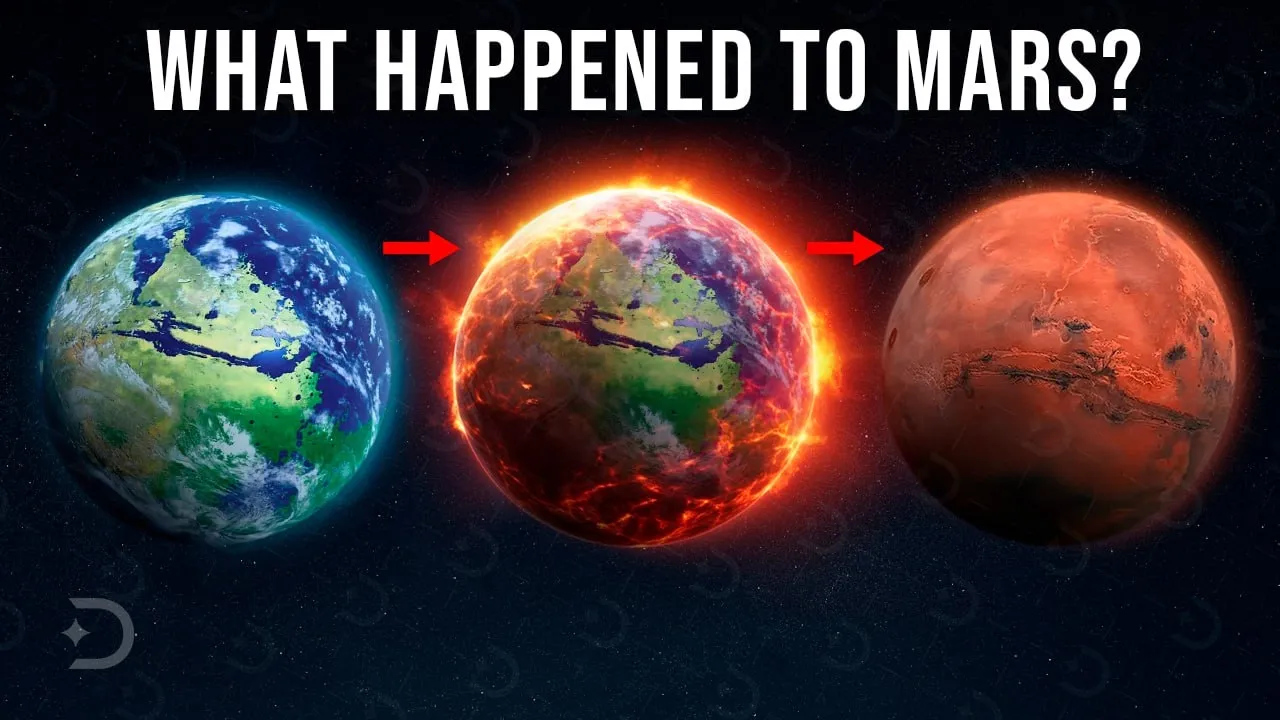
Billions of years ago, Mars was a very different place. Imagine a planet with blue skies, flowing rivers, and vast oceans. This is the Mars scientists believe existed long before it became the dry, barren world we see today.
That said, let’s delve deeper into the fascinating transformation and understand the processes that reshaped the red planet. Evidence from NASA’s rovers and orbiters suggests that Mars once had liquid water on its surface. River valleys, lake beds, and evidence of minerals that form in water all point to a wetter Mars.
These features indicate that water flowed across the planet, carving out channels and filling basins. The largest of these channels, such as the Valles Marineris, stretch thousands of kilometers and are up to 10 kilometers deep, dwarfing the Grand Canyon on Earth. Scientists estimate that Mars' oceans could have covered about 19% of the planet’s surface, similar to the area of the Atlantic Ocean on Earth.
The northern lowlands of Mars are particularly interesting because they appear to have been an ancient ocean bed, possibly holding a body of water larger than the Arctic Ocean. Picture lakes dotting the Martian landscape, rivers winding through valleys, and perhaps even rainfall feeding these waterways. This vision is supported by the discovery of hydrated minerals and sedimentary structures that only form in the presence of water.
These ancient lakes could have been havens for life, similar to early Earth’s primordial soup. But how did Mars transform from this potentially habitable world to the dry desert we see in the rover images today? To understand this, we need to take a look at the planet’s magnetic field, or magnetosphere, and its atmosphere.
A planet’s magnetosphere is crucial for maintaining an atmosphere. Earth, for example, has a strong magnetic field that protects us from harmful solar radiation and helps keep our atmosphere in place. Mars, too, once had a magnetosphere.
A magnetic field is generated by the motion of molten metal within a planet's core. For Earth, this is known as the geodynamo effect, where the movement of liquid iron and nickel generates a magnetic field that extends far into space. Mars, being smaller than Earth, had a similar but weaker magnetic field that protected its atmosphere from the stream of charged particles emitted by the Sun called the Solar Wind However, over time, Mars lost its magnetic field.
This likely happened because Mars' inner core cooled down. Because Mars is smaller than the Earth, the planet cooled more quickly. When the core solidified, it could no longer generate a magnetic field.
Studies suggest that Mars' magnetic field disappeared about 4. 2 billion years ago, leaving the planet vulnerable to the solar wind from the Sun. Without a magnetosphere, Mars became exposed to this relentless solar wind.
These particles bombarded the planet, gradually stripping away its atmosphere. This process, known as atmospheric sputtering, took millions of years, but the result was devastating. The once thick atmosphere of Mars was slowly eroded, reducing it to a thin shell that is less than 1% the density of Earth’s atmosphere today.
As Mars lost its atmosphere, it couldn’t retain heat. The planet cooled, and any remaining water froze or sublimated, which means it turned directly from ice to vapor and escaped out into space. Mars transformed from a warm, wet world to the cold, dry planet we see today.
The average surface temperature on Mars is now around minus -80 degrees Fahrenheit, far too cold for liquid water to exist on the surface for long. So, could Mars have supported life? Scientists think it’s possible.
The presence of liquid water is a key ingredient for life as we know it. If Mars had water for long enough, it’s conceivable that microbial life could have developed. Early Mars had conditions similar to early Earth, where life first emerged.
Both planets had volcanic activity, a thick atmosphere, and liquid water… all essential ingredients for life. If life did exist on Mars, it would likely have been simple, single-celled organisms. These microorganisms could have thrived in the nutrient-rich waters, possibly around hydrothermal vents, much like early life on Earth.
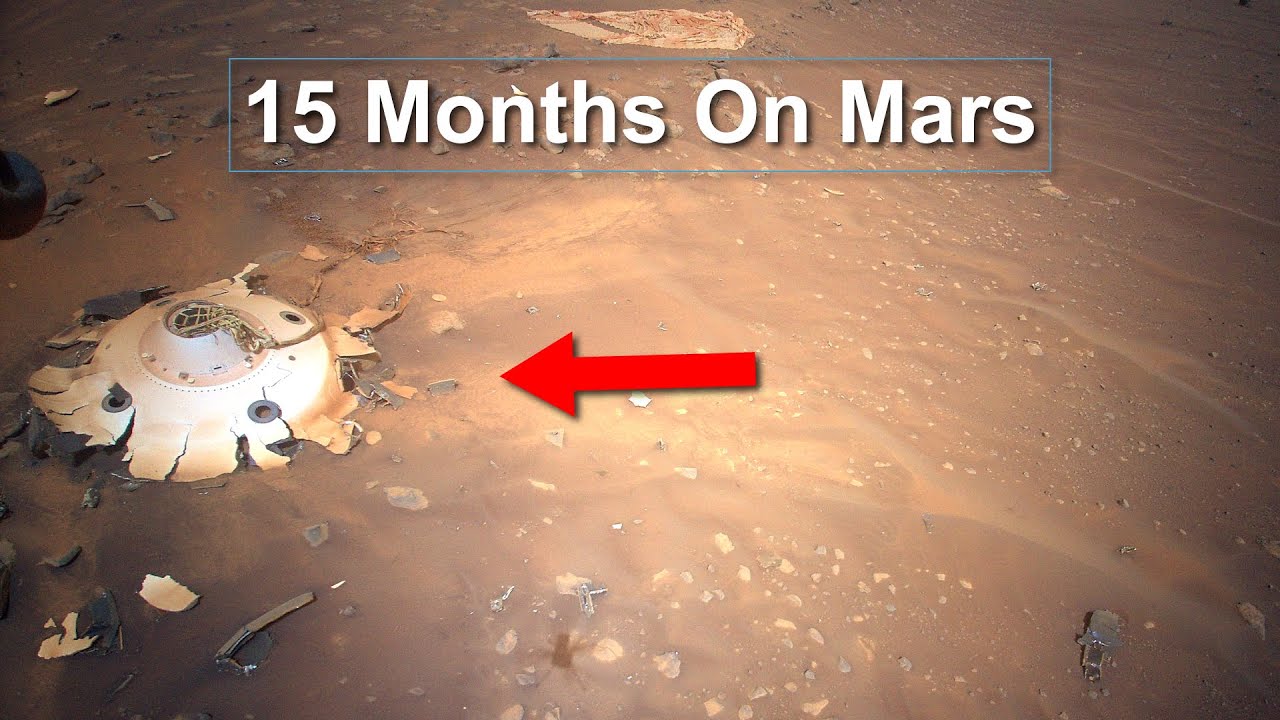
Hydrothermal vents provide heat and minerals that can sustain life, making them prime locations for the origins of life on both planets. Today, continuing missions like NASA’s Perseverance rover are searching for signs of ancient life. Perseverance is exploring Jezero Crater, which once held a lake.
By studying the rocks and soil, scientists hope to find biosignatures; those chemical or physical signs of past life. Jezero Crater was chosen because its delta deposits are excellent at preserving organic molecules and potential fossils. Perseverance is also collecting samples to be brought back to Earth.
These samples could contain clues about Mars' past climate and habitability, and potentially even fossils of ancient microorganisms. The rover is equipped with sophisticated instruments to analyze the chemical composition of rocks and soil, searching for complex organic molecules that could indicate past life. So what’s so important about researching Mars’ watery past?
Well, it’s important for several reasons. It helps us learn more about the history of our solar system and the conditions that lead to habitability. It also helps lay the foundation for the search for life beyond Earth.
If life could arise independently on Mars, it would suggest that life might be common in the universe, potentially existing on many other planets. It’s also important to know that Mars and Earth share many similarities. Both have polar ice caps, similar landforms, and a history of volcanic activity.
By studying Mars, we can learn more about our own planet’s history and how it has evolved over time. For example, Mars’ volcanic regions like Olympus Mons; the largest volcano in the solar system, could offer insights into volcanic processes that also occurred on early Earth. The knowledge we gain from studying Mars also prepares us for future human exploration.
Scientists and engineers are still working on plans to send humans to Mars. Understanding the planet’s history and resources is crucial for these missions. Future explorers could use local resources, such as extracting water from ice or using the Martian soil for growing food, to support long-term missions.
It could be that one day there will be a future where humans live and work on Mars. We could use the planet’s resources, like water ice, to support life and create a sustainable presence. This dream is becoming closer to reality as technology advances.
Concepts for habitats, life support systems, and transportation are currently being developed to make human life on Mars possible. The search for life on Mars is far from over. Future missions, including those by international space agencies and private companies, aim to dig deeper into the Martian surface and explore new regions.
The European Space Agency’s long delayed ExoMars rover, set to launch sometime in 2028, will drill into the Martian subsurface to search for signs of life, where microorganisms could be protected from harsh surface conditions. Advances in technology are crucial for these explorations. Innovations in robotics, artificial intelligence, and remote sensing are enhancing our ability to study Mars in unprecedented detail.
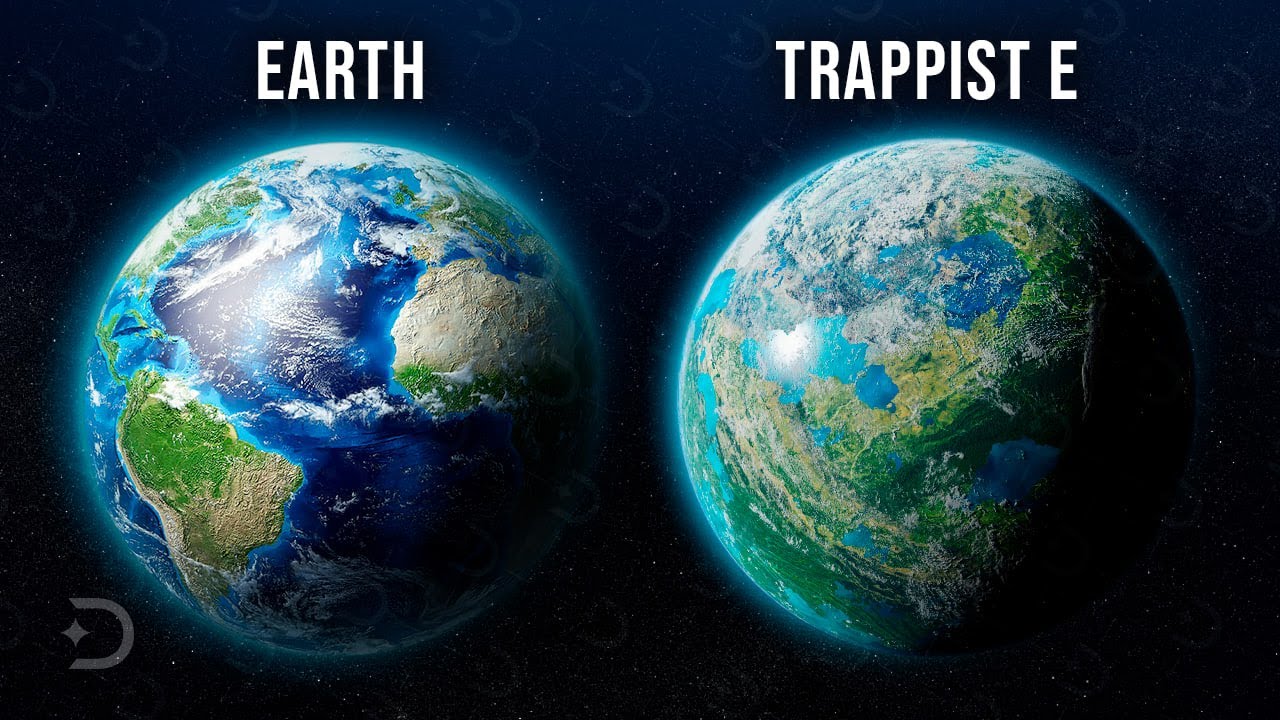
These technologies allow us to analyze vast amounts of data and make discoveries that were previously impossible. Studying Mars also helps us refine our search for life beyond our solar system. Exoplanets, or planets orbiting other stars, are being discovered at an astonishing rate.
By understanding what makes a planet habitable, we can better identify exoplanets that might host life. Mars, with its similarities and differences to Earth, is a natural laboratory for these studies. And what if we did end up finding life, or past signs of life on the Martian planet?
The implications of finding life on Mars would be profound. It would challenge our understanding of life’s uniqueness and prompt us to reconsider our place in the universe. If life can arise on two neighboring planets, it might be a common phenomenon, suggesting that the universe is teeming with life.
The many missions to Mars have been long and challenging. Early missions in the 1960s and 1970s, like NASA’s Mariner and Viking programs, paved the way for our current understanding. The Mars rovers; Spirit, Opportunity, Curiosity, and Perseverance, have built on this legacy, each mission contributing new insights and discoveries.
Looking ahead, the future of Mars exploration is bright. Collaborative efforts between space agencies, private companies, and international partners are expanding our capabilities. The Artemis program aims to return humans to the Moon, establish a presence, and perhaps build a moon base that will serve as a stepping stone for future Mars missions.
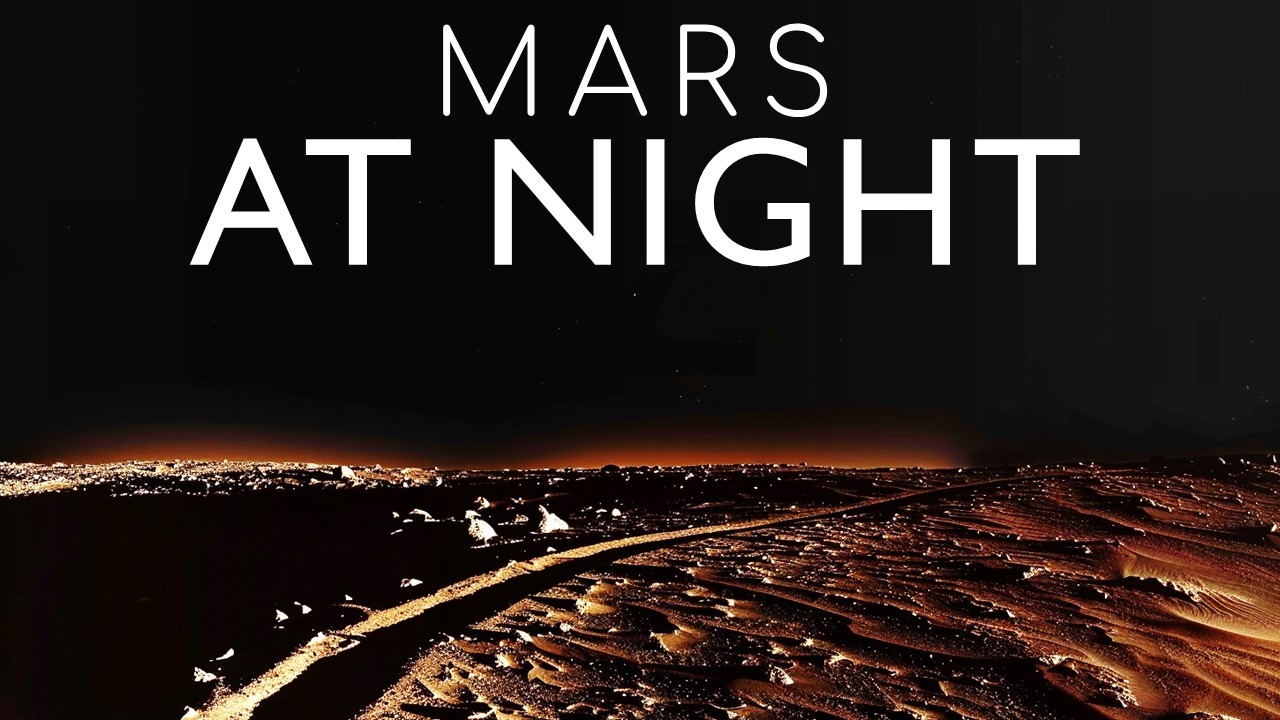
And if we envision the bigger picture, Mars is not just an endpoint; it’s a gateway. The technologies and strategies developed for Mars exploration will also help us explore other destinations, such as the moons of Jupiter and Saturn, which may also harbor subsurface oceans and potential life. As we look up at the night sky and see Mars shining bright, we now understand that this distant world could have once had the conditions for life.
Our journey to uncover its secrets is just beginning, and who knows what we might find as we continue to explore the Red Planet. We hope you enjoyed the video, and we want to thank our viewers for staying with us on this journey through the history of Mars. Stay tuned here for more exciting discoveries about Mars by clicking the subscribe button, and if you enjoyed what you saw, click the like button, too.
It really helps us out so that we can create more amazing content for you.