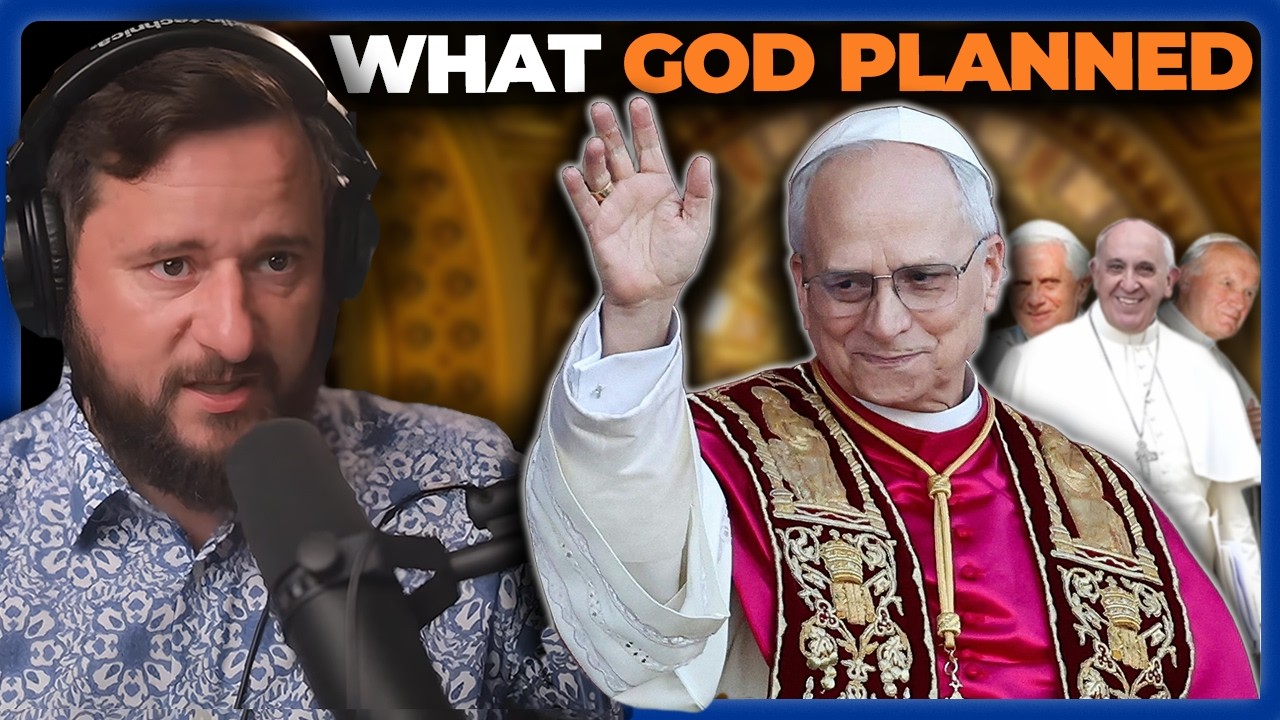
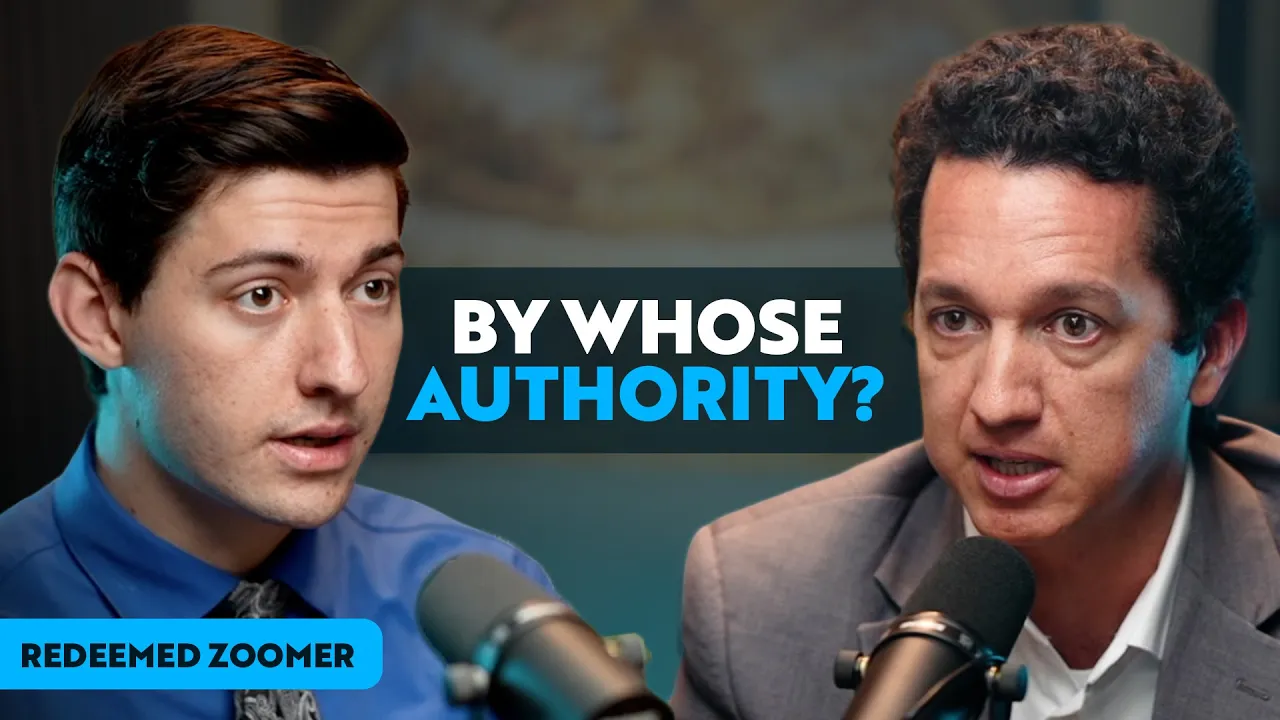
Welcome to the Council of Trent. Joining me today is Redeem Zoomer. Thank you so much for being here. Hey Trent, thanks for having me on again. H Well, now I'm excited for you to be here because the last time you were here, the setup was I I don't know the best way to phrase it, but crummy comes to mind. It was It's still better than any setup I've ever had in my videos. No, I I love your videos. Uh I I really enjoy I We had a Fun back and forth recently. Uh, someone said to
me, I got a reply saying, you know, if you want to connect with Gen Z more, you know, don't play Super Mario World. But the reason I did that was I don't I feel like I shouldn't pretend to be something I'm not. Yeah. And it's not like most of Gen Z can't watch a video unless somebody's playing Minecraft in the background. That was originally what I did because I didn't have a high quality camera to show my face. Right. So, you just have something pleasant. It's it's hypnotic. Actually, what's nice about when you have Minecraft
playing when you're talking about theology is it's a three-dimensional firsterson perspective exploring things. So, it kind of like lulls you into a nice sense of listening while you're just kind of walking around. Feels like right. When I first started getting into Christianity and listening to a bunch of sermons and lectures, I would play Minecraft while listening to that and that helped me focus on what I was listening to. So, I wanted to kind of recreate the experience for everyone else. The closest that I was thinking of when I was thinking, oh, what could I play
to be an analog in Replying to Redeem Zoomer was maybe just exploring like empty Halo 3 maps because like that's I mean that's what I did 20 years ago and uh still play you if you you don't people don't know my username but You may catch me on there. Uh, all right. So, what I wanted to talk today, we might touch on a little bit of some of the things we've gone back and forth on, but I wanted to especially talk about your views on Protestantism and get a better understanding of that. I saw you
speak to Iron Inquisitor about this, and you have some views. What's interesting is uh I I feel like you are more you're much more concerned it seems like about evangelicals and Non-denominationals than Catholics, which is different from a lot of other people who have concerns about Catholic theology. They tend to not think evangelicals or non-denominationals are that big of a deal. Yeah. Well, I'm glad you bring that up because a lot of evangelical creators have been calling me out recently that a messenger of truth guy said, "Oh, Redeem Zoomer is not Protestant." because he seems
to see himself as closer to Catholics than Evangelicals, which I do. I do find a lot more agreement with Catholics than evangelicals. But so did Martin Luther and John Calvin. They were much harsher against the Anabaptists than they were against the Catholics, right? And the evangelicals today are basically the same as the Anabaptists, not identical. Um, but evangelicals don't really have any continuity to any group. So the the same things that the reformers condemned the Anabaptists for are the same things That evangelicals believe. Namely uh anti-institutionalism and no views of sacramental efficacy, right? And no
respect for church history. So let's talk a little bit because recently you said uh you're done being a Protestant apologist, you know, whatever whatever that means. Tell me about your thoughts on that and then we can get into what it means to be Protestant. Right. I just took a break temporarily uh because I was just beginning to study the Resources and I noticed there were a lot of people who had studied a lot more than me but weren't making content. They were just kind of being lazy. Yeah. Um I do think Catholics and Orthodox are
much better at defending their beliefs and much less lazy about defending their beliefs. The second a kid converts to Catholicism, he makes a channel like defending Catholicism even if he's 15 or whatever. And I know Protestant seminarians who have been studying for Like 20 years and they're like, "I don't know, man. I'm just too busy to make a YouTube channel." Why do you think that is? Well, most of these people that I was calling out are in the Protestant schismatic groups like the ACNA or the PCA. Uh, and I think the retreatist mindset has pervaded
its way has made its way into like most of conservative American Protestants. When you call them Protestant schismatic groups, I want to make sure we get all of our our terms Clear here because a lot of people when they think of schism, they think about departing from someone who has legitimate ecclesial magisterial authority. Are you talking about people who it sounds like, correct me if I'm wrong, claim to be like a mainline Protestant denomination, but they're not? They only are in name only. Sort of. I think voluntary schism is a lot different than forced schism.
There's been many schisms in church history like The Caledonians versus the non-caledonians and the the Great Schism and the Protestant Reformation. In none of those cases was there one group consciously and willingly and voluntarily departing from the mainstream established group. Nobody committed voluntary schism really until the great awakenings in America which is really where evangelicalism is birthed. So I think if you talk about what's generally perceived as Protestantism, You have mainline Protestantism on one end which has the historical continuity to the Protestant Reformation. On the other end, you have evangelicalism which is Protestant in name
only and has zero continuity to the reformation. Okay? And then you have schismatic Protestant groups uh which are usually conservative and they try to preserve some of the beliefs of the reformation more than the main lines do but they end up adopting an evangelical ecclesiology by rejecting The institutional church. Okay. So that's why if you go to like your old historic beautiful Episcopal cathedral or Presbyterian church or Methodist church, chances are it's a mainline Protestant church. Chances are it's not part of the ACNA or the PCA or the Global Methodist Church, these recent schismatic offshoots.
So let's try to understand a bit. It seemed like your concern when you were saying you were done being a Protestant apologist is That you want to focus on what you call the reconista initiative. It's your claim was essentially it sounded like you need before we reach out to Catholics, before we draw people into Protestantism, Protestantism needs to define itself and needs to clean house and especially needs to purge these, for lack of a better term, liberal elements. Yes. Within it. Absolutely. Um so you feel the need to do that. How would you reply playing
devil's advocate? Sure. Um Someone says, you know, RZ, why why do you care about that? I mean, uh, Catholicism is just as liberal, if not more liberal. Like Pope Francis said, "Who am I to judge?" I mean, people say these things. Yeah. But they're wrong. Catholicism is objectively a lot less liberalized than the mainline Protestant denominations. That's because the conservative Catholics weren't cowards and they cared about their own heritage and they didn't run away and I respect Them for that. Whereas a lot of the conservative Protestants in America, this is specifically in American context cuz
in most other countries the mainline Protestant churches are fine. like in Brazil, the mainline Presbyterian church there, very historic. Got lots of beautiful cathedrals. Technically, Presbyterians don't have cathedrals, but they call them that for tax purposes. And it's mainline, it's historic, it's got a lot of universities, and it's Very, very conservative. It's more conservative than the Catholic Church in Brazil. But in America, because of this radical individualism in American culture, the conservative Protestants chose to split off from the mainline denominations, and that's what let the mainline denominations drift so liberal. Do you think part of
that's also due to being a religious minority? Like when you're, for example, like in America, it was primarily founded on Protestant, you Know, ideals. Well, how you define the Puritans, but you know, Puritans are Protestants. Yeah. So, um, Anglicans may not have thought that way about them, but, uh, so we'll we'll get to we'll get to all of that. Uh, Protestant foundation here, whereas, you know, in South America, it's more of a heavy Catholic influence. So the Protestants that are going to thrive there are going to be more maybe more traditional and conservative. Similar like
I think for Example you think about the decline of Protestantism in America. I think about the decline of Catholicism in Europe for example where you know especially where it was like just so big but it turns into something where you rest on your laurels kind of right I mean to some extent that's true but there there even are historically Protestant nations like Australia where the mainline Protestant churches are mostly still conservative. Mhm. The Presbyterian Church of Australia is they actually had women's ordination and they got rid of it. There is this one liberal Protestant denomination
in Australia called the Uniting Church, but it's sort of like the liberal minorities of all the other denominations who just sort of left and made their own thing. So Protestantism in America is completely cooked if we don't all return to the mainline churches. That's what I want to really communicate. So recently I did come back To Protestant apolog a apologetics and that's why I responded to like your video, but I'm specifically a mainline Protestant apologist. What I'm defending is not this category of Protestantism that includes non-denominational churches or Jehovah's Witness or Calvary Chapel or even
the PCA. I'm defending mainline Presbyterian Church of America. Yeah. That's the schismatic conservative group that left in the 1970s because they didn't like that the Presbyterian Church supported civil rights. Mhm. Um and I know that that's true because they've publicly repented of that, but that's still why they exist, right? Um yeah, let's try to I want to break the terms down here because I think I look at Protestantism. I have a different categorical framework. Yours seems to be more institutionalbased just to understand who is like who is a Protestant. It seems like your definition is
more of a historical Uh institutional continuity versus doctrine or methods. I mean, basically, yeah. I Oh, good. Like, if I am some random guy in my basement and I decide that I agree with transubstantiation and purgatory, does that make me a Catholic? No. I have to actually join the Catholic Church. So I think you're comparing apples and oranges if you compare the institution of Catholicism to the vague idea of Protestantism based on the five solas which didn't exist until the 20th Century. Okay. I define Protestantism the same way you'd define Catholicism or orthodoxy. It's an
institution. A Protestant is someone who's part of a Protestant church. And a Protestant church is a church with roots in the Reformation. What if somebody said, "Well, I'm an evangelical and their roots are the Anabaptists who were present at the Reformation, so why can't I be considered a Protestant?" So if you Consider the radical reformation part of the reformation maybe there is some ambiguity in these terms but there was a very clear distinction between the magisterial reformation which was institutional and the radical reformation which was anti-institutional and the magisterial reformers Luther and Calvin and Zwingley
and Knox they saw themselves as having much more unity with the Catholics than with the radical reformation. So, if you want to just use The Protestant label because you have some Anabaptist heritage, that's fine. But then you can't claim Luther and Calvin as your boys the way a lot of these guys want to do, right? Cuz I I think that when when I'm trying to put everyone in here, like what are the consequences of your view? So, I guess there are there are Protestants. Would it be easier if we just said there's there's Catholic, Orthodox,
Protestants, and Evangelicals? Yes. Okay. That's what I basically say. Okay. So would you so for example like would you say not to well I I think it's fair to name names here to see where people fall like would you consider like Gavin Ortland a Protestant or an evangelical? So he is an interesting case because he actually was part of one of the seven mainline Protestant denominations the American Baptist Church USA. Yeah. And now he's part of a non-denominational church and I have publicly voiced my disagreement With him. I have the utmost respect for Gavin Orland.
He's great. Uh I do disagree with him on the validity of evangelicalism though. So I think he definitely has a lot of Protestant roots. Um well his view of the Eucharist seems almost close to the the Presbyterian spiritual presence view. It is. And there are some Baptists with roots in the Reformation. It's just a very small group of them. Like the American Baptist Churches USA are Descended from like the 1689 particular Baptists. They founded Brown University. They founded Rhode Island. They have a lot of Protestant heritage. The vast majority of Baptists you encounter today have
no historical connection to that and are just non-denominationals with a Baptist label. Right. Uh then moving on though. So I guess you would would you say like like John MacArthur and William Lane Craig not only are evangelicals I feel like you'd probably want to label Them heretics. Yes. They are not Protestants. They're and they are heretics. They're not even um like you don't have to be a heretic to be an evangelical. Um because John Piper for example is is an evangelical but he confesses that Mary is the theotocos right unlike John MacArthur who said Mary
did not give birth to God. God was never born or Jesus's blood is in God's blood. Yeah. He is way more notorian than Notorious. You know Nestorius said It's more accurate to call Mary the mother of Christ than mother of God. Not Mary is not mother of God. Okay. So, you're trying to defend Protestantism and you think, "Okay, if we're going to make apples to apples comparison, like you're going to compare the institutional Catholic Church with its doctrines and methods, the comparison must be then to an institutional uh Protestant framework, which might include then confessional
Lutherans, Presbyterians, Anglicans I guess. Uh but we have to cut off for example like the Evangelical Lutheran Church of America or the you know I mean will they have like therefore like samesex marriage and like female pastors or do you I don't think we have to cut them off because um just because the like German Catholic bishops um are teaching a lot of heterodoxy doesn't mean we say they're not Catholic. We say they're Catholics in rebellion against Catholic teaching. Well, not they're not doing same-sex weddings. That's true. But I would still like there are Aryan
bishops in the Catholic Church in the 400 300s and they're still technically Catholic bishops and stuff. They're just Catholic bishops that are heretical. So I guess like they're part of the institution. So So you'd have a preference then for like let's say like like a mainline church that has these liberal views and female pastors versus let's just say a really Conservative evangelical church that's straight down the line on abortion, samesex marriage, male pastors only. Seems like you have a preference for the more liberal mainline one. Am I hearing this right? Yes. And that's kind of
why I'm doing the reconista because all the mainline denominations are liberalized to the same extent that the ELCA, the evangelical Lutheran church is. You just think they can be fixed? Yes. Because Athanasius didn't split off voluntarily And start Athanasius's Free Bible Church in the desert when the majority of the church was hijacked by heretics in the 300s. Mhm. Both Catholics and Protestants agree it's possible for the majority of the church at a particular time, at least the institution of the church, to be hijacked by this or that heresy, but that does not in and of
itself warrant schisming. And by the way, the reformers and the Presbyterian scholastics agree with this, right? Um, Robert Bailey is one of the four main, you know, Scottish Presbyterian authors of the Westminster Confession. So, he's a big deal. And he says that even if your church gets taken over by heretics, that is not a valid reason to schism. He said in first Corinthians they were blaspheming the Eucharist and in Galatians they were preaching a false gospel and his exact words are yet from none of these churches did any of the apostles ever separate nor gave
they the Least warrant to any of their disciples to make a separation from any of them. Samuel Rutherford has a very detailed system for when it's okay to separate versus when it's not. And basically it's if you're excommunicated um then it's an existential decision. You have to ask, was that excommunication valid? And in 99 out of 100 cases, it is. But the Protestant belief is that the excommunication of the reformers was not valid. And the Reason I'm not Catholic, because everyone's like, "Oh, if if you want to retake the mainline churches, why not retake the
Catholic Church and make it Protestant?" Because I respect the Catholic Church. I respect that they've anathematized Protestant views. I'm not going to try and uh sneak into the Catholic Church and lie about what I believe and try to subvert it, right? um like if somehow uh the Catholic Church was able to tolerate Protestant views, I Know most of the mainline Protestant churches would be happy to go into full communion with the Catholic Church, but you I'm sure that you don't support that happening. I don't think you want us the Catholic Church to just take back
what they said about Protestant theology. Well, I think that we can we can make strides to come together like the the joint declaration on justification between Catholics and Lutheran back in the '90s. But I do think like for me to Define Protestantism, I look at it in a little bit of a of a different way. I consider it more like what is your authority. So I would look at for example, so Catholics have scripture, tradition, what is your infallible authority? Scripture, tradition, and the magisterium. Orthodox would have infallible scripture and tradition. For Protestants, I'm going
to bracket it into two. I would say that conservative Protestants would say that scripture is Is the only infallible rule of faith for faith, faith and life. And then liberal Protestants would say they actually don't have any infallible rule. They don't consider scripture infallible. They might consider it authoritative. And then like below that would just be like the non-Christians who say like Muslims would say, "Yeah, there's some things that are true in the New Testament as long as they cohhere with the Quran." But you see where I'm Doing where I'm just like kind of going
up in the the authority chain. So with Protestants, there's the conservative ones who believe in the infallibility of scripture and then the liberal ones who who don't or give lip service to it. I think that's like kind of the big issue there, right? Are you defining authority as just infallible authorities? I do think that's a big thing. Yeah, because I think that that's that's one of the big barriers uh between Catholics and Protestants is understanding that the magisterium, you know, does it have infallible authority like when it defines when the Council of Trent defines certain
theological positions on justification as being heretical, do you have to accept that or not because it's been infallibly defined versus just something we might agree or disagree about? So is your method of categorizing different Christian groups just what they consider to be infallible? That's Not the only method. I think there's other issues related to like church polity. How do they structure their their leadership for example? But I think when I'm looking at what is the big difference between Protestants, Orthodox and Catholic uh because you're saying that Protestants also believe in an institutional church. Catholics have
an institutional church. It's well the difference there is which authorities do we consider to be the highest Authorities or the infall you know which things are infallible and can't be can't be gains because when you're talking about like like evangelicals now how would you respond to this somebody says look it's really good the Protestant reformers came along because the Catholic Church lost its way and they're you know saying we need to do this theology instead to remedy the the ills of the medieval church whatever it may be but then what if someone says well in
300 years later in the 1800s we see where the Protestant reformers lost their way and we're reforming that, you know. So why why can't they follow the same like principle? I guess I mean they could but that's kind of a slippery slope fallacy because if you say that even if the Protestant reformers disagreed with the evangelicals, their ideas inevitably led to that. The Eastern Orthodox could say even though the Catholic Church doesn't agree with Protestants, their ideas inevitably led to that. Then the Oriental Orthodox could say even though the Eastern Orthodox don't agree with Western
ideas, their theology inevitably led to that. the oriental orthodox. No, I I'm not I'm not just critiquing them. I'm not saying that the method I'm not critiquing the method. I'm more trying to figure out what is your reply to them because it seems like you would like to stop this doctrinal or institutional shift away Like say, hey, let's stay at the Protestant main lines and fix it, not go away to something else. When these people are saying, you know, what's wrong with what we're doing? We're just we're just applying like the same kind of principle.
Whereas you want to put the brakes right here and with these the mainline churches. Yeah, if you're wondering how do I how would I respond to evangelicals, I would use kingdom theology that I' I think evangelicalism Is mostly gnostic, not like literally, but Gnostic in terms of their ideas of what the church is. They believe in mostly just an invisible church. They don't think the church needs to have a visible tangible transformative impact on the world today. And that's largely influenced by dispensationalism and rapture theology. M so I would just argue against them with theology
and scripture and saying that Jesus's main message was not how to go to heaven but The kingdom of heaven here on earth. I think NT Wright for example does a great job at that and he's he's my favorite living theologian and he's a mainline Protestant and whenever somebody asks me about kingdom theology or esquetology I just defer them to NT right because he's great. Good old Tom. Yes. Exactly. Uh, so I see what you're you're saying here, but I think one of the problems and I think when you're trying, you know, you're trying to say,
look, we want to Make these mainline churches. Cuz what I see when people talk about, and people often give this criticism to me, like, you're only focusing on the non-denominationals and, you know, the evangelicals. And part of me is like, well, well, they're the ones giving us all the critiques and making the arguments and doing the leg work out there. There's there's just a few like Anglicans, Lutherans, and Presbyterians that are critiquing Catholic theology. I Found actually a lot of the people in the past 30 years who've written books on this, they tend to be
reformed Calvinists in a low church tradition if you think about it. Maybe I mean a lot of the Calvinists I would say are not actually part of the Calvinist church if you think like John MacArthur or John Piper and some of them are but the reason that evangelicals are much more engaged in the debates with Catholics is because evangelicals are a lot more Anti-atholic than mainline Protestants are. The reason mainline Protestants don't make as many pmics against Catholics is because mainline Protestants generally aren't anti-atholic. We generally see Catholics as true Christians. Now, now this is
interesting because I I'd want your thoughts cuz in your when you're talking to Iron Inquisitor, you said, you know, when you're looking at the institutional churches and especially like the Confessions of faith, like the Westminster confession. I think this is helpful for all of us to be on the same page because in your reply to me, I was also a bit unclear about what you thought about scripture. There's some a bit of an equivocation on something being infallible or something being inherent. It's a difference, right? Um, and I think that gets mixed up a lot
too. Technically, we would say infallibility is a property of an agent To make a judgment and their judgment could be fallible. You know, they could make a bad judgment or a good judgment. Whereas we would say inherency is the property of like a written document. Does it contain an error or does it not contain an error? So your view then well we'll talk about Westminster because I think you said that it's inherent but I don't think you would say that its inherency is due to a a divine quality. It just happens to not have errors.
Of Course. Right. Okay. But when it comes to scripture you would you would say do you believe scripture you prefer the term inherent rather than infallible? No I prefer infallible over inherent. Oh okay. So scripture has infallibility. Scripture is infallible. The Westminster confession is not infallible. I call it inherent because I just subscribe to it fully the way every Presbyterian minister until the 1930s did. Are now so would you be referring because when I'm Talking about like the idea that evangelicals and others who want to continue developing the mainline tradition things that they felt like
were mistaken, the Westminster confession itself was revised in 1789 in the American church. Yeah. I the version that I think is inherent is the revised American version. Okay. Yes. Because the original one has a not great part in section 25 about the nature of the church which says this. There is no Other head of the church but the Lord Jesus Christ. Uh nor can the pope of Rome in any sense be head thereof. And that's also in the revised version. It the revised version removes the next clause of the pope saying but is that Antichrist
that man of sin and son of predition that exaltth himself in the church against Christ? You know that is called God. Yeah. Right. Okay. So Oh, that's interesting. So you're saying that the revision that happened in 1789 In the American church, that's the one you consider to be inerarent because it improved upon the earlier one. Yes. I think the church has the authority to revise its statements because the church is fallible. Sure. Uh do you see how that would open the people who will try to open the door to say, you know, maybe we have
been wrong, for example, on prohibiting female pastors, right? Uh what would be your response to say well well in this case we're we're not Wrong versus you know versus something else. Well I don't necessarily subscribe to everything that my church says and nor do I have to to be a member of the church. Uh we don't anaize people in the Presbyterian church who don't subscribe to every tenant of Westminster. We just say you have to believe the essentials of the faith contained in the apostles and nine creeds. That's what you have to believe to become
a member at a PCUSA church. Mhm. You know, typically Sometimes it doesn't get enforced. So, hypothetically, um, if the church revised Westminster to say, "Oh, we don't believe in predestination anymore. Now we're like universalist." Then I would disagree with that. I just think the current version of Westminster that the Presbyterian Church uses has no errors. That's all I mean when I'm saying it's inherent. You would say, I don't know if if you'd say the statement 2 plus 2 is four is inherent because There's no errors in that statement. That's all I mean when I say
Westminster is inherent, right? And when I say like the Bible is inherent, I also agree it it does not have errors. But that's because of a particular divine quality of the text is, you know, because it's divinely inspired. That something could be protected from error through human ingenuity or through the actions of the Holy Spirit. And we'd have to qualify that. Yeah. I don't think Westminster Has any divine protection against errors. I just think it happens to not be wrong. I I can't see anything in Westminster that I think isn't biblical. But then that's where
the problem because the goal of where you see things becoming we asked like why are things becoming more liberal in the mainline churches they would say well you know we were maybe you know 1789 revised things uh and it wasn't just the pope there were other things that got revised uh That were from 1647 you know maybe then there's other things that we need to continue revising. It seems like to me the problem like how do we provide uniformity along these mainline churches because if you try to go and join them I'd say you know
there are Anglican communions, Lutheran denominations, Presbyterian denominations, huge bodies that are just whackadoodle off the reservation like versus like I think in Catholicism I would say that the the Catholic groups that have gone off the reservation are very very very small in comparison like the old Catholic church. True. like they're very very small in comparison. And I think what you guys need, if I can offer a suggestion, what about a Protestant pope? So, we're not going to have a Protestant pope. He's not infallible, but he's but he's the head that gives unity to everything else.
The Eastern Orthodox don't really need a pope. The Oriental or the oriental The Anglicans have the archbishop of Canterbury. I mean, yeah. Uh different Protestant groups have different ecclesiologies. It's that hasn't helped them much though either. It's worth pointing out that the vast majority of global mainline Protestantism is not liberal. It's mainly a problem in particular individualistic western countries where the conservatives have schismed off and done their own thing. Okay. Like in so For example, how many Presbyterians would you estimate there are in America? Oh, that is a good church stat question. Just wild guess.
How many Presbyterians? Yeah. Let's see. Well, numbers wise, well, Protestants make up 20% and there's about 70 million Protestants. That'd be about Sorry, 70 million Catholics. That makes up that's that's 20%. I don't know, 20 million. There's 2 million Presbyterians in America. And the Presbyterian Church off by a factor Of 10. Not a great USA is largely hijacked by liberals. There's 2 million Presbyterians in America. There's 20 million Presbyterians in Africa. All the churches there are very conservative. Africa will be the majority of Protestants by 2050 the majority of Protestants will be in Africa. Yes.
And the global south. There are more Anglicans in Nigeria than England. Of course. And the African Anglicans are very conservative. The Anglican Presbyterians are very conservative. So the the center of gravity globally of mainline Protestantism is not in the places where Protestantism is getting liberal. That's why I'm that's why I'm hoping you you know maybe we'll get a African pope recorded before the reveal. So, I have been supporting Cardinal Sarah since 2018. I didn't just hop on the bandwagon because it's cool. So, we will we will see that this was recorded uh while while the
Cardinals were in Conclave. So, um but to answer your question, every single denomination, every single one except for weird schismatic cults has gotten more liberal in the past 300 years. Even the Eastern Orthodox, every group has gotten Oh, yeah. They Well, they they went fully on board. not fully on board, but it's pretty loosey goosey on contraception and Yeah. Yeah. Um, every group has gotten looser on slavery, has got adopted more modern liberal views of Race, and by the way, that's a good thing. Um, and they've gotten more ecumenical, also a good thing. Some of
the modern developments are good. I think I think Catholics were always pretty solid on race because our adherence came from every racial group because of the nature of the church. I mean, we were the church that was fighting against interracial marriage bans back in like the 40s, right? But every church has still got adopted more Progressive stances on social and theological issues. Some more than others, but it's happened. But but in some of these cases, they are justified. Like understanding uh I agree. I think a lot of them are justified. I'm not even saying the
Catholic Church is bad for that. But the problem is then threading the needle between the the heretics will use the ones that were justified and understanding that a certain evil might be tolerated a point in the past like Slavery and say there's been a development here. Well, we can have all other kinds of crazy developments like hey, don't use that to justify your other your other crazy. I think the problem becomes drawing the line. Uh so I I feel like you are kind of facing a battle on two fronts between people who want to go
super far left, but then I think the other problem is what about when like redeemed alpha gets even more hardcore base than you? Yeah. And says Like we need to rescue the church from redeemed Zoomer's evolution and heliocentric heresies. and things like that because that then it can go too far in the other direction. I agree. I have basically equal struggles against people to the left of me redeemed alpha be like we got to rescue it from redeem Zoomer's heresies about evolution uh helioentrism and race realism. Yeah, pretty much. Um I think that's always a
danger if you Believe in any development of doctrine. I do believe in development of doctrine. Yeah. Um just because something can be misused doesn't mean you should abandon it. So yes, that is a legitimate danger that people will use legitimate developments to argue for illegitimate developments, but that's just something we have to be watching for and something we have to be smart and wise about. So I guess then where where it becomes the problem here. It's where do we set the Boundaries for doctrine and that's why I had like the infallible and authoritative rules here.
So there's there's infallibility, but I think a lot of people misunderstand that about the Catholic magisterium. the vast vast majority of the magisterium's teaching acts are not infallible. Uh which is which is a good thing. If everything you're saying is infallible, it doesn't give you room to develop. It doesn't give room for the Holy Spirit. That Might just be tolerating things that are being taught rather than assert, you know, divinely asserting certain things. Um but I I think though when it comes to when it comes to Protestants, where how do we put those parameters in
there? That's one. The where do we set the infallible guard rails? And then two might be like if you're coming in saying, "Hey, main lines that have gone off the rails here, you need to come back." They'll say, "Well, who says?" Is The authority then just who's better at making the argument from scripture and tradition? I think there's it's there's an authority problem here a little bit. I think really the issue is power because it's not like the mainline liberals are saying, "Oh, we interpret scripture to think we can do all these liberal things." really
they're Marxists hired by George Soros who say we don't care what the Bible says. The Bible is not an authority. The only authority is The people paying us to hijack these churches. It's a real problem in the seminaries. So you don't really see Protestants who hold to the infallibility of scripture who are also pushing liberalism. It's generally a hijack from the outside. Um and you could go deep into this. Uh there's a lot of money behind progressive hijack of the seminaries. And what the conservatives did rather than fighting it is just run they they just
ran away. Started their own things. Yes. So, while we're talking about infallibility though, I wanted to clear up something I saw in your response. I want to make sure I heard you right. You said you believe in the infallibility of scripture, but not the kind that would be asserted by like the Princeton theologians like BB Warfield. Yeah. So, what do you exactly mean by the infall? Because I think that that's really important to understand that because I Think for many, you go back a hundred years when liberal Protestants were denying like the virgin birth for
example. No, no, no. I I affirm the same type of biblical inherency that most Catholics do. Okay. So, what how would that be different from like Warfield or the Princeton theologians? Like what do you what do you mean by that? So, they I think they focus too much on the original manuscripts of the Bible which we don't have. Okay. Um they say the Original manuscripts that we don't have, that's what's inherent. Okay. That's not very helpful. That doesn't really help with textual issues. I think it sort of makes a house of cards. Um, so what
I deny is what I call PDF inherency where there's this Platonic uh form of the Bible that's just this PDF word for word, letter for letter and that is exactly how the Bible is supposed to be in Hebrew and Greek and Aramaic and every departure from that is a departure From scripture. So the Princonian inherency is like that you know imaginary PDF of the Bible in the original languages in the original manuscripts that's what's inherent. We don't have that and I don't think such thing exists cuz you know for emperor Nero in some variants his
number is 666 and in some variants is 616 and that variant was intentional and some of the church fathers say that the variance in scripture are inspired. So when I'm Rejecting princonian inherency that's what I'm rejecting I'm not rejecting anything Catholics think about the inherency of scripture. Okay. Yeah. So you would reject then someone from a liberal perspective they might make this kind of argument. I don't see anything wrong with female pastors cuz when Paul says, "I do not permit a man to teach," uh, that comes from a a forgery or an interpolation, uh, that's
not actually St. Paul. Yeah. That's not a valid way To argue from scripture. And the people who are arguing for liberalism in the mainline churches are not appealing to solos scriptor to do it. They are contradicting soul scriptor. But that's what I was saying when I'm looking at Protestants. Like Catholics have three infallible rules, Orthodox have two, conservative Protestants have one and scripture is an infallible rule of faith and it's the only infallible rule of faith. And then those who have zero, who Might be more like the liberal Protestants who say scripture is authoritative, but
it's not infallible. Right? But if you're dividing people into which infallible rules they use, then you'll have to divide Catholics because Catholics often disagree on what is infallible. Uh, Catholics often disagree on which papal statements are infallible, which councils or what part of which council. Well, I think they I think they disagree about what is Included in the rule, but I think all Catholics agree in the scripture tradition magisterium paradigm. They might disagree about what counts as infallible magisterium, but they agree with the concept of it. Sure. I just think that's a bit of an
arbitrary way to categorize uh Christian traditions. if you're just categorizing them based on which authority they think is infallible. I I don't see that it's I don't think that's arbitrary because you Go to that authority to set your doctrinal guard rails just like yourself would you would say that someone couldn't say well I don't agree with the virgin birth because um Matthew and Luke are contradictory that's best explained by these being later traditions that were added to the text I think you would say no you can't hold that view because that contradicts the fact that
scripture is infallible right that makes you more of a conservative Protestant than a Liberal one right but then you'd have to group the Eastern and Oriental Orthodox and the Assyrian Church of the East together because they all hold to the same view of what is infallible basically. Well, I I think that they're in a similar in a similar plane just like there's going to be, you know, some Catholic splinter groups that believe scripture tradition, the magisterium, but their magisterium is is some guy who lives in Kansas. Yes. So, I mean, yes, I Do agree there's
going to be different groups, but there's there's satellites around the same thing. I I mean, you could categorize things that way. Um, I just think that that's not what we're talking about when you talk about denominations. Sure. It's to me it's just like at each level there's going to be like a constellation of people that that hold to that view because under the um uh scripture is the only infallible rule of Faith. Uh you would also that would also include Jehovah's Witnesses. Uh and it would include Mormons because when I dialogue and debate with them,
they actually at least one at least Jacob Hansen when I was talking to him said he denies the Mormon church is infallible. I've heard some Mormons say that the Mormon church can make infallible decisions. So I guess it would depend which ones representing it. If they are correctly then then they would get up in Tier three with us if they have scripture tradition infallible magisterium. I've heard other Mormons deny it. But like the Jehovah's Witnesses say the watchtower always gets new light that it's not infallible to get out of all the failed predictions and things
like that. But I wouldn't put them but I would consider them they're not Christian. Yeah. Because so so for you then to determine who is or who isn't Christian. This has also been Something I find difficult within Protestantism, at least from a solos script or a paradigm. Uh maybe the evangelicals have a harder time with this in deciding like who is and who isn't Christian. Mhm. Like that because a lot of people say, "Oh, Trent, that's so easy. It's just Trinity and the deity of Christ." I'm like, "Uh, it gets a bit more nuanced than
that." I mean, you know, then you have people like MacArthur, William Lane Craig, and Others deviating and I think you have to go back to the creeds to help you. Yeah, I would say that they've definitely placed themselves outside the bounds of Christian orthodoxy and I do not presume their salvation the way I presume the salvation of Christians who do not publicly commit heresies like that. And your reason for that is because the definition of what makes someone a Christian? Would you say that definition is found primarily outside of scripture Like in ecumenical councils or
within scripture? I think the church has the ministerial authority to clarify what is essential and accidental to the gospel. Okay. So when would you say the church has done this? So do you believe that the So the Roman Catholic Church has a list of which baptisms are valid? You know. Yeah. A rough list. Sure. Yeah. And I have a rough list of which Christian denominations are Christian denominations. Right. But but the list That Catholicism would put forward is derived from previous infallible declarations about whose baptisms are valid or who is outside of orthodoxy like at
ecumenical councils at Nika, Constantinople, Calcidedon. Okay. But does the Catholic Church have a have an infallible cannon of valid baptisms? No, it doesn't have an infallible cannon. Right. But I'm just asking I'm just giving you the sources where they come from. So would you agree that for your List of whose baptisms are valid and whose aren't that that comes primarily from outside of scripture? Like like where where where are the sources? Where where are you figuring that out from? It comes from the Presbyterian church. Okay. Like we have an a universal ordinary magisterium that's not
always infallible, but we still have to ascent to it. Mhm. So, um, the Presbyterian church, now there are some fringe Presbyterian groups that don't recognize Catholic baptisms, but the PCSA will accept your baptism if you are Catholic or Eastern Orthodox or Baptist. Not if you're Mormon or part of the Christian community of Rudolph Steiner, which is what I was baptized in as a baby. The Roman Catholic Church says it has an invalid baptism, and so does the Presbyterian church. So, that's why I got baptized for real in the Presbyterian church. Um, so I don't see
I don't think there's much of a Difference. And much of my Protestant apologetics has been clarifying that it uh Protestant apologetics looks a lot different when you actually have an authoritative normative magisterium. Maybe it's not infallible. It's still authoritative and we still have to submit to it. It's still binding. So for you though, it would be the magisterium of a partic the particular Presbyterian denomination, not the PCA. Are you talking about the PCUSA? PCUSA. the PC USA. So that is the particular authoritative magisterium that you ascent to. Yes. Um and so why ascent to that
rather than to the the Lutheran Missouri church sinnade for example or like a conservative Anglican magisterium? I mean my magisterium right now is not conservative but I Right. The one you would I Sure. Oh okay. So you're sorry but for everybody who's got you we got acronyms flying up the wazoo up here to keep everything straight. Yes. Protestant. So you're So you're in PCA. No, I'm in PC USA. Right. But you said it's not cons Oh, because you're trying to Yeah, I'm in a majority liberal denomination trying to retake it. I Yeah. Okay. So PCA
PC USA, but which one would you consider to be the actual like conservative Presbyterian denomination that kind of ran away? The PCA is the conservative offshoot that ran away. Oh, okay. Sorry. I got I got confused here. I thought I thought because you said They were like schism off. I thought they were the far liberal one. Never mind. No, the liberals are the ones who kept the institutions. The conservatives are the ones who ran away. And we every modern church split has been the liberals keeping all the stuff and the institutions and the brand and
the conservatives running away. Play somewhere else. Yeah. The ACNA is also schismatic. The Global Methodist Church also schismatic Conservatives. They actually won the vote and left the church. American conservatives are the vote about samesex marriage. American conservatives are just so cowardly. And we see this with other institutions like fundamentalists in the early 20th century retreated from the universities and started their own retreatist Bible colleges instead. And we see this with the Boy Scouts. When the Boy Scouts got liberal, um, people just made trail of life instead. So Conservative retreatism is this big big paradigm that
I'm trying to work against. Yeah. So I guess so when it's like okay as a Christian you need to you need to submit to magisterial authority but you're in an odd position because it would seem like the PCA has more authority because it's more doctrally sound but you want to fix the PCUSA and have it retain its authority. Yes. So it's like you have to submit to it except for the parts where they're Kind of bonkers right now. Well, there are sort of lesser authorities that are orthodox in the PC USA. My pastor is fully
Orthodox. Okay? So, I advise people to try and find PCUSA congregations that are Orthodox. There's hundreds and hundreds of them. Like even if only uh 20% of the PCUSA is conservative, that's still 1,600 congregations because the PCSA is just so big. It's like during the Aryan crisis when the majority of bishops were Aryan, should people have Sure. But should people have split off and started new uh ecclesial communities or should they have just you know weathered the storm and wait for the church to correct itself? And that will get back to then the identity of
what is the church that Christ established. And that that's the that's going to be a big question if you and I appreciate that you take this um uh institutional Ecclesial and hierarchical view of what the church is that it's a visible church. Because this has been one of the hardest times I have when I'll talk to Protestants and talk about well what is the role of the church? And I'll get answers like well the church guides believers. is it guides them to sound doctrine. It it disciplines believers who are weward in the faith. And I'm
thinking, well, if because what I hear, and this is not you, you're a minority View. What I hear from a lot of other Protestants or evangelicals. I don't think I'm a minority view. I think I'm a minority view on the internet. On the internet. Yeah. Well, it's a different world up there. But even but even when I just meet people who go to churches that are not Catholic or Orthodox. Yeah. Um the church, the the fallback position is well, the church is just the invisible bond between all Christians. Yeah. That's not true. There there is
a sense In which because but that church can't help me do squat. Yeah, exactly. Um the church is not purely invisible. We do talk about an invisible church, but we're not saying that that's the only way to talk about the church. The church is also visible. It's an institution with buildings and people and rules that you have to submit to. It's not just the imaginary set of all believers. But it seems like what you're saying now is while PCUSA is, you know, you guys are Trying to fix things and people are trying to to pick
the right denomination. And I think that that's a hard time for anybody who who goes and says, "Well, I'm not I'm not on board." I think there's a lot of people there might be in this boat. They listen to you, listen to other people, and they realize, "Wow, evangelicalism has a lot of problems." And it's like, "Sorry, Gavin. I'm going to I'm going to dunk on low church." You Know, he did that video recently. And I and like I said with you, I love Gavin. I'd love to have him sit down and offer his perspective
on these things. And they think, I want to get more mainline. And then they look out and they see they have to answer the question, you know, Lutheran, Presbyterian, Anglican, Methodist. But even within those, it's like, "Oh, watch out for watch out for that domination. We still need to fix that one." Or, "Yes, go to that one. We're in the midst of we're just in uh pardon our dust." It's kind of like you're treating PCUSA as like, "Come on in, but pardon our dust. We need to fix up stuff while we're here." Sort of. But
a lot of people forget that all the seven mainline Protestant denominations, Presbyterian, Lutheran, Methodist, Episcopal, Reformed, Baptist, and Congregationalist are all in communion with each other. So, it's a lot like Eastern Orthodoxy where you have Different jurisdictions with different identities and even different theologies sometimes, but they're all in communion. We can all take communion at each other's churches. We all share pastors sometimes. We all share the same seminaries. The Lutheran don't have a closed communion. The LCMS does, not the ELCA. Now, the LCMS is not I would expect that of the ELCA. The LCMS is
not here's your sparkle Eucharist. Yeah. Well, here's the thing. I think this is A reason why the internet is unhelpful because the vast vast majority of ELCA pastors are not like the sparkle creed lady, but she's the one that gets all the clicks. A pastor faithfully preaching the word and administering the sacraments in his congregation is not going to go viral on the internet. Like the reason you see these priestesses, you know, reciting the sparkle creed and talking about how God loves abortion, it's very clear people are falling for Their trap attention. But the body
itself still supports evils like legal abortion, same-sex unions, female pastors. That's the problem. Once again, I'd say it's always possible, according to every tradition, for the majority of the church, the institutional church, at any given time to fall into heresy. But we believe that there's a promise from the Holy Spirit that the gates of hell will finally not prevail against the church. Yeah. Because I guess what it Feels to me is like when you're saying people go and they want to get out of evangelicalism, go into mainline, it seems to me the standard they're going
to end up using in sifting through to to find the right one would just be applying just biblical standards to to these, you know, okay, which ones are orthodox and what the Bible teaches on life, on marriage, on theology. And so they're they're they end up going back to the old paradigm they had as Evangelicals of just the Bible alone to figure out what I'm going to do. But then you're saying, well, no, we need to follow. It's not just that. We need to be have an allegiance to the the institutional church that has its
its roots in the reformation, even if it's really really corrupt right now. Right. Well, everyone has to make this decision. Everyone has to choose which church they're going to submit to. M um everyone has to make that private Judgment of whether to submit to the Catholic Church or the Eastern Orthodox Church or the Oriental Orthodox Church or the Assyrian Church of the East or the True Orthodox Church or the Presbyterian or mainline Protestantism which is all united, right? Well, I mean when you say it's united, it's united institutionally. I know it's not very united theologically,
but the same could be said about everyone, but there's wide differences there when it comes to Important issues like like infant baptism, for example, or you know, children receiving the Eucharist. a lot of things that do relate to questions dealing with like dealing with salvation for example. Yeah, I do think that all the seven main lines in their confessions are united and all all that's necessary for salvation which would be what the apostles and nine creeds. Well, except for the ones that won't say the the nyine creed like Even at their services because they have
theological there's Baptist they did that whole thing where they were voting on it and they couldn't even agree on that. The Southern Baptists aren't one of the main lines. They're they're historic enough to be a mainline. not like the in communion with the rest of us. Um, historic Baptists are fine with the nyine creed. Okay? cuz yeah that that gets into another issue of figuring out okay what is like what is necessary For salvation but even like the apostles creed and the nine creed if you're saying that MacArthur John MacArthur and William Lane Craig put
themselves outside of the bounds of orthodoxy for monoitism and notorianism but then you're having to enlist the other ecumenical councils beyond just the these ancient creeds well the other councils mainly clarified the meaning of the first two creeds and I think the church has the ministerial authority to Clarify that. Mhm. So we're not saying that, oh maybe you accepted the apostles and nine creeds, but you're not a Christian because you didn't accept this additional thing. What we're saying is if you don't accept that Jesus is one person, that marries the mother of God, then you're
not really accepting the first two creeds. Well, they would say they they accept the creeds based on how they understand what the creeds mean. And the creeds don't explicitly refer to Issues dealing with diiothalatism or chrystokos versus theotokos. And the church has the ministerial authority to make judgments about that. Okay. Uh I guess the only other thing Well, I guess I I have one last question here to to pull everything to pull everything together. I am super glad you're able to come and sit down with me on this. Uh I want to really improve like
the conversations Catholics and Protestants are having. uh one in tone just like Yelling at everyone saying that they're heretics. Submit to Rome or else or or just some of like the rage like the rage baiting Catholics do to Protestants and Protestants have been doing to Catholics lately. It's like come on. Yeah. Knock it off. Uh so that's one. But I think also it's it's interesting like for you and I talking about like levels of authority and the institutional church to have these interesting conversations about authority beyond like just the um The packaged um objection counter
objection. So I don't know what do you have thoughts on just like how we can make these conversations better between Catholics and Protestants. Yeah. So I heard a very good quote one time that in debates clarity is more important than agreement. M a debate is successful not if one person converts the other cuz that almost never happens but if both sides gain a greater clarity of the other side's position. So to the Catholics watching this, I'm not asking that you all become mainline Protestant. That'd be nice, but I'm not asking that. I'm I think you're
fine in the Catholic church. I want you all to understand what Protestantism is. Protestantism is the seven churches that came from the Reformation and debatably their offshoots as well, but not evangelicalism. The main goal of my Protestant apologetics lately has been just to Think of Protestantism and evangelicalism as two completely different forms of Christianity because Protestantism according to the reformers and the confessions and the existing churches today that are descended from them sees itself as much closer to Catholicism than to evangelicalism. So, I would like uh I guess my plea to Catholic creators when they're
responding to like John MacArthur or ragebait Twitter accounts that say there Was nothing special about Mary whatsoever, right? Um it'd be helpful if they use the word evangelicals instead of Protestants. I think that's helpful. And I think and I've tried to use those two terms interchangeably. I think it's helpful for Protestant to refer to I guess these mainline denominations that you want to call them. Uh, I think where it gets difficult though is like when I say evangelical, like help me run run Through this. It seems like evangelicals just have a lot more doctrinal in
spite of them having less institution. They seem to have more doctrinal unity than the mainline churches. Like if you're because you're you're you're pro you're trying to fix all of like this liberalness within the main lines. There's not as much of that in evangelicalism. There's not liberalism in terms of social issues as much. I mean, Evangelicals will disagree amongst themselves on every social issue. Like the extent to which homosexuality is okay, there's the whole side B debate in evangelicalism. They'll disagree on birth control and IVF. They will disagree. Or do you think maybe they have
just as much a problem? They just got better PR. They have way better PR. I don't think they have as much liberalism as the main lines, but I think that's because there's big money Invested into hijacking the main lines. And the reason they want to hijack the main lines is cuz, as I'm sure you know, Marxists always want to hijack the institutions. Yeah. Uh there's a reason that, you know, Scotland has been hijacked and not Somalia by the leftists because they care about the Somalians do the hijacking. Sorry. Sorry. Only Only the bad pirates on
the coast. Yeah. Because Marxists care about hijacking the centers of power. And if they are Invested in hijacking the mainline churches, that tells me there's something very valuable about those mainline churches. And they tried to hijack Catholicism to some extent. Catholicism, I think, resisted it better. Well, that's why I kind of think that there's a lot of people who uh will espouse very very liberal views that are totally antithetical to the Catholic magisterium, but they can't give up that Catholic identity even at the bare Minimum of I went to Catholic school for 12 years because
they really I think they really see the Catholic Church kind of having main character syndrome here and like they still want to they they can't they're like I still want to be a part of that somehow. I know what you mean. I know what you mean. I've talked to those people. I think we're talking a bit too much about the theological issues. I think there is politics behind this too. Sure. Like you know about the Frankfurt school and Antonio Grahamshy's long march through through the institutions, right? Sure. Yeah. Yeah. So like these Marxists literally said
we need to do a long march through all the major cultural institutions of the West, especially the mainline churches. And then they went and did that. Yeah. Um, so people ask me, "When are you going to give up on the mainline churches and just go join the PCA or another conservative offshoot?" And I ask, "WMD, what would Marxists do?" Would they ever give up trying to subvert an institution? No, they wouldn't. You don't think that maybe you just join the conservative offshoots and the liberal ones just die on the vine anyways cuz that demographically people
just aren't interested in them? I mean, demographically, that's probably what's going to happen, but I don't want to sacrifice all that heritage because it's not like the conservatives are just Going to flourish and get all these beautiful cathedrals and we want our buildings back and and they're not like the PCA is not going to invent Princeton 2.0. It's like, yeah, if the PC USA dies, then the Protestant heritage or at least the Presbyterian heritage in America is just cooked and it's still fine in Ireland and Brazil and Australia and Mexico, but I care about the
American Presbyterian heritage. Oh, not to I know I said I was wrapping things Up. I don't want to open a ton of can of worms, but I appreciated your reply to me and I think it had a lot of thoughtful elements to it, but I and I understand I think your position is interesting. It's basically, yeah, I think Catholicism is false, but I'm not going to go on a crusade to turn Catholics into Protestants. That's not your I think Catholicism is true Christianity. Yeah, it's it's similar to someone who might think Calvinism is False. We're
not going to go on a crusade on that. It's something they're fine to let be. Yeah. Um but the point I was making and I was trying to be very understanding. I was not trying to do like when I was pointing out you're saying my problem with Catholicism is it makes these infallible claims but that holds them to a standard of if you contradict yourself that's big problem if you want to still be infallible right um and when I was bringing up that point About the Bible I was actually not saying you were you were
arguing like an atheist my point was more if you and it's good I'm glad you have the traditional in view of scripture being infallible right that there is a clarity that I think will come forward that when you put forward an infallible rule like I think if you're going to revitalize a lot of these liberal institutions in Protestantism saying that scripture is the infallible bar to judge against is Going to be a very helpful tool to be able to to do that because so infallibility is an asset in providing that kind of clarity but infallibility
has its own liability when people don't like that asset and want to attack it and try to find contradictions and things like That that's all I was saying is that for people who see this with Catholicism, I think anyone who uses an infallible standard to provide doctrinal clarity will have to explain and raise Defenses when people try to attack the infallible standard. That was the point I was trying to make. Yeah. And I think Catholics do need to try and explain the infallible the supposedly contradictory statements in their infallible magisterium just the way Protestants have
had to explain the supposedly infallible Bible contradictions. Sure. I think they've done a very good job at it though. Yeah. And I and I think that there are uh good explan there are good Explanations out historically and and I really appreciate what I love about Gen Z is this is a a positive and a minus in your generation. I love that Gen Z religious, be they strong mainline Protestants or Catholics, they want to get to the nitty-gritty and the fine details of theology. Yes. And so that's a good thing. So, I see a lot of
good creators uh online with Catholicism like answering the question, well, do the church contradict itself on no salvation Outside the church? And they're going through Florence. They're going through what I'm saying. They're going through the primary sources and they're going to the, you know, the theological voices at the time to provide context like what like Toramada said that you could still be saved even if you ignorantly followed an antipope for example. And so, I appreciate they do that. My only concern is I I worry sometimes about Jenz sometimes they can't see the forest for The
trees that you'll have people who get so obsessed with, you know, critiquing or defending Filioquay and then they're posting horrible stuff on their timeline. Oh yeah, that's for So that's so that's what I that's my honest assessment of Gen Z Christianity online right now. I just think Gen Z online has an overload of information. Like nobody ever had access to this many perspectives and this much information before. Yeah. Um, and if you have all These supposedly infallible exclusive churches making exclusive claims, then the nitty-g gritties about the filioquay actually do matter because that makes the
difference between Catholicism and Orthodoxy or the differences between the Lutheran Presbyterian and Baptist view of the Eucharist. I think that's a bit different because none of us really are exclusivists. None of us really anaize the other or ever have. Well, I I do think it does get a little bit important About whether you whether you Yeah. But we don't think that your salvation is in danger if you get it wrong. Okay. So, I think it's a bit less high stakes. That's why I think but I think even just for critiques like we're trying to just
do theological discussions like I hate when Catholics basically say all Protestant Eucharist is just a cracker and grape juice. It's like come on man. Come on. You at least the very least read four views on the Lord's Supper. That's actually a decent anthology covering the the major views on that. So bringing it then full circle, I think what can help then for the dialogue between Catholics and Protestants is to invite a lot more of the heftier theological and historical data to be nuanced about the different positions and then we can just have a better discussion
that way. I agree. Very good. Well, we'll have to have you have you back for that. Or maybe we'll do a maybe We'll do a round table and we'll have a we'll have an evangelical we can both Sure. Beat up on Gavin Ortland here. Well, I want to have Gavin out soon. Gavin Hortland and Jay Dyer and then that'll be fun. No, there's um Jay Jay is an interesting fellow. We had we certainly had a debate on natural theology and I I thought that was a very interesting debate. No, and I thought he was very
actually um cordial in that debate. A lot of people give him, you Know, grief about his and some of his online behavior is worthy of grief being given, but I think he was fine there. But I think I I think if I was to do a four-way it might be Miyu Gavin Ortland uh Orthodox um Father actually Lawrence uh Cleanwork I believe is his name. I don't know if you've ever heard of him. I know he he's really solid. He wrote a um he wrote a book called Healing This Broken Body. So he's a very
um uh astute and scholarly Eastern Orthodox priest And he wrote a very good defense of the perpetual virginity of Mary actually. Nice. And I believe in that. And the PC USA's confessions also teach the perpetual virginity of Mary. Exactly. So yeah, Father Lauren Cleanwork, it's called I Partenos and he defends the uh the Eastern Epipanian view of the brethren of the Lord. So you hold a perpetual virginity of Mary. Yeah. What do you do with the brethren of the Lord? What's your what's your out out? I mean, I don't have like a solid position like
I wasn't there. Sure. But I think they're most likely Joseph's children from a previous marriage because we don't hear about Joseph when Jesus is all grown up. He was probably a lot older. Yeah. And that means he probably had a previous marriage and his previous wife died or something. Yeah. It's like that's not the only possible explanation. It's something you can see yourself leaning towards. Yeah. I I Think that's the AAMS razor explanation. It's the simplest explanation. And that is what that's one that I'm firmly behind. But I don't anatize anyone who has Jerome's view.
Though there are Catholics who would take from all of this like I can't believe that he doesn't believe in Jerome's and that that Joseph was married before. That's the one thing that that that's the hard part. You see Protestants and Catholics get worked up about these Intradoccctrinal issues. Like, yeah, guys, we've got we got the world's going to hell in a hand basket here. Like, we need all all hands on deck. I do agree that there does need to be more maturity online. And I'm a bit hypocritical cuz sometimes I haven't been the most mature.
Um, but we it's right that we shouldn't be debating like the nitty-g gritties of the filio or meapsitism and then posting degenerate content on Twitter. Yeah. All of us should be that Good example. I think you've been a good example for for other Protestants to engage. And I would well that's why I wrote my book, Confusion in the Kingdom, because we have that problem, too. We've got the hierarchical guard rails to prevent like even the most liberal Catholic parish is not doing samesex weddings because that will go up the chain real fast to Rome because
we've got the hierarchy to do that. But we still have insidious liberalism. So, I Wrote my book, Confusion in the Kingdom. Yeah. which deals with honestly probably a lot of the same stuff that you're seeing in the PCUSA of saying with homosexuality, transgender, feminism, well maybe they just give like this squishy maybe it might be this a little bit and then the the liberal camel gets its nose under the tent and who knows where it will go but but to I that's why I would love in the future we could band together just for because
there is a Catholic reconce that needs to be done against these these liberal elements. So, I I will fully I'll fully support you in what you're in and what you're doing to root out uh evils of things like people, you know, defending all kinds of evils on the left in the Protestant churches. I'm I'm happy to help you clear that out. It's funny you mentioned a Catholic reconista. My mom's Catholic. She's a big fan of your stuff. She actually asked me to start a Catholic Reconista group. So, I actually did that in my Discord and
they changed their name to like Fodius Christi because they didn't want to use our Reconista brand. But yeah, I did technically start a small Catholic Reconista group on Discord. Well, I I think that there are it's nice if you can get that in parishes. I I remember actually going to a Newman center that was run by the wackiest liberal Dominicans, but then find people were Fighting against it for a while and finally when we got a new bishop, they go to the new bishop and be like, "Can you get rid of them?" Yeah. Yeah. And
then just like out the door. RZ, thanks so much for stopping by today. Yeah. Thanks for having me. Thank you. And everyone else, uh, be sure to check out Redeem Zoomer's channel if you haven't already. I'll link to it in the description below. Hope you guys all have a blessed day.
![[FULL DEBATE] Ubi Petrus vs Voice of Reason](https://img.youtube.com/vi/UPyHjZILcBU/maxresdefault.jpg)