[Music] You could feel it before a single word was said. Not from the lights, not from the cameras, from the silence. The second Melania Trump stepped onto the WNYT studio floor in Albany, the atmosphere shifted like oxygen being quietly siphoned from the room.
She didn't wave. She didn't smile. just a nod to the floor manager and a soft good afternoon.
Barely louder than a whisper, but everyone noticed. She wore a tailored navy coat dress, cream heels, and a face you couldn't quite read. Was it composed, calculating, calm?
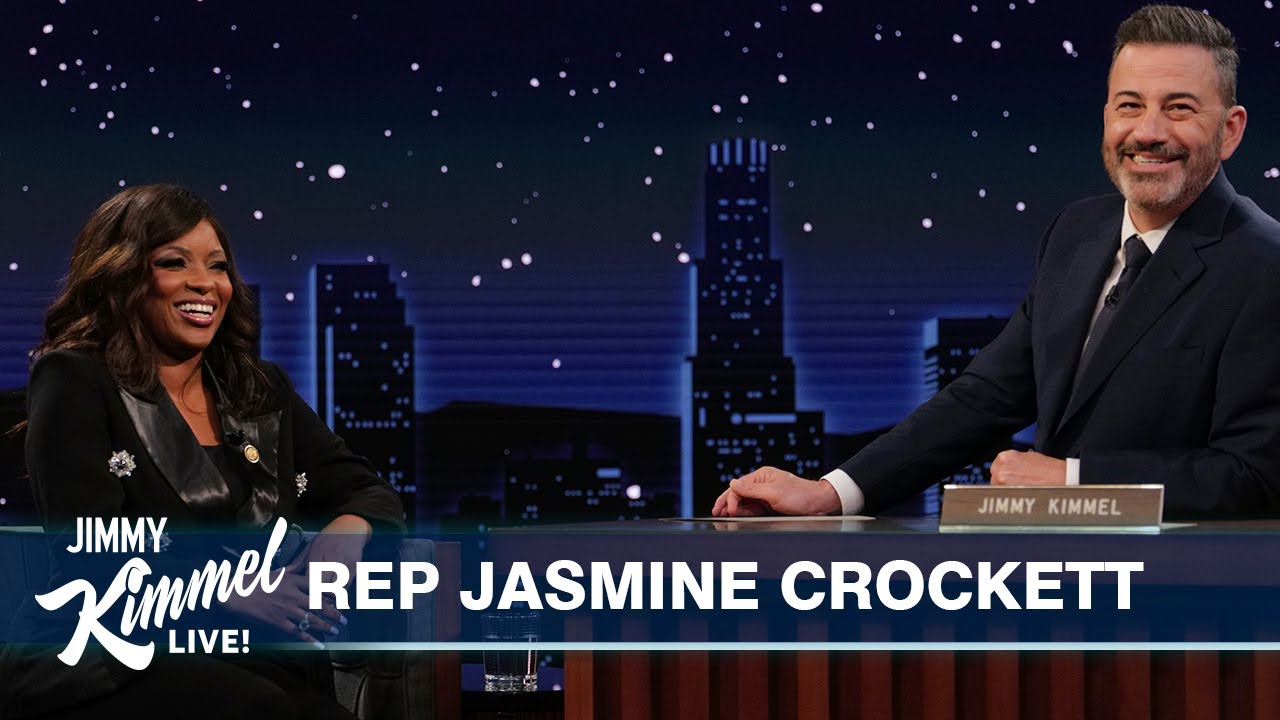
Didn't matter. This was her first televised panel in nearly 2 years, and she was sitting just three chairs away from Congresswoman Jasmine Crockett. Now, that was the real tension because Jasmine didn't play nice for the cameras.
She didn't soften her tone or step back to make others comfortable. She built her platform on truth, even when it cut sharp. And lately, that truth had been pointing at people like the first lady without saying her name, but close enough that everyone knew.
The show was buil as a bipartisan conversation on civility in modern politics. But civility, civility was already hanging on by a thread. Steve Barkley, a veteran broadcaster from upstate New York, opened the segment with practice charm.
Let's talk about disagreement. Can we still argue without destroying each other? Polite laughter.
Then Melania answered first. Cool, smooth, deliberate. Real strength doesn't shout.
We should speak with purpose, not noise. Jasmine didn't look at her, but one eyebrow arched just enough to register with viewers at home. Then she answered, "Sometimes noise is the only thing people hear, especially after they've been ignored too long.
It wasn't a direct hit, but it landed. " Steve chuckled, trying to balance the air in the room. But the balance was already gone.
What followed was 20 minutes of elegance versus edge. Melania's answers were clean, slow, and coated in calm detachment. Jasmine's replies, sharp, fast, precise, not hostile, but there was weight behind every word, like she wasn't just speaking for herself.
Then came the pivot. Steve asked if the White House bore any responsibility for fueling division in recent years. Melania blinked slowly.
No sign of discomfort. I can only be responsible for my own words, not how others react. Jasmine didn't pause, but silence is a reaction.
No shouting, no interrupting, but viewers could feel it. Something real was simmering beneath the studio lights. And that's when the camera pulled wide.
Steve gave the usual line, "We'll take a quick commercial break. Stay with us. " The screen cut to black.
But the story was just getting started. Because what no one realized, not Melania, not Jasmine, not even the moderator, was this. The microphones were still on.
And what happened next would become one of the most dissected, debated, and quietly devastating moments in modern political media. Not because it was loud, but because it was whispered, and some somewhere was listening. The broadcast returned from commercial like nothing had changed, but something had.
You could see it in the eyes. Not in what they said, but how they said it. The panel resumed.
Four guests, one moderator, clean graphics, subtle music under the opening question, but millions of viewers weren't listening for answers anymore. They were watching for the shift. And it came in the form of a single sentence.
Steve Barkley turned to Melania. What does strength and leadership look like to you in this climate? She didn't blink.
Her voice was measured soft, unshakable. Strength is not always loud. Sometimes it's choosing not to escalate.
Choosing grace. It was elegant, carefully crafted, the kind of answer that sounds like wisdom until it's tested. Jasmine Crockett didn't speak immediately.
She waited, let it hang in the air, then. That's true, but sometimes silence feels less like grace and more like a shield. Melania turned just slightly.
Not defensive, just aware. Steve leaned in. Congresswoman Crockett, are you suggesting that silence is a form of complicity?
Another pause. Jasmine looked directly at Melania now. I'm saying that for some of us, being quiet isn't a choice.
It's what's forced on us. So when we raise our voices, it's not for drama, it's survival. The room didn't flinch, but at home, people did.
The comment section lit up. Tik Tok creators clipped it before the segment even finished. She said that with her whole chest, one post read.
No lies detected, said another. On the panel, Melania maintained her composure. I believe in dignity, she replied.
There's strength in speaking with purpose, not just volume. Jasmine didn't smile. She didn't nod.
She just said, "Sometimes purpose requires volume, especially when people stopped listening. That landed harder than any shout ever could. " Because this wasn't a fight.
It was a conversation with teeth. And the brilliance of it, neither woman raised their voice. No one interrupted.
No one named. But the weight of history, politics, and unspoken truths filled every silence between them. The audience couldn't look away, not because something outrageous happened, but because two women, worlds apart in background and method, were showing how much could be said without ever yelling.
The camera caught it all. The micro glances, the breath between responses, the steel under the surface of both voices, and as the segment continued, civil, calm, and deadly precised the tiny green light on the mixer. It had changed from red to yellow.
Mike still on, still live. And in less than a minute, that would matter more than anything they'd said on air. Because real tension doesn't explode.
It whispers first. The panel went to commercial. The cameras cut.
The lights dimmed. But the truth, the truth stayed live because in the silence when no one was supposed to heart while women said everything. And 20 seconds later, the whole country was listening.
They called it a break. the kind of pause made for sips of water, small talk, earpiece adjustments. But this wasn't that kind of break.
As the camera pulled back and the we'll be right back graphic faded to black, the tension in the studio stayed put like smoke that didn't know where to go. Jasmine turned slightly toward the moderator, chuckling at something another panelist mumbled off mic. She looked relaxed.
Melania, on the other hand, sat still, too. still legs crossed, back straight, palms folded. Then she shifted.
Not much, just enough to Lenot dramatically, but deliberately toward Jasmine. And in a voice too low for most ears, but just clear enough for the mic still pinned to her collar, she said, "You should be careful who you call out. Some of us never forget.
" The words hung in the air like fog on glass, unclear, but impossible to ignore. Jasmine didn't react at first. Her eyes blinked on Sislo.
Then just as softly, she replied, "Is that supposed to scare me? " Melania didn't flinch. Just a smile, half meant, half message.
One of those expressions that says, "This isn't a threat, but it could be. " What neither woman realized the microphones were still on, not just hot recording live. Inside the control booth, a junior audio assistant named Angela Russo froze in place.
She was reviewing sound feeds something routine during breaks to sync levels before the next segment. She had headphones on and when those words came through, she sat reound played it again. You should be careful who you call out.
Some of us never forget. Is that supposed to scare me? Angela's pulse quickened.
She looked around the room. The main producer was off grabbing coffee. No one else noticed, but she knew this wasn't just political tension.
This was a moment not meant for air, but now hanging by a thread. 20 seconds. That's all it took before the audio feed accidentally still rolling was flagged, clipped, and quietly pulled by a backend recorder.
Angela didn't know what she was going to do with it, but she knew what she just heard would leave the set and reach the entire nation. Not because it was loud, but because it wasn't. Angela Russo sat frozen in her chair.
Her hands hovered over the keyboard. The audio was still playing in her headphones. You should be careful who you call out.
Some of us never forget. Then Jasmine's voice, calm, defiant. Is that supposed to scare me?
Angela wasn't a senior editor. She didn't have clearance to make decisions like this. But she'd heard enough moments like this vanish, buried, muted, walked over like they didn't matter.
So, she clipped it. 20 clean seconds. No music, no transitions.
Just raw audio and a frozen still of the studio panel. She didn't post it, not directly. She sent it to her roommate, Jade, a freelance producer for a political YouTube channel.
The two had an agreement. If you see something that matters, don't keep it quiet. Jade watched the clip, then sent it to one more person, and that's all it took.
37 minutes later, the video landed on X, formerly Twitter. Hot mic moment. You decide.
Melania Trump whispers something to Rep. Jasmine Crockett off air audio attached. It had 900,000 views in two hours.
By sunrise, it was everywhere. Tik Tok creators broke it down frame by frame, sinking subtitles and reaction shots. Instagram meme pages called it civility gone cold.
Conservative forums defended Melania as calm under pressure. Liberal voices praised Jasmine's restraint. Then came the hashtags.
Number hot McMelania. Number careful Jasmine. on number some of views never forget.
Within 12 hours, CNN aired the clip on repeat. MSNBC brought on a body language expert. Fox News called it a manufactured controversy.
But none of that slowed it down. Because the real fire wasn't in what was said. It was in the tone, the timing, and the fact that someone finally heard it.
Not during a speech, not in a tweet, but in the quiet space where power thought it was safe to whisper. This wasn't a political segment anymore. It was a moment.
And the whole country was listening. She didn't call a press conference. She didn't sit down with the morning shows.
She didn't even add a hashtag. Just one tweet, 10 words. Some people hide behind quiet voices.
I don't. That was it. No names, no ad tags, no explanation.
And somehow that silence hit louder than any shout. Within minutes, the tweet spread like electricity. Within an hour, it was screen capped by celebrities, quoted by journalists, and dissected by political analysts.
Within a day, it was printed on t-shirts. Podcasters called it a masterclass in tone. Leadership trainers added it to presentations.
Students began quoting it in debate clubs. A viral clip might make headlines, but a phrase like that, it makes legacy. Some saw it as a clapback, others a manifesto.
But for those who had ever been told to tone it down, for those whose voices had been sidelined, muted, or reshaped to please others, it was a mirror and a rallying cry. Suddenly, number ID hide became a quiet counterwave to the original clip. Mothers posted it under their daughter's graduation photos.
Activists used it in campaign launches. Even a small town mayor quoted it in a city council meeting right before voting to fund a new community center. Jasmine didn't say another word that day.
She didn't have to because somehow 10 words had done what entire speeches couldn't. It made people feel seen. The whisper caught on the mic wasn't born in that studio.
It had a history, a quiet one. until now. Because almost a year earlier, long before hashtags and headlines, Jasmine Crockett and Melania Trump had met once before.
Far from cameras, far from Twitter, it was a private fundraiser in Naples, Florida. No press, no podiums, just white linen tables, polished donors, and polished words. Jasmine wasn't even planning to go.
She was still new in Congress, still fighting to push a healthcare bill no one wanted to touch. But her chief of staff had told her, "The right people will be in that room. " He was right.
Midway through the evening, Jasmine found herself waiting at a marble bar for a glass of water. And standing just a few steps away was Melania Trump. No entourage, no makeup team, just elegance and stillness.
Jasmine offered a measured hello. Melania gave a small nod. Congresswoman.
Then calmly, without judgment or heat, she said, "If you plan to build influence, learn which tone the room prefers. No threat, just a suggestion. " But Jasmine remembered every syllable.
And when Melania leaned in during that studio break a year later, when she whispered, "Be careful who you call out. " Jasmine didn't just hear a warning. She heard a continuation.
The second part of a conversation that never finished. This wasn't an accident. It was unfinished business.
The invitation came quietly. A private dinner in Dallas, hosted by the Harrington Foundation. 50 guests, no press, no microphones, just policy makers, donors, and power behind closed doors.
Jasmine wasn't surprised when she saw Melania Trump's name on the guest list. What surprised her was that she'd been invited at all. The last time they'd shared a room, the country listened in on a whisper.
This time, no cameras, no audience, just a second chance to speak without being heard. Jasmine arrived early. Dark green dress, low heels, alone, no staff, no entourage, no buffer.
She wasn't there to posture. She was there because silence had never protected her. Never would.
Melania entered 20 minutes later. Champagne colored blouse, long skirt, two aids at a distance, composed as always. They were seated apart, not far, but enough.
Dinner passed with small talk, clinking glasses, polite laughter. Then, during dessert, Jasmine excused herself and stepped into a quiet corridor lined with framed photos of past political gatherings. Footsteps followed.
Melania. They stood there alone, not by plan, but by gravity. Melania spoke first.
You write very beautifully. Her voice was calm. Measured.
No edge. Jasmine turned. Thank you.
A pause. Then Melania said, "You believe I threatened you? " Jasmine didn't blink.
"I believe you said exactly what you meant. " Another pause. Melania's tone softened.
I didn't want to hurt you. But I'm not sorry for saying it. Jasmine stepped closer.
Not confrontational, just present. Then you meant it. Melania nodded slowly.
Yes, but not how people heard it. I was taught to survive by choosing silence. Jasmine held her gaze.
Silence doesn't protect people like me. It just makes it easier to ignore us. that landed not with heat, but with truth.
The air between them wasn't angry. It was heavy with things they both knew but rarely said. "Then something unexpected.
" "I admire you," Melania said. Jasmine raised an eyebrow. "That's not the word I thought you'd use.
" Melania smiled faintly. "I admire what I can't do. You speak without fear.
" Jasmine's reply came low and steady. I'm not fearless. I'm just done being quiet.
They didn't hug. They didn't shake hands. They just stood there.
Two women shaped by different silences, finally facing the distance between them. Then Melania turned, heels tapping softly down the corridor. Jasmine followed a minute later.
At their tables, nothing seemed different. But something had shifted. Not in public, in understanding.
3 days after the dinner in Dallas, Jasmine Crockett released an op-ed. No press tour, no morning show appearance, just words titled, "I was elected to speak the truth not to whisper. It didn't name Melania.
It didn't mention the clip. It spoke to something deeper. I've learned that what's said in comfort," she wrote, often echoes louder than what's shouted in anger.
The piece dropped at noon. By 300 p. m.
it was already trending. Not because it was fiery, but because it was familiar. People had heard that tone before.
In boardrooms, in back offices, in classrooms, where power doesn't scream, it suggests. The op-ed hit like a tuning fork across the country. A high school civics teacher in Wisconsin used it to open discussion on tone and power.
A group of nurses in Atlanta read it aloud during their lunch break. A church in Tulsa printed it in the weekly bulletin under a sermon titled The Voice That Won't Shrink. It became more than a political piece.
It became a mirror. Suddenly, the story wasn't just about Melania or Jasmine. It was about what happens in rooms where women are expected to stay polite, where speaking too boldly is seen as impolite, and staying quiet is mistaken for dignity.
At dinner tables, on podcasts, in union halls, people asked, "What does it mean to speak when we're not supposed to? Who decides which tone belongs in the room? " Jasmine didn't set out to start a movement.
She answered a moment, and that answer grounded, unapologetic, intentional, outlived the clip that started it all, because in the end, the whisper faded, but the message that stayed. It was never just about Jasmine Crockett. And it was never just about Melania Trump.
It was about something deeper. A moment, a whisper, and the kind of silence that only exists when someone believes they hold all the power. What Jasmine exposed wasn't a scandal.
It wasn't even loud, but it was enough to make the whole country pause, to ask, who gets to speak quietly and still be heard? And who has to raise their voice just to be seen? That's what this really was, not a feud, a mirror.
Because in every office, every family dinner, every board meeting, there's that moment when someone leans in and says something quiet enough to pretend it wasn't meant for you, but sharp enough to make sure you feel it. That's what Jasmine responded to. Not the whisper, but the legacy behind it.
She didn't drag names. She didn't fuel outrage. She just stood in it, calm, clear, unmoved.
And in doing so, she showed a different kind of strength. Not the kind that comes from control, but the kind that comes from clarity. Melania didn't lose her position.
Jasmine didn't win a title. But something shifted in homes across the country. People started talking about tone in a new way.
Not just as volume, but as a form of power. They remembered the clip. They quoted the tweet.
But what stayed with them wasn't the drama. It was the question behind it. What do we do when someone speaks softly and expects not to be challenged?
And maybe more importantly, who gets to whisper and still get the final word? That's why the moment mattered. Because it didn't end with applause or a headline or even a winner.
It ended with people thinking differently, listening more closely, and recognizing that real power doesn't always shout. Sometimes it leans in quietly and dares you not to respond. But Jasmine did, not with fire, not with fury, but with a sentence that echoed longer than any sound bite.
I was elected to speak the truth, not to whisper. And in those 10 words, she didn't just answer Melania.