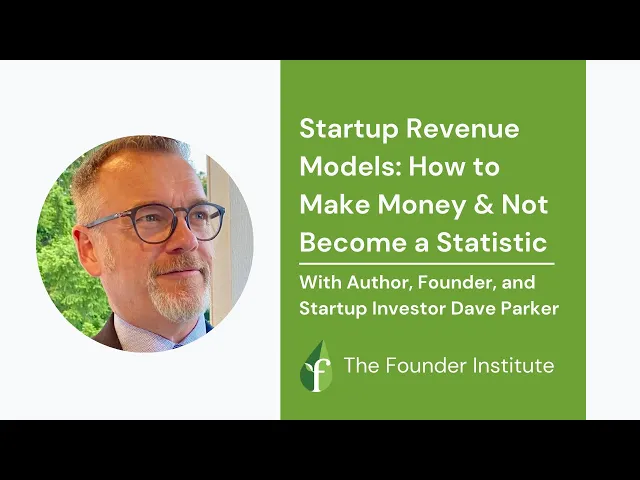
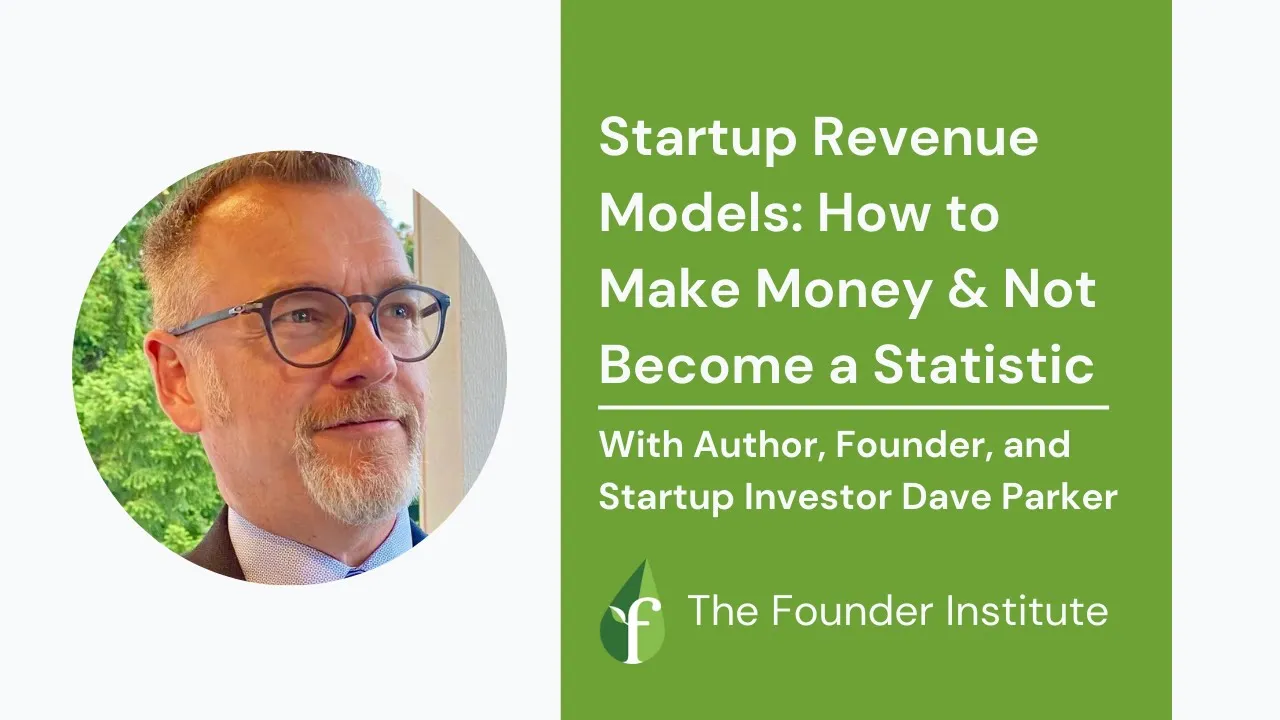
All right welcome everybody uh to this founder institute webinar my name is jonathan greech and i'm a co-founder and ceo of the founder institute and we have a great topic today a topic that is always relevant uh and should always be relevant i think some some startup founders and some startup investors lose sight of that which uh leads to uh times of froth and times of a lot of issues and later stage funding That we're seeing right now but we're all here to talk about startup revenue models okay and uh this is a topic this
is something whenever i talk to an entrepreneur and they're like oh well you know twitter started without a revenue model and facebook started without a revenue model or anything like that it always makes my eyes roll because that's basically like saying okay well This person won the lottery so i can win the lottery too right uh so we're here today to talk about startup revenue models in a way that's realistic uh in a way that uh really can help you build a business that is actually sustainable and maybe not totally reliant on venture capital which
is the type of business that you should strive to build and uh today we had a great speaker who was here to to talk about that and to talk about really The nitty gritty and how to find a relevant uh revenue model for your business because uh and i think and i'll bring you on screen here now dave i think uh you share my you share my uh sentiment that you know it really it's there's a lot of places where uh a founder can be creative but on the revenue model is probably not where you
want to be flexing that muscle right hopefully your idea is unique but how You make money is never unique for sure perfect okay so let me just give a quick uh a quick introduction to dave so uh i've known dave for for over a decade now which which makes me feel a little bit old uh but dave has been working for startups in a very long time starting companies building companies coming in as a ceo as a ceo i believe as well uh angel investing in companies and now You're working with an amazing organization called
the fearless fund and also uh author of a book which i have here trajectory startup you can learn more about this book at dkparker.com but uh but yeah so that's my uh hopefully flattering introduction to for you dave but any anything to fill in there for everybody you know always good to see you my friend it's been it's been too long and And uh it's good to cross paths and uh back from gosh early founder institute days when i was running seattle for sure okay awesome yeah so dave i will uh i'm gonna hand things
off to you a couple quick notes for everybody and it looks like we have a lot of activity in the chat here which is amazing this is a 100 live event okay this is not pre-recorded so um we want to make sure that these events are as interactive as possible so dave is going to go through a Presentation right now you should definitely pay attention to that presentation but at any time if you have any questions throw your questions into the chat uh and we have a team of people who will be in there and
they'll be feeding the questions to me and once dave's done with the presentation uh we'll just have a discussion and we'll be bringing up a lot of your questions and i'm seeing here now we got a great international Audience evelyn from nevada uh tai from dallas chris in singapore i think it's pretty late for you chris so thank you for uh for taking the time to join us wisconsin panama uk zurich uh new york madrid cleveland swarthmore uh pennsylvania uh i went to uh i'm a graduate of villanova university so i'm familiar with that area
lagos buenos aires all right awesome so amazing live international audience keep The activity going in there okay in that chat we are here throw any of the questions that you have into the chat uh for dave and once he's done with the presentation we're just gonna go through all of your questions and hopefully try to make this event as interactive and as helpful for you as possible sure okay all right so dave i am going to make you the featured speaker here uh and uh and i am going to hide myself and Mute myself and
see in a few yeah and i will i will be back awesome well welcome everybody thanks for joining me and i'm actually in seattle washington today uh we're just outside of seattle but have a chance to get a chance to work with founders globally both from founder institute all kinds of other programs and i was just in in tunisia so i saw some folks from the middle east and north africa so Let me walk you through the presentation today is around how your startup makes money and how you don't become a statistic so from the
um from a founder perspective i'll give you a little bit about me uh why startups fail and you shouldn't and then i'm gonna walk you through the 14 revenue models used in tech and how you break down a business model into the pieces and components that really are Pieces that drive it and then ultimately what value how you value the company based on those revenue models and what are the other factors and we'll talk about especially for pre-revenue companies how you value a company so as jonathan mentioned um i'm a 510 founder uh sold three
of those company closed two one was an epic crater uh gargantuan proportion so i raised 12 million dollars and exited 85. i worked for an organization called startup Weekend uh the non-profit until we sold that to techstars and then uh joined the fearless fund about a year ago and we invest exclusively in women of color founded companies so about 30 companies in that portfolio split between uh [Music] early cpg companies and early technology companies uh and then i authored the book trajectory startup which most of this content is actually in the Book um and then
work on the sell side of helping founders actually get personal checks instead of the corporate checks when you sell your company at the end it's a little bit about me i'll make sure the jonathan and team has all of these documents that you can find more at dkparker.com uh there's actually a free excerpt for the for the 14 revenue models as well so you're welcome to download that for free all right so first off i want you to Ignore the memes i know today in the twitter sphere things are crazy about all things um you
know frothy markets down markets compressions and rounds uh but i would encourage you as a founder to ignore the memes and one of my favorites is you know the idea doesn't matter only execution matters except that ex actually assumes it's a good idea so in venture actually it all Matters so it's the market matters the team matters the idea does matter especially if it's a bad idea because you can fail fast um you know follow your passion i feel like we've we've told a generation of that passion is critical but not sufficient to the success
of your startup so i'm gonna give you some mechanics and numbers today so a lot of the stuff is around from a fundraising perspective is all about math so i started off with the Thesis of actually it all matters let's start off with why startups fail the first thing is that we build a product that companies don't or our customer doesn't want um this is the cb insights data it's been something that happens every six months they actually um the data has been very consistent now over a decade that the number one reason that startups
fail is they built a product nobody wanted now We're convinced that startup founders being a five-time founder as well all of my ideas are good i love them all but some of my ideas are actually worthwhile and spending time on of course running under the cash having the wrong team getting out competed all of those things matter too but know that first and foremost are we building a product that customers want and can we get paid for it so getting paid for it is a critical success factor In that and we'll talk to jonathan's point
about the revenue model that is the non-revenue model which is called new media so yeah you can be like that on twitter but uh or clubhouse et cetera but not if you're b2b because that one only works in the 14 models for b2c so some calculus here a great team in a bad market is probably going to fail and an okay team in a great market could have a blockbuster return as an Investment a great product with no path to revenue will ultimately fail right just because you built a better product it doesn't matter it's
a secret an okay product with great monetization can still make great money but may not produce a unicorn but to get to unicorn you have to have a great product solid monetization strategy a great go to market and market size and great execution all of those things have to Come together so let's start off on the mechanics of how you make money and how you think about making money because that's really an important component that you need to know from the investor perspective so on that side now i've switched to the dark side i know
on the investor side so we tend to think about returns first unit economics which is how do you make money and product lasts as a product founder we tend to think product first Oh yeah we need to get to the united economics and then oh yeah how do i exit the company it's easy for me to get a check into your company it's hard for me to get a check out of your company so the reason i think about returns now as well in that continuum is it's not just about the product it's also about
how you sell the product and how you make money so let me break down the business model for you there's three distinct parts of The business model and i want to break them down into their cost structures and their in their profit structures but first off has how do i create value that's the product or service you're selling today so if it's a if it's a product company if it's a services company if it's a combination company that is the first thing it's about how do you create value for the customers the second thing is
how do you deliver value that's a mix of your pricing Your revenue model in your marketing and sales it's all about your go to market and the cost of selling the product and then you'll see that what you have left is how do you capture value which is top lane revenue gross profit and net profit gross margin and net profit so let's break it down in a little bit of detail if i want to create a new company and create value i have to have engineers to build a software product they have to have people
to help Deliver the product so the cost of building the product or the cost of delivering the service is the team which includes engineering design hosting maybe manufacturing they were doing a combination of iot plus uh software but that cost of creating the product is your your cost to build the product or if you're doing a service the cost of delivering that service including the support and delivery all of those things go in your spreadsheet As a cost associated with building and delivering the product so that's all your cost structure the next cost structure is
the cost of delivering value which is your revenue model how you monetize there's 14 of them and i'll get to them here next the pricing you use for your product by the way most of you are pricing it too low the cost of customer acquisition which is your marketing spend all the way through the sales process to get to the Customer on board which is marketing and sales your lifetime value ltv which is how much is that customer worth to me over the lifetime and a note here that promotions and pricing are different so if
you do a freemium as an example that's a promotion that's not actually a price component these pieces are how you deliver value so i have the cost associated with building the product now i have the cost Associated with delivering the product which are these components that sometimes are in my control sometimes a little not in my control but at least there are variables you can push on and then what's left over is my top line revenue my gross margin and my net profit so if you're doing something that's in commerce and i'm selling a virtual
product or a physical product i can take that transaction value and look at that transaction and say my total Gross sales on that was three hundred dollars my cost of goods was 150 my gross profit was 150 now that does get me to my net profit because i have to look at my net profit later but at least i can calculate my gross margin so you'll notice here this is what's left i have no variables or no no leverage to pull on this one it's determining the cost of building it determining the cost of selling
it and How do i price it and monetize it so those are the three big buckets of the business model they're broken down for you in a way that you can go get to it so product market fit then becomes this idea of math and you'll hear this on stage from venture capitalists we'll know when we see it it's like it's pornography according to the the supreme court ruling from years ago well i don't know what product market fit is where i don't know what traction is but i'll Know it when i see it can
i break it down to you it's simple math so if if the traffic on the site that my site is going up or the traffic on downloads on an app store is going up if my leads are increasing or my downloads are increasing if my closing ratio is increasing if my time to close is decreasing so if i was 94 days and now 62 days my time to close is coming down and if my annual contract value or my monthly recurring Revenue is increasing those five things are the miracle of compound interest so know that
product market fit isn't a feeling it's not a myth it's not a unicorn it's math so know that the math to it really goes those five things now there are some bonus features there too is it if your referrals are increasing that's a good sign your time on app or time on site is increasing again it's a good sign ltv to calc ratio should be improving That's kind of a trailing indicator of product market fit and then your lifetime value should be increasing at greater than 12 months but again trailing indicator versus the five on
the left really your leading indicators or product market fit and it should be what you're driving to to show that you have growth and and revenue so that's product market fit it's just math all right how do you monetize your Startup so i want to walk you through the 14 ways of doing it this is not a calculation or calculus for evaluation this is just the heuristic and it's one of many parts of how you value the company we'll get to evaluations here at the end really quickly so first off the data so when i
was with founder institute back in seattle one of the things somebody asked me for at one point was hey can i have your financial model i actually went out and started Looking at like how many financial templates would you need to cover 80 percent of the market and i went to crunchbase at the time and said hey can you give me a list of all the seed funded companies over the last 18 months ends up being 2654 companies because it took me so long to write the book and i was interim ceo a couple times
and sold a couple companies um it took me five years to do it so we ended up with a Five-year longitudinal study of these companies and we're able to look at which one succeeded and which ones failed based on the revenue model component so some big surprises in that series c rounds have gone from series seed one and then off to an a round and a b round to series c one through ten and the other thing we looked at was the number of companies who failed and one of the things we did consistently going
Back and looking at each of those websites on the wayback machine was that 80 plus percent of about 86 of them didn't have a call to action and didn't have any pricing or a way to monetize on their site you couldn't tell how they actually sold their product if a customer did get there there was no call to action there was no sign up for a demo get a white paper um there was nothing to do other than here's what we do But no pricing so um so then when we took that data and we
basically looked at every site and we mapped them out you'll notice a couple things here the combination revenue models are very fast from the seed funding to a funding and then we tracked from a funding to b funding and some of these are about kind of what you would expect but combination models typically had services revenue plus subscription was the way they broke down so early subscription revenue early Services revenue actually um validated the product so that it was easier to go get funding the other one you'll notice here is gaming is gaming was about
normal on this on the scale from c to a but super fast from a to b because if you had a hit on gaming it was easy to raise that next round of funding so these are the models i'm gonna walk you through what their unit economics are how they work where they work and I'll give you a list at the end of all 14 that you can choose from but starting point here is fee for services we all know the fee for service is not a scalable business that venture capitalists like but it is
a revenue model component for sure accenture is a good example that stride is an education company these uh fee for services businesses work for b2b and b2c your key metric here is your project Revenue and your cost of delivering which is usually your bill rate to the customer and your pay rate to the employee or contractor that gives your equivalent gross margin so now of course services here are super hard to scale but if you can prove it out with early revenue and customers will give you money for that and you can move to subscription
later totally a good place to start validation the form of revenue is a great option That's number one number two is product as a service slight variation on i think if this one is like southwest airlines or ibm they're selling a black box of a delivery of something that customers are going to get but they're not breaking down the cost per meal the cost for the pilot to cost for the co-pilot the cost for my my diet coke etc so from a customer's perspective i'm buying a package and a solution from your perspective you're managing
a Bunch of costs within that and again it's fixed price versus hourly rate so they're very similar to services slightly better margins slightly better value so some companies will make that shift from services companies to product companies as well so that's number two productive service commerce is number three i think lululemon here wayfair early days of amazon before they were conglomerate so this one works both b to b and b to c Your key metrics here your wholesale cost of goods sold your average margin percentage and your average basket so if my average basket is
three hundred dollars my cost of goods sold is 150 my gross margin is 50 and then i need to know how many baskets per month am i going to do from my unit economics perspective so this can be physical goods can be virtual goods um It can be something you manufacture or something you resell i know that this one can mature into a marketplace so number three is commerce number four subscription there's subscriptions everywhere now so uh subscription salesforce spotify or b2b and b2c examples it works both b2b and b2c my key metrics here are
my average revenue per user that could be in the form of monthly recurring revenue or Annual recurring revenue or annual contract value my conversion ratio for example how many trial to paid versions do i get less my churn how many what percentage of my customers are leaving me every month so those are my key metrics for subscription typically you're going to mature into a tiered pricing models where each ideal customer profile has a different price that fits a sweet spot of what you're Trying to make more for that pricing for that customer these have great
high multiples right the revenue here on subscription multiples are great i'll walk you through multiples here at the end fifth one is metered services so think here twilio aws if you have an aws bill and it went up this month usually that means you made more money congratulations this one is a b to b only solution think cell phone days in The early days where you got charged per text or per minute that was a negative customer experience on this side it's actually a positive customer experience so here i'm tracking average revenue per user very
much like subscription it looks like subscription but you have a pay as you go component that you crank it up the more the customer use the more they pay like subscription it has churn keep in Mind this one has the highest multiple of all the revenue models and i'll walk you through that why that's important here in a bit but this was probably the one that matured the most over the six years seven years that we've been trailing watching this data so metered services went from subscription to metered services number six is the transaction fee
business or the rental business think Here uh chegg or stripes stripe doesn't actually book the top line revenue if you make a thousand dollar credit card charge they book the three and a half percent fee so they're in the fee business so they have to do tons of volume because they're making super low margins so the difference between commerce and transaction fee is commerce i'm booking the thousand dollar sale or the 300 sale i used Earlier with the transaction fee i'm just booking the 3.5 transaction fee on that 300 sale that's the difference rental works
very much the same as the mechanics so b to b and b to c here average revenue per transaction et cetera so if you're doing transaction fee you're just not booking the line revenue how does that work when you have two sides of it it's called the marketplace so if you're doing b to b to c that's a Marketplace um almost always so alibaba uber great examples of marketplaces here um my key metrics are my average transaction amount the number of monthly transactions and then my commission transaction percentage so keep in mind marketplaces are hard
in the early days i'll quote a deo here from an early exam you have to favor the seller you need inventory in the marketplace to sell if you don't have any inventory to sell all of your cost Of customer position on buy side will be wasted because i have no inventory so at maturity they're in equilibrium at launch they favor the seller so that's the key on a marketplace combinations are next i think in terms of this one smartsheet is a good example smartsheet is a company based in in seattle they do services and software
25 of their revenue is services revenue 75 of subscription revenue But it compressed the sales cycle so if they could do non-recurring engineering and set up for their customers it compresses their sales cycle by 50 so in this case it's a good example of services lead followed by subscription um if the vcs tell you that it doesn't work you can't do services point in the smart sheet and say we're doing the same thing because it's compressing our sales cycle hardware and sensors are another good Example so think of companies at scale have multiple revenue models
but at lunch you're probably going to have one gaming is next so think king candy crush here if you're doing gaming margins are amazing on virtual swords they're terrific it's b2c only um i'm going to track my downloads my percentage of people who play and the average in-app purchases per customer and typically i'm going to look at my 21-day predictors of success how many people have downloaded It if you used it to still use it 21 days so it's a hit driven business like movies if you're doing gaming it's a great margin business advertising and
searches here number ten why is it at the end instead of the beginning you have to have a million unique subscribers so if you're doing advertising search that's awesome the only question that matters is how long will it take me to get to a million uniques per month So know if that's your model this model is a valid model but it only works at scale it doesn't work at launch so know that that's the challenge with it number 11 is new media jonathan mentioned this one we're going to go viral congratulations so uh snapchat clubhouse
this one down at the bottom would say this is the only revenue model that's the non-revenue model it actually is a deferred revenue model that converts for advertising so typically This is the the one that's going to be advertising in the long range and you're focused on customer growth i've got news for you if you're b2b this one's b2c only it doesn't work in b2b linkedin went uh viral for just a little bit of time and slack went viral for just a little bit of time but in general you have three levels to track new
media word of mouth hopefully anybody can get that network effect i think in terms of Whatsapp app works better when i add like my network to it and the top one is a viral code or k factor that means for every paid customer i get i get greater than two additional paid customers so it's just math it's a viral coefficient or k factor if you want to look up the math google k factor before a virus no one knew what it was after the virus everyone knows what the k factor is big data is next
patients like me is a good example again this is a b2b it only Works at scale because you have to have the data before you can sell the data so now that that's number 12 big data 13 is lead generation if you've been around mint or chime or all-star directories all those companies basically are better at marketing than the people that they sell the leads to this is a great um way to bootstrap a business it's pretty nichey but it is a unique revenue model so it's listed and there's Number 13 and last but not
least number 14 is licensing so remember when microsoft used to sell a software licensing and they shifted their subscriptions 15 20 years ago the analysts were you know you know thinking like can we make the switch to the subscription and now the answer is subscriptions are everywhere so licensing is 14 simply because there's not a lot of them left anymore so know That what we're after with that one is it's still a valuable model it just doesn't have the same value that subscriptions have so here's your list of all 14 i would encourage you to
take a minute and just figure out which one you're going to use um and then most of these i'd say they're pretty common as far as the statistics go they've got common conversion metrics And in the book you'll you'll find a bunch of the details down to a revenue model by revenue model all right so why does it matter so first off it matters that the value is partially in how you're going to sell the product to the customer you want to sell to but if you can choose which revenue model you can choose i
would encourage you to go with the ones that have the highest value So in the early company valuations we don't value the company based on the price to earnings ratio or p e ratio we base it based on price to sales ratio so let's say you're doing a smart contracts company you want to sell to docusign so in that case i could go to docusign and say we have a similar revenue model to docusign we sell on a subscription basis and we have a product that's complementary to docusign so that Docusign could actually buy us
so we would look at that company based on the valuation of price to sales not price to earnings because you typically don't have ebitda in the early stage of companies so how do i look at them as the company who's likely to buy us so here's a rank that we did for the table for the book and you'll see here that services companies generally trade at 1.5 times There's 0.75 to 1.5 times revenues so if john and then and i do a million dollar consulting business that business is going to be worth roughly a million
dollars which is awesome but not great now the same time if we do a million dollar subscription business you'll see here that business is worth eight to twelve million dollars and a million dollar metered service business is worth about 24 million dollars Now we've taken this data and moved it into uh an analysis of 280 publicly traded companies in tech globally and even post-sell-off you're seeing the companies that have metered services have what have bounced back quicker than some of the companies that had subscriptions but the valuation differences are absolutely quite huge so in the
case here of new media versus old media you'll see new media companies trade 23 times revenues where an old Media company is creating three times revenues and the same thing is true here for advertising and search companies they're trading seven to nine times now i'm not saying to optimize around your exit but where you can optimize around increasing value i would definitely optimize for an increase in value all right other influences on valuations because i get this a lot dave what's my company worth So the revenue model is part of it the total addressable market
you're going after is also part of it if you're going after a big-ass market um your company will be more valuable if you're going after a nichi market or you're only concerned about morocco or northern africa the answer is it'll intrinsically be smaller because your total addressable market is smaller we used to have what's called a rule of 40. kind of shifted to the rule of 50 which is are You growing at greater than 50 for a combination of 50 percent growth 25 growth and 25 profit so there's and then am i finding a logical
up market buyer to create competition so those are influencers on your valuation growth revenue model total addressable market likely up market buyers and path to profitability i'll increase your value now in market compression and all kinds of things stuff going on right now it'll Actually help you sustain value right as well as hopefully increase value so quick summary here i did not say the method here allowed you to calculate the value of a pre-revenue company if you want more data on that i would point you to david burkus um dave's a mentor and friend i
actually wrote a blurb for the back of the book and 20 years ago he wrote the burpicus method for how to value a pre-revenue company Keep in mind the data in that is biased to west coast tech companies so you have to discount appropriately based on your region so the data that we're working on is still a work in progress and probably will never end it's turned into kind of an interesting perspective on it but keep in mind as jonathan and i started hopefully your product is unique hopefully your marketing is amazing how You make
money is almost never unique so what i want to caution you on is if you're if you're doing a new startup and you're like and we're inventing a new revenue model i would be like oh my god please don't like just to be honest if you create the 15th revenue model i will write about it but the risks of creating a new revenue model at the same time you're creating a new product is super hard so know that how you make money is never unique So with that jonathan i'm going to open it back up
to you for q a that was that was awesome dave uh can you guys see me now or yep you're good okay oh i i hid my self view i've uh i've already uh making myself old using zoom so let's uh a couple of things here and there's amazing questions coming in keep the questions coming i had a couple of questions and i have a feeling we may Want to bring you back back up also dave um just just from some of the from some of the questions that i'm seeing here um so one of
the things and i had this a lot a lot of people were asking okay if you know choose one right now i know a couple of these are combo and you also talked about which i think is interesting how a lot of these revenue models can kind of lead to another revenue model Right um i think the fee for service and productize as a service is probably the most obvious one and we see a lot of consultancies kind of become product or startups um from that but would you still for for any entrepreneur or any
startup at the very early stage just say like just pick one try to try to make a go with that uh before you even think about another one or or what kind of advice would you Provide there yeah i would definitely lean into what your primary revenue is revenue model is first jonathan and i would go test it and see if it works and then i that's why i go with primary and secondary versus choose one and two at scale you can have multiple revenue models uber today has multiple revenue models but at launch they
had a very focused marketplace model that was focused on inventory first and buyers Second right so and then you'll have people say oh we're going to do a multi-sided marketplace so my answer is usually oh my god no like start with a single marketplace that's freaking tough enough before you try to do so i think from a founder perspective there's what i am at launch and there's what i am at scale and in our heads as Founders we tend to be like i'm manifesting my own destiny i'm going to live in the future and i'm
like i just want to i just want you to survive long enough to not die in this sequence over here before you get over there so that's the important thing about pick one today right and by the way i've gotten was talking about metrics here a little bit uh which has been a lot of what you talked about and by the way that that's What i love about dave guys is that he just takes this stuff remove all the hype right product market fit is math a lot of the stuff is just math um and
one of the metrics that at least i use is when you the more uh people in attendance ask do i get a copy of these slides do i get a copy of these slides generally generally uh correlates with the quality of the slides and the quality of the presentation so just some metrics to Share there with you and to answer the many people that have asked we've been trying to keep up in the chat yes we'll be sending out these slides he covered a lot of information um go back to actually that one the multiples
because we had a question in here actually from simmons and simmons asked the question is there a list of the most profitable revenue model to the lease for strategic purposes so I don't know if necessarily this is the most profitable i do i actually do have i don't know this profitable it's based on market cap so the family office i worked for we did the mathematical chart that you guys saw at the start of it and they asked a really interesting question that i had never asked because i'm not a public company guy until i
do the family office they're like huh have you looked at the profitability of these companies and how they market the gap and sure Enough they they follow this model in reverse in descending order so uh metered services companies disproportionately high right you have to discount a few for like oh when bit bitcoin and blockchain companies were super high so take groupon right so this when i started this dataset groupon was super hot they ultimately became legion and Commerce groupon trades for .49 12 revenues docusign today even after the sell-off in the docusign from as high
of 325 ish to where it is today at 70 still trades at 21 times trailing 12 revenues right so if you were to make so we literally joked about should we make an etf that just invests in metered services and highly uh tuned um subscription businesses and i think the answer is I can yeah well if you look at my portfolio the answer would be yes that is an answer now this is the investor point of view just just to point out right just in getting started right so at least this is what investors will
look at so super valuable for you to understand that um but as far as just getting started i mean some of the for early stage idea stage pre-seed seed i mean a lot of this stuff is just going Like subscription is usually one of the the fastest paths right um and but as you would mention too this new media versus old or advertising is is a path that a lot of people think that they're going to pursue but at least in my opinion a lot of times it's just laziness it's just like you don't have
a revenue stream so you just say oh yeah we'll figure out later we're going to guess it's going to be Advertising we're going to go viral yeah all right yeah no it's and again it's just math right so that like we had one company in my portfolio the last venture fund i was with that we're like we're going to get shipped to the big data model from subscription i'm like that's awesome what are you going to do for the 18 months where you don't have any revenue because you don't have data to sell Right and
they were like oh yeah we hadn't thought about that so again this just points out some of these work at launch some of them only work at scale almost all circumstances say you know like market places the critical success factor marketplace is how do i get market momentum in my critical mass where with advertising how do i get to a million subs So we have about four companies that are in the marketplace businesses i have friends who are like dave hates marketplaces i don't hate them they're just intrinsically hard because i have to have a
marketing funnel on the sell side in the marketing funnel on the buy side they have to ratchet them up right right and now if it works i have competitive competitive advantage But how much do i have to spend to get there is it 3 million or 10 million right to get to critical mass so there's there's models that you can test early and give you really proof points and then there's models that will you know it's it's the rattan death march right because it's incredibly hard to get there right and i think even we see
this a lot the services to the productize the Service you know for a lot of struggling entrepreneurs because look you're not going to raise money until you have metrics to prove that you're on to something right right um so the the services to a productized service model is actually at least realistically speaking for a lot of uh entrepreneurs one of the most realistic and best paths that you can take and you have i think you mentioned like you know Moths or used to be called seomoz right a lot of those you know those are those
are great businesses and they started not by raising a ton of money on speculative projections but by delivering a value to a customer and then figuring out how to build a product to do it at scale right yep and then they actually sold off their services business which most Of the time is difficult for them to do john i think is that 35 to 50 gross margin which by the way is the average for a services business is it's hard to extract that revenue and go just product only should you i based on these multiples
my answer is of course you should but i think as founders when again when i did my first startup i didn't have any perspective on this data now this is i have strong opinions lightly held and informed by data That's kind of the way i approach it today versus the way i approached it with my first startup for sure right the other thing the last thing i'll say about the slide and then i'll get back to some of the uh the questions here from the audience is uh this is also i would say right now
because of uh you know that there's a little bit of a bloodbath going on right now in later stage bc okay Now later stage bc is highly speculative in a lot of cases and it's it's banking on um the ones that have the highest numbers here so would you recommend um or yeah just what are your thoughts on that it's with the cycle that we seem to be going in right now investors are going to be uh much more Attracted to things where they can actually see metrics and they can see uh money and see
a path to to getting revenue quickly whereas things like uh new media um you know and and some of these the metered services and things like that uh do require a lot of funding to actually get to that point where you can pull that revenue model off right yeah yeah and i'll tell you the same thing we told Our portfolio companies is where you have clear visibility in your roi so in marketing we think about as row as a return on advertising spend so in if you're doing b2b it's kind of return on marketing spent
but i think about it in days right if i'm spending a thousand dollars this month how does it take me 92 days to get my cash back or 47 days or 32 days so if i have clear visibility the answer is keep spending if you don't have clear visibility the answer is You've got a shitload of testing to do right so i want to know that if because as the founder of your company you're the chief allocation officer i'm allocating cash resources and people in time now i'm thinking about it i want to have visibility
to how much runway do i have from a cash perspective where do i have clear return on investments right where we're like oh we're swinging for the fences dave you don't understand now been there done that got it have a Creator to show for it here's the deal key metrics are math derivative the more you have data the more investors are like wow that's interesting the more you have hypothesis and speculation the answer is i have a checkbook consequently i have the power so there's a power dynamic and venture if you have data you can
offset that power dynamic if you don't have data the answer is i don't care how passionate you are i'm glad you Have to be passionate passion by itself is not sufficient passion and data is required right and i think generally speaking i would sum up the cycle that we're going into is just going to be much more focused on data which is not a bad thing by the way there were a lot of questions maybe can we go to the slide where the where you go through the product market fit right because this was not
surprisingly A pretty popular topic in all of the uh the questions that we've been getting here right um product market fit equals math and a lot of people uh were asking and i'm just summarizing a lot of the questions that i saw here you know so you have uh it's not a feeling right um you should be able to see it in the metrics now uh this list that you have here on the left so uh one through five Um you know what it i mean the vast majority of entrepreneurs that think they're on to
product market fit are going to have some you know one or two yeah yeah but but but i feel good about it the answer is that's awesome but keep in mind these five in total is the miracle of compound interest right so if i can sit down with you and say that's where it's an engine That's somewhat sustainable and it's it's going to grow you're off to the races do you have the pieces together like you can if you if you spiked traffic for one month that's good now the question is what did it cost
you to do that is this sustainably going up if i look at my leads is my lead still keep in mind here time to close decreasing is a big deal right average revenue per contract is a big deal so like i was Meeting with a founder yesterday and like we're charging this amount i'm like you need to triple that and they're like well how do you know and i'm like because nobody's pushing back if anything your customers are telling you oh my god this price is too cheap so price is one of the variables in
your control you can't change it every month but you should be testing it systematically every quarter and looking at how quickly can i change my pricing So the annual contract value so i these are these are the math that we use for our fund right we're like if i could sit down with you and see the map before you see the math i'm going to get a great deal because i'm going to make you i'm going to give you a check right you need to see it as the founder right but it i'm just taking
some of the clutter away of like vanity metrics Right so site traffic by itself is a vanity metric unless it's converting for leads right so you have to take away the vanity side of this and just get down to the math but i can track this on a monthly basis i have some friends and ventures like every company has its unique thing i'm like maybe but these are totally prescriptive like while you wait for your miracle unicorn metric just trying to track these because it'll Help you right because generally speaking no matter what business it's
like okay a lot of people are coming to the site but what percentage of those are you converting to somebody that could potentially uh pay you or could could create revenue right and then what percentage are you closing them and then how much time does it take to go yeah so it all kind of is prescriptive here and then We had a question also from ayashi i hope i'm pronouncing that correctly uh is asking you know so you mentioned here uh ltv cac and for anybody in the audience that doesn't know that's lifetime value and
customer acquisition costs yeah pretty pretty much uh most people in startups will refer to this as you know your unit economics right how much does it cost for you to acquire a customer And then how much is that customer worth to you uh for the lifetime of them being a customer right so uh any benchmarks that you can provide there is what is she was asking and and you know if you need to break that down which you probably will and into some at yeah yeah well i think first you think about it as b
to b versus b to c so on a b to b side typically you're going to look for an ltd to calculation of five so Let's let's call it so give an example of one of the companies i ran was code fellows code fellows was a code training school we would have students for up to 20 weeks it's a 20 000 full vote thing on average their lifetime value was 16 600 my cost of customer acquisition was fifteen hundred and eighty dollars so i had a to ltv ratio of 11. which for b2b is amazing
right if it's amazing it also means you need To spend more on cap right so your marketing spend needs to go up so there's some heuristics on the so that's a b to c business we we've got consumers that come take the class so if you have an ltv to calc ratio of 10 on a b2c business you need to be spending more on your marketing side to get that lte calculation somewhere in the six seven range if you have an ltv attack ratio on b2b which because typically your cost of Customer position is higher
and your retail price point lifetime value is higher you should be around four to five if you get above six and and above five i would spend more on cac and get my increase my marketing to get my ltv to calculation back down because there's also you can get to a point where we don't spend enough so know that that's the b2b and bc heuristics on that so the big thing the catch here is most of us as Founders are like we're making our lifetime value three years then the answer is no make it 12
months because otherwise you're going to overspend because you just don't know and then as you have real data from your customers if you get 13 months and 18 months out you use 13 in 18 months but don't guess it's six years because it's better for you it's actually not better for you that's just a dumb guess Right you need to get your ratios correct got it there are a couple questions too you mentioned most of you are pricing your product too low yes that was a common question i've seen in here can you elaborate on
that sure so a whole workshop on pricing for sure so the statistics when we looked at the book so um i went back and read 100 books a year for two years before i finished the book jonathan so it's one Of those weird because i want to use that was that during covert or was this pre-covered i finished i finished it it was one year pre-covered in one year the first year covered and i finished it during coven so but i knew there was a bunch of books i wanted to credit to and there's about
87 books in the bibliography so um and there's some great books to go deep on right if you want to go deep on The two big things that that happened one was um a pricing section was the thing that was the hardest one to find which was really bizarre and then the data shows that most startup founders don't change their pricing almost at all in the first three years which is kind of frightening so uh so from a pricing perspective you should be able to look at it we live with the anxiety of um Oh
my god if i press too high no one's gonna buy it you should price it high enough that everybody's you're getting good solid pushback and then you can give them a promotion and give them 90 days free or 30 off for the first year so again pricing promotions are different right so the other thing is um we know our product and we know what a baby product it was to when it was an advanced product so i could you know if you said hey uh dave sent me a picture Brandon so jonathan knows knows my
fam um i could send him a picture when brandon was five he was super cute kid today he's 29 and plays the guitar in the metal band he's got you know gauges in his ears and he's all tatted up so both of them would be true but one of them would be accurate so how do you change your pricing over time as you as you add new features does that become a new product do you need to price it up but systematically i would say i would Do a pricing committee that looks at the market
conditions every quarter and then ask the question of should we address pricing or not and do it very systematically again i'm not saying you should change it every quarter but for the most part most founders because we know that we know the mvp this came from yeah we're going to price it too low and we're going to wait too long to price it back up so if anything i'd say that's a Great opportunity both monetization and pricing there are levers in your control so probably going to the tiered pricing probably addressing the specific ideal customer
profiles for sure yeah we we couldn't agree more it's also just it's a lot harder to increase price than to do or sorry it's yeah it's a lot harder to increase price and to decrease your price right also especially if you have like i'm setting expectations for next year that My price i'd rather say hey jonathan it's ten thousand dollars about to give you three thousand dollars off and set your expectation it's gonna go up next year yeah and especially when you're just at the early stages and you're trying to get feedback if you put
up a price that's way too low and they're like oh hell yeah we're in right you're not getting the feedback if you put a price that's too high they'll Say you know what this is too high and this is why you don't do this this or that right it's just it's a mechanism to just get the important feedback that you need um even if maybe you lose a customer too and in the beginning uh the feedback is is just as important well i'll give you another example a founder came to me and they're like i'm
not as bored and coca-cola they gave coca-cola price and coca-cola came back and said hey we Know we're going to raise your price in year two can you give give us a different price so we increased the price fifty percent made it a two year contract and gave them a third year option to extend for another 25 on top of that they took the three-year price right and the founder was like right because again we're thinking about from the founder perspective not from coca-cola's perspective or a customer's Perspective if they're getting great value yeah you
can charge for it yeah it's all relative and if you're just eating ramen and doing that stuff it's hard to see what that the value that you're creating is is really really worth um so we had a couple questions i'm going to get to a few more questions we got to get about 10 more minutes here and then I want to let dave go he's been gracious uh with his time just to put another note in here check out dkparker.com everybody did register to this event we'll send you a link to the video we'll send
you a link to these slides as well certainly was a lot of information in these slides and i definitely encourage everyone to go back and really break it down pick the right revenue models i think what was really great about Those slides too for each revenue model is like look these are the key metrics that really should be guiding your business right these are the ones that are gonna not only be attractive to investors but really just show you okay do i am i on to something here is this something that can actually uh be
sustainable so um let's see here we have Thoughts uh moses is actually is asking the thoughts on a subscription plus marketplace uh do you do you know of any good examples uh that use kind of a mix of both of those um and yeah just any any thoughts on that for moses yeah it's it's definitely a trend on the combination side so originally combinations were services plus subscriptions like the example that i gave for smartsheet and then we're also seeing on the Marketplace side there's marketplace plus subscription for sellers so the sellers get a different
a lower transaction fee so the plus side is is what you get again jenna you know me so from a financial model perspective it's like i have to put a number in a cell right i can't do hand weight stuff about it i have to put a number in a cell make a calculation and say here's what i'm assessing the Nice thing about subscription revenue on top of that is giving me a base of revenue at a much higher multiple on a recurring forecastable basis so if i have seasonality in my marketplace right i'm getting
rid of the lumpiness and the seasonality by creating recurring revenue subscriptions so if i think about a third of my revenue being subscription now the value of that revenue is going to be 15 times where The value in the three the 75 percent of the revenue is going to be about um three times so the value of that revenue in the mix is much more valuable from the market's perspective from publicly traded costs so again the only reason i use publicly traded cops is for most cases most of the startups aren't going to go public
you're going to sell to a publicly traded company so There's a company that you know the ceo um as well jonathan he was one of our mentors in seattle called zipwhip zipwhip sell sold to twilio another one of our founders from founders to seattle started a company called author zero he sold to octa so in both those cases i went back to both those guys and said hey it's not public how much revenue you're doing it was publicly sold for 7.8 billion dollars can i guess at the Future 12 revenue of the company and both
of them they came back and i said here's here's my guess on the revenue right because you could take octave's revenue at the time or twilio's revenue the time to make a calculation based on that and they both came back and said you're plus or minus 10 right so the point is is that now you have to be above 10 15 20 million dollars in revenue before you can consider selling It at that point right so your concept isn't going to sell for 20 times revenues but if you have 10 million in revenue it might
sell for 20 times revenue so the important thing is in the zero to one phase go get to a million dollars in revenue in the one to ten phase you're gonna have a whole different set of challenges right but hopefully now you're scaling revenue you're not inventing a new Revenue model you're just copying one and then following the playbook of people who come before you to go try to copy that revenue model right 100 and sam had a question here and this probably relates to the multiple slide again is you know is there any average
time to maturity for these models um you know or any thoughts you have on I mean definitely any of the models that rely on scale right metered services uh new media advertising right all ones that are going to rely on a massive amount of scale uh so those are ones that will will require uh maturity and i think that that's what sam is getting at here a marketplace as well maybe you know you don't necessarily need scale to start making some revenue on a marketplace but but it is challenging Because you have to build out
both sides right so you do have to build get to that a lot of it depends on a lot of it depends on the average transaction amount too so picasso is a marketplace it got to an enterprise value greater than a billion faster than company ever because they're doing you know fractional ownership of luxury homes right so i mean that's spencer reichoff who is the ceo of zillow so if your marketplace has super low Transaction volume that's a problem right if your marketplace is selling you know multi-million dollar luxury homes uh the answer is you
get to you get to a market cap fast so your variables here are my inputs have to do with pricing back they're kind of the sum of the same metrics right so if my average revenue is low but my margins are high that's okay but not great if my average revenue is going up and my margins are low that's not Great so i want to be able to have one where i have some sort of sustainable margins over time as my pricing goes up but if you're like we you know my first company we grew
from zero to 42 million in sales in four years but the margins were horribly low right so the as much as the top liner you know what we would look at the uh gross gmd gross merchandise value oh my god i hate those like all i cares i care About is real revenue i don't care about gmv at all it's a vanity metric so if you're making one percent who cares right so you have to you have to focus on the real metrics right and that's why i said gmv is a vanity metric for sure
right so every time i have a founder with that i'm like stop talking about gmv's i don't care okay and then omar's asking maybe this falls under somewhat under uh what you Might call a vanity metric or things that maybe you do or don't care about but putting your investor hat on uh how would you value you know so you have the the revenue right and there's multiples for that how would things like patents trademarks those types of things uh factor into some of those multiples in your opinion sure i mean so we tend to
think of a fast four and a slow stick so we have ten factors we looked at in total by the Way they happened to map to your ten slots problem solution market go to market you know et cetera so ip it's interesting because it is a secret sauce that keeps other people out of your market at scale but i p without scale doesn't really matter much to me so because i could go to the tech transfer office at mit or georgia tech or university of washington and say i want to buy tech transfer and the
answer is you have ip but if you don't have go To market and a known customer so mapping that ip to an ideal customer profile that's the hard part right so i mean both of those things so i'd refer you back to the early one says don't believe the means right all this is important you gotta do them all and you have to do them all well to have an ounce outside of return so when we look at it we're like cool that's defensible but it's not in our fast forward my fast forward when we
look at a company are I when it before i wrote the book i would have told you it would have been team first and market second i will tell you now it's market first and team second as a 1a and a 1b and the reason is because even a great team in a crappy market is going to get a crappy result yes but a marginal team in an amazing market could get you a blockbuster return so as much as i care about teams and i would make it a 1b market matters Most to me so
market first team second product third do the customers care about your product is it super sticky and traction fourth if you have those four things i want to talk to you if you have three of those four things the answer is go get the fourth one and let's talk right and then there's things like ip and financial modeling go to market strategy right all of those things i care about but i don't care about them If they don't meet the fast forward so our whole investment team we score every deal on a fast forward if
it doesn't get more than 12 we provide feedback to the founder and says hey with your light in this area that's kind of what we require to take a look at the deal right they're like well what about my and i'm like don't care right because what i've learned is if you if you don't have some sort of traction and that doesn't have to be Customers or revenue it could be uh customer development interviews if you've talked to a hundred people and 72 said that buy it tell me more that's traction right and it's traction
anybody on this call can go get before they spend a dollar on products so today i would tell you i would rather spend a thousand dollars on advertising validating the idea or invalidating it before i would spend a dime on product And people are like well isn't it disingenuous dave i mean you can drive people to a site that doesn't exist it's an mvp it still doesn't exist right so i mean in your head it does i'm just testing the advertising before i spend it on the other side yep okay awesome and then yeah i
just last question so cindy was asking and this was too it's like most times when people talk about what they look at right a lot Of times like you'll just hear traction traction traction traction traction right but your list you actually had it some before um now as you said so a great market can pull a mediocre a mediocre business often make it insane right and there's no shortage i mean just look around google some of the the you know the most famous and most lauded entrepreneurs in the world They're going to have failed businesses
too right it's not the team is not always can't pull a very very challenging business where the market's just just not ready right or whatever like even the best team in the world is not going to be able to make that happen what was number three on the list just their product is number three um and traction's number four i mean we look at timing timing matters a ton right but Timing usually is part of that is a little bit of an attraction side do we think like i we like nasty markets right markets that
haven't happened yet they're new and native so when you see one you're like there's no there's not a lot of proof points that your timing is right you just have to believe your timing is right so um you know nascent markets are one of the things we look at that says we we like mason market it's because no one's ever succeeded there Before now if we're off in timing we can be way off in timing because if you're too early as you know that's just way too expensive right and it can be fatal for the
founders perspective right okay well we have used a lot of your time thank you so much good to see you my friend feedback the feedback and the questions have been amazing if anyone wants to uh follow dave or check out his book i highly recommend it uh just go to Dkparker.com uh as in uh what's your middle name dude uh well it's actually william it's actually k stands for catherine but uh yeah and then i'll drop in my uh my twitter handle there as well but yeah so dk parker is the is the family business
the llc that we invest in companies and and do that sort of stuff so yeah okay thanks everybody it's a pleasure thanks so much dave and everyone else we you Will get a video and the presentation within the next 48 hours thanks everyone have a great day thanks again dave