Hello, little scientists, I am Professor Bill Tyson and together we are going to know different forms of science. In this episode, we will return to talk about homogeneous mixtures, which are also called solutions. In the previous episode we talked about solvents and solutes and today we will see how these solutions can vary according to the quantity of solvent, quantity of solutes and variations of temperature.
This we call solubility coefficient . . .
Wow, what a complicated name! Calm down, I'll explain. Let's go back to that example of our water and cooking salt.
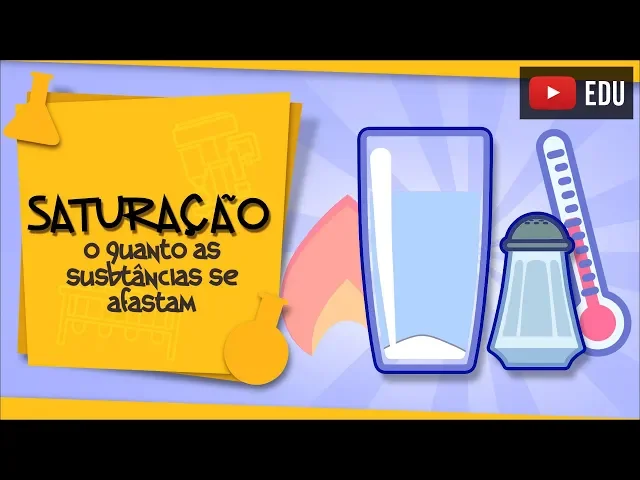
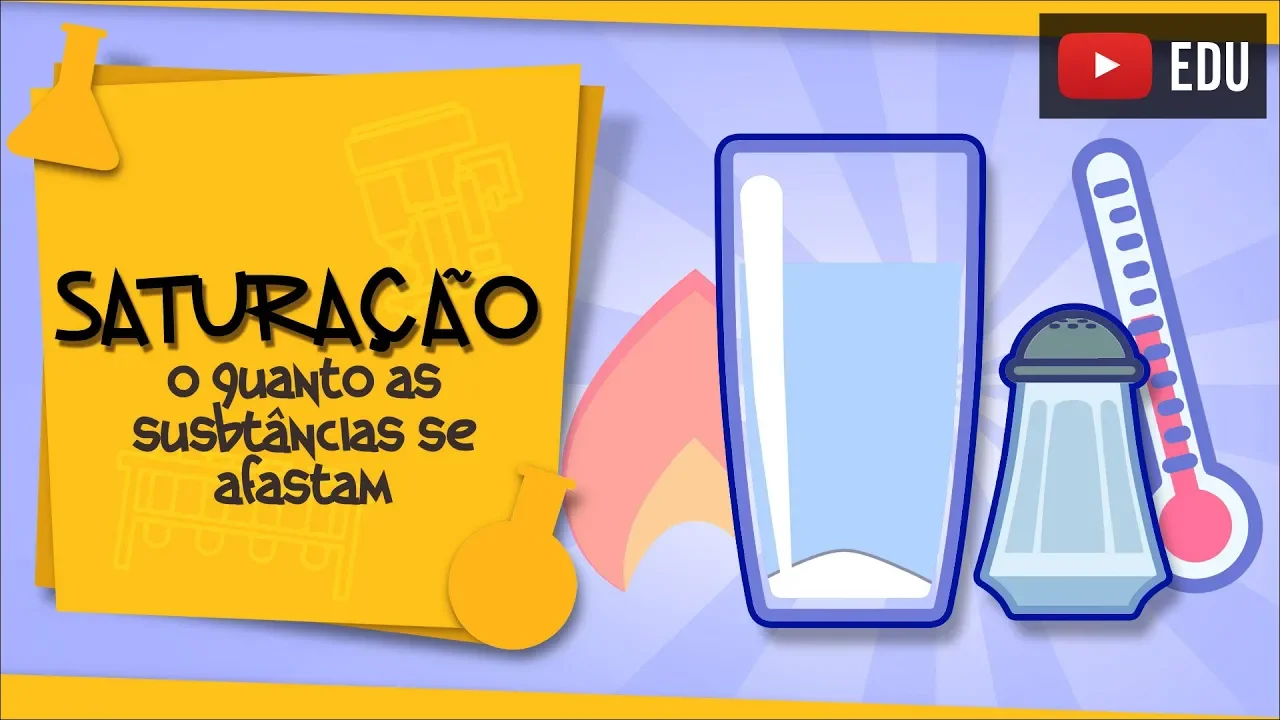
A pinch of cooking salt (Sodium Chloride) in a glass with one hundred milliliters of water and. . .
Bada-biiing! The salt was dissolved, and we could not see its particles. We call this then unsaturated solution, because the amount of solvent, the water, is still able to spread the solute particles, the salt, and is far from its limit.
But if we start adding more salt, reaching 36 grams to be dissolved? This is the maximum amount of salt to be diluted in water, and it becomes a saturated solution. Because it is the limiting amount of salt that can be dissolved in water at room temperature.
What if I put another 10 grams of salt besides those 36 grams I already added? What would happen? In this case, it is no longer possible for the solvent to fully dilute the solute, and then we can see the salt in the water in a form that we call Precipitate.
That is when the particles go down to the bottom of the glass. And this solution is called a supersaturated solution. (Plays a superhero song) No, it's not that kind of super.
Okay, but you must be wondering: where does the temperature come in? If I take that same supersaturated solution and heat it, the solvent will have a stronger effect in this case. The amount of agitation of the water molecules increases, increasing the energy of movement, kinetic energy, and the heat produced helps to dissolve the particles of excess salt.
So the more I heat the water, the more salt it can dissolve. But if you cool it, the excess salt will return to the bottom of the glass. So that the salt can be dissolved will depend on the temperature where it is.
Not always increasing the temperature will increase the effect of the solvent, in some cases the opposite happens, this will depend on the substances that we will use as solvent and solutes. For now, it's just personal, see you next time. And then?
Want to help me reach out to smaller scientists? Share this video.