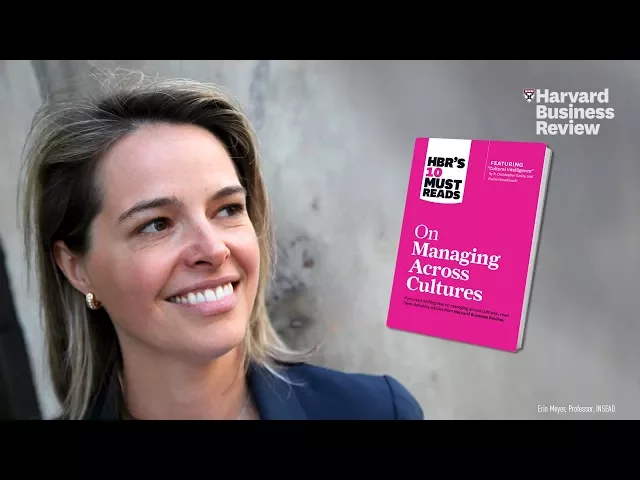
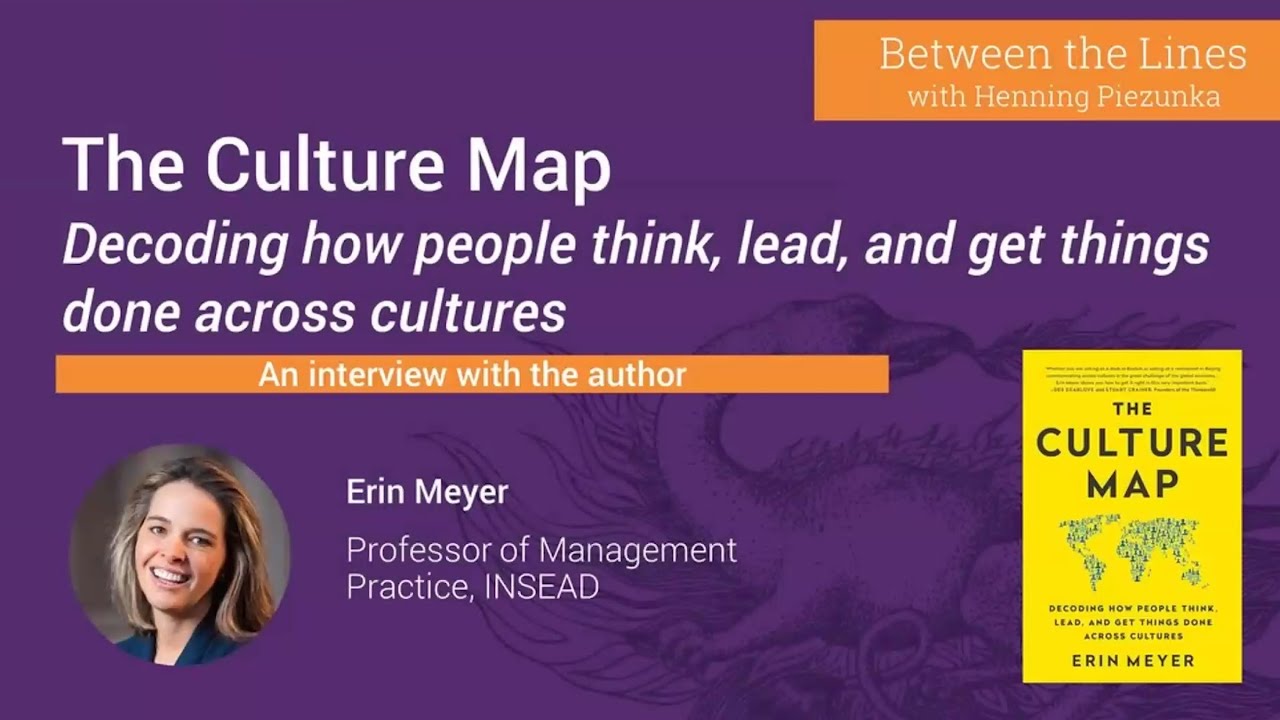
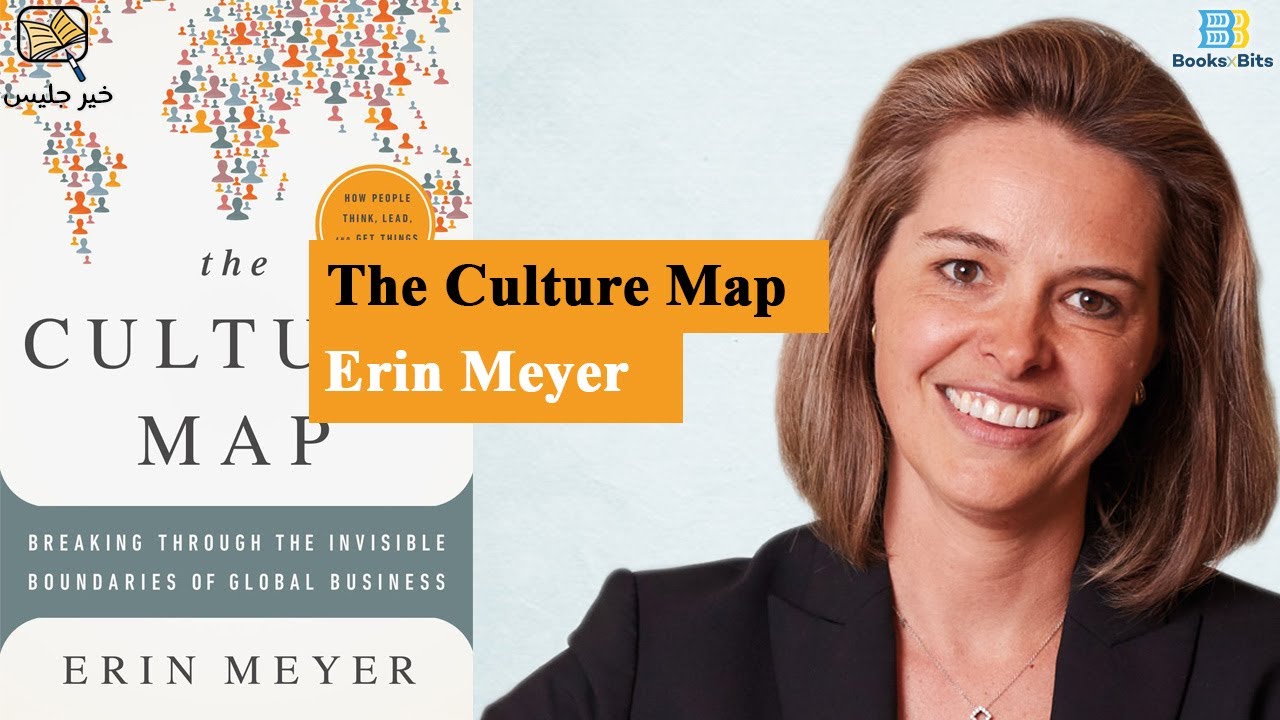
[Music] I'm joined by inside Professor Aaron Maya recently published author in the Harvard Business Review 10 must-reads on managing across cultures thank you for joining me Aaron it's a pleasure class so in the article you're talking about the cultural map as a tool for global leaders to navigate the international waters of cross-cultural management so can you elaborate what is the cultural map yes well I have a system that breaks cultural differences down to eight behavioral scales so it looks at things like how we make decisions differently in different countries or how we build trust differently
in different parts of the world and then through a lot of research we've been conducting at INSEAD we have about 55 countries that are positioned up and down these scales so you can then map countries up next to one another and you can see that when you're working with one country you might need to adapt your style of giving they get a feedback in one direction to be more direct or you might find that when you make a decision you need to be more consensual when working with another country so the map provides you a
system so that you can decode your own cultural differences in comparison of the country or countries that you're working with and so how how do leadership styles different differ across conscious leadership is really interesting because we kind of think of like there's one thing that means good leadership around the world but that's something that is very culturally specific so you know we learn as children and later when we enter the workforce in some cultures that we really need to share show a good deal of respect and deference to the authority figure or the person in
charge and in other cultures we learn that the authority figure is really just like a facilitator among equals I had a situation a while ago where I was working with a Dutch company the Netherlands is one of the most egalitarian countries in the world and in the Netherlands the Dutch really learned you know the boss is just really just a facilitator among equals and I had these Mexicans who had joined this company who were managing Dutch people and in Mexico and New Mexicans learned to show a lot more respect to the boss so I had
one of these Mexicans who said you know managing Dutch people is absolutely incredible because I'm trying to roll out my strategy and get everybody on the same page and my dutch employees they are challenging me they're contradicting me they're taking my ideas off in other directions he said sometimes I just want to get down on my knees and plead with them you know please don't forget that I'm the boss so I believe this is really challenging because in today's global world it's no longer enough to know how to lead the Dutch way or the Mexican
way or the American Way or the Chinese way we have to be flexible enough to adapt our leadership style to the population that we're working with in order to get the results that we need so that is how it affects leaders what about if you're a part of a global cross-cultural team how do those thoughts apply well teamwork is of course very subtle like we were often working at a distance we might not be able to see people's reactions and then just simple things in the way we operate may create impressions that we had not
intended so for example in my own culture the American culture it's very common at the end of a telephone call that we would get off of the phone and we would be put into writing what we've decided and we would send that written recap off to the person that we've worked with but one of my Indonesian clients said to me you know Erin in Indonesia if we have a discussion on the telephone and we make some decisions verbally that would really be enough for me and then if you get off of the phone and you
put into writing everything that you've just decided and you send that to me that would be a clear signal to me that you don't trust me so when we're working on global teams we need to understand how our actions create perceptions in different parts of the world so that we can adapt our style and increase our effectiveness and that's what I try to do with the culture map so what would be a general advice when working across cultures would it be to practice more explicit over communication or well my number one piece of advice is
to learn about the difference but your culture and the culture that you're working with and you know I try to provide a lot of tools both in my book and on my website so that you can actually you know map out the cultures and see the similarities and the differences and yeah then once you're aware of it I think we should talk a lot more about these things now using humble words to describe your own culture and curiosity to talk about the other culture but I encourage everyone you know to learn and discuss so that
we can make these things less less dangerous for our effectiveness and how do you make sure that you sort of stay true to your authentic self everybody's talking about authentic leadership while still adapting to the local culture yeah well that's a very popular question these days because of course authenticity is all over the leadership news and you know I preach a flexibility so I you know I believe that global leaders are people who have a strong sense good global leaders or people have a strong sense of what I call authentic flexibility and if you think
about like you have two legs right your left leg in your right leg and your left leg that's like your authentic like that's your leg that's the most natural the most comfortable and of course every effective leader has to have an authentic style but that doesn't mean that with your other leg that you can't be working on learning techniques to adapt your style to the population that you're working with the most effective leaders have worked so much on learning these techniques that they have a choice you know when I'm in Sweden next week I'm gonna
do it their way I think I'm gonna have better results the next week when I'm in Thailand maybe I'll do it my way I think I'll have better results to be a global leader is to know the difference between your own culture and your authentic style and how to get results in the other culture so that you can choose to maximize your effectiveness okay thank you that's great advice trying to keep both feet on the ground to learn more read aaron myers article in the HPR ten most reads on managing across cultures and visit Aaron
mayakam thank you thank you [Music] you [Music]