[Music] our solar system is just a small chapter in the vast story of the cosmos beyond the planets moons and the Sun that we call home lies a realm filled with wonders and phenomena that challenge our understanding of the Universe from rogue planets drifting through the void to the enigmatic pull of black holes and the distant Sparkle of galaxies borne at the dawn of time join us as we Take you on a journey to explore what lies beyond the bounds of our solar [Music] system nestled within the vast expanse of the Milky Way galaxy our
home planet Earth occupies a rather privileged position in the solar system it is the third planet from the Sun positioned at an average distance of about 93 million miles this prime location places Earth squarely within the Sun's habitable zone a region where conditions are just right For liquid water to exist on a planet's surface unlike the scorching Mercury and Venus or The Frigid Mars Earth's proximity to the sun Fosters a temperate climate that has supported life for billions of years orbiting the Sun earth completes one revolution in approximately 365 days creating the cycle of Seasons
that has shaped the evolution of Life on our planet this Cosmic dance of Earth along with its singular large Moon and its place among The planets makes it a unique world within the solar system when it comes to the Grand scale of our solar system earth sits in a rather modest position in terms of size among the eight planets that dance around the sun earth is the fifth largest dwarfed by gas giants like Jupiter and Saturn and even by the ice giants Neptune and Uranus Jupiter the Colossus of our solar system has a volume that
could encapsulate Earth more than a thousand times yet when compared To its nearer neighbors Venus and Mars Earth stands out as the larger Venus our sister planet is only slightly smaller with a surface area about 90% that of Earth Mars on the other hand has a diameter just over half of Earth's making it akin to a smaller sibling in the Cosmic Family despite its modest size Earth's diverse and dynamic geology from towering mountains and deep oceans to drif ing continents makes it a place of immense complexity and wonder far Outweighing what its size alone might
suggest Earth's habitability is a remarkable feat attributed to a Confluence of unique features that create the perfect conditions for Life as we know it at the Forefront Earth's distance from the Sun places it squarely in the habitable zone where temperatures allow for liquid water to persist on its surface water is the elixir of Life a solvent and medium where complex organic reactions crucial for Life take place Beyond its placement Earth's atmosphere is a special blend of gases rich in nitrogen and oxygen but also with a critical layer of ozone that Shields the planet from harmful
solar radiation this atmosphere not only sustains life but also keeps the planet's surface warm through the greenhouse effect trapping heat and maintaining a stable climate moreover Earth's magnetic field generated by the chur burning of its liquid outer core Extends far into space forming a protective shield against the solar wind a stream of charged particles emanating from the Sun without this magnetic field Earth's atmosphere could have been Stripped Away over time much like Mars was rendering the planet Barren lastly Earth's geological activity plays a pivotal role in recycling carbon through the carbon silicate cycle regulating the
atmosphere and climate over geological time scales tectonic movements have Shaped the continents creating a dynamic surface that Fosters biodiversity all these factors combine to make earth a unique Haven for life in the vastness of space Earth's atmosphere is remarkably distinct from those of other planets in the solar system a key factor that underpins its ability to sustain life composed primarily of nitrogen around 78% and oxygen approximately 21% with Trace Amounts of argon carbon dioxide and other gases it differs significantly From the toxic and dense carbon dioxide atmospheres of venus and mars or the hydrogen and
helium dominated atmospheres of the gas giants like Jupiter and Saturn this unique composition supports a range of complex biological processes including photosynthesis which is critical for Life as We Know It Earth's atmosphere is layered with each layer playing a vital role in protecting life on the surface the ozone Layer in the stratosphere for example acts as a barrier that Shields the Earth from the sun's harmful ultraviolet radiation furthermore Earth's atmosphere facilitates the greenhouse effect trapping heat and maintaining the planet's surface at lifeup supporting temperatures in contrast Venus's thick atmosphere leads to a runaway greenhouse effect
making it the hottest planet in the solar system while Mars's thin atmosphere offers scant protection from The sun's radiation and the cold of space this delicate balance of gases protection and temperature regulation is a Cornerstone of Earth's unique capacity to Harbor life Earth's geology provides a fascinating window into the processes that may shape other planets and celestial bodies Across the Universe by studying Earth's diverse geological features such as its mountain ranges volcanoes and tectonic plates scientists Can draw parallels with other rocky planets and moons in our solar system and beyond for instance the discovery of
ancient riverbeds on Mars suggests the presence of water in its past echoing Earth's water-rich environment similarly volcanic activity observed on Jupiter's moon iio highlights the universality of geothermal processes the study of meteorites found on Earth remnants of the early solar System offers direct insights into the materials and conditions from which our planetary neighborhood formed these space rocks can contain complex organic molecules hinting at the widespread availability of life's building blocks throughout the cosmos additionally Earth's resilience to cataclysmic events such as asteroid impacts provides clues about how life might adapt or emerge under extreme conditions on
other worlds through the lens of Earth's geology we Not only uncover the story of our own Planet but also gain a deeper understanding of the dynamic processes that govern the Universe At Large underscoring the interconnect ESS of Earth's history with the vast Cosmic narrative Earth's magnetic field and atmosphere work in concert to create a sanctuary for Life shielding it from the harsh conditions of space the magnetic field generated by the motion of molten iron in Earth's outer core extends far Beyond the planet's surface forming a magnetosphere this Invisible Shield deflects much of the solar wind
a stream of charged particles emanating from the Sun preventing it from stripping away the atmosphere and exposing the surface to intense radiation during solar storms when the sun releases a higher Flux Of charged particles the magnetosphere role becomes particularly evident as it channels some of these particles toward the poles Creating the a inspiring natural light displays known as auroras meanwhile Earth's atmosphere a thin veil of gases enveloping the planet provides additional layers of protection the ozone lay situated in the stratosphere absorbs the majority of the sun's harmful ultraviolet UV radiation allowing life to thrive on
the surface furthermore the atmosphere acts like a giant thermal blanket through the greenhouse effect trapping heat and Keeping the global climate within a range suitable for life these combined mechanisms ensure that Earth remains a habitable Oasis in the vast expanse of space illustrating the delicate balance of natural forces that sustain life on our planet Earth Earth is accompanied by a singular natural satellite the moon which exerts a profound influence on our planet the moon the fifth largest satellite in the solar system plays a significant role in shaping Earth's Natural phenomena its gravitational pull is primarily
responsible for the rise and fall of ocean tides across the planet the tidal forces generated by the moon's gravity cause the oceans to bulge out both toward and away from the Moon creating High Tides while the areas in between between experience low tides this continuous motion of water has implications for marine life Coastal ecosystems and human Maritime activities the moon stabilizes Earth's Axial tilt which influences the climate and the changing seasons without the moon stabilizing gravity Earth might experience erratic shifts in its tilt leading to drastic changes in climate over relatively short geological time spans
the moon's presence also contributes to Earth's rotation speed with tidal friction gradually slowing the planet's rotation and lengthening the day historically the moon has been a catalyst for scientific curiosity and Exploration also playing a significant role in the cultural and spiritual lives of civilizations throughout human history its influence extends beyond the physical to the imaginative and inspirational making it an intrinsic part of how Earth is perceived and experienced earth-based observations Have Been instrumental in expanding our understanding of the universe since ancient times humans have looked up at the night sky with Curiosity tracking the Motions
of celestial bodies this early stargazing laid the groundwork for astronomy leading to fundamental discoveries about the nature of the cosmos the invention of the telescope in the early 17th century marked a turning point allowing astronomers like Galileo galile to observe moons orbiting Jupiter and phases of Venus providing evidence that Earth was not the center of the universe in the centuries that followed Telescopes grew more powerful enabling astronomers to study distant galaxies nebuli and stars in unprecedented detail observatories positioned on high mountains or in remote arid regions take advantage of Earth's atmosphere at its thinnest reducing
Distortion and light pollution these Earthly Vantage points have contributed to Monumental discoveries including the expanding Universe the existence of dark matter and dark energy and the detection of Exoplanets orbiting distant Stars furthermore earth-based radio telescopes have mapped Cosmic microwave background radiation giving us a glimpse of the universe's infancy and supporting The Big Bang Theory additionally observatories equipped with gravitational wave detectors have opened new windows into the cosmos observing ripples in SpaceTime caused by cataclysmic events like black hole collisions these earth-based Endeavors Complement space-based observations together weaving a more complete picture of the universe's complexity Beauty
and Mysteries one common misconception about Earth's place in the universe is the belief that it occupies a central or uniquely special position historically this geocentric view held that Earth was the center of the universe with all celestial bodies revolving around it however Nicholas kopernicus is heliocentric model supported by Subsequent astronomers like Galileo galile and Johannes Kepler demonstrated that Earth orbits the sun which is just one of billions of stars in the Milky Way galaxy another misconception is the idea that the Milky Way is exceptionally special or Central in the universe in reality it is one
of billions of galaxies scattered throughout the Universe each with its own systems of stars and Planets additionally there's a tendency to underestimate the vastness of the universe and overestimate our ability to explore it while humans have made significant strides in space exploration reaching as far as the outer planets with unmanned probes and observing distant galaxies through telescopes the universe extends far beyond the limits of our current exploration capabilities the observable universe is about 93 billion light years in diameter filled With Mysteries that we are only beginning to understand lastly the idea that earthlike planets are
exceedingly rare is being challenged by the discovery of exoplanets in habitable zones around their Stars suggesting that conditions suitable for Life as we know it could be more common than previously thought these discoveries underscore the importance of maintaining a perspective that is both humble and curious about Earth's place in the expansive Cosmic Arena life on Earth provides a wealth of clues about the possibilities of life elsewhere in the universe showcasing the resilience and adaptability of living organisms in a variety of extreme environments on our planet life exists in places once thought inhospitable from the acidic
Boiling Springs of Yellowstone National Park to the high- Press pitch dark depths of the Mariana Trench these extremophiles demonstrate That life can thrive in conditions radically different from the temperate environments we're accustomed to expanding our understanding of what is considered habitable ah microbial life found deep beneath earth's surface in rocks or deep sea vents where sunlight never reaches suggests that life could exist underground or underwater on other planets and moons surviving on chemical energy instead of sunlight the study of Extremophiles has informed the search for Life on Mars leading scientists to probe beneath the planet's
surface and explore ancient riverbeds for signs of past or present microbial life furthermore the discovery of extremophilic organisms capable of surviving in the vacuum and radiation of space for extended periods hints at the possibility of Life spreading between planets or moons via meteorites a hypothesis known as Panspermia by studying the diverse manifestations of life on Earth and understanding the biochemical basis of Life which depends on carbon and water scientists can make informed predictions about where to look for life elsewhere the search focuses on on planets and moons with conditions that might support liquid water the
right chemical building blocks and sources of energy using Earth as a model to guide the Quest for extraterrestrial life in the Universe the solar system is structured in a hierarchical Arrangement dominated by the Sun a middle-aged yellow dwarf star that contains about 99.8% of the total mass of the entire system the sun's gravitational pull keeps the solar systems constituents in orbit around it directly orbiting the Sun are eight planets grouped into the inner terrestrial planets Mercury Venus Earth and Mars and the outer gas giants Jupiter Saturn Uranus and Neptune these Planets are separated by the
asteroid belt a region filled with Rocky debris located between Mars and Jupiter the terrestrial planets are characterized by their rocky surfaces and relatively modest sizes beyond the asteroid belt the gas giants boast significant atmospheres composed mostly of hydrogen and helium with Jupiter and Saturn being much larger and more massive than Uranus and Neptune further out the Kyper belt Populated by Icy bodies and dwarf planets like Pluto extends the boundary of our solar system not to be overlooked countless comets asteroids and meteoroids swarm form within this structure along with numerous moons orbiting the planets these satellites
vary widely in appearance and composition adding to the solar systems diversity lastly the distant or Cloud a hypothetical vast sphere of icy objects Marks the outer edge of the solar system serving as the source of long period comets that occasionally visit the inner solar system this intricate architecture of planets moons and smaller bodies all orbiting the Sun showcases the complex and dynamic nature of our solar system the definition of a planet has evolved over time especially as our understanding of the cosmos has expanded according to the international astronomical Union iaau for a Celestial Body to
be classified as a planet within our solar system it must meet three criteria it must orbit the Sun be spherical in shape due to its own gravity and have cleared its orbit of other debris this definition was formalized in 2006 and marked a turning point for how celestial bodies are classified particularly affecting Pluto Pluto discovered in 1930 and long considered the ninth planet of our solar system was reclassified as a dwarf Planet because it does not meet the third Criterion located in the Kyper belt a region Beyond Neptune filled with icy bodies and Remnants from
the solar systems formation Pluto shares its orbital Zone with other objects it has not cleared its orbit of these objects thus failing to meet the ia's definition of a planet this reclassification of Pluto stirred considerable debate and prompted Discussions about the characteristics that distinguish planets from other celestial bodies the decision to demote Pluto to a dwarf planet was not just about Pluto itself but was part of a broader effort to categorize the growing number of discovered bodies in a scientifically meaningful way as telescopes and space probes grow more advanced revealing more about our solar system
and beyond the definitions and classifications we use may continue to Evolve reflecting our expanding understanding of the universe uh the asteroid belt and the Kyper belt are Treasure troves of information that provide critical insights into the early solar system and the processes that shaped its formation and evolution these belts are collections of small bodies or minor planets composed of rock metal and ice that orbit the Sun but never coalesced into full-fledged planets the asteroid belt located Between Mars and Jupiter contains remnants from the solar systems formation about 4.6 billion years ago by studying these asteroids
scientists can glean information about the materials and conditions present in the early solar system the diversity of asteroid compositions from the carbon Rich C types to the metallic M types and silicate Rich s types types reflects the varied building blocks available during planetary formation the asteroids orbits And distributions also provide clues about the gravitational influences of nearby planets particularly Jupiter whose immense gravity is believed to have prevented these objects from forming a planet the Kyper belt extending Beyond Neptune's orbit is home to a wide variety of icy bodies including dwarf planets like Pluto the composition
and distribution of Kyper belt objects kbos offer insights into the outer regions of The solar system these iy relics are largely unchanged since the solar systems formation acting as a deep freeze Archive of its early history studying kbos helps scientists understand the distribution of different types of material in the early solar system and the processes that led to Planet formation the Kyer belt is thought to be the source of short period comets which when they Venture close to the Sun and Earth provide accessible samples of primordial material for study similarly some asteroids are believed to
be parent bodies of meteorites that have fallen to Earth offering a direct means to analyze the early solar systems composition in some the asteroid and Kyper belts are not just remnants of our solar systems formation but are active fields of study that continue to reveal secrets about our Cosmic neighborhood's past aiding our understanding of Planetary systems beyond our own the gas giants Jupiter Saturn Uranus and Neptune stand apart from the terrestrial planets Mercury Venus Earth and Mars in several fundamental ways highlighting the diversity of celestial bodies within our solar system first and foremost their compositions
differ drastically gas giants are predominantly composed of hydrogen and helium with Jupiter and Saturn being true to this definition while Uranus and Neptune have Have higher concentrations of ice and are often referred to as ice giants this is in stark contrast to the Rocky and metallic compositions of the terrestrial planets another defining characteristic of gas giants is their size and mass all four gas giants are significantly larger and more massive than any of the terrestrial planets with Jupiter being the largest planet in the solar system its diameter about 11 times that of Earth's this immense
size and Mass give Gas giants strong gravitational pulls allowing them to host numerous moons and planetary ring systems complex structures composed of ice rock and dust orbiting around them additionally gas giants do not have well-defined Solid Surfaces their visible surfaces are actually the outer layers of dense gas clouds if one descends into these planets the pressure and temperature increase dramatically and the gas gradually transitions into liquid or Metallic States making their internal structures significantly different from those of the terrestrial planets the magnetic fields of the gas giants also stand out they are much stronger and
more extensive than those of the terrestrial worlds with Jupiter's magnetic field being the strongest in the solar system these potent magnetic fields are a consequence of their rapid rotation rates and the movement of conductive materials within them lastly Their atmospheric Dynamics are complex char cized by Massive storm systems like Jupiter's Great Red Spot and Neptune's Great Dark Spot along with distinctive band patterns caused by strong jet streams these features are not found on the terrestrial planets underscoring the unique and dynamic nature of the gas giants in our solar system delving deep into the vastness of
our solar system the atmospheric conditions of other planets offer a Fascinating pallet of extremities far beyond what we experience on Earth take Venus for instance our neighbor cloaked in a thick atmosphere composed mainly of carbon dioxide with clouds of sulfuric acid making it a greenhouse hell with surface temperatures soaring above 800° F on the far end of the spectrum lies Mars with its thin atmosphere 95% of which is carbon dioxide failing to retain heat and subjecting the planet to Frigid conditions that can plummet to minus 195° fahit at the poles then there's the gas giant
Jupiter a planet without a solid surface where the atmosphere plunges into layers of hydrogen and helium festering storms larger than Earth itself with the Great Red Spot being a hurricane that has raged for centuries as we venture through these celestial bodies it becomes clear that the composition and conditions of Planetary atmospheres are as diverse as the planets themselves painting a vivid picture of the climatic extremes that exist within our solar system the moons orbiting the planets in our solar system serve as crucial keystones in unraveling the complexities of the cosmos significantly enriching our understanding of
the universe one of the most captivating examples is Jupiter's moon Europa believed to Harbor a vast ocean beneath its icy crust suggesting The tantalizing possibility of extraterrestrial life the study of our own moon has shed light on the Earth's history providing insights into the early solar systems Dynamics and the processes that shape the terrestrial planets Saturn's largest moon Titan with its thick atmosphere and liquid methane Lakes offers a glimpse into what earthlike conditions might look like under drastically different chemical compositions furthermore moons like Neptune's Triton orbiting in the opposite direction to the planet's rotation challenge
our understanding of celestial mechanics and formation theories these natural satellites each with their unique characteristics and Mysteries are not not just celestial bodies orbiting planets they are windows into the processes that govern planetary systems offering hints at the conditions that may support life and the diverse outcomes of planetary formation and Evolution Across the Universe in the realm of space exploration recent years have been marked by groundbreaking discoveries that have deepened our understanding of the solar system one of the most significant findings is the evidence of water vapor plumes erupting from the South Pole of Saturn's
moon Enceladus hinting at a subsurface ocean capable of potentially supporting life this discovery challenges the long-held Belief that habitable environments are confined to Planet surfaces furthermore NASA's Parker solar probe's daring mission to touch the sun has provided unprecedented insights into the sun's atmosphere or Corona unraveling the mysteries of solar wind acceleration and the mechanisms behind the heating of the corona significantly advanced ing our understanding of solar phenomena Additionally the detailed images and data collected by the New Horizons Mission during its flyby of Pluto revolutionized our view of this distant World revealing a complex and dynamic
planet with ice mountains flowing glaciers of nitrogen ice and a blue atmosphere these discoveries among others underscore the dynamic nature of our solar system revealing that it is a place of astonishing variety and complexity far beyond what was once imagined the sun's power and stability Play a foundational role in orchestrating the Rhythm and Harmony of our solar system its immense gravitational pull keeps the planets comets and asteroids in their respective orbits maintaining the delicate balance that prevents these bodies from hurtling into the void of space or colliding with one another moreover the sun's energy radiated
as light and heat is the Lynch pin of life on Earth it drives the earth's climate and weather systems Powers photosynthesis in plants and influences biological rhythms beyond Earth the sun's impact is evident in the formation of auroras on planets with magnetic fields such as Jupiter and Saturn and in the tales of comets that always point away from the Sun due to solar wind the sun's stability characterized by a consistent output of energy over billions of years allowed life to flourish on Earth offering a conducive environment for evolution However this stability is not Eternal the
sun is halfway through its life cycle and in about 5 billion years it will expand into a red giant significantly altering the landscape of the solar system this Central Stars power and stability have not only shaped the physical arrangement and climate conditions of the solar system but also set the stage for the development of Life marking its influence as both nurturing and transformative Comets often described as dirty snowballs of ice dust and rock serve as Cosmic time capsules holding vital Clues to the Solar System's history and the processes that shaped its formation these ancient bodies
are remnants from the solar nebula The Cloud of gas and dust from which the Sun and planets condensed more than 4 and A2 billion years ago as such they carry pristine materials from the early solar system unaltered by the Heat and Gravitational forces that transformed materials on the planets by studying comets scientists can glean insights into the original composition of the solar nebula and the Dynamics of early solar system formation including how water and organic materials key ingredients for life were delivered to the inner planets including Earth each time a comet visits the inner solar
system its ice sublimates releasing gas and dust that form the comet's tail Providing researchers a unique opportunity to analyze these anci substances The Landmark missions such as Rosetta which landed on Comet 67 p/ churum of gimeno have offered unprecedented close-up observations of a comet's nucleus and its chemical composition shedding light on the early conditions that prevailed in the solar system and offering Clues to Earth's Own Origins and the emergence of Life In This Way comets are not merely Celestial Wanderers they are key to unraveling the story of our Cosmic nature neighborhood throughout the history of
space exploration several missions have marked pivotal moments in our quest to explore and understand the solar system each contributing uniquely to our Collective knowledge the Voyager 1 and 2 spacecraft launched in 1977 stand as Monumental achievements each taking a grand tour of the outer planets before Heading towards Interstellar space sending back the first detailed images and data of Jupiter Saturn Uranus and Neptune their discoveries including the active volcanoes on Jupiter's moon iio and the intricacies of Saturn's rings have had a profound impact on our understanding of the outer solar system Cassini hyans launched in 1997
devoted two decades to studying Saturn and its moons providing insights into the planet's atmosphere magnetic Environment and ring structures its deployment of the hens probe to Titan Saturn's largest moon revealed an earthlike world with rivers lakes and seas of methane and ethane expanding our perspective on where life might exist in the solar system closer to home the Mars rovers specifically Spirit opportunity and curiosity have transformed our understanding of the red planet by analyzing Martian rocks and soil they Found evidence of waters past presence crucial for understanding Mars's climate history and its potential to support life
launched in 2004 the European space agency's Rosetta Mission became the first to orbit a comet 67p churyumov gerasimenko and deploy a Lander to its surface this Mission offered a unique window into the role comets play in our understanding of the early solar system and the origins of Water on Earth [Music] the Milky Way our Galactic home Sports a complex and Majestic structure that has captivated astronomers for centuries at its core lies a bulging Center enveloped in a Halo both of which harbor ancient Stars revealing the Galaxy's maturity surrounding this core is the Galaxy's most defining
feature its spiral arms vast Lanes of gas dust and billions of stars that wind outward from the center Painting a picture of dynamic Beauty and Cosmic activity these arms are not only sights of star formation but also home to young hot stars that illuminate the Galaxy's swirling patterns encircling the disc of the Milky Way is a thin Halo speckled with globular clusters tight spherical groupings of stars that are among the oldest inhabitants of the Galaxy bearing witness to its early history embedded within this Halo but difficult to see is the dark matter that Envelops the
Galaxy providing the essential gravitational glue holding the vast structure together adding to its enigmatic Beauty the Milky Way features a bar-shaped structure that extends from its core a phenomenon common in spiral galaxies which has been a focal point of recent research aiming to understand its role in the Galaxy's Evolution and Dynamics as we reside within one of its spiral arms getting a comprehensive view of the Milky Way's Grand Design is Challenging yet ongoing observations and mapping efforts continue to unravel the mysteries of its structure helping us piece together the story of not just our Galactic
home but also the universe's vast expanse when placed in the vast Cosmic tapestry the Milky Way stands as a testament to the diversity of Galaxy forms and sizes peppered throughout the Universe classified as a barred spiral galaxy it is similar in structure to Perhaps 2/3 of all large galaxies observed in the cosmos however its specific properties Dimensions highlight both its uniqueness and its commonality in comparison to its spiral siblings like the Andromeda galaxy M31 our Milky Way is slightly smaller with Andromeda containing about twice the number of stars both galaxies though are considered average in
size and Luminosity compared to the overall Galaxy population which includes Behemoths like ic101 the largest known Galaxy stretching over 6 million light years across dwarfing our approximately 100,000 Lightyear diameter what sets the Milky Way apart particularly from elliptical and irregular galaxies is its pronounced spiral structure and distinct barred region features indicative of a dynamic and ongoing history of star formation Stellar Evolution and gravitational Interactions this contrasts with elliptical galaxies which often appear more uniform in shape and have less new star formation and irregular galaxies which lack a clear form and are usually significantly smaller and
less massive despite billions of years of evolution which includes interactions with neighboring galaxies and internal changes the Milky Way retains its identifiable spiral structure it is on a collision course with the Andromeda Galaxy with the two expected to merge in about 4 billion years a common fate that emphasizes the dynamic and everchanging nature of galaxies in the universe in this Grand Cosmic dance the Milky Way serves as a bridge connecting us to the broader Cosmic story illustrating both the diversity and the universality of galaxies in crafting the fabric of the cosmos at the heart of
the Milky Way lies one of the most enigmatic and compelling objects in the cosmos a super Massive black hole known as Sagittarius A asterisk sgr a asterisk this colossal black hole with a mass equivalent to about 4 million times that of the sun exerts a powerful gravitational pull orchestrating the orbits of stars and gas clouds that reside in the Galaxy's central region despite its mass scar a asterisk is relatively quiet compared to the active Galactic nuclei found at the centers of other galaxies only occasionally flaring up as it interacts With surrounding matter the presence of
Cesar a asterisk was inferred from the movements of stars near the Galaxy's core their rapid orbits indicative of the influence of a massive compact object further bolstered by radio and xray observations the evidence points to this super massive black hole as the central pivot around which the Milky Way turns the environment near Cesar a asterisk is a hot bed of astronomical phenomena with intense tidal forces Relativistic effects and extreme conditions providing a natural laboratory for studying the physics of black holes and their impact on Galaxy formation and evolution the super massive black hole at the
center of the Milky Way is not just a focal point of the Galaxy's structure but also of intense scientific inquiry as researchers seek to unravel the mysteries of its Origins Behavior and the role such Giants play in The Cosmic ballet of the universe stars begin their lives in the cold dense cores of molecular clouds vast reservoirs of gas and dust scattered throughout Galaxy GES within these clouds regions of slightly higher density catalyzed by events like the shock waves from nearby Supernova begin to collapse under their own gravity initiating the process of star formation as the
collapsing region or protostar continues to pull in material its core Heats up until it reaches temperatures and pressures high enough to ignite nuclear fusion this Fusion of hydrogen into helium generates a tremendous outflow of energy counter acting the inward pull of gravity and marking the birth of a new star the life cycle of a star is primarily determined by its mass smaller stars like our sun spend billions of years fusing hydrogen in their cores once the hydrogen is exhausted they Enter a red giant phase expanding and cooling as they start to fuse helium into heavier
elements eventually the outer layers are ejected leaving behind a dense core called a white dwarf which slowly cools over time more massive stars lead shorter more tumultuous lives they burn through their nuclear fuel at a faster rate eventually leading to the fusion of heavier and heavier elements until iron is produced iron does not generate energy through Fusion leading to a fatal instability the core collapses triggering a colossal explosion known as a supernova which can outshine entire galaxies what remains after this cataclysm depends on the star's Mass a neutron star for less massive stars or a
black hole for the most massive ones the cycle of star birth and death is a fundamental process in the universe enriching the cosmos with the heavy elements necessary for planets and life Each end marks the beginning of a new chapter in The Cosmic Saga with the remnants of dead stars contributing to the birth of future Generations woven into the fabric of the universe stars in the universe display a dazzling array of types each distinguish by unique characteristics such as mass temperature luminosity and lifespan the hrung Russell diagram a pivotal tool in astrophysics classifies Stars based
on their luminosity and temperature Revealing a broad spectrum from cool dim stars to hot luminous ones at one end of the spectrum we find the red dwarfs small cool stars with low mass and a reddish Hue they are the most common type of star in the Milky Way characterized by their longevity capable of burning for trillions of years due to their efficient Fusion of hydrogen moving up in temperature and Luminosity we encounter main sequence stars like our sun which fuse hydrogen into helium In their cores these Stars vary in color from red to blue white
reflecting differences in temperature with the Sun classified as a yellow dwarf beyond the main sequence Giant and super giant Stars Mark the later stages of Stellar evolution ution Giants are larger and more luminous than main sequence stars but cooler giving them a red or orange appearance super Giants are among the most massive and luminous stars in the universe with a short Lifespan ending dramatically in Supernova explosions on the extreme end of temperature blue dwarves and blue giants boast some of the hottest surfaces resulting in their distinct blue coloration these stars are much rarer and live
fast burning through their nuclear fuel at a remarkable rate another class includes the remnants of stars that have completed their nuclear burning phases white dwarfs Neutron stars and black holes white dwarfs are the compact remains of medium mass stars incredibly dense but not massive enough to continue nuclear fusion neutron stars the remnants of supernova explosions pack a mass greater than the Suns into a city-sized sphere lastly black holes formed from the most massive Stars possess gravity so strong that not even light can escape each type of star plays a pivotal role in the cosmos from
nurturing Planets with stable warmth to seeding the universe with heavy elements forged in their cause or violent demises their variety and life cycles are Central to the story of the universe's Evolution measuring distances in the vast expanse of our galaxy is a complex Endeavor that astronomers tackle using a variety of ingenious methods each suited to different scales within the Milky Way one Fundamental technique is the use of Parallax which relies on the apparent shift of a star's position against a backdrop of more distant stars as Earth orbits the Sun by precisely measuring this shift astronomers
can calculate the distance to Stars up to a few thousand light years away using the simple geometry of triangulation for objects beyond the reach of Parallax astronomers turn to standard candles objects whose intrinsic Brightness is known one of the most reliable standard candles is a type of exploding star known as a type a supernova these cataclysmic events occur when a white dwarf star acquires enough Mass from a companion star to undergo a runaway nuclear fusion reaction briefly outshining entire galaxies since type I supern noi have a known Luminosity astronomers can calculate their Distance by comparing
their apparent brightness as seen from Earth Another pivotal tool is the observation of seed variable Stars whose luminosity pulsates in a predictable pattern the period of these pulsations is directly related to the star's intrinsic brightness allowing astronomers to determine its distance by measuring the period and comparing the star's apparent brightness with its true Luminosity additionally techniques such as the Tully Fisher relation which links the Luminosity of spiral galaxies to Their rotation speed and the Faber Jackson relation for elliptical galaxies based on a correlation between luminosity and Stellar velocity dispersion extend our reach even further enabling
measurements across extra Galactic scales these methods alongside ever evolving Technologies and the forthcoming data from space telescopes and observatories continually refine and expand our understanding of the Milky Way's structure and our place within the cosmos Paving the way for inside into the universe's most profound Mysteries black holes enigmatic objects with gravitational fields so intense that not even light can escape their grasp play a pivotal role in the Dynamics and evolution of galaxies at the heart of nearly every large Galaxy including the Milky Way resides a super massive black hole which can influence the Galaxy's structure
and behavior in Profound ways one of the key roles of these super massive black holes is in Galactic nuclei activity when matter spirals into a black hole it heats up and emits immense amounts of radiation before crossing the Event Horizon this process can fuel the Luminous cores of active galaxies known as quers and active Galactic nuclei making some of them visible across vast Cosmic distances the energy released can Regulate star formation in the surrounding Galaxy by either triggering it through compressing gas in shock waves or suppressing it by Heating and dispersing the Galaxy's interstellar medium
moreover the gravitational influence of supermassive black holes affects the orbits of stars near the Galactic Center leading to high velocities and dense Stellar environments this Dynamic interaction can also contribute to the growth of the Black hole itself and to the evolution of the galactic core including shaping the Bulge the dense group of stars surrounding the galactic center in the ground scheme of Galaxy merges and interactions black holes can play a crucial role in the final stages of the merging process as two galaxies Collide and combine their Central black holes form a binary system eventually merging
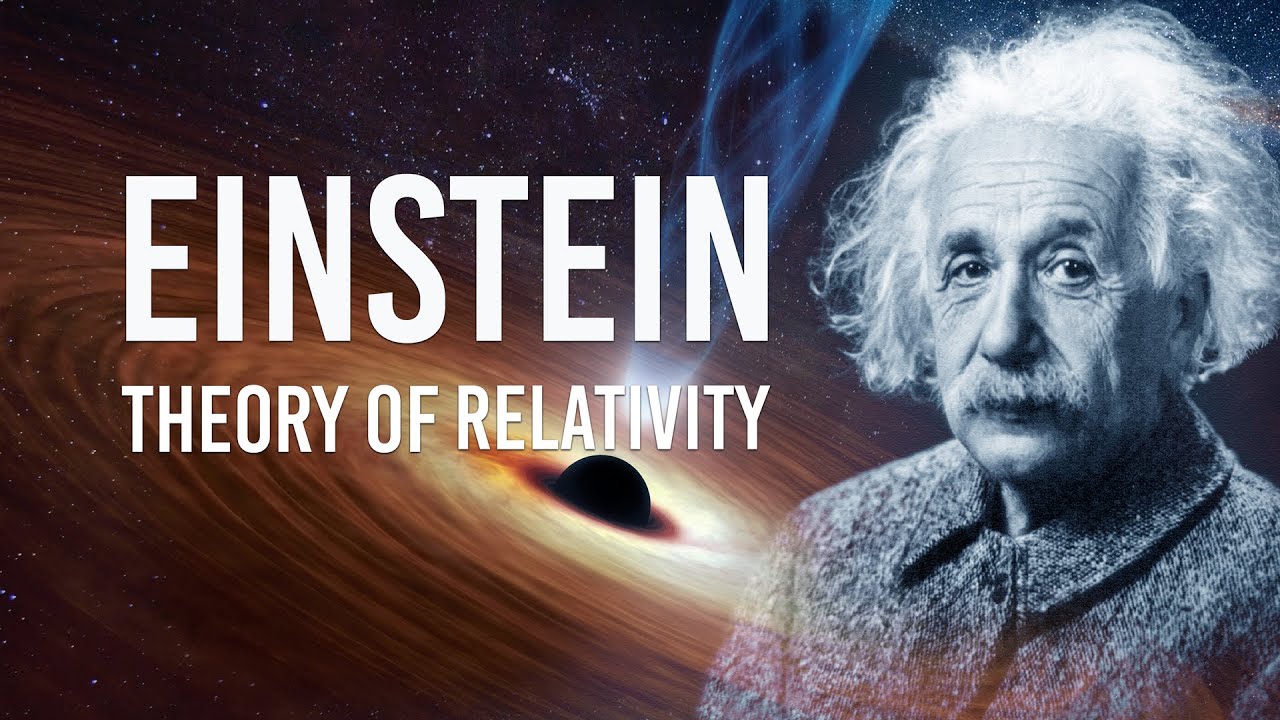
into an even more massive black hole this merger can send gravitational Waves Rippling through the fabric of SpaceTime a phenomenon predicted by Einstein's theory of general relativity and directly detected by the ligo and Virgo observatories thus black hole s Are Not Mere Cosmic Oddities but are instrumental in shaping the galaxies they inhabit their influence extends from the very center of galaxies to their broader structure and evolution marking them as key players in the Cosmic ballet of the universe Dark Matter represents one of the most profound mysteries in modern astrophysics a hypothetical form of matter that
doesn't emit absorb or reflect light rendering it completely invisible and detectable only through its gravitational effects despite being invisible dark matter is believed to make up about 85% of the total matter in the universe playing a crucial role in its structure and evolution the Importance of Dark Matter arises from its significant gravitational influence it acts as an invisible scaffold that guides the formation and clustering of galaxies and Galaxy clusters without Dark Matter the gravitational pull from visible matter alone wouldn't be strong enough to form the large scale structures observed throughout the cosmos it helps to
bind galaxies together and shapes their rotation curves the speed at which stars and gas Orbit the center of their galaxies observations show that Galaxy's outer regions rotate much faster than can be accounted for by the gravitational pull of their visible matter alone Dark Matter provides the additional mass and gravitational force necessary to explain these curves moreover dark matter is instrumental in the cosmic webs architecture a vast network of interconnect filaments of galaxies and dark matter that spans the universe this Web structure observed through the distribution of galaxies and Galaxy clusters aligns with cosmological simulations that
include Dark Matter offering a compelling look at the universe's large scale structure the quest to understand Dark Matter also drives innovation in detection techniques and Technologies including direct detection experiments shielded deep underground and indirect detection attempts through astronomical Observations identifying the nature of Dark Matter would not only revolutionize our understanding of the cosmos but also provide new insights into particle physics potentially uncovering particles and forces beyond our current standard model dark matter is a fundamental component of the universe crucial for understanding the formation structure and ultimate fate of galaxies and the cosmos at large its
elusive nature challenges our perceptions of what Constitutes the universe and underscores the Mysteries awaiting Discovery in the cosmic dark the Milky Way our Galactic home is not an isolated entity drifting through the cosmos it is surrounded by a retinue of smaller galaxies known as satellite galaxies which orbit the Milky Way much like moon orbit a planet among the most prominent of these companions are the large and small melanic clouds visible from the southern hemisphere as irregular pches of light these are dwarf Galaxies located about 163,000 and 200,000 light years away from us respectively and represent
the brightest and most substantial of the Milky Way satellites in addition to these well-known companions there exists an ensemble of lesser known dwarf galaxies that accompany our Milky Way some of these like the Sagittarius dwarf elliptical galaxy are in the process of being cannibalized by the Milky Ways massive gravitational pull leaving Trails of stars that offer clues about the interaction Dynamics others such as the Draco Ura minor and sculptor dwarf galaxies orbit at greater distances their dim star-filled structures offering critical insights into the nature of dark matter and the process of Galaxy formation and evolution
the recent Advent of sensitive astronomical surveys has led to the discovery of numerous Ultra faint dwarf galaxies Each harboring just a few thousand stars these are the most dark matter-dominated objects known and are critical to understanding the Milky Way's gravitational influence and the nature of dark matter these satellite galaxies not only provide a deeper understanding of our own Galaxy's mass and gravitational reach but also serve as natural Laboratories for studying star formation Stellar Evolution and the effects of Gravitational interactions in a diverse range of environments despite their small sizes and dim appearances the Milky Way
satellite galaxies play a significant role in astrophysical research and our understanding of the cosmos the Milky Way our Galactic home is not stationary it moves through the cosmos at a staggering speed of approximately 600 km/s this breathtaking velocity is the Result of the gravitational forces at play Within the vast expanses of the universe particularly due to the pulls from the massive Virgo cluster the great ATT tractor and the shapley super cluster our galaxy along with its neighbors in what's known as the local group is being tugged towards these larger Cosmic structures creating a cosmic dance
that has been ongoing for billions of years what makes this movement particularly intriguing is the Fact that it's not just a simple linear Journey the Milky Way also rotates as it travels with its Stars including our sun tracing paths around the galactic center this combination of rotation and travel through space constructs the dynamic spiral structure of our galaxy a fact that adds a layer of complexity to our understanding of the [Music] cosmos observing other galaxies is a fascinating Journey that takes us Billions of light years away from our own Milky Way and it involves a
combination of advanced technology and ingenious methods astronomers use telescopes equipped with highly sensitive cameras and sensors to capture the light from distant galaxies some of these telescopes are ground-based giant observatories that use mirrors to gather light While others orbit Earth or even Venture deeper into space to avoid atmospheric distortions that can blur The images these telescopes can observe not just invisible light but across the electromagnetic spectrum including radio infrared ultraviolet X-ray and gamma rays each type of light can reveal different characteristics of a galaxy from the Star formation activities in the ultraviolet to the distribution
of dust in the infrared moreover techniques such as spectroscopy allow scientists to analyze the light from galaxies to determine their composition temperature Distance and even to infer their motions by piecing together all this information astronomers can understand understand the life cycle of galaxies how they evolve interact and the role they play in the grand Cosmic web of the universe the nearest galaxies to the Milky Way are fascinating Cosmic neighbors each with its unique characteristics and stories the closest galaxy is the kis major dwarf Galaxy discovered in 2003 it lies about 25,000 Light years from the
solar system and is actually located within the outer bounds of our Milky Way making it our closest Galactic neighbor it is currently being gravitationally pulled apart by the Milky Way and adds to the dynamic interaction among galaxies in our local Cosmos following the kis major dwarf Galaxy the large and small melanic clouds are the second and third closest galaxies respectively these are irregular dwarf galaxies visible from The southern hemisphere sitting at around 160,000 light years for the large and 200,000 light years for the small melanic cloud they are named after the Explorer Ferdinand mellan who
documented them during his circumnavigation of the earth another notable nearby galaxy is the Andromeda galaxy which is the closest spiral galaxy similar to the Milky Way and is located about 2 and A2 million light years away Andromeda is on A collision course with the Milky Way and is expected to merge with our galaxy in about 4 billion years an event that will significantly alter the structure of both galaxies this impending Cosmic merger underlines the dynamic and everchanging nature of the universe where galaxies are constantly moving interacting and evolving Intergalactic travel refers to the hypothetical Voyage
between galaxies traversing the vast stretches of almost Empty space that separate these Cosmic Islands considering the closest galaxy to the Milky Way the kis major dwarf Galaxy is around 25,000 light years away and the Andromeda galaxy the nearest spiral galaxy is approximately 2 and 1 half million light years from us the distance scales involved are truly astronomical with current technology Intergalactic travel remains firmly within the realm of Science Fiction the fastest spacecraft built by Humanity the Parker solar probe reaches speeds of about 700,000 km per hour at this speed it would take approximately 3,000 years
just to travel one light year thus reaching even the closest galaxies would require Journeys lasting millions of years with today's propulsion methods however scientists and science fiction authors have contemplated several theoretical concepts for faster than light travel such as warp drives which involve bending SpaceTime or using Wormholes as shortcuts through the fabric of the cosmos these ideas while intriguing rely on physics that are not yet fully understood and Technologies far beyond our current capability so while the idea of Intergalactic travel captivates the imagination it remains a speculative Venture for the future the immense distances between
galaxies serve as a humbling reminder of the vastness of the universe and the current limitations of human technology When it comes to exploring these outer reaches galaxies the massive Assemblies of stars gas dust and dark matter come in a fascinating variety of shapes and sizes a astronomers have developed a classification system to organize this diversity into several main types based on their appearance the most widely recognized system is the Hubble sequence developed by Edwin Hubble in the 1920s at one end of the Hubble sequence are elliptical galaxies which range from Nearly spherical classified as e0
to more elongated ellipses up to E7 these Galaxies have a smooth featureless light distribution and contain old older redder Stars they lack the gas and dust necessary for new Star formation making them fairly quiescent spiral galaxies like our Milky Way are at the other end of the spectrum they have flat disc-shaped structures with spiral arms winding out from their Central bulges these arms are sights of Ongoing star formation giving spiral galaxies a bluish color due to the presence of young hot Stars they're further classified based on the tightness of their spiral arms and the size
of their Central bulge from say tight arms large bulge to C loose arms small bulge lenticular galaxies designated as s0 serve as a transitional class between ellipticals and spirals featuring a prominent bulge in a disc but lacking The spiral structure they contain more old stars like ellipticals but retain a significant disc component finally irregular galaxies defy the regular shapes of the previous categories lacking a distinct form they are often rich in gas and dust hosting vigorous star formation these galaxies can result from gravitational interactions or collisions that have distorted their structure besides the Hubble sequence
There are other ways to classify galaxies including by their activity such as star formation rate or environment such as isolated galaxies versus those in clusters as our understanding of galaxy deepens and as we discover more exotic and unusual galaxies astronomers continue to refine these classification schemes among the vast sea of galaxies astronomers have stumbled upon some truly astonishing discoveries that have Deepened our understanding of the cosmos and challenged prevailing theories one of the most surprising findings is the existence of super massive black holes at the centers of nearly all galaxies in including our own Milky
Way these Cosmic behemoths Millions to billions of times the mass of the Sun influenced the evolution of galaxies in profound ways and were not anticipated when the theory of black holes first emerged another unexpected Discovery was that of ultra diffuse galaxies ghostly galaxies that are as large as The Milky Way but have only 1 100th to 1 1,000th of the Stars making them incredibly faint and difficult to detect their existence challenges our understanding of Galaxy formation and dark matter as they seem to have far more dark matter in proportion to their luminous matter than expected
perhaps equally surprising has been the detection of galaxies that Appear to be devoid of Dark Matter alog together since dark matter is thought to be the backbone upon which galaxies form Finding galaxies without it calls into question our understanding of Galaxy assembly and the nature of Dark Matter itself the discovery of the the Hubble Ultra Deep Field HF also stands out by pointing the Hubble Space Telescope at a seemingly empty patch of Sky astronomers were able to detect thousands of galaxies at various stages of evolution Some of which were formed only a few hundred million
years after the big bang this discovery provided an unprecedented glimpse into the early Universe revealing galaxies in their infancy and offering clues about the initial stages of Galaxy evolution lastly the observation of Galaxy collisions and mergers such as the anticipated merger between the Milky Way and the Andromeda galaxy underscores the dynamic and everchanging nature of the Cosmos these Cosmic events which can spur bursts of star formation and reshaped galaxies offer invaluable insights into the forces that sculpt the universe these discoveries among others continue to fuel our curiosity and drive forward the frontiers of astronomy illustrating
the richness and diversity of the universe beyond our Milky Way galaxies are not evenly distributed Across the Universe but instead cluster together forming a colossal Cosmic web That stretches across the vast emptiness of space this web consists of Galaxy clusters superclusters filaments and voids shaped by the gravitational pull of dark matter at the smallest scale we have Galaxy groups which can consist of a few to dozens of of galaxies gravitationally bound together our own Milky Way is part of the local Group which also includes the Andromeda galaxy and about 50 other smaller galaxies these groups
are the Building blocks of larger structures known as Galaxy clusters which can contain hundreds to thousands of galaxies stretched over millions of light years the Virgo cluster the closest large Galaxy cluster to the Milky Way is a prime example housing over a thousand galaxies clusters and groups are the themselves linked by filaments massive elongated structures of galaxies and dark matter that form the boundaries Between vast voids enormous regions of space nearly devoid of galaxies this intricate structure of filaments and voids resembles a sponge or a cosmic web superclusters are the next level up in the
hierarchy where Galaxy clusters and groups connected by filaments form even larger concentrations our Milky Way is part of the lanaka supercluster which contains tens of thousands of galaxies the distribution and clustering Of galaxies on such massive scales are largely influenced by the initial fluctuations in density in the early Universe magnified by the gravitational pull of Dark Matter Dark Matter creates the underlying structure of the cosmic web with galaxies forming and evolving within this dark framework over billions of years the mutual gravitational attraction between galaxies along with with the influence of dark energy accelerating the expansion
of the Universe sculpted the complex filamentary structure of the cosmos that we observe today this Grand Cosmic structure reveals much about the fundamental properties of the universe and the forces that have shaped it throughout its history Supernova the cataclysmic explosions of Stars play several pivotal roles in the cosmos acting as Cosmic forges catalysts and Cosmic tape measures when a star reaches is the end of its life it may explode as A supernova an event so bright that it can briefly outshine an entire galaxy there are two primary types of supernova type one which occur in
binary systems when a white dwarf star accretes too much matter from its companion and type two which result from the collapse of a massive star's core after it has exhausted its nuclear fuel the explosion of a supernova has profound effects on the universe firstly they are responsible for creating and Dispersing the heavier elements throughout the cosmos while Stars fuse hydrogen into helium and subsequently into heavier elements up to iron the most massive elements are forged only in the extreme heat and pressure of a supernova explosion elements like gold silver and uranium are synthesized in these
cataclysmic events and then ejected into space where they can become part of future stars planets and even life Forms secondly supern noi play a crucial role in gal Galactic Evolution the shock waves from the explosions can trigger star formation in nearby Interstellar gas clouds catalyzing the birth of new stars conversely these shock waves can also sweep up and clear out gas within a Galaxy potentially inhibiting star formation this feedback mechanism helps regulate the pace of star formation in galaxies and contributes to their structural development over Cosmic Time furthermore supern noi serve as V tools for
astronomers type AA Supernova in particular have similar intrinsic brightness at their Peak making them invaluable as standard candles for measuring Cosmic distances observations of distant type AA supern noi provided key evidence for the accelerating expansion of the universe a discovery that led to the concept of dark energy and earned the 2011 Nobel Prize in physics supern noi Enriched the universe with heavy elements necessary for life influence the evolution of galaxies and illuminate our understanding of the universe's structure and expansion these Stellar explosions underscore the dynamic and interconnected nature of the cosmos where the death of
stars seeds the birth of new generations and shapes the Universe on the grandest scales galaxies interact and merge through a complex ballet driven by Gravity a process that can dramatically alter their structures and star forming activities these encounters range from minor interactions with galaxies slightly affecting each other's structure and star formation rates to Major mergers that can completely reshape the galaxies involved during an interaction the gravitational pull between galaxies can distort their shapes creating tidle Tales Bridges and streams of stars Stretched out into space these distortions are the result of the differential gravitational forces exerted
on the galaxies over their size pulling them in different directions minor interactions might lead to the formation of new structures within the galaxies such as bars or rings and can trigger bursts of star formation as gas clouds within the galaxies Collide and compress in major mergers two or more galaxies of similar sizes Collide and Blend together to form a new Galaxy the intense gravitational forces during such a merger disrupt the original Galaxy's discs often leading to a significant burst of star formation as the gas clouds within the merging galaxies Collide compress and collapse to form
new stars over time the merged entity settles into a new equilibrium which can often result in an elliptical galaxy although other forms including large dis galaxies can also result from the Complex dynamics of merging the super massive black holes found at the centers of galaxies can also play a significant role during merges if each of the merg ing galaxies contains a super massive black hole these black holes can eventually spiral toward the center of the newly formed Galaxy and merge releasing significant amounts of energy in the form of gravitational waves which are ripples in the
fabric of SpaceTime Galactic interactions and merges are fundamental aspects of Galaxy Evolution driving changes in their morphology kinematics and star formation rates these processes Have Been instrumental in shaping the diverse Galaxy population we observe in the universe today in our own Cosmic backyard the Milky Way is on a collision course with the Andromeda galaxy and the two are expected to merge in about 4 billion years an event that will reshape Both galaxies and form a new Galaxy potentially a large elliptical galaxy quazars or quazy Stellar objects are among the most luminous powerful and energetic phenomena
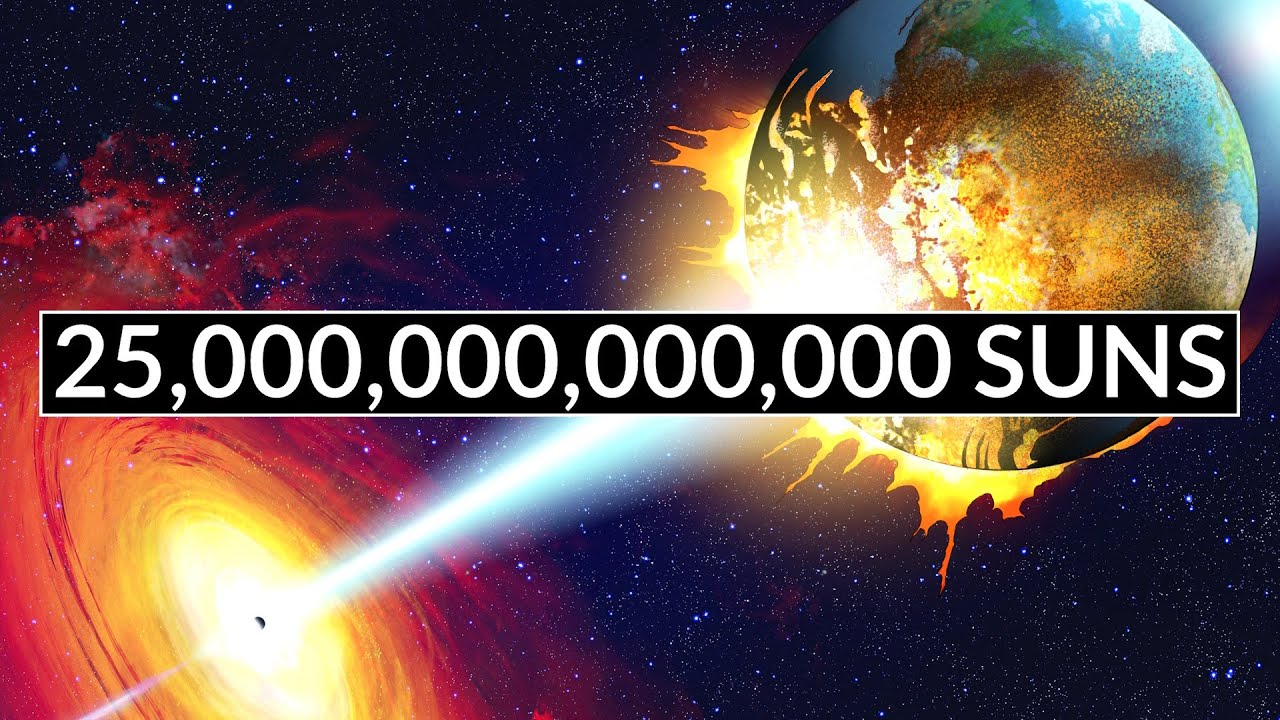
in the universe emitting light and other radiation across the electromagnetic spectrum they are found at the centers of some galaxies powered by super massive black holes accreting matter at a high rate as matter spirals into these black holes it forms an accretion disc around them the Incredible gravitational forces heat the infalling material to millions of degrees causing it to radiate intensely across the electromagnetic spectrum from radio waves to gamma rays quers are crucial for understanding the early Universe they are visible over vast Cosmic distances providing a glimpse into the past when the universe was much
younger many of the quers we observe today are seen as they were billions of years ago allowing Astronomers to study the conditions and processes at play during the infancy of the universe their light can also serve as a probe for the intervening space revealing information about the distribution of matter including galaxies and Intergalactic gas clouds through which the light from quases has traveled moreover the study of quers contributes to our understanding of Galaxy Evolution and the role of super massive black holes the correlation Between the masses of these black holes and the properties of their
host galaxies suggests a close link between the growth of the black holes and the evolution of galaxies this relationship indicates that quers and the super massive black holes that power them have played a significant role in shaping galaxies throughout Cosmic time quers also challenge our understanding of physics under extreme conditions the energetic processes in The vicinity of the Event Horizon of the super massive black holes at their centers offer unique Laboratories for studying the laws of physics in regimes that are impossible to replicate on Earth quazars illuminate some of the most profound questions about the
structure Evolution and fate of the universe providing insights into the processes that govern the formation and growth of super massive black Hol holes the evolution of galaxies and the Distribution and state of the cosmic web that forms the backbone of the universe the Universe on its largest scales is structured in a complex hierarchical web-like pattern often referred to as the cosmic web this immense structure is composed of long filaments of galaxies and Intergalactic gas that stretch across the voids of empty space connecting dense clusters of galaxies at their intersections the cosmic web is the largest
scale Structure in the universe and is a direct consequence of the distribution of dark matter and the influence of gravity over billions of years the vast voids that make up most of the volume of the universe are regions with relatively few galaxies appearing as great empty spaces between the filaments and clusters these voids can be hundreds of millions of light years across in contrast the filaments which are denser regions containing Galaxies gas and dark matter thread the universe together on scales of tens to hundreds of millions of light years where these filaments meet Galaxy clusters
and superclusters form acting as the dense gravitational anchor points of the cosmic web this structure began to form less than a billion years after the big bang as the initial irregularities in the distribution of matter primarily Dark Matter began to collapse under Gravity Forming the first Stars galaxies and clusters which then evolved into the the intricate pattern we observe today the distribution of dark matter which interacts with visible matter through gravity played a crucial role in shaping this web as it makes up about 85% of the total matter content of the universe the cosmic web
is a vivid illustration of the large scale structure of the universe highlighting not only the distribution of galaxies And dark matter but also the dynamical processes that have shaped the cosmos over its 13.8 billion years year history observations of this structure from Galaxy surveys and mappings of Intergalactic gas provide crucial insights into the formation and evolution of the universe the nature and distribution of dark matter and the overarching influence of gravity in sculpting the [Music] Cosmos The Big Bang Theory is the prevailing cosm ological model that describes the origin and evolution of the universe according
to this Theory the universe began approximately 13.8 billion years ago from an extremely hot dense State and has been expanding and cooling ever since this initial explosion was not a conventional explosion but rather the rapid expansion of space itself propelling matter and energy Outward in the very first moments following the Big Bang the universe was an unimaginably hot and dense Point as the universe expanded the temperature and density began to decrease allowing for the formation of fundamental particles such as quarks and electrons within the first few minutes these particles combined to form protons and neutrons
and eventually the first atomic nuclei were created in a process known as Nucleosynthesis as the universe continued to cool and expand over hundreds of thousands of years atoms began to form as electrons were captured by nuclei this period known as recombination allowed light to travel freely for the first time leading to the release of the cosmic microwave background radiation cmbr a faint glow that permeates the Universe and provides a snapshot of the infant Universe The Big Bang Theory is supported by multiple pieces of observational evidence one of the strongest pieces of evidence is the aforementioned
cmbr which was accidentally discovered in 1965 5 and presents a uniform low energy radiation field that can be detected in all directions in Space the theory is also supported by the observed red shift of distant galaxies indicating they are moving away From us and the relative proportions of Light Elements such as hydrogen helium and lithium which align with predictions from nuclear synthesis over the decades The Big Bang Theory has been refined with additional observations and Remains the best explanation for the origins and and large-scale structure of the universe however it continues to be developed and
elaborated upon as new astronomical observations are made Contributing to our understanding of the cosmos since the Big Bang approximately 13.8 billion years ago the universe has undergone a remarkable Evolution transitioning from a hot dense point to the vast complex Cosmos we observe today in the immediate aftermath of the Big Bang the universe was in a state of extreme heat and density where conditions were so intense that particles and antiparticles were being created and Annihilated as the universe expanded it cooled sufficiently for the first stable particles to form quarks and electrons which eventually gave rise to
protons and neutrons within the first few minutes after the big bang the universe cooled enough to allow these protons and neutrons to combine and form the first atomic nuclei a process known as nucleosynthesis however it would take another few Hundred thousand years for the universe to cool further permitting electrons to be captured by nuclei thus forming neutral atoms this era known as recombination resulted in the universe becoming transparent to light for the first time leaving us with the cosmic microwave background radiation a snapshot of the infant universe that astronomers can still observe today following recombination
the universe entered a period known as the Cosmic Dark Ages where it was populated by hydrogen and helium gas but little light eventually gravitational attraction caused regions of slightly denser matter to collapse forming the first stars and galaxies the light from these first generations of stars ended the cosmic Dark Ages and their energy transformed the surrounding gas allowing it to be seen again a transition known as reionization over billions of years Stars and galaxies continued to form evolve and in many cases merge larger structures such as Galaxy groups clusters and superclusters emerged from the gravitational
attraction between galaxies forming the intricate Cosmic web that characterizes the universe's large scale structure inside galaxies heavier elements were forged in the hearts of stars and spread through Supernova explosions seeding the cosmos with the building blocks necessary for Planets and life the universe continues to expand and cool a process accelerated by mysterious dark energy that influences the universe's large scale structure throughout its history from the first moments after the big bang to the formation of stars galaxies and Beyond the universe has transformed from a uniform soup of particles into a rich tapestry woven with vast
Cosmic structures hosting an incredible Diversity of celestial objects and phenomena Cosmic microwave background radiation cmbr is a faint glow of light that fills the universe providing a snapshot of the cosmos as it appeared approximately 380,000 years after the big bang this Relic radiation is the Afterglow of the universe's formation dating back to a time when photons were first able to travel freely through space marking the moment when the universe transitioned From being opaque to transparent the cmbr was predicted by alfha and Robert Herman in the 1940s but was accidentally discovered by arop penus and Robert
Wilson in 1965 a finding that earned them the Nobel Prize in physics the discovery of the cmbr is one of the most significant pieces of evidence supporting The Big Bang Theory offering profound insights into the early universe's Conditions this Cosmic backdrop is extremely uniform with a temperature of about 2.72 5 Kelvin 20 70425 de C orus [Music] 44.76911° cob cosmic background Explorer W map Wilkinson microwave anisotropy probe and most recently by the plank satellite these mappings have provided critical data on the universe's rate of expansion its age composition and the distribution of matter supporting and
Refining our cosmological models the shape and fate of the universe are interconnected Concepts that address the universe's overall geometry and how it will evolve over time these ideas hinge on critical factors such as the universe's total mass energy content and the properties of dark energy the shape of the universe is described in terms of its curvature which can be open closed or flat a Closed Universe curves back on itself somewhat like a sphere an open Universe curves outward and is endless and a flat universe has no curvature and extends infinitely the geometry of the universe
influences its expansion and ultimate fate observations particularly of the cosmic microwave background radiation suggest that the universe is flat implying that its expansion will continue indefinitely the fate of the universe is Closely tied to its shape and the density of matter and dark energy it contains an open or flat universe with insufficient matter to cause a gravitational pull strong enough to stop its expansion would continue expanding forever gradually growing colder and emptier leading leading to a scenario known as the big freeze or heat death in this scenario Stars will burn out leaving behind black holes
neutron stars and white dwarves that will eventually Evaporate or cool off leaving a dark cold Universe in contrast a closed Universe would eventually stop expanding and begin Contracting in a process known as the Big Crunch where galaxies stars and ultimately particles would collapse into a singularity potentially leading to a cyclical mod of the universe where a big crunch is followed by another big bang currently observations indicate that the universe's expansion is Accelerating due to Dark Energy a mysterious force that opposes gravity this has significant implications for the universe's fate suggesting it will likely continue expanding
indefinitely leading to the big freeze scenario while our understanding of dark energy and the universe's total energy content is still evolving these Concepts remain Central to cosmology driving research efforts aimed at unraveling the mysteries of the cosmos's ultimate Fate The Cosmic distance ladder is an essential Concept in astronomy that enables us to measure the vast distances Across the Universe like a series of interconnected steps each method is used depending on the distance we aim to measure for relatively close objects within our Milky Way Parallax is a key technique relying on the apparent shift in a
star's position due to Earth's orbit around the Sun as we reach beyond our galaxy astronomers employ standard Candles like sepid variables and type A supern noi sepid variables stars with a direct correlation between their luminosity and pulsation periods serve as benchmarks for gauging distances for the outermost reaches we turn to type IIA supern noi their consistent Peak brightness provides a reliable measure across cosmological distances finally for the most distant reaches of the universe red shift gives Clues on how far the light has traveled expanding our Understanding of the universe's scale each rung on this ladder
combines allowing us to piece together the vastness of our Cosmos in a comprehendable manner offering insights into our universe's age expansion and the distribution of galaxies within the cosmic web Dark Energy a term that evokes a sense of mystery is the name given to the unknown force that is causing the universe's expansion to accelerate Despite comprising about 70% of the universe's total energy its nature remains one of the biggest puzzles in cosmology initially astronomers expected the universe's expansion to slow down due to the gravitational pull of all matter however observations in the late 20th century
of distant Supernova revealed that the universe is expanding at an accelerating rate leading to the proposition of dark energy as a repulsive Force counteracting Gravity The implications of dark energy are profound affecting not only our understanding of the universe's fate but also theories about its origin if Dark Energy continues to dominate it could lead to an ever expanding Universe growing colder and emptier with time a scenario often termed the big freeze it challenges our grasp of physics necessitating new theories that can Encompass both the dark aspects of the universe dark energy and dark matter and
The observable matter by unraveling the nature of dark energy we may gain insights into the fundamental laws of the universe and perhaps answer to one of the most pressing questions in cosmology how will the universe end gravitational waves ripples in the fabric of SpaceTime predicted by Albert Einstein's general theory of relativity over a century ago have become a crucial tool for understanding the universe detected for the first time in 2015 by the laser interferometer gravitational wave Observatory ligo these waves are produced by cataclysmic events such as the collisions of black holes or neutron stars sending
shock waves across the cosmos unlike electromagnetic radiation which can be absorbed or scattered gravitational waves travel unhindered across the universe carrying with them pristine information about their Origins and the nature of gravity itself this new way of Observing the universe allows astronomers to study events that would otherwise be invisible or hidden offering insights into the most energetic processes in the cosmos the detection of gravitational waves also opens the door to testing parts of general relativity in extreme conditions enhancing our understanding of the universe's most mysterious phenomena including the Dynamics of black holes and the environment
of the early Universe fractions of a second after the big bang as the field of gravitational wave astronomy matures it promises not only to unravel the secrets of the cosmos but also to expand our understanding of the fundamental laws that govern the universe the largest structures in the universe are unimaginably vast Cosmic webs of galaxies known as superclusters and filaments which stretch across hundreds of millions of light years These colossal structures consist of thousands of galaxies bound together by gravity interspersed with vast voids that appear as dark empty spaces in the cosmic fabric at the
heart of our understanding of these giant entities is the great attractor a gravitational anomaly in Intergalactic space that reveals the existence of a much larger structure the lanaka supercluster which encompasses our own Milky Way galaxy along with tens of thousands of other Galaxies spread over an area of 500 million light years these superclusters and filaments are like the backbone of the universe out lining the large scale structure that emerged from the gravitational amplification of minor irregularities in the density of the early Universe observations of these massive Cosmic structures challenge our understanding of the universe's Evolution
and composition pointing to the influence of dark matter and dark Energy as driving forces behind the large scale structure formation by studying these giant clusters and the vast voids between them astronomers can trace the history of the Universe from The Big Bang to the present day providing critical insights into the cosmos's fundamental properties and the grand scale of the observable universe the concept of multiverses proposes the existence of multiple perhaps infinite universes existing Parallel to our own each with its own laws of physics Cosmic structures and possibly even varying constants of nature this idea while
still speculative and not directly observable extends from various interpretations and extensions of modern physics theories particularly quantum mechanics and string theory in quantum mechanics the many world's interpretation suggest that all possible alternate histories and Futures are real each represented by a separate Universe Meanwhile string theory in its attempts to reconcile gravity with quantum physics allows for the existence of a vast landscape of possible universes within a higher dimensional space the Multiverse Theory also also arises from inflationary cosmology which posits that during the Big Bang space expanded exponentially and this process could have led to the
creation of countless bubble universes each potentially hosting different physical Constants and laws although the idea of a Multiverse stretches the boundaries of empirical science as direct evidence for other universes remains elusive it offers intriguing implications for understanding fundamental questions in physics it challenges the not of the uniqueness of our universe and provides a possible explanation for the fine-tuning of the cosmological constants that allow life to exist as such the Multiverse concept fits into Modern physics as an expansive orbe it controversial framework that pushes the limits of science observation and our understanding of reality itself the
ultimate fate of the universe remains one of the most compelling questions in cosmology and several leading theories paint different pictures of how the cosmos might meet its end one prominent theory is the big freeze or heat death which is based on the universe's current rate of expansion This scenario suggests that as the universe expands it will gradually cool as galaxies move apart Stars burn out and matter spreads thinly across an ever increasing expanse leading to a cold dark and lifeless Universe another theory is the Big Crunch the opposite of the Big B where the expansion
of the universe eventually halts and reverses causing the cosmos to collapse in on itself this contraction would lead to temperatures And density skyrocketing potentially resulting in a singularity from which a new universe could be born the Big Rip offers a more violent end positing that the universe's expansion will accelerate to the point where even galaxies stars planets and ultimately the atoms themselves would be torn apart lastly the there's the scenario of the big bounce lastly there's the scenario of the big bounce a cyclical Model suggesting the universe could undergo an infinite series of expansions and
contractions essentially bouncing between big bangs and big crunches each of these theories stems from our current understanding of physics cosmological observations and mathematical models however determining the universe's ultimate fate depends significantly on unraveling the mysteries of Dark Matter dark energy and The Very fabric of SpaceTime itself as our Technologies and theories Advance we may Edge closer to understanding which if any of these scenarios will dictate the final chapter of the [Music] cosmos string theory is a theoretical framework in which the point-like particles of particle physics are replaced by one dimension objects known as strings it
suggests that what we observe as particles are actually tiny Vibrating strings with the mode of vibration of a string determining the type of particle it appears to be therefore electrons quarks and all other fundamental particles are manifestations of these fundamental strings string theory is crucial because it represents a major step towards a Theory of Everything a framework that unites all fundamental forces and particles in a Le all-encompassing Theory this is because string theory has the potential to Reconcile the two pillars of modern physics quantum mechanics which governs the subatomic world and general relativity which explains
the force of gravity and the large scale structure of the universe one of the most intriguing outcomes of string theory is its prediction of extra Dimensions beyond the four space-time dimensions three of space and one of time that we can observe according to string Theory there could be as many as six or seven additional Dimensions compactified or hidden at Scales too small for us to detect despite its lack of empirical evidence and the challenge of testing its predictions string theory is considered important because of its potential to explain phenomena that remain unsolved by conventional theories
such as the nature of black holes and the unification of forces it opens up new lines of thinking about the Fundamental structure of our universe pushing the boundaries of knowledge and inspiring future research in theoretical and experimental physics quantum mechanics with its principles of wave particle duality quantum entanglement and superposition has already drastically reshaped our understanding of the universe at the smallest scales it suggests that particles can exist in multiple States simultaneously until measured and can Instantaneously affect each other regardless of distance chall alling classical Notions of space and time as we delve deeper into
quantum mechanics it holds the potential to further transform our understanding of the universe in several profound ways one pivotal area is in the realm of quantum gravity a theoretical framework that seeks to reconcile quantum mechanics with general relativity this reconciliation could Lead to a more complete and unified theory of gravity potentially unlocking secrets about the fabric of SpaceTime the nature of black holes and the mysteries of dark matter and dark energy Quantum Computing which harnesses the principles of quantum mechanics May revolutionize our ability to simulate complex systems from the behavior of molecules and materials to
the evolution of entire universes this could lead to breakthroughs in medicine technology and Our understanding of cosmological phenomena quantum mechanics also raises philosophical questions about the nature of reality observation and the limits of human knowledge as experiments continue to confirm and challenge quantum theory we may need to reconsider our views on determinism causality and the Very notion of an objective reality overall as our grasp of quantum mechanics deepens and we devise new ways to observe and manipulate the quantum World it promises not only to provide new tools and Technologies but also to offer profound insights
into the workings of the Universe At Its most fundamental level uniting quantum mechanics and general relativity into a single all-encompassing theory is one of the greatest challenges in modern physics the primary difficulty arises from the fundamental differences in how the two theories describe the universe quantum Mechanics operates in the realm of the very small dealing with particles and forces at the atomic and subatomic levels it is a probabilistic theory where out outcomes are described in terms of probabilities rather than definite predictions on the other hand general relativity governs the large scale structure of the universe
explaining gravity as the curvature of SpaceTime caused by mass and energy one significant hurdle is that quantum Mechanics suggests a discrete Quantum nature of phenomena whereas general relativity treats SpaceTime as a smooth Continuum this difference poses a conceptual challenge in imagining a quantum theory of gravity where SpaceTime itself would have a Quantum structure possibly made of tiny indivisible units another issue is that general relativity is a classical theory that does not inherently include the Principles of uncertainty and superposition fundamental to Quantum Theory when trying to apply Quantum rules to the gravitational field calculations often lead
to mathematical inconsistencies like Infinities that cannot be easily removed additionally while experiments have confirmed the predictions of quantum mechanics and general relativity in their respective domains with Incredible accuracy testing theories that attempt To unify them like string theory and loop quantum gravity is exceedingly difficult with current technology due to the incredibly small scales and high energies involved the pursuit of a unified theory often referred to as quantum gravity requires not just Bridging the Gap between the theories mathem atically but also conceptual shifts in understanding SpaceTime matter and the Very fabric of reality bridging this divide
not only Promises to unlock some of the deepest secrets of the universe but also to redefine fundamental physics as we know it the future of space travel is poised to be revolutionized by several emerging Technologies with the potential to overcome current limitations of cost speed and efficiency one of the most anticipated techn techologies is nuclear propulsion which could drastically reduce travel time within our solar system unlike Conventional chemical Rockets nuclear propulsion systems such as nuclear thermal or nuclear electric offer much higher efficiency and thrust potentially cutting the Journey to Mars by half another groundbreaking technology
is the development of reusable Rockets pioneered by companies like SpaceX this Innovation significantly reduces the cost of access to space by allowing the same spacecraft to be launched landed and used multiple times making space Travel more economically viable space elevators a concept that involves a tether extending from the Earth's surface into space could also revolutionize space travel though currently limited by material science technology space elevators would provide a continuous energy efficient means to transport materials and people to space bypassing the need for costly rocket launches on the horizon are also Advanced Materials and Manufacturing techniques
including 3D printing in space which would enable the construction of spacecraft and habitats directly in orbit or on other celestial bodies this would dramatically reduce the need to launch materials from Earth further lowering costs and expanding possibilities for long duration space missions and colonization Quantum communication technology promises to enhance secure Communication across vast distances in space supporting more sophisticated exploration missions and potentially enabling a human presence on other planets as these and other Technologies progress they promise not only to expand our reach within the solar system but also to transform our understanding of travel and
life in space making the cosmos more accessible than ever before wormholes are theoretical passages through SpaceTime that could Create shortcuts for long Journeys Across the Universe essentially a wormhole would act as a bridge connecting two distinct points in SpaceTime potentially enabling travel over Cosmic scale distances in much shorter times or allowing travel between different universes or Dimensions According to some theories the concept of wormholes comes from the solution to the equations of Albert Einstein's general theory of relativity although Wormholes have never been observed they remain a popular subject of study and speculation in physics as
for time travel wormholes theoretically could allow for such a phenomenon under certain conditions if one end of a wormhole was stationary and the other end was moved at a significant fraction of the speed of light then due to time dilation a relativistic effect whereby time moves slower for an object moving at high speed compared to a Stationary Observer time could flow differently at each end of the Wormhole this would in theory enable a form of time travel however there are numerous hurdles to overcome not least of which is the fact that existing theories suggest that
any Wormhole would collapse very quickly without exotic matter to keep it stable an exotic matter that theoretical physicists hypothesize could have negative energy density and large negative pressure something not Currently known to exist in the form required moreover while general relativity allows for the possibility of wormholes quantum mechanics introduces additional complexities and a fully un ified theory of quantum gravity which combines general relativity and quantum mechanics would be required to fully understand the possibilities and limitations of wormholes and time travel thus while the concepts remain a fascinating possibility within the Framework of theoretical physics practical
application including time travel through wormholes remains speculative and far beyond our current technological capabilities colonizing other planets is a goal that humanity is progressively working towards driven by advancements in technology and a growing understanding of our solar system while the concept of establishing human colonies beyond Earth presents Significant challenges it is increasingly seen as feasible within future decades particularly focused on our nearest neighbors like Mars and the moon the feasibility of extraterrestrial colonization hinges on overcoming Monumental obstacles including the provision of sustainable life support systems sys protection from cosmic radiation and the psychological effects of
long duration isolation and confinement in addition the development And transportation of the necessary infrastructure and supplies to support human life in the vastly different environments of other planets is a daunting task for Mars for instance solutions for producing oxygen water and food shielding from radiation and developing propulsion systems sufficient for the journey must be further developed and refined technological innovations and research in fields such as closed loop life Support systems insitu resource utilization isru Habitat Construction and space farming are key areas that could significantly increase the feasibility of planetary colonization isru which involves utilizing local
resources like using Martian soil to produce building materials or extracting water ice is particularly pivotal for reducing the costs and Logistics of transporting materials from Earth the involvement of both government space agencies such as NASA Isa and Ros Cosmos and private companies such as Space X and blue origin has accelerated the pace towards making space colonization a more tangible possibility spacex's development of the Starship spacecraft for instance is aimed directly at making human life multiplanetary starting with Mars in summary while colonizing other planets remains a significant challenge Ongoing advancements in space technology and increased International
interest in space exploration are making the prospects of establishing permanent human settlements beyond Earth more feasible than ever before the combination of technological physiological and psychological breakthroughs will be key to overcoming the barriers to becoming a multiplanetary species space exploration raises Numerous ethical considerations that SP environmental social and philosophical Realms as Humanity reaches further into the cosmos it's imperative to navigate these challenges thoughtfully to ensure responsible stewardship of outer space one primary concern is the potential contamination of celestial bodies through human or robotic exploration known as planetary protection this involves both forward contamination bringing Earth
origin Microbes to other planets and backward contamination returning extraterrestrial organisms to Earth preserving the pristine conditions of other worlds is crucial for scientific research particularly the search for extraterrestrial life as well as for respecting the intrinsic value of these environments the utilization of space resources such as mining asteroids or extracting water from the Moon also Prompts ethical questions this includes issues of ownership exploitation rights and the equitable distribution of space derived benefits the outer space Treaty of 1967 designates space as the province of all mankind emphasizing the need for activities in space to benefit all
Humanity not just the interests of space fairing Nations or entities moreover the increasing problem of space debris represents an ethical Challenge for current and future missions the accumulation of debris in Earth's orbit poses a significant risk to satellite space stations and spacecraft highlighting the need for sustainable practices in space operations and debris mitigation to ensure the safety and accessibility of space for all ethical considerations also extend to the potential colonization of other planets this raises questions about the Possible displacement of extraterrestrial life forms human governance in space and the preservation of Earth's cultures and diversity
in extraterrestrial colonies in exploring the unknown it's critical that space exploration is Guided by ethical principles that promote the responsible use of space protect the rights and interests of all stakeholders and maintain the Integrity of celestial Environments open dialogue among scientists policy makers ethicists and the public is vital to navigating the ethical landscape of space exploration ensuring that our Venture into the cosmos is done with foresight respect and responsibility toward both our home planet and the Universe At Large simulations play a crucial role in understanding the complexities of the universe serving as a bridge between
theoretical models and real world Observations by inputting physics equations and initial conditions into powerful computers scientists can create detailed simulations that mimic Cosmic phenomena ranging from the formation of galaxies to the Dynamics of black [Music] holes one of the primary benefits of using simulations is their ability to test hypotheses about how the universe works for instance cosmological simulations can track the evolution of The Universe from shortly after the big bang to the present day helping scientists understand the role of dark matter and dark energy in Cosmic structure formation these simulations can reveal patterns or outcomes
that are not immediately obvious from theoretical equations alone providing insights into the behavior of complex systems furthermore simulations allow researchers to explore scenarios that Are not accessible through direct observation or experimentation due to limitations in current technology or the sheer scales of time and distance involved by adjusting parameters and initial conditions scientists can study a wide range of possibilities helping to refine our understanding of physical laws and predict the outcomes of unobserved phenomena simulations also play a vital role in the design and interpretation of Experiments and observations for example simulations of gravitational wave signals from
merging black holes or neutron stars can help astronomers identify these signals in real data increasing the chances of making groundbreaking discoveries simulations extend the reach of science into the most remote corners of the universe offering a powerful tool for testing theories guiding observational campaigns and opening new Avenues of research in cosmology astrophysics and Beyond they are an indispensable part of modern science's toolkit enabling a deeper more nuanced understanding of the universe and its Myriad Mysteries artificial intelligence AI holds the promise of transforming future space Explorations offering unprecedented capabilities in data analysis decision-making and automation its
role could be pivotal in Various aspects of space missions from design and planning to operations and data interpretation one significant contribution of AI could be in handling the vast amounts of data generated by space telescopes and planetary missions machine learning algorithms can sift through this data more efficiently than humans identifying patterns classifying celestial objects and detecting phenomena that might otherwise go Unnoticed this could accelerate discoveries in areas like exoplanet identification Galaxy formation and the search for extraterrestrial life AI could also revolutionize Mission autonomy enabling spacecraft and Rovers to make on the spot decisions without waiting
for instructions from Earth which can be delayed by light speed communication limits this capability is crucial for navigating and conducting research in Remote or harsh environments such as the surface of Mars or the icy moons of Jupiter where immediate responsiveness to the surroundings can significantly enhance Mission productivity and safety furthermore AI driven robotics could play a central role in constructing habitats and infrastructure on other planets performing tasks in environments too dangerous or impractical for humans this includes mining resources building shelters or Setting up solar arrays laying the groundwork for human colonization efforts in the realm
of astronaut Health AI could monitor Vital Signs and detect early signs of illness or stress providing real-time Health assessments and medical advice during long duration missions where immediate human medical intervention is not possible as we look toward ambitious exploration goals such as establishing sustainable human presence on the moon And Mars ai's role becomes increasingly integral by augmenting human capabilities automating routine tasks and making critical decisions AI could significantly enhance the efficiency safety and success of future space exploration missions turning what now seems like distant dreams into achievable realities in the vast intricate tapestry of the
cosmos the potential for discovering new particles rests on The Cutting Edge of scientific exploration like voyagers on the cusp of Uncharted Seas with the Large Hadron Collider LHC operating at energies of up to 13 trillion electron volts our ability to unearth particles that have eluded detection is greater than ever consider the higs boson once just a theoretical particle it was brought into the realm of confirmed existence in 2012 underscoring the Monumental potential of our Quest physicists now speculate about Particles beyond the higs such as super symmetric particles which could solve enduring Mysteries like dark matter
the theoretical framework suggests a cosmos filled with particles yet to be detected offering a profound promise for future discoveries each potential particle represents a missing puzzle piece in the grand scheme of the universe holding the power to redefine fundamental aspects of [Music] physics when astronomers sift through The cosmos to identify potentially habitable planets a specific set of criteria guides their search much like Navigators using Stars to chart their course across unknown Seas Central to this Quest is the planet's location within the so-called goldilock zone of its parent star a region where conditions are neither too
hot nor too cold allowing liquid water and essential ingredient for Life as we know it to potentially exist on the planet's Surface Additionally the size and mass of the planet are crucial it must be sufficient to retain an atmosphere yet not so large that it becomes a gas giant devoid of a solid surface the presence of an atmosphere is another key Criterion offering protection from cosmic and solar radiation while potentially providing the chemical ingredients for life these criteria serve as a preliminary checklist in the grand Endeavor to find Earth's cousins In the cosmos guiding astronomers
to planets that share similarities with our home in the hope that one day we might discover a world teeming with life the search for exoplanets planets orbiting Stars beyond our solar system employs a fascinating arsenal of techniques each acting as a beacon into the vast Cosmic unknown one of the most fruitful methods is the transit method which monitors the light from a star watching for The Telltale dimming that Occurs when a planet passes between the star and our Viewpoint this slight dip in brightness can reveal not only the existence of a planet but also its
size and orbit another groundbreaking technique is radial velocity which measures the subtle wobble of a star induced by the gravitational tug of orbiting planets this wobble affects the Stars light stretching or compressing its wavelengths and allows scientists to infer the presence of a planet as well As its mass and the shape of its orbit these methods among others have revolutionized our understanding of the cosmos transforming exoplanets from a speculative curiosity into a rich field of study shedding light on the astonishing divers of Worlds that dot our galaxy through the meticulous work of astronomers and the
incredible Precision of modern instruments the cosmos slowly reveals its Secrets One Planet at a time the quest to discover Life beyond Earth focuses on locations within our own solar system and beyond where conditions may be right for Life as we understand it one of the most tantalizing prospects is Mars with its history of water flow and reservoirs of Water Ice suggesting that life could have existed there in the past or might still exist in protected niches equally intriguing are the icy moons of Jupiter and Saturn Europa Enceladus and Titan each harboring subsurface oceans beneath Their
icy crusts where life could exist in environments protected from the harshness of space Europa in particular with its potential hydrothermal activity presents a compelling case for habitability beyond our solar system the search Broad to exoplanets situated in the habitable zones of their respective stars planets like Proxima B orbiting our nearest Stell neighbor Proxima centor offer tantalizing possibilities its location in the habitable zone hints At the potential for liquid water on its surface a key ingredient for life these celestial bodies each with unique environments represent the Forefront of our search for Life guiding our Exploration with
the promise of uncovering not just new worlds but possibly new forms of life fundamentally expanding our understanding of what it means to be alive in the cosmos proof of life beyond Earth a Milestone in human understanding would require incontrovertible evidence that could withstand the rigorous scrutiny of the scientific Community such evidence could take several forms depending on where and how we search for instance if examining the surface of Mars the discovery of microbial fossils embedded in rock formations similar to early life forms found on Earth would provide tangible Proof of Life in the icy moons
of our Solar system like Europa evidence might come from analyzing plumes of water ejected into space revealing organic compounds or even microbial life that inhabit the subsurface oceans in the case of exoplanets proof may be more indirect derived from the analysis of atmospheric compositions using spectroscopy the detection of BIOS signature Gases such as oxygen ozone methane and carbon dioxide in the right proportions could Suggest the presence of biological processes moreover the discovery of a chemical imbalance in an exoplanet's atmosphere which could only be explained by the presence of living organisms would serve as a strong
indicator of Life ultimately the proof of extraterrestrial life would likely require a combination of findings including direct evidence such as as microorganisms or their biochemical signatures and indirect evidence such as Atmospheric bio signatures or the alteration of a planet's surface or chemistry this multi-pronged approach would help build a compelling case leaving little room for doubt that we are not alone in the universe the search for extraterrestrial life captivates the human imagination weaving its way into the cultural and scientific fabric of society it challenges our understanding of Life existence and our place in the universe fostering
a profound sense of Curiosity and wonder this Quest while primarily scientific spills over into philosophy Theology and ethics prompting us to confront fundamental questions about Consciousness intelligence and the potential for communication with non-human entities on a practical level the Technologies developed and knowledge gained from this search have tangible benefits for Earth including advancements in Fields as diverse as astrobiology ology chemistry and Environmental science demonstrating the interconnectedness of Earth's ecosystem with the wider Cosmos moreover the pursuit of life beyond Earth serves as a unifying Endeavor transcending National cultural and ideological boundaries it reminds us of our
common Heritage and Destiny fostering a sense of planetary stewardship and the need to protect our home world even as we reach for the stars the implications of discovering Extraterrestrial industrial life would be revolutionary potentially Transforming Our understanding of biology revamping the social sciences and even affecting everyday life through new technologies or by shifting philosophical perspectives in some the search for extraterrestrial life is more than a scientific Endeavor it is a reflection of Humanity's insatiable quest for knowledge and our unyielding drive to Explore the unknown it holds a mirror to our Collective Soul High highlighting our
fears aspirations and the boundless possibilities of the universe discovering extraterrestrial microbial life would Mark a profound moment in human history reshaping our understanding of biology chemistry and the very essence of life itself such a discovery would confirm that Earth is not the only Crucible of life in the universe significantly increasing the Likelihood that life exists in many forms across the cosmos this Revelation would have immediate and far-reaching implications for the field of astrobiology which would gain its first real world subject beyond Earth catalyzing the search for more complex forms of extraterrestrial life and potentially guiding
our exploration of other planets and moons the discovery would also prompt a thorough reexamination of the theory of Life's Origins scientists would delve into questions about whether life on Earth and elsewhere shares a common ancestry or if life emerged independently under the right conditions suggesting a universal recipe for life this would influence our understanding of how life might evolve in different environments offering insights into the resilience and adaptability of life from a societal perspective knowing we are not alone would likely alter Philosophical theological and existential Frameworks that have been in place for Millennia the knowledge
that life can thrive in environments vastly different from our own could expand the human perspective challenging us to consider our place in the universe aresh such a discovery would have practical implications for future space exploration influencing how missions are planned and conducted to avoid biological contamination Between Worlds It would also raise ethical considerations about the protection of extraterrestrial ecosystems and whether Humanity has the right to interfere with them finding extraterrestrial microbial life would be a catalyst for scientific philosophical and cult cultural Evolution marking a Monumental step in the ongoing human quest to understand the cosmos
and our place within it the discovery of intelligent alien life would undoubtedly elicit a wide Range of reactions across Humanity stirring a complex tapestry of emotions thoughts and responses initially there might be a profound sense of awe and wonder at the realization that we are not alone in the universe accompanied by a surge of curiosity about these other beings and their civilization this Revelation could unite Humanity in a shared sense of purpose and curiosity potentially bridging existing divides as we Face the reality of a larger Cosmos Bustling with intelligence simultaneously the discovery could invoke apprehension
and fear about the unknown including the intentions capabilities and Technology of the intelligent life forms philosophical and existential questions would come to the for challenging long-held beliefs and narratives about human uniqueness and our place in the universe religions and spiritual beliefs could undergo a period of inpection and Reinterpretation in light of the new knowledge on a scientific and technological level there would likely be an unprecedented push to learn more about these beings how they communicate their social structures culture technology and their understanding of the universe this quest for knowledge could drive International collaborations fostering a
new era of technological innovation inspired by the desire to Communicate with or even visit these extraterrestrial intelligences governments and organizations May grapple with issues of diplomacy and governance in this broader Cosmic context pondering how to establish guidelines or protocols for interaction with non-human intelligences the principles of such Interstellar diplomacy would be Uncharted Territory requiring careful thought to avoid misunderstandings or conf Icts ultimately the discovery of intelligent alien life would Mark a pivotal point in human history challenging us to expand our perspectives and reconsider our place in the cosmos it would prompt not just scientific inquiry
but a profound cultural and psychological shift as Humanity comes to grips with the existence of other intelligent beings in the universe the philosophical implications Of discovering life elsewhere in the universe are profound and multifaceted inviting a re-evaluation of some of Humanity's most foundational questions and beliefs firstly the existence of extraterrestrial life especially intelligent life challenges The anthropocentric View that humans are the central or most significant entities in the universe it prompts a reconsideration of human exceptionalism urging us to see ourselves as part of a Broader tapestry of life that spans the cosmos secondly the discovery
would Breathe new life into age-old philosophical inquiries about the nature of Consciousness intelligence and the potential for communication and understanding across species boundaries of a cosmic scale it would provoke questions about whether human modes of thought perception and reasoning are unique or if they share commonalities with those of other intelligent Entities ethical considerations would also come to the Forefront particularly regarding our responsibilities toward other life forms the discovery could lead to the expansion of ethical Theory to include not just all humans or terrestrial life but all sentient beings in the universe this Universalist perspective might
influence how we treat other species on Earth and guide our interactions with extraterrestrial life underpinning them With a recognition of the intrinsic value of Consciousness and sentience wherever it exists moreover the existence of life elsewhere would have theological implication ations challenging religious doctrines that are centered on human beings and Earth it would invite dialogue among and within religions about the place of extraterrestrial life in creation and how such discoveries align with or challenge spiritual Beliefs the discovery of extraterrestrial life would act as a philosophical Catalyst propelling Humanity into an expansive reflection about our understanding of
Life intelligence morality and our place in the cosmos it represents an invitation to broaden our Horizons and embrace a more Cosmic perspective on existence different cultures perspectives on alien life are richly represented and varied in the media Showcasing a tapestry of beliefs imaginings and reactions that span the global cultural Spectrum from films and television shows to literature and journalism media outlets around the world offer a window into the multifaceted ways that societies conceive of and relate to the possibility of extraterrestrial Ral beings in Western media depictions of alien life often range from the benevolent and
wise visitors seeking to Aid or Enlighten Humanity to the malevolent Invaders bent on conquest or destruction these narratives frequently reflect a mix of Hope and anxiety about the unknown echoing historical encounters with the other and the dualities of curiosity and fear popular films like ET the Extraterrestrial and Close Encounters of the Third Kind showcase this Fascination and potential for friendly interaction while War of the Worlds and Independence Day tap into Themes of invasion and survival Asian media reflecting its diverse cultural landscape often incorporates philosophical and spiritual themes into its portrayals of extraterrestrial life sometimes blending
Science Fiction with ancient myths and Cosmic Visions Japanese anime and manga for example in indigenous and Aboriginal storytelling encounters with beings from the stars are sometimes woven into the cultural fabric seen as part of a larger Continuum of existence that transcends the Earthly plane these narratives can emphasize harmony with the cosmos wisdom from ancestral star beings and the interconnectedness of all life offering a unique perspective on the potential for encounters with extraterrestrial life across these diverse media Landscapes the representation of alien life reflect a rich Mosaic of human thought and emotion about the cosmos They
reveal underlying cultural attitudes toward the unknown highlight existential questions and illustrate the universal human inclination to look up at the stars and wonder who or what might be looking back private companies have begun to play a significant and growing role in the search for extraterrestrial life complimenting and expanding upon the efforts traditionally carried out by governmental space agencies this Involvement marks a new era of space exploration characterized by Innovation collaboration and the opening of space to wider participation Beyond governmental actors one of the primary ways that private companies contribute to the search for extraterrestrial life
is through the development and deployment of Advanced Technologies from telescopes capable of detecting exoplanets and analyzing their atmospheres for signs of Life to sophisticated Rovers designed to explore the surfaces of Mars and other celestial bodies these Technologies are at the Forefront of our quest to find life beyond Earth companies like SpaceX and blue origin are pushing the boundaries of space travel making it more accessible and cost effective which in turn facilitates a broader scope of missions focused on astrobiology and the search for Life additionally private companies are Increasingly involved in missions that could Aid in
the search for life for example spacex's capabilities in launching satellites and spacecraft have already played a critical role in deploying missions to study other planets and moons within our solar system areas where signs of past or present life might be detected moreover the participation of private companies introduces a level of competition and Innovation that can Accelerate progress in the field the drive to innovate reduce costs and improve efficiencies could lead to the development of new technologies and methodologies for detecting and studying extraterrestrial life in some private companies are becoming vital players in the continued exploration
of space and the search for extraterrestrial [Music] life the limits of human exploration in Space are governed by a complex interplay ofch technological physiological and economic factors technologically the vast distances between celestial bodies pose a formidable challenge even the nearest stars are light years away requiring propulsion systems far beyond our current capabilities for feasible human travel moreover the harsh conditions of space including extreme temperatures vacuum and Cosmic radiation necessitate Advanced life support and protection Technologies to sustain human life for ex exended periods physiologically the human body faces significant challenges in the microgravity environment of space
including muscle atrophy bone density loss and exposure to harmful space radiation these factors limit the duration astronauts can spend in space without serious health consequences and effective counter measures or Technologies are critical for longer missions such as those to Mars or Beyond economically the the costs associated with space exploration are staggering developing launching and maintaining missions require substantial Financial investment making it crucial to balance scientific Ambitions with available resources while private sector involvement has introduced new funding and Innovation the financial demands of overcoming technological and Physiological barriers continue to be a significant limiting factor despite
these limitations the drive to explore and understand our universe persists pushing the boundaries of human capability and Technology ongoing advancements in propulsion life support and habitat design combined with International cooperation and public private Partnerships offer promising paths to extend the reach of human exploration in Space pushing against the limits and expanding our presence in the cosmos the latest advancements in spacecraft design are propelling Humanity further into the cosmos driven by a mix of innovative engineering Material Science Science and computational Technology one of the standout developments is the increasing use of reusable spacecraft exemplified by spacex's
Falcon rockets and dragon capsules these systems significantly Reduce the cost of access to space by allowing for the recovery and reuse of launch Vehicles a paradigm shift from the traditional single-use Rockets another cuttingedge technology in spacecraft design is the development of more efficient propulsion systems ion thrusters which use electrically charged particles to propel spacecraft offer a more fuele efficient alternative to Conventional chemical propulsion although they generate less thrust Research is also underway on nuclear thermal propulsion which could provide a higher thrust to weight Rao than chemical Rockets drastically reducing travel time to Mars and Beyond
advancements in Material Science are also Critical with the integration of lightweight composite materials and self-healing skins to protect and prolong along the lifespan of spacecraft these materials can withstand the extreme conditions of space travel from Temperature fluctuations to micrometeoroid impacts while also reducing the overall weight of the spacecraft artificial intelligence and Robotics play increasingly prominent roles in spacecraft design facilitating autonomous navigation onboard decision- making and systems maintenance this reduces the need for constant Ground Control intervention and increases is the resilience of missions in the deep space Environment lastly the concept of inflatable habitats and modules
such as those being developed by companies like Bigalow Aerospace represents a Leap Forward in creating livable spaces for astronauts that can be compactly transported and then expanded once in orbit or on another Celestial body these habitats could play a crucial role in long duration missions providing a more comfortable and spacious environment for crew members together these Technologies Are expanding the possibilities of space exploration making the dream of sustainable human presence in space and the exploration of far off worlds more attainable than ever before globally space exploration is funded through a mixture of public and private
sources reflecting a diverse ecosystem of investment in the quest to explore and understand the cosmos traditional funding for space exploration has primarily come from Government budgets allocated to National Space agencies such as NASA in the United States the European Space Agency Esa roscosmos in Russia the China National Space Administration cnsa and the Indian space research organization ISO among others these allocations support a wide range of activities from scientific research satellite deployment manned missions and the development of new space exploration Technologies in recent years private sector involvement Has surged spearheaded by companies like SpaceX blue origin
and Virgin Galactic which contribute both Innovation and substantial Financial Resources to space exploration these companies are funded through a combination of venture capital private investment and revenue generated from commercial activities such as satellite launches space tourism and contracts with governments and other corporations the collaboration between public agencies and private compan Companies is increasingly common blending governmental oversight and goals with private Innovation and efficiency day additionally International collaboration plays a significant role in funding space exploration joint missions and shared projects allow countries to pull their resources expertise and financial burdens projects like the International Space Station
ISS are emblematic of this Approach funded by a Consortium of space agencies from the United States Russia Europe Japan and Canada emerging sources of funding also include crowdsourced financing for smaller projects University or privately funded research and in some cases public private Partnerships that aim to leverage the strengths of both sectors for Mutual benefit consequently the global landscape of space exploration funding is multifaceted with a blend of National pride scientific curiosity and Commercial interests driving the financial support behind Humanity's Reach for the Stars this diverse funding structure supports a broad spectrum of projects from fundamental
scientific research to ambitious Mann missions reflecting the wide ranging goals and priorities of the global community in understanding and exploring space the political implications of space territories are increasingly Significant as Nations and private entities expand their presence and AC activities in Space the competition for strategic advantages resources and scientific achievements in space raises complex issues of sovereignty governance and international law that the global Community must navigate in the coming years one key implication is the challenge of ensuring the peaceful use of space the outer space Treaty of 1967 which forms the basis of International Space
law declares space to be free for exploration and use by by all countries but prohibits the sovereignty claim of any Celestial Body By Any Nation as activities in space escalate tensions could arise over the placement of satellites potential lunar and Martian bases and the exploitation of space resources such as water ice and precious metals on asteroids ensuring that space remains a realm for peaceful cooperation rather Than a new frontier for geopolitical rivalry is a significant challenge the potential for resource extraction from celestial bodies also has profound political implications the ability to utilize space resources could
shift economic and strategic power balances on Earth raising questions about who has the right to these resources and how benefits should be shared this could lead to conflicts or conversely Drive the development of new International Frameworks for Equitable resource sharing and Environmental Protection in space moreover the presence of private entities in space introduces another layer of complexity companies operating extraterrestrial Ventures may eventually challenge or complicate Notions of national representation and Authority in space leading to debates over the regulation responsibilities and rights of private versus governmental Activities beyond Earth in navigating these political implications the International
Community faces the task of developing governance models that Ensure space remains a domain for peaceful exploration and mutual benefit this may include updating existing treaties creating new regulations and fostering dialogues that bridge nationalistic Ambitions with a collective stewardship ethos for the Vast expanse beyond our planet as Humanity's reach extends further into space the political ramifications of how we manage share and protect those territories will shape the future of space exploration and international relations demanding thoughtful consideration of equity sustainability and cooperation on a truly Cosmic scale as Humanity reaches farther into the cosmos the question of
how International laws apply to space becomes increasingly pertinent the governing principles for these extraterrestrial territories could be likened to a cosmic Constitution known as the outer space treaty ratified by over 100 countries since its Inception in 1967 this treaty a Marvel of global cooperation establishes that space shall be free for exploration and use by all countries but prohibits Any Nation from Claiming sovereignty over celestial bodies it also emphasizes that the moon and other celestial bodies are to be used exclusively for peaceful purposes preventing the placement of nuclear weapons or any other kinds of weapons of
mass destruction in space however the application and enforcement of these laws in space present a complex challenge unlike laws on Earth there's no Global Authority or enforcement mechanism in place to ensure adherence To these principles as commercial space Ventures and satellite launches become more common the intricacies of space law and its practical implications will need to evolve providing a fascinating intersection of science ethics and international cooperation in the last decade the realm of space exploration has witnessed some extraordinary missions that have significantly expanded our understanding in of the cosmos among these the Mars Science laboratory
Mission which successfully landed the Curiosity Rover on Mars in 2012 stands out curiosity's ongoing exploration has unveiled invaluable data on the red planet's climate and geology hinting at past water flows and potentially habitable conditions another Cornerstone Mission is the New Horizon's probe launched by NASA which made a historic flyby of Pluto in 2015 providing the first close-up photos of the dwarf planet and Changing our understanding of the outer solar system not to be overlooked the Rosetta Mission by the European Space Agency which achieved the first ever successful landing on a comet in 2014 has shed
light on the composition of comets and their impact on our understanding of the early solar system these missions alongside others underscore a decade of remarkable achievements in space exploration deeply enriching human knowledge and sparking Global interest in the Mysteries beyond our Earth Educational Systems worldwide are beginning to Pivot toward integrating space sciences and Technologies into their curricula preparing the Next Generation for a future that increasingly reaches into the cosmos this preparation encompasses a multi-disciplinary approach blending mathematics physics engineering and even biosciences to give students a Comprehensive foundation in the skills and knowledge required for space
exploration and related Technologies Innovations in learning such as virtual reality simulations of space missions and educational Partnerships with space agencies provide Hands-On practical experiences furthermore universities globally are expanding their programs to include aerospace engineering astrobiology and planetary science aiming to Foster an environment of Research and discovery that drives forward Humanity's Quest beyond Earth emphasizing critical thinking problem solving and creative ity these educational Endeavors are crucial for equipping future astronauts engineers and scientists with the tools to navigate the challenges and opportunities of space exploration through these concerted efforts the educational system is evolving to not only
imagine a future in Space but to actively prepare for it ensuring that the next generation is ready to contribute to Humanity's next giant leap space exploration while pushing the boundaries of human knowledge and capabilities carries with it environmental impacts that are both direct and indirect one of the primary concerns is the debris left in Earth's orbit known as space junk which includes defunct satellites spent rocket stages And fragments from disintegration erosion and collisions this clutter poses significant risks to operational satellites the International Space Station and future missions potentially triggering a Cascade of collisions known as
the the kesla syndrome on Earth the launching of rockets contributes to air and water pollution rocket propellants can release harmful substances like chlorine and alumina particles into the stratosphere which can deplete the ozone Layer Additionally the impact of building and maintaining sprawling launch facilities can disrupt local ecosystems and Wildlife however the space Community is increasingly aware of these issues leading to efforts to design more sustainable rocket Technologies plans for debris removal and the development of international guidelines to minimize and mitigate environmental impacts as space exploration advances Balancing the Quest for Discovery with environmental stewardship remains
a critical challenge underscoring the need for sustainable practices in our journey Among the Stars the future of the International Space Station ISS an emblem of international cooperation and scientific achievement orbits around evolving space space exploration goals and geopolitical Dynamics currently the ISS is approved for operation until 2024 with Discussions among partner Nations the United States Russia Japan Europe and Canada about extending its operational life until 2028 or Beyond as it ages maintaining the iss's safety and functionality will require significant investment there's a growing interest in transitioning from this state operated model to a more commercial
one where private companies could use the ISS for research tourism and Manufacturing potentially Paving the way for a new era Of space stations several countries and private entities have expressed interest in developing their orbital platforms focusing on specific scientific commercial or exploratory goals in the meantime NASA and its partners are looking to the moon and Mars planning to use the knowledge gained from the ISS to build sustainable outposts for long duration missions the legacy of the ISS in terms of international collaboration and Scientific research will undoubtedly influence future endeavors in space as Humanity continues to
reach beyond the confines of our planet advances in propulsion technology are dramatically reshaping the landscape of space exploration unlocking possibilities that were once firmly in the realm of Science Fiction traditional chemical Rockets while powerful have limitations in efficiency and speed making long duration missions to Mars And Beyond a daunting challenge the development of new propulsion methods such as ion thrusters nuclear thermal propulsion and even theoretical Concepts like solar sails promises to revolutionize space travel these Technologies offer higher efficiency and significantly reduce transit times to distant celestial bodies making human missions to Mars and the outer
planets more feasible moreover the ability to launch heavier payloads and conduct more More frequent missions due to reduced costs could vastly expand our capabilities in space from constructing large-scale infrastructure to enabling detailed comprehensive exploration of the solar system as these Advanced propulsion Technologies continue to evolve they might not only make the cosmos more accessible but also open New Horizons in understanding the universe and our place within it heralding a new era of Discovery and Adventure Among the Stars