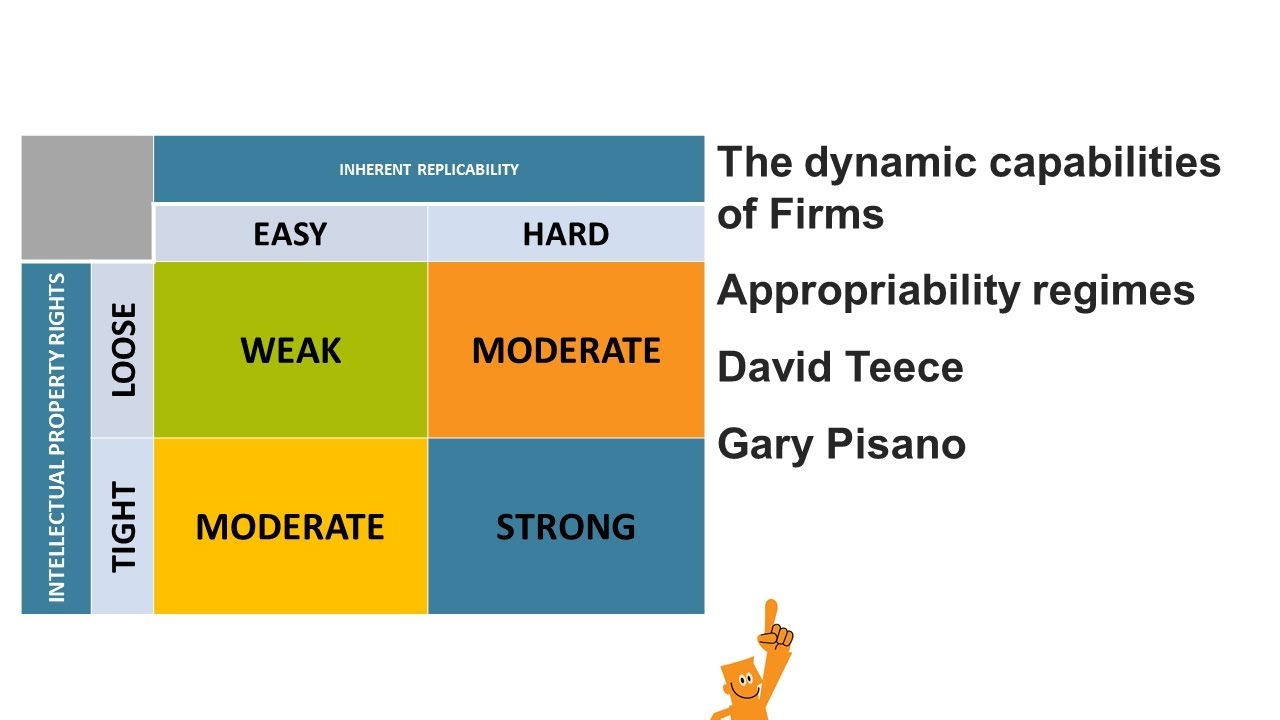
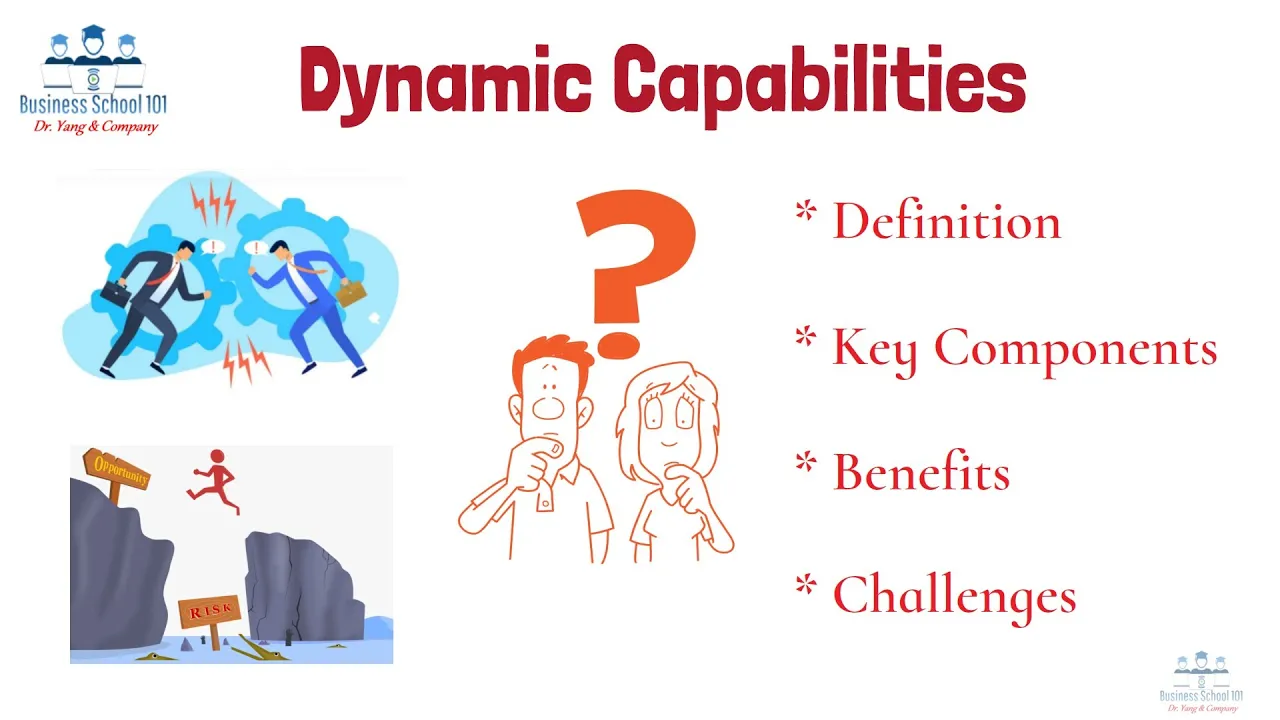
hello everyone welcome to business school 101 have you ever wondered how companies stay competitive in rapidly changing environments or consistently adapt to New Opportunities and threats the answer often lies in Dynamic capabilities but what exactly are Dynamic capabilities what are their key components and what are the main benefits and challenges they present in this video I'll explore these questions with you section one definition dynamic capabilities refer to a company's ability to integ build and reconfigure internal and external competencies to rapidly respond to changing environments unlike traditional capabilities which focus on operational efficiency Dynamic capabilities emphasize
adaptability and flexibility in the face of uncertainty and evolving markets a great example of dynamic capabilities is Apple Apple has continuously adapted its product offerings from computers to smartphones and wearable devices by leveraging its core capabilities in Innovation and design Apple's ability to shift its focus and quickly adapt to Consumer preferences is a Hallmark of its Dynamic capabilities section two key components number one sensing opportunities and threats sensing opportunities and threats involves a company's ability to constantly Monitor and analyze the external environment including market trends customer behavior and emerging Technologies companies should invest in market
research to stay informed about changes in consumer preferences new technologies and Industry developments leveraging data analytics helps gain insights into customer behavior and market trends enabling faster response times additionally maintaining continuous dialogue with stakeholders such as customers suppliers and partners ensures a better understanding of emerging opportunities or threats for example Netflix sense the shift from DVD rentals to online streaming early on by closely monitoring technological advancements and evolving consumer habits Netflix recognized the growing demand for digital content and transformed its business model to focus on streaming services this proactive sensing allowed Netflix to stay ahead
of competitors and maintain its market dominance number two seizing opportunities once opportunities are identified companies must act quickly and efficiently to capitalize on them agility in decision-making is crucial allowing teams to make rapid decisions based on Market data and Analysis companies must also allocate resources effectively focusing on high potential projects or markets that align with long-term goals partnering with other companies making Acquisitions or investing in R&D can also be strategic moves to gain a Competitive Edge and enter new markets or develop new products for example xiaomi seiz the smartphone market Opportunity by offering high-quality devices
at affordable prices by focusing on online sales and cutting distribution costs xiaomi rapidly gained market share in China and globally xiaomi's ability to quickly adapt its strategy to meet market demand helped it become one of the leading smartphon brands worldwide number three transforming and reconfiguring resources to stay competitive in a constantly changing Market companies must regularly reconfigure their resources capabilities and processes this includes assessing internal capabilities investing in new technologies to enhance efficiency and fostering a culture of continuous Improvement where employees are encouraged to innovate by doing so businesses ensure that their teams are equipped
to handle new challenges and maintain long-term growth transforming resources also requires companies to Pivot their strategies restructure teams or shift Focus to more Innovative product lines when necessary for example Microsoft successfully transformed its business model by transitioning from selling software packages to offering cloud-based services like Microsoft Azure and Office 365 by reconfiguring its resources and capabilities to focus on the growing demand for cloud computing Microsoft ensured its relevance in a rapidly changing Tech landscape second three benefits of dynamic capabilities Dynamic capabilities provide several benefits to organizations number one adaptability in uncertain environments Dynamic capabilities allow
companies to respond quickly to unexpected changes in the market enabling them to navigate crises and capitalize on emerging opportunities example Zoom quickly adapted to the increased demand for remote communication tools during the co9 pandemic scaling its platform to handle millions of users globally number two sustained competitive Advantage companies that continually develop Dynamic capabilities can maintain a long-term Competitive Edge as they are better positioned to innovate and disrupt the market for example Apple has consistently remained a market leader in consumer electronics due to its ability to innovate and adapt to Consumer demands number three increased organizational
resilience Dynamic capabilities make organizations more resilient to disruptions whether from technological advancements economic changes or global crises example Airbnb adapted to the challenges posed by the pandemic by pivoting to long-term stays and work from anywhere accommodations ensuring business continuity section four challenges of developing Dynamic capabilities while Dynamic capabilities are critical to success they are not easy to develop some challenges include number one high costs of innovation developing Dynamic capabilities require significant investment in R&D talent and new Technologies which can be costly for many businesses for example general electric GE faced challenges with its digital transformation
efforts as the costs of innovation and shifting business models mounted over time number two cultural resistance to change for dynamic capabilities to thrive organizations need a culture that Embraces change and encourages experimentation however employees May resist changes especially if they are used to traditional methods for example Kodak once a leader in photog graphy failed to adapt its business model to the digital Revolution due to internal resistance to change ultimately losing its Competitive Edge number three balancing stability and flexibility while being flexible is important companies must also balance this with operational stability to avoid constant disruptions
striking this balance can be challenging for example Sony struggled to balance its innovative products with operational stability leading to several unsuccessful product lines despite its reputation for innovation Section Five summary in conclusion Dynamic capabilities refer to a company's ability to adapt integrate and reconfigure resources in response to changing market conditions this capability is crucial for businesses aiming to thrive in fast evolving environments as it enables them to sense opportunities capitalize on them and continuously transform although building Dynamic capabilities can be challenging due to costs and internal resistance they are vital for maintaining competitiveness fostering resilience
and ensuring long-term success in today's Dynamic markets all right that's all for today's topic if you have any questions or thoughts feel free to leave a comment below I hope you found this video helpful don't forget to give it a thumbs up and subscribe to my channel for more business insights thanks for watching and I'll see you next time







![Michael Porter's "What is Strategy?" Full Summary [Hipster Edition]](https://img.youtube.com/vi/VpRNZFuJ_VU/maxresdefault.jpg)