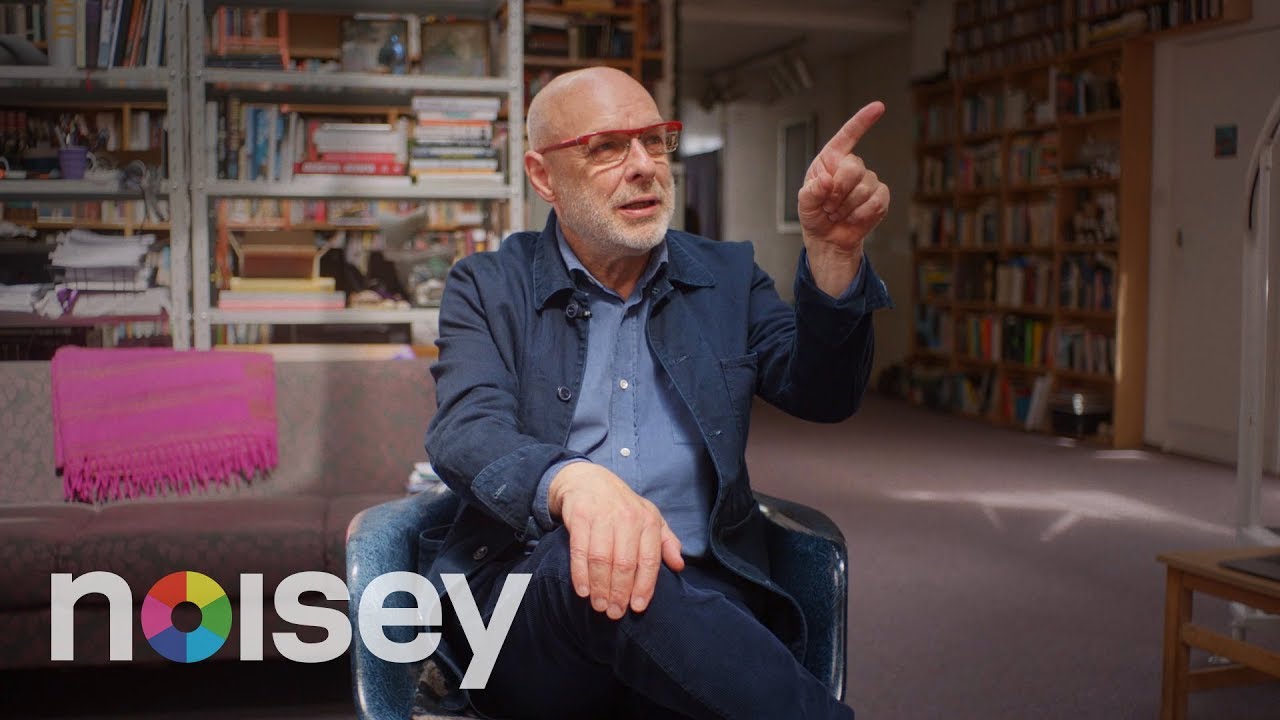
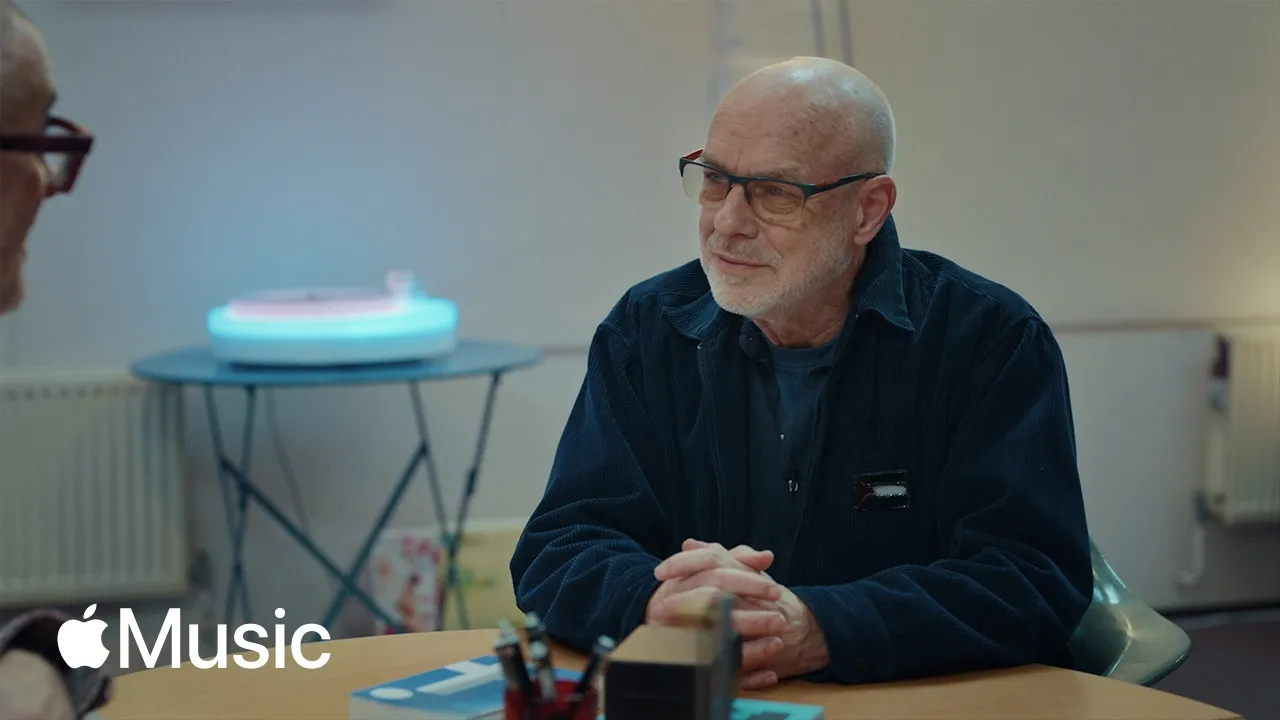
it's funny with music you never say I work music you say I play music which of course is true but I think all creative job is sort of play play is a way of exploring things you know you sort of watch what you're doing and the consequences feedback into your life let me see how many pieces do I now have in here 10,550 tracks equates to a listening time of 44 days 8 hours 38 minutes and 28 seconds so as soon as I click this it's going to make a new piece of music which will
be some random combination from my nearly 11,000 yeah I can guarantee pretty certainly that I will never have heard this piece before it's a heady Time for Art those who make it and those who love it in the undertoe of innovation scale and the infinite possibility of an AI future we may just forget what art does so creative groundbreaker Brian Eno has written a book about it reminding us that art is about building community and finding yourself in the process put it on the Shelf next to all the music Innovation art installations literature and most
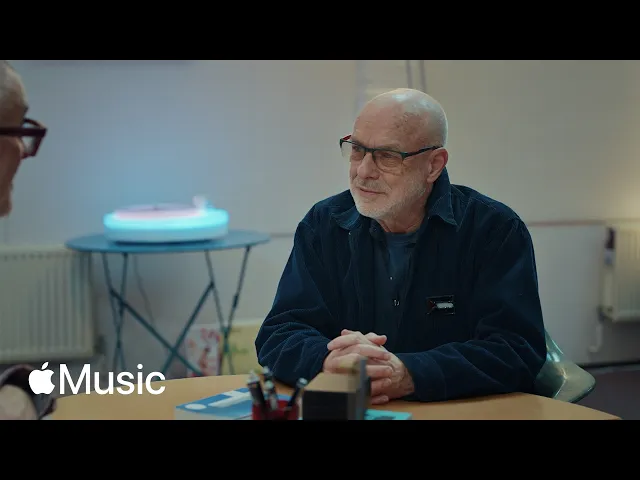
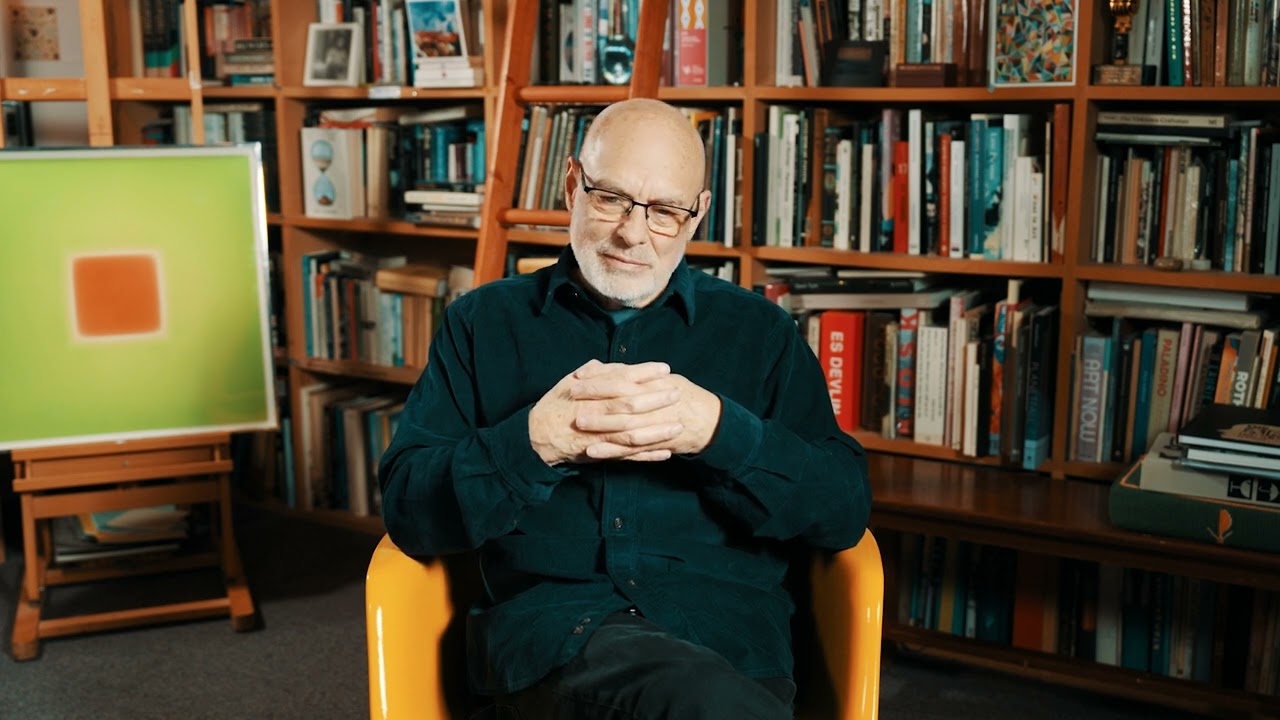
low-key of all Smash Hit albums that Brian Eno has contributed to and we have ourselves a conversation for the ages let's hope AI is listening hi Zane hi can I give you a hug you could I had I might smell a bit than just did good to see you I've been working hard thanks for uh for seeing me I always I mean I've been lucky enough to speak with you both on camera and off camera a few times in my life now but I always love being here in your house of play my house of
play yeah well it's the place I like being most as well yeah in the world actually I hardly ever go to my flat cuz there's nothing much to do there except sleep yeah well wonder what life was I mean it's not even really a question you to answer because you're probably always thinking about and seeing things through ART as I've read the book and I can see it's everywhere oh you got the book I love the book by the way but I I sort of wonder what it was like when you leave here and whether
or not you purposefully detach or you just keep thinking about things and moving I read at home that's that's what I mostly do there I read and sleep um and then here I work but I work at home actually as well yeah writing is it work oh you know those are the right I suppose to some degree there's off there's always desks here and computers and some people you work with that I'm sure you compensate fairly and and that's kind of all the all the Hallmarks of of work but it really is a creative space
so is there a distinction between the two or is that the point that there isn't that the play is the work and the work is the play yeah it's funny with music you never say I work music you say I play music don't which of course is true but I think all creative job is sort of play um play is a way of exploring things you know play is when you try something out for fun but you sort of watch what you're doing and the consequences feed back into your life and and what you do
in the rest of your life I think but then we're told later in life that um to start playing the children's game and to get to get to work yeah and what I loved about this book what art does um is it focuses on um the idea of play and the feeling that you get out of that and more importantly the importance that that has in the way that Society relates to each other community finds one another and all the way through to some of the big Concepts that we are distracted by politics and policy
and World change that art is in all of it and I love that this was a reminder and also educated people to some degree if they bother to pick it up that that's the reality that it is that that why why does it get trivialized yeah why it's cuz we don't take play seriously I mean we we're all aware that when children are playing they're learning that's how children understand things about materials about people around them about how Society Works about how traffic Works about how everything works they they try it all out in play
and we fully understand that that's how children learn but then we for some reason we think about the age of 11 they stop learning like that and they start learning through books it's almost like we're being told I remember as a kid and I was lucky I had parents who encouraged me to follow my follow play but but when I went to school I felt like um the message was get ready for the real world yeah yeah that's right you know and basically in a way what that says is get ready to contribute isn't it
well it also says get ready to be obedient get ready to stop being awkward to handle let us know exactly what you do and where you fit into the scheme of things and just stay there um education doesn't at at the General Normal level doesn't encourage too much play actually play is chaotic in a sense in terms of capitalism that the more we are obedient consumers and nothing else the more useful we are to capitalism you know we fit nicely into the system we go and do our jobs and which keeps the whole machine running
we spend the money that we earned on the in the machine so the whole thing is kept going by things like that and and there's no there's nothing in it for capitalism to say hey stop doing all of that do what you want to do if you want to do doesn't produce more money to run the system then it isn't a valid aim I don't think that's conspiratorial that's just the way things have evolved you know if if profit is your essential motive that's the kind of system that will evolve it doesn't mean that any
there's some evil person who thought I just want to keep that Zan low in his place it's better for the system if you are kept in your place and but that's what's great about the book though is it's not rejecting the idea of us all playing a role in keeping Society moving I loved that page where you began to um explain the amount of people and dedication it took just to get you to work that day thousands of individuals over potentially hundreds of years who have been chipping away and innovating to try to create an
efficient way for you to get to work um but I I liked it because I felt that for people who um are afraid to exercise their uh right to play to search for a way to create that it's a it's an additive experience not a replacement to work to the things that you do that if you add it to your life it might actually make the other things more interesting yes I mean we we've sort of inverted things now where people are defined by their work rather than what they do outside of their work which
is a Pity really isn't it because the the things that those people are most interested in are usually the things outside you know people talk about their holidays or the things they do at the weekend so that's the center of their lives but as far as capitalism is concerned the center of your life is your job what you contribute to keeping the machine running um so I I think that's a era of perspective really again it doesn't mean that there have to be evil people planning it but if you set the system up that way
with those values then you get those results those values yeah say about social media well exactly the same thing social media was set up not to make people happier which it could have been set up for that could have been the state aim but it was set up to maximize engagement because engagement translates into profit so so that was the and if you want to maximize engagement there's no better way than to make people angry resentful etc etc which is hard on the Arts there's enough criticism out there I mean I I think if an
artist now you show up um and there's a cue outside the door of people who want to tell you what you did and what you made and I think it takes great courage to create share it I think stubbornness is actually the important value now is that secret ingredient I really do I think more and more I think the people who make a difference of the ones who just refuse to be deterred and who who are stubborn they they can't be made to stop I admire those people but a lot of those people also have
a a vulnerability to them is a paradox between sensitivity and stubbornness isn't there you know like what what is the part that gets somebody over that sense of internal um crisis or confusion and actually the creates the courage to share mhm what they're thinking yeah I think a lot about attention where does your attention go your attention in a capital Society is the most value valuable thing about you that's what everybody wants so it's important to engage your attention all the time to tell you what you should be interested in what you like what you
want to do and to do that you have to disengage your attention from where it wants to be you don't have to plan to do that but just the fact that you're flooding somebody with 5,000 adverts a day which is apparently what we on average see each day 5,000 other claims on your attention apart from the things that you voluntarily choose to look at all the time each of us is drowning in a in a kind of mesh of things saying you should be thinking about this you should have an opinion about this you shouldn't
like that you should not even know about that you know when kids start sort of looking around finding that they like this or that or the other and it isn't on the grid they don't get a lot of encouragement for it those are the people we should be encouraging the people who aren't sort of riveted to their Tik Tok still exercising free will yeah or free yes free wanting free free free Love Actually in the old fashion sense of that yeah um stubbornness I keep going back to that because I just was so stubborn I
remember when I was young I just was so interested in some things and I wanted to pursue them whatever everybody else was doing but I didn't have anything like the pressure that somebody who's young now would have I mean I think you and your contemporaries were probably called Avant guard then you know I don't even know whether or not that term means anything to you whether you would consider it to be um you know a positive a positive statement or something that just it reflects people's misunderstanding of what it is that you were trying to
actually achieve when you started you know Steve Reich you know yeah you know hugely influential to you and and eyes wide open ears wide open open to the Arts and all that was possible Right but considered to be ever on guard at the time yeah yeah he was and and that doesn't you know be liking somebody like Steve Reich doesn't mean you can't like the Four Seasons or I don't mean the Vivaldi one I mean the group from New Jersey yeah so one of the things that was difficult when when I was younger was loving
both of these things that you weren't supposed to like both of yes you know so if you like Steve then people would laugh at you for listening to yeah pop music Bo didly or something like that exactly and vice versa it would be you like that stuff that that weird stuff that electronic stuff whatever so I don't know why is it so hard to say I I like a lot of it I like all of it but then when you did it we got Roxy Music that's what Roxy Music is right it's a combination of
this idea of put of being an art and fashion and searching for things that consider but also big Tunes yeah I was thinking the other day that when Roxy started rock and roll was about 16 years old that is if you if you think of it 1955 is probably when you can say it started with sort of Bill Haley and rhythm and blues just becoming rock and roll Little Richard that kind of thing 1955 56 so that seemed like ancient history to us when we started Roxy Music yeah and now that's what is that that's
um 70 years ago yeah I suppose what I remember most was people saying well of course it won't last it's a f and I was surprised that it lasted actually I didn't expect to still be doing something like this at my age I didn't expect to ever reach my age actually wow and yet here you are busier than ever and um so much that I want to talk about um thanks so much for doing the radio show with us on chill and such a beautiful experience sit down as we knew it would be yeah I'd
love to um yeah I love it was lovely to hear this beautiful framework for lack of a bit of term that you've created in order to create generative music but it's it's by Design but it also I'm sure creat surprise for you yeah I think the misconceptions people have about artists is that artists walk around with sort of unrealized things in their head and the process of being an artist is making those become real but I don't really know any artists who work that way you might have some an idea of where you want to
start but the process of making something is the process of it of you starting to understand it as well you know that you find your way through making it not you've got it all in your head we're not architects essentially um Architects have to plan it all in advance because otherwise The Things fall down but in art it doesn't matter if it all falls down but in working in a generative environment where something will present itself and you'll feel something your instinct will begin mhm to some degree does away with some of the overthinking and
the diligence that can get in the way has it affected in any way your relationship with your inner voice which people focus a lot on the creativity of Art that's where people say you know you got to do the work and what they're saying is you have to dig as deep as you can to find something inside of you that you really want to share will help you and it will help others what's the relationship like with that voice and the inner voice in your experience well first of all I should tell you a little
bit how I think generative art works so some people present it as though you kind of come up with a system and then the system does all the work for you what that overlooks is that the the system doesn't do anything interesting unless it has very interesting inputs carefully curated inputs which is a lot of work and a lot of filtering on the other end which is also a lot of work so and of course you you built the machine as well so you're tweaking that all the time as well you know if if I
want to get a result I like I find I have to do more on change that rule and so I mean if you think of the most simple gener ative machine a set of Windchimes right that's a very simple generative art piece you'd think oh well that's that's easy to make and it is easy to make but then there are lots of choices what notes will I have in that how far apart will I space these things which determines how often they'll hit so how noisy and busy is it going to be even with something
like a windchime there are a lot of decisions made and they're artistic decisions just because you you didn't plan the progress of that piece Sand by sand uh it doesn't make it any less of a challenge even when you place them and we have one of something like that in our house in California and often I've moved it because um you know the wind will change direction and I don't like the way the wind is conducting yet it's too strong it's become a slip knot concept for me I'm like no no no no it's too
intense you know what does slip knot mean slip knots a heavy metal band there a bunch of guys like nine of them came out of Iowa dressed in um homemade boiler suit and clown masks and all kind of craziness and very theatrical but very an enormous amount of believability like 100% committed to their craft and also happen to be able to play like beasts they'd come out and it would just be like I don't even know how to describe it they would hit the stage and it would just be like this radioactive explosion of energy
and it's still amazing in making music today but yeah powerful band well I have heard of them but I don't think I've ever seen them embarrassed by but what did just to ask you one more question what do those nine people do so well yeah there's singers and there's guitar players and bass players and then there's a couple of guys who play percussion and they stand on hydraulic platforms up and down Hing like steel drums and metal drums and all kinds of industrial stuff so it's quite industrial yeah there there's a drummer and a DJ
and so everyone's got a role and I think you'd have to ask them but the general feeling I always got from the band was like we're coming out of Iowa smalltown Iowa this is a great way to get out and go see the world and survive make some money and do something with our life everyone let's get it together and make it a real thing it's pretty amazing it's pretty wide check it out so I want to talk a little bit about Bloom and the impact that that creating um that app back in I guess
it was 2008 perhaps um had on the way that you sort of made music from that point forward because that to me was I guess your first forway into seeing whether or not it could exist in the wider world and people would enjoy it and use it so I'd been making generative pieces for a long time some of the earliest ones for example involved long long Loops of tape that ran on different machines the tape sort of wound around chair legs around the room to support it in general the the systems that I used then
were quite clumsy another one was um I used six or eight ghetto blasters as they used to be called with different CDs in them and different material on each CD but combining in in space um so they weren't synchronized together that was the whole point not being synchronized allowed new clusters of sound to and I always thought I wonder how I could get that that experience of something making itself um in a form that people would listen to without having to go to one of my shows because I used to install these things in Galleries
and museums and so on it's also not lost to me that that is a very early forway into what's become spatial audio I mean that is an immersive experience yeah it was it was very immersive yeah some some of them had 12 or 20 different sound sources but the only way I could really make a version of it that was listenable to by a listener was to put it onto a stereo recording which of course loses all the spatial aspect or most of it um and it wasn't really until computers came along that I thought
ah here's a way I could make something that could make itself as you're listening to it so you know you're listening to it the first time that particular version of of the piece has ever happened and I think I think that makes a difference people realize that I think you know when there's a football game on now and you're watching it you're watching it and you know you're in the same situation as everyone else they don't nobody knows what's going to happen yeah that's quite different from watching it 5 minutes later even when you know
that somebody else knows the result already and that's the world we live in right now where everybody wants to know exactly what they want to know when they want to know it you're right we've lost some of that anti that that unique the unique properties of that experience yes yes so so I wanted it to feel I wanted you to know that what you were listening to was unique to that moment um nobody had had that experience before and so when I started working with Peter chilas that's that's what we found ourselves doing starting to
use quite a lot of the ideas that came out of games basically that you could put into computer because the most important thing was not the computer which had existed for a while but the fact of it being in a phone that you carried with you so that made it a quite different experience that you could have this unreplicated piece of music and fast forward 17 years later and to some degree whether it's by chance or by Design um you know the the director and the creator of of the software that ultimately became your documentary
Eno kind of it's an extens of that principle right quite a unique experience for people to see you on camera at all um for the longest time you seemed reticent to ever really be caught on camera can I ask you what being on camera meant to you when you were in your process and why you didn't really like that experience I think it's because it pulls you out of where you really are in the present and it puts you into a sort of future when you're looking back at yourself so it puts you into a
sort of strange ironic way of being instead of when it's like when a cameraman says oh just be normal suddenly you are incapable of being normal um it's a little bit like somebody saying don't think of elephant you know as soon as the thought is in your mind you can't lose it so I resented the way it took you out of where you were at that moment yeah um and I I kind of understood what so-called primitive people were saying when they said it steals your soul because it does in a way it takes it
out of you um because it says oh you are not just in this moment you're going to be in the future in this moment again and again and again and again so this isn't just any old moment you're trapped In This Moment Forever yeah you yes that's right you you're fixed some part of you is fixed there you know this documentary is um is fascinating because of the way that you've been able to to create a you know unlimited amount of variations through the idea of the narrative and Technology meeting in perfect Unison um I
I read some interesting feedback on it you know one somebody actually drew a line through and and that ended with AI and sort of said at this time where we're concerned about the impact AI is going to have on personalization of Art and the attention that people will give to AI which is the currency we need people to make bold artistic decisions rather than put it through a randomization effect and I wonder what your thoughts are on that you know and and whether or not you think this what the relationship between what you and the
director and the software creator and Peter are trying to do and where the world is going from an AI point of view the biggest problem for me about AI is not intrinsic to AI it's to do with the fact that it's owned by the same few people and I have less and less interest in what those people think and more and more criticisms of what the effect of their work has been I think um social media has been a catastrophe and and mildly useful at the same time is possible for both things to coexist but
I think in terms of what it's done to societies it's been a catastrophe what it's done to politics has been completely toxic yeah um again that could have been avoided I think if if it had started out in a not for-profit regime it would have been different because maximize engagement wouldn't have been the the sort of head headline of the whole project maximum engagement is just another word for maximized profit and if if that's your intention then you get what we got um just like in in you know the American food industry is maximize profit
which is why you have a lot of very very unhealthy people um if if maximized profit is the bottom line then that is such a lowly ambition that produces very bad results um what about maximize happiness you know what about maximize the the good sides of Human Relationships rather than the toxic sides which is what's now happened so that's put that aside now talking about AI itself I've always been happy to welcome new technologies and to see what you could do with them that nobody else thought of doing with them and what things they could
do other than those that they were designed for CU with all music technology it's always very interesting that stuff is designed for one reason and then people start to find new things they could do that are completely beyond what the designer was thinking about Distortion is a good example you know Distortion is in a way the sound of popular music a lot of the things that we find uniquely exciting to do with equipment kind of going wrong yeah that's quite a bizarre thought isn't it you design equipment to do this then you start using it
to do something else which doesn't do very well and you get to like the sound not very Wellness but that's a process of Letting Go isn't it and and you talk about that in the book and I think those two words are crucial to The Human Experience Beyond even just art yeah let go it it it's the hardest and most important thing for us to try to get our head around is that is that part of this process as well like at some point hopefully and I don't know if this is a step too far
you might invite us into the balloom box I was going to do that but I thought it would be better go there now actually let's go take a look at that I'd love you get some you can get some film of these things when it's a bit darker um okay let me just thanks you you might think that this is what my studio looks like all the time but are you cleaned up just for us I didn't somebody else did uh shall I show tell you about well the the music archive is yeah okay please
so this all started with the fact that I make so much music some of it isn't really worth listening to or some people would say none of it is worth listening to but that is subjective and a human right but but I I just whatever I work on even if it's just I'm trying out a new synthesizer or something and I I think that's quite an interesting sound so rather than just store the sound in the huge library of sounds I have I always make a short little piece with it just so I can remember
what that sound was and you name them all I give them names they're not used to very interesting but how do you come up with names I'm fascinated by names how how do you like is it is it quick do you not think too much about it is it just shoot from the hip like well that's a name that snouty is is the name of one sound souty Jam yeah so machinist is another so this is why I needed a different kind of AR so for about 40 years or so I've been making bits and
pieces of music that some of them are intended as pieces of music others are just momentos of a particular sound or thinking that something I thought oh maybe that will come useful later on you know do you even consider the term writer block as something that's reality or do you just go to work even if you're not particularly inspired in in sort of traditional sense of the word it's like I'm going to create something yeah well yes I do I just get started um so because I have two media that I work in so I
I work in I make these light pieces as well as sound pieces if I really get sick of being in the studio I start working on some light pieces for a few days and vice versa you know so so I've got two things to drift between yeah but I always remember this quote from tobacco uh from tobacco industry you'd be amazed how inspire ing the tobacco industry has been over the years it's helped me no end no Picasso once said that um inspiration does come but it has to find you working and oh yeah so
so I think if if you think you've got writers block get to work just get to work and yeah try doing something mundane maybe you know don't try to write the Great American novel try to write a a nice letter to a friend or something like that um just get something going you have to get the thing running again it's like if you're an athlete you have to practice every day you know you don't just wait till the day of the race and think oh I better get better get limbered up you're you're in shape
the whole time so a lot of this is me staying in shape but but it means that I have um let me see how many pieces do I now have in here uh 10,550 tracks equates to a listening time of 44 days 8 hours 38 minutes and 28 seconds starting now so the first thing I thought was well I need an archive that can take me through those in interesting ways because I I won't remember the name of anything yeah so the first the first thing we made was quite a simple idea imagine that I
was tidying up or something in that room or writing to somebody or something like that but I want my archive to be flashing past all the time so so now I've set it so that every two seconds it's going to change to another piece wow so you're just giving yourself a flash frame a a quick a quick memory of something to see whether it it it takes you back there or or joins you here okay so can we do this in real time if I found one that I really liked and said let's do something
with that say that say that piece there okay so I first of all stop and then I'll go back to find what that was it was that one wasn't it I think um that one yeah um then I would just either go and find that piece yeah which is from 2021 at 507 yeah so then I might go and work on that piece so that was fine and it's been very useful but we then came up with another idea I I said to Peter wouldn't it be nice if we could hear two or three tracks
actually stuck together played at the same time so we came up with this thing called the shuffler or Peter Peter did I should say I didn't have anything to do with programming it at all and so this is this is an example of the shuffler so as soon as I click this it's going to make a new piece of music which will be some random combination from my nearly yeah so and I will not have I can guarantee pretty certainly that I will never have heard this piece before okay so that's a new piece of
music wow how interesting for you to be able to have the an experience that most artists will never have because they get it to a place of completion and then never want to listen to it again you get a first impression yeah of the music you've made wow and if I if I hit it again I'll get a new piece when you listen back to your own music but in a in a brand new composition that you've never heard before how does it affect your own sense of creative identity if at all it's presenting itself
to you you didn't you made it but you didn't well I made all the bits in it I never thought of putting them together in that way before so so one of the things is that you discover quite a lot about your taste yeah that's right for instance there there are things combining in here that if you heard them separately you would probably never think wow they' make a nice piece put together that's so cool though have you ever made anything that's shown up in a public attention for film TV anything like that from this
yeah yeah in fact well I've just in my Apple playlists yes that's right I just did there was one of these in each those playlist that's what amber arm is yeah that's right um so but when I now when I make film music I I make film music sometimes I nearly always start here um so so by the way just I should tell you another thing yeah yeah if I hear a combination I like I can mix it a little bit you know so I can turn bits up and down get a mix I like
and then I can go save combination and that enters then this list of combinations I've saved there is amazing um and the other thing I should say about it is that each of the pieces plays as a loop so when it gets to the end it will just go back to the beginning so that means because they're all different lengths it means the piece itself will change throughout the day as it plays so because you have a um components that can be randomly selected out of more than 10,000 pieces of music I can't do the
math that quickly oh it's trillions okay so as someone who clearly loves the idea of staying present and focusing on what you're focusing on now and with at the risk of sounding morbid you find it anything at all that the idea of long after you've shifted off into whatever the next experience spiritually is that you'll still be making music for the rest of time yeah yeah no I find that um intriguing and it's a funny sort of it is a kind of immortality in a way but I mean everybody has a kind of immortality put
all your narcissism into this it it all goes into here oh look this is interesting it's just it's just about to loop back in fact this one is just loop back yes so it's changed it's changed the dynamic all together it's a feeling complet changed I I like the idea of making pieace making things that will continue to have a life without me around you know like these these things here you know these they're very simple but they they keep changing and making new combinations you've successfully created your an AI version of yourself so that
when your body finally decides to stop working yeah which looks like being very soon stop your your creativity will continue to to evolve yeah crazy I love it but but I think that sort of happens with with every artist in way because what you leave behind changes forever you know even though it looks like the same painting of course everything else is changing around it so it changes so I I don't think it's that revolutionary I mean it's it's it's nice to be able to do it it's cool can we go look at a few
light boxes before we um leave you to your would you like should I leave this piece yeah can we leave playing yeah so nice I'll put it through the speakers outside as well it's so nice lead the way I'm I'm glad we're going to get a chance to look at these because I love I love your light box uh art and work um well I'll tell you what I'm going to I'm going to ask if I can put the lights off so you can see them 100% yes please they get better as it gets darker
yeah I'll put the kettle on yeah nice thanks and the its sound will contribute to the general Ambiance how fun is okay so this piece is looking quite good it's dark enough in this corner to see it yeah smell this say this is my current favorite tea what is that it's it's it's an African tea from Morocco love that we're going to have that yeah I'm excited isn't that lovely yeah this one's beautiful and it's interesting I I don't see too many that have Cur soft curves yeah no I I used to do mostly soft
curved ones a long time ago but yeah then I've been through a geometric period now I'm now I'm back in the curves again this one's really beautiful so that's that's a fairly new one as well over there a so clean so nice this one's generating color isn't it yeah or is it static no that's that's changing that'll change if I switch it off and on again then it will come back in different colors told you so good I did that I did that not long ago it was being filmed I said you see it would
come back in different colors it came back identical and I said oh that's unusual I did it again identical colors so that's another this is another kind where you have you have three color Fields here that one that one and the one behind oh which happens to be sort of the same color now but if I if I switch this off and on again and that's not on everyone is it no you're right this this idea of using a color background it's coming out of there you see I made the first one of these about
4 years ago guess something like that with the back color yeah beautiful what if I may ask and if you find the words nice way for us to finish when have a cup of tea do you get out of make of this experience of creating these what feeling same as the music really that well the only reason I ever made music was cuz I just wanted to hear something you know when when you've listened to a lot of music you think I wish there was something more like that but much longer or that had those
kinds of feelings in it but they didn't keep interrupting it with this other thing that was often the feeling and so I started the first piece of music I really made on my own was I'd found this big lampshade at Art School big metal lampshade which had a sound like a bell and there was a tape recorder there so I could record this spell at three different speeds which meant in three different octaves and I just loved hearing this simple flat sound um and I thought that sounds like music to me and I didn't really
know at that time that music like that existed there had been was called music concrete you know excuse me I just do the tea and that gets back to the principle of what you talk about um in the book which is what do you like yeah what is it you really like what is it you really like yeah the quote that kind of I guess has guided you all the way through I think that is such an important question and people think it's about self-indulgence or selfishness or something like that but it isn't really it's
about where is your attention where does your attention want to be and as I said earlier in a world where everything is trying to claim your attention to sell you something or to get you to vote for something or to believe in something what your attention wants to do is very important and it just is constantly being bombarded by other demands you know no no you should look at this hey this is really interesting hey you'd like this um and to to sort of say okay hold on what was it that I liked what was
the thing that really mattered to me um and the things that really matter to you can be even quite trivial things you know like I like cooking my eggs in a certain way um or it can be I really care about what's going on in Gaza now even though the newspapers don't think of it as a story any longer but you really ought to be the shepherd of your your own attention you you can't let that be stolen from you and I think this is one of the I was saying that one of the primary
um qualities of an artist I think is stubbornness and that's what the stubbornness is about it's about refusing to have your attention stolen from you let's sit down again I cannot tell you how grateful I am and how much fun I've had being back here again um to spend time thank you to just to just talk with you you know it's very kind of you thank you in the spirit of of everything that you've created a smells so good it's a wow it's quite a it's amazing the nicest thing about this this comes in a
can which has a little QR code in it yeah and the QR code sends you to a playlist of songs they think that perect that they're mostly African songs um would you send me this piece of music now you've saved it yeah I will I'll I'll I'll just make it now great cuz I have to I just record it cuz at the moment it's not being recorded a relatively gentle Fade up at the risk of making this too too Grand a statement that is now going to be one of one yeah that'll be the only
existing version of this piece of music yeah wow they warned me when you come in here you'll never leave so maybe this is where I say goodbye let's have such a good time that's true thank you thank you for coming I am very happy in this room I have to say yeah well thank you for letting us into your happy place and allowing us to move freely with you and uh for the tea it's a pleasure all right guys I think we should leave Brian alone well have the tea oh I'm staying you have to
go [Music]