The SANONS’ Response to Study Article 31. What Jehovah Has Done to Rescue Sinful Humans. Theme Text.
“God loved the world so much that he gave his only-begotten Son. ”—JOHN 3:16. FOCUS.
How Jehovah has been taking the initiative to help us battle against sin and how he has made it possible for us to enjoy eternal life, free from sin. Paragraphs 1 & 2. WOULD you like to know how much Jehovah God loves you?
Here is a good way for you to learn the answer: Study what he has done in order to save you from sin and death. Sin is a terrible enemy, one that you cannot defeat on your own. We all sin daily, and we die because of sin.
There is good news, though. With Jehovah’s help, we can defeat sin. In fact, our victory is absolutely certain!
Jehovah God has been helping humans fight against sin for some 6,000 years. Why? Because he loves us.
He has loved humans from the very beginning, so he has gone to great lengths to help them in this fight. God knows that sin leads to death, and he does not want us to die. He wants us to live forever.
That is what he wants for you. In this article, we will discuss three questions: 1. How did Jehovah offer hope to sinful humans?
2. How did sinful humans in Bible times gain Jehovah’s favor? 3.
How did Jesus come to the rescue of sinful humankind? Question 1 & 2. What is sin, and how can we win our fight against it?
Our Response: Sin is a powerful force that we cannot overcome by ourselves, but with Jehovah’s help, victory is certain. His love and desire for us to live forever, free from sin, is clearly shown in his actions. Reflecting on Jehovah’s love, as expressed in Romans 5:12 and Romans 6:23, gives us hope and strengthens our confidence that Jehovah will help us in this battle.
What an assurance it is to know that we are not alone in this fight! Paragraph 3. When Jehovah created the first man and woman, he wanted them to be happy.
He gave them a beautiful home, the gift of marriage, and a fascinating assignment. They were to fill the earth with their descendants, making the whole planet a paradise like the garden of Eden. He gave them only one simple restriction.
And he warned them that if they broke that command by deliberately rebelling against him, their sin would lead to death. We know what happened. An invisible spirit, one who had no love for God or for them, entered the picture and tempted them to commit that sin.
Adam and Eve gave in to that bad influence. Failing to trust their loving Father, they sinned. As we know, Jehovah’s words proved true.
From that day onward, they had to face the consequences: they began to grow old, and finally, they died. Question 3. How did our first parents come to be sinners?
Our Response: Jehovah lovingly provided everything Adam and Eve needed, yet they chose to disobey. Their failure to trust Jehovah opened the door to sin and death, affecting all their descendants. This helps us understand the far-reaching consequences of disobedience to Jehovah’s instructions.
However, reflecting on Genesis 3 verses 1 through 6 reminds us that despite their actions, Jehovah’s purpose for humanity has not changed—he still desires us to live forever in a paradise earth. Paragraph 4. Jehovah had that sad account recorded for our benefit.
It helps us to understand why he hates sin so much. Sin separates us from our Father, and it leads to death. That is why Satan, the rebel spirit who instigated all this trouble, loves sin and seeks to promote it.
He might have thought that he won a great victory in Eden. But he did not understand how loving Jehovah is. God never changed his purpose for the descendants of Adam and Eve.
He loves the human family, so he immediately offered hope to all. Romans 8:20, 21 reads: ``For the creation was subjected to futility, not by its own will, but through the one who subjected it, on the basis of hope that the creation itself will also be set free from enslavement to corruption and have the glorious freedom of the children of God. `` Jehovah knew that some of those descendants would choose to love him and would seek his help in fighting against sin.
And as their Father and Creator, he would give them a way to be set free from sin and draw close to him. What would Jehovah do to make all that possible? Question 4.
Why does Jehovah hate sin and help us fight against it? Our Response: Jehovah’s hatred of sin stems from its destructive impact on our relationship with Him. Isaiah 59:2 emphasizes that sin creates a separation between us and God, but Jehovah’s love moves Him to help us overcome it.
The hope expressed in Romans 8:20, 21 is deeply reassuring, showing that Jehovah is eager to rescue us and restore our relationship with Him. It’s comforting to know that despite our imperfections, Jehovah’s love for us is constant, and He provides a way for us to return to Him. Paragraph 5.
Genesis 3:15 reads: And I will put enmity between you and the woman and between your offspring and her offspring. He will crush your head, and you will strike him in the heel. ” The first glimmer of hope came when Jehovah pronounced his sentence on Satan.
God foretold that an “offspring” would be the key to hope. This offspring would eventually crush Satan, undoing all the evil that he had caused in Eden. (1 John 3:8).
However, that offspring would suffer in the process. Satan would strike him, causing his death. That would hurt Jehovah most deeply.
But the pain would all be worth it in the end because countless humans would be saved from sin and death. Question 5. When did Jehovah offer a first glimmer of hope to sinful mankind?
Our Response: Genesis 3:15 provides the very first promise of hope for humanity. Although Satan succeeded in leading Adam and Eve into sin, Jehovah’s declaration of the coming “offspring” assured the eventual defeat of Satan and the undoing of his works. 1 John 3:8 confirms that Jesus, as the promised offspring, came to destroy the works of the Devil.
Jehovah’s willingness to sacrifice His Son for our sake is the ultimate expression of love, giving us the assurance that through Jesus, we can be rescued from sin and death. Paragraph 6. Through the centuries that followed, Jehovah gradually made it clearer and clearer how sinful humans could draw close to him.
Abel, the second son of Adam and Eve, was the first human to put faith in Jehovah after the tragedy in Eden. Because Abel loved Jehovah and sought to please Him and draw close to Him, he offered up a sacrifice. Abel was a shepherd, so he took some of his young lambs and slaughtered them, offering them up to Jehovah.
How did Jehovah respond? He “looked with favor on Abel and on his offering. ” Jehovah expressed approval of similar sacrifices offered up by people who loved him and trusted in him—such as Noah.
By accepting such sacrifices, Jehovah showed that sinful humans could gain his favor and draw close to him. Question 6. What did men of faith, such as Abel and Noah, do in order to draw close to Jehovah?
Our Response: Just like Abel and Noah, we can draw close to Jehovah by demonstrating our faith through acts of obedience and love. By offering our best to Jehovah, we show that we trust in Him, and in turn, we can expect His favor, as Genesis 4:4 reveals. Jehovah’s approval of their sacrifices assures us that despite our sinful nature, we can still gain His favor by seeking to please Him.
Paragraph 7. Jehovah asked Abraham, a remarkable man of faith, to do something extremely difficult—to offer up his own son Isaac as a sacrifice. Abraham surely found this to be the most painful task imaginable.
Nonetheless, he prepared to follow through with it. But God stopped him at the last moment. Still, that example teaches all people of faith a vital truth—Jehovah would be willing to offer his own beloved Son as a sacrifice.
Jehovah loves humans that much. Question 7. What do we learn from Abraham’s willingness to sacrifice his own son?
Our Response: Abraham’s willingness to sacrifice Isaac shows us the depth of faith and trust that Jehovah desires from us. His action also foreshadows Jehovah’s love in offering His only-begotten Son, Jesus, for our salvation. Genesis 22:1-18 reminds us of the ultimate sacrifice Jehovah made, showing the profound depth of His love for humanity.
We, too, can demonstrate our faith by trusting in Jehovah's purpose, even when it requires great personal sacrifice. Paragraph 8. Centuries later, the Law given to the nation of Israel called for many sacrifices to atone for the sins of God’s people.
(Leviticus 4:27-29 reads: “‘If any one of the people of the land sins unintentionally and becomes guilty by doing one of the things that Jehovah commands should not be done, or if he becomes aware of a sin that he has committed, then he should bring a sound young female goat as his offering for the sin he has committed. He will lay his hand on the head of the sin offering and slaughter the sin offering in the same place as the burnt offering. Leviticus 17:11 reads: For the life of the flesh is in the blood, and I myself have given it on the altar for you to make atonement for yourselves, because it is the blood that makes atonement by means of the life in it.
) Such sacrifices pointed to a greater sacrifice, one that would completely save mankind from sin. God’s prophets were inspired to explain that the promised offspring, who turned out to be a special Son of God, would have to suffer and be put to death. He would be slaughtered like a sacrificial sheep.
(Isaiah 53 verses 1 through 12 Imagine: Jehovah would arrange for his own beloved Son to be sacrificed in order to save mankind—including you—from sin and death! Question 8. What did the many sacrifices under the Law point to?
(Leviticus 4:27 through 29; Leviticus 17:11). Our Response: The sacrifices under the Law were a foreshadowing of Jesus’ ultimate sacrifice. As Leviticus 4:27 through 29 and 17:11 explain, these sacrifices symbolized the future atonement that Jesus would provide for all mankind.
Reflecting on this reminds us of the tremendous love Jehovah has for us, as He allowed His beloved Son to be sacrificed to give us the hope of salvation. Paragraph 9. In the first century C.
E. , God’s servant John the Baptist pointed to Jesus of Nazareth and said: “See, the Lamb of God who takes away the sin of the world! ” These inspired words identified Jesus as the long-foretold offspring.
He would offer up the promised sacrifice. Now more than ever before, there was a solid hope for sinful mankind—a complete victory over sin. —Read Hebrews 9:22.
Yes, according to the Law nearly all things are cleansed with blood, and unless blood is poured out no forgiveness takes place. Question 9. What did John the Baptist indicate about Jesus?
(Hebrews 9:22; Hebrews 10:1 through 4 and 12). Our Response: John the Baptist’s identification of Jesus as "the Lamb of God" in John 1:29 points to the fulfillment of Jehovah’s promise to rescue mankind from sin. Jesus' sacrifice provides complete atonement, as explained in Hebrews 9:22.
This gives us solid hope, knowing that through Jesus, we can attain victory over sin and death. Our gratitude for this provision should motivate us to remain close to Jehovah. Paragraph 10.
Jesus focused special attention on people who felt weighed down by sin and invited them to become his followers. He knew that sin was the root cause of mankind’s ills. So he reached out to men and women who were known to be sinners.
Using an illustration, he explained: “Healthy people do not need a physician, but those who are ill do. ” He added: “I came to call, not righteous people, but sinners. ” Jesus lived up to those words.
He gently forgave the sins of the woman who washed his feet with her tears. He taught vital truths to the Samaritan woman at the well, though he knew of her immoral lifestyle. God even empowered Jesus to undo the end result of all sin—death.
How? Jesus resurrected people—male and female, children and adults. Question 10.
How did Jesus show that he “came to call” sinners? Our Response: Jesus’ mission to call sinners, as shown in Matthew 9:12, 13, highlights his compassion and desire to help those burdened by sin. His loving actions, such as forgiving the woman and teaching the Samaritan woman, demonstrate that no one is beyond the reach of Jehovah’s mercy.
Through Jesus’ resurrection of the dead, we see Jehovah’s power to undo the ultimate consequence of sin—death. This reassures us that Jehovah and Jesus deeply care for us and are eager to help us overcome our weaknesses. Paragraph 11.
It is no wonder that even people deeply caught up in sin were drawn to Jesus. He showed them compassion and empathy. They felt comfortable approaching him.
And Jesus commended and rewarded such ones for showing faith in him. He provided a perfect, living picture of his Father’s mercy. By word and deed, he showed that his compassionate, merciful Father loves people and wants to help each of them to win the fight against sin.
Jesus helped sinful people to want to change their ways and to follow him. Question 11. What drew sinners to Jesus, and how did he help them change their ways?
Our Response: Jesus' compassion and empathy made him approachable even to those who felt deeply burdened by sin. His loving manner demonstrated Jehovah’s mercy and helped sinners feel valued and hopeful. Luke 15 verses 1 and 2 shows how Jesus attracted those seeking change, and by helping them, he illustrated the love of his Father.
We, too, can imitate Jesus’ compassionate approach by showing love and understanding to those who are struggling. Paragraph 12. Jesus knew what lay ahead of him.
More than once, he told his followers that he would be betrayed and executed on a stake. He knew that his sacrifice would take away the sin of the world, as John had proclaimed, and the prophets had foretold. Jesus also taught that after offering his life, he would “draw all sorts of men” to himself.
Sinful humans could please Jehovah by accepting Jesus as their Lord and by following in his steps. If they did so, they would finally be “set free from sin. ” So, Jesus willingly and courageously faced his terrible death.
Question 12. What did Jesus teach about his own death? Our Response: Jesus was fully aware of the suffering he would endure but willingly faced it out of love for humanity.
His sacrifice, as foretold in Matthew 17:22 and John 12:32, opened the way for all to be freed from sin if they follow him. His courage in the face of death encourages us to remain steadfast in our faith, knowing that through Jesus, we can be set free from the power of sin. Paragraph 13.
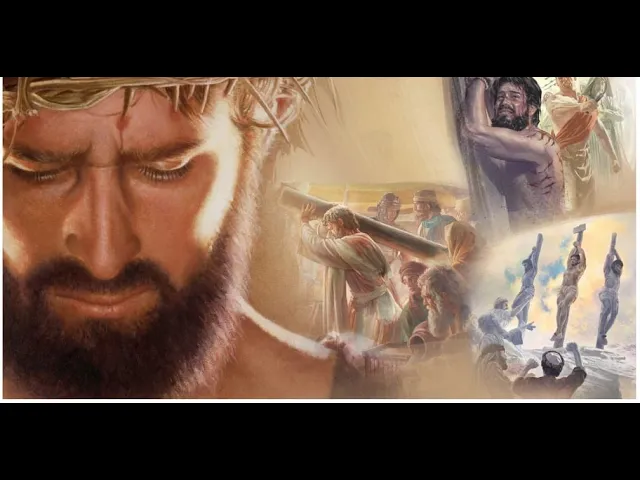
Jesus was betrayed, arrested, verbally abused, slandered, convicted, and even tortured. Soldiers led him to the site of execution and nailed him to a stake. As he faithfully endured all that agony, there was Someone who felt even more pain.
That was Jehovah God. He held back his infinite power and refrained from intervening. Why?
What could move a loving Father to act in that way? In a word, love. Jesus said: “God loved the world so much that he gave his only-begotten Son, so that everyone exercising faith in him might not be destroyed but have everlasting life.
”—John 3:16. Question 13. How did Jesus die, and what did his death teach us about Jehovah God?
Our Response: Jesus’ death was a profound act of love, not only on his part but also on Jehovah’s. As John 3:16 highlights, Jehovah’s willingness to let His beloved Son die shows how deeply He loves humanity. His restraint from intervening during Jesus’ suffering speaks to the incredible sacrifice made for us.
Reflecting on this should move us to greater appreciation for Jehovah's love and the ransom provision. Paragraph 14. Jesus’ sacrifice is the ultimate proof of how much Jehovah loves the descendants of Adam and Eve.
It proves how much Jehovah loves you. He went to great lengths, subjecting himself to the worst pain imaginable in order to rescue you from sin and death. Yes, he wants to help each one of us to fight against sin—and to win!
Question 14. What does Jesus’ sacrifice teach you? Our Response: The sacrifice of Jesus is personal—it is the ultimate demonstration of Jehovah’s love for each one of us.
1 John 4:9 and 10 reminds us that this love was shown in the willingness to endure suffering for our sake. This knowledge should fill us with gratitude and motivate us to continue fighting against sin with the confidence that Jehovah will help us succeed. Paragraph 15.
God’s gift, the ransom sacrifice of his only-begotten Son, makes it possible for us to have our sins forgiven. But to receive God’s forgiveness, we must do something. What is that?
John the Baptist and then Jesus Christ himself provided the answer: “Repent, for the Kingdom of the heavens has drawn near. ” So, repentance is key if we truly want to fight against sin and draw close to our loving Father. But what is involved in being repentant, and how does it help us combat our sinful condition?
The next study article will provide the answer. Question 15. What must we do in order to benefit from God’s gift of the ransom sacrifice of Jesus?
Our Response: The gift of Jesus’ sacrifice is available to all, but we must actively repent to benefit from it. Matthew 3:1 and 2 reminds us of the need to recognize our sins and turn away from them. True repentance is a continual process that helps us draw closer to Jehovah and maintain our spiritual strength.
This step is essential in our fight against sin and our efforts to gain everlasting life. How Would You Answer? 1.
How did Jehovah offer hope to sinful humans? Our Response: Jehovah offered hope to sinful humans right after the rebellion in Eden. He provided a prophecy in Genesis 3:15 that foretold the coming of an "offspring" who would crush Satan and undo the damage caused by sin.
This offspring, later revealed to be Jesus Christ, would provide a way for humans to be saved from sin and death. Jehovah’s immediate promise in Eden showed His love and His desire for humanity to have hope, even in the face of sin. 2.
What did the animal sacrifices under the Law point to? Our Response: The animal sacrifices under the Mosaic Law foreshadowed a greater and perfect sacrifice—Jesus Christ. These sacrifices were a temporary arrangement to atone for the sins of God’s people but pointed to the ultimate sacrifice that Jesus would make.
As Leviticus 17:11 and Hebrews 9:22 explain, only the shedding of blood could cover sin. Jesus’ death fulfilled what those animal sacrifices represented, providing complete forgiveness for all humankind. 3.
How did Jesus come to the rescue of sinful humankind? Our Response: Jesus came to the rescue of sinful humankind by willingly offering his life as a ransom. As John 1:29 indicates, Jesus was “the Lamb of God who takes away the sin of the world.
” His sacrifice made it possible for humans to have their sins forgiven and to be set free from the power of sin and death. Jesus’ loving actions, including his compassionate treatment of sinners and his ultimate death on the torture stake, demonstrated Jehovah’s desire to rescue humanity from sin and bring them back into a close relationship with Him.

![“The Head of Every Man Is the Christ ”—1 COR. 11:3 [English VS. French]](https://img.youtube.com/vi/UfarpbgecDM/maxresdefault.jpg)
![How You Can Fight Discouragement [Ps. 55:22] -- (EN/FR)](https://img.youtube.com/vi/IVuw4PL7KkE/maxresdefault.jpg)