Welcome to the Ark of Our Safety podcast. My name is Brad Fields. In this episode, we're going to talk about the only time in the Savior's mortal ministry that he actually used somewhat of military force.
Not enough to to do any damage or anything, but just kind of uh a shocker, something to let them know that he was not of this world. We're also going to discuss the phrase in the garden of Gethsemane that he used that has always troubled me my whole life where he says, "If it be if thou be willing, let this cup pass from me. " Was he trying to get out of this agreement?
Was was he not trying to fulfill? Did he forget who he was and what his his purpose was? This and much more as we talk about these great and important things on Good Friday.
I hope you enjoy. God bless. Thomas Jefferson in 1809 referred to the Constitution as the ark of our safety.
As it was in the days of Noah, so will it be in the days leading up to the return of the Messiah. The floods are coming. The Lord will soon shut the door.
It is now time to board the ark, set sail, head towards the promised land, and never look back again. Okay. So in John chapter 18 we learn about this experience that that occurred um in the garden of Gethsemane.
Okay. And this is uh verse one. It says um now a little bit of background.
This is right after the intercessory prayer uh which he prays for unity. He asks that um that people might have eternal life, that they might en enjoy some of the oneness that him and his father enjoy and that uh that everyone will be able to to be part of that unity that part of the part of God's family. And in verse 18, he is now headed towards the garden of Gethsemane.
And it says this, "When Jesus had spoken these words, he went forth with his disciples over the brook Cedron where was a garden. " Okay, so he's going through the brook Cedron. Now, uh that is a very important place that's actually called the Kidedron Valley and that is the place that leads to the garden of Gethsemane.
Now the significance of the Kidedron Valley is this is a place that at least two kings went to. Um the first king was uh King David and after King David kind of uh you know committed adultery and uh and murdered uh the kingdom began to fall apart and his own son betrayed him and and took basically the kingdom away from him and so uh King David fled to the Kidron Valley. So, think of this.
This is a betrayed king. He's kind of been stripped of his kingship. And so, there there's a lot of symbolism there with with Christ.
Here's a king. He's the king of the Jews. And yet, he's going to a place where he is now going to suffer uh the greatest consequences ever in all of eternity.
Okay. This is also the Kidron Valley is a place where King Josiah went. uh during the time of King Josiah, he they found the scriptures under the floorboard of a temple and it caused uh people to start reading the scriptures and and they were made aware of their their wickedness and their sins.
And so King Josiah took all of the idols in Jerusalem and went to the Kidron Valley and crushed these idols. Think about what Christ is doing in the Garden of Gethsemane. He is crushing those false gods that uh we hold on to so dearly.
So he went into the garden into the which he entered and his disciples and Judas also which betrayed him knew the place for Jesus oft. He knew that this was going to be the greatest battle that would ever be waged on humanity. And he was going to stand between humanity and the wrath of God.
He was going to take upon himself the cup of our iniquity, the fullness of human nature, the natural man. And he was going to fill this schism, this division. Okay?
In John chapter 17, he felt this oneness. in the garden of Gethsemane. He felt complete chaos, complete separation, beginning to to feel this complete separation between him and God, which would culminate on the cross where he would finally cry out, "My God, my God, why hast thou forsaken me?
" He felt the complete abandonment of his father. And so yes, this is the place he knew about. And he would come and he would he would ask his father, "Am I ready?
Am I prepared? Do I have what it takes? Please help me.
" And it was so difficult that when the the waves of humanity begin to come upon his soul that he he felt this deep anguish, this this this bitterness that was not caused by him. It was caused by others, by all of us, by me and you. This this enm enym towards him and the father.
And he didn't want to feel that because he didn't want to to curse at God. He didn't want to uh hate God. And he had to experience those feelings of rebellion.
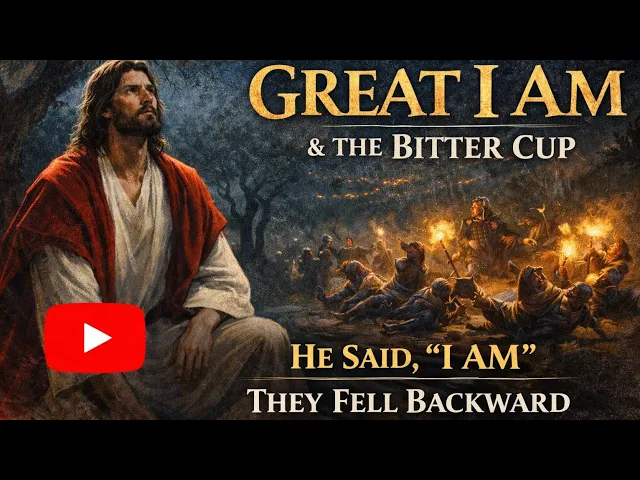
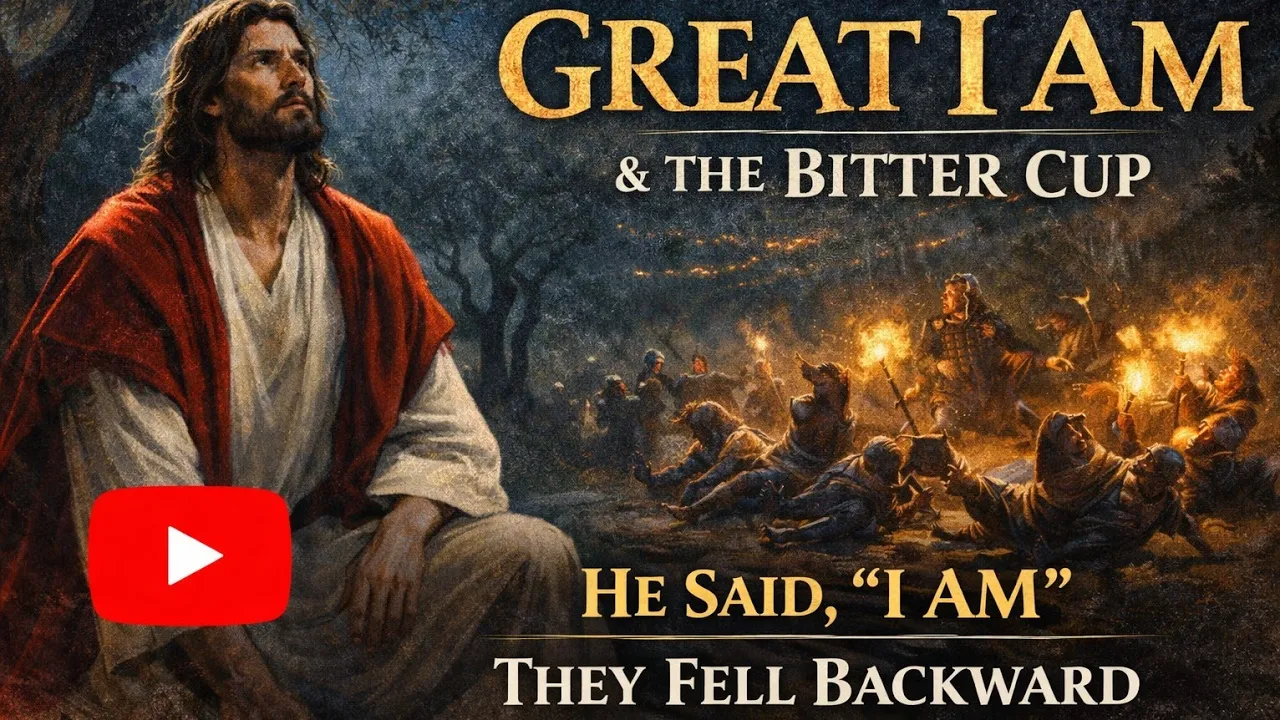
not his own, but ours, our human rebellion, which was the greatest thing to fight against ever. And so he's he he he came here often to think about that, to prepare himself for the ultimate war, the ultimate battle that he would that that God had given him the power to overcome. Judas then having received a band of men and officers from the chief priests and Pharisees cometh thither with lanterns and torches and weapons.
So the priests and the Pharisees, these are people who, you know, operate in the temple. They sacrifice animals. They make sure everybody's living the law of Moses.
They came with weapons. They came for possibly uh you know some sort of resistance that Jesus you know was going to try to you know fight him and they were going to try to fight him with their weapons and their torches. Here here is the light of the world and in the Old Testament he's described as a military general, Lord of Hosts, which literally means general over the armies of heaven.
and they think that they're going to be able to to to to arrest Jesus and that Jesus just is going to, you know, not uh is going to go down easy. Okay. Now, the other thing to to look at is this term band of men.
Okay. This tells us how many men Judas was leading to come and arrest Jesus. And band of men, if you look at the original Greek word, um it actually is a military cohort.
uh and it's about onetenth the size of a Roman legion army. Okay? And a and a Roman army or legion has about 3 to 6,000 uh men.
So onetenth of that is is about 300 to 600 men that Judas uh is is leading to to get Jesus. Okay. or in verse four.
Jesus therefore knowing all things that should come upon him went forth and said unto them, whom seek ye? They answered him, Jesus of Nazareth. Okay.
Jesus saith unto unto them, I am he. Okay. He's using that word I am.
That word I am is very familiar to the Jews because that is the same name that Moses learned about in Exodus chapter 3 where he went back and he told the children of Israel that I am has sent me and that I am is transliterated into YW. There's a whole thing on it but it means Jehovah. It means one who acts, one who is self-existing.
Um other there and there's a lot of scholarly work on this. I'll leave a link in the notes below, but it could be translated as am that I am or will be what I will be or I will cause what I will cause. Um, other scholars have notated that this is a description of the kind of being that God is that he is dynamic and the active that he he cares about humanity.
He cares about our suffering and that he does everything to better our situation. that as he caused the chaos to form into this earth and he caused you know order from chaos that his ultimate desire is for us uh slaves to to become a a higher and holier people. People who can have a nation where we worship God and we can we can spread the covenant.
So I am is is a big deal. And Judas also which betrayed him stood with them. As soon then as he had said unto them, I am he, they went backward and fell to the ground.
Okay. So, we have this military cohort coming to just, you know, take Jesus and and uh and Jesus, this is the only time in scripture that I know of where he gives them a little bit of a taste of the power of the name of God and it causes them to fall backward. Now, what's cool is there's a scripture in um Revelations where it says, "Who is able to stand?
" Okay? And what's interesting about this whole, you know, falling to the ground, that's symbolic of the fall of man, that we are fallen. We are all fallen backward.
And the only one who can raise us, who can help us to to get back up from our backward thinking, our backward living, our our downward fall is the great I am. He will get and this is where he's going to suffer. Then the he's going to begin to suffer this in the garden of Gethsemane where he will he will go to the very depth of hell, the very deepest darkest dungeon of hell and he will be able to grab down to the the farthest sink to the lowest bottomless pit and pull us out if we simply reach up for his help.
We surrender and say, "Okay, I am not but you are. " and he will lift us up to his level. He will through his grace, his enabling power, give us the strength to overcome the weaknesses and the humanity that's in our lives.
Um, I love in the Book of Mormon how it talks about uh, King Benjamin talks about this in Mosiah chapter 3 about the natural man is an enemy to God. And really what Christ did in Gethsemane and on the cross and and with the resurrection is he's causing the natural man, the anger, the lust, the the the uh the uh pridefulness. He's allowing the the he's causing the natural man in us to fall backwards so that we can finally shine the light that we were destined to shine.
to shine his light that we can, as Peter testified, put on the divine nature to have that nature of diligence and faith and charity and patience and longsuffering and goodness and gentleness and faith and meekness. And as we partake of what Christ did uh through his atonement, we can have that natural man fall backward and completely die. and we can fully take on the joy of our redemption which only comes through the name of Jesus Christ.
And so this last part, I won't go into it completely, but the uh Book of Mormon equivalent of this story is in First Nephi 17 where Nephi is is given a similar command and he basically he shocks his brother and they they fall to the ground. They fall backward. uh but I won't read that.
But basically in closing, so I come back to my original question about the garden of Gethsemane and and Christ looking for a way to get out. And now after reading all these scriptures and pondering upon it, the thought occurred to me and the spirit really worked on my soul that this is this wasn't disobedience. This wasn't Christ trying to get out of of the atonement.
Um because he knew he couldn't do that. He'd already covenanted, you know, to perform the atonement. But what this was was uh the struggle, the contradiction of what the father was trying to ask him to do.
Because Jesus had always had a relationship with the father where he was he was feeling his love where he was connected. He loved the father with all of his heart, might, mind, and strength. and he was now going to be an enemy to God where he would take upon himself all of the sins not only of this planet but all of the worlds that he has created and he would be an enemy to God.
He would feel hatred and uh uh enmity and and and this was the greatest contradiction because Jesus didn't want to hurt the father in any way. He was completely innocent. He had never done anything wrong.
He had never blaspheied the name of God or or done anything to bring any kind of disloyalty to the father. And now the atonement of of that he was going to do which would cover all of us. He was being asked to curse God.
Not hi not him cursing God but humanity that would be cursing him. And as I thought about this, he just didn't want to disappoint his father. Is there any other way to do this without feeling hatred towards thee?
Because I never want to feel hatred towards thee. And and as I as I felt that I I felt the spirit strongly confirm that instead of disobedience that this was an act of his love towards the father and that he wanted to just love the father because what he would experience was complete and total abandonment. Abandonment of which he did not deserve.
And this just causes me to love Jesus Christ all the more that he was willing to take upon himself my enmity, my natural man. The times when I have been an enemy to God and I have cursed God and and just wished to, you know, uh be destroyed or to, you know, my worst moments, he took upon himself all of our worst moments combined. and he just wanted to love the father.
And so anyway, um I really feel that this message uh will I really hope that this message helps you and that you are able to find hope and healing through Jesus Christ. that he is bigger than any trial that you've ever faced, but he still loves us and took upon himself all of our little trials. And that every little thing, all of this suffering, this bitterness that we experience that that we don't need to experience it the fully from what he did.
That we will have sorrow in this life, but ultimately because of what he did in the garden and on the cross and in the empty tomb, we can have eternal life. we can have the joy of our redemption. And I just know that this is true.
And I know that God lives and that Jesus Christ is his son. I hope that God blesses all of the United States of America. I hope that we turn towards him at this Easter season.
My prayer and my my blessing to all the world. May God bless us everyone. Have a good one.
Happy Easter. J. Ruben Clark once taught, "When we begin to tamper with the Constitution, we begin to tamper with the law of Zion, which God himself set up.
After the flood, the Lord revealed to Noah, and the bow shall be in the cloud, and I will look upon it, that I may remember the everlasting covenant which I made unto thy father Enoch, that when men should keep all my commandments, Zion should again come on the earth, the city of Enoch, which I have caught up unto myself. Thank you for watching and may you join us next time as we mutually pledge our lives, our fortunes, and our sacred honor in defending our right to life, liberty, and the pursuit of happiness.