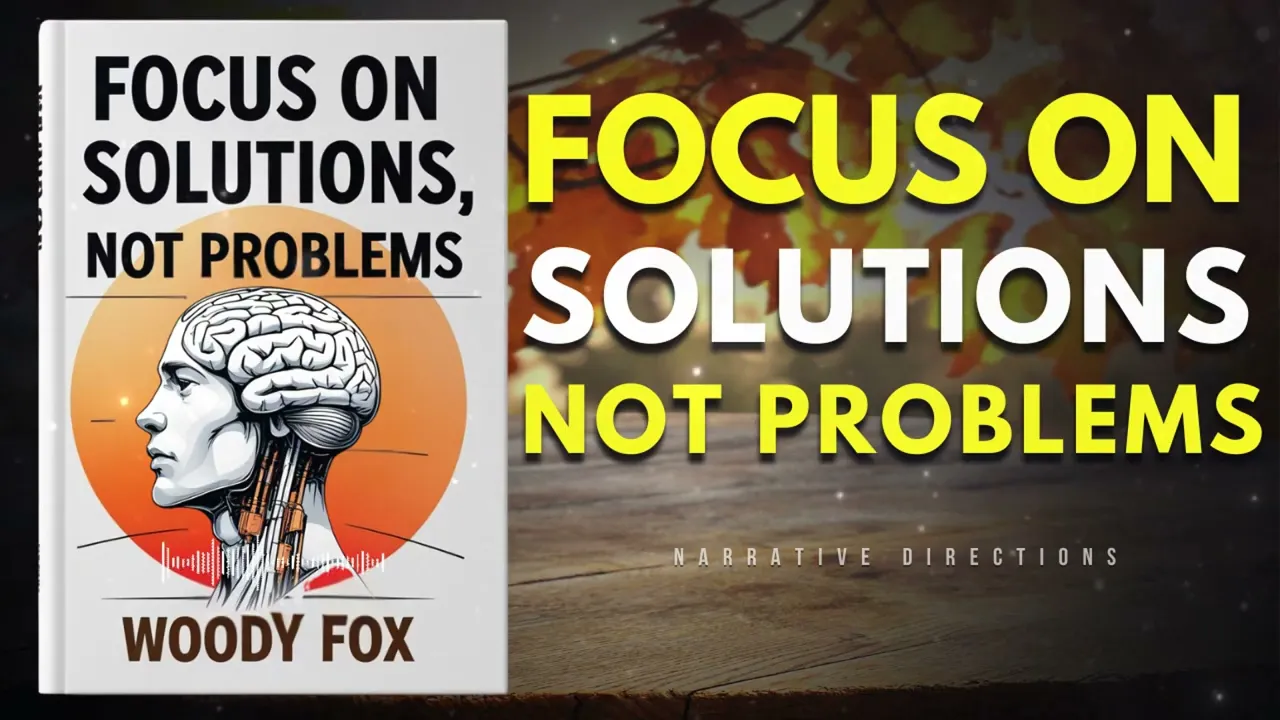
Your life begins to change the moment you focus on solutions, not problems. Most people don't even realize it, but they spend their days stuck in what's wrong. They overthink. They complain. They wait for something to fix itself. And the more they focus on the problem, the bigger it feels. That's why progress feels so far away. because the focus is in the wrong place. If you keep feeding the problem with your attention, you'll Stay exactly where you are. In this video, you'll learn how to focus on solutions, not problems. You'll understand how to take back control
of your mind, how to stop letting your emotions make your decisions and how to shift your attention toward what actually moves your life forward. This is real talk, real mindset work, and real results. No fluff, no hype, just clear, simple truths that will help you stop wasting time and finally start Growing again. Chapter one, take full responsibility for what happens from now on. You know, one of the most important steps you will ever take in your life is this one right here. When you decide to take full responsibility for what happens from now on, not
for what happened years ago, not for what your parents did or didn't do, not for what your boss said last week, not for the way the world operates, but for your Life from this moment forward. That kind of decision changes everything. It changes the way you think. It changes the way you respond. It changes the way you act. And most importantly, it changes what happens next. The moment you take full responsibility, you stop waiting for something outside of you to fix your life. You stop pointing fingers. You stop hoping that maybe someday your circumstances will
magically get better. You stop giving Your power away to other people or to the past. See, when people stay stuck in problems, it's because they're caught in a loop of blaming. Blaming is easy. Anyone can do it. You can blame your family, your past, your friends, your environment, your education, your job, the system. But none of that changes anything. Blaming doesn't build anything. It only drains your energy. It keeps your focus locked onto everything that's wrong instead of everything that Could be right. And here's the truth. If you blame something, you hand over your control.
You give away your ability to change. But when you take full responsibility, even when things weren't your fault, you take your power back. Responsibility doesn't mean it's all your fault. It means it's now your job to deal with it. And that shift is what creates forward movement. You can't grow if you're always explaining why you're not where you want to be. You can't Improve if your energy is stuck in defending your pain. That's not how progress works. Growth begins when you say, "This is my life. It's not perfect, but I'm in charge now." Not your
excuses, not your problems. You When you take full responsibility, you start paying attention to what you can control. You You begin to notice your habits, your patterns, your thinking. You ask better questions. You stop asking why is this happening to me and You start asking what can I do about it now? And that's how you shift from focusing on problems to focusing on solutions. Because problems will always be there. They're part of life. But how you show up to them, that's your choice. Every single day you are given the chance to either complain or create.
And the difference between people who move forward and people who stay stuck is not luck. It's responsibility. If you want change, you have to build it. You have to show up for yourself. No one's coming to push you every morning. No one's going to rescue you from your laziness or your procrastination. That's on you. And that's not a burden. That's your power. It's not about being perfect. It's not about having all the answers. It's about owning your effort, owning your time, owning your decisions. You start seeing results in your life the day you stop running
from Accountability and start building consistency. Every little action you take matters. Every time you choose to take one small step instead of getting stuck in fear, you make progress. But if you spend your days defending why you haven't changed, nothing will change. You have to be honest with yourself. What are you avoiding? What are you pretending not to know? What patterns keep showing up because you won't deal with them? See, Responsibility is about confronting those truths. And it's not always easy. It's not always comfortable, but it's real. And real is what creates results. Most people
spend more time describing their problems than fixing them. They repeat the same stories for years. They relive the same pain over and over. But talking about what's wrong doesn't solve what's wrong. You need to shift into doing, into acting, into becoming the kind of person who solves. Not someone Who waits for life to feel better before trying. So ask yourself, what can I do today that moves me forward? Not next week, not when you feel ready, today. What can I stop doing that's slowing me down? What excuse have I been making that needs to be
removed? What habit needs to be replaced? That's what responsibility looks like. It's clarity. It's action. It's facing the mirror and saying, "I decide who I become next." And don't wait for someone to give you Permission. You don't need approval to change. You don't need applause to grow. You need discipline. You need direction. You need honesty. Taking responsibility doesn't mean life gets easier, but it does mean life gets clearer. You stop feeling powerless. You stop blaming your past. You start focusing on solutions because you realize your future depends on what you do now, not what you
wish would change. So no more stories about why It's hard. Everyone has hard. Some people use it as fuel. Some use it as an excuse. The only difference is choice. And the best part, you can choose again, right now. You can choose to rise. You can choose to let go of what doesn't serve you. You can choose to show up even when it's tough and people will notice. You'll start thinking differently, speaking differently, acting different. Not because your problems disappeared, but because you Stopped letting them define you, because you started solving instead of stalling. Don't
wait for motivation. That comes and goes. You need responsibility. Responsibility creates structure. Structure creates results. Results create confidence. And confidence keeps you moving. It all begins with a decision, a real one. The kind where you draw the line and say, "From here on out, I own my life. Not halfway. Not when it's easy. Every day." And you'll fail. You'll mess up. That's part of it. But if you keep showing up, keep learning, keep owning your effort, you'll keep growing. That's what matters. You don't have to change everything today. You just have to take responsibility for
your next step. And then the next one. Because once you get in the habit of owning your choices, your mindset shifts. You become someone who builds instead of waits. Someone who Solves instead of avoids. That's where real strength comes from. Not from having no problems, but from building the habit of rising above them. That's what it means to focus on solutions. That's what it means to take responsibility for what happens from now on. Your time starts now. Not tomorrow. Not when it's convenient. Now. Show up. Own your path. Be the reason your life moves forward.
And never forget. Your future depends on the actions you take Today. Chapter two. Train your focus to go where progress can grow. Your life will always follow the direction of your focus. If your focus stays on what's missing, what's broken, or what hasn't worked, then your mind will build patterns around those things. You'll feel stuck, not because there are no opportunities, but because your mind is constantly replaying the parts that are broken. That's not because you're weak. It's because your attention is being Trained in the wrong direction. Every day, most people wake up and their
attention immediately goes to what's wrong. They think about the stress, the noise, the problems, the things they don't like. Their focus is shaped by what makes them feel stuck. And without realizing it, that becomes their mental routine. But if you want to create change in your life, you need to train your focus to go where progress can grow. Progress doesn't grow in the Middle of negative thinking. It doesn't grow when all your attention is locked into fear, resentment, regret, or excuses. Progress grows in clarity. It grows in direction. And it starts with you being aware
of what your focus is doing every moment, every hour, every day. You can't keep feeding your mind constant reminders of failure and expect confidence to rise. You can't keep staring at setbacks and expect Motivation to show up. You need to deliberately choose where you place your attention. That's what training your focus means. You take it seriously. You treat it like something valuable because it is. Your focus is your energy. And where your energy goes, your future follows. Most people are focused on the wrong things, not because they want to be, but because they've never been
taught how to control it. They've never been told. You can direct your focus. You can train it like a muscle. You can teach your mind to see what's useful instead of just what's urgent. But it starts with becoming aware. Start noticing what steals your focus. Is it the constant noise of comparing yourself to others? Is it fear of what could go wrong? Is it a habit of jumping from one thought to another without ever being grounded in the present? If you don't catch it, your attention becomes scattered. And scattered focus leads to Scattered results. Training
your focus means slowing down enough to ask yourself, "What am I actually giving my energy to right now?" If the answer doesn't serve your growth, you need to shift it. This doesn't mean you ignore problems. It means you don't feed them more than they deserve. You see them, you address them, but you don't live inside them. Progress is built when you focus on actions, not distractions. When you wake Up and choose to think about what you can build today. When you go through your day catching the moments your mind drifts into negativity and gently pulling
it back to what matters. It's not about being positive all the time. It's about being aware and deliberate with your attention. You might feel overwhelmed some days. That's normal. But even in the middle of that, you still get to decide what gets your full focus. You still have the power to say, "I'm going to give my energy to something that helps me grow, not something that makes me feel smaller." When you keep doing that, something changes. Slowly, your brain starts to recognize progress as the normal way of thinking. You stop seeing everything as a problem.
You start asking different questions. You ask, "What can I learn from this? What's the next step I can take today? What would make this day just a little better than yesterday?" And those questions pull your attention toward action, toward clarity, toward the kind of mindset that doesn't break down when life gets difficult. Because a focused mind is a strong mind. And a strong mind builds real change. People often say they don't have time to focus, but it's not about time. It's about attention. You can have 5 minutes of deep focus that moves your life forward
more than 5 hours of mindless distraction. It's not the clock that's Holding you back. It's how much of your day you give away to things that don't grow you. Your phone is a tool. Your environment is a tool. Your thoughts are tools. But if you let those tools take over, your focus becomes fragmented and progress dies in a distracted mind. So how do you start training your focus? You practice every day. You take small moments to center yourself. You write down what matters to you. You set short goals that bring clarity. You track Where your
attention goes when you're tired, overwhelmed, or frustrated. You learn to catch your mind when it slips into patterns of overthinking, self-doubt, or anger. And you redirect it. This isn't something you do once. This is something you build. Focus is a practice. It's a skill. And like any skill, the more you work on it, the stronger it gets. The more consistent you are, the more natural it becomes. You don't need perfect focus. You just Need better focus than yesterday. If your focus was scattered all week, but today you took 30 minutes to work with deep clarity,
that's progress. That's growth. And that's how change begins. Small decisions, clear direction, real effort. Your attention is one of your greatest powers. But you have to use it like it matters. Stop giving it to everything that asks for it. Not every notification, not every opinion, not every memory deserves your focus. You Get to choose. And when you start choosing more wisely, you start seeing new results. You start noticing that you don't feel as stuck. You feel more in control. You have more energy for the things that matter. You spend less time explaining why you feel
behind and more time building momentum. Progress is always possible, but it's only visible to those who are looking in the right direction. Don't expect to feel motivated if you're constantly watching Things that drain you. Don't expect to feel disciplined if your focus is scattered across distractions. Your life needs structure. Your mind needs guidance. And that starts with training your focus. When you learn to do that, you stop waiting for the perfect moment. You stop searching for shortcuts. You start doing the work with a clear mind. You start building a life that moves forward even when
the circumstances don't feel Perfect. A focused life is not a busy life. It's a meaningful one. It's filled with moments that matter because your mind is there. You're not lost in the past. You're not drowning in the future. You're present. You're connected to the step in front of you and that's where progress grows. So don't rush through this process. Don't look for fast results. Just stay with your focus. Practice noticing where it goes. Practice pulling it back to your Priorities. Practice giving it fully to the things that make you stronger, calmer, clearer. If you do
that day after day, you'll notice something powerful. You'll realize your problems haven't disappeared, but your focus has shifted. And because your focus shifted, you became someone who builds instead of breaks. Someone who moves forward instead of staying stuck. Someone who trains their attention to follow growth, not chaos. This is how you take back control of your mind. This is how you take back control of your results. Train your focus and progress will follow. Chapter 3. Act before fear makes the problem feel too big. One of the biggest mistakes people make in life is waiting. Waiting
until they feel ready. Waiting until they're no longer afraid. Waiting until the situation seems easier. But the longer you wait, the harder everything starts to feel. Fear doesn't Shrink on its own. It grows. It multiplies. The more time you spend thinking about the problem without doing anything, the more impossible it starts to look. That's how your mind works. When you hesitate, when you pause too long, your imagination takes over and turns challenges into monsters. What started as a small step becomes a mountain in your mind. Not because it's truly that difficult, but because you've allowed
fear to stretch it out of Proportion. That's why the most important action you can take is to move early. Act before fear has time to build. Act before the problem becomes exaggerated in your thoughts. When something difficult shows up in your life. Your first instinct might be to pull back, to think more, to analyze, but overthinking rarely gives you more courage. What builds courage is movement. doing one thing that proves to your mind you're not helpless, that You're not stuck, that you still have the ability to move forward, no matter how unsure you feel. Fear
will always find a way to grow if you give it space. If you let fear sit in your head too long, it starts controlling your voice, your choices, and your decisions. It tells you to stay safe. It reminds you of the last time you failed. It plays all the worstc case scenarios in your mind. But fear is not a signal to stop. It's a sign to start. Not recklessly, Not blindly, but intentionally. Because the longer you stall, the more power fear gains. It's important to understand something very real about the way your brain works. Your
brain is built to protect you. It scans for threats. It's always looking for danger, but it doesn't know the difference between real danger and discomfort. So when you feel nervous about making a move, your brain says, "Let's wait." And if you follow that voice, you create a habit of Hesitation. That habit becomes automatic. And one day you wake up and realize you've been standing still for months or years. Not because you're incapable, but because fear trained you to pause instead of push. You don't overcome fear by thinking about it. You overcome it by doing something
that moves your life forward. That might be a small step. That might be a conversation. That might be applying for something, Showing up somewhere, speaking up, committing to a plan. But the key is movement. Because once you move, your brain starts getting a new message. It starts learning that the discomfort is not deadly. That stepping forward didn't destroy you. That doing the hard thing gave you proof you can keep going. It's not about getting rid of fear completely. It's about refusing to let it lead. Fear might still be in the room, but you're the one
walking. You're The one acting. And with every action, fear gets quieter because fear loses its grip when you stop feeding it your attention. Action gives you something fear can't touch. Momentum. When you act, you gain ground. You gain experience. You gather real feedback instead of assumption. Most of what you fear will never happen. But you won't know that if you stay stuck in your head. The longer you wait, the more stories your mind creates. And Most of those stories are based on worstcase thinking, not reality. When you act early, you take away fear's chance to
build. You stay in control. You keep the problem small enough to solve. That's the advantage of acting before you feel fully ready. You catch the challenge before it turns into a crisis. You deal with it while it's still manageable. You prevent it from growing into something that drains your energy and clouds your judgment. People Think courage feels like confidence. But courage often feels like shaking hands, a nervous stomach, a dry throat, and still doing the thing anyway. Courage doesn't come first. It shows up after the action. You build it as you go. And the more
you practice doing hard things, the less control fear has over your choices. Don't wait for everything to feel certain. That moment might never come. Some clarity only arrives after you begin. You take one step and the Next step becomes a little clearer. You move and your mind starts adapting. But if you wait for clarity before you move, you miss opportunities. You stay behind. You let fear guide your pace. And fear has no interest in your growth. It only wants your safety. And safety, while comfortable, never builds a meaningful life. Growth comes from doing. You grow
when you stretch yourself. When you make a move, not because it's easy, but because it's Necessary. Even small steps matter. They build mental strength. They show you what you're capable of. They create progress. And progress gives you energy. When you see movement, you feel motivated. When you feel stuck, you lose belief in yourself. That's why action is always the answer. When fear starts speaking louder, you don't need to know everything to begin. You need to know what matters right now. You need to Trust that progress doesn't come from perfect conditions. It comes from deciding this
matters to me and I'm willing to act before fear takes over. That mindset creates a life of results, a life of growth, a life that keeps moving even in the face of uncertainty. Think about how many things you've avoided because fear made them seem too big. Think about the chances you didn't take, the conversations you avoided, the Goals you postponed. Not because they were impossible, but because your mind kept enlarging the problem. And now imagine if you had acted earlier. If you had taken that first step before fear built a wall around it, your life
would be in a different place. It's not too late to change that. The next time something feels intimidating, ask yourself, "What can I do right now that moves me forward even a little?" That one step might be all it takes to shift Your momentum. And momentum is powerful. It breaks hesitation. It builds belief. It reminds you that fear doesn't get to decide your direction. Train yourself to catch fear early. Learn to recognize when it starts whispering reasons to wait. Be honest about the times you've listened to it and then make a new decision. Choose action
not because you feel ready, but because you refuse to let fear shrink your potential. Remember this, fear Feeds on delay. The more you wait, the bigger it grows. But the moment you act, fear loses its grip. And every time you repeat that process, you take back control. You build a mindset that doesn't freeze under pressure. You become someone who solves instead of stalls. Your future is shaped by how you respond to fear. You can let it keep you small. Or you can use it as a signal to move. Not recklessly, not without thought, but with
purpose, with Strength, with commitment. Don't let your life be a story of hesitation. Make it a story of action. A story of moments where you felt the fear and moved anywhere. Where you made the call, sent the message, stood up, showed up, took the first step because you knew that waiting would only make the problem feel bigger than it really was. And when you look back, those moments of action will be the ones that changed you. The ones that taught you that fear is loud But not wise. That your future doesn't belong to your hesitation.
It belongs to your decision to act before fear takes over. Chapter 4. Take full ownership of how you react to setbacks. Every single person faces setbacks. No one is immune. Life doesn't ask for your permission before it throws you off course. Sometimes things fall apart without warning. Plans don't work out. People disappoint you. You fail at something you believed you were ready For. But what defines your growth is never the setback itself. It's how you react to it. You don't control everything that happens to you, but you do control what you do next. That's where
all your power lives. That's where real progress begins. When you take full ownership of how you respond. The truth is, your first reaction to a setback reveals the quality of your mindset. If you always respond with frustration, blame, or self-pity, you're building Habits that keep you in that same place. But if you train yourself to pause, stay aware, and choose a response that moves you forward, you start building a different kind of life, one that gets stronger under pressure instead of weaker. Most people don't realize that reacting is a habit. If your usual reaction is
to complain, your mind will go there by default. If your first move is to blame someone or something else, your focus stays locked on what went Wrong instead of what could go right. But when you take ownership of your reactions, you stop running in circles. You give yourself the chance to learn, to grow, and to make smarter decisions going forward. You can't avoid every obstacle, but you can decide how much power it gets over your thinking. That's what ownership is. It's not pretending everything's fine. It's not forcing yourself to be positive. It's standing up and
saying, "This happened and I will Decide how I respond to it." That kind of thinking puts you back in control. It makes the setback smaller and your mindset stronger. Your reaction shapes your future more than the event itself. The same setback can destroy one person and develop another. The difference is in how each person chooses to handle it. Some people get bitter, some people get better. One is a decision to stay stuck. The other is a decision to grow. When something doesn't go the way you Expected, take a moment. Don't rush to speak. Don't rush
to post about it. Don't rush to escape it. Sit with it. Ask yourself real questions. What just happened? What am I feeling right now? What does this reaction say about how I've been handling pressure? Then go deeper. What would a stronger version of me do right now? What action would help? Not just feel good, but actually help. You grow when you stop reacting and start responding. A reaction is Automatic. A response is intentional. A reaction is emotional. A response is grounded. When you build the ability to respond with clarity, you gain power that most people
never even try to develop. Sometimes setbacks feel personal. They sting. They hurt your pride. But the pain is part of the message. If you pay attention, setbacks will show you where you need to improve. They'll hire weaknesses in your thinking, your habits, your Expectations. And when you take ownership of your role, even a small part of it, you open the door to real improvement. Avoiding responsibility for your reactions might feel easier in the moment, but it guarantees long-term pain. You end up repeating the same mistakes. You go through the same emotional patterns. You blame the
same types of people. Nothing changes because you're not changing. Ownership is the opposite of avoidance. It's maturity. It's the decision to lead yourself even when things feel unfair or unexpected. You don't need to have all the answers. You don't need to pretend you're unaffected. But you do need to care about how you show up when life tests you because those moments, those emotional turning points shape your direction more than you realize. When you respond with clarity, with maturity, with purpose, you build something no one can take from you. Self-respect. Taking full ownership of how you
react doesn't mean you suppress your emotions. It means you manage them. It means you don't let them decide your next move. You feel them. You process them. And then you choose what to do. You don't lash out. You don't quit. You don't sit in anger or shame. You breathe. You reflect. You move forward with strength. You also need to stop waiting for perfect circumstances to practice this. You won't learn how to respond better if You only work on yourself when life is calm. You learn in the heat. You grow in the challenge. You develop mental
strength when you apply it in real time. Not when everything feels easy, but when things feel hard. And don't confuse responsibility with guilt. Ownership is not about blaming yourself for everything. It's about recognizing your power to choose your attitude, your focus, and your next action. That power is yours. Even when things feel Completely out of control, even when you feel tired, misunderstood, or unafforded, you still get to choose how you handle it. You also can't control how others respond to you. But you can always control how you respond to them. Some people will test your
patience. Some will doubt you, reject you, disrespect you. But when you take ownership of your response, you protect your peace. You don't hand over your emotional stability to someone else's Behavior. You decide how you want to feel. You decide what standard you want to live by. That's what makes you stronger than the moment. When things fall apart, your reaction either builds your character or exposes what still needs work. That's not something to fear. That's something to use. Let your reactions become a learning ground. Pay attention to the patterns that keep coming back. Do you get
defensive too quickly? Do you shut down? Do you try to Avoid reality? Those reactions are habits and habits can be changed. Start small. The next time something annoys you or stresses you out, catch your reaction. Pause. Don't let it take over. Ask yourself, "Is this how I want to respond? Is this who I want to be right now?" That small pause is the beginning of a new habit, a better habit, a habit of conscious reaction. And that habit repeated over time creates maturity, strength, and clarity. If you really Want to grow, study your reactions more
than you study your plan. Your reaction shows you where your real work is. It shows you what still controls you. It shows you whether you lead your life or let your emotions lead you. This is not easy work, but it's powerful and it's worth it because the day you take full ownership of how you react is the day you stop being controlled by outside forces. You stop being a victim of every setback. You stop depending on external Things to keep you calm or strong. You become your own foundation. When you build that foundation, setbacks stop
being permanent. They become temporary. They lose their power to define your mood, your self-worth, or your direction. You might still feel pain, but the pain won't control you. You might still feel pressure, but it won't break you. You'll handle things differently. Not because life got easier, but because you got stronger. This kind of strength is quiet. It's internal. It's the kind of strength that makes you trustworthy to yourself, to others. It's the kind that makes people respect you. But most importantly, it's the kind that helps you respect yourself. So the next time you hit a
wall, don't just look at what went wrong. Look at how you reacted. Be honest. Did you run from it? Did you blame someone? Did you give up too soon? Or did you breathe, think, adjust, and Take one more step forward? That's your work. That's your power. That's your life. Take full ownership of how you react to setbacks. And you'll build a life that can handle anything. Not because everything goes right, but because you show up right. That's what real success looks like. Leading yourself well when things go wrong. That's what turns pain into power, failure
into fuel, and struggle into strength. It starts with you. It starts Now. Chapter 5. Catch the moment your thinking starts going in circles. One of the quietest ways people stay stuck is by thinking in circles. It starts out small. a single thought, a worry, a doubt, a what if and then instead of finding a solution or taking a step forward, the mind keeps looping. It replays the same thought, the same scenario, the same question over and over. You go through your day, but that one worry keeps coming back. You try to Focus, but your mind
keeps spinning. You're not solving anything. You're just exhausting yourself with the same thoughts dressed in different words, and you don't even notice it happening. That's the danger of circular thinking. It feels like thinking, but it's really just spinning. It gives the illusion of effort, but it's not progress. It drains energy, builds stress, and blocks clear decisions. If you want to grow, if you want to solve your problems and move Forward, you have to learn to catch the moment your thinking starts going in circles. That moment matters because the longer the loop continues, the harder it
becomes to break it. Your thoughts begin to reinforce each other. They feed off your fear. They start building emotional momentum. And soon you're not just thinking. You're stuck in a pattern that controls how you feel, how you behave, and how you respond to life. The key is awareness, not judgment, not panic, just Awareness. You need to start paying attention to the way your mind moves. Begin noticing the signs. When you're thinking about the same problem again and again without a new idea or a step forward, that's a sign. When you start getting anxious just from
thinking, not from anything real in front of you, that's a sign. When your thoughts start circling instead of leading anywhere, it's time to pause. That pause is powerful. It gives you a chance to step Out of the loop and step into clarity. Most people are never taught how to work with their thought. They're taught to achieve, to act, to perform, but not to recognize what's going on in their own head. So when circular thinking takes over, they assume they're just being thorough or careful or thoughtful. But thinking should lead to answers, to action, or to
peace. If it leads only to tension and exhaustion, you're not solving, you're spinning. So, what do You do when you notice your thoughts going in circles? First, stop. Not stop thinking altogether, but stop following the loop. Interrupt it. Say to yourself, "I've thought this already. What's new here?" If there's nothing new, nothing helpful, nothing that moves you forward, then it's time to shift your focus. One of the strongest habits you can build is the ability to direct your thoughts with intention. That means you decide which thoughts stay and which thoughts need to Go. You don't
accept every thought is truth just because it showed up. You filter, you question, you challenge what doesn't serve your growth. That's how you regain control over your thinking. You also need to understand why your mind loops in the first place. It's trying to protect you. Your brain thinks that if it keeps going over the problem, maybe it will find a perfect answer or prevent pain or prepare you for the worst. But what it's really doing is Holding you in a state of emotional paralysis. Nothing changes. You just get more stress. So remind yourself thinking without
action doesn't reduce fear. It increases it. Now this doesn't mean thinking is bad. Thinking is powerful. Reflection is valuable. But there's a difference between productive reflection and repetitive remination. Reflection looks for lessons, makes plans, and creates change. Remination just repeats the same discomfort again and again. That's the difference between clarity and confusion. One leads to movement, the other leads to mental f. When you train yourself to catch circular thinking, you create space for something better. You open the door to new thoughts, new solutions, and a calmer state of mind. You stop feeding the cycle and
start building a different pattern. One where your thoughts serve you, not control you. You can start by writing things down. When a thought Keeps repeating, put it on paper. Ask yourself, "What's the real issue here? What am I afraid of? What's one action I could take today to reduce this fear?" Writing breaks the cycle. It gets the thought out of your head and into a place where you can look at it with more clarity. You can also shift your attention physically, move your body, change your environment, go outside, exercise, breathe deeply. When the body changes,
the mind follows. Sometimes you Don't need more thinking. You need a pattern interrupt, something to shake your system out of the loop. Don't wait for peace to arrive on its own. Create it by becoming intentional with your focus. Redirect your energy toward the things that build you. Don't allow your mental space to be occupied by the same few thoughts on repeat. That kind of thinking doesn't just waste time. It wastes potential. Catch the loop early. The earlier you catch it, the easier it Is to redirect. But even if you've been stuck in a loop for
hours or days, you can still break it. You just have to notice it. Awareness is always the first step to change. Another helpful practice is asking better questions. Instead of asking why do I always feel this way, ask what can I do about it right now? Instead of thinking what if it all goes wrong, try what's the next small step I can take. Better questions lead to better focus. They create openings for New actions and better outcome. Surround yourself with people who remind you to think clearly, not people who feed your fears or join you
in your mental spirals. Choose people who challenge your assumptions, who encourage you to take action, who help you see things from a wider view. Sometimes a simple conversation with the right person can break a mental loop you've been trapped in for days. You also need to be honest about what kind of content you feed your Mind. If you're constantly watching or reading things that trigger anxiety, stress, or comparison, you're giving your mind more material to loop around. Protect your focus. Be intentional with what you consume. Feed your mind with clarity, not chaos. You won't always
catch the loop right away. That's okay. This is a skill you build with practice. Every time you notice your thinking go in circles and choose to step out of it, you're strengthening your mind. You're Building mental discipline. And that's one of the most important skills you can develop if you want to grow in life. There's nothing weak about struggling with your thoughts. Everyone does. But there's something powerful about choosing to face that struggle with awareness and strategy. You don't have to be perfect. You just have to care enough about your mental clarity to work on
it, to pause, to shift, to catch the loop and choose better. When your mind Is clear, your life starts to move. You make better choices. You feel less overwhelmed. You see solutions that were hidden behind the noise. That's what happens when you stop spinning and start directing your thought. Your life is shaped by the quality of your focus. And the quality of your focus depends on how quickly you catch your mind when it starts circling. Catch it early, train it daily, guide it firmly, and build a future that reflects clarity, not Confusion. That's how real
progress is made. One clear thought, one better reaction, one strong decision at a time. Chapter six. Create space to think instead of rushing into panic. Most people are trained to react, not to think. When something unexpected happens, when plans go off track, when someone says something hurtful, when you get bad news or face a sudden challenge, the natural instinct is to panic. You feel it in your chest. Your thoughts Speed up. Your breathing shortens. Your decisions become fast, emotional, and often poor. That panic creates pressure. And that pressure pushes you to act even when acting
immediately isn't the right thing. It makes you feel like you have to fix everything right now. But rushing is rarely the solution. In fact, rushing often creates more problems. What you really need in those moments is space. Space to breathe. space to see clearly, space to think. Thinking takes Intention, it requires mental stillness. But in a world that celebrates urgency, that kind of stillness is rare. People are praised for being quick, for reacting fast, for moving constantly. But clarity doesn't come from chaos. It comes from calm. If you want to make good decisions, if you
want to stop letting panic control your life, you need to build the habit of creating space between what happens and what you do next. That space is powerful. It Gives you the ability to separate the situation from the story you tell yourself about the situation. It helps you slow down long enough to ask the right questions instead of acting on impulse. Without that space, you respond out of habit. And most habits formed under stress are not helpful. They're just familiar. When you panic, your thinking narrows. You stop seeing options. You focus only on what's wrong,
not on what's possible. You stop Thinking long-term and make short-term decisions to escape discomfort. And when those rushed decisions add up, your life feels out of control. But it's not the circumstances that did it. It's the absence of mental space. You can't expect to build a strong life if your mind is always in emergency mode. Strength comes from grounded thinking, from slowing down long enough to evaluate, reflect, and choose wisely. This doesn't mean you avoid action. It Means your action is thoughtful, not impulsive. It means you decide from clarity, not from panic. Creating space starts
with self-awareness. You need to know what triggers your panic. Is it pressure from others, fear of failure, the need to please people? Once you identify your triggers, you can catch yourself before panic takes over. You can pause. You can step back. You can breathe. That pause might be 30 seconds or 5 minutes, but that moment is Everything. It breaks the automatic response and gives you back control. Some people think creating space means doing nothing. It doesn't. It means doing something different. It means choosing reflection over reaction. That's a skill and it's one most people never
practice, but it's available to anyone willing to pause before they move. And once you start doing it, you'll notice something important. Most of the pressure you feel isn't coming From the outside. It's coming from inside your own mind, your thoughts, your expectations, your fear of being wrong or looking weak. But when you step back and breathe, that pressure starts to shrink. The problem doesn't disappear, but your ability to handle it grows. That's the difference between reacting and responding. One feels urgent and chaotic. The other feels deliberate and focused. To build this habit, you have to
create systems in Your life that support stillness. Maybe it's taking 5 minutes in the morning before your day begins just to sit quietly and center yourself. Maybe it's journaling in the evening to release the mental noise. Maybe it's learning to say, "I need a moment when a situation feels emotionally charged." These small practices make a big difference. They train your mind to seek space instead of spiraling into panic. You can also train your body to support this process. When Your body is tense, your thoughts follow. When your breathing is shallow, your mind feels pressure. But
when you relax your body, when you breathe deeply, when you slow your movements, your brain gets the message. It's safe to think and that's when better ideas come. That's when you see the full picture instead of just the problem. In high pressure moments, most people want quick answers, but what they need are better questions. Questions like, "What Matters most right now? What's one smart thing I can do?" "What's within my control?" Asking questions opens your thinking. It pulls you out of fear and into focus. And that's where good decisions are made. Don't expect others to
create that space for you. In fact, people around you might want quick decision. They might rush you, pressure you, or expect you to react immediately. But that's not your job. Your job is to stay grounded, to protect your clarity, To value your peace more than their expectations. Because if you give up your thinking space to please everyone around you, you lose yourself. And a life without mental clarity becomes reactive, chaotic, and empty. Protect your time. Protect your thoughts. If something feels urgent, ask yourself, is it really urgent or is it just uncomfortable? That distinction is
important. Not everything that feels urgent deserves immediate action. Some Things need space. They need time to breathe. They need quiet thought. And the more you give yourself that, the more confident you become in your choices. This is not about being slow. It's about being smart. It's about making decisions that serve your future, not just your emotion. When you rush, you satisfy the moment. When you think, you serve the long term, and life rewards those who can hold both urgency and clarity at the same time. You're Going to face situations that test you. People will misunderstand
you. Plans will fall through. Emotions will rise. But that doesn't mean you need to panic. That's your old habit. That's the reaction you used to rely on when you didn't know there was a better way. Now you do. Now you can pause. Now you can create space. You can say, "I don't need to figure this out in the next 5 minutes. I need to think clearly. I need to understand what's happening. I need To move from strength, not from fear." And the more you do this, the more you trust yourself. You stop fearing problems because
you know you can handle them with a calm mind. You stop avoiding pressure because you've trained yourself to stay grounded in it. That's what builds real confidence. Not the absence of challenge, but the ability to think clearly when it comes. This kind of control doesn't show up overnight. You build it over time. Each time you pause Instead of panicking, you're changing your pattern. You're building a new pathway in your brain. One that says, "I don't need to rush. I don't need to react. I can think." You'll start to notice that people around you react to
life very differently. Some people always seem frantic, always stressed, always overwhelmed. Others seem composed, thoughtful, effective. The difference is not that one has fewer problems. It's that one has learned to Protect their space. They've trained themselves to pause. And that's what you can do, too. You deserve that kind of peace. You deserve to live with intention, not just reaction. You deserve to trust yourself even in uncertain moments. But that starts with one decision. The decision to create space. Not tomorrow. Not when things calm down. Now, in this moment, in the next challenge, in the next
pressure-filled situation, you get to Choose. You get to breathe. You get to think. And once you start living that way, you'll wonder why you ever gave panic so much power. You'll see how much better life works, when you give your mind the time and space it needs to lead you forward. And you'll build a future, not out of reaction, but out of real thoughtful, steady action. That's how strong minds are built. That's how wise choices are made. And that's the kind of life you were meant to create. Chapter 7. Ask yourself what would actually help
right now. Most people don't realize how often they get in their own way simply because they don't pause to ask the right question. They get caught up in frustration, doubt, stress, or confusion. And they keep pushing through it, repeating the same thoughts, the same complaints, the same behaviors without stopping to reflect. But progress doesn't come from pressure alone. It comes from clarity. And one of The fastest ways to find clarity is to ask yourself a simple question in the middle of the mess. What would actually help right now? Not what feels good, not what looks
impressive, not what others expect, what would actually help right now. That question cuts through the noise. It forces your mind to shift from overthinking into practical thinking. It moves your attention away from blame, regret, and wishful thinking and back to real action. It's not a complicated Question, but it's one that very few people ask themselves in the moments when they need it the most. When your day is falling apart and nothing seems to be working, what would actually help right now? When you feel tired, angry, or discouraged, what would actually help right now? When you're
overwhelmed with options and can't make a decision, what would actually help right now? Not next week, not next month, not when you have more time or energy right now. This Question works because it forces you to step into the present. Most stress lives in the past or the future. You replay something that already happened or you worry about something that might happen. But rarely do people sit with the current moment long enough to understand what they really need. That's why asking this question brings you back to the center. It grounds you. It stops the spiral.
It gets you thinking clearly again. You can't move forward if you Don't know what you're aiming for. And in moments of pressure, the mind wants to escape, not act. You look for distractions, reasons, or escape routes. But what helps is often simple. Take a break. Get honest with yourself. Set a small goal. Ask for help. Drink water. Go for a walk. Write it down. Silence your phone. These small decisions when made with intention can break the tension and give you a way forward. Not every situation needs a big solution. Most moments require a practical shift,
but you won't find that shift unless you're asking the right question. Most people ask, "Why is this happening?" or "What's wrong with me?" or "How am I supposed to fix all of this?" And those questions might feel urgent, but they don't give you answers that help in the moment. They add weight. They keep you focused on problems instead of possibility. But when you ask, "What would actually help right now?" You Immediately flip your mindset. You move from reaction into strategy. You're no longer waiting for something to change. You're deciding how to move. And that decision
gives you back your control. It doesn't have to be dramatic. Maybe what helps right now is turning off all the noise around you. Maybe it's stepping outside for some quiet. Maybe it's finishing the one small task you've been avoiding all day. Maybe it's forgiving yourself for not being perfect. Maybe It's choosing to speak up about something you've been bottling up. Or maybe it's just resting without guilt. Whatever it is, you'll only know if you slow down long enough to ask. This practice builds self-awareness. The more you ask this question, the more you begin to notice
your own patterns. You start recognizing what throws you off and what brings you back. You become better at responding to stress with intention rather than emotion. You stop Waiting for the perfect condition. and you start creating better conditions with simple actions. Asking this question also builds emotional maturity. It teaches you to separate your feelings from your actions. You can feel disappointed and still take the next step. You can feel uncertain and still make a smart choice. You can feel frustrated and still do what's useful. You learn to lead yourself instead of being led by your
emotions. That's real Strength. That's real discipline. It also helps you communicate better. When you're in a tough conversation and your emotions are starting to take over, you can pause and ask yourself quietly what would actually help right now. Sometimes it's listening more. Sometimes it's saying less. Sometimes it's walking away for a minute to cool down. That small question can save you from saying things you don't mean or doing something you regret. It gives you a better grip on Your behavior. This question isn't just for hard times either. It works when things are going well. If
you're feeling focused and productive, ask yourself what would actually help right now to keep this momentum going. You might realize you need to protect that time. cut distractions or dive deeper into what's working. It keeps your progress intentional, not accidental. If you feel like you're spinning your wheels, this question gives you a reset. It shifts You away from wishful thinking and into reality. You start solving, not stalling. You stop hoping things will get better on their own. And you begin taking responsibility for how you respond to your current situation. Over time, this becomes a habit.
Instead of feeling overwhelmed by problems, you become the kind of person who steps back, breathes, and looks for a real solution. Not a perfect one, but one that helps in the moment. That's how Confidence is built. Not through huge achievements, but through the steady habit of solving what's in front of you. This mindset also trains you to stop catastrophizing everything. You learn that not every bad moment means everything is ruined. You stop making problems bigger than they are because you've trained yourself to look for small practical steps forward. You start to believe in your ability
to handle life because you've proven it to Yourself over and over in small ways. The more you practice this, the faster your recovery time becomes. You'll still face stress. You'll still have bad days, but you won't stay there as long. You'll catch yourself. You'll regroup. You'll shift your attention from the noise to the action. And that's where your progress lives. Not in perfect planning. But in present awareness, start using this question in your daily life. When you're tired, ask it when you're stuck. Ask it when you're emotional. Ask it when you're distracted. Ask it. Write
it down. Put it where you'll see it. Make it part of how you think. And the more you use it, the more power you take back from your emotions, your environment, and your old patterns. You'll begin to notice you waste less time. You'll catch yourself before you spiral. You'll make fewer excuses and more progress. and you'll become someone who doesn't wait for circumstances to change because You've trained yourself to change your response instead. That's what self leadership looks like. It's not loud or dramatic. It's a quiet question, a simple pause, a better decision, one moment
at a time. That's how you stay grounded. That's how you keep moving forward. And that's how you turn your attention into action that actually makes a difference. Not someday, right now. Chapter eight. Replace complaining with one simple action every day. Every Day, people waste time, energy, and potential by complaining. It becomes a habit so quickly, you don't even realize you're doing it. You wake up tired, so you say it out loud. You see something you don't like, and you point it out. Someone makes a mistake and you talk about it to someone else. You hear
bad news and you add your voice to the noise. Little by little, this habit builds a mindset and that mindset creates a life. A life that's reactive, Negative, stuck. Because the more you complain, the less energy you have left to change anything. Complaining doesn't fix the situation. It doesn't make you stronger. It doesn't give you a better outcome. It simply keeps you focused on what's wrong. And when your attention stays locked on what's wrong, you stop seeing what's possible, you stop looking for what can be done. You spend your day in frustration instead of progress.
It's easy to complain. That's why so many People do it. It doesn't take discipline. It doesn't take courage. It takes nothing from you except your peace and your power. But if you want your life to get better, you have to do better with your words, your attention, and your effort. And the best place to start is simple. Replace complaining with one useful action every day. One small action, not a perfect solution, not a huge leap, just one thing that moves your life in the direction you say You want. Because what you do daily shapes who
you become. If your daily habit is to find something to complain about, you become someone who sees the world through frustration. If your daily habit is to take one step forward, no matter how small, you become someone who builds progress instead of talking about problems. Most people complain because it feels like release. You're upset. Something didn't go right and you want to let it out. You want Someone to hear it. You want to feel validated. That's understandable. But you have to ask yourself, what does this do for me after I complain what's actually better? Did
the problem go away? Did my mindset improve? Did I grow or did I just waste more time sitting in what I already knew? Now imagine if every time you caught yourself complaining, you stopped and asked yourself, "What's one thing I can do right now that helps?" Maybe it's Sending an email you've been avoiding. Maybe it's organizing something in your space. Maybe it's checking off one item on your list. Maybe it's apologizing. Maybe it's drinking water and resetting your energy. It doesn't have to be big. It just has to be different from complaining. That shift builds
a powerful habit. You teach your brain that discomfort doesn't need to be expressed through negativity. It can be transformed through action. And that action creates motion. It creates momentum. You stop repeating the same emotional patterns because you're interrupting them with real movement. This doesn't mean you suppress your feelings. It means you respect them enough to do something useful with them. If something upsets you, notice it, but don't just talk about it. Move with it. Ask yourself, what would progress look like here? Then take one step in that Direction. That's how you take responsibility without being
overwhelmed. One moment, one choice, one shift in direction. When you replace complaining with action, your confidence grows. You begin to trust yourself again. Because instead of relying on someone else to make things better, you're showing up for yourself. You're being the kind of person who handles things even when it's inconvenient. Even when you're tired even when it's not fair. You don't need to be perfect. You don't need to fix everything. You just need to stop using your words to describe how stuck you feel and start using your time to change what you can. The results
won't always show up right away, but your mindset will shift instantly because deep down your brain knows the difference between expressing and improving. And the second you take action, it knows you're leading your Life instead of being led by circumstances. The habit of complaining creates mental fatigue. It wears you out before the day even begins. It makes you feel powerless because all you're doing is reacting. But when you build a habit of small daily action, you build emotional resilience. You learn that even on the worst days, you still have choices. You still have the ability
to respond instead of repeat. Start small. Pick one Moment in your day when you notice yourself complaining. That could be in traffic, at work, at home. Catch it, and right there, do something instead. If you're stuck in traffic and getting annoyed, use that time to learn something. Listen to an audio book or reflect on your goals. If you're about to complain about a coworker, stop and ask yourself what needs to be said directly or what part of the situation you can influence. If you're complaining About how tired you are, ask yourself if you've had water,
food, or sleep and fix one of those things before repeating how drained you feel. These are not huge changes, but they are powerful because they're consistent. And consistency is what rewires your mind. It teaches you to stop seeing frustration as a destination and to start seeing it as a signal. A signal that something needs to change, a signal that you're ready to move, a signal that you have the power To do something else. Over time, people will notice the difference in you. You'll speak with more calm. You'll handle challenges, with more patience. You won't be
pulled into every complaint or negative conversation around you. And it won't be because your life suddenly became easier. It will be because you decided to lead yourself through the day instead of dragging your mind through the same complaints. You'll also find that you start respecting yourself more Because deep down you know when you're being productive and when you're just avoiding responsibility. And nothing brings long-term peace like knowing you're doing your part to improve even in small ways. Don't wait for motivation. Don't wait for everything to feel perfect. That's just another excuse not to act. Start
today. Start with one complaint. Replace it with one action. Then repeat. Build the muscle. Teach Your brain that every challenge comes with a chance to improve, not a reason to spiral. It's not complicated, but it is a decision. You choose which habit you feed complaining or creating. You choose whether you describe the problem or work toward the solution. One will drain you. The other will build you. And you don't have to do both. You get to decide how you show up to your life. So the next time you feel the urge to complain, pause just
long enough to ask Yourself, is this helping me move forward? And if it's not, trade it not for perfection, not for some grand change, just for one small action. That's how you grow. That's how you move. And that's how you start turning your energy into progress instead of problems. every single day, one choice at a time. Chapter nine. Calm your emotions so your choices stay clear. When emotions run high, decisions become cloudy. That's Something you've probably experienced more than once. Whether it was saying something you didn't mean, doing something you later regretted, or avoiding something
you knew you needed to face. The common thread in all of those moments was simple. You weren't calm. Your mind wasn't clear. Your emotions took the wheel and they drove you straight into a choice you would never have made if you had been grounded. That's the reality for most People. They let emotions lead instead of learning how to lead their emotions. Emotions aren't the problem. They're part of being human. They carry messages. They let you know when something matters. But when you don't manage your emotional state, you lose the ability to respond wisely. You react
without thinking. You say yes when you should say no. You say nothing when you should speak up. You give in to pressure instead of staying aligned with what's Right for you. The cost of unmanaged emotions is high. It shows up in broken relationships, lost time, missed opportunities, and ongoing frustration. The solution isn't to ignore emotions or pretend they don't exist. That doesn't work. Suppressing what you feel only builds pressure under the surface and eventually that pressure finds a way out. What you need to do is learn how to calm yourself in the moment. How to
slow things down just enough to see clearly, To think clearly, and to choose clearly. Calm is not a luxury. It's a skill. And just like any skill, it can be learned, practiced, and strengthened over time. When you train yourself to stay calm, you protect your judgment. You give yourself the chance to see things as they are, not as they feel in a single intense moment. Most emotional reactions are based on the first version of the story your mind creates. And that version is usually filtered through Fear, past experiences, or assumptions. But if you pause, if
you slow down your breathing and center yourself, that first version quiets down. You gain access to a second version, one that's more balanced, one that sees a wider picture. That's the version of you that makes strong choices. That's the version of you that speaks with purpose, not panic. That's the version of you that holds the long-term goal in mind, even when short-term emotions are pulling you In every direction. Think about the last time you made a decision under stress. How did that turn out? Were you proud of how you handled it? Or did you walk
away thinking, "I should have taken a moment. I didn't need to react like that." That feeling isn't guilt. It's awareness. It's your deeper self telling you that there's a better way to move through challenges. You don't become emotionally calm by accident. You build it with practice. You build it by noticing your Signals. The tightness in your chest, the heat in your face, the racing thoughts, the shallow breath. Those signals are not random. They're your system warning you that your thinking is about to be hijacked. And that's your cue to pause. When something triggers you, an
argument, a rejection, a delay, your body reacts before your logic does. That's why it's critical to learn how to calm your system. You do it by breathing deeper, by pausing before speaking, by Stepping away when needed, by grounding yourself in the present moment. Those few seconds of calm can change everything about what you say and do next. In those seconds, ask yourself a simple question. What do I really want from this situation? Not what you feel like doing. Not what emotion is screaming for you to do, but what actually helps the bigger picture. That question
pulls you out of your emotional tunnel and gives your mind something Solid to hold on to. Strong people don't let emotions decide their next move. They use emotions as data, not command. They feel what they feel, but they wait before they act. And in that waiting, they choose with clarity. That's what separates a good decision from a destructive one. The ability to stay calm long enough to remember who you are and what you stand for. You might not get this right every time. That's okay. The goal is not perfection. The goal is Progress. Catching yourself
one time out of five is better than never catching yourself at all. And the more often you do it, the easier it becomes. Eventually, your natural response to stress or conflict won't be to explode or shut down. It will be to breathe, to reflect, and to act with intention. There are people who've lost years of progress because of one emotionally driven choice. They walked away from something valuable. They said something That couldn't be unsaid. They made a decision out of fear or anger that created consequences they couldn't undo. And every single one of them would
tell you the same thing. They wish they had taken just a little more time, just a little more space to calm themselves before reacting. You don't have to become someone who avoids emotion. You just need to become someone who handles it wisely. Who respects it but doesn't bow to it, who allows it to be felt but Not followed blindly. That takes strength. It takes awareness. It takes discipline, but it's worth it. Imagine how much stronger your relationships would be if you learned to pause before reacting. Imagine how much more consistent your progress would be if
you didn't let frustration steer your decision. Imagine how much clearer your thinking would be if you trained yourself to stay steady when things around you feel uncertain. That's the Power of calm. It's not loud. It's not flashy, but it's strong. It's the kind of strength that holds your future together when things start to shake. It's the kind of strength that keeps your reputation intact, your focus sharp, and your integrity unshaken. Start practicing in small moments. When something annoys you, don't rush to complain. Breathe instead. When someone misunderstands you, don't jump to defend yourself. Listen first.
When something Unexpected happens, don't rush to fix it out of panic. Take a moment to assess. Those small decisions build the habit. And that habit builds emotional leadership. The ability to guide your inner world. No matter what's happening in the outer one, you are not your emotion. You experience them, but they don't define you. They don't control you. They don't decide your path unless you hand them the power. Keep that power. Own it. Use it. Build a life That's not ruled by reaction, but led by wisdom. You can't stop emotions from coming, but you can
stop them from making decisions you'll regret. That's your job. That's your responsibility. And that's your freedom. The more you practice calm, the more peace you create. And from that peace, better decisions follow, clear thinking follow, a stronger, more stable future follows. So the next time your emotions start rising, remember you don't need to match Their speed. You don't need to move with them. You need to pause, breathe, and choose. That's where your power lives. That's how you protect your clarity. That's how you create a life that's not just reactive, but wise, stable, and deeply aligned
with who you truly want to be. Chapter 10. Keep going even when your results feel too slow. Progress doesn't always look exciting. It doesn't always come with applause, clear milestones, or big wins. Most of the Time, it's slow, quiet, ordinary. And that's what makes it so difficult to stay committed. When you're working hard and not seeing results as fast as you hoped, it's easy to start questioning everything. You start wondering if you're wasting your time, if you're doing something wrong, or if maybe it's just not meant for you. That kind of thinking creeps in when
effort isn't followed by quick reward. But here's what you need to understand. Slow Results are still results. The pace may not be what you expected, but if you stop now, you erase every step you've taken so far. Real growth isn't fast. It's consistent. It's built through repetition, small choices, daily effort. The kind of progress that lasts, doesn't happen overnight. It happens quietly behind the scenes when no one is watching and nothing seems to be changing, but something is changing. You just can't see it yet. That's the part That requires belief. Not blind hope, but strong
belief grounded in discipline. Most people don't fail because they don't have talent or potential. They fail because they stop too soon. They walk away in the middle of the process because they expected results to match their effort right away. When it doesn't happen like that, they assume it's not working. But what they don't realize is that slow progress is part of how the process work. Your Mind, your habits, your outcomes, they all need time to shift. It's not about instant gratification. It's about long-term transformation. Think about how long you spent building your current habits, years,
maybe decades. You can't expect to reverse them in a week. You're not just changing what you do. You're changing how you think, how you respond, how you carry yourself in the face of challenge. That takes time. And if you walk away every time, it feels slow. You Never give yourself the chance to reach the result you were aiming for in the first place. You have to learn to move without needing constant evidence that it's working. That's the kind of maturity most people never develop. They're driven by how they feel instead of what they've committed to.
When they feel excited, they act. When that feeling fades, they stop. But discipline says, "I'll keep going anyway, even when it's boring. Even when it's hard, even When I don't feel motivated, because the goal still matters, because I'm not doing this for applause. I'm doing it for growth." That's the mindset that creates something meaningful. You don't have to go fast. You just have to go steady. Keep doing the right things. Keep showing up. Keep making the choices that move you forward. Even if the progress is hard to see right now because everything you're doing is
building something. Every choice, every Action, every small decision, it's stacking up. You're either stacking effort that supports your future or you're stacking reasons to stay the same. The speed doesn't matter as much as the direction. When you feel discouraged, when the days feel long and the results feel invisible, remind yourself that this is the part most people give up in. And that's exactly why you should. Because if you stay consistent through the slow seasons, you Become the kind of person who can handle success when it comes. You develop the patience, the strength, and the mindset
required to keep going once you actually get the result you've been working for. People often say it's not working when what they really mean is it's not working fast enough. But if you've been putting in the work, if you've been honest with your effort, and if you've been doing the right things, even inconsistently, then you're moving Forward. You just have to keep going long enough for the process to catch up. You can't rush real change. You can't speed up growth just because you want it to happen faster. It takes what it takes. And it's your
job to keep showing up during the weight. That weight is where you build character. That weight is where you learn the difference between interest and commitment. Anyone can be interested when it's new and exciting. But staying committed when the Excitement wears off, that's where transformation happens. This is where most people look for shortcuts. They want the quick fix, the overnight success. But what they don't realize is that every shortcut has a cost. And that cost is often a weak foundation. If you get something too fast, you're not prepared to hold on to it. You haven't
built the habits or the strength to maintain it. That's why slow growth is actually a gift. It prepares you. It Strengthens you. It makes you ready for what's coming. Remind yourself why you started. Go back to the reason, the goal, the future you imagined when you first committed to this path. That vision still matters. It's still real. It's just waiting on your consistency to catch up. Don't let the slow pace convince you to stop. Keep building. Keep working. Keep choosing the action over the excuse. Every day, no matter how small, no matter how long it
takes, You're not stuck because you're slow. You're only stuck if you stop. Slowowness is not failure. It's a sign that you're doing the hard work, that you're walking through resistance, that you're building something real. Don't compare your journey to anyone else's timeline. You have no idea how long they've been working behind the scenes. Focus on your own pace, on your own progress, on your own direction. The world moves fast. Social media shows Results, not the work behind them. Don't fall for the illusion that everyone is moving faster than you. They're not. Everyone has seasons of
slow growth, setbacks, and waiting. But the ones who keep going, the ones who stay consistent through those seasons, those are the ones who reach their goals. You're doing better than you think. The fact that you're still here, still trying, still showing up, that means something, that means you're in this for the right Reason. Don't let frustration distract you from what's still possible. Don't let impatience convince you to give up on something that still has value. You don't need massive wins every day. You need to keep your head down and keep moving. One step, one task,
one choice at a time. Some days will feel slow. Some days will feel like nothing changed. But if you look back over time, you'll see it. The shift, the growth, the new mindset, the stronger version of You. Stay focused. Stay steady. Don't quit. just because it feels quiet. That quiet is where your strength is being built. That silence is where your next breakthrough is forming. You don't have to see it yet to believe in it. Just keep going. And when you want to give up, remember this. Slow progress is still progress. And the only way
to lose is to stop. So don't keep moving. Keep building. Keep believing. The results will come. Maybe not today, maybe not Tomorrow, but they will come. And when they do, you'll be glad you never walked away.