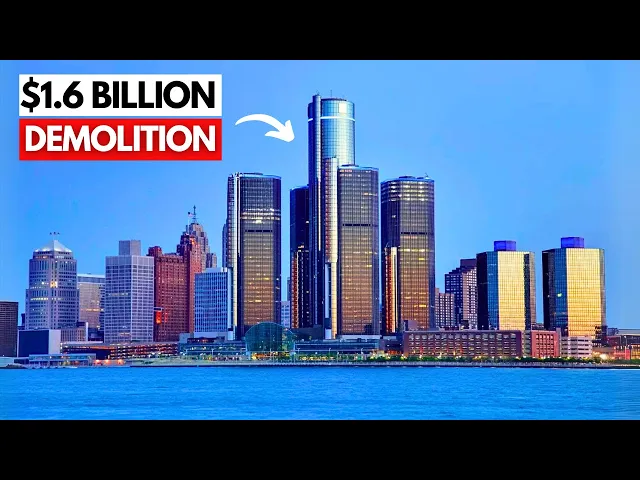
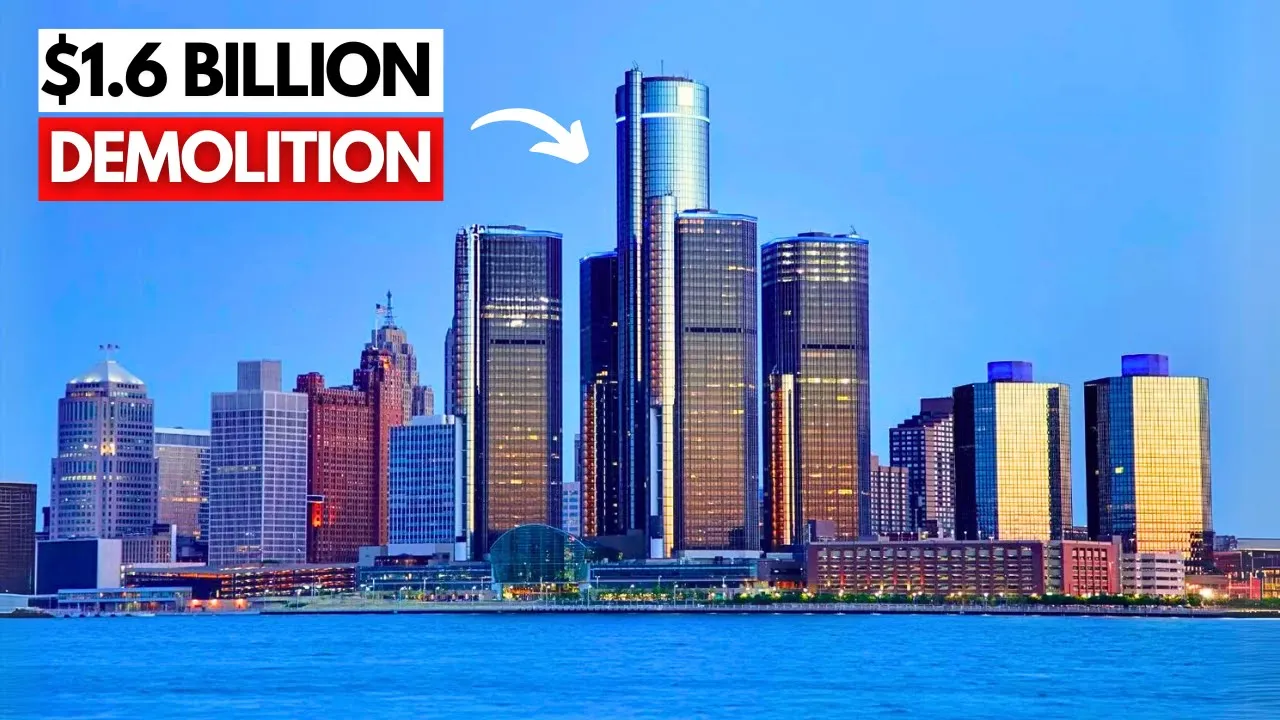
in the heart of Detroit an iconic structure that once symbolized the city's aspirations is now at the center of an audacious transformation plan this billion dooll project aims to reshape not just the building itself but the future of Detroit's Urban landscape what once stood as a testament to modernism and economic ambition is now seen by some as an outdated Relic isolated from the vibrancy of the City around it the proposal to partially demolish and reimagine this Landmark has sparked heated debates supporters hail it as a Visionary step toward revitalization one that could redefine the city's
connection to its Riverfront and attract a new wave of residents and businesses detractors however see it as a risky gamble questioning the implications of such drastic changes and the allocation of public funds join us today as we delve into America's shocking plan to demolish Detroit's iconic skyscraper don't forget to click on that subscribe button and like this video as it's the best way to support this channel Detroit's Renaissance Center better known as the renen is a symbol of the city's resilience and a significant Landmark since its completion in the [Music] 1970s designed by architect John
Portman and funded by the Ford Motor Company the renen was unveiled in 1977 as a bold statement of Detroit's economic Ambitions with its futuristic design featuring seven interconnected Towers the complex symbolized Detroit's aspiration to reinvent itself amid declining industrial fortunes its centerpiece a 73 story Hotel became the tallest building in Michigan and a defining feature of Detroit skyline the complex officially opened in 1977 at a cost of $500 million equivalent to to about 3.9 billion today it was the largest private real estate investment in Detroit at the time while the five original Towers were built
in 1977 two other matching Towers were later added in 1981 over the decades the rensen became a prominent fixture on the city's Skyline and served as a hub for business tourism and culture the rensen underwent various changes including the General Motors acquisition of the property in 1996 which transformed it into the company's Global headquarters General Motors invested significantly in renovations to modernize the space and improve its accessibility to date GM has invested more than $1 billion in improvements to the rensen site while it became a symbol of corporate stability the building's fundamental challenges remained its
design suited to a different era struggled to adapt adapt to the evolving needs of a city embracing Innovation and Community oriented growth many argue that the skyscraper was isolated from the surrounding City its fortress-like structure and lack of pedestrian friendly access have been cited as barriers to community engagement and economic integration these issues have persisted contributing to the complex's underutilization in recent years particularly in in the wake of shifts in office space demand due to remote work Trends in 2024 the average daily Workforce in the rensen was just 20% of what it was in 2019
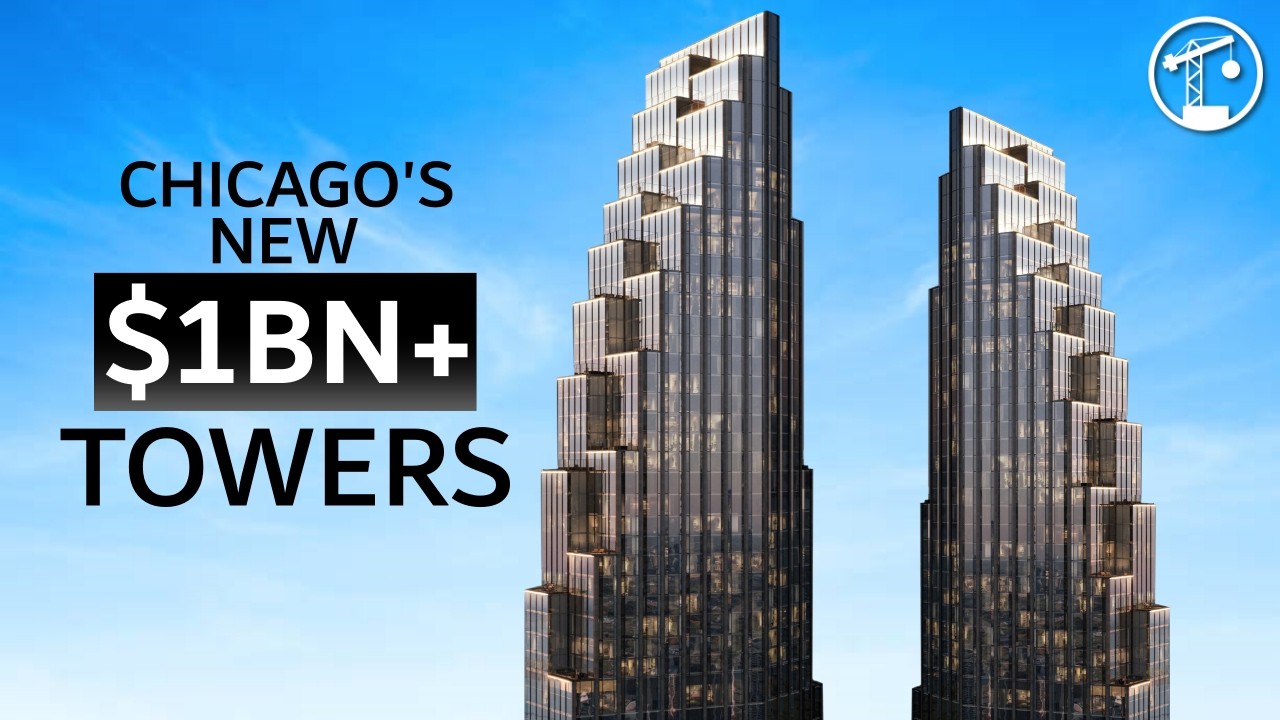
additionally data from 2023 shows that total foot traffic including visitors reached only 38.5% of pre-pandemic levels within this context the rensen is undergoing scrutiny under a proposed Redevelopment plan that has captured national attention this ambitious $1.6 billion proposal spearheaded by General Motors and the real estate developer Bedrock aims to reshape Detroit's Skyline Riverfront and urban core the plan includes demolishing portions of the rensen transforming its footprint into a mix of residential hospitality and public spaces and integrating it more seamlessly with the city's fabric while heralded by some as a necessary step toward Detroit Revival the
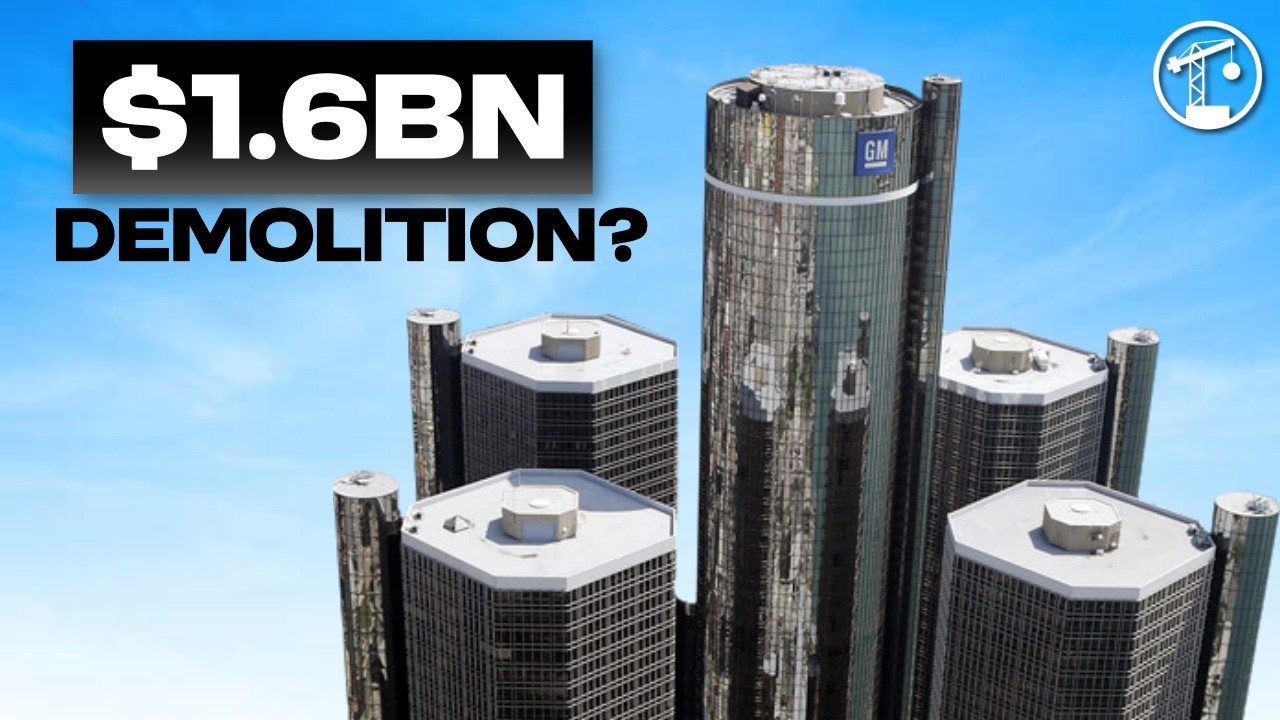
project has also sparked controversy raising questions about Public Funding historical preservation and the broader implications for urban Redevelopment in America General Motors and bedrocks proposed plan seeks to transform the Renaissance Center into a more accessible vibrant and multi-functional space The Proposal involves demolishing Towers 300 and 400 located closest to the Detroit River this step aims to create open space and improve connectivity between the riverfront and downtown Detroit Michigan's tallest tower the Detroit Marriott which stands 727 ft tall and the two other large skyscrapers will be kept and renovated transforming the complex into one geared more
towards residential and Hospitality use this mixed use approach aligns with contemporary urban planning trends that emphasize versatility and sustainability the Redevelopment plan also includes creating a pedestrian prominade that links downtown Detroit to the riverfront by dismantling the complex's lowrise base and redesigning the layouts the project seeks to foster a more inviting and accessible environment for resids and visitors reclaimed Land from the demolition will be converted into public spaces such as parks and plazas aimed at enhancing Community engagement and attracting economic activity plans also include for GM to move its headquarters into a new space in
2025 at the site of the former JL Hudson department store in downtown Detroit renderings of the renen Redevelopment show the central Detroit Marriott building prominently standing next to the river whereas before it sat in the middle of the four taller skyscrapers at its base will be a more condensed glass Podium that extends towards the River East of the complex a series of low-lying structures and landscaped areas will replace what is now a massive parking lot the $1.6 billion funding for the project is expected to come from multiple sources GM has committed $250 million to the
Redevelopment reflecting its longstanding ties to the Renaissance Center as its Global headquarters the real estate firm Bedrock plans to invest $1 billion demonstrating its confidence in Detroit's Resurgence as a dynamic urban center the remaining 250 million is anticipated to come from public funds potentially through state or local government contributions while public private Partnerships are common in large scale Redevelopment projects this aspect of the funding plan has generated significant debate critics argue that taxpayer money should not be used to support a project led by a multinational corporation and a billionaire developer particularly in a city still
grappling with economic challenges proponents however contend that the Project's potential to create jobs boost property values and enhance public spaces justifies the investment the Renaissance Center Redevelopment is not merely a construction project it is a complex Endeavor that must navigate various social economic and cultural considerations several challenges and criticisms have emerged in response to the proposal the demolition of parts of the rensen has raised concerns among preservationists who view the complex as an iconic piece of modernist architecture balancing the need for redevelopment with the desire to preserve Detroit's architectural Heritage is a delicate task also
ensuring that the Redevelopment benefits all detroiters particularly historically marginalized communities is a critical challenge critics fear that the project could exacerbate gentrification displacing lowincome residents and businesses meanwhile with the rise of remote work reducing demand for office space some question whether the Project's mixed use Vision can achieve long-term economic viability as General Motors and Bedrock move forward with their proposal several mil Stones must be achieved to bring the vision to fruition the project requires approval from local and State authorities as well as Public Funding commitments meaningful dialogue with Detroit residents and stakeholders is essential to
address concerns and build support for the Redevelopment finally effective project management and oversight will be crucial to ensuring the Redevelopment stays on schedule within budget and aligned with its stated goals while the future of the Renaissance Center remains uncertain the proposed Redevelopment represents an opportunity to redefine one of Detroit's most iconic landmarks and contribute to the city's ongoing revitalization if successful the project could serve as a model for other cities seeking to navigate the challenges of urban transformation in the 21st century what are your thoughts on this demolition project leave a reply in the comments
section thanks for watching and see you in the next video