SPEAKER: From zebra stripes, to cracked mud, to honeycombs, patterns abound in nature. Are these patterns just pleasing to the eye or do they reveal something about biological processes? For ecologists, understanding the mechanisms underlying vegetation patterns can provide insights into ecosystem dynamics.
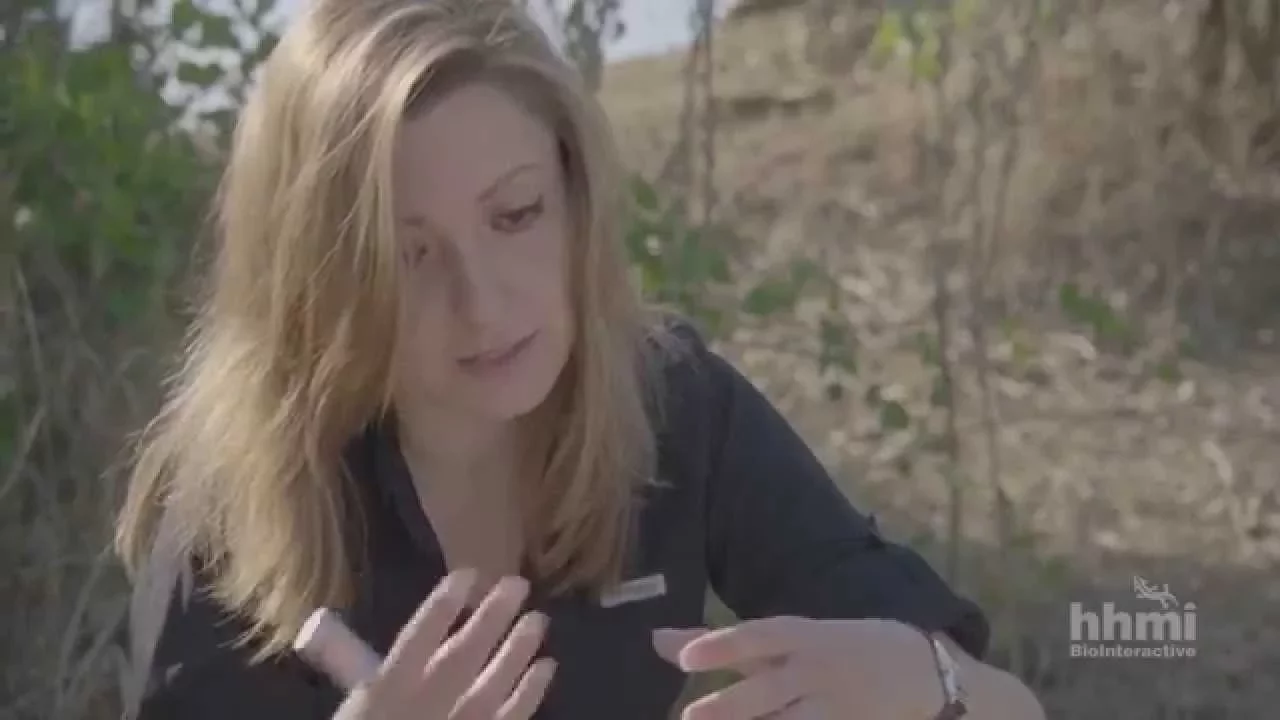
Corina Tarnita never imagined biology would be her destiny. As a three time Romanian mathematical Olympiad champion, she excelled in geometry. CORINA TARNITA: I was a pure mathematician to begin with, so there was a lot of just sitting in my office and thinking about very esoteric problems.
And then I think at around 25 I started feeling that math is getting a little bit claustrophobic and I'm learning more and more about less and less. So I started to work on a mathematical biology kind of question. Africa, I think, is just fascinating.
Because a lot of what I do has to do with geometric patterns. That in places where we have so many cities and so much agriculture, you can't see natural pattern anymore. Whereas here you see it everywhere.
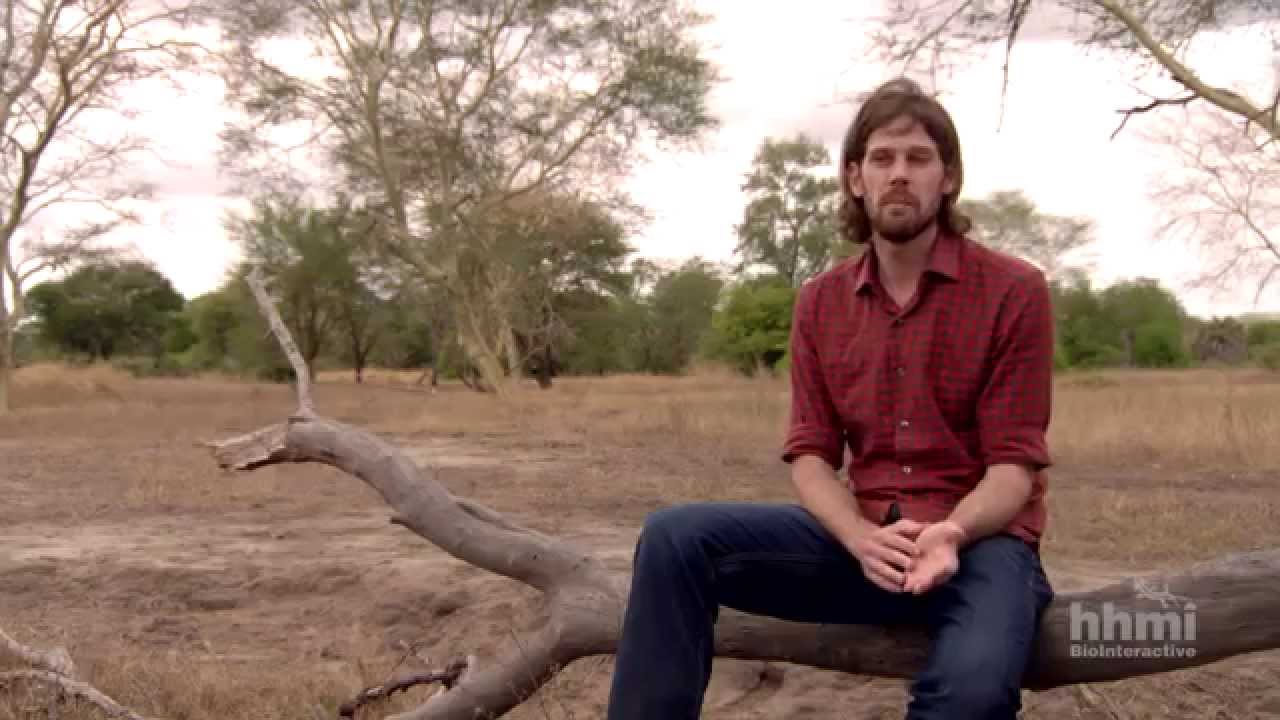
SPEAKER: Corina has come to Gorongosa National Park, Mozambique, in search of new patterns. CORINA TARNITA: Yeah, we're getting close to those 100 meters. SPEAKER: One of the main features of the savanna landscape here are termite mounds.
Carina and her collaborator, Rob Pringle, have shown that termite mounds are biological hot spots. Termites create rich, moist soils that enhance plant growth. When seen from above, termite mounds are islands of green on a drier and often more sparse background.
ROB PRINGLE: If you look at this perfectly polka dot landscape. CORINA TARNITA: Wow, look at this. look at all the mounds.
SPEAKER: Corina and Rob noticed that the spacing of termite mounds looks very regular, but how regular is it? Corina turns to a mathematical tool called the Voronoi diagram and applies it to satellite images of termite mound landscapes. She uses the center of each mound to generate a field of points that in turn partition the landscape into regions.
Corina can now ask how many neighbors each mound has. CORINA TARNITA: And so sometimes it will have five. Sometimes it will have seven.
When you then average over all these counts you'll find that the average number of neighbors is 5. 99. So it's basically six neighbors.
There was a Eureka moment when I realized, they're actually hexagons. They're packing the space in the optimal possible way. SPEAKER: What sort of natural processes could account for this regularity?
To find out, we have to know more about termite behavior. CORINA TARNITA: Termites live in these mounds. They are the centers of the territories.
I'm going to draw them as these green discs. But in fact, they don't eat there. SPEAKER: Termites forage for plant material outside their mound.
Eventually, they bump into their neighbors. Termites are extremely territorial and this meeting zone becomes a battleground. CORINA TARNITA: So what you find is that they put a boundary exactly at the middle of the distance between the two mounds.
SPEAKER: So a major driver in this system is termite competitive behavior. CORINA TARNITA: If the colonies are very different in size, then the bigger is always going to win and the other one is going to be killed. So that explains why they should be roughly of the same size.
And all the same distance from each other. Wow. So this is 30 meters.
This is the neighbor. Perfect. SPEAKER: So termite competitive behavior creates the hexagonal pattern that allows the termites to optimize space and resources.
But are the termites in Gorongosa National Park unusual? How common is this packing pattern of termite mounds across the thousands of acres of savanna? CORINA TARNITA: Then it was just going to every single satellite image that had termite mounds.
And every one that I took had exactly the same hexagonal pattern. That's what you hope to see. That's something that's repeatable in every environment where you have termite mounds.
SPEAKER: Competition between termite colonies is not the only force producing patterns. Corina's model predicted that in the areas between termite mounds she should find vegetation patterns at a smaller scale. To find them, she needs to look from a lower elevation.
A drone is the perfect tool. CORINA TARNITA: Oh, this is beautiful. This is really beautiful.
So now we can actually see these patches of darker and drier vegetation intertwined with the lighter patches of soil. SPEAKER: The maze-like pattern may not be as obvious and regular as the mounds, but it becomes clear when analyzed mathematically. Together, these two patterns on different scales combine to reveal a fundamental dynamic of the savanna ecosystem.
CORINA TARNITA: Immediately after the dry season, everything dies out, except for the mound. And as you get precipitation, you start to see that everything re-vegetates again. As long as you have termite mounds there, your system is much more resilient.
So things like you have an increased frequency of droughts. You may end up losing the vegetation in between the termite mounds, but you're still going to be left with the termite mounds. If the precipitation comes back, they're going to be able to reseed the whole system.
So they act as this double role of both delaying the collapse of the system to desert and at the same time helping with the rebound. SPEAKER: So termite mounds are not only major engineers of the savanna, they also contribute to the stability and resilience of the ecosystem. And the hexagonal pattern optimizes the number and distribution of mounds across the landscape.
With climate change models predicting more water stress in some savannas, understanding these vegetation patterns on and between mounds will become a very powerful tool for monitoring such ecosystems. CORINA TARNITA: They're hugely important for conservation. And they should be one of the primary things that we think of conserving when we think about climate change.
Because they're going to help us keep the system alive for a lot longer than we could otherwise. SPEAKER: Understanding patterns in nature leads to the discovery of new processes. Mathematics is the language of nature.
And scientists like Corina are refining our dictionary of that language every day.






![The Hidden Mysteries Behind The Dinosaur-Like Insects Of Amazonia | [4K] Wildlife Documentary](https://img.youtube.com/vi/Y58UtzZNtyU/maxresdefault.jpg)