Our beliefs about ourselves and our expectations of ourselves influence our perception of the world and I would go even further to say they not only influence our perception of the world they Define the world in which we subjectively inhabit one way for an average person to to reflect about this and this is a kind of simple meditation exercise that we do is imagine a challenging situation that has happened Recently in your life bring it into your mind and simply Envision what your response that situation might be if you had a completely different set of beliefs
and expectations going into that situation we are so fused with the beliefs and expectations that we have of ourselves many people don't even recognize that they have beliefs and expectations wait can we just can we slow those down just for a second because So I thought of a situation I'm not going to go into too much detail I thought of a situation where someone hurt my feelings and they did something that I think is wrong you know unethical like really wrong so I'm trying to imagine like I have I'm thinking of a friend of mine
who happens to be a I would consider a pretty enlightened person she was raised in a Buddhist community and she's very Chill if this happens to her she would have had a totally different reaction I mean it's not to say that she wouldn't be hurt but is is that the kind of example we're talking about yeah that that's a I think that's a very appropriate example huh we all have a narrative about ourselves um many people don't recognize that they have a narrative and there are some people that recognize that they have a narrative but
they regard it as a kind Of fixed quality of themselves they don't recognize that the narrative can shift and really what's key to well-being is not so much changing the narrative at the beginning but it's changing our relationship to the narrative so that we can see the narrative for what it is that it is a narrative and it could be different uh and uh it it's a constellation of thoughts and thoughts are thoughts they're ephemeral they come and go it's Break down she's gonna break it down for you because you know she knows a thing
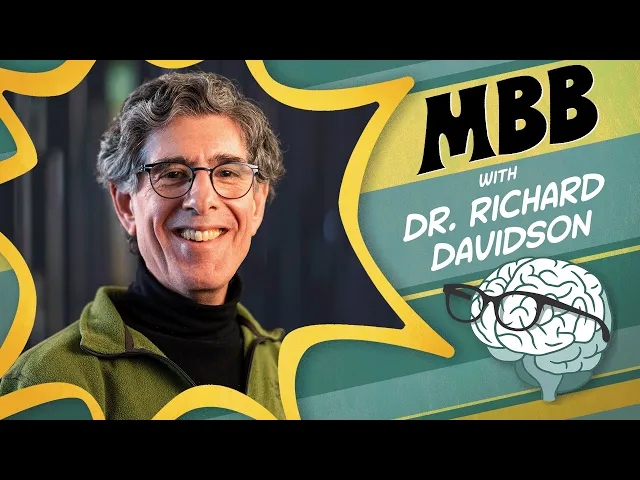
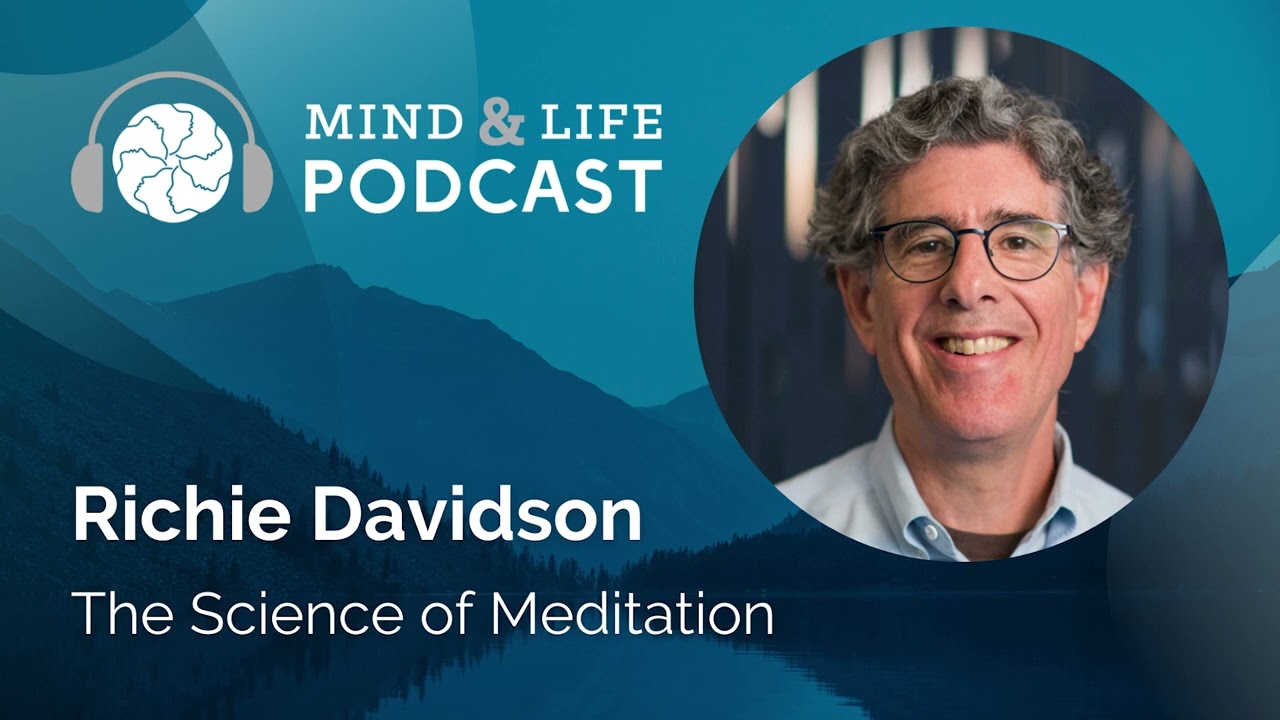
or two so now she's gonna break down it's a breakdown she's gonna break it down hi I'm Ian Bialik and welcome to my breakdown this is the place where we break things down so you don't have to today we're going to break down so many different aspects of not just meditation but what it truly means to be well in your emotional self Uh flying solo today which is really sad because Jonathan would absolutely love to talk to Dr Richard Davidson he is a professor of psychology and Psychiatry and founder and director of the center for
healthy Minds at the University of Wisconsin Madison but he is so dope in so many ways he began his personal meditation Journey with none other than Ram Das when he was in grad school in the 70s he's published over 573 articles he's written a book the emotional life of your brain with Sharon Begley he wrote with Daniel Goldman altered traits which came out in 2017. he founded a non-profit healthy Minds Innovations which translates science into tools that cultivate and measure well-being I highly recommend you go to Center healthy minds.org there's also an app a healthy
Minds app that is free which is unbelievable and this man is All About Us understanding the larger Framework of our Wellness where awareness connection insight and purpose contribute to our well-being he's a fascinating really really really well researched man and he has studied over 75 monks in an MRI scanner do I need to say more if you want to know about the science of meditation and also the larger framework in which we as humans deserve to connect with meditation as one of our tools I highly recommend you take a listen it's Such a pleasure to
welcome Dr Richie Davidson he goes by Richie to the breakdown [Music] thank you so much for having me happy to be here you said I can call you Richie so I'm going to go ahead and do that please do I tend to be pretty old-fashioned with neuroscientists and I feel like I should call them doctor but if you insist I will call you Richie Um thank you so much um for for being here I'm very very excited to to speak with you um you know you're one of the the real kind of pioneers you know
in an aspect of of Neuroscience which obviously is very close to my heart um but also our understanding of of meditation and of mindfulness and one of my sort of Favorite Things Um about you is um you you're very careful in sort of not um not equating all ways that meditation and mindfulness have made their way into our culture so I wonder if you can talk a little bit because you know we obviously talk about it a lot here on the podcast I've talked about how my meditation practice has has grown and it's still growing
um can you sort of talk about and I'm Not I don't mean to start this off by asking you to be critical but can you talk a little bit about what certain aspects of our culture what we're getting wrong or not exactly right when we talk about let's just say meditation sure well first thank you for having me and thank you for the good question and I think a good place for us to begin is to acknowledge first that uh there are hundreds of different kinds of meditation uh I often Use the analogy of sports
uh there are just a plethora of different kinds of sports uh and and to say sports would really be so underspecified until in terms of describing what a person might be doing and in the same way uh uh really uh in terms of the contemplative Traditions from which they come there are literally hundreds of different kinds of meditation practices here in the west we have privileged just a very tiny Fraction and there's even a further restriction of range in terms of what's been studied scientifically and often meditation is uh equated with mindfulness and mindfulness is
one of hundreds of kinds of meditation uh and um uh and so uh and it's also the case and this is a separate issue that these practices in their original form have been embedded in a larger framework uh a part of which is an ethical framework And when these practices are taught in the west and also when they're being studied for the most part um when they're being studied scientifically in the west they are stripped of this ethical framework this ethical context in which they are embedded in their original form and um I think that
this does some disservice to the practices themselves uh I believe that uh uh a proper contextualizing of these practices Within their context may actually even change the effects that they have both behaviorally and biologically uh and so um I think that these are all elements that are complex elements but ones that really are important in understanding um how these practices affect the mind brain in the body can you um it's it's a beautiful point and you know we had Sharon Salzburg on here and we've had you know a lot of really interesting People who were
part of some of those early waves you know of of bringing as it were bringing uh meditation and and you know Eastern practices that have been in use for thousands of years you're right in a completely different context you know bringing those to the West um Can can you even be a little bit more specific because I think when people hear you know like ethical construct like can you be more specific like is it Just that white people in the west shouldn't meditate no so can can you be more specific about kind of what that
means I mean what I hear is like when I say that I practice yoga right people picture me like sweating in a room with lots of skinny pretty girls because I live in Los Angeles and you know like you feel good and you get real strong and you know when when I think about yoga I think about all the branches of it and I think about mantras and I think About positioning and I think about breath work and I think about mindfulness because that's sort of how I've been taught to think about it is it
similar for meditation yeah it's similar in some ways uh I think one of the um important pieces is that in their original context you know when we put our butts on the cushion it's primarily not about us it's about others we we are putting our butts on the cushion in Order for us to be uh more compassionate in order for us to be more helpful to others uh in order to uh increase our warm-heartedness toward others it's really about um uh uh that altruistic frame that is uh uh the the kind of um mindset if
you will you know using a a more modern term that uh these practices are really part of uh and so in the west they've become much more self-focused uh you know it's really Focused on self-improvement Peak Performance I was going to say there's a competitive notion you call it this sort of like mind training you know like who who can get there quickest who can be Zen the quickest yeah and so I think that it's um uh again uh uh the we haven't we meaning the scientific Community has not yet uh adequately studied this but
my conviction from everything I know as a scientist and as a practitioner that when we meditate Even with simple forms of mindfulness practice and we meditate uh with this altruistic mindset the impact of the practice is going to be different than when it is removed uh stripped from that context and you specifically you know have kind of dedicated your your career to sort of providing both parts of an understanding of what it means to sort of apply meditation meaning there's the you know the neurological substrates kind of part of your universe and and Your work
um and then there's there's also you know sort of um an elucidation of what it really means to sort of have emotional health and what well-being means so you kind of have these these two things which you know for anyone to work on one of those things would be such an amazing contribution but you really have kind of a hand in in both of these so Um you know as Sharon Salzburg said you know she didn't need to know the neural substrates to know you know that this stuff works but um for many people and
I think also in general for Western culture we really want that that information and we want those scans and we want the data and we want you know we want the asterisks indicating statistical significance so um if you don't mind kind of giving us a Layperson's sort of um you know if I if I were to say to you I'd like you to convince people you know in in four minutes or less that meditation mindfulness that this kind of attention to to to breath work to um to silence to calm to peace that it impacts
your brain positively what what would you say yeah well first let me say that I um first of all Sharon is a very dear old friend and I would agree with her uh that you know And for me you know I I didn't originally start meditating because I was convinced by the scientific research when I started meditating there was no scientific research um uh so uh it was so long ago there wasn't even science am I right I'm kidding well there wasn't science on meditation there were there were there were three papers in the world's
literature on uh neuroscientific changes with meditation that was it and Um yeah my first retreat was in 1974. so uh it really was before any of this work was uh started um but to answer your question there are a few things that I would say uh um we have learned that meditation uh and here I'm intentionally using it generically because different forms of meditation do different things to the mind and the Brain they're not all the same but if we make a general point About a variety of different kinds of meditation uh we know that
uh they improve our brain health and they improve our bodily health uh and this is one of the ways in which they are they support well-being uh and so uh uh there is research that shows that circuits in the Brain Change in response to a variety of different kinds of meditation and these circuits are important for uh several different aspects of well-being Uh uh and uh uh one of the things that I liken it to is um which doesn't directly answer your question but is indirectly related and that is that um I think of the
cultivation of well-being as a public health issue we know that meditation improves well-being we know that well-being is linked to our health um uh people who have higher levels of Well-being are physically healthier that's not true of everyone but if you look at Large populations epidemiological research uh it's definitely true uh and so uh when human beings first evolved on this planet none of us were brushing our teeth and I'll bet every person listening to this podcast brushes their teeth and spends a few minutes a day doing that this is not part of our genome
this this is something that we Figured out how to do because it's important for our personal physical hygiene what we're talking about is important for our personal mental hygiene and it turns out that science shows that our mental hygiene is also linked to our physical hygiene [Music] Miami Alex breakdown is supported by ag1 I drink ag-1 the daily foundational nutritional supplement that supports whole body Health literally daily I gave Ag1 a try because I wanted better gut health and more energy and I wanted a supplement that actually tastes great I drink ag1 in the morning
before starting my day and I know that I'm doing something good for my body right off the bat ag1 is a foundational nutrition supplement that delivers comprehensive nutrients for whole body Health it can replace your multivitamin probiotic and More in one simple drinkable habit ag1 has a science-driven formulation of Vitamins probiotics and Whole Food Source nutrients it's raising the standard for quality in the supplement category and helps you build your health Foundation First ag-1 was created in 2010 and has helped millions of mornings begin on a healthier Foundation ever since it's not only a high
quality all-in-one solution for daily foundational nutrition it also saves you time confusion and money each serving costs less than three dollars a day and Gives you powerful long-term results if you're looking for a simpler effective investment for your health try ag1 and get five free ag1 travel packs and a free one-year supply of vitamin D with your first purchase go to drinkag1.com breakdown that's drink ag1.com breakdown check it out my ambiance breakdown is supported by Stitch fix wouldn't it be great if you had the perfect wardrobe to match your evolving lifestyle whether you're Picking up
a new activity looking for maternity wear or maybe you're just bored of your old choices the stylists at Stitch fix make sure you always have something to wear Stitch fix is the best way to shop new Styles and Brands think of them as your personal style partner your stylist will learn about your tastes and collaborate with you on looks you'll love without breaking the bank you simply share your style sizes and budget with a quick style quiz and Stitch fix will send you five items in a fix right to your door with your choices in
mind and sizes from extra small to Triple XL they will find your perfect fit the best part is you try everything on at home keep what you like and send back the rest shipping and returns are always free they have over 1 000 Brands and styles no matter what season of life you're in Stitch fix has you covered you can order a refresh as needed or set it and forget it with regular fixes you are In control over time Stitch fix and their season style experts will match you with greater Precision to perfect pieces is
for you based on your likes and dislikes it is so easy I recently wore my new Stitch fix dress to synagogue and I got so many compliments even my kids liked it it was something I never would have even known existed and I filled out the brief questionnaire and then I did like a couple of the quizzes so that they could learn my style it Worked a big thank you to stitch fix you guys get me and they'll get you to try today at stitchfix.com break and you'll get 25 off when you keep everything in
your fix which you probably will that's stitchfix.com break stitchfix.com break [Music] study brains of people and you do these kind of you know large you know meditation studies and you know there's many different methods that that you can use to to do this Um how do you control for the other things that people do meaning people who meditate are also more likely to you know not eat processed foods um you know uh have jobs that tend to be less stressful meaning like there are so many other things that that you have to control for you
know how do you how do you know that that's what you're looking at because I know a lot of people who meditate and they are not kind to their Spouses they're not kind to themselves or I know people who go to yoga and then leave and start cursing at people because you know they're not driving fast enough on the freeway or you know on an even more kind of you know basic level like many people like still smoke cigarettes and drink alcohol but also like meditate and do yoga so how do you control for that
how do we know what we're looking at when you tell me you know this study shows yeah yeah it's Yeah it's a wonderful question you also introduce some other elements to it which are also really important about people who meditate that um you know do all these other things that may seem inconsistent with their meditation practice so let me address each of them they're both important um the first question about how do we know that it's really meditation as opposed to their diet uh their um Lifestyle choice of choice of occupation just a gazillion things
so you know when we started this work we compared long-term meditators to age and gender match controls and all of the problems that you're describing are exactly the problems that leave that work to fundamentally be unsatisfying um we needed to start there because if there was no difference between long-term meditators and age and gender magic controls we might as well put away The hardware and go home uh because uh if we can't see a difference between them with all the confounds that you're talking about then we're not going to see uh effects in more novice
meditators so we started there and we found some huge differences there are many questions that uh are uh important and that can account for these differences and we can't say with any certainty that these are due to the meditation practice it could be living at high altitudes Um you know it could be the Simplicity of their lives so many so many factors so we then embarked upon entirely different research strategies where we took people who've never meditated before and we randomly assign them to meditate these are people who obviously are expressing some interest and the
way we set these experiments up is we tell them we're going to teach you an intervention to cultivate well-being but there'll be Different interventions and you'll be randomly assigned to one or another of these interventions in one case a person might get meditation another case a person may get cognitive therapy which is an empirically well-validated strategy for reducing anxiety and depression and improving well-being and people are randomly assigned so they don't choose which they're going to uh and so all of these factors that you're talking about now are completely Rigorously removed from explanation in that
case and there we can much more definitively say that the changes we're seeing are due to meditation per se that's that's a um a really helpful set of distinctions what's the most interesting part of the brain in your opinion that you find positively impacted by consistent meditation yeah I know it's like asking you to pick your favorite child you know yeah well you know all neuroscientists have Favorite parts of the brain that they're um uh so uh you know I would say probably well one is I I should I I should first qualify it in
the following way we don't these days talk about um specific individual parts of the brain so much because that's not the way the brain works uh the brain is a a massively interconnected uh set of machinery and they the brain works in circuits it doesn't work in isolated structures Having said all that having said all that things light up and you can tell what part of the brain it is uh that's in part true uh uh and so one part of the brain which is importantly influenced by meditation is the prefrontal cortex this chunk of
real estate that we have uh in the front of our brain that really in many scientists believe it is responsible for things that are um characteristically human uh it uh in Particular our capacity for self-control uh for regulating emotions regulating attention all of which in part depend upon the prefrontal cortex and so uh there are literally hundreds of scientific studies now that show some effects on the prefrontal cortex from different kinds of meditation um also can't help but wondering about prefrontal cortex and Trauma um obviously there's been a lot of attention to this particular part
of the Brain in terms of um the the processing of trauma in terms of knowing what's now what's then and really a deep sense of self um meditation also something that can be very helpful in in trauma therapy as well correct yeah so one of the things I often say is that the very mechanisms in the brain and in the body that encode trauma are the same mechanisms that can be used for Awakening for well-being they're mechanisms of neuroplasticity and epigenetics uh both of which are we we know are impacted by trauma uh and both
of which also we know now are engaged and altered with different kinds of meditation so um there there is no question I think that these practices can be helpful uh in that regard um but yeah I want to also go back to a point that you made earlier that we didn't I didn't talk about yet which is The um the examples you gave of the person who comes out of a meditation class or yoga class and gets on the LA freeway and is behaving like a jerk to others who might be driving and you know
certainly all of us have seen those kinds of examples and to me um I mean it's not that surprising we're gonna see stuff like that because uh it Takes a lot to change habit and if a person has been habitually behaving in a certain way I think it's um it's unrealistic to expect a magical solution uh and for change to happen uh so quickly and so this is uh really where we see the influence of practice and practice uh uh in a variety of scientific studies now uh shows um systematic relationships with outcome uh not
all the time but in many studies the more practice we do the more Beneficial is the outcome well I'm going to go ahead and poke at that a little bit because I think you know as someone who took up you know meditation um really at a time in my life when my behavior towards my children was an indicator that something was amiss in me right um and I have pretty pretty uh easy going children and what became clear to me was that my my instinct to rush to Anger or to Rage or to extreme impatience
uh was a complete reflection of me and really not them you know I I do believe children um do exactly what they need to get their needs met and if you don't meet it the first time if you don't listen if you're on your phone if you're doing other things they will tug harder and then they will start doing other things to get attention and um And it was a friend of mine Carla nomberg who um who turned me on to meditation but I I want to be really um I want to be really consistent
with the message that I know that that you are so good at sort of delivering as as part of your life's work it's not simply that you need to put in the hours because many of us sit and we we put in hours um there's there is a notion that There's an integration required to really incorporate not just you know the the tricks uh the top five you know ways to meditate but really a deeper understanding of the substrates of the need to you know fill in the word Center uh be mindful quiet down have
more compassion you know live an ethical kind of existence um and you know for me as I as I was you know learning more and more about you Um you know this notion that awareness connection insight and purpose are actually the framework for kind of who we are um to me that makes a lot more sense um and I know that that's you know obviously uh part of what you're indicating um there's there's a larger kind of path um and I wonder if it's okay that I brought those four Concepts in um because to me
that's sort of you know That piece that for me was missing you know when I just started like sitting and like okay I'm sitting like I don't get it you know um it wasn't until you know and I I came to these not necessarily from your work but um you know I came to the notion of starting to chip away at awareness connection Insight purpose I I call them akip but I don't know if you call them asip or if it has an acronym okay asip Great um Can can you talk a little bit about
sort of those components um and and perhaps how that sort of you know then dovetails into when we think about kind of growing not just a practice of meditation but sort of an identity of Integrity yeah well that's beautifully put thank you for putting it that way um the asip components that you're referring to awareness connection Insight and purpose uh we uh view as a framework a template for understanding well-being these are the four key pillars if you will uh in each of these pillars we um believe exhibits plasticity they can be changed by experience
and they can also be influenced by training and um this framework is really important and guides uh pretty much everything we do these days uh and and we think it's particularly important because uh uh as We discussed earlier most of the work in uh science in the science of meditation in the west is focused on the first two pillars most of it is focused on the first pillar awareness which is where mindfulness would be there's a little bit on connection um uh with loving kindness and compassion practices uh there's virtually nothing on Insight uh and
um and while there is scientific research on purpose there's almost no Research on the training of purpose in the way that we're talking about um uh uh that is the plasticity of purpose uh uh and so uh this is really an important framework and um uh you know when when a person is just doing mindfulness with all due respect it would be like going to the gym and just working out on your upper body you know it's going to be good for your upper body but after a while it's actually going to lead to some
imbalance uh and So in order for a human being to flourish she needs all these components it's not possible to flourish with just one or two we need all of them and so we have developed a more systematic well-being training program we don't call it a mindfulness program because that's not what it is um it's it incorporates all of these components uh and um uh we but we not only do we believe But we've shown that they're all trainable and uh uh they influence overall well-being um my embiotics breakdown is supported by puree there are
so many headlines about contamination from heavy metals pesticides toxins not just to the environment but what we put in our bodies that's why I was so thrilled to discover puree pure natural food supplements I add their plant protein Booster to my smoothies and I highly recommend this brand protein is an essential part of any healthy diet not just for athletes and I had been looking for a high quality vegan source that I could trust and I found that with puree's PB plant protein booster it offers 10 grams of high quality pea protein isolate per scoop
plus it contains red algae that fortifies the product with an organic form of calcium and it's certified clean by the clean Label project and won the Purity award every batch is third party tested against more than 200 contaminants including heavy metals pesticides and glyphosate all common concerns in plant-based protein products I like the PB plant protein booster in all of my smoothies it is super delicious it is not grainy at all and the the neutral flavor means it doesn't compete with everything else that I'm putting in my smoothies and my kids drank it and Didn't
complain which is the greatest seal of approval for me puree is pure origin potency and peace of mind that's what we get with all of the wonderful products that Puri offers be aware of what you're putting in your body trust puree like I do right now period is offering our listeners 20 off site wide go now to my special URL fury.com breakdown use the promo code breakdown this even applies to the already discounted subscriptions you'll get Almost a third off the price go to p-u-o-r-i.com slash breakdown don't wait use the promo code breakdown puree.com breakdown
and now word from our sponsors at betterment picture this your eyes meet a mysterious stranger from across the room your souls start to intertwine your hearts start to become one and you haven't thought about your investing portfolio in a while that's because you use betterment betterment lets you be Wildly Madly Deeply totally chill about your finances their automated technology makes it easy and simple to get in the market and stay in the market without checking in every day gone are the days of being glued to your phone tracking your portfolios every move and not being
able to trust your money is where it should be thanks to betterment's expertise automated technology and optimization tools you can be the totally chill investor you've always Wanted to be plus Jonathan you'll have more time too you'll have more time to figure out the mysterious and alluring stranger from across the room who will surely Drive umat betterment be invested and totally chill learn more at betterment.com investing involves risk performance is not guaranteed you know I I'll be honest I was surprised when and you know I read the the penis paper Um and I was really
surprised when when you talked about how for awareness for connection for insight and for purpose that these things are able to be cultivated they're able to be grown the the place you were born the class you were born into the family you were born into that's not what determines your ability to develop these and I found that I was surprised that I was surprised to hear that but it did make me feel Very hopeful um and I think the one that that obviously as you mentioned doesn't really get a lot of attention the one that
I I wonder if you can elaborate a little bit about because I think it is the most abstract for for most lay people the notion of insight so Insight this is a quote from from the paper Insight in our framework refers to self-knowledge concerning the manner in Which emotions thoughts beliefs and other factors are shaping one's subjective experience especially one sense of self I think eight out of ten well-adjusted adults would be like what's that can you explain explain what Insight is I would argue this is one of the things most missing from our current
culture in every aspect yeah and first let me just say I love that you asked this question uh and um And it is also if you look at other existing Frameworks for understanding well-being to the best of our knowledge there's not a single other framework that has insight as part of it uh it's it's really unique although in the contemplative Traditions if you look in Buddhist psychology it's all about insight and if you talk to the Dalai Lama um you know that's the core of the meditation practice he does it's really Fundamentally about Insight um
so what we mean by this is really pretty simple and um it is the idea that our beliefs and our expectations particularly our beliefs about ourselves and our expectations of ourselves influence our perception of the world um that and I would go even further to say they not only influence our perception of the world they Define the world in which we subjectively inhabit Um uh you know William James eloquently spoke about this in in his writing um uh and one way for an average person to to reflect about this and this is a kind of
simple meditation exercise that we do is imagine a challenging situation that has happened recently in your life bring it into your mind and simply Envision what your response that situation might be if you had a completely different set of beliefs and expectations Um going into that situation huh can you imagine how you might respond differently if you had a different set of beliefs and expectations and that's simply a way to get to make this a little looser if you will um we are so fused with the beliefs and expectations that we have of ourselves many
people don't even recognize that they have beliefs and expectations wait can we just can we slow this down just For a second because so I thought of a situation I'm not going to go into too much detail I thought of a situation where someone hurt my feelings and they did something that I think is wrong you know uh unethical like really wrong so I'm trying to imagine like I have I'm thinking of a friend of mine who happens to be a I would consider a pretty enlightened person she was raised In a Buddhist community and
she's very chill if this happens to her she would have had a totally different reaction I mean it's not to say that she wouldn't be hurt but is is that the kind of example we're talking about yeah that that's a I think that's a very appropriate example huh not because she's Buddhist I was just happened I happened to conjure a friend of mine who's like very she's very like roll with the punches and I've known her Since I'm 11 and I've always been like the high strung one and she's always been like that's just life
like everything's fine yeah and also let me just say to make it explicit for listeners that I don't think that this quality it belongs in a privileged way to any specific religion sure I think it's accessible it is part of social nature yeah so but yeah that's the kind of thing that that um I think is the case and this idea of uh this narrative That we have we all have a narrative about ourselves um many people don't recognize that they have a narrative and there are some people that recognize that they have a narrative
but they they regarded as a kind of fixed quality of themselves they don't recognize that the narrative can shift and really what's key to well-being let me just say one thing here is not so much changing the narrative At the beginning but it's changing our relationship to the narrative so that we can see the narrative for what it is that it is a narrative and it could be different uh and uh it it's a constellation of thoughts and thoughts are thoughts they're ephemeral they come and go and uh and having that deep understanding is really
helpful in loosening the grip loosening the extent to which this narrative really hijacks Our perception okay so this is where my yes and this is where my brain went this is literally what I thought as you were saying that I was like but he doesn't know my family and I'm not saying that just to be funny but I literally you know I I I wasn't planning on going kind of back to that trauma place you know but I think of um you know I think of a lot of us who have intergenerational trauma I think
of um a lot of the ways that that that many Of us are are raised and you know hurt people hurt and many of us come from from parents who who were processing what their parents were processing etc etc you can tell by the way I talk that I'm from a particular part of uh the universe where there's a lot of this and you know what what the the hope is you know is that you know it's not the 1940s it's not even the 1970s like we are in a different we're in a Different age
right I'm doing different as best as I can I'm sure my children will have what to say but you know the another aspect of the work that you've done is to create a curriculum and also you know there's an an app that is free which is like unbelievable where people can begin to to access these things in ways that they can make it their own because just the notion that's I think so many people walk around even in this day and age and I live in Los Angeles you know a place where people love to
talk about this over smoothies right but the notion of truly understanding what you came from where you're going you know how your psychological being is impacting every relationship that you have right the the notion that this is something that can be taught to young people like that's what we need to do correct and I mean some schools are starting to already implement this even in Elementary school um you know mostly when I try and have my kids participate in meditation like they laugh they get bored they don't know why we're doing it but this aspect
of insight what does that look like to teach it to kids and I don't just mean kids in wealthy private schools what does this look like for every human being as their right to understand their inner world what does that look like how do you teach that You know yeah well first a lot of uh wonderful issues that you raised and um uh uh and so if we I'm not sure where to start with young people um we we've developed a kindness curriculum which teaches some aspects of this it's starting in preschool with kids four
and five years old the kindness Curriculum by the way is freely available on our Website in both English and Spanish anyone can download it um uh the uh you know there's been essentially really no work on the development of insight um uh we don't know at what age it really would be appropriate to start teaching this my own conjecture is probably around adolescence uh would be the appropriate time to begin to to teach This and I think the um the way in which this might be taught to adolescents might look really different than the way
we think about meditation it does you know meditation doesn't require that you sit it doesn't require that you sit in any specific posture meditation can be done anytime anywhere uh uh and so it may look completely different in uh an adolescent being taught these kinds of insight practices Uh uh and so it may be in the form of a dialogue that they have with a peer uh where they're asked to take the perspective of another uh as a way to cultivate this appreciation for how our beliefs and expectations affect our perception of others so there's
another point that you made though which I feel obligated to comment on and um just about your own history you know on the history of any family is going to be fraught with you Know a lot of complexity and there's trauma uh in so many different places and you're absolutely right I mean there's a huge amount of of really good neuroscientific evidence on this now that there is there is a reality of the intergenerational transmission of trauma there's also a reality of the intergenerational transmission of resilience of the intergenerational transmission of Awakening uh the because
the very same mechanisms that are Responsible for trauma as we said before are also responsible for um for well-being and for flourishing and so we can harness those mechanisms and people will start off at different baselines because of their trauma history but every human being has innately the capacity for these qualities and in fact you know I talk about the fact that we are born to be kind and to some people that may sound nuts In the kind of world in which we live but the data are very clear if you look in young infants
and you look at their propensity for warm-hearted pro-social interactions compared to interactions that are selfish and aggressive the data are very clear and it's not like 55 of infants prefer the pro-social and 45 percent prefer the other it's like 95 um you know depending on the study it's between 90 and 100 percent this is something that we come into the world With and so when we sit down or more actively meditate and cultivate these qualities we're not cultivating them from scratch we're not trying to create something de novo but rather we're familiarizing ourselves with the
basic nature of our own minds it's really beautiful and and you know when I think about I mean it really it touched my heart and Valerie also I think we both welled up a little bit you know that notion that our that our default state Is one of openness right kindness love connection I mean we're mammals right that's like nurturing and attachment like that's what we do and I thought of two groups of people who seek to tap into this people who have a deep connection with a power greater than themselves and I'm not saying
that religious people have it all figured out but for me as a person of Faith especially when I connect Musically in in a faithful mindful way that notion that I am connected to something that has as its core an element of goodness and this is a human word you know God doesn't have good bad you know it just is um and you know certain aspects of monotheistic religions Christianity have really have really honed in on that notion of Salvation and goodness so I'm even leaving that aside but just being In touch with something that feels
like oh that's my purpose is goodness is kindness is openness the other group of people I think about are people who have had transcendental experiences either through intense meditative practice often with fasting and sometimes chanting and also people who have experienced you know often with completely safe physician supervised psilocybin or ketamine um there are people who report that in Transcendental States they are experiencing a source of love and wholeness and goodness and I have to believe that these things are not you know they're not disparate yeah no I completely agree and I think that uh
this is something that every human being has access to and it's really part of who we are and uh uh love is a more fundamental part of our nature than is hate uh I think we need to learn to hate but love is innate you had the the Opportunity to meet uh the Dalai Lama in 1992 I believe and this led to a really the fascinating aspect of research of scanning correct scanning monks I need to know about this like I have so many dumb questions like like where did you scan them did they come
here were they living here what did they wear like did you have to provide certain food what was that sort of research protocol like yeah great questions uh I mean over the years we've probably scanned at Least uh 75 monks um uh and uh most of them live in Asia in India and Nepal primarily and so when we were doing those studies we would fly the monks over from Asia to Madison Wisconsin and they would uh they would spend about a week with us typically uh and um you know they wore Monk's ropes so that's
uh and you know they came into our laboratory they used the scanner That they're in the scanner that we have in the lab and that's uh that's what we did um and we fed them food that they enjoyed eating did they get like a coupon to Starbucks like when you participate in a scanning study you get like a some of them like like lattes uh you know it's uh these are I mean all the monks that we had the opportunity to scan for the most part are monks that Are familiar with the West they've they've
been to the West before they many of them are teachers some of them are famous teachers uh uh who um uh you know have are quite well known have published books in uh in English that are uh well-known books uh and so some of these are you know some of the most famous living meditation teachers and um can you talk a little bit about sort of what you looked at in this particular you Know population were you asking them to actively meditate were you asking them to think about other things um what what were you
kind of looking at was this well-being can be measured that's a quote of yours yeah so we were looking at many different aspects of their brain and their body um in these studies uh we would record brain electrical activity we would also Have them in the MRI scanner looking at both the structure and the function of the brain we did have them actively meditate a a good portion of the studies was focused on discovering what changes in the brain occurred during meditation per se during formal meditation but we also were looking at how their brains
were different at Baseline compared to Adrian gender match controls but that you know those findings are findings that have all these possible alternative Explanations that we talked about earlier sure because of the many ways in which these people are different but you know you asked sort of you know how we did that and what some of the Practical details are let me just share one story uh because it captures this so um we most of the time we have them stay in a hotel that's just adjacent to the campus and walking distance from the labs
did you bring them in Winter because I have seen Wisconsin in the Winter robes are not enough for that winter they do we have them here in the winter and uh you know they were wrapped in at least one case I went out and bought someone a pair of gloves um because he didn't have any gloves and I felt it was not appropriate for him not to be wearing gloves many of them stayed at this hotel that was just on the edge of campus and they walked to the lab from there and so We had
one of these monks in for a week uh and uh he left and the day after he left I got a call from the manager of the hotel and the call was um you know initially taken by an assistant of mine and you know she said that the manager is calling me and I thought that you know there's probably probably some administrators screw up the bills got you know um uh didn't get paid or something oh I assumed somebody threw a television Through a wall you made them unmonk with your research so what happened was
they were calling me to thank me for the wonderful guests that were having stay in this hotel and he said to me that this guy was so friendly and he we he got comments from the uh from the uh housekeeping staff the front desk staff and the kid the um restaurant staff all of whom were just talking about what an incredible person this was that is one of the best Unobtrusive measures of uh kindness that we that we have you co-authored the emotional life of your brain which came out in 2012 and um it talks
about emotional style and we had Susan David on and a lot of a lot of her work kind of resonated with with when I was learning about um about this work of yours and the notion that we all have like an emotional fingerprint meaning there are different kind of Um unique components of many different aspects that sort of make up uh how we function and operate emotionally um you you discuss resilience Outlook social intuition self-awareness sensitivity to context and attention and I guess where we fall on all of these Continuum sort of determines our emotional
fingerprint can you talk a little bit about sort of the structure of this concept you know of emotional style and also can these things change Too yeah so the great question so the emotional life of your brain book and the uh framework for six emotional Styles was uh um an inductive process if you will that uh I came to after 30 years of research looking at these different ways in which people respond to emotional challenges and so this really was the question that I began my career with in many ways still is vibrant in our
work and the question can Be simply phrased as uh why is it that some people uh uh respond to emotional challenges uh with resilience and others respond to these challenges um with vulnerability if you will um and uh uh what accounts for these variations in how people respond and so any two people will respond differently to a challenge and this is really the stuff of emotional Styles and um and how we think about it and so after doing this research uh we we came up with These these six styles that really capture the space of
how people respond differently and some of them are you know pretty intuitive and seem um you know pretty clear and reasonable others I think are surprising to most people because they're a little bit unorthodox and uh out of the box so for example one of them is sensitivity to context yeah I was going to ask about that and um and so we were led to that by thinking about Um some of the fundamental differences in people who have post-traumatic stress disorder um I and so when you think about people who have post traumatic stress disorder
one way to think about them is that they are displaying emotions which would be appropriate for certain contexts but they're displaying those emotions in contexts that are safe and inappropriate so um in response to a traumatic event the Emotions that they experience may be actually adaptive for that immediate traumatic event but then when those emotions continue and they are displayed in safe context that's where the problems arise so to give a kind of concrete example someone might be a veteran who comes back from a war zone may be walking in his neighborhood and here's an
ambulance here's an ambulance siren and that triggers off a panic attack because of All the associations and what we would say is that the fundamental difference there is that that individual is not uh taking into account the context the context here is it's a safe neighborhood and you know it's an ambulance going by uh and the failure to encode that context is leading to a response which may be adaptive in the original traumatic context but is no longer adaptive and that you know is an example of a a type Of emotional style and it's rooted
in a specific brain system in that case it really is primarily the hippocampus right and we know that the hippocampus is it's an area that's really important for memory and particularly for emotional memory at least in certain parts of the hippocampus and we know that that's a very in the brain that is specifically exhibits certain kinds of abnormalities in people with PTSD It's interesting that you that you kind of pulled out sensitivity to context you know um I I actually you know instantly was wondering about you know people who may not even be operating from
a place of of trauma or PTSD but you know I was thinking about when when people date right or when you meet people that you're going to spend extended periods of time with there are people who are Exceedingly sensitive to things that other people are not so I'll I'll take Jonathan for an example because he's not here you know he once reported to me that his feet felt very hot and like he couldn't like we were playing pickleball or something we were playing basketball and I was like your feet are hot what does that even
mean and he said well what do you mean what do I mean Like my feet are hot don't your feet get hot sometimes and I said I don't know if my feet have ever been hot like in my life and I gave him such a hard time about it and then I was at another time not long after that I was playing basketball with my younger son who is exceptional in many ways and we were playing for a few minutes and he said Mama he must have been 13 at the time he said I can't
play my feet are so hot And I remembered saying I shouldn't have given Jonathan's it's a hard time because my younger son is a really good reporter of of somatic things and often they're they're not always connected to emotional states but I thought oh my gosh like I don't know if I'm not sensitive enough right if he's too sensitive and I was just thinking like with your child obviously I was like okay we'll stop playing basketball but I was thinking about how Many times you know especially in dating context or in friend contexts where it
feels like there's a mismatch in this particular Arena but I wonder and this might be outside of the scope of sort of emotional styles are there ways to predict do you think who would be a good match based on these continue way I don't know what the plural is of Continuum Continuum continue uh um yeah it's a great question and the Honest answer is we don't know yeah um you know it would be super cool to look at that and uh I can picture successful relationships going both ways that is where there's assorted of mating
so to speak to people who are similar coming together but I also can picture complimentary mating right people who really are different come together and uh uh the sum is greater than the whole of it's well or or what all is greater than some of its parts or one person can Hold for the other one whose feet are so hot yes can I ask you one final question sure what is your personal meditation practice well my personal meditation practice has evolved over the years you know I've been meditating pretty much daily since uh in 1974.
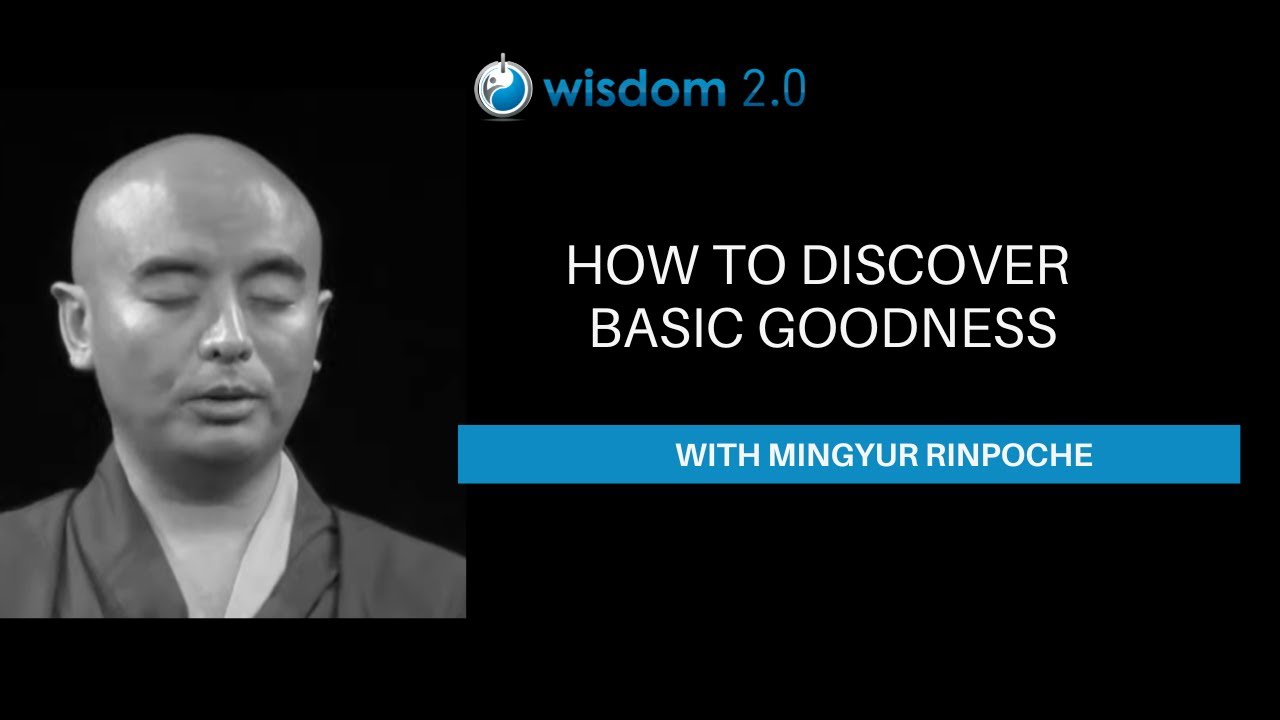
WoW and in the early days of my practice uh I was practicing in the taravatan tradition doing a lot of of pastina kind of practice uh and then in the last 15 years I've been Practicing in the Tibetan Buddhist tradition and uh uh one of the monks that we studied uh is minger and pajay and um I don't know if you've ever heard of him he's written the book called Joy of living which I think is probably the best book on meditation that's ever been written um and uh he is my meditation teacher wow so
um okay wait now I have a couple small Follow-up questions hold on could you meditate in an MRI scanner if hard pressed like not even a question you could like that's easy yeah I've done it many times what I mean I can barely stay I can barely stay unsedated in a scanner and I I was trained I was trained as an undergrad I trained in fmri uh that was my my undergraduate research yeah but um it's funny because I was um I was in shavasana at the end of a yoga class the Other day and
my favorite favorite yoga teacher who also does kirtan and he does a lot of chanting and uh another class got out and there was a lot of talking in the hallway and you know I instantly was like pulled out of whatever I was trying to not be pulled out of and he in a very very calm voice uh his name Zach shout out I don't know if he listens to this podcast or knows who I am uh but he said try and imagine that you cannot even understand language And I was like that's all I
needed to hear and I can't say that I was able to kind of bring myself back completely but just that notion of like it it just you need to just let it wash over you which is really what we need to do with all the negative thoughts and judgments that come when we meditate is that what it's like trying to meditate in a very loud MRI scanner yeah I think that's a great and I think his uh that little tip is great I you know think it's very uh Insightful and um uh uh and yes
I think that that is it I mean minger and potato talks about this a lot you can do sound meditation so rather than um then sort of feeling wow this is a big distraction and it's quote pulling me out make friends with it uh and uh making friends with it is simply to uh um any anything could be used to support our awareness Even pain even noise even trauma even destruction exactly and actually I'm writing a book now with minger and Pache and oh another scientist called Turning poison into medicine that's incredible That's The Story
of My Life Richie um okay wait I had I did have one more question what happened in 1974 that you got turned on to this kind of universe were you already in med school I'm trying to Do the math well I wasn't in med school I was in graduate school okay yeah oh you have you have the other degree um just as you do uh so uh yeah so uh yeah I was Inc I just finished my second year of graduate school at Harvard in Psychology and uh I was very fortunate to be or meet
some people who were like just super amazing people they were warm-hearted they uh they just had this Secret Sauce that I wanted to learn more About and wanted some of I and I learned that these were all people who had uh a practice of meditation and um and they were people that I met outside the academy and uh uh and although they had some connection to the academy uh one of those people by the way was ramdas I don't know of course please Richie okay so Ron ramdas was one of my first teachers wow wow
wow wow and he was hanging around in Cambridge Massachusetts in those days he had just come back from his first Extended Stay in India and I literally met him the very first day of graduate school wow um and so that was like a mind-blowing experience no that's absolutely so he told me I should go to to Asia and um get a taste of this more deeply so took a couple of years but I went after my second year of graduate school and where Were You Raised New York City oh Manhattan Proper got it Brooklyn oh
Brooklyn got it my parents are from the Bronx so it's really been a pleasure talking to you um and um I just again I have such great respect for for so much of your work and and really how you've been able to to tackle so many different aspects of you know true Wellness um in a way that's just really so entertaining to talk to you about um and it really just is such a pleasure um so thank you so much for being here Well thank you so much and I really appreciate your great questions and
uh all that you're doing to bring this work out into the world so thank you breakdown she's going [Music] up down it's a breakdown she's gonna break it down [Music]