[Music] [Music] I'm here today to share with you an extraordinary Journey extraordinary rewarding Journey actually which brought me into training rats to save human lives by detecting L mines and tuberculosis as a child I had two passions one was a passion for rodents I had all kinds of rats mice hamsters gerbils squirrels you name it I bred it and I sold them to Pet Shops I also had a passion for Africa growing up in a multicultural environment we had African students in the house and I learned about their stories so different background dependency on imported
knowhow goods Services exuberant cultural diversity Africa was truly fascinating for me I became an industrial engineer engineer in product development and I focused on appropriate detection Technologies actually first appropriate Technologies for developing countries I started working in the industry but I wasn't really happy to contribute to a material consumer Society in a linear extracting and Manufacturing mode I quit my job to focus on a real world problem landmines we're talking 95 now Princess Diana is announcing on TV that landmines form a structural barrier to any development which is really true as long as these devices
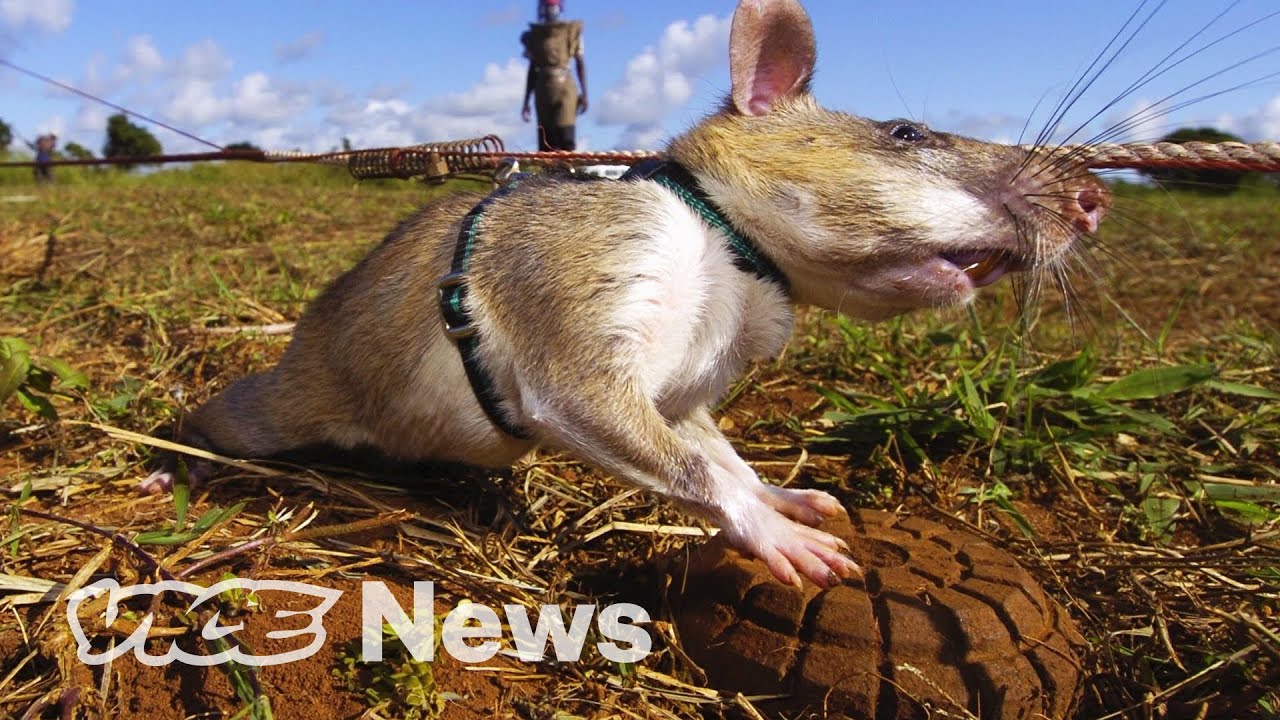
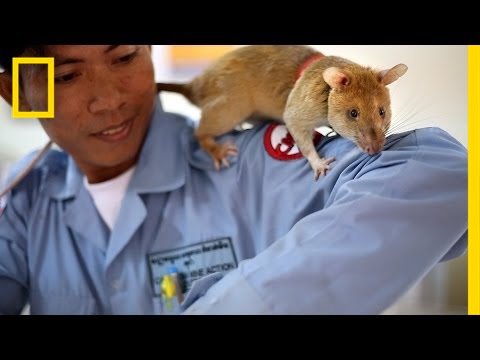
are there or there is suspicion of landmines you can't really enter into the land actually there was an appeal worldwide for new detectors sustainable in the environment where they needed to produce which is mainly in the developing world we chose rats why would you choose rats because aren't they verum well actually rats are in contrary to what most people think about them rats are highly sociable creatures and actually our product what you see here there's a Target somewhere here uh you see an operator a trained African with it rat in front who actually left and
right there the animal finds a mine it scratches on the soil and the animal comes back for a food reward very very simple very sustainable in this environment here the animal gets its food reward and that's how it works very very simple now why would you use rats rats have been used since the 50s last century in all kinds of experiments rats have more genetic material allocated to Al faction than any other mammal species they're extremely sensitive to smell moreover they have the mechanisms to map all these smells and to communicate about it now how
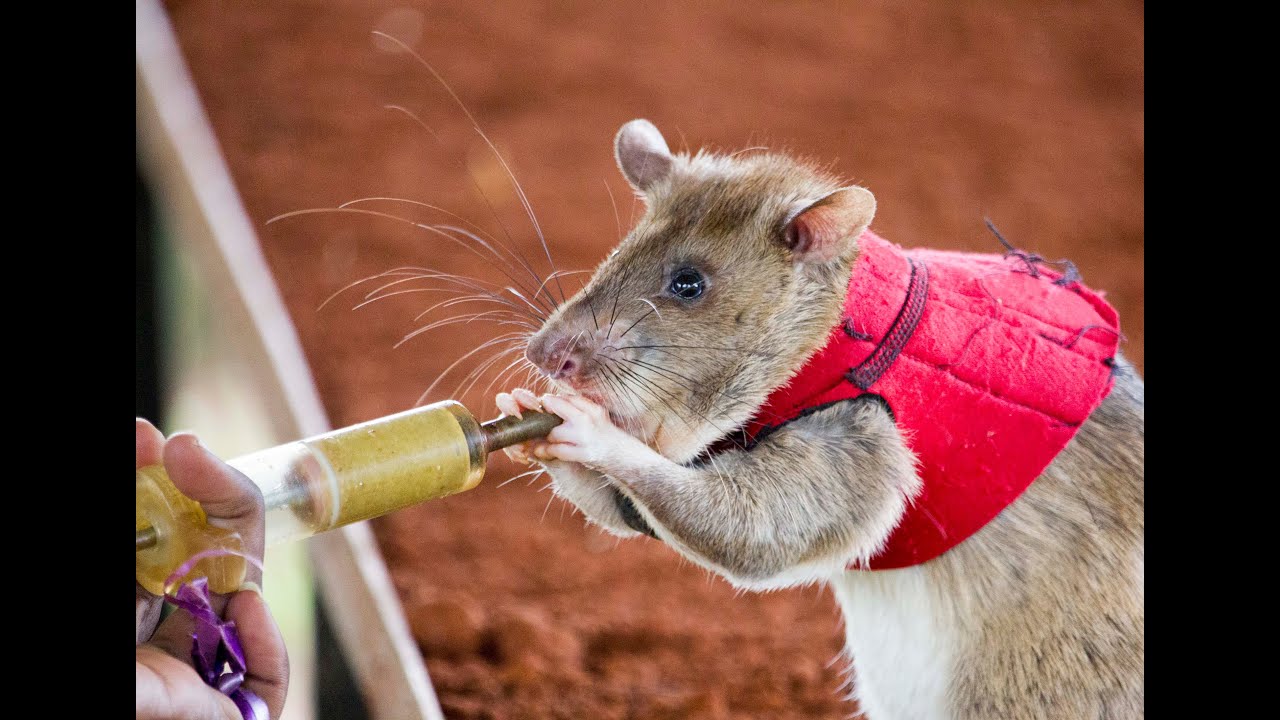
do we communicate with rats well uh we we don't talk rats but we have a clicker uh standard method for animal training uh which you see there a clicker which makes a particular sound with which we can reinforce particular behaviors first of all we associate a click sound with a food reward which is mashed banana and peanuts together in a syringe once the animal knows click food click food click food so click is food we bring it in a cage with a hole and actually the animal learns to stick the nose in the hole under
which a Target sent is placed and to do that for 5 seconds 5 Seconds which is long for a rat once the animal knows this we make the task a bit more difficult it learns now to find the target smell in a cage with several holes up to 10 holes then the animal learns to walk on a leash in the open and find Targets in The Next Step animals learn to find real Minds in real Mine Fields they're tested and accredited uh according International mine action standards just like dogs have to pass a test this
consists of 400 square meters there's a number of mines number of Mines placed blindly and team of trainer and their rat have to find back all the uh all the targets if the animal does that it gets a license as an accredited animal to be operational in the field just like dogs by the way maybe one slight difference we can train rats at a fifth of the price of a trained the mining dog this is our team in mosambik one Tanzanian trainer who transfers the skills to these three mm Bean fellows and you should see
the pride in the eyes of these people they have a skill which makes them much less dependent on uh foreign aid moreover this small team together with of course you need the heavy vehicles and the manual de miners to follow up but with this small investment in an rat capacity we have demonstrated in mosambique that we can reduce the cost price per square me met up to 60% of what is currently normal $2 per square meter we do it at 1.18 and we can still bring that price down question of scale if we can bring
in more rats we can actually make the output even bigger we have a demonstration site in mosambi 11 African governments have seen that they can become less dependent by using this technology they have signed a PCT for peace and treaty in the Great Lakes region and um they endorse hero rats uh to clear their common borders of landmines but let me bring you to a very different problem and there's about 6,000 people last year that walked on a land mine but worldwide last year almost 1.9 million died from tuberculosis as a first cause of infection
especially in Africa where TB and HIV are strongly linked there is a huge uh coming problem microscopy the standard wh procedure reaches some 40 to 60% reliability uh in Tanzania the numbers don't lie 45% of people get D TB patients get diagnosed with TB before they die that means that if you have TB you have more chance that you won't be detected but will just die from TB secondary infections and so on and um if however you're detected very early diagnosed early treatment can start and even in HIV positives it makes sense you can actually
cure TB even in HIV positives so in our common language Dutch the name for TB is staring which etymologically ref first to the smell of tar already the old Chinese and the GRE Greek Hippocrates have actually published documented that TB can be diagnosed based on the volatiles exuding from uh patients so what we did is we collected some samples just as a way of testing from hospitals uh trained Rats on them uh and well see see if this work and wonder well we can reach 89% sensitivity 86% specificity using uh multiple rats in a row
this is how it works and really this is a generic technology we're talking now explosive tuberculosis but can you imagine you can actually put anything under there so how does it work you have a cassette with 10 samples you put these 10 samples at once in the cave an animal only needs two hundreds of a second to discriminate the scent so it goes extremely fast here it's already at the third sample this is a posi sample uh gets a click sound and comes for award and by doing so very fast we can have like a
second line opinion uh where to see which patients are positive which are negative just as an indication whereas a microscopist can process 40 samples in a day a rat can process the same amount of samples in seven minutes only a cage like this a cage like this provided that you have rats and we have now currently 25 tuberculosis rats uh a cage like this operating throughout the day can process 1,680 samples can you imagine the potential Offspring applications environmental detection of pollutants in soils uh the Customs applications detection of illicit Goods in containers and so
on but let's stick first to tuberculosis I I just want to briefly highlight the blue rods are the scores of microscopy only in the five clinics in D Salam on a population of 500,000 people where 15,000 reported to get a test done microscopy found 1,800 patients and by just presenting those samples once more to the rats and looping those result results back we were able to increase case detection rates by over 30% throughout last year we've been depending on which intervals you take we've been consistently increasing case detection rates in five hospitals in darus Salam
between 30 and 40% so this really considerable knowing that a missed patient by microscopy infects up to 15 people healthy people per year uh you can be sure that uh we have saved lots of lives at least our hero rats have saved lots of lives the way forward for us is now to standardize this technology and there are simple things like for instance we have a small laser in the sniffer hole where the animal has to stick for 5 seconds so to standardize this also to standardize the pallets the food rewards and to semi-automate this
in order to replicate this on a much larger scale and affect lives of many more people to conclude there are also other applications at the Horizon here is the first prototype of our camera rat which is a a rat with a rat backpack with the camera can go under Rubble to detect for victims after earthquake and so on this in a prototype stage we don't have a working system here yet to conclude I would actually like to say you may think this is about rats this project but in the end it is about people it
is about empowering vulnerable communities to tackle difficult expensive and dangerous humanitarian detection tasks and doing that with a local resource plenty available so something completely different is to keep on challenging your perception about the resources surrounding you whether they are environmental technological animal or human and to respectfully harmonize with them in order to foster a sustainable world thank you very much [Music]