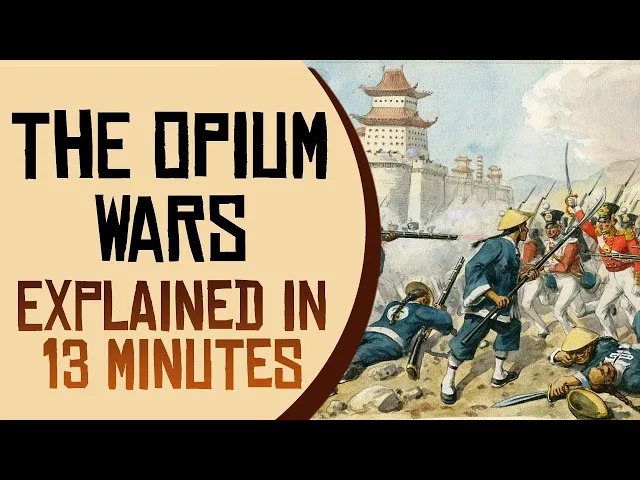
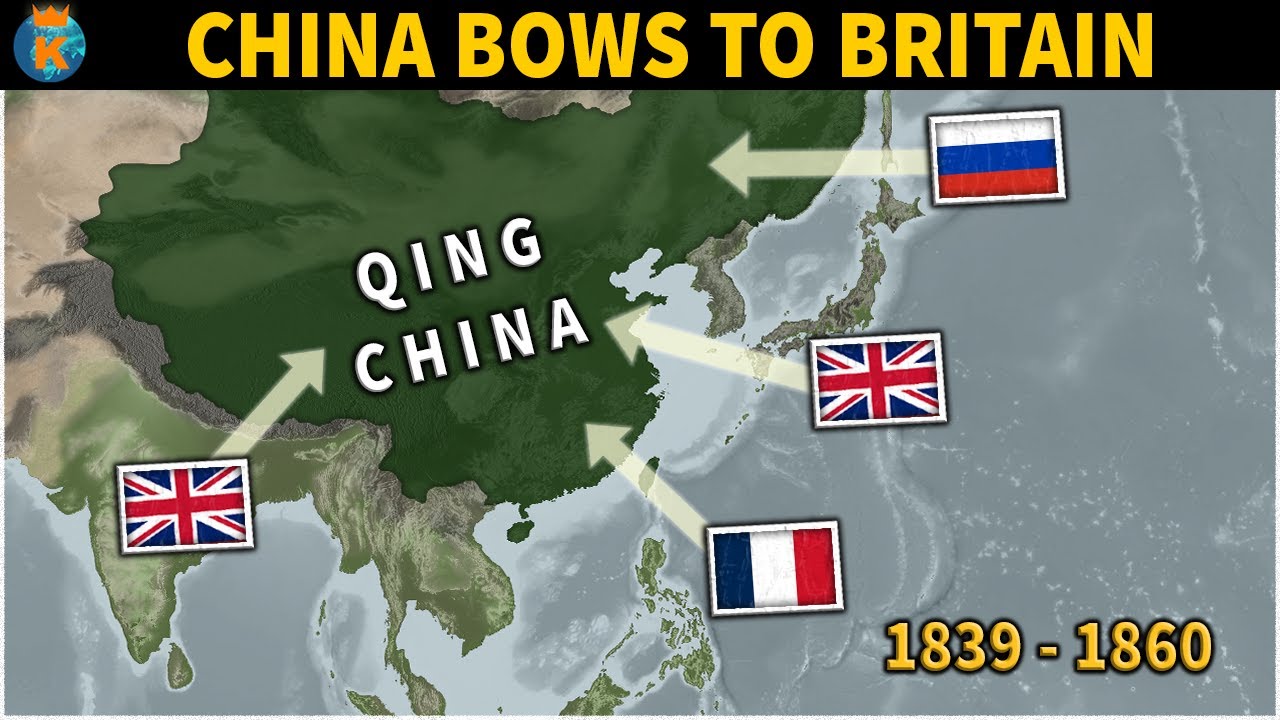
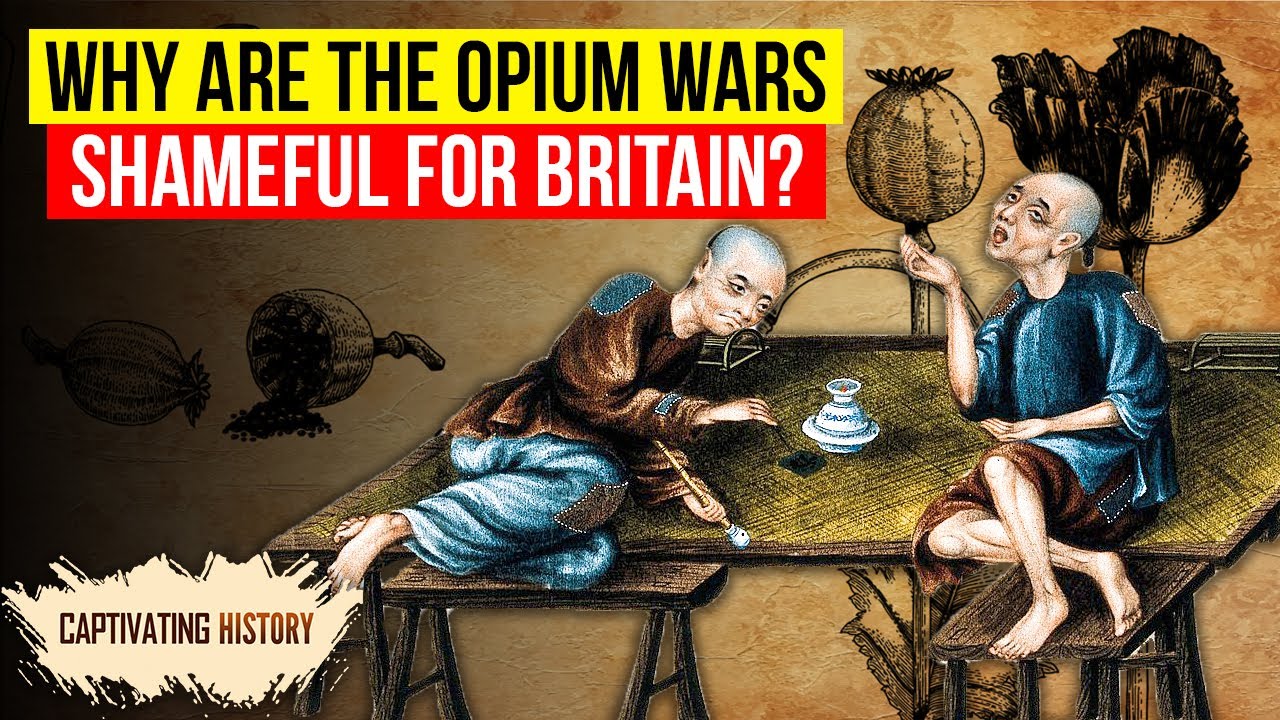
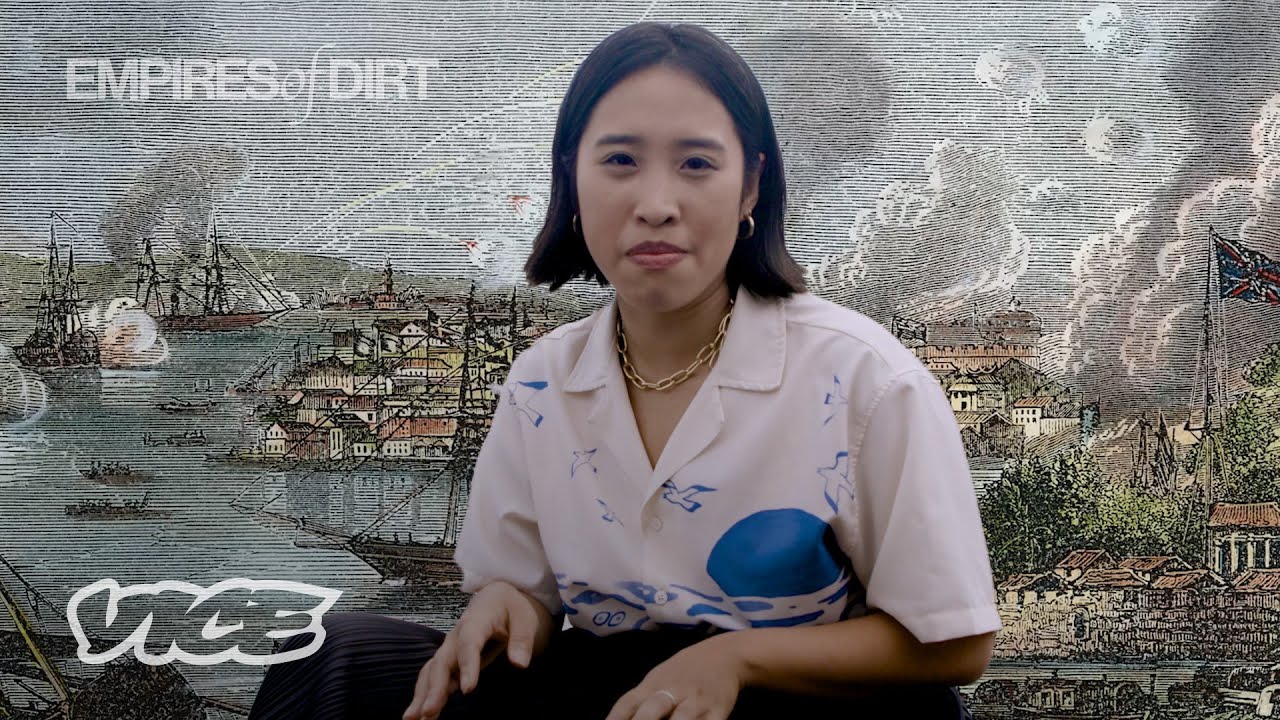
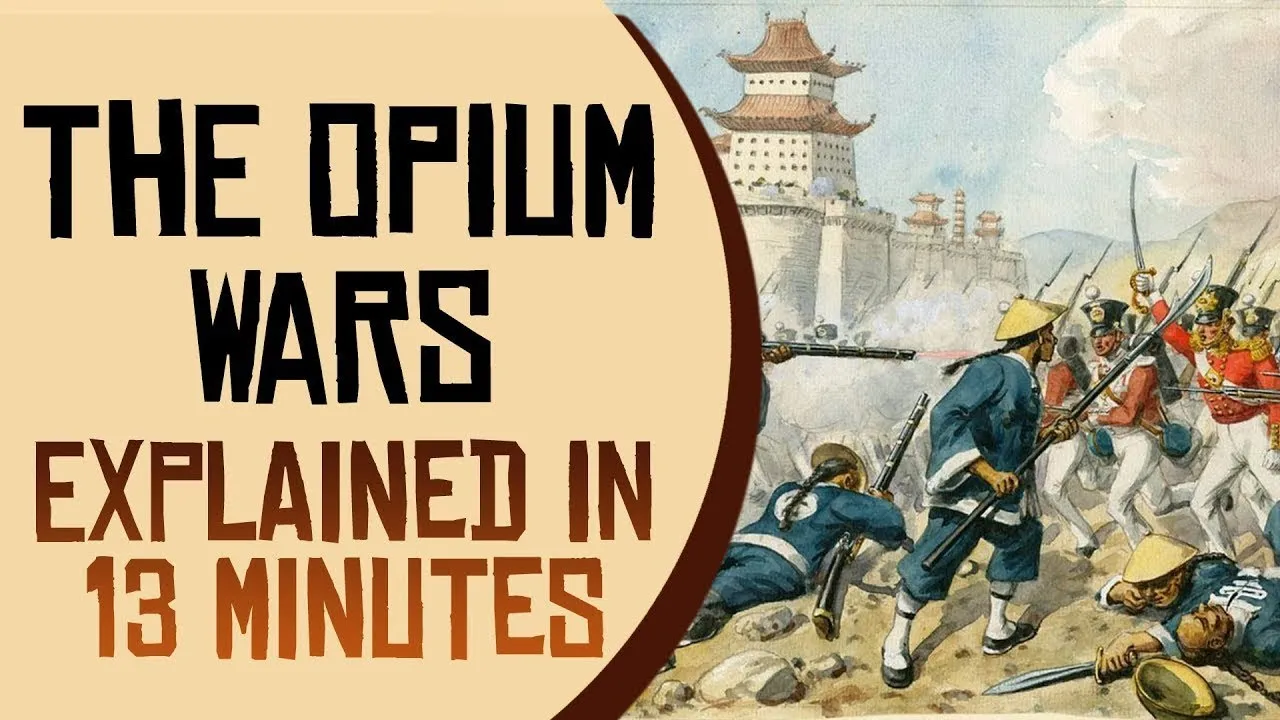
this video is brought to you by captivating history the opium wars were a series of conflicts fought over the lucrative drug trade in mainland china during the 19th century despite having greater numbers china would struggle against the technologically superior british who were determined to protect their colonial interests ultimately the opium wars would cement european hegemony in asia by opening this once untouchable nation during the early 19th century great britain was fast becoming the most powerful nation on earth blessed with a strong economy and a growing middle class british people developed a taste for finer things
including porcelain silk and tea imported from china while the bill for chinese goods steadily ballooned the british sold little to the chinese in return and merchants were soon shelling out more silver than they were making 19th century china was extremely self-sufficient and they were cautious about opening their borders to foreign merchants western visitors were banned from traveling inland unless officially authorized by the emperor an all-western trade was funneled through just one port in canton modern-day guangzhou despite the difficulties many business-minded westerners were drawn to this large and potentially lucrative market looking to rectify the trade
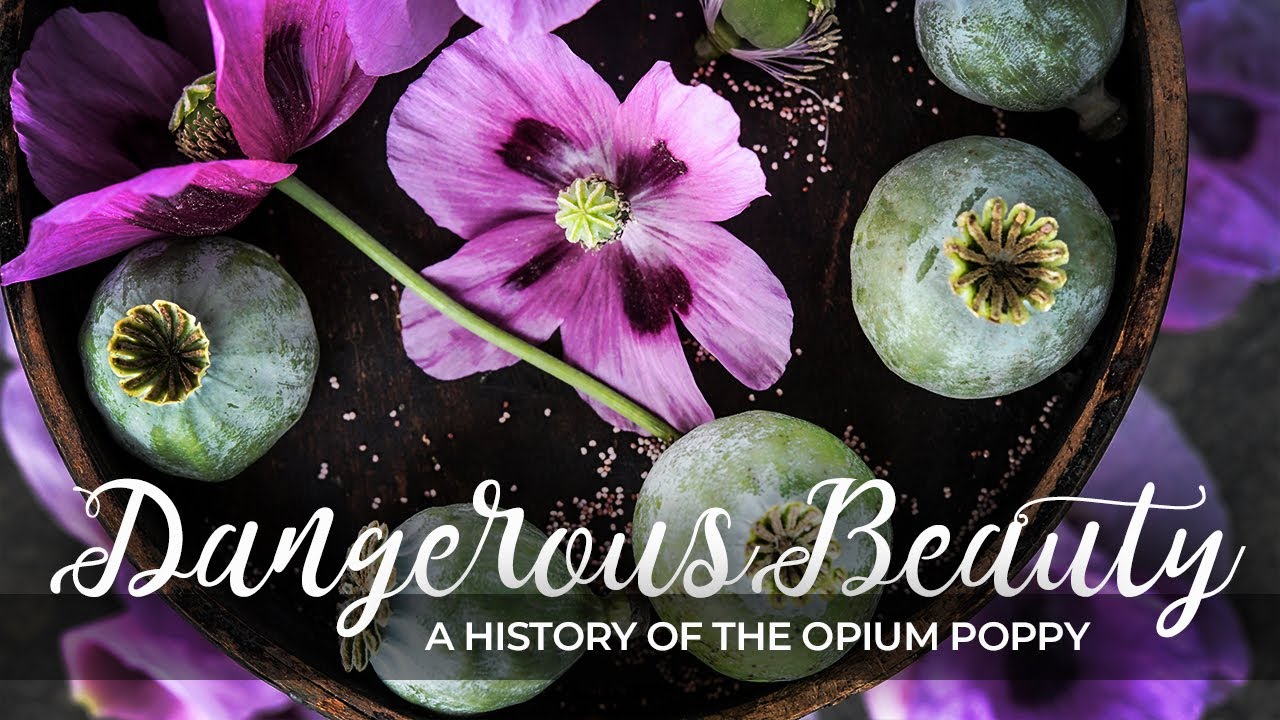
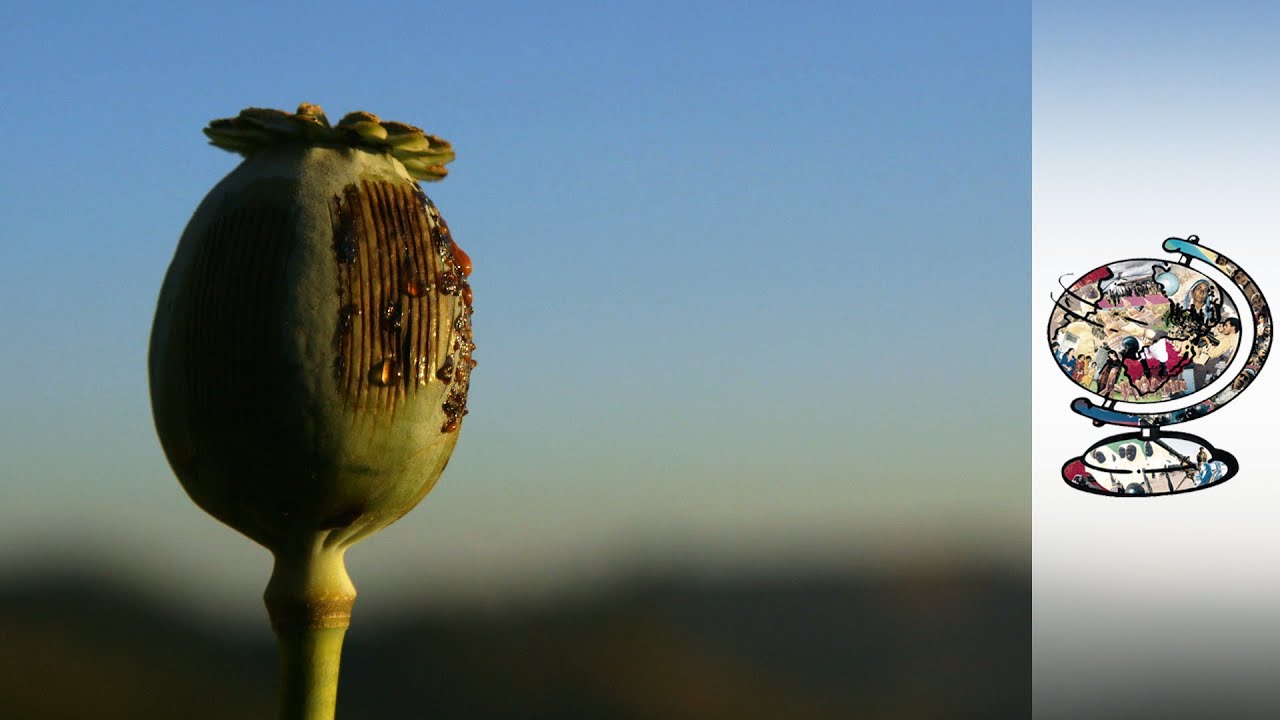
imbalance and with nothing useful to sell legions of british merchants resorted to selling illegal opium which was moved around china in the black market harvested from poppies grown in british india opium was officially banned in britain and you could only buy it when it was diluted to make lautena while opium smoking was not new in china it was not yet the massive social ill it would become and during the 1780s british merchants struggled to sell even one crate to the chinese however with repeated efforts the first flowering of widespread addiction steadily increased demand and soon
roaring profits were made off the dangerous drug between 1806 and 1807 the chinese had spent almost seven million silver dollars on opium by the late 1830s consumption was widespread a determined chinese official the formidable viceroy lin zizu went on a personal mission to end the addiction crisis he seized every crate of opium he could get his hands on and wrote an open letter to queen victoria asking that the illegal opium trade be halted lynn's letter was an attempt to tug on the queen's conscience surely victoria could not permit british merchants to buy spices tea and
silk in exchange for poison while lynn never received a reply from the queen he introduced new and increasingly harsh measures to deal with drug trafficking opium dealers were sentenced to death as were officials who turned a blind eye to the trade by 1839 the foreign quarter of canton was locked down in a concerted effort to recover all the opium not already turned over to the authorities thousands of smuggled crates were uncovered and destroyed troops oversaw the process and trade was only reopened again under strict controls concerned they would lose all their profits the british opium
merchants sought compensation for their lost wares although the british government agreed to match the impounded goods cost the hard-up merchants also demanded that the chinese government compensate them for any future losses china refused and many angry traders called for britain to send troops to china meanwhile viceroy lin was incensed that many opium smugglers were still finding new more creative ways to get the drug into china including sneaking in via the portuguese colony of macau in july 1839 tensions finally came to a head when a group of drunken british sailors killed a chinese villager when the
british arrested the men they sentenced them to just six months of hard labor and did not permit the chinese to try them in a local court viceroy lin asked the british to hand the men over but the british knew that given a chance the chinese would execute the sailors furious lynn passed an edict forbidding the sale of food to british nationals this was an attempt to force them to either cooperate or leave china altogether this provocative act was a risky move on the part of the chinese who did not yet realize the extent of british
naval power while most of the british immediately fled china some merchants remained just off the coast quickly running out of provisions concerned for the welfare of those who remained the british trade commissioner demanded that the chinese sell them food and when they continued to resist he ordered the british to open fire on chinese ships this small skirmish known as the battle of kowloon ended in a stalemate with the british boats fleeing down the coast to buy provisions after a brief and ultimately inconclusive engagement at the battle of chuangpai the chinese government was convinced they had
finally rid themselves of the troublesome british most of whom had disappeared from chinese waters little did they know the british parliament was discussing serious military action and many fictitious stories about chinese cruelty began to circulate in british newspapers encouraging popular support for a war by june 1840 the british were back armed with a war fleet and determined to take punitive measures against a defiant china after quickly capturing the port city of dinghai the british moved up and down the coast annihilating the chinese navy in battle after battle while the chinese had superior numbers they were
easily outclassed by british technology and many chinese junks or wooden sailing ships were repeatedly blown to pieces by large steam-powered british gunboats not only could these modern warships fire farther than their chinese opponents but they could also sail against the prevailing winds and tides which usually dictated how naval battles were fought by early 1841 the british had received considerable reinforcements including a new and formidable steamship hms nemesis which they sailed down the pearl river to capture the city of canton the chinese had believed that canton was relatively safe as the shallow pearl river was difficult
for boats to navigate however the new british ships have been engineered to tackle shallow waters even at low tide while the british captured canton relatively quickly they could not hold the city long with so few men agreeing to hand the city back in exchange for cash the british set up a base in nearby hong kong the british would spend the next year campaigning along the yangtze river's length creating as much disruption as possible by the summer of 1842 the chinese had capitulated and the first opium war ended with the signing of the treaty of nanking
this humiliating agreement opened five ports to the british and gave hong kong to britain as a permanent base of operations china would not get it back until 1997. in the aftermath of the first opium war many other western powers also gained additional rights to trading china and the power balance between east and west would continue to tip in the west's favor over these few decades many more chinese people were exposed to western culture for the first time and plenty headed west to find work even more were kidnapped or tricked into slavery it is estimated that
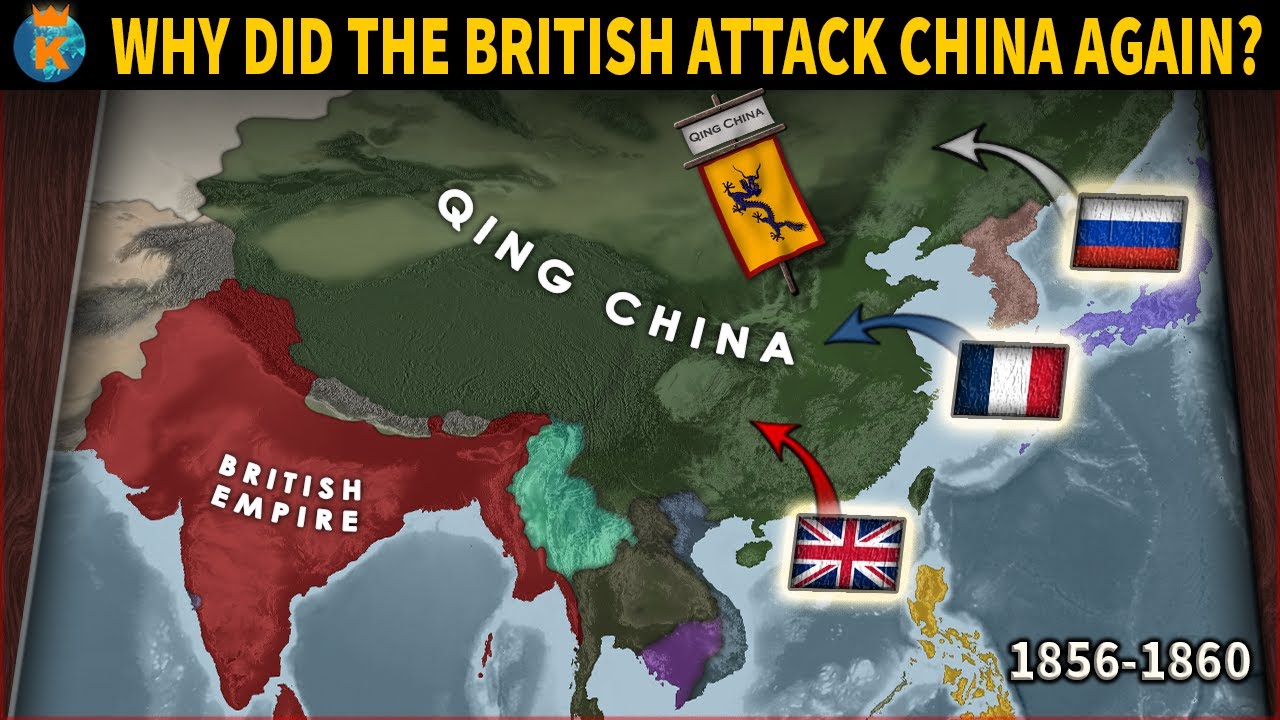
up to 40 percent of the chinese slaves transported to the west died in transit under horrific conditions opium continued to be traded in huge quantities and some historians believe it became the single most profitable commodity in the entire british empire peace would not last for long by the 1850s china was wrecked with massive internal problems the taiping rebellion a political movement founded by a visionary prophet challenged the authority of the young chinese emperor zhangfeng and the rebellion would consume china for almost 14 years seeing that china was in a weakened state the british looked for
an opportunity to expand their trade rights once again and in 1856 a diplomatic incident gave the british an excuse for war during an investigation in canton some chinese officials had boarded a british ship called the arrow and arrested the chinese crew members although it was a british merchant ship the vessel had once belonged to a crew of pirates and two of its original crew members were still working on board the british council argued that because the sailors were working on a british ship the chinese had no right to arrest them a heated argument ensued during
which one chinese official slapped the british council across the face although the chinese eventually released the prisoners after a heated negotiation they refused to apologize for the incident and rumors circulated that they had lowered the british flag on the arrow this flimsy pretext was enough for the british who responded by sailing warships down the pearl river once again attacking the riverside forts around canton although the chinese viceroy stationed in canton immediately ordered the locals to kill every foreigner they encountered the british ultimately met with little resistance and blew a hole in the city walls soon
other western powers got involved in the second opium war seeing it as an important opportunity to open trade with the vast asian power the french used the murder of a french missionary in the country as an excuse to send troops to china and the russians and the americans would join the trade negotiations when china appeared to be losing once again western naval and technological superiority made the second opium war a foregone conclusion the chinese soldiers fighting in canton were still using bows and arrows and flintlock muskets from the 18th century after capturing canton in 1858
anglo-french troops were determined to get close enough to the chinese emperor to scare him into submission western soldiers broke through chinese river defenses and sailed towards tianjin a city on peking's outskirts with enemy troops just 30 miles away from the capital the frightened emperor agreed to negotiate the treaty of tianjin which provided considerable concessions to the western powers was written and signed in june of 1858 however although the treaty had already been agreed upon at the last moment the chinese refused to acknowledge the humiliating document and they made a last stand against bullying western powers
a major battle broke out in the summer of 1859 around the daegu fort complex which guarded the high river route to tianjin the battle was brutal and during the assault a battalion of british marines got stuck in the soft mud at low tide and were massacred by the chinese while british losses were severe the western alliance was now more determined than ever to punish china in the summer of 1860 a sizable anglo-french army returned broke through the chinese river defenses and marched their forces directly into peking the chinese emperor was ready for them having amassed
an enormous army of over 20 000 men partly composed of cracked troops from mongolia this vast force met the invaders before they reached peking but their inferior technology and medieval tactics could not defeat a modern military force and they were quickly cut to ribbons by the concentrated firepower of the western gunners recognizing the defeat was inevitable the emperor himself fled the city while the gates were opened and anglo-french forces set about looting the imperial palaces millions of dollars worth of artwork made for the imperial family was carried away to europe and a small pekingese puppy
found on the grounds was later given to queen victoria personally as a joke he was nicknamed ludi during the march on pay king many british prisoners were found living in horrific conditions and when it came to light that the chinese had tortured and executed some the british commander lord elgin ordered that the emperor's summer palace yuan ming gardens be burnt to the ground while many were embarrassed by this act of cultural vandalism lord elgin himself was hailed as a hero in britain for his righteous act of vengeance with no other options available the emperor's brother
prince gong signed the western treaty agreement at the convention of peking foreigners were given the right to travel across china 11 more ports were opened and missionaries were given the right to preach opium was legalized and the british claimed almost 10 million dollars worth of war reparations besides the loot they had stolen the now sickly emperor zhang fing who was ironically struggling with opium addiction would die within a year broken and humiliated although the british would only agree to stop selling the drugs to china in 1907 opium addiction would continue to ravage the country until
the 1950s when chairman mao's ruthless communist government finally rotted it out to learn more about the opium wars check out our book the opium wars a captivating guide to the first and second opium war and their impact on the history of the united kingdom and china it's available as an ebook paperback and audiobook also grab your free mythology bundle ebook while still available all links are in the description if you enjoyed the video please hit the like button and subscribe for more videos like this