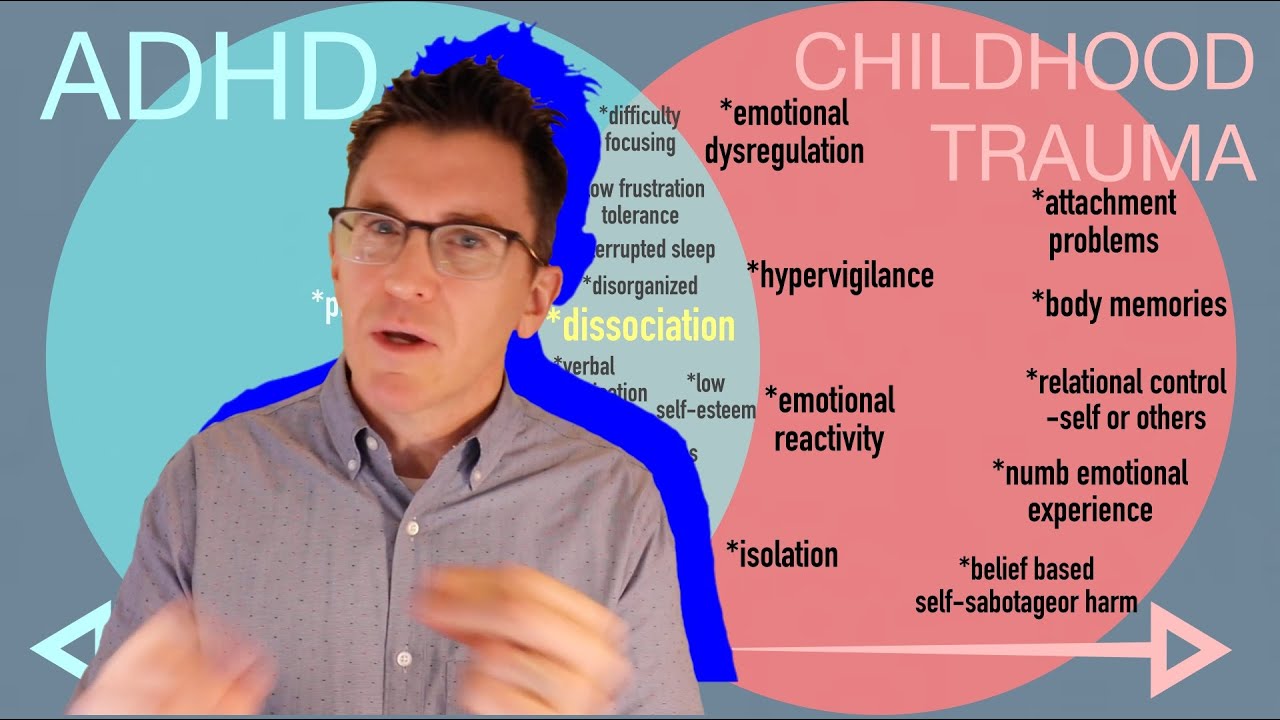
Hello I'm Dr Russell Barkley and I'm a clinical professor of Psychiatry at the Virginia Commonwealth University Medical Center in Richmond Virginia in this presentation I want to speak with you about adult ADHD and what you need to know about the nature the impairments the causes and the treatments for adult ADHD to begin with it's important to understand that while the public has Only recently come to recognize ADHD in adults as a valid condition the fact is that ADHD in adults has been recognized for more than 240 years or more in the first reference to ADHD
in the medical literature the German physician milkier Adam wer described a condition of attention disorder that very much resembles today adult ADHD subsequently the Scottish physician Alexander kryon also published a medical Textbook it's quite possible that kryon even studied with wer during his time getting training in Germany in any case kryon also describes the same condition in adults but also goes on to talk about another attention disorder as well nonetheless what this shows is that ADHD in adults has been recognized in the medical literature for several hundred years not much was done about that however
until the 1960s and70s when follow-up studies of large samples Of ADHD children who were then called hyperactive were followed into adulthood and it was discovered that at least 35 to 50% of these cases of ADHD in childhood seem to have persisted into adulthood these studies were compromised however by the fact that there were no valid reliable or consensus diagnostic criteria at the time in existence for diagnosis ADHD either in children or Adults that would come later nonetheless studies of these very active inattentive children followed to adulthood showed that the disorder could persist at about the
same time Paul wender and his colleagues at the University of Utah Medical Center were also publishing studies on adults with ADHD and what kinds of medications might be be useful for them but it was in the 1990s when the public was first awakened To the possibility that adults could have ADHD even though the medical literature and research had been documenting that possibility for quite some time this largely had to do with the publication of a trade book driven to distraction by my friend Edward Hollowell and his colleague John in which he talks about adult ADHD
at the same time specialty clinics were being set up in the United States To see adults with ADHD at first these clinics were started by clinicians who specialized with children such as child psychiatrists and psychologists that is because our adult colleagues in Psychiatry and psychology did not yet recognize that ADHD could be a legitimate adult diagnosis so in order to treat these adults those people already responsible for treating children with ADHD began to open clinics to see these adults and From there the information spread out to other clinicians that this was a valid condition in
adults and that many children diagnosed with it in childhood would continue to be ADHD upon reaching adulthood by the turn of the century in the 2000s numerous specialty clinics began to operate in the United States and elsewhere headed by professionals who now did specialize in adult ADHD and this trend continues to date so that there has been a growing Percentage of adults with ADHD who are getting appropriate diagnosis and care now whereas in previous decades this was certainly not the case how do we diagnose ADHD in children and adults currently we use a manual published
by the American Psychiatric association known as the diagnostic and statistical manual for mental disorders it is now in its fifth edition published in 2013 and so it is called dsm5 the DSM criteria for the diagnosis are shown on the following slides first there is a list of inattention symptoms that have to occur often and the individual must have at least five or more of these symptoms these symptoms include problems with failing to give close attention to details difficulty sustaining attention to tasks not listening to directions or to others Not following through on instructions problems with
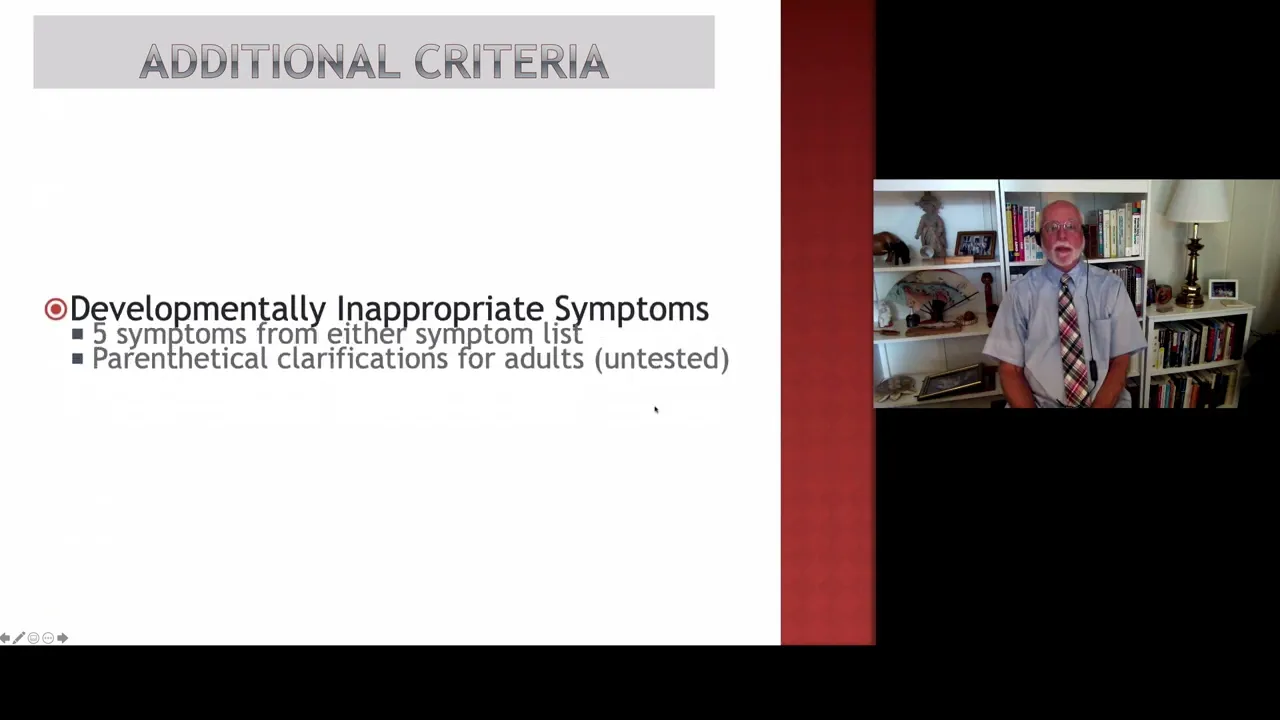
organizing one's tasks or activities problems with avoiding tasks that require sustained mental effort what we call procrastination losing things necessary for tasks being easily distracted and being forgetful in daily activities these are the nine attention symptoms and if an adult has at least five or more of these it is considered to be Developmentally inappropriate or deviant and it is the first step toward diagnosis of the disorder the next set of symptoms deal with hyperactive and impulsive behavior again the adult must have at least five of these symptoms the symptoms must have occurred often often or
more this helps to separate these problems from normally occurring behavior in the typical adult and child population so these symptoms include Things like being very fidgety or squirmy in one seat leaving the seat in in one's classroom or at work inappropriately for children it includes running about or climbing on things excessively although we don't hear that complaint in adults difficulty playing quietly or engaging in leisure activities quietly in the case of adults seems to always be on the go or driven by a motor meaning very active Behavior talks excessively Often blurts out answers before questions
are completed and has difficulty awaiting their turn such as when waiting in line or in traffic and so on and interrupts or intrudes on others impulsively so these are the nine symptoms that we look for now the problem with these symptoms is that they mainly apply to Children the hyperactivity declined markedly with age such that by adulthood many of these hyperactive symptoms are no longer Evident if they were in childhood it is the symptoms of impulsiveness that are quite persistent and here you see they mainly have to do with excessive speech and interrupting others while
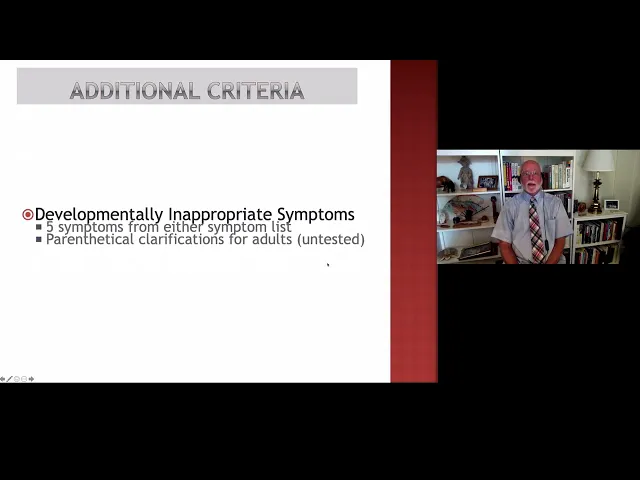
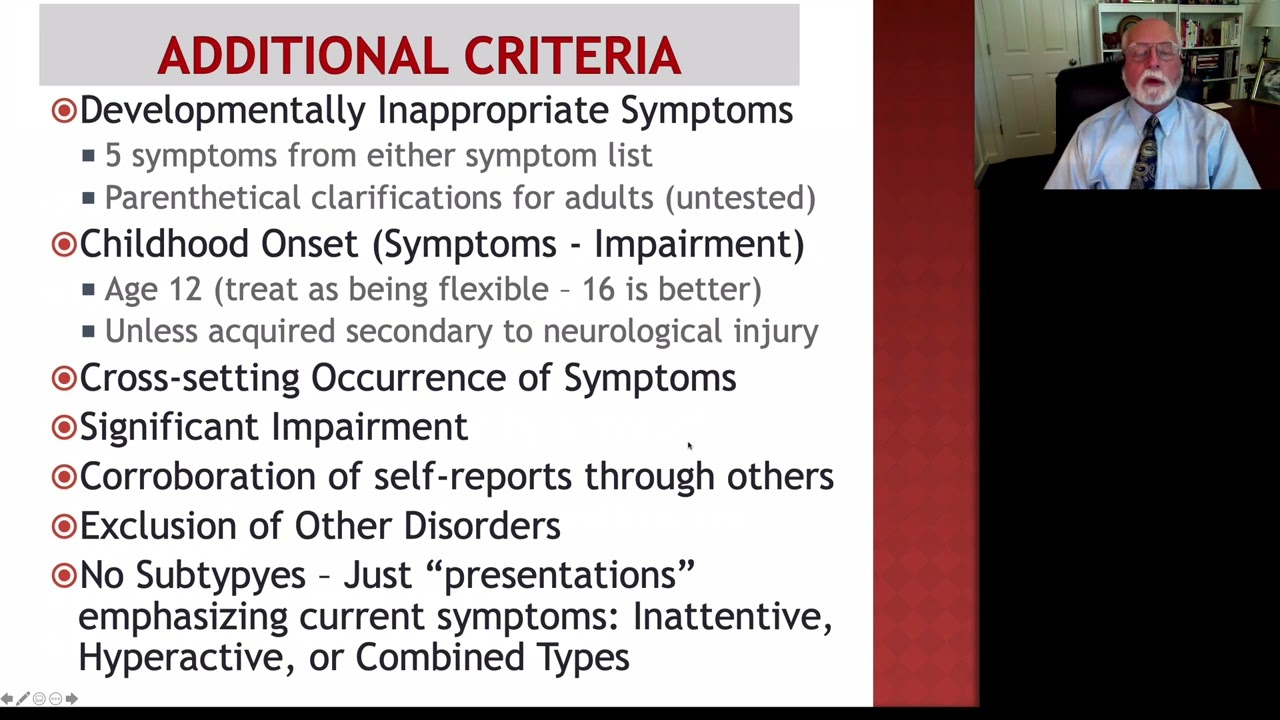
they're talking but there are other symptoms as well that I will show you in just a moment there are more criteria besides this not only does an adult have to have at least five symptoms on either of those lists doesn't have to be both just either of them The symptoms also have to be considered inappropriate for their age and the best way we measure that is through the use of behavior rating scales that are completed by the adults and by others who know them well and we can then compare their answers to the answers we
would get from the general population and that helps us to decide just how far from normal the adult is in these symptoms now we do require that the symptoms have developed sometime in Childhood or adolescence and although the dsm5 says that the symptoms should be present by age 12 that's not really true they can develop after that as well generally as long as the symptoms have developed sometime around 18 years of age or younger we would consider this to be a legitim case of ADHD and the reason for that is that adults are not very
good at recalling exactly when their symptoms might have developed in fact my Studies show they're often off by about 4 years or more that is they often say the symptoms developed about four years later than they actually did so we don't want to place too much emphasis on the age of onset as long as the symptoms occurred sometime during the developmental period then we would consider the criteria to have been met even then some people can develop ADHD later in adulthood secondary to Some neurological injury such as a traumatic brain injury experienced during a fall
or a car accident or playing sports or possibly from some neurologic disease or tumor such as stroke or Dementia or other things so it's quite possible for people to show the symptoms of ADHD following some event that compromises the Integrity of the brain particularly the front part of the brain now these symptoms have to occur In multiple places not just one situation so we look for them to exist in their home life in their work in any school settings in which they may be participating or even out in the community in the case of adults
we also see whether it affects things like their driving their management of money their ability to live with and engage in relationships with other people and of course their ability to raise their children also should they have children So we're looking across many domains in order to to see that the symptoms are affecting at least one or more of these we want the symptoms to produce significant impairment or harm to the individual so that the individual is not functioning well in those situations that I've mentioned like their home life or in their work life as
well so we must be seeing that there are adverse consequences that are occurring in these domains of major life activities as an Additional requirement for diagnosis now because adult ADHD often interferes with self-awareness we want to corroborate what the adults tell us about themselves through others who know them well because in some cases particularly with teens and young adults they often under report the severity of their problems so it's very important that we obtain information from elsewhere especially people who know them well in order to Validate or corroborate these self-reports now mental health professionals also
need to exclude other disorders that might be producing problems with attention such as depression bipolar disorder psychosis or schizophrenia anxiety and so on we can usually rule out those those other conditions as causing the problem because they don't usually show problems with attention impulsiveness and hyperactivity that date back to Childhood and have been largely chronic in nature only ADHD seems to be a chronic unremitting pattern of those symptoms that starts in childhood now we also like the symptoms to have persist Ed for at least 6 months or longer in the case of adults that's easy
to do especially since the symptoms developed in childhood or adolescence earlier versions of the DSM said that there were three types of ADHD We no longer believe that that is the case so in DSM 5 we change the term from subtypes to presentations so that there is a predominantly inattentive presentation in which mainly the symptoms of inattention are the most problematic but some people may show up with problems more with impulsiveness and maybe hyperactivity in which case we would call that the hyperactive impulsive presentation but the majority of Children and adults who come to clinics
have the combined presentation in which they meet criteria for having at least five or more symptoms symptoms on both lists of symptoms so now you understand how we go about making a diagnosis of ADHD in adults here are some things to consider although the symptoms of ADHD as I have described them are correct clinical researchers like myself have a much deeper appreciation for or Understanding of the nature of these symptoms so let me explain them the way I understand them and not just the way the dsm5 lists them and that is because the symptoms in
the dsm5 are fairly superficial were developed mainly on children were not well tested with adults and as a result don't seem to apply to adults as well as they do to children so it helps if the clinician the professional has has this richer understanding of what to look for in Someone with adult ADHD now we've said that ADHD involves these two dimensions of neuropsychological deficits the first of these to develop in childhood is usually the problem with inhibition the hyperactive impulsive symptoms what they look like however is much more than just motor hyperactivity or restlessness
it's not just just a problem with inhibiting motor actions in addition as the dsm5 points out there Are problems with inhibiting verbal Behavior which are manifested through things like talking excessively not giving others a chance to Converse in the conversation interrupting others inappropriately and so on but besides those two problems with inhibition there are at least three others that are not mentioned in the dsm5 one of them is impulsive thinking or cognition in which the individual has difficulties suppressing unwanted Thoughts from entering into their stream of Consciousness particularly when they are working on tasks or
pursuing goals during those times most typical people would suppress these unwanted thoughts and would focus on the task at hand but people people with ADHD because of their inhibitory problems often have difficulties not thinking about these irrelevant ideas or thoughts in addition we also see adults with ADHD engaging in very rapid decision making which means That they don't think about or deliberate the consequences of the actions they're considering doing before they do them instead they appear to think impulsively and act on those ideas impulsively as well another problem with impulsiveness is what we call impulsive
motivation this simply means that people with ADHD prefer to have more immediate but smaller rewards and other consequences rather than deferring their Gratification and working toward larger later Rewards so that delay of gratification is very difficult for them and they often find themselves engaging in things that give them immediate pleasure or rewards even if these are not the most optimal ways they should be spending their time in teens and young adults with ADHD we may see this in their development of internet or gaming addictions among others in which they are opting to play games because
they're Such fun and provide immediate gratification rather than studying or doing schoolwork or completing the task they've agreed to do for their employers yet another area of impulsiveness is impulsive emotion this is also not mentioned in the dsm5 but it is just as Central to ADHD as are the other symptoms that are mentioned in our diagnostic manual by impulsive emotion or poor emotional self-regulation what we mean is that People with ADHD show their emotions very quickly when they've been provoked now these emotions are different from what we see in a mood disorder in several respects
first the emotions are provoked by things that happen to us just as are the emotions of typical people what distinguishes them is that the person with ADHD shows them very quickly and often to a more extreme degree but we can also understand the emotion it's reasonable rational it Makes sense to us we too might have felt the same way but we wouldn't have shown the emotion or at least not to that degree we would have inhibited the initial emotion and engaged in various ways to calm ourselves down and adults with ADHD have difficulty doing that
their emotions are quite impulsive often more extreme and they struggle to get control of them if those strong emotions have been provoked but they are understandable Nonetheless in a mood disorder the emotions are long duration not short as in emotions in a mood the emotions may be lasting for days or weeks we also don't understand what provoked them they don't make sense to us we can't see what's making the person depressed or manic or necessarily anxious also the emotions are often extreme capricious and labile or variable especially the emotion of irritability so all of these
are ways That we distinguish a mood disorder from the emotional problems that adults with ADHD have again the emotions are provoked but impulsive a little more extreme hard to get control of but they're understandable they're situation specific they often pass relatively quickly and they're not bizarre or extreme at least not like an a mood disorder so you can see that there are at least five domains in which inhibition interferes with functioning In adults motor Behavior verbal Behavior their thinking their motivation they want things now rather than later and in their emotions as I've said earlier
the hyperactive Behavior often seen in children with ADHD declines markedly with age so that by adulthood those hyperactive symptoms are not very useful for making a diagnosis the adult may feel Restless May show some need to be busy and engaging in lots of different tasks which they don't finish But we don't see them climbing on furniture driven by Motors or in other ways acting that hyperactive but they may still show signs of some restlessness when they are required to stay seated for long periods of time now how can we understand the inattention symptoms Beyond just
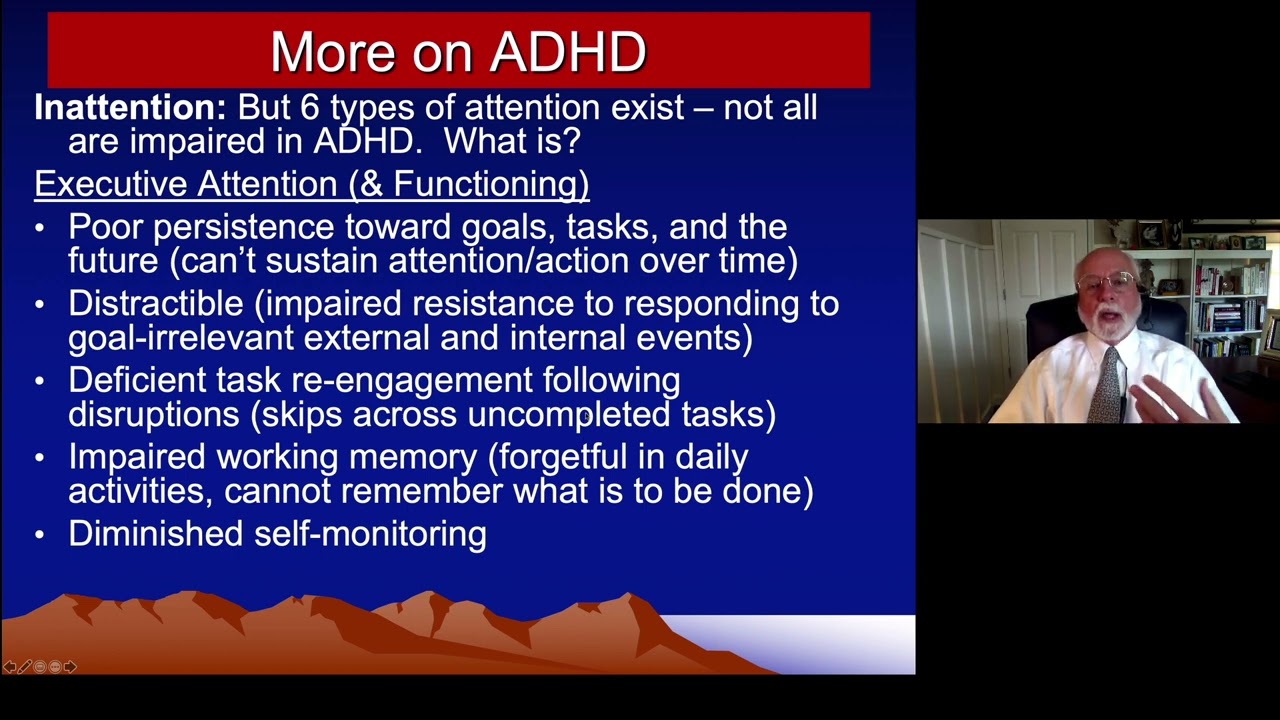
the way they're described in the DSM 5 we need to understand that there are at least six different kinds of Attention that our brain allows us to have ADHD does not interfere with all of these kinds of attention such things as arousal alertness the focus of attention and so on instead ADHD interferes with sustained attention a better term for that is persistence toward goals toward tasks persistence toward the future in general ADHD is interfering with the ability to string together long chains of motor actions Needed to accomplish a longer term goal they can't persist toward
their goals or assigned tasks in other words the problem with attention is one of attention to the Future and that's a very special kind of inattention along with that in order to persist toward our goals and our future we have to resist responding to distracting events which are simply events that are not relevant to the goals that we're pursuing and we must Inhibit responding to these if we are going to accomplish the work we want to do and that is what adults with ADHD struggle to do as well they often react to events that are
happening around them even if those events have nothing to do with what they should be doing at this time now we all will get distracted from time to time during our work and when we do we deal with the distraction and then we get back to finishing the task at hand we return to or re-engage the Incompleted work work people with ADHD struggle to do that also once they've been distracted away from their work or tasks they find it hard to go back and resume the incompleted goal or activity instead they are off pursuing other
things other distractions skipping from one uncompleted activity to another and not finishing much of anything now the ability to re re-engage work that we've been distracted from is not a problem with Attention it shows that there's a problem with working memory working memory is a very special kind of memory that is given to us in our frontal loes the forward part of the brain and in this kind of memory we are actively holding in mind our goals the steps we intended to pursu to get there and what progress we're making toward those goals it's all
actively held in our mind and we're using it to keep ourselves on task focus our effort and Persist over time people with ADHD have serious impairments in working memory they can't hold in mind information about what they're supposed to be doing for very long and it's easily disrupted by other events that happen around them that aren't relevant to the goal but nonetheless distract them in that way they're a lot like older people such as myself once you get past age 55 or so you begin to lose some of your working memory and you may go
Into a room and forget why you went there because you couldn't hold the goal in mind for very long so we see the same thing in ADHD but it is much much worse finally as I've said another attention problem that goes with ADHD is attention to the self the ability to be aware of and monitor ourselves as we go about our daily activities and to compare what we're doing against what our goals were so self-awareness or Self-monitoring is very important to accomplishing our goals and adults with ADHD as I said earlier often have diminished self-awareness
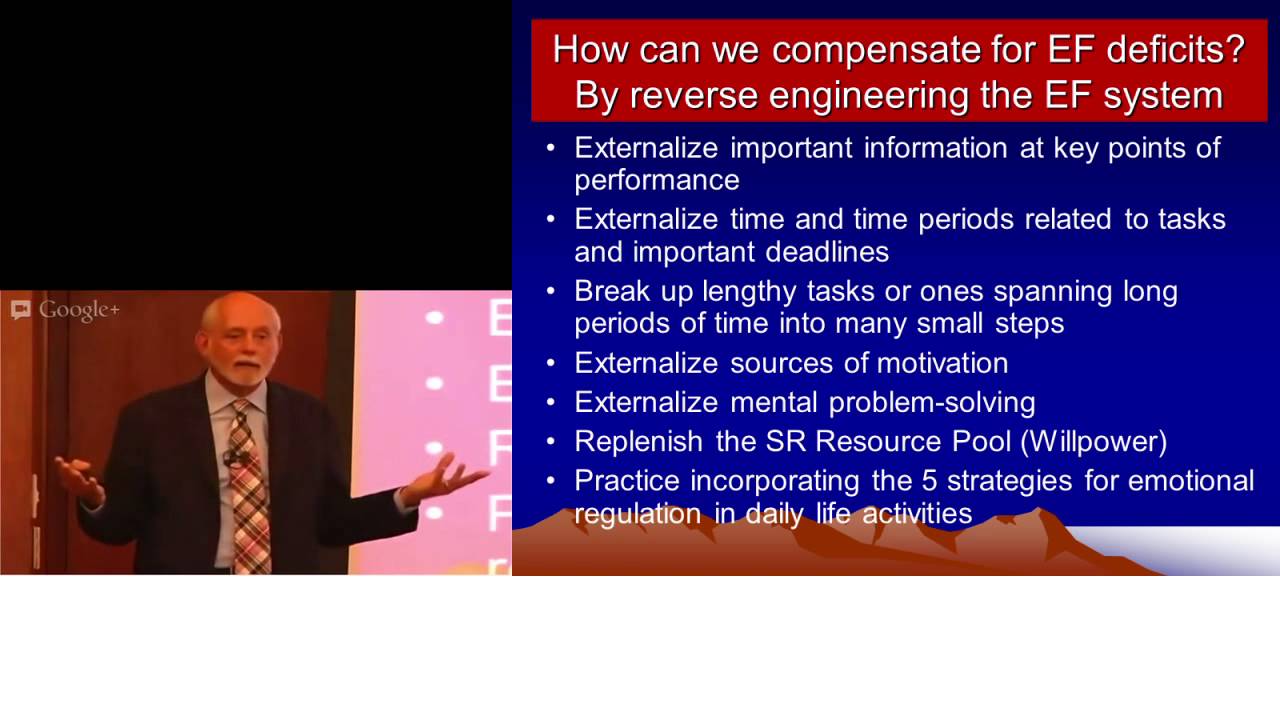
and that is why we can't rely exclusively on what they tell us about how they're functioning in their life we must get information from others excuse me you may not know it but I have just suggested that ADHD involves most of the brain's executive Functions the executive functions are that set of mental abilities that we use to pursue goals get ready for the future and solve problems people with ADHD as is evident here have lots of difficulties with these executive abilities excuse me these executive functions give us self-control self-regulation over time to prepare for the
future in order to improve our Welfare and people with ADHD have lots of trouble with that so let me go back and specifically list for you excuse me the seven executive functions that ADHD is likely to be impera the first as I've mentioned is self-awareness and self-monitoring the second I've mentioned is inhibition or self-restraint the third is working memory and there are two kinds of Working memory nonverbal in which we use visual imagery to think about what we're going to do to reflect back on our relevant past which we call hindsight and then to think
ahead from that about what might happen next for it that's the non-verbal aspect of working memory holding images about the past and the future in mind that are related to our goals the second type of working memory is verbal working memory basically it is selfs speech we talk to Ourselves in the case of little children they do it out loud but by the time they are out of elementary school this voice has moved into their head they've internalized it and they now have a mind's voice that they can use to talk privately to themselves in
order to guide themselves to do what they've been asked to do or to pursue their own goals so think of working memory as the Mind's Eye visual imagery and the mind's voice and we use both of these in order to Stay on task and accomplish our goals and people with ADHD struggle with both of them I like to think of working memory very much like a GPS in a car we get in the car and we enter a destination into the GPS that's our goal right then the GPS brings up images of the relevant surroundings
the maps and it also gives us verbal instructions of how to move through through that region those Maps so the GPS is using images and Words to guide us over time to reach a destination and working memory works very similar to that and so when it's disrupted as it is in ADHD people will have a lot of difficulty accomplishing their goals pursuing the future staying on task now I've mentioned the others already there's a problem with emotional self-regulation there's also a motivational deficit problems with self- motivation instead of Pursuing longer term goals that have bigger
rewards which requires that we motivate ourselves people with ADHD instead right opt to do shorter term things for which they can get more immediate rewards and consequences that don't require self-motivation finally although I haven't mentioned it before ADHD adults and children have problems with planning and problem solving both of which are very important to futur directed goal Oriented behavior we must be able to think about various plans and options for what we hope to accomplish and choose the best one and if we encounter problems or obstacles along the way to our goal we have to
be able to stop inhibit think about what we're doing and see if we can come up with multiple other possibilities that might overcome the problem problem solving people with ADHD struggle to do these things as well you can now see that ADHD in an Adult is a much more impairing disorder than people originally believed it is a problem not just with attention and inhibition but with the executive functions with self-regulation and that helps us to understand why if ADHD in an adult is not treated it can lead to all of the difficulties you see on
this slide difficulties with education problems with family conflict difficulties getting along with Others not just people in the family but people we encounter outside friends and acquaintances it can lead to problems following the law in which people with ADHD are more likely to engage in illegal Behavior or antisocial Behavior it can lead them into substance abuse such as smoking more using more marijuana or alcohol or even using illegal substances again this is because of their impulsiveness which leads them to Be prone to addiction we see a pattern of risk-taking behavior may be evident in their
sexual behavior in which they engage in more sexual activity with others without using contraception which leads to an increased risk of teenage or young adult pregnancy and sexually transmitted disease because they don't think through the consequences of what they're doing their risk-taking often leads them to experience many more accidental injuries Than do other people not just injuries at home but while driving or while engaged in sports or while working in the workplace people with ADHD suffer a lot more in their accidental injuries to the point where children with ADHD are twice as likely to die
by age 10 and adults with ADHD are five times more likely to die by age 45 as a result of their risk-taking and proness to Accidental injuries by adolescents there's also a Growing risk for attempting suicide because of their impulsiveness if they're depressed and they think about suicide they are more likely to attempt it because of their lack of inhibition they also have difficulties with risk taking while driving speeding with a motor vehicle parking where they shouldn't getting more traffic citations for all sorts of driving infractions driving while under the influence of drugs or alcohol
as well so their Driving is very risky and it leads to a lot more crashes citations and even license suspensions as you can imagine these problems with executive functioning will interfere not just with school but with work performance their occupational functioning and of course people who are impulsive don't manage their finances or their money very well particularly their use of credit cards for impulse buying people who don't think about Their actions also don't look after their health very well instead of eating well with Healthy nutrition exercising often and getting good medical and dental care that
is preventive in nature they tend to avoid doing those things eating poor diets often filled with junk food high in carbohydrates and sugars and often low in proteins or healthier foods this leads them to a growing risk for obesity twice the risk for obesity of other adults and eventually to risk For coronary heart disease or CD you can imagine that these deficits in self-control would certainly affect one's marriage or one's cohabiting relationships with others and we do see that the impulsiveness certainly leads to problems in living at home and accomplishing our work at home when
we live with others other s because of the impulsive emotion there's a greater likelihood of reactive aggression frustration and hostility and sometimes That can lead to interpersonal violence toward others when they're provoked should they have children you can well see that these problems with self-control would interfere with their ability to monitor their children create more consistent home routines give more reasonable consequences for good and bad behavior control their emotions more when they have to deal with their children and become Frustrated in doing so so ADHD leads to a variety of impairments across nearly every major
domain of life activities that we have studied to date luckily treatment reduces many of these risks r s particularly treatment with medication now what causes adult ADHD it's essentially the same things that lead to Childhood ADHD with perhaps a couple of exceptions right ADHD in children and adults is Highly inherited it is genetically influenced indeed ADHD is one of the top three most genetically influenced psychiatric disorders we know of the other two being bipolar disorder known as manic depression and autism spectrum disorder the genetic influence on ADHD is between 70 and 80% which means that
about 75% of the differences among people in the population in their ADHD symptoms is the Result of differences in their genes the gene ICS that build and operate the brain and as a result determine some of these behaviors so far and away genetics is the leading cause of ADHD now while often it is inheritance that we're talking about here the genes for ADHD exist in other relatives other relatives are more likely to be diagnosed with ADHD and therefore the biological offspring of these people are More likely to get those genes and develop ADHD simply put
ADHD runs in families at a much higher rate than we would expect by chance alone if an adult has ADHD their child is eight times more likely than a typical child to have the disorder put another way nearly half of the children of adult with ADHD will also be ADHD if their parent has the genetic Form of the disorder if a child has ADHD 25 to 35% of their brothers and sisters will also qualify for the disorder and if a twin has ADHD their identical twin is 75 to 90% likely to have the same disorder
all of the figures I've given you clearly show you how inherited how genetic ADHD actually is but more recently we've learned that there's another genetic cause of ADHD that doesn't involve inheritance the way I've described it here this is what we call new or denovo mutations what happens is that as adults grow up and wait to have children they are accumulating mutations in their DNA in their eggs and sperm so if we did a blood test we wouldn't see these mutations but if we looked more closely at their gammites their eggs and sperm we would
see that they have more mutations in them now since many people Are waiting to have children particularly here in the west often not having their first children until they're about 30 years of age or older adults who wait that long have 8 to 10 times more mutations in their eggs and sperm than if they had had children in their 20s so these mutations pile up and eventually they reach a point where enough mutations exist to cause ADHD in The Offspring of those parents even Though no one else in the family before them ever had ADHD
it has to do with the accumulation of new mutations as a result of delaying childbearing this is more likely to affect fathers than mothers but research shows that it occurs in both sexes of parents so one cause of ADHD accounting for about 10 % of all ADHD are these new cases denovo cases that arose from genetic mutations in the parents eggs and Sperm now about 2third of ADHD can be explained by these genetic causes what about the other third well as this diagram shows there are other things that can create ADHD in a child and
have it persist into adulthood all of these have to do with things that damage the brain particularly during pregnancy or early childhood such things as being born very prematurely and having low birth weight often leads to bleeding in the brain and Small injuries but if these injuries are sufficient they can lead to ADHD and about 35 to 4 5% or more of babies born very premature and needing to go into a newal intensive care unit will go on to develop ADHD in childhood another reason for ADHD is mothers who drink during their pregnancy that is
use alcohol alcohol is a toxin to the brain and it can poison the development of the frontal lobe in particular if done in large quantities It even leads to fetal alcohol syndrome but even just alcohol exposure is sufficient to increase the risk for ADHD about 2 and a half times more than would be the case if the mother had not consumed alcohol at all during her pregnancy other toxins in the environment such as lead Mercury and so on heavy metals in the environment can lead to damage to the brain of young children or to the
brains of a fetus during pregnancy if the mother is Exposed to these toxins so poisons can disrupt the formation of the frontal loes the executive brain and lead to ADHD more research now is showing that frequent illnesses and infections in the mother during her pregnancy increase the odds that her child will have ADHD it's not clear whether it is the virus or bacteria that is doing this by directly affecting the child's brain development or if it's the mother's immune system that is reacting to the Infection perhaps overreacting to it leading to systemic inflammation and possibly
to her immune system or even the baby's immune system beginning to attack the brain we know that there are a number of adult medical syndromes that can arise from autoimmune disorders where the immune system turns on the body and begins to damage it in some way a good example you may know would be multiple sclerosis but there are other such autoimmune disorders in which the Immune system is damaging the body and in this this case the brain the number of pregnancy complications and especially delivery complications are also risk factors for ADHD such as not getting
sufficient oxygen during delivery a very prolonged delivery that might be leading to some traumatic damage to the child's brain as it is stalled in the birth canal and so on so there are many other things that could happen just about Anything that might affect brain development adversely could potentially give rise to ADHD in a child and have that persist into adulthood to create adult ADHD now ADHD in children and adults is rarely seen by itself often times we see other disorders developing alongside the ADHD and you'll see a list of them here some of the
most common are oppositional disorder a pattern of defiance in Children uh a pattern of stubbornness anger and irritability toward others often times this pattern of anger and hostility toward others temper outp purse and so on can persist into adulthood conduct disorder or antisocial behavior is another problem that I've already mentioned that can develop by adolescents in about 25% of ADHD children and adults those who go on to develop conduct disorder or even antisocial Personality which is related to it are also at high risk for substance use and abuse about 25% of adults with ADHD May
develop mild depression or be demoralized or even qualif ify for major depressive disorder the risk for depression seems to be highest in the Adolescent years and decline somewhat after that although being demoralized is a very common feature of adult ADHD because of their frequent failures to achieve all that They had hoped to do in their lives or been asked to do in their employment as a result of having ADHD there's a new mood disorder called disruptive mood disregulation disorder that's a pattern of extreme depression and irritability coupled with explosive temper aggressiveness and even destructive behavior
only about 10% of ADHD children or less ever develop that disorder anxiety disorders increasingly Occur with ADHD with advanced age so that in children we may see 15 to 20% or more having an anxiety disorder with their ADHD but if the ADHD goes untreated until adulthood that figure more than doubles such that 40 to 50% of adults with ADHD we see in our clinics usually have an anxiety disorder with their ADHD about 5% or so of people with ADHD might develop a tick disorder it's a little higher in children much less in Adults uh and
a few of them may go on to develop Tourette Syndrome but ADHD is not a major risk factor for those two problems however if a person already has a tick disorder or Tourette Syndrome they carry a very high risk of having ADHD along with it anywhere from 40 to 80% % of such cases have ADHD as a co-existing disorder about 20 to 25% of children with ADHD have some symptoms of autism spectrum disorder often toward the Higher end of functioning and being relatively mild conversely over half of children with autism have ADHD so the two
two disorders do coexist intellectual disability may occur in ADHD to a slightly greater extent in the population it's about 2 to 3% of adults have intellectual disability what we used to call mental retardation that figure is about two to three times higher in people with ADHD about 4 to 7% might qualify for having This intellectual ual subnormality one of the more common learning problems we see in ADHD are the specific learning disabilities half or more of children and adults with ADHD have difficulties with Reading Writing language spelling and arithmetic we call these specific learning disorders
because they interfere with a specific type of academic achievement so the relationship between ADHD and LD is quite High also more than half of children with ADHD are diagnosed with a Developmental Coordination Disorder having both fine and gross motor in coordination more than is the case in typical people of the same age they are also more likely to have difficulties with language development and communication but particularly with expressive language which we've already talked about the excessive talking the Difficulties with motor coordination of the mouth and so on may affect communication finally ADHD does link up
to some extent with adult personality disorders the three most common are antisocial personality disorder what some people think of as sociopathy or psychopathy a pattern of chronic violation of the rights of others and of the legal system borderline personality disorder may occur in about 15 to 20% of these adults and to about 10% or less we Might see passive aggressive personality disorder all of this is simply to explain to you that ADHD rarely occurs alone over 80% of children and adults who come to clinics for an evaluation for ADHD will have at least one of
these other disorders and more than 50% will have at least two of them now when they go to clinic what the adult can expect from the clinician are these steps in evaluating them to see if They have adult ADHD the first is we're going to ask them what they're concerned about of course in a very open-ended interview why are you here what troubles you and then we're going to ask how long those problems have existed if what we hear begins to sound like the symptoms of ADHD the clinician will then get out the manual the
dsm5 and go through the 18 symptoms of The disorder and although I've said that the DSM requires at least five symptoms from each of the two symptoms SYM list or from either symptom list research shows that even four symptoms on either of those lists is very inappropriate for an adult and so I argue that clinicians should be urged to use four as the symptom threshold not five we want to make sure that the symptoms are truly deviant that is that they are occurring to a degree that is inappropriate for The adult's age and sex and
the best way to do that is to give them a rating scale of these ADHD symptoms in which they go through an answer how often they experience each of the symptoms we can then add up their score and compare their scores to a table of norms of numbers that we get from the general population and that allows us to see how far from normal how deviant they are people with ADHD often fall above the 93rd percentile in the Population in how many symptoms and how severe those symptoms are of ADHD so these are not common
and we look to screen out typical Behavior by using these rating scales we want to review the DSM criteria again for how you were as a child and we ask that you recall your symptoms from when you were 12 to 16 years of age or younger giving them a very broad window in which to think about their history and we are looking to see if They had six or more of these symptoms on either the inattention or the impulsive symptom list we want to make sure that the onset has occurred sometime in childhood or adol
lence but it isn't really as I said all that important that we do so because we know that recall is not very reliable and therefore we're simply looking for symptoms that have developed some time before the age of 16 to 24 let's say but even then we're not going To apply a hard and fast specific number as part of our criteria we're looking for onset during development and development as you know goes on until we're at least 24 to 30 years of age even then as I've said ADHD could develop in people who have had
a significant brain injury and it could develop at any time in life secondary to such injuries we want to make sure that the symptoms of the adult are pervasive as I've said that they're occurring in many settings so we're going to ask about where are these problems in what areas of life are they affecting you to be sure that it isn't just one place and then we want to make sure that there are adverse consequences occurring we call this impairment right so is it interfering with your home life with your social life with your work
with your education with your driving with your management Of money with raising children with living with an intimate partner as in marriage we're going to ask about all of those things and we want to see that there are problems in at least two or more of those domains in order to be confident that the person has ADHD now it's very possible for somebody with ADHD who has a very high IQ to go quite far in school maybe even to get into college or even to a professional school before they begin to have Problems in school
nevertheless their high IQ does not protect them from the adverse consequences of ADHD in other areas of life such as getting along with others holding a job managing money driving and being predisposed toward antisocial Behavior or drug use or addiction so although a high IQ can protect someone with ADHD from some of the educational adverse consequences it Can't protect them from the others so much we will also during this evaluation see if the adult with ADHD has any other psychiatric or learning or developmental disorders what we call comorbidity because of what I said on my
last slide about the high risk that the adult will have at least another disorder and possibly two or more and then as we've said several times in this lecture we corroborate what the patient tells us through others who know Them well and through previous archival records like school records report cards driving records criminal history work history can we see a pattern in any of these histories that there has been impairment suffering adverse consequences have occurred and then of course we need to rule out the possibility that the adult might be faking their ADHD what we
call malingering or feigning ADHD this is not very common in routine clinical practice But there are special parts of the population where here in the United States we are seeing this as a more common problem one is college campuses you see at our universities if you have ADHD you can get special accommodations considerations on your exams that you take get extra help in your classes maybe even be able to take medication to help you some students want these advantages even though they don't have ADHD and because of the internet they are able to quickly learn
what the symptoms are and then go to a university clinic and complain about having a DHD so professionals who work for universities have to be very careful in evaluating students to rule out those who seem to be faking the disorder to get these advantages one might also see this in criminal trials where someone has been found guilty and wants to have their Sentence minimized and they may argue that they have adht and so they shouldn't be punished so severely their ADHD explains why they got into so much legal trouble so there's a tendency sometimes in
Criminal Courts for people to fake ADHD in hopes that it might get them a more lenient sentence now many times when I speak about ADHD in the US people come up to me and say where was this when I was growing up I've never heard of this I Don't remember anyone in my school or in my social life ever being diagnosed with this well that's true they may not have been diagnosed with it because until the 1990s it wasn't widely recognized that adults could have ADHD but they did have it they just weren't diagnosed with
it ADHD has been with us ever since we have been humans right and as we know stories that is discussions of ADHD exist in the medical literature Going back to the 1770s so where were these adults if they weren't being diagnosed here are the various problems that we see these adults having and this might be where they showed up a sizable percentage of adults with ADHD are not looking after their health very well they have a prop it for obesity females have a propensity for binge eating obesity bulimia they're more likely as a result to
develop dental problems even Dental fractures From their risk-taking behavior and their aggression and they may even go on to have a higher risk for type 2 diabetes we also know that they're more likely to have had accidental injuries of all types so we would have seen them in the emergency room or in obesity clinics or eating disorders clinics 25% of them may have had depression so a mood disorder clinic might be where they went as I said 15 to 20% of children and 40 to 50% of adult patients with ADH Have an anxiety disorder so
perhaps that's where they were being seen for their anxiety even if their ADHD went undiagnosed if they went to an obesity Clinic evident shows that 40% of people who go to weight loss clinics are adults with ADHD struggling to control their impulsive eating and as I've mentioned women in particular may be prone to bulimia or binge eating disorder I noted earlier that there's a greater predisposition to substance use And abuse and no surprise when we look at clinics for drug abusers we find that about 40% of them would qualify for a diagnosis of ADHD don't
forget these people are more prone to antisocial Behavior to law breaking so let's look at our prisons what do we find one in four prisoners in the United States would qualify as having adult ADHD if we look at adolescents who are in our Juvenile Justice System it's 50 To 80% of them have ADHD so notice even if they're not diagnosed with ADHD they might be being seen in various other clinics or within the justice system as well and as I've said they're more prone to injuries suicide attempts self-injury of all types and even vehicular crashes
so look at the emergency room and you'll see a lot more people with ADHD coming in because of accidental injuries and as we've pointed out adults with ADHD have more problems in their Marriage peer relationships finances work and so on so that's where you would have seen these people when you were growing up people who were in marital therapy who wanted help with social skills who needed help managing their money and finances and who may have needed help getting and keeping a job as I pointed out people with ADHD are likely to die younger so
one reason you might not have seen them is that some of them were dying early twice as likely to Die in childhood four to five times more likely to die in adulthood by age 45 due to accidents suicide or homicide most recently my own research shows that adults with ADHD who are not receiving treatment have about a 10 to 13-year reduction in their healthy life expectancy or total life expectancy and that's because of the accumulation of all of their impulsive actions over time their proness to drug use drinking smoking obesity poor diet not exercising And
so on all eventually begin to add up to a reduced life expectancy again this can be changed if we will just treat the ADHD so none of this is cast in stone in terms of early mortality or shorter life expectancy it's one reason why we want people with ADH to be as treated as early as possible and it's never too late to get treatment and to change these risks so again where were these people When you were growing up they were there you would just have found them in these other Pathways maybe not being diagnosed
but certain certainly having ADHD in their adult years let's focus now on the treatments that we like to use for adult ADHD I think of these as falling into five areas of management the first is to get a thorough appropriate diagnosis get well diagnosed and let's understand Whether you have additional disorders comorbidities besides your ADHD so diagnosis or evaluation is our first component next get educated about your disorder read widely watch videos like this read my books taking charge of adult ADHD or when an adult you love has ADHD and there are many other books
on this topic go to YouTube you will see many of my lectures on ADHD there along with others remember truth is an assembled thing the more widely you read The more resources you examine the more accurate will be your understanding of ADHD so don't just trust one professional one book one website read widely learn look for consistency in the information across these sources get educated then we use medications over 80% of adults with ADHD will need to be on medication in addition to the other things we will do for them no other form of treatment
is as effective for Managing this disorder as are the ADHD medications and that includes complimentary or psychosocial or psychological treatments they are only about onethird or less as helpful as are the medications so that is why we often combine the medications with these other treatment components so please think about medication if you're an adult with ADHD because if you turn it down you are Turning down one of the most effective treatments we have it would be as if you were a diabetic and told me you refuse to take insulin or an epileptic who doesn't want
to take their seizure medication you're turning down a very effective intervention that's not to say that the medications do not have side effects all medications have side effects those for ADHD are annoying to some extent but not life-threatening the next component to Treatment is to modify your behavior as best we can and we do this by helping you with cognitive behavioral therapy programs mindfulness meditation programs increasing your participation in exercise and physical activity and getting you to rearrange your environment so as to change your pattern of behavior to be more helpful more beneficial so behavior
modification is the fourth component of treatment finally we like to rearrange Your workplace home or school settings in order to make them more conducive to your being able to function effectively there like putting a ramp into a building so someone in a wheelchair can enter the building even though they're physically disabled and are limited to being in a wheelchair the ramp does not get rid of their disorder at all but it allows them to participate more effectively in society and that is what these Accommodations are trying to do for ADHD so for instance breaking your
work down into smaller quotas taking frequent breaks moving while you're working even including squeezing a rubber ball or standing while you work or going for a walk before you go into a meeting all of these are ways of changing your environment as as well as your behavior in order to make it more likely that you can get the work done and meet the expectations of that Situation so again the five components of treatment are evaluation education medication modification of behavior and accommodations changes to the environment now within those five components let's look a little more
specifically at the things we recommend for adults the first is that we counsel the adult about their diagnosis about their ADHD and sharing with them all of The information I have shared with you today in this lecture by doing so we hope to bring you to a new view of yourself and of your ADHD that is ADHD is a chronic medical disorder that persists in many people into adulthood and has to be managed using multiple means to do so on a daily basis it is exactly like diabetes which is why I call ADHD the diabetes
of Psychiatry because it helps people understand the approach we need To take to treatment the treatments we have cannot cure diabetes similarly the treatments we have cannot cure ADHD but we do them anyway because we're trying to contain maintain and control the disorder to prevent the many other harms that will happen if we don't you know the harms from diabetes heart disease going blind Gang Green and infections and risk of amputation vascular disease and so on all of these are things that happen as well as early Death to people who don't manage their diabetes and
the same can happen with ADHD remember all of the different domains I showed you that ADHD interferes with if it is not treated so think of ADHD like diabetus and you will understand what we have to do in order to treat ADHD treat it using multiple methods on a daily basis to improve functioning and prevent harm now the medications for ADHD that we have here in the United States are The stimulants Methylphenidate which was known as rlin in earlier years and the amphetamines which people know as dexadrin back decades ago more recently drugs like adero
and viance there are many different drug names for stimulants but they basically involve these two chemicals it's just that they may be formulated into very different Delivery Systems the way that we take them and those different Delivery Systems keep the medicine in the body longer than the Original immediate release tablets of these medicines used to do decades ago the next category of medicine we have in the US is the non-stimulant STA which is chemically atomoxetine this is not a stimulant it's a norepinephrine reuptake inhibitor it makes more norepinephrine available in the brain whereas the stimulants
are more likely to affect how much dopamine occurs in the brain and to Some extent norepinephrine too so other countries often only have methen and atomoxetine but Western countries particularly here in North America have a much wider variety of medicines including the amphetamines now recently about a decade ago people discovered that drugs used to treat high blood pressure in adults clonidine and guanosine known as Alpha 2 agonists these drugs also had some Behavior modifying effects that might be helpful for managing ADHD particularly impulsive hyperactive explosive behavior and so they've been reformulated into extended release preparations
for use now in ADHD here in the US so we have at least three kinds of medicines stimulants non-stimulants and the Alpha 2 agonists besides these medicines and teaching you about ADHD we also counsel You about ways to adjust to your ADHD to improve your life to understand your ADHD better and encourage you to own it as we say just like a diabetic has to understand that they are a diabetic adults with ADHD need to own their ADHD because they won't do anything about it if they don't believe they actually have it so sometimes we
have to counsel them about acceptance of the diagnosis living with the diagnosis and Finding ways to succeed in spite of it as I've said we also help adults with ADHD make changes to their home and work life so that they are better able to function in those environments whether it involves recommendations about organization of their workspace time management tips using calendars and day planners and computers to help with our scheduling and our DU lists as we call them all of these are ways to make people more accountable for the work They've agreed to do one
simple way of doing that is to make yourself accountable to others more frequently for what you promise to do at work you can have a colleague or a supervisor where you meet with them several times a day in which you discuss what you plan to do and then knowing that you have to meet with them later that day is more more likely to help you stay on task and get your work done I've already mentioned that we try To help adults with ADHD modify their behavior and we do this through cognitive behavioral therapy but in
this case it's not the usual forms of CBT that we would use for depression or anxiety instead this version of CBT focuses on those executive function deficits that lead to problems with impulsiveness poor emotion regulation time management difficulties difficulties with self-motivation there are different Programs available at least three here in the United States that have been developed and tested through research and shown to be beneficial for adults with ADHD manuals by Mary Santo and Dr J Russell Ramsey are the more recent manuals that explain how this CBT should be done here in the US we
have a new profession that has developed over the past 20 years known as adult ADHD coaching in which counselors therapists or other par Professionals have gotten some training in ADHD and how to help manage it and they will meet with you more often text you use Facebook and use other social media as well as your smartphone to stay in contact with you frequently in order to help you cope with your ADHD and accomplish the goals you wanted to achieve that day or that week hopefully this will become available in other countries as well although it's
not yet definitive there Is a growing body of evidence showing that teaching adults with ADHD mindfulness and and meditation can be helpful for them particularly in managing stress and gaining more emotional control and so there are now new books published just this year on teaching adults with ADHD mindfulness and meditation I think that this may prove to eventually be helpful not for all the deficits that ADHD produces it's hard For me to see how how mindfulness meditation would help someone with time management but it would help with emotion regulation I've said earlier and it's becoming
increasingly evident in our research that movement helps people cope with ADHD symptoms so we encourage regular daily exercise as well as incorporating smaller muscle movements during periods of work or other sedentary activities as I've said simply Squeezing a tennis ball while you're working or standing while you work or pacing back and forth at your desk while you're work are ways of helping to sustain concentration and reduce the impact of ADHD in school or the workplace and finally because of all the health related problems I've mentioned that go with ADHD including risk for early mortality as
well as um obesity and a shorter life expectancy we encourage adults with ADHD to routinely Participate in preventive medical care that is annual checkups and preventive dental care so that they don't let things get so out of hand that these become serious medical problems for them now some adults with ADHD ask me are there certain jobs that are better for an adult with ADHD and the answer is probably yes in my own experience in working with thousands of people with ADHD these are the kinds of things that we see about their work in which they
Find that they do better in their workplace if they're allowed to work this way allowing more movement while they work not having to sustain their attention for too long to any one thing having a job that's more exciting or stimulating like being an emergency medical technician a fireman a policeman or a soldier in the military if you're a physician with ADHD working in the emergency room might be a good place for You they seem to enjoy work that involves more Hands-On interaction with materials such as carpentry or Plumbing or being an electrician a landscaper a
Mason and so on so that working with their hands and building things or even working with computers and fixing them are things they find to be more interesting jobs that involve changing the workplace often such as a door-to-door Salesman or someone who works as a videographer for a television Station who goes out every day and collects film footage of current events to show on the Nightly News these are all things that people with ADHD find to be helpful and coping with their disorder being more accountable to others as I've mentioned in the workplace having more
flexible hours to determine when you start and when you end work can be helpful adults with ADHD report that their best hours of concentration are not those of morning Hours like they are with other adults but are afternoon and evening hours so perhaps allowing them to adjust their work schedule to when their attention is most optimal might be beneficial to them of course jobs that don't require a lot of sitting still sedentary activity organizing long-term projects planning out things and so on paperwork these are jobs that are not very ADHD friendly the more frequently they
can interact with others as part of their job is helpful Such as in sales work having work that is carved up into small quotas with frequent breaks can be helpful and then targeting them to a vocation that capitalizes on their aptitudes or strengths often adults with ADHD are good at non-traditional things such as Athletics sales being an entrepreneur working with computers dealing with other people traveling and so on these are ways that people with ADHD may have strengths and better Aptitudes to be successful of course jobs that allow them to be a little more impulsive
and expressive of their emotions might be better jobs for them think about standup comedy about drama and acting uh what about the other Arts such as dance these might be places where adults with ADHD would do better than in alternative occupations people with ADHD are often a little more creative especially if they have very high intelligence so that they Come up with more ideas and more unusual ideas so making them part of a creative team that's involved in advertising for instance uh would be a way of using their creativity while keeping them in a group
that helps them to focus their creativity here's a list of the various occupations I may have mentioned already and others in which we find adults with ADHD having satisfactory careers and being able to be successful I'll just leave that for you to Decipher in conclusion adult ADHD is not a disorder of attention it's a disorder of self-regulation and the brain's executive functions that are needed for self-regulation go directed behavior and getting ready for the future and a lot of this has to do with their poor inhibition and their difficulties with the other executive functions such
as working memory self- motivation time management and so on about 3 to 5% of adults with ADHD excuse Me of adults in the US have ADHD so it's a relatively common problem here and it applies to both men and women the sex ratio is about 1.6 men to every woman but women have ADHD too and it can be just as impairing about 23s of the children diagnosed with ADHD will have ADHD into adulthood maybe not so severe that they still qualify for a diagnosis but they are still highly symptomatic and it's interfering With their life
so it's a very persistent disorder in most cases as I've shown you adult AG DHD can adversely interfere with virtually every major domain of human adult life activity from home life to work to school to friends to marriage to driving and money and health and so on so it's a very pervasive disorder in terms of its negative effects which is why we need to take it more seriously and make sure it gets treated well as I've explained the disorder is largely due to biological factors such as causes within the Realms of genetics and neurology it
is not a disorder that is caused merely by social problems by sugar in the diet by too much screen time or other ideas popular among lay people but have no scientific basis to them treatment of adult ADHD as I've argued involves five components an evaluation to get your diagnosis education to learn about the Disorder as much as you can and to accept your disorder as part of you medications that can be very effective at managing your ADHD in most cases only about 10% of people with ADHD do not benefit from any of the medications we
have available learning to modify your behavior through cognitive behavior therapy and focusing on your executive function problems can be helpful but also making changes to the environment What we call accommodations can be beneficial too so I hope you've learned more about adult ADHD and in conclusion you need to understand that despite the seriousness of this disorder it is among the most highly treatable disorders we know of in psychiatry we have more treatments particularly medicines that do more to change these symptoms and help more people with the disorder than any other psychiatric Disorder including depression anxiety
learning problems and so forth so there's a lot of Hope for adults with ADHD if they can get treatment they can lead relatively successful and meaningful lives thank you very much for joining me for this lecture today I hope that you have found this information to be of use to you as you go forward and learn more about ADHD