so what is a fever how do we normally regulate our body temperature what's the physiological process of how the fever comes about what are parents and what medications can we use to mitigate fevers welcome to this short lecture on fevers the five lone outcomes for this particular lecture ah firstly what are fevers how do we normally regulate our body temperature what's the process the physiological process of how a fever comes about what our pyrogens and then finally some medications that can be used to reduce fevers so starting at the beginning what essentially is a fever
well it's pretty simple it's just where your core body temperature elevates above a normal range and it's usually cut in categories of either infections or non infection not infectious diseases so we look at the infections these are usually microbes like bacteria and viruses so there is an immune reaction to these type of microbes now it is a a fever is an innate response so it's nonspecific to the type of infection that you have it's just the body's reaction to it that will help your immune system fight these conditions more efficiently but it's nonspecific so things
like bacterial or viral infections can induce fevers not infection diseases this could be things like autoimmune diseases or autoinflammatory or things like cancers or even brain injury can cause a fever or high temperature to result moving on to a normal body temperature so essentially the process of how do we keep our body temperature in a certain range now it's important to note that this your body temperature will vary during the day it's not just set at a particular point and stays there it will fluctuate during the day the way that we measure temperature as clinicians
is usually in two ways we do it through core temperature or through a peripheral temperature core temperatures a bit harder to get it's a bit more invasive some examples would be rectal through the urinary bladder so through a catheter that's an in urine but urinary bladder or through the pulmonary artery these are much more invasive and they're more difficult to actually routinely do so we usually rely on peripheral temperatures these could be through oral thermometer tympanic through the ear or under the arm being auxilary now there will be slight differences between the core and peripheral
temperature so please note that when you do take your temperatures of your patients there's also variables that will fluctuate temperatures amongst the population so if intake of food will change temperature slightly certain hormonal into chronic conditions such as thyroid hormone will change temperature the menstrual cycle in females so throughout the 28-day period it will cause a change in body temperature the age of the person the weight a bigger person is likely to have a slightly higher temperature certain diseases like cancer will increase the rest in body temperature so there's a number of things to be
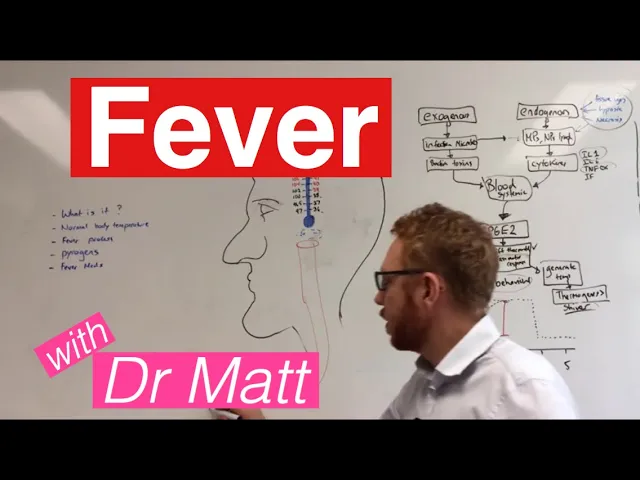
mindful when you take temperature that how it could be affected the first point I wanted to just make known on where it's regulated it's in the hypothalamus so when we look at this schematic drawing of a face what I put here is a thermostat which represents your area of your brain being the anterior hypothalamus that regulates your body temperature all hold the temperature there in place so you can see Celsius over here Fahrenheit over here now in black this is considered kind of the normal range of temperatures so for when taking temperature orally you could
range from 35 up to just below 38 so that's the fluctuation you're usually cooler in the morning so approximately thirty five point six degrees Celsius taken orally in the morning and about 6 a.m. is going to be your coolest whereas up here about 38 degrees at three to four o'clock in the afternoon is going to be your warmest period now this is considered a normal range the average being about thirty six point eight degrees Celsius taken orally is than the mean temperature over a 24-hour period however it's important to note that if you take temperature
from a call reading it will be point six degrees hotter than orally so you need to take that into consideration between the times of the day as well as it's so rectal temperatures will be 0.6 or degree hotter event oral temperatures so the way that the hypothalamus regulates your temperature in your body essentially is between gaining temperature and losing temperature the way that we'd gain temperature is usually through our metabolism so tissues like our liver our muscles our brown fat can increase temperature with it within us and that's through metabolism and how we lose temperature
two main areas that are most efficient is through your skin and through your lungs through your breathing so your hypothalamus has the ability to hold you in that range by either increasing your metabolism in those tissue areas or changing and changing around the way that you lose temperature so that's important to be mindful of with how normal body temperature is regulated before we go into the fever process I'll just get rid of that because I'll have the draw over it so when we look at fevers we need to understand that the the control center for
the fever is going to be the hypothalamus particularly the anterior hypothalamus which is considered the firm irregular center of your body so for a fever to begin it there is what we consider a change in prostaglandin levels within your hypothalamus specifically prostaglandins pge2 so this is just a type a subtype of prostaglandins and this particular the level of this prostaglandin within your hypothalamus will kind of do two things it will so the levels of prostaglandin e2 if it increases so I put an arrow up there if it's increases it's going to move you towards a
fever state so what it will actually do is kind of two things it will shift the thermostat and it will increase the vaso motor response so this is the response to essentially either conserve temperature or generate temperature so by increasing your prostaglandin e2 within your hypothalamus you're going to get a shift in your thermostat just like your air-conditioner at home you change the dial from 38 degrees now you wind it up to 40 degrees Celsius that's a in thermostat but also you get a change in the output that the hypothalamus is telling the body so
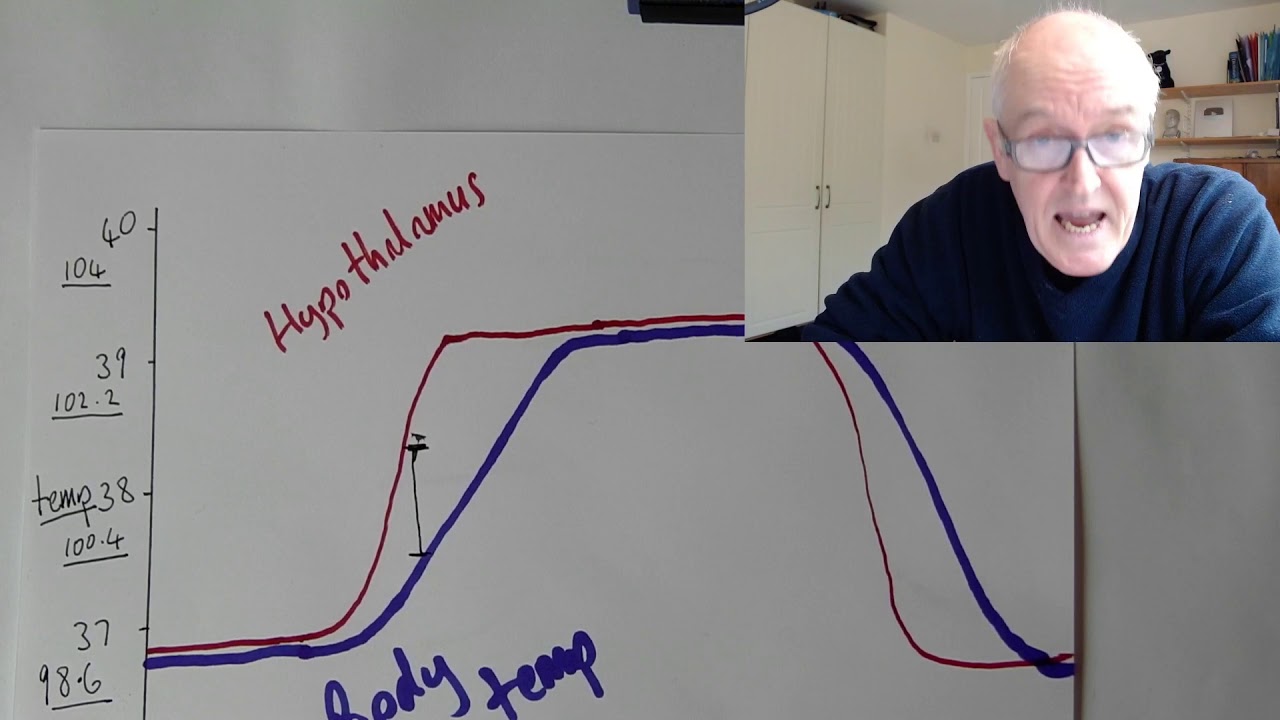
the two things it's going to do is conserve temperature and generate temperature okay now the shift in thermostat we can see here where's the blue gone we can see here so you're normally your you've got a kind of a homeostatic level of about thirty six eight degrees Celsius but as soon as you increase your prostaglandin e2 it's gonna shift this resting state up to 40 degrees Celsius okay so now your new setpoint is up here which means you're basically a minus four degrees Celsius below what your body thinks you should be so what that means
that have to do now so you've already done the shift now you need to bring your temperature up because currently the temperature of your body is still down here so the way that you will increase that temperature is you would conserve temperature and the best way you can conserve temperature with a fever response is vaso constrict so in this phase all the blood from your skin will be shunted away and go to your core temperature and that's why initially in a fever response the person might feel cool and they look white because they're Vaser constricted
now to generate temperature basically what we will do is thermogenesis thermogenesis okay and this is generated in your liver and your muscles and your brown fat so that's a bump up in metabolism and it's going to change the way that proteins are coupled which increases the temperature so by doing this process and vasoconstricting we're going to start to increase a body temperature up to the new setpoint so what you'll start to see is after a few hours your body temperature will start to go up like that and that's in response to vasoconstrict in the thermogenesis
and possibly also you mate you may also start shivering this is not always done but it's a possibility there's also going to be behavioral changes so this is you may as the person going through this fever response start to put more clothing on go into a warmer room or just change the way that you feel in your temperature also with your conservation of temperature your ability to feel heat is diminished so your hot sensing neurons will be down regulated and so you're less likely to feel hot you're more likely to feel cool in this space
so how we got physiologically up to now four degrees so how we increase that four degrees is a common accommodation of vasoconstricting thermogenesis and shivering and behavioral changes and that's going to shift you up here so that's the physiological response to how we get fever but what started the process of and this is what we call pyrogens pyro mean fire jens meaning to generate so these are chemicals that are released to change or to induce a fever there are two types that will what we call exogenous and endogenous exogenous means that come from outside the
body endogenous they come from within the body so if you look we'll start with the X so X odd genus so the best way to remember these outside the body an example would be infection infectious microbes so the classic example would be bacteria okay so bacteria and bacteria if they're gram-negative they have endotoxin and if there's gram positive they have exotoxins so we can say bacteria toxins now these toxins will essentially go into the blood so they go into the blood systemic now they'll go up to the brain and ultimately what they do is in
the in the hypothalamus they'll start to generate pge2 so their response in the hypothalamus is to generate pga - so this is bacteria exotoxins endotoxin so in the endotoxin that would be things like the lipopolysaccharides that's in the actual membrane of the bacteria all the exotoxins so from staph and strep they will produce these chemicals that will go out go into the blood and cause a an increase in their prostaglandin e2 it's important to note the bacterial toxin can do it directly in the hypothalamus to generate the pge2 but it can also shift across to
the endogenous so endogenous so these are pyrogens that's generated in your body okay so some examples that we'll call this so what would cause these to be released tissue injury hypoxia and things like necrosis all these things can start the endogenous process of and the way that they respond is usually through a group of immune cells like macrophages or monocytes neutrophils or lymphocytes these will be the ones that get activated by this process also these infection molecules will activate these guys which ultimately create proteins called saito kinds now there's a whole list of these cytokines
so I won't go through all that but the big ones you need to know interleukin 1 interleukin 6 T and F alpha so tumor necrosis factor and interferon now the strongest ones is interleukin 1 and to burn across a factor alpha so these cytokines will also go into the blood going to the systemic supply going up to the brain and start to increase prostaglandin e2 so you could imagine if you've got an infection or injury down in your finger the blood supply from your finger would take blood will go up to your hypothalamus so this
could be a combination of infectious particles like bacterial toxins it could be carried directly up which would induce a change in prostaglandin e2 shifted in the thermostat up to 40 degrees and also changing the vasomotor response that's directly from the toxins all the toxins can activate the the macrophages and neutrophils and the lymphocytes or any kind of damage down on the tissue so inflammation tissue injury necrosis can do that as well releasing cytokines going to the blood all these particles will go up and into this region which will cause the issue so it's important to
note that these cytokines can cause a change in the fever but also at the level of the tissue it will cause an increase in prostaglandins and that can cause other effects at the local level like myalgias and arthritis kind of feelings that we get when we are infected and got a systemic inflammation process occurring so that is essentially how pyrogens impact the fever process now the drugs that you could use the big one you know is aspirin or NSAIDs these work at this level so aspirin and NSAIDs essentially they block an enzyme called cyclooxygenase which
stops prostaglandins been produced and this is essentially how that would work in this space so they work they're both peripherally out here but also centrally up there so that's how these guys work now acetaminophen which is paracetamol it doesn't work peripherally so it doesn't stop it's not an insert it doesn't stop prostaglandin formation peripherally but somehow which we don't completely know it will work in the brain to stop pge2 it won't stop prostaglandins peripherally but it will stop prostaglandins up in them centrally so it's a central Cox inhibitor so we'll work up here which will
work to block fever so also paracetamol or acetaminophen also works in this space very effectively so they will work to reduce your fever through the production of pge2 another possible drug that can be used is corticosteroids so corticosteroids and they work by because they're a steroid they work at the DNA level they also work by changing the expression all the way that the cyclooxygenase enzymes work so they'll also work at that level but they'll also stop cytokine formation so they can also work up there so that's hopefully and finally if that if you do these
two things what that will essentially do is we'll bring the setpoint back down here so if you change either pge2 through drugs or the pyrogens that generated the increase in PG or - if that drops back down the new set point will be reinstalled back down to 336 degrees so now you're way too hot so your body is too hot so it needs to bring it back down here and this is where you'll start to see the symptoms of sweating and feeling flushed and you may take clothes off and this is kind of the the
downward phase of the fever so you might have people that will go up and down through these spikes and it could be the downward phase could be a combination of whatever the producing the cytokines or the toxins is drop in and that will bring you back down to a set point or through the use of drugs that can bring it back down and this may give you that kind of fluctuations through the fever so hopefully now what you can answer is what is a fever how do we normally regulate our body temperature in the hypothalamus
what's the physiological process through here to generate your heat to bring it up what apparents and then what drugs can we use to regulate the temperature