in the past fire and gas detector placement was more art than science based on Expert judgment leading to inconsistent and insufficient systems the process industry is now widely used fire and gas mapping software to address the challenge of creating consistent and effective systems however there are some critical differences in how software applications approach this challenge resulting in staggering differences in cost and effectiveness of the design 3D models are commonly used to visualize and enhance facility design these models are vital in determining the necessary quantity and placement of fire detectors early in the process the model
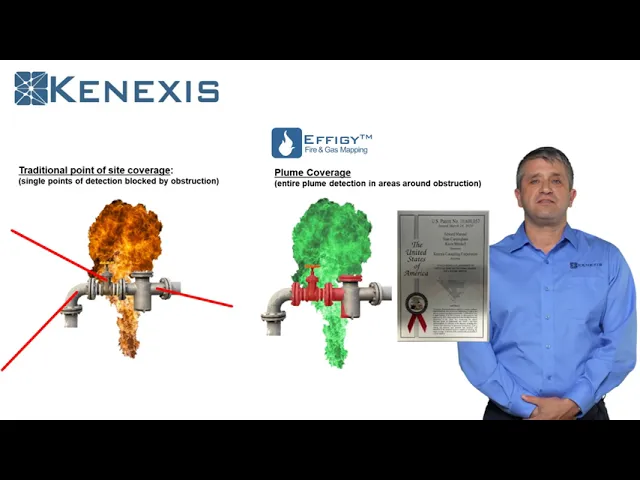
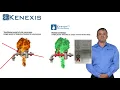
contains only major equipment and piping systems with low detail making it easier to achieve coverage targets as the design progresses the model incorporates more detailed elements such as instruments tubing wiring and vessel of pertinances even at the 60 stage the drawings become crowded making it challenging to achieve fire detector coverage targets especially if small obstructions aren't considered in the fire and gas mapping software most fire and gas mapping software Solutions use a traditional point source fire algorithm assuming fires occur at a single point which creates gaps behind obstructions this approach predicts uncovered zones behind pipes
in the detector's view rendering a fire along the obstructed pipe undetectable however a fire has volume to address this challenge Connexus developed a far superior software solution called effigy while Effigy supports the use of point source modeling for simple designs it takes it to the next level with a method called a plume model for complex designs the plume model considers a fire's volume in its results the plume model is so Superior in fact it's patented the plume modeling technique involves estimating the volume of a fire this is done by spreading the radiation from a fire
of a specified size and design basis across the entire Fire's surface next the radiation of each finite volume element is analyzed separately to determine whether any obstruction is present the total radiation flux received at the detector is then calculated to check if it surpasses the activation threshold the Effigy plume model predicts the area directly behind the pipe as an unobstructed region but why this is because the plume from a fire located directly behind the pipe remains largely visible to the detector leading to sufficient thermal radiation detection while the pipe obstructs 10 to 15 percent of
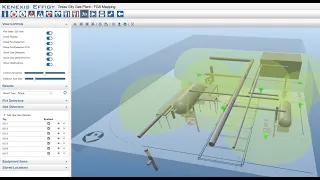
the fire surface the detector can still reach an alarm State due to the significant volume of the fire this coverage map was created using the traditional Point site algorithm used in most fire and gas mapping software looking at this map it is easy to see the inaccuracy in the modeling due to the limitations of the point site method this results in artificially low coverage calculations which in turn suggests artificially High detector counts required to achieve coverage targets if the same facility is analyzed using the Effigy plume fire model the predicted coverage is far greater creating
a much more realistic result in the number of detectors needed this can lead to dramatically lower costs and higher efficiencies in the design of the fire detection system while still meeting coverage targets plume detection technology is far superior to traditional point-of-sight methods when using designs with a high degree of detail the patented plume detection technology discussed in this video is only available in effigy fire and gas mapping software from Connexus for more information please visit www.connexus.com