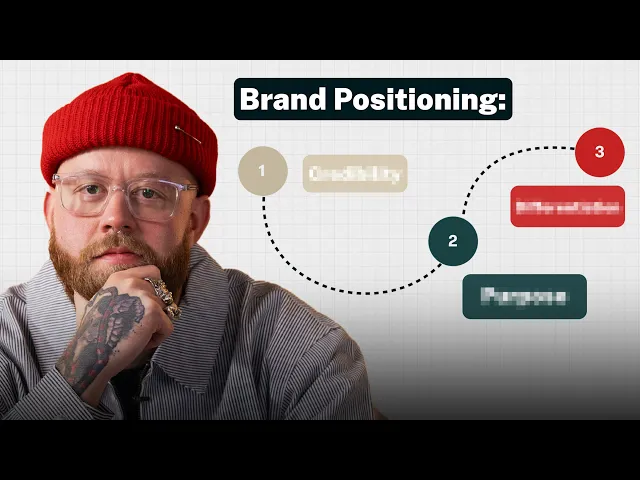
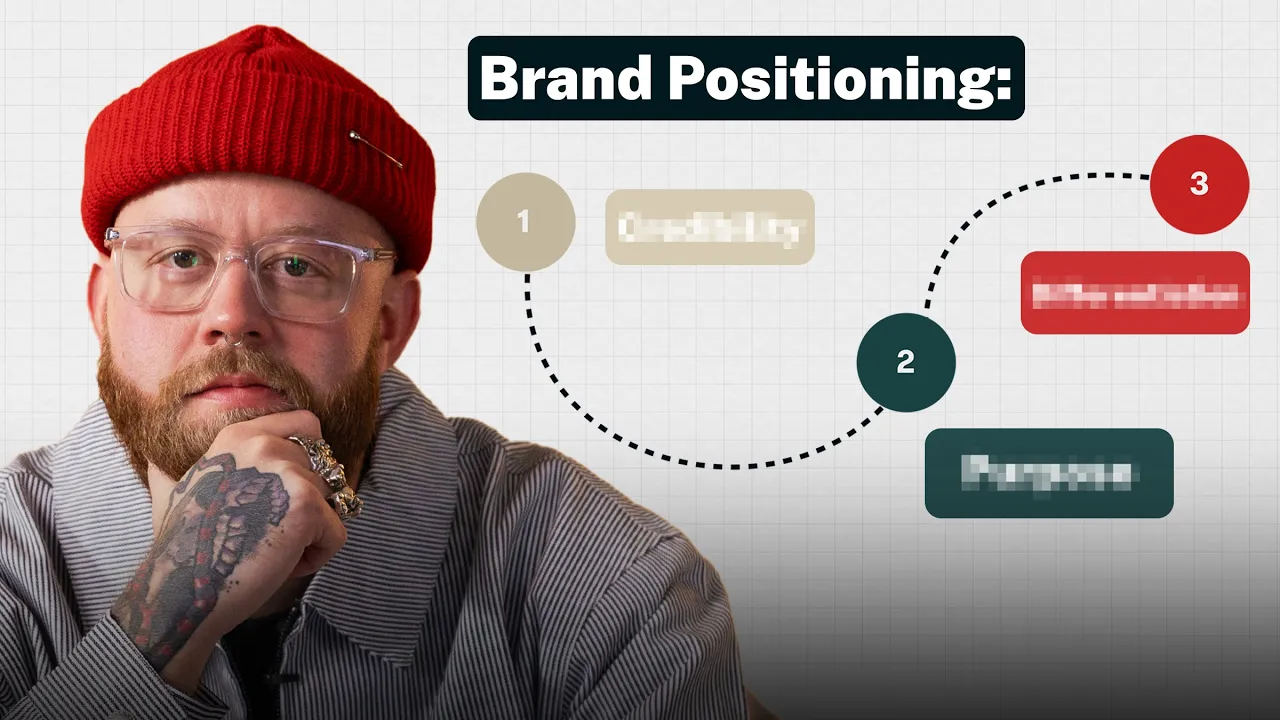
Let me paint you a picture. 99% of people who start their personal brand get zero results in the first year. What I can tell you after 17 years of building personal brands is that you are not broken. You're just missing three crucial elements. Why would anybody listen to you? Why are you starting your personal brand in the first place? And thirdly, how are you going [snorts] to go about standing out from your Competition? In this video, it is my goal to help you get clarity on all three of those elements and to build a personal
brand that you love and your audience trusts. And the first question that I would like to address is why should anybody listen to you? You watching this, you're in one of two camps. You're either the student or the expert. And the majority of this video, to be very clear, is for the expert. But one thing that I want to call out is That some of you are actually a student who are pretending to be an expert. If you're the student, you don't have the big W's. You don't have years of experience. You're not who your
audience wants to be. You're on the journey of becoming who your audience wants to become. What your job is is to be the guinea pig, to be the proxy for your audience. You do all the testing and investing that either goes well or doesn't go well. And so, if you're the Student, [ __ ] be the student. Don't pretend and posture as the expert. This is where I see so many people get trapped and stuck online. And what you end up doing is you burn trust forever with that audience. So for the students watching, know
that you are the student. Now the expert, I think it's it's probably pretty clear to you. Although you might be somebody who would feel awkward calling yourself an expert, but if you have multiple W's on your resume, If you are the person who your audience wants to become or you have done the thing that your audience wants to do, then you are the expert and is your job to teach in public. The student is learning in public, but you are teaching in public. And there's a little bit of build in public that you can you
can add into that. But the main thing that I want to focus on is that you're going to be sharing how you've accomplished what you've accomplished, the mistakes, I Guess, that you've made along the way that you would encourage others to avoid when going on the same journey. But you also want to make sure that you're imparting to them the ability to go from where they are to that expert level quicker than you did. And the first thing I want to do is actually an exercise. I want to start this video off by actually taking
some real action and getting some results right away for us. Okay? And so what you're going to do is There's a link in the description below this video on YouTube. Click that link, enter your email. We're going to send you the workbook. And in that workbook, there's one exercise that I really want to start off with, which is building your bank. Now, for the students watching this, and again, like I said, we're not going to talk too much to the students, but I do want to give you this cuz I think it's really useful. You're
going to build what I call an interest Bank. Interest as in what you are interested in. This is a running list of the things that you are studying, you're experiencing, you're experimenting with, you're learning, you're testing. These are all the things that you are on your journey of learning. And your channel is going to be documenting the process of improving or becoming better or working towards becoming the expert in this field. Now for the experts watching, you need to establish a credibility bank. This is a running list of the things that you've done, you've achieved,
you solved, you've proven the mistakes that you've made and the lessons that you learned from that. These are the things that you built. These are the successes that you have in your career. And what this does is it builds the foundation that you're going to build and amplify your personal brand off of. Now, a really important note here for some of you, you might feel like, "Oh, that's Not fair." It's just the way that life is. The reality is the results that you're going to get for your personal brand do have a lot to do
with what you put down in your credibility bank. Now, real quick, I don't want you to misunderstand this. I'm not saying make [ __ ] up in your credibility bank, but the more impressive the items in your credibility bank are, the more likely you are to have better than average results with growing your personal brand In the first couple of years. It's no secret to me that one of the reasons why we're having the success we're having with building my personal brand in the first year, I mean, hello, we're at over 200,000 followers, over 39,000,
maybe even 40,000 people on our email list at this point. like it's getting kind of crazy. And I believe that we're being intentional with how we're making our content, but it's not lost on me that I have had several big public W's in my Career that have added to the legitimacy and credibility that I bring into the content I'm sharing. For example, rather than listening and watching content on how to build your personal brand from somebody who has only done it for themsel, a lot of people value the fact that I have helped build multiple
very big personal brands within the business creator space. And so they know that I'm not just speaking from a tactic point of view, but I'm teaching principles that Work in differing scenarios. And so what I want you to do is put together your credibility bank that that's in the workbook. You can go in fill that out for yourself. And what you're going to do is this is the foundation that you draw from and you speak to because the question that we're trying to answer is why would anybody listen to you? Well, the answer is in
your credibility bank. This is why people will listen to what you have to say. Cuz if you do more epic [ __ ] you're going to have more epic [ __ ] to talk about. It's a crazy concept. If you aren't impressed with your credibility bank, well, that's fine. You can keep rolling and start building your personal brand, but just know that you should work on building a more impressive credibility bank, which means go do cool [ __ ] For example, if I'm wanting to learn from you on how to climb a mountain, well, if
you've only climbed, you know, 5,000 6,000 ft peaks, That's not that impressive to me. But if you've bagged a bunch of 14ers, you've done Everest, you've done K2 and all of these other crazy summits, well then I'm suddenly going to take what you have to say from a different frame than maybe you know Joe who has only climbed a couple local hills [snorts] as we would call them in the Northwest, not mountains. Okay? And so the more impressive your credibility, the more buyin and belief your audience will have With you and belief that what you're
saying is going to lead them to the outcomes they desire. Now that we are on the path of establishing why people are going to actually listen to what we have to say, one thing that I want to stop and do real quick is address burnout. But I want to hit this from a brand perspective because I think there's ways that you could burn out from a content creation perspective, but also from actually how you're building your brand And determining your brand positioning. And I believe this happens, burnout, because most creators end up building a brand
that they [ __ ] hate. You start talking about [ __ ] that you're not actually interested in or passionate about and definitely not an expert in, but you just see these trending topics that all these other personal brands have built their brand around. And so you assume that you need to do the same. But the reality is is if you don't like The brand that you are building, do you really think that you're going to stick with it for long enough to get the results that you desire? No. And so instead of trying to
build a brand that the algorithm tells you, build the brand that excites you. This year there's been a lot of things that we have chosen to not do from a actual content perspective, from a brand pillar perspective, from a packaging on our content perspective that we know would Actually lead to more views, more subscribers, more followers. We'd get better numbers, but it'd be building a brand that I was embarrassed of, that I wasn't proud of. I can't tell you the amount of times that I have uh met with different individuals who they make YouTube content
as an example and they're consistently putting out YouTube videos. But here's an interesting little element. They won't text those YouTube videos to any of their friends. They Won't share it with anybody whose opinion they actually care about. Why? Because they are embarrassed of the brand that they are building. And to me, that is just a countdown clock to quitting. If you quit, you don't get your desired outcome. And so I really want to just take this moment really quick here for you to be very intentional with how you're crafting this. As we move through the
rest of this video and the rest of the exercises That you're going to go through in your workbook, I want you to be very thoughtful. Don't think through the lens of what do people want? What is going to get the most views? What are people going to be most interested in? That's not the first question that you should be asking. The first question that you should be asking and answering is what am I going to be most proud of? What is going to make me most stoked to continue doing this? What am I wanting to
put out Into the world to show who I am as a human, not this curated caricature version of me that I've crafted so that the algorithm works in my favor. What you want to do is you want to talk about your core subject matter, right? Like for me, it's personal branding. And within personal branding, you have a bunch of different subtopics. But in addition to that core subject matter, you want to inject elements that show you the human. You don't want your Brand, in my opinion, to be based around just one sole thing because you,
the human, more than likely, is not based around one sole thing. And so that's why in my content, I will reference my Harley-Davidsons or the fact that I love metal or the fact that I'm the biggest Seahawks fan imaginable other than the guys that wear no shirts and they paint Seahawks across their chest in the middle of winter during the Seahawks games. I'm trying to share in addition To the value I'm trying to provide you. I want you to know who I am as a human. One, because I'm interested in those things. I'm passionate and
I'm going to want to talk about them. When I'm sitting and talking with my friends, those subject matters and those topics naturally come up. They should be coming up in the content as well rather than trying to hide who you are and and think that there's this this world where you only talk about one thing ever cuz That's what so many of the gurus online have told you to do. That is maybe a way to grow really quick on the platform, but it's also a way to quit really quickly from the platform. And so again,
I am trying to help you build something that is sustainable. And so I want you to take a moment and really reflect on who you are as a human. The rest of the work that we're going to do in this video needs to be based off of that. Not some ideal version that you think that Your audience will desire, but who you are as a human. The next question that you should be trying to answer and solve is why would your audience care? We know why they're going to listen to us because we've established that
we have the credibility that gives proof to why we have something good to say, but why are they going to care? What's in it for them? A mistake that I see you making is looking at what your competitors are doing and building your personal brand Based on those findings. aka you're optimizing around your competitors, not your customers. Do you want more competitors? Whatever group you optimize for is the group that you're going to attract more of. If you optimize around what your customers actually want, not what your competitors are doing, but what your customers actually
want and need, then you will attract more of them. So when you start with your customers, the way you do that is you Identify what is the pain that they are facing. Ultimately the main reason why we as humans consume educational content is there's some problem that we are looking to solve. There's some pain that we are feeling that we want relief from. You want to start by defining what the very painful problem is and what your unique solution is to it. Your brand should be built around that. It's a combination of who you are
as a human, your expertise and solving the problems That your customers actually face. that's what they care about. You probably have somebody in your life who is kind of the the fixer, right? There's people in our lives that we know that are always fixing things. And what do we end up doing with them? We go to them when we have a problem. We also often times will recommend our friends or family go to them with that same problem. If you become known as someone who solves your ideal customers Problems, guess what? More people will come
to you. And so by building and optimizing your brand not around being second best to the top dogs in your space and copying everything they do, but instead you start from the place of how do I solve real painful problems for my customer. Then what you're going to find is that your brand becomes known as somebody who solves real problems, not somebody who just makes cool content online. Cool content online will get Views and it will attract attention, but it doesn't build trust like solving problems does. And so, if you know your ideal customer's painful
problems, then that's going to help inform you of everything else that you need to work on through the rest of this video and the workbook associated with it. So, make sure that you've downloaded the workbook. Click the link below, download that, enter your information. It's literally just your email, I think, or Something like that. and we're going to email you the workbook and I want you to list out your customers painful problems. What you're going to see in the workbook is it's asking you for 10 to 15. Some of you might not be able to
come up with that many right now. That's okay. As many as you can. But what I will tell you is the more painful problems you identify, the more ideation you have for the content that you're going to make in the future. Now, one of The questions that we mentioned at the top of this video is how do you stand out? And I'm sure this hits a painful nerve for you because more than likely you feel at some level like your space, your niche is saturated. You feel like there are a lot of individuals who are
making content talking about the thing that you would be talking about or you are currently talking about. That's very real. There are more content creators online today than ever before. I think There's something like 700,000 hours of YouTube content uploaded every single day. like it's [ __ ] absurd out here. And so you need an intentional and strategic way of actually standing out. And I believe that there are three different main levers that you can pull to stand out. Now, two of them are in your content. We're going to address that in future videos, but
today what I want to talk about is your contrarian belief. And this is the biggest lever in Terms of the three levers that you can pull to stand out. I think this gives you the greatest returns out of all three. Like you can take the other two, combine them, and they won't come even close to identifying your contrarian belief. This is the way that I believe you are going to get the best traction the quickest. You know that whole 8020 principle that everybody always talks about? Well, I will tell you this is your 80%. This
is the thing that's going To drive the actual growth and make all the other things and initiatives you do for growing your personal brand a lot easier. Now, when I say contrarian belief or contrarian take, people misunderstand this. I've been on podcasts where I'll say that and they immediately regurgitate it, but instead of contrarian, they say controversial. I want to distinguish and define contrarian versus controversial because I will never ever ever tell you to be Controversial for controversy's sake. I think that is a terrible terrible approach. See your contrarian belief is when you are going
against the dominant belief because you actually genuinely believe it. you are incapable of not sharing this belief because at your core it's so [ __ ] true. Now, a controversial belief on the other hand is when you're taking a position because you know it's going to trigger people. This is when you design your statement To get a reaction. There are plenty of people that take this strategy on. There's plenty of people that preach it. And by all means, you do you, boo boo. I am all for you taking whatever approach you desire. But what I
will tell you is if you build that brand, you start to get known as somebody who is controversial. For you watching this, you've probably not been in these rooms, but I've worked with some of the biggest personal brands in the business world. And what I will tell you is that they avoid people who are highly controversial, like the plague. Nobody who has a really strong established brand, who is very thoughtful about the associations they make, they're not going to want to pair themselves with you. If you're building just a controversial brand for controversy's sake, most
people who build a controversial brand, they're kind of known as a loose cannon. You don't know Where that controversy is going to be aimed. I encourage you build a contrarian belief, not a controversial belief. Now that we have that defined, let's go into how you go about building your contrarian belief. I really want you to identify the belief that you have that is fundamentally different than the other individuals in your space, in your niche, and be able to articulate that to your audience consistently. A couple examples that I think might help you Understand just how
impactful having a contrarian take is. Sometimes, as a side note, the contrarian take when you hear it after the fact, you're like, "That was contrarian. That's insane." Yavon Shinard, and I I hope I'm pronouncing that right. If I'm not, let me know in the comments. He is the CEO and founder of Patagonia. And he was in an industry, the outdoor apparel world and industry where they were hardcore about mass consumption and they prioritized profits Over everything. He came onto the scene and built a company based on the belief that you should prioritize environmental stewardship aka
taking care of the [ __ ] environment rather than prioritizing profits. And so his actions followed all the things that he has done within Patagonia point to the fact that he's actually caring more about the environment than he is about profits. And now he's known as the model for building an organization where it's Valueled, not profitled. And another example, the final one that I want to share is Reed Hastings with Netflix. Everybody thought that people loved, absolutely adored and held tightly the ability to go to their local Blockbuster or video rental store. There was the
Hollywoods and all the other ones, and pick out the VHS. They wanted to physically hold them and read the back in order to understand what the video was going to be about. And Reed Had this crazy contrarian belief that actually people don't want to leave their house. They want to be able to select a movie from their couch, have it delivered to their front door, be able to watch it, and then return it without ever leaving their home. And I think it's pretty obvious uh that contrarian take kind of worked. He started by shipping DVDs,
right? So that you wouldn't have to like go to the local store. you could just open your front Door and boom, there it is. Watch it, open your front door, place it right back in the mailbox and off we go. And eventually that evolved into not even having to open the front door, just having to literally flip on the switch of the TV and boom, you can stream. And I think it's pretty clear where that contrarian take not only took Reed Hastings and Netflix, but took the entire entertainment industry as a whole. Streaming is now
the number one Thing. That's what everybody is doing, right? Every single network that we used to watch on cable now has their own version of an OTT. I just can't hammer home just how important it is to have your contrarian belief. This is how you are going to stand out from all the other individuals in your space in your niche. So clearly a great business and a great brand can be built off of a contrarian belief. But the question that you are probably asking is how do I Figure out what mine is? How do I
know what my contrarian belief actually should be? Now, there's a chance that you actually do know it off top, right? Like that was me. For years, I had been hearing people preach going viral and maximizing for views. And I just knew at my core that was not the right way to build a personal brand where you're trying to actually grow your business if you sell a high ticket offer. It just didn't make sense to me. I knew it. And So, when I would hear those things, I would have that reaction that I described earlier. My
blood would boil. the hair on my neck would stand like I would get a little annoyed and irritated. The first thing that you can think of is what do you hear people in your industry say that rubs you the wrong way that makes you go uh I don't know if I completely agree with that. I guarantee there's several of these industry tropes that are out there that You fundamentally view differently. But if you are struggling with coming up with what your contrarian belief is, you don't totally know what it is. I have a very simple
exercise that I want to walk you through that I think is wildly useful and will provide immense levels of clarity on what your contrarian belief could be or potentially provide you several that then you can go and test in your content. It's called the two column approach. And what I want you To do [clears throat] is you're going to draw out two columns or if you downloaded that workbook, you actually have this table right in front of you so you can fill it out. On the left side, you're going to write down all of the
different things that people in your space or niche say that you disagree with. And on the right side, you're going to write out what your view of that is. I also, in addition to the statements that they say, I want you to Write out the things that your competitors do that you disagree with, that you don't like, or that you think your customers hate. If you're an agency and most agencies are really slow to respond, terrible with communication and not organized, that is less of a statement that they're making and more of their actions. And
so what I want you to do is identify that on the left side. And then on the right side, I want you to write out what you would do Differently. What this is is it ends up being a list of contrarian takes. It's a contrarian belief or a contrarian action that then you can utilize for building your personal brand. When I started, I had three. I'm going to share with you the belief that I disagreed with and what my view of it was. And I'm going to do that for two more after that because I
think it'll help get your wheels turning on what you could identify in your niche or your space that you don't [ __ ] with. So, the first one is always try to go viral, a million views or bust. That's what I hear so many people preaching. I believe and I preach that you should optimize for trust, not virality. That is my contrarian belief. Another one is that there's plenty of people out there that preach that you should be posting on every single platform. Volumes, mountains, mountains of content that you should be posting daily on every
single platform Imaginable. And the moment that a new platform appears in the app store, you better download that, sign up for a new account, and be posting at least 20 times a day on it. Like it's it's crazy, right? And sure that probably works, but it's not practical. I believe that you should build a system that you will actually stick with, not what your favorite creator does. Okay? You need to build it around you, not optimizing around them. The third one is that you Need your media team to fear you in order to respect you
and listen to what you have to say. And it sounds kind of audacious when I say this, but if you're not in this world and you don't lead media teams and work with a lot of people that do, well then you might not realize this, but this is a very very it's weird, but it's a common belief that a lot of people have. And my contrarian belief, my contrarian take on that is that you need to create an Environment of psychological safety or the work will suffer. Creative will suffer if they don't feel safe to
take risks. And so these are the three contrarian takes that I entered onto the scene with when we first started building my personal brand. I talked about all three of these in podcast and in my content. But what I did is I started to notice that one of them was clearly resonating with the audience more than the other two. We're at a Point right now where all of a sudden I'm seeing more and more people talk about optimizing for trust than virality. When I first started making content a year ago, that was not the case.
There were very few people preaching this message. And so what I noticed is it was catching fire. People were resonating with it and understood it. They agreed with it. They were frustrated and tired of the old way of building a personal brand online. And so When I noticed that, instead of trying to force all three onto my audience, I doubled down on the one that was clearly resonating with you. And by the way, thank you for resonating with that. Uh that's the one that I am most passionate about. And so this actually worked out really
well for me because the one that I like to preach and share with as many people one-on-one or in small group settings as possible, I'm now able to preach and shout from the mountaintops In my content. Not because it's what I want, but because it's what you have told me you wanted. So once you've done the exercise, you'll have identified a couple of different contrarian takes and I want you to test them in your content. And then once you notice that one is resonating more with your audience, just like I described with my contrarian take
around optimizing for trust over virality. Once you notice that, I want you to double and triple down with your Audience on sharing that statement over and over and over again. Now, the natural question that you have is, "How do I know that they're resonating with it?" Yes, I do read your DMs. I do read your comments. I knew you were about to ask that question. And it's a very fair question. And there's a lot of different places that you can look to as indicators that your audience is [ __ ] with this. Look at the
piece of content where you're talking about this Contrarian belief. Are people commenting, literally quoting your contrarian belief back at you? That's a big sign. That's something that I see uh a lot of times is a great indicator. Another one is if you make a video that is central around or a piece of content in general, it could be a blog post, a substack, whatever. If you make a piece of content around your contrarian belief and you get more DMs than normal, referencing that piece of content, that Is another good indicator that your audience is [
__ ] with this. If you get to a point where things start getting really crazy for you, [snorts] and this is a wild point to get to with your personal brand. It it blows my mind every time I see it. If people start making content talking about your contrarian take and tagging you in it, that's when you really know this thing has gone intergalactic. This is what you're going to build your brand around. This is what you become known for. If you actually listen to your audience and you actually pay attention to what they're saying
to you, you will know you'll know that they're liking this one more than the other ones. And that actually brings up a really important point which I haven't really talked about much ever in my content which is who should you be listening to? Not what creators should you be listening to. You as the creator, who should you be Listening to to inform the pivots or lack of pivots that you make with your personal brand? And it's a very interesting discussion that happens online. You have half of the camp that falls into the the belief that
you should respond to every comment, read every comment and take it as doctrine, as gospel. And then you have the other camp that is like ignore the comments completely, make whatever you want, and never take into account what they have To say. And I think there needs to be a happy medium. But first, we need to define what are you doing. I believe that if you have a mass market low ticket offer that you are selling, this is why you're building your personal brand is to lead towards that, drive sales, build your business. If that's
the world that you're in, then I do think you can listen to the audience in your comment section. If they're saying that they want more of something or they Want less of something, I think it's worth listening to them. Now on the flip side, if you have a narrow market, high ticket offering, I don't know that it makes sense to listen to what the audience is saying in your comment section to dictate how you build your personal brand. I think you need to go to a different group of people. I think what you need to
do is look at what your customers are saying, what they want more of, what the questions are that They have. That's what you want to optimize around because whatever group you optimize around is the group that you're going to get more of. Do you want more followers or do you want more customers? For me, I want more customers. I love that you are subscribed to my channel. If you're not, you should hit that subscribe button. I've never said that before, but it just felt natural here. But I'm not looking to build my follower count. I'm
looking To build my business. And so, I want to optimize. I care about everyone who's watching the content greatly. And it's not to say that I don't look at your comments and take it into account, but the biggest driver of the pivots or adjustments or the things that we'll double down on for my personal brand comes from our clients. And so, back to noticing that people were resonating with optimizing for trust, not virality. Yes, the general audience was [ __ ] With that very clearly, but more importantly, my ideal clients were. I was getting DMs
from people that I knew but had never worked with for years that were saying, "Oh my god, this makes so much sense. I click with this. I'm so tired about working with this agency that is having me film these topics that we know are going to get millions of views, but I could give less than a [ __ ] about. My Instagram has turned into something that I'm ashamed of, not Something that I'm proud of." And so that's what we're optimizing around. Again, I want to leave you with this on this point. This is super
super important. The group that you optimize around is the group that you will get more of. If you optimize around your followers, sure, you'll get more followers, but if you optimize around your customers, you will get more customers. Now, once you land on that contrarian belief, that contrarian take That you're going to really lean into, what you're going to want to do with that is you need to craft what I call a brand statement. This is a way for you to clearly and concisely communicate that contrarian belief so that you can say it as many
times as you [ __ ] can in the content that you make. Okay? I believe that you want to consistently pair yourself with that belief so that eventually your audience makes that association. I'm going to share a lot More on that in just a second. But it's kind of like how Apple and Johnny IV have created the association with Apple being a design first, not a processor or tech first company. When you think of Apple, I would bet you're not thinking about the technical. You think about the design. And I don't believe they became known
as a design company because of their marketing. I believe they became known as a design company because for years they consistently paired Themselves with a very clear contrarian approach to building computers and ultimately hardware design as a whole. Johnny IV is known for approaching design with simplicity, clarity, restraint, not being overly done, but actually exercising discipline and having an elegant approach to a world that the word elegant couldn't have been further away from. And Apple continued to pair themselves with this for 20 years. Okay? So now when you hear Apple, You don't think processor first,
you think design first. And so again, make sure that you downloaded the workbook and you do the two column exercise. This is going to give you the ammo that then you can go into the world making your content to test which of these contrarian takes, which one is resonating with the customer or the audience that I'm optimizing for my ideal customer. That's what you want to optimize around. Again, if you have a Mass market, low ticket offering, cool. Your ideal customer is loud in your comments. But typically, if you have a high ticket, narrow market
offer, what I have found is my ideal client, more often than not, they end up texting, DMing, or emailing me rather than commenting publicly on the piece of content. And I don't need to get into the why behind that, but that's just the reality. And so in my world, I'm optimizing more around the private Messages I'm receiving than the public comments I'm getting. Real quick, I just want to say I am so sorry. I know that this is a lot to take in right now and even more for you to take action on, but that
is the whole reason why we created Rston Select. Rston Select is your one-stop destination to not only learn, but to actually implement. We're talking pre-production, production, post-production, and platform strategy all through the lens of educational Content. Click the link in the description below if you want more information. Now, let's get back to the video. And so, that pairing that we're talking about of Apple pairing themselves with design first thinking leads to an association. If you haven't heard me define these terms, I want to actually define branding and brand for you because this is how you're
going to determine how you want to be viewed. At its core, branding is just a pairing of Things. And I believe that brand is the byproduct of that. A good brand is when your audience inherently associates you and the thing that you are intentionally pairing yourself with. If Apple is for 20 years straight consistently pairing themselves with design first thinking, it's no surprise for us that the association that we draw upon very quickly when thinking of Apple is design. That's how this actually works. That's how branding works and how the Byproduct occurs, which is brand.
A really simple example is below this this cool shirt that I just recently got. Below it is a black t-shirt, just plain, right? And if you see me in a plain black t-shirt, there's not that much to draw upon. You're more looking at maybe, you know, my rings, my glasses, my hat, whatever, there's not that much to go off of. Now, if I were to take that same plain black t-shirt and slap a black metal logo, you know, like a Swedish or Norwegian black metal band that you can't even read, that might change how you
perceive me. you suddenly have different associations that you're drawing upon. Why? Because I'm pairing myself with that logo. Now, if we were to exchange that black metal logo for a Hello Kitty logo might be a different perception, might be some different associations that you draw upon, right? So, what you you the brand, what you pair yourself with consistently informs The brand that your audience sees. This is the lens. This is the filter that they view you through. And so, you want to be very thoughtful and strategic with the pairings that you make. Knowing this, I
think you're going to want to be a little bit more thoughtful with the words that come out of your mouth and the people that you show up publicly with. And so, the formula that you can think of is pairing times consistency equals an association. Pairing times Consistency equals association. Here's an example that I want to share with you. You're very familiar probably with Instagram stories. I think it's something that we interact with on a pretty regular basis. For me, it's a, you know, too many times per day, uh, as my screen time report on my
phone is constantly telling me. If you look at Instagram stories, for example, let's say you meet somebody recently and you both follow each other on Instagram. You Don't know that much about this person. And so what's going to end up happening is whatever you see them consistently posting in their Instagram story is going to shape the brand that you develop or the brand that you view them through. The lens that you view them through. For example, you connect with Sarah and you now follow Sarah on Instagram and suddenly you start noticing that Sarah posts a
lot of black metal songs in her stories. What are you Going to assume? It's simple. It's not like some loaded question. The answer is you're going to assume that she's into black metal, right? Pairing times consistency equals association. She is consistently pairing herself with black metal songs. And so the association is she must like black metal. Now, if you're one of those people who love Amish romance novels and you're posting a screenshot of your favorite Amish romance novel in your story, I'm going To make the assumption that you like Amish romance novels. And even more
than that, if I have known people in my life previously who have liked Amish romance novels, I am going to associate not only you with the Amish romance novel, I'm going to associate you with what it means in my life to like an Amish romance novel. Okay, it's a little heady there, but basically the point being is whatever you consistently pair yourself with, that is the association that your Audience is going to start creating for your brand. Now, something that we want to be careful and weary of is we've described this from like a positive
frame, right? I love black metal, so I think it's very positive to be associated with black metal, but this works equally as powerfully in the reverse. Okay? So just as effective as it is for a positive association, it's also just as effective for a negative one. If you pair yourself with something Or someone that is the opposite of what your desired outcome is, that is the opposite of the brand that you want to build and what you want to be known for, then that be a bad pairing. That's not a good pairing for you to
make. That's not what you want to do. I'm trying to build a trustworthy brand. I want to be known as a trusted figure. And so, knowing that this is how branding works, it would be really [ __ ] stupid of me to start consistently showing up online With people who are known as untrustworthy characters. If I show up with untrustworthy individuals consistently, you are going to start wondering if I'm trustworthy myself. Like I said, these associations are the lens that your audience views you through. And the way that you can actually control and set these
associations is by being intentional with the pairings that you consistently make. Now, I'm a huge fan of reverse Engineering from a desired outcome to today. I try to apply that way of thinking to as much uh that I do in my work life and in my personal life as humanly possible. And it's what I want to do here with your desired associations. In that workbook that if you haven't downloaded yet, click the link in the description, enter your email, we'll email you the workbook. In your workbook, there's a desired associations exercise. I think it's Called
that or something like that. And what it's going to prompt you to do is it's very simple. I want you to write out two associations that you want to be known as being for and I want you to write out two associations that you want to be known as being against. Just as much as you want to build a brand as what you are going towards, you also want to build a brand that speaks to what you are not willing to do, what you do not want. Something that a lot of Luxury brands do a
really good job of is not only speaking to who they do make their product for, but who their product is not for. And by doing that, you create an exclusivity for the audience that you are actually building and optimizing around. And so this is how you're going to be able to reverse engineer these desired associations. And once you determine what those are, the next logical question you need to ask yourself and answer is, well, in order To get those associations, what do I need to consistently pair myself with? This gives you the actions in order
to shape the associations that your audience makes when thinking of your brand. It's no longer this crapshoot where you're, you know, pulling the lever at the slot machine and hoping that you get all three bananas. like this is how you do it intentionally, not with guesswork. Now, watching this video, you're probably at the beginning Of building your personal brand or you saw this and realized you don't like your personal brand and you want almost like a restart or a refresh. And so, what I'm about to walk you through at this stage that you're at might
feel absurd. I want to walk you through and talk about some brand threats. And in the beginning stages, this feels audacious. This feels insane. Like you can't even imagine that there would be a threat to your brand right now because You're just in the beginning stage. But let me tell you, this is a very, very real thing. There's been several incidents this year where people have come to us and worked with us for a short period of time purely to help solve a problem they were having with their brand publicly. You know, one could call
it a little PR disaster moment. And this is something that I think sure you're gonna have things that you can't predict, but a lot of the time If you build with the right foundation, I think you can avoid a lot of these brand problems and brand threats that a lot of personal brands find themselves encountering in the first couple of years of establishing who they are online. And the thing that I want you to really be thinking about is what you say now publicly creates the lens that your audience is going to view you through
and what you claim that you are strong And staunch about. Your audience will hold you to that for a lot longer than maybe you realize right now. Like maybe you hate how authors or or you know subject matter experts pump out a new book every year because that that indicates that it must be a shitty or lowquality book. I believe that if you say that enough a year, 2 years, 3 years, even four or five years down the road, it might be very difficult for you to ever do something like put out a book Every
single year or even just put out a book in general. And this might seem surprising to you, but you'll be shocked at how much your audience can latch on to some of these messages. You have no idea what the future holds. And so I would encourage you, I'm not saying don't take any strong stances, but keep your optionality open. If you really truly believe it, like you'll die on that [ __ ] hill, say it. Right? Like I talk about optimizing for trust over Virality. That's something that I'm not going to change. I I do
not foresee that changing. But there's other things that maybe I believe that I'm not interested in doing right now, but maybe in 5 years I learned that that would be really important and impactful for our business. And that's something that we need to do. And so I want to be careful about restricting my future ability to act based on current statements and thoughts that I share in my content Haphazardly without real intentional thought. It's kind of like what my mom always told me about tattoos. only get it if you're still going to be proud of
it when you're in your 50s and 60s. I would encourage you to think about the things that you say and the statements you make in your content and the stances that you take. Is it a stance that you're still going to be proud of and agree with in 5, 10, 15 years? If not, I would take a second stab at maybe Thinking about whether or not you want to say that publicly because what you can end up doing is actually creating a prison that your brand lives within and cannot escape. For example, there was a
time where I was working with a creator where it became wildly difficult for us to sell a product that we were selling and had because they had built the expectation for a long time that they were just giving away free content and that was all they were ever going to do. Even though they had given a lot of goodwill to the audience and done really well by the audience, when they went to make this transition of informing their audience of an offer they had, their audience got pretty pissy about it. And the reason why is
because they set up expectations that this would never happen. What you say now influences your ability to act later. Now, I'm not saying, and please don't get it twisted and misunderstand what I'm saying. I'm Not saying you can't change your position down the road. You absolutely can. I admire people that admit that they said one thing one way and they have new information now and they're changing their view on something, right? But just like in politics, whenever a politician, and it's very rare that they do this, whenever a politician comes out and says, "I held
this position and now I believe it differently." Sure, I respect and admire that and I think you Probably do, but the masses ridicule them and critique them heavily. It's very difficult as a public figure on whatever spectrum, whether it's massive or even a small little community of people. It's very difficult for humans to see you say something consistently and now say something different. And so what I would recommend is if you believe that this is something worth dying on the hill for, cool. By all means, say it, share it. But if you don't, I would
[snorts] question whether or not this is worth sharing publicly because you can make a change in what you believe. You can say you can change your stance, but you will deal with backlash. I I promise you that. I'm not saying that's a reason to not do it. I'm not saying backlash is the worst thing in the world, but it is something that you should know that you are going to experience if you go about changing your views, beliefs, and opinions on things that you have been Consistently saying for a significant amount of time. Now, so
much of this video has been focusing around you and how all these different elements of who you are. And so, we're really clear on you, right? We know who you are. But the question is, should you assume that your audience knows who you are when they're engaging with your content? And more than likely, you have made the mistake or you've seen another creator make the mistake where they make content for a Warm audience. They have inside jokes. They have all these little things that only their warmest, most consistent audience understands and knows. I assume a
lot of times in my content that you know my background and and the different work that I've done in my career, but the reality is you don't. And so I need to at some point in the video give a qualifier or give some credibility so that somebody you who doesn't know who I am wants to listen to what I have to Say. But the mistake here that I want to correct is thinking that your audience knows who you are. What you should be doing is every piece of content you make, you should assume that the
person watching it has no clue anything about you. Who you are, what you stand for, what your preferences are, what your interests are, what your track record is. None of that is known by the audience. And so I would tell you that everything you do with your personal Brand, you should approach it through the lens of these people are witnessing or experiencing me for the first time. And with that in mind, you're going to contextualize things a little bit differently. It's kind of like when you're talking to a group that you've just recently met versus
friends you've known for 13, 14 years. It's going to be a wildly different conversation. With this new group, if you mention, you know, Valerie, I'm going to have to Mention the fact that Valerie is my mom's name. That that is something that my friends all know, but a new group doesn't. That's a very simple example, but you need to apply that way of thinking to building your personal brand. It's kind of like what I said earlier, which is the principle of whatever group you optimize for is the group that you're going to get more of.
If you optimize your content around a warm audience, you're just going to Continue with your current audience and you're going to have a very tough time bringing new people into your world. If, however, you optimize for a cold audience, and cold and warm just means cold, they don't know who you are. warm. They do know who you are. If you optimize for a cold audience, you're going to attract more of those individuals. But guess what? The cold audience, they come up, they come up to your front door, you open the door, and You say, "Come
on in. The fire is warm, and there's hot cocoa in the kitchen." That's how you can convert them from being a cold audience to being a warm audience. You're not going to ever convert them if they don't engage with your content. and they won't engage with your content if in the beginning you're alluding to things that only people who know you would understand. I hope this makes sense. This is a huge mistake that some of the biggest creators in the Spaces and niches that you follow and admire, this is the mistake that a lot of
them are making. Don't make the same mistake. Now, a funny part in this is in order for you to be able to share what your brand is and what you stand for, you kind of need to know. [laughter] In order to be able to explain what your personal brand is and what it stands for, you need to understand that. And so, that's why we've been focusing on what we've been focusing on in this Video. Everyone wants to jump to content strategy right away. What is the content strategy that's going to get me a million views
or whatever? That [ __ ] doesn't matter. If you get a million views around a brand that you don't understand, how the [ __ ] are those million people ever going to actually understand what your brand stands for? Here's the secret. They won't. And so, you don't want to be doing that. Please make sure you understand your brand so That you can then communicate what your brand is and who you are to a cold audience and then you can convert them into a warm audience. Now, a little uh caveat that I want to add here.
I'm going to share a moment of of interesting vulnerability. I'm in my first year of building my personal brand and we've put out uh to date, as of filming this video, we've put out, I believe, eight videos. No, nine videos. Eight videos. >> Nine videos. Thank you, Trevor. We've put out nine videos to date. We're still in the early stages. We're still in our first year of putting content out on YouTube. And something that I noticed is in our most recent video on YouTube, we got some comments saying that we were getting a little bit
more repetitive. I saw the comment and immediately I was like, "Oh, okay. I want to make sure that we're not doing anything that is going to bore the audience. Like, I want To make sure we're providing value and usefulness and all of those things." And so, I had a little moment, like a little mini panic attack. Nah, that's a little dramatic. I had a moment where I was like, "A gasp is is more uh realistic." Then Trevor and I were really thinking about it and we're like, "Okay, we're in our first year." So yes, we
are going to optimize our content around a cold audience. But something that we can do a better job of in 2026 is doing both. You Want to make sure that you are doing a good job of making content that is for new audience acquisition and a good job of making content that is providing current audience nurture. And if you're missing one or the other, what's going to happen is you essentially one is you're not attracting anybody new and so you're only just working with the people that are currently in your audience. If you're only optimizing
for the new audience and not nurturing the old, it's Like a leaky bucket. You're going to be adding water in all the time, but as you're adding in more water, you've got water escaping. So, you're staying at the same level. You're not going to see the numbers on your content or more importantly, the conversions for your business go up because what happens is every new person that comes in, you have one of the current members leave. And so, you need to make sure from a personal brand highlevel perspective That you're thinking about not only the
cold audience. I'm telling you hardcore optimize and make every video assuming that they're a cold audience, but also make sure that you are nurturing the warm audience, the people that have already showed you that they are loyal and care about you and what you are producing. So earlier I teased that brand statement. This is where you're able to take that contrarian belief that you have identified, right? You probably Identified a couple. Then you started testing them in your content and seeing which one was resonating the most. And that's the one you're going to double down
on. Once you have that contrarian take that you're going to double down on, you need to form it in a very clear and concise statement. Okay, why do you want to do that? Well, what did we talk about earlier? What is branding? It's consistently pairing yourself with something. And the byproduct of that is Your brand. If you want to build a brand that stands out, it needs to be a contrarian take. But you need to be able to say it consistently in the content you produce. And so I believe that what you want to do
is take all the work that we've done so far. And there's been a lot of it. You want to take that and put it into one single statement that you're able to articulate in any scenario, shape, or form. Okay? I say it in the content that we're making for our own Channels. I say it if I go on a podcast or on the rare occasion where I speak at an event, I will share it there. And my brand statement is as follows. I believe that business owners and entrepreneurs trying to grow their business through their
personal brand should optimize for trust, not virality. There's a lot that is communicated in that statement. The beautiful thing is is I'm communicating who I serve, how I serve them, and what I do differently than my competitors. Three important things to make it very clear to my ideal customer why they should choose me or not choose me over my competitors. It makes it very easy for them to make a decision. We want to make things easy for people to decide on, not just for buying and converting with you, but also whether or not they're going
to opt in to consume the content in general. We want this to be an easy decision for them. So, there is a an exercise that walks you through, It's very simple, the framework that I use for crafting a brand statement. I'm not saying this is the only way that you can make a brand statement. There's other ways you can do it, but this is a very simple and effective way to do it. And what it does is it produces something that communicates to your audience who you serve, how you do it, and what makes you
different than your competitors. And so in the workbook, make sure you downloaded it. If you Didn't, it's the link in the description. Click that link, enter your email. We're going to email you the workbook. In the brand statement section, you're going to follow the framework. I believe insert your audience who want their core desire should your contrarian belief not common belief in niche or space. If you fill this in, you're going to have something that you can regurgitate and say in any scenario, day or night, awake, tired, Good mood, bad mood, whatever. It's very easy
for you to say. I can say my brand statement in my sleep. In fact, if you ask my girlfriend, I'm sure there's been times where I have said it in the middle of the night while I'm dreaming. This becomes the powerful leverage that you have to amplify your brand and stand out from all these other [ __ ] Just kidding. All these other individuals who are lovely and wonderful in your space that you want to differentiate yourself From. You want to separate yourself from the pack. This is how you do it. Okay. Another analogy uh
that we shared earlier is how Apple consistently paired themselves with design verse thinking. And then what happened? We start thinking of design when we think of Apple. You have to say this statement over and over and over again so that when your audience thinks of you, they think of this statement. I believe that we through a very low volume of content Have done this very effectively in our first year of building my personal brand. So much so that last year there was a video that we put out that was really long. It's like three and
a half hours long. And one of the comments on the video was calling out the fact that this is too long, too boring, too educational to ever get a million views. And before I could even respond, you or other people in the audience were going and commenting saying and telling Informing this person, that's not what I'm optimizing for. They beat me to it. They knew and they know what I am trying to build and what I'm optimizing around which is trust not virality and they know that because I am consistently pairing myself with it. Okay?
And so please go through that exercise. It might take you a little bit longer than you think. It seems really simple when I say it out loud, but then when you go to put pen to paper, it actually takes a Little while. So block some real meaningful time to craft this. Once you have this, I think you're going to be blown away at the results that you get on how you stand out compared to others in your space. Now that you understand your brand positioning, click here to work on your content strategy.