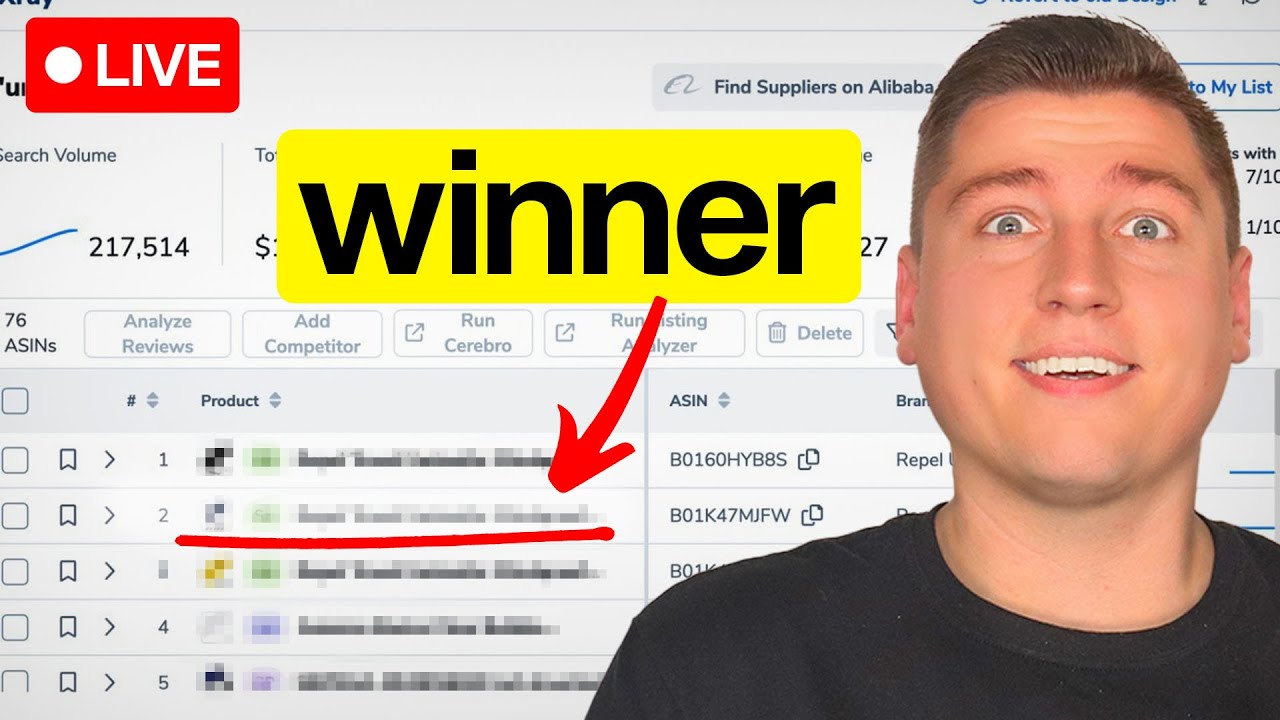
in the last 30 days my Amazon FBA business did over a hundred thousand dollars in sales and if you guys don't believe me we're gonna dive into my screen I'm gonna show you guys proof but first in today's video I'm going to show you guys the exact step-by-step strategy on how to find winning products and break down what you should and shouldn't sell on Amazon if you get this part wrong you will fail let's get into it what's up Champs welcome back to the channel my name is Sean Peterson I'm a full-time seven figure Amazon Seller and the first thing that I want to do is prove to you guys that my Amazon FBA business did over a hundred thousand dollars in the last 30 days just to give me a little bit of credibility and let you know that what I teach is what I Implement in my own Amazon FBA business so we're going to come over here and dive into my first Amazon account and as you guys can see I've done just over fifty eight thousand dollars on this account and on my second account I did just over forty four thousand dollars in the last 30 days so what I'm about to teach you in today's video absolutely works and I've just showed you guys proof and I can't put enough stress and emphasis on this topic of product research if you do this wrong like I said you will fail period so what we're going to do is first talk about what you should not sell on Amazon and if you guys enjoy if you guys like the video please do me a favor subscribe and drop a comment you guys support means the world and let's come over here and let's talk about what you should not sell on Amazon so the first thing that is super important is cheap products okay so if you are selling a product that's seven eight bucks and it's cheap and it's flimsy what that's going to do is number one it's going to lead to battery views if you have a cheap flimsy product that doesn't perform well you're going to get bad reviews and as soon as you have bad reviews your listing is going to tank and it's going to get destroyed the second thing is if it's super cheap what that means is it's going to invite a lot of competition because the barrier to entry is a lot lower because if you think about it if you're selling product for 10 bucks you can get each unit for let's say 75 cents a dollar or two dollars and if you order let's say 200 units well that's only a couple hundred dollars to start up so the barrier to entry is super low and what that creates is a lot of competition selling these cheap products that just end up in price tanking Wars and it's just a race to the bottom really quick so that is the reasons that you don't want to sell cheap products and the third reason that I forgot to mention is PPC when it comes to marketing your product you pay what's called pay-per-click advertising and every time somebody clicks on your listing you're going to get charged so if you let's say are running PPC advertising on a cheap Eight dollar product each click costs you one dollar well that results in basically all your profits after you get two or three clicks and boom you're not profitable so looking to sell cheap products is not the way to go so that's the first thing the second thing is competitive products we talk about this and we've heard it time and time and time again we got to sell products that are low competition what does that actually mean and I'm going to break that down in today's video we're not going to dive into it too much right now but note do not sell competitive products the third thing is do not sell seasonal and trendy products I see so many new Amazon sellers make this mistake and they find a product that come across it and it looks like it's just amazing but then when they actually launch it the season is already passed and there's no demand and they're like well where's my cells what's happening and then they just get stuck with a bunch of seasonal inventory and then it's hard to sell and then it gets stuck in Amazon and then you get long-term storage fees and it's just a disaster so make sure you do not sell seasonal or trendy products fourth thing is do not sell restricted or patented products I've done this before I've sold products that are in a restricted category and Amazon basically says hey you can't sell this and I've still products that have patents on it and then basically you order this inventory and you go to try to sell it and then you can't okay so those are just super important and that alone right there in the five minutes that I just talked to you not even five minutes about what not to sell just doing those things will save you literally tens of thousands if not hundreds of thousands of dollars okay so thank me and you can do that by subscribing to the channel so that is what you should not sell now we're gonna talk about what you should sell and I'm gonna be breaking down step-by-step strategies on how we can actually find these particular products all right so we're gonna come over here and we're gonna be talking about what you should sell on Amazon and the first thing is might sound super obvious but you'd be shocked at how many Amazon sellers would make this mistake and that is profit margins so many sellers have no idea what their profit is they don't know their FBA fees they don't know their landed cost and they don't understand anything and if you guys are like well what's Landing costs well that means how much does it cost to get your product landed at Amazon so that includes fees duties taxes product costs shipping costs everything added up what is your landed cost once you know that then you can actually do the math and you know okay well if I sell it for this much my Amazon FBA fees are this much and my costs are this much what is my profit margin and you can calculate that and your profit margin should be in the range of that 30 plus now there are some products that might be a little bit lower but if you are not at minimum of 30 percent with your Landing costs and FBA fees taken into account then that's not the product that you want to sell we're in the business to make money and if you're not profitable that's just not going to work okay so that's the first thing the second thing that we're going to look for when it comes to selling a product on Amazon is premium products what this is going to do is it's going to do the opposite of selling cheap products the barrier to entry is a little bit higher so the the competition isn't as brutal then you've got the pricing where it's a little bit higher so I like to sell a little bit higher ticket items 25 30 plus would be great because what that allows you to do is manage profit margins better and manage PPC a lot better and it just becomes a whole lot more profitable my most profitable items are items that are over thirty dollars period no offends or buts so look to sell premium products and what that will do is if you have a premium product customers aren't just buying it based on price they care about what the product actually is which that leads into the third thing that you should sell and I promise we're going to get into Hands-On strategies to show you guys how to find these products but it's so important to build that foundation and understand what you should and shouldn't sell so the third thing is it solves a problem this is so important and this is something that not a lot of people talk about and if you can accomplish this if you can solve a problem that's where you're going to get paid there's a good term good saying that say dollars follow value so the more value you can bring the more problems you can solve the more money you will make so if you can find a product that's premium and let's say it sells for fifty dollars and you solve somebody's problem or you you make somebody's life better that's going to result in a number of things it's going to result more money in your pocket a better customer experience which leads to more reviews which means more credibility which means more sales and it's just that domino effect so if you can find a product and you can figure out okay this product is okay but how can I make it better and how can I solve this problem that this customer is having so what you can do is you can actually read customers reviews on Amazon and see okay they're struggling with this or it's not big enough or they don't have this color or they don't have this size or whatever the case is and if you can solve that and then clearly advertise that that's where you can start really really crushing the game of Amazon so that's the third thing is you need to solve a problem and the fourth thing that I'm looking at is trying to find a product where there is a low brand dominance so let me give you an example if you're selling let's say soccer balls and you've got Adidas Nike and puma and you're trying to compete against those top soccer ball brands ends that's going to be very difficult for you to compete and competing against these main brands that are so dominant and so what you need to do is you need to find a category where there's not just one brand that's doing let's say a hundred thousand dollars of sales and then the others are doing let's say a couple thousand you need to find a category a product a niche where there is it's spread out it's not just brand dominant and not one brand is just dominating the entire industry so if you can do that that's going to set yourself up for Success now let's dive into the fifth thing that we should look to sell on Amazon and it has to do with keywords this is something that is extremely important and if you're an Amazon Seller you need to understand this concept period Amazon is a search engine just like Google I say this all the time but when you go to Google or you go to Amazon think about it from the customer standpoint you go and you search for something specific and what's cool is there are dozens of ways to describe certain products so you take a product let's just say we've got this iPhone phone case you could describe that iPhone case in a number of ways it could be a slim iPhone case it could be a green iPhone case it could be a wallet phone case it could be a waterproof iPhone case it could be an iPhone case for uh men iPhone case for women whatever the case is so there's a lot of different ways to describe that particular product and so one thing that I'm looking for that basically makes a good product is if there are multiple keywords that describe a product so if you can take your product and there's let's say 10 20 30 a hundred different ways to describe that product that's amazing because what that allows you to do is get ranked for your product on multiple keywords to that first page if you can be on the top of page one for all these keywords that's where you just start raking in the cells so you've got to find a product that has more than a couple keywords that describes it now for the most part that's the case but there are certain products where there's only like one or two words that describe it and that becomes more difficult because then competition comes in and then there's not that low-hanging fruit that we call like the keywords that are low hanging fruit to Target in our PPC campaigns to launch the product and then it just becomes a little bit more competitive so if you can find a product that has a ton of keywords that describe it that's going to be a winner now the sixth thing that we're going to be looking at is the price disparity and what I mean by this is if you go to Amazon and I'll show you guys an example so if we come over here and we search for the product tongue scraper and if we scroll down you'll see that this seller sells for 9. 99 this one's for 762 12. 99 699 seven dollars so you can see it that literally on that first page there's prices from Seven dollars to thirteen dollars so you've got basically a six dollar price disparity and that's not good that is terrible and so what I like to look for is if you can find a product where if you go to the first page and you can see a product that sells for twenty dollars and then you see it basically the same exact product selling for a hundred dollars and you have that price disparity between 20 30 40 50 100 that is amazing because what that means is you're not competing solely on price and when I look at this I'm basically for a tongue scraper like I don't really care like all of them look like pretty much the same and I'm gonna buy it based on basically the price and reviews and I'm gonna be like oh well this one is the cheapest so I'm gonna buy this product and we don't want to get in the situation where we're relying and hoping that customers are gonna buy a product just based on price point the seventh thing to look at for what we should sell on Amazon is is the product giftable what I mean by this is if you can have a product that is easy to gift whether it's for Christmas whether it's for a birthday whether it's for Mother's Day Father's Day or if it's just a good product to buy for yourself like it can be Universal that is going to be great because when it comes Q4 when it comes to those holidays when it comes Easter Valentine's Day these different events that product is going to really pick up some momentum and a lot of people are going to be buying it because they're buying it for somebody else so giftable items are fantastic and that's not like an absolute must but it's something that can bring in quite a bit of sales during those specific holidays now diving into the last thing that I'm looking at of what you should sell is the obvious we hear it over and over and over and that is a product with high demand and low competition so those are kind of the breaks down and I'm gonna break down the high demand and low competition but now that you guys understand what you shouldn't sell and what you should sell kind of the criterias we're going to dive into my screen and I'm going to show you guys some strategies on how we can actually find products that fit those criterias so we're going to come over here and we're going to go to a tool called helium 10 black box I'll put the link down below you guys can actually get 20 off for six months it's an incredible savings you guys can click the link sign up and you will be blown away at how cool this tool is because what I just talked about about what you should and shouldn't sell you can go in and enter in these filters to find the perfect product that fits those criterias so we're going to come over here and you'll go to tools you'll click on black box and then there's different different tools inside of Black Box such as products keywords competitor Niche product targeting we're just going to stick to the products Tab and what we're going to do is you'll see the category so the first thing is we want to sell in category that's not restricted that was one of the criterias is we don't want to sell in anything that's gated restricted or going to cause problems so for me baby products can cause you problems CDs and vinyl is going to cause you problems Electronics there's going to be certain Electronics with batteries that's going to cause you problems so if you come over here and we just like hey patio lawn and garden I know that's an open category I want to sell in this now I want to be very very clear I do not want you guys to follow the same exact filters I'm just giving you a general rule of thumb so if everybody was to go and do patio and Lawn well we're gonna maybe find similar products so what you can do is you can go try other categories that are open so home and kitchen we've got industrial and scientific calves and go ones kitchen and dining we've got Office Products we've got pet supplies we've got Sports and Outdoors we've got tools and Home Improvements so there's a bunch of other categories so this particular example I'm just going to do patio lawn and garden then from there we're going to do review count this is where you can kind of narrow down the competition and you can basically make sure that you're not competing against these top dogs that have tens of thousands of reviews so I'm going to come over here and I'm just going to say I'm going to start my search at 300 reviews just make it so that I don't have any crazy competitors that have tens of thousands so I'm going to basically filter that out and then we're going to come over here to the cells and go to price and this is where we don't want to sell cheap eight ten dollar products we're going to come over here and we'll just say a minimum of 20 to let's just say forty dollars for this example next I'm actually going to go a little bit higher and we'll say 25 to 40.
and actually I'm gonna even go even higher I'm gonna go 25 to 60. and again this kind of depends on your bud budget bigger budget you have the the more expensive product you could go out there and sell from there you're going to go to monthly Revenue this is obviously going to help us find products that have high demand and so you're going to come over here and I'm going to do at least a product that is doing five thousand dollars per month products is not doing five thousand dollars per month then it's not crazy in demand and it might not be something worth my while but on the flip side there could still be great opportunity on a product that's doing like let's say fifteen hundred to three thousand so I'm not saying that you shouldn't but I'm just giving you guys the example so we'll say five thousand and we'll say Max 20 000 I don't really want to go after some crazy product that is doing Thirty forty thousand dollars per month and this is where new Amazon sellers just make this mistake and they think that oh I want to sell a product that's doing 30k a month but if you realistically want to sell a product that's doing thirty thousand dollars a month you're going to have to have a massive budget because in order to meet that thirty thousand dollars per month you're going to be having to spend a lot on marketing you have to spend a ton on inventory you're gonna have to buy three months of inventory and that's going to cost a ton of money so what you can do is you can kind of tailor it to what your specific situation is and that's kind of how you reverse engineer uh the equation so five thousand to twenty thousand is kind of that good good monthly Revenue range and then we'll come over here and this is just like a little bonus tip is the number of images this is something that you can find sellers that don't understand what they're doing on Amazon so maybe they only have a couple images on their listing and that's a good sign of low hanging fruit an opportunity for you to come in and improve your product and destroy your competition because they only have a couple images so this is basically weeding out some of the top sellers and you're trying to find sellers that don't really know what they're doing so I want to say sellers that have Max of four images and if they only have four Images they're clueless of what they're doing on Amazon so right there is just kind of a general overview of some film cultures that you can kind of go in and then I'm going to hit search and one thing that I do want to share with you guys first is the listing age in months and this is going to help us find products that are not super trendy that aren't just fads that aren't seasonal and you want to have the listing age at least eight months plus and what this is going to do is it's going to help you find products that are not just kind of that fad trendy product or products that are just coming to Market that are going to get super competitive we want to find one that has historical data so that we can make the best educated decisions so we'll come over here and we'll put the listing age as the minimum of eight months and then we'll come over here and hit search and just like this they're going to go in and they're going to find a ton of products that fit this specific criteria and as you can see there are over 500 items that fit that criteria that we just picked now what we're going to do is we're going to scroll through and we're going to be able to find something thing that is like hey this could have potential or oh this looks interesting and so right here this first one this metal plant stand as you can see it sells for 40 bucks the monthly sells 207 they're doing eight grand a month and they don't have a ton of reviews and as you can see they've got 4. 6 review uh rating so it's pretty good reviews and what I like to look at is for bad reviews and so what I'm going to do is I'm going to click on this little button and it's going to categorize it from bad reviews to good reviews and what this is going to do is I'm going to find a product opportunity where if they've got 4.
1 Stars 4.