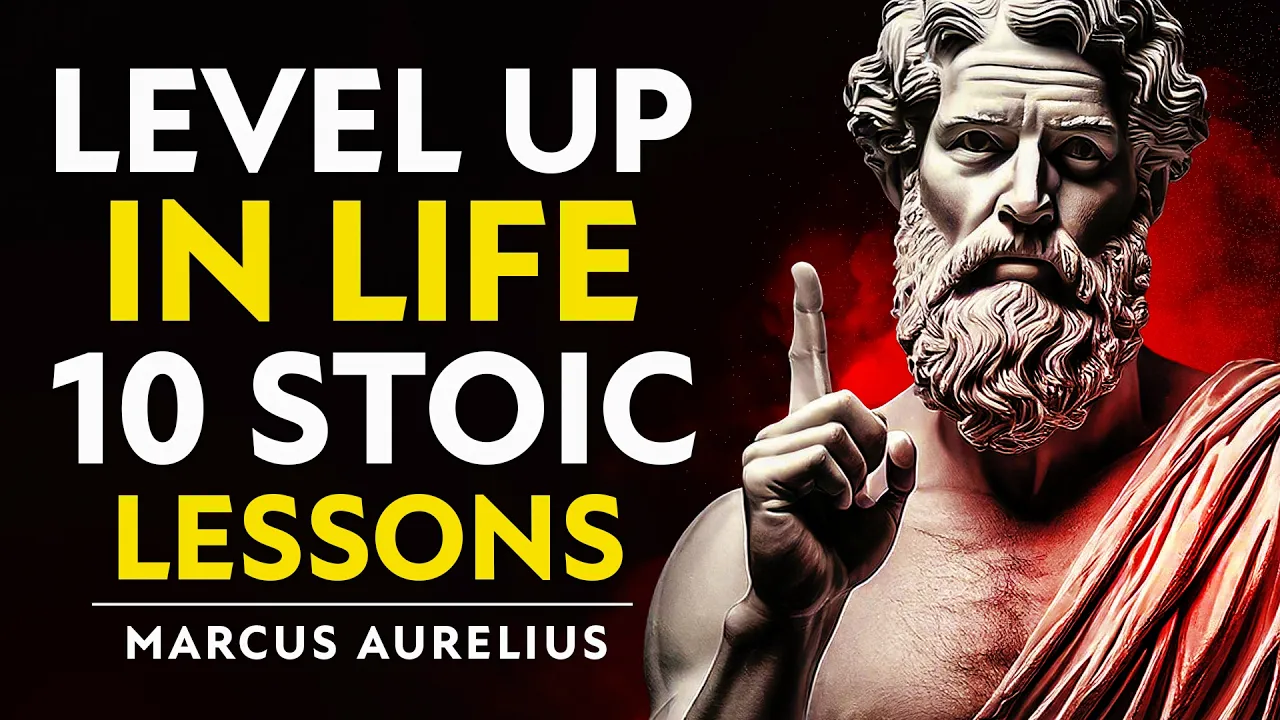
Have you ever felt overwhelmed by life's challenges, unsure of your path, or are you simply yearning for wisdom to guide you through your day? Well, you're in luck! Today, we're going to embark on a journey through time to learn from one of history's greatest philosopher-kings, Marcus Aurelius.
Picture this: it's the 2nd century AD, the Roman Empire is at its height, and at its helm stands a man who's not just an emperor but a thinker—a stoic philosopher who penned down his thoughts in a journal we now know as Meditations. Fast forward almost two millennia, and his words still ring true, offering us guidance in our fast-paced, often chaotic world. But who was Marcus Aurelius?
Imagine a leader who, despite having immense power, chose to live a life of virtue and constant self-improvement—a man who, amidst wars and plagues, found time to reflect on what it truly means to live a good life. You might wonder, what can a Roman emperor from 2,000 years ago teach me about my life today? Well, my friend, you're in for a surprise.
The challenges Marcus faced—dealing with difficult people, managing stress, finding purpose—are the same ones we grapple with today. The wisdom he left behind is timeless, and today we're going to explore 10 life-changing lessons from this ancient sage. So, are you ready to unlock the secrets of a more purposeful, resilient, and intelligent life?
Let's dive in. **The Power of Perception** Our first lesson from Marcus Aurelius is all about the power of perception. He wrote, "You have power over your mind—not outside events.
Realize this, and you will find strength. " Think about that for a moment. How often do we feel victimized by circumstances, blaming our lousy mood on traffic, rude comments, or rainy days?
But Marcus reminds us that while we can't control these external events, we have absolute control over how we perceive and respond to them. Let me share a personal story. A few years ago, I was laid off from a job I loved.
At first, I was devastated. I felt like a failure, and I was angry at the company. But then, I remembered this teaching from Marcus Aurelius.
I realized I had a choice: I could view this as a catastrophe or see it as an opportunity for growth and change. By shifting my perception, I used that time to pursue a passion project that eventually led to a more fulfilling career. The event didn't change, but my perception of it did, and that made all the difference.
So, how can you apply this in your daily life? The next time you face a challenging situation, pause for a moment. Ask yourself: Is my interpretation of this event the only possible one?
Is there a more constructive way I could view this? Remember, you have the power to reframe any situation. A traffic jam can become an opportunity for mindfulness; a critic's harsh words can be a chance for self-improvement.
By changing your perception, you change your reality. Marcus Aurelius practiced this by starting each day with a simple meditation. He would remind himself that he might encounter difficult people or challenging situations, but the power to remain calm and rational was entirely his own.
Why not try this yourself tomorrow morning? Take a few minutes to set your intention for the day. Remind yourself that whatever comes your way, you have the power to choose your response.
In the comments below, share a situation where you could apply this lesson. How might changing your perception transform a challenge in your life? **Live in the Present Moment** Our second lesson from Marcus Aurelius is about the importance of living in the present moment.
He wrote, "Never let the future disturb you. You will meet it if you have to with the same weapons of reason which today arm you against the present. " In our modern world, it's so easy to get caught up in regrets about the past or anxiety about the future.
We replay old mistakes or worry about what might go wrong tomorrow. But Marcus reminds us that the only moment we truly have is now. Think about it: how much of your mental energy is spent on things that have already happened or things that might never occur?
It's exhausting, isn't it? Let me share an example from ancient times that's still relevant today. There's a story about a group of people who came to Socrates complaining about their anxiety over a forthcoming battle.
Socrates asked them, "Are you anxious about the past? " They said no. "Are you anxious about the present moment?
" Again, they said no. Then Socrates concluded, "You must be anxious about the future, which doesn't exist and may never exist. " This wisdom echoes Marcus Aurelius's teaching.
By focusing on the present, we free ourselves from unnecessary suffering and open ourselves to the richness of each moment. But how do we put this into practice? Here are three simple techniques: 1.
Mindful breathing: Take a few deep breaths, focusing your attention solely on the sensation of breathing. This anchors you in the present moment. 2.
The five senses exercise: Wherever you are, name five things you can see, four things you can touch, three things you can hear, two things you can smell, and one thing you can taste. This rapidly brings your awareness to the present. 3.
Single-tasking: Instead of multitasking, focus on one task at a time—whether eating, working, or talking with a friend. Be fully present in that activity. Remember, the present moment is where life happens; it's where we can act, change, and live.
As Marcus Aurelius said, "Confine yourself to the present. " Try this for the next hour: commit to being fully present in whatever you're doing, then share how this experience differed from your usual way of being in the comments. Did you notice anything new or surprising?
As we wrap up this first part of our journey through Marcus Aurelius's wisdom, take a moment to reflect on these two powerful lessons. How might your life change if you mastered the art of perception and lived more fully in the present moment? Our next segment will explore two more life-changing lessons from this ancient sage.
Until then, remember you have the power to shape your reality, and the present moment is your point of power. Use it wisely. Embrace adversity.
As we continue our journey through the wisdom of Marcus Aurelius, let's dive into our third lesson: embracing adversity. Marcus Aurelius wrote, "The impediment to action advances action; what stands in the way becomes the way. " This profound statement encapsulates a core principle of Stoic philosophy: the idea that obstacles are opportunities.
Now, I know what you're thinking: "Embrace adversity? That sounds about as fun as hugging a cactus. " But bear with me, because this perspective shift can be truly life-changing.
Think about it: we all face challenges in life; it's inevitable. But what if we saw these challenges as roadblocks instead of seeing them as chances to grow stronger, wiser, and more resilient? Let me share a story from ancient China that illustrates this principle beautifully.
There was once an old farmer whose horse ran away. Upon hearing the news, his neighbors came to visit. "Such bad luck," they said sympathetically.
"Maybe," the farmer replied. The next morning, the horse returned, bringing three other wild horses. "How wonderful!
" the neighbors exclaimed. "Maybe," replied the old man. The following day, his son tried to ride one of the untamed horses, was thrown, and broke his leg.
The neighbors again came to offer their sympathy for his misfortune. "Maybe," answered the farmer. The day after, military officials came to the village to draft young men into the army.
Seeing that the son's leg was broken, they passed him by. The neighbors congratulated the farmer on how well things had turned out. "Maybe," said the farmer.
Much like Marcus Aurelius's teaching, this story reminds us that what appears to be adversity might actually be an advantage in disguise. It's all about perspective and how we choose to respond. So how can we put this into practice in our daily lives?
Here are three strategies: 1. **Reframe the situation**: When faced with a challenge, ask yourself what opportunity might be hidden in this difficulty. 2.
**Focus on what you can control**: In any adverse situation, identify what aspects you can influence and direct your energy there. 3. **Learn and grow**: Use adversity as a teacher.
Ask yourself what this experience can teach you and how it can make you stronger. Remember, embracing adversity doesn't mean you have to enjoy hardship; it means you approach difficulties with a mindset of growth and opportunity rather than defeat. As Marcus Aurelius said, "You have power over your mind, not outside events.
Realize this, and you will find strength. " By embracing adversity, you're not just enduring life's challenges; you're using them as stepping stones to become the best version of yourself. In the comments, share a challenge you're facing right now.
How might you reframe it as an opportunity for growth? Practice gratitude. Our fourth lesson from Marcus Aurelius is about the transformative power of gratitude.
He wrote, "When you arise in the morning, think of what a precious privilege it is to be alive—to breathe, to think, to enjoy, to love. " In today's world, getting caught up in what we lack, want, or think we need to be happy is easy. We're bombarded with messages telling us we're not enough—not successful, attractive, or wealthy enough.
But Marcus Aurelius reminds us that true contentment comes from appreciating what we already have. You might be thinking, "Sure, it was easy for him to be grateful; he was an emperor. " But here's the thing: Marcus wrote these words during some of the most challenging times of his reign.
He faced wars, plagues, and personal loss, yet he still found reasons to be grateful every single day. The practice of gratitude isn't about ignoring life's difficulties; it's about shifting our focus to include the good alongside the bad. It's about recognizing that even in our darkest moments, there are still things to be thankful for.
Let me share a powerful example from more recent history. Victor Frankl, a psychiatrist and Holocaust survivor, wrote about finding meaning and moments of grace even in the concentration camps. He recalled how a sunrise, a kind word from a fellow prisoner, or the memory of loved ones could provide hope in the darkest circumstances.
If Frankl could find reasons to be grateful in such extreme conditions, surely we can find things to appreciate in our daily lives. So how can we cultivate a practice of gratitude? Here are three simple techniques: 1.
**Keep a gratitude journal**: Write down three things you're grateful for each day. They don't have to be big things—just a warm cup of coffee, a smile from a stranger, a beautiful sunset—anything that brings you joy or contentment. 2.
**Practice mindful appreciation**: Throughout your day, fully appreciate the good things in your life. Savor that first sip of coffee, or take a moment to feel the sun's warmth on your face. 3.
**Express gratitude to others**: Make it a habit to thank people in your life, not just for big favors but for the small everyday kindnesses that often go unnoticed. Gratitude isn't just a feel-good practice; research has shown that it can have profound effects on our mental and physical health. It can improve our mood, boost our immune system, and even help us sleep better.
As Marcus Aurelius said, "Do not indulge in dreams of having what you have not, but reckon up the chief of the blessings you do possess, and then thankfully remember how you would crave for them if they were not yours. " So I challenge you: one. .
. For the next week, start each day by listing three things you're grateful for. Two, at the end of the week, reflect on how this practice has affected your mood and outlook.
Three, share your experience in the comments; you might inspire someone else to start their gratitude practice. Remember, gratitude turns what we have into enough. It's a simple practice, but it has the power to transform our lives one thankful moment at a time.
Practice self-discipline. Marcus wrote, "You have power over your mind, not outside events. Realize this, and you will find strength.
" This powerful statement underscores the importance of self-discipline in shaping our lives and character. Now, I know what you're thinking: self-discipline sounds about as fun as eating boiled vegetables for every meal. But hear me out; mastering this skill can be the key to unlocking your full potential.
Self-discipline isn't about punishment or deprivation; it's about aligning your actions with your values and long-term goals. It's about choosing what you want most over what you want now. Let me share a story from ancient Greece that illustrates this principle beautifully.
Odysseus knew he would have to sail past the island of the Sirens, whose enchanting song lured sailors to their doom. Instead of resisting their call, he filled their ears with wax. He exercised self-discipline in advance, knowing he couldn't trust his future self to make the right decision in the heat of the moment.
Much like Marcus Aurelius's teachings, this story reminds us that self-discipline is about setting ourselves up for success rather than relying solely on willpower in the moment of temptation. So, how can we cultivate self-discipline in our daily lives? Here are three strategies: 1.
Start small. Don't try to overhaul your entire life overnight. Begin with one small habit, like making your bed every morning or meditating for five minutes daily.
2. Create systems. Set up your environment to support your goals.
If you want to eat healthier, stock your fridge with nutritious foods. If you want to exercise more, lay out your workout clothes the night before. 3.
Practice mindfulness. Before acting impulsively, pause and ask yourself, "Is this aligned with my long-term goals? " This simple question can help you make more disciplined choices.
Remember, self-discipline is like a muscle; the more you exercise it, the stronger it becomes. And as it strengthens, you'll find yourself more capable of achieving your goals and aligning with your values. As Marcus Aurelius said, "You must be like a promontory of the sea against which, though the waves beat continually, yet it both itself stands, and about it are those swelling waves stilled and quieted.
" With self-discipline, you can stand firm against the temptations and distractions of life, staying true to your course. In the comments, share one area of your life where you'd like to cultivate more self-discipline. What's one small step you can take today toward that goal?
Embrace impermanence. Our sixth lesson from Marcus Aurelius is about embracing the impermanent nature of all things. He wrote, "Is any man afraid of change?
What can take place without change? What then is more pleasing or more suitable to the universal nature? " Can you take a hot bath unless the wood for the fire undergoes a change?
In today's world, we often resist change. We cling to possessions, relationships, and identities as if they'll last forever. But Marcus reminds us that change is not only inevitable; it's essential for growth and renewal.
Now you might be thinking, "Embracing impermanence? That sounds like a recipe for constant anxiety. " But stick with me, because understanding and accepting life's transient nature can bring profound peace and freedom.
Consider the Japanese concept of "mono no aware," the bittersweet awareness of the transience of things. This philosophy finds beauty in the fleeting nature of life, like the brief blooming of cherry blossoms. It teaches us to appreciate things not despite their impermanence, but because of it.
Let me share a Zen story that illustrates this principle: A man was enjoying a cup of tea when suddenly he was confronted by a ferocious and deadly tiger. He fled, the tiger after him. Coming to a cliff, he caught hold of the root of a wild vine and swung himself down over the edge.
The tiger sniffed at him from above. Trembling, the man looked down to where, far below, another tiger was waiting to eat him. Only the vine sustained him.
Two mice, one white and one black, little by little started to gnaw away the vine. The man saw a luscious strawberry near him. Grasping the vine with one hand, he plucked the strawberry with the other.
How sweet it tasted! This story reminds us that we can find joy and appreciation in the present moment, even in the face of inevitable change and mortality. So, how can we embrace impermanence in our daily lives?
Here are three practices: 1. Practice non-attachment. Enjoy things without clinging to them.
Appreciate experiences, relationships, and possessions fully, but be ready to let them go when the time comes. 2. Find beauty in transitions.
Instead of resisting change, look for the beauty in it. Appreciate the changing seasons, the different phases of life, and the evolution of relationships. 3.
Live fully in the present. Knowing nothing lasts forever motivates us to appreciate and engage with our current experiences fully. Embracing impermanence doesn't mean we don't care about anything; on the contrary, it allows us to care more deeply because we recognize the preciousness of each moment.
As Marcus Aurelius said, "Loss is nothing else but change, and change is nature's delight. " By embracing impermanence, we align ourselves with the natural flow of life, finding peace in the midst of constant change. In the comments, share a recent change in your life.
How might viewing it through the lens of impermanence change your perspective on it? Remember, friends, change is the only constant in life. Life, by embracing it, we free ourselves from the suffering that comes from futile resistance.
We open ourselves to the beauty and richness of each passing moment, and in doing so, we truly begin to live. Focus on what you can control; this principle is at the core of Stoic philosophy and is relevant to our often chaotic world. Think about it: how much time do we spend worrying about things beyond our control?
The weather, other people's opinions, and the state of the economy can occupy our minds and drain our energy, yet we have little to no influence over them. Instead, Marcus encourages us to focus on what we can control: our thoughts, actions, and responses to events. This shift in focus is liberating; it allows us to channel our energy into areas where we can make a difference.
Here's a practical way to apply this principle: try this exercise next time you're feeling stressed or anxious. Drw two circles on a piece of paper. In the inner circle, write down everything you have direct control over.
In the outer circle, write down things you're concerned about but can't directly control. Now focus your energy on the items in the inner circle. Remember, you can't control the waves but can learn to surf.
Focusing on what you can control will make you feel more empowered and less stressed in the face of life's challenges. In the comments, share one thing you've been worrying about that is outside your control. How might shifting your focus change your approach to this situation?
Cultivate virtue; our eighth lesson from Marcus Aurelius is about cultivating virtue. He believed living a virtuous life was the path to true happiness and fulfillment. But what exactly is virtue?
For the Stoics, virtue encompassed wisdom, justice, courage, and self-control. Marcus wrote, "Waste no more time arguing about what a good man should be; be one. " Now I know what you're thinking: virtue?
That sounds a bit old-fashioned. But hear me out. In a world that often emphasizes external success—money, fame, power—Marcus reminds us that true fulfillment comes from within, from living according to our highest values.
Think of virtue as your inner compass, guiding your decisions and actions. It's about doing the right thing, even when it's difficult. It's about treating others with kindness and respect, even when they don't return the favor.
It's about having the courage to stand up for what you believe in, even in the face of opposition. Let me share a story that illustrates this principle. In ancient Rome, there was a senator named Cato the Younger.
He was known for his unwavering integrity. Once, during a time of political corruption, Cato was offered a bribe. Not only did he refuse, but he also publicly exposed the attempted bribery, despite the risk to his career.
His commitment to virtue earned him respect, even from his political opponents. So how can we cultivate virtue in our daily lives? Here are three practices: 1.
Reflect on your values. Take time to identify what truly matters to you. What principles do you want to live by?
2. Practice small acts of virtue. Look for opportunities to be kind, honest, or courageous in your daily interactions.
3. Learn from role models. Study the lives of people you admire for their character.
What qualities do they embody that you'd like to develop? Remember, cultivating virtue is a lifelong journey. As Marcus Aurelius said, "What stands in the way becomes the way.
" Every challenge is an opportunity to practice and strengthen our virtues. In the comments, share one virtue you'd like to cultivate more. What's one small step you can take today to practice this virtue?
Embrace your mortality; our ninth lesson from Marcus Aurelius might seem morbid at first, but stay with me; it's incredibly life-affirming. The lesson is to embrace your mortality. Marcus wrote, "You could leave life right now; let that determine what you do and say and think.
" This isn't meant to be depressing; instead, it's a powerful reminder to live fully and authentically in the present moment. In our society, we often avoid thinking about death, but the Stoics, including Marcus, believed that regularly contemplating our mortality could help us live more meaningful lives. Think about it: if you knew this was your last day on Earth, how would you spend it?
What would suddenly become important? What petty concerns would fall away? This perspective can help us prioritize what truly matters.
It can motivate us to pursue our dreams, repair relationships, and live according to our values. It reminds us not to postpone our happiness or tell people we love them. Here's a practice you can try: at the end of each day, take a moment to reflect.
If this had been your last day, would you be satisfied with how you lived it? This isn't about morbid obsession but about using the reality of our finite time to fuel a more purposeful life. As Marcus said, "It is not death that a man should fear, but he should fear never beginning to live.
" By embracing our mortality, we free ourselves to live truly. In the comments, share one thing you've been putting off. How might embracing the idea of mortality motivate you to take action on it?
Remember, friends, our time is limited, but that's what makes it precious. Let's use this knowledge not to fear death but to inspire us to live more fully, love more deeply, and leave a positive mark on the world. Practice self-reflection; we've arrived at our final lesson from Marcus Aurelius: the practice of self-reflection.
Marcus wrote, "Look within; within is the fountain of good, and it will ever bubble up if thou wilt ever dig deep. " In our fast-paced world, it's easy to get caught up in the external—our jobs, social media presence, and possessions—but Marcus reminds us that true growth and contentment come from looking inward. Self-reflection isn't about harsh self-criticism; it's about honest, compassionate self-examination.
It's about understanding our motivations, recognizing our strengths and weaknesses, and continuously striving to align our actions with our values. Try this: set aside a few minutes each day for self-reflection. You might journal, meditate, or review your day quietly.
Ask yourself: What went well? What could I have done better? What did I learn?
How did I grow? As Marcus said, "The happiness of your life depends upon the quality of your thoughts. " By cultivating the habit of self-reflection, we can improve the quality of our thoughts and, by extension, the quality of our lives.
As we wrap up our journey through the wisdom of Marcus Aurelius, let's take a moment to reflect on what we've learned. We've explored the power of perception, the importance of living in the present, embracing adversity, practicing gratitude, cultivating self-discipline, accepting impermanence, focusing on what we can control, nurturing virtue, embracing our mortality, and the value of self-reflection. These lessons, though ancient, are timely; they offer a roadmap for living a more purposeful, resilient, and fulfilling life.
But remember, wisdom isn't just about knowing; it's about doing. The real work begins now, as you apply these lessons in your daily life. As Marcus Aurelius said, "Waste no more time arguing about what a good man should be.
Be one. " So I challenge you: choose one of these lessons that resonated most with you and commit to practicing it for the next week. See how it changes your perspective, your actions, and your life.
Remember, becoming a modern Stoic isn't about achieving perfection; it's about continuous growth and improvement. It's about striving to be better today than you were yesterday. If you've found value in these lessons from Marcus Aurelius, I invite you to join our community of modern Stoics.
Subscribe to the Stoic Community YouTube channel for more insights on applying ancient wisdom to contemporary life. Hit that like button if this video resonates with you, and share it with someone who might benefit from these timeless teachings. Remember, the journey of personal growth is both individual and collective.
By sharing these ideas, you're not just improving your own life; you're contributing to the wisdom and well-being of others. Thank you for joining me on this exploration of Marcus Aurelius's wisdom. Until next time, stay curious and reflective, and strive to be your best version.