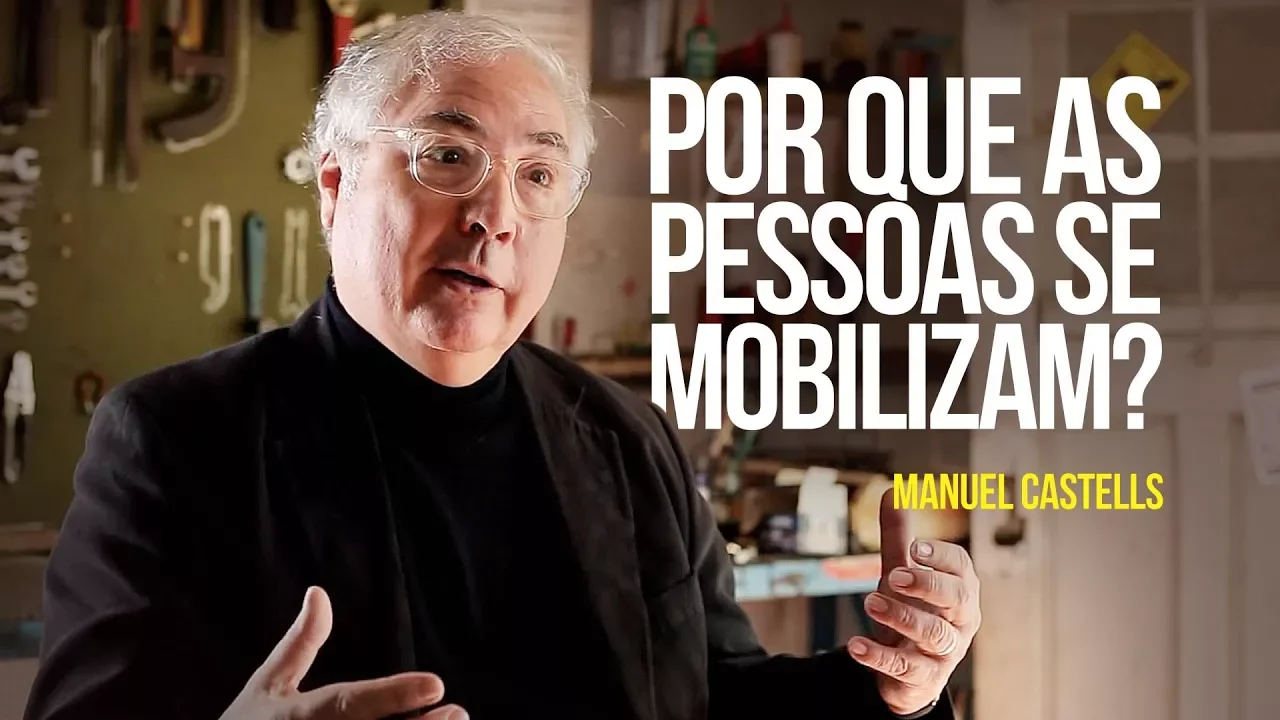
The world of people is a completely different world. What happens in one person to commit or not commit in a social or political cause, is always an individual problem. But, talking more generally, what one can consider is that people commit, mobilize, when something affects them personally.
In other words, not this idea that there are passive and active people. No. We all can be passive or active depending on what happens to us.
The young street vendor in Tunisia, who had perform self-immolation, as a protest against the humiliation by the police, and that the images of his self-sacrifice on YouTube caused an uproar in the Arab world, that young man wasn't a politician. This young man was trying to earn a living selling fruits on the streets, and the police started to humiliate and humiliate, in order to obtain. .
. who had to pay illegally or they wouldn't leave him alone. They would confiscate his fruits, they would destroy his work, and his life, until one day he couldn't take it anymore.
Then. . .
Let's say that there are people who act selflessly, by intellectual persuasion that the world is unfair and we have to do something against it, and there's a personal satisfaction in contributing for a better world. But most of the people who really mobilize for something do so because something moves them which for them is unbearable, and then, in emotional terms, fear, which is the most paralyzing emotion that there is, fear is overcome by indignation. They are two contradictory emotions.
Usually, society is made so that we are afraid of doing anything against the rules. Societies are based on fear, fear is the fundamental rule of social organization. Without fear, there's no social stability.
In laws, politics, lawyers, governments, etc. Fear is only overcome when the indignation you feel is so strong you're willing to take the risk even knowing something bad and dangerous will happen to you.