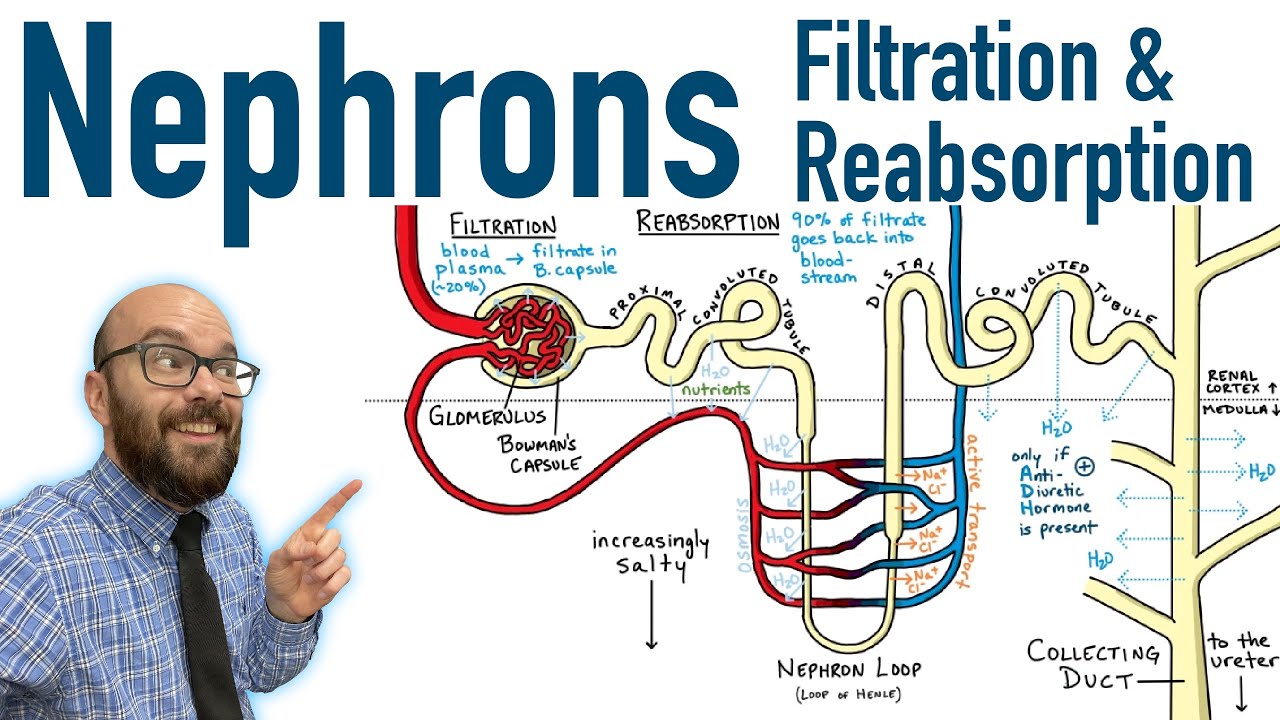
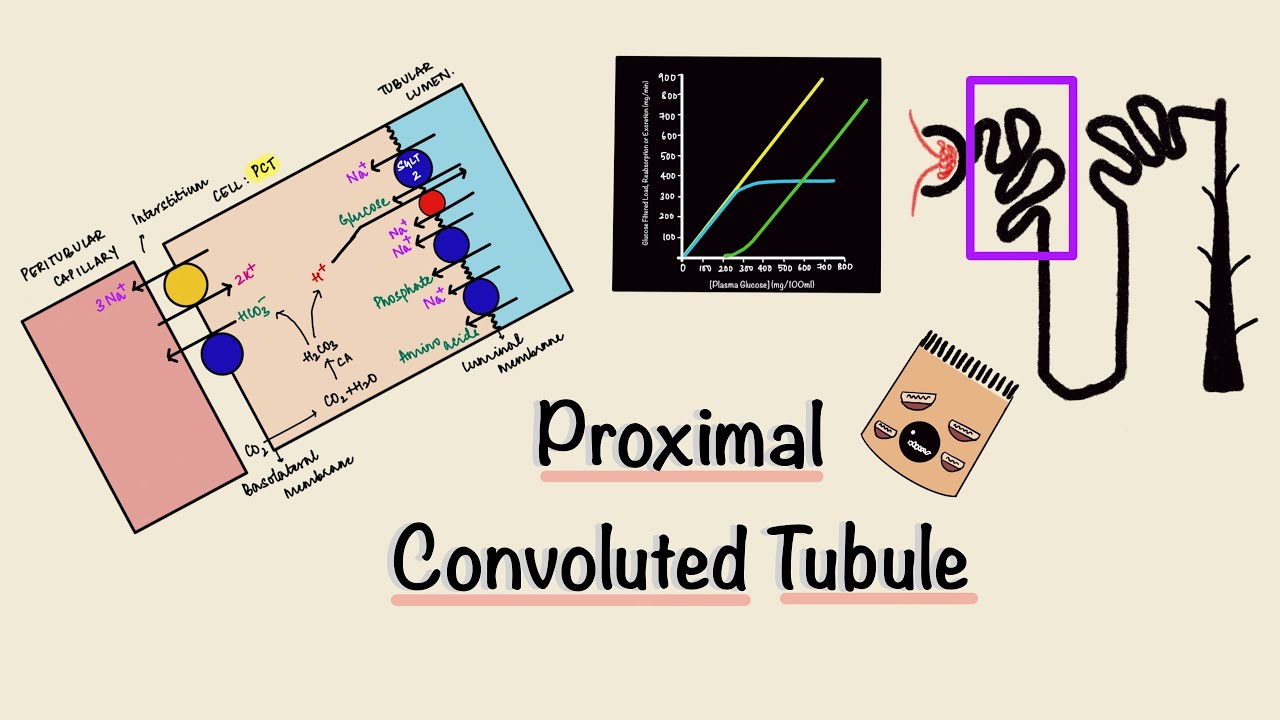
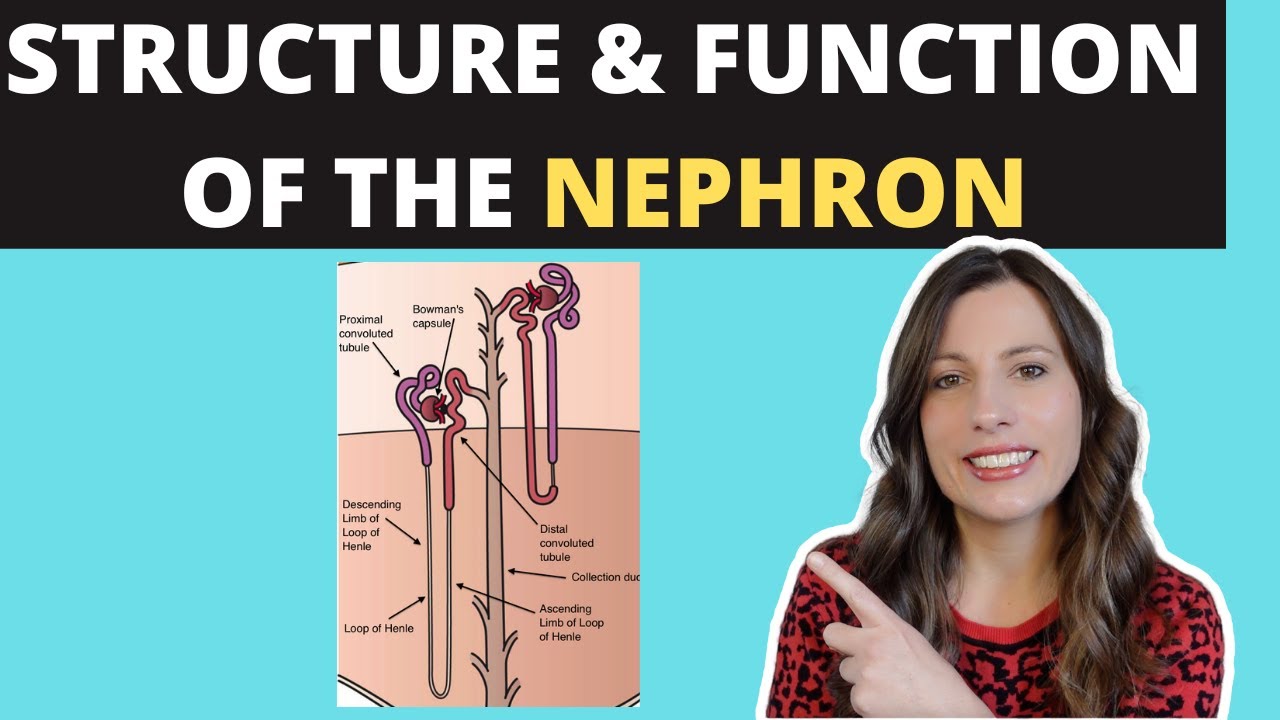
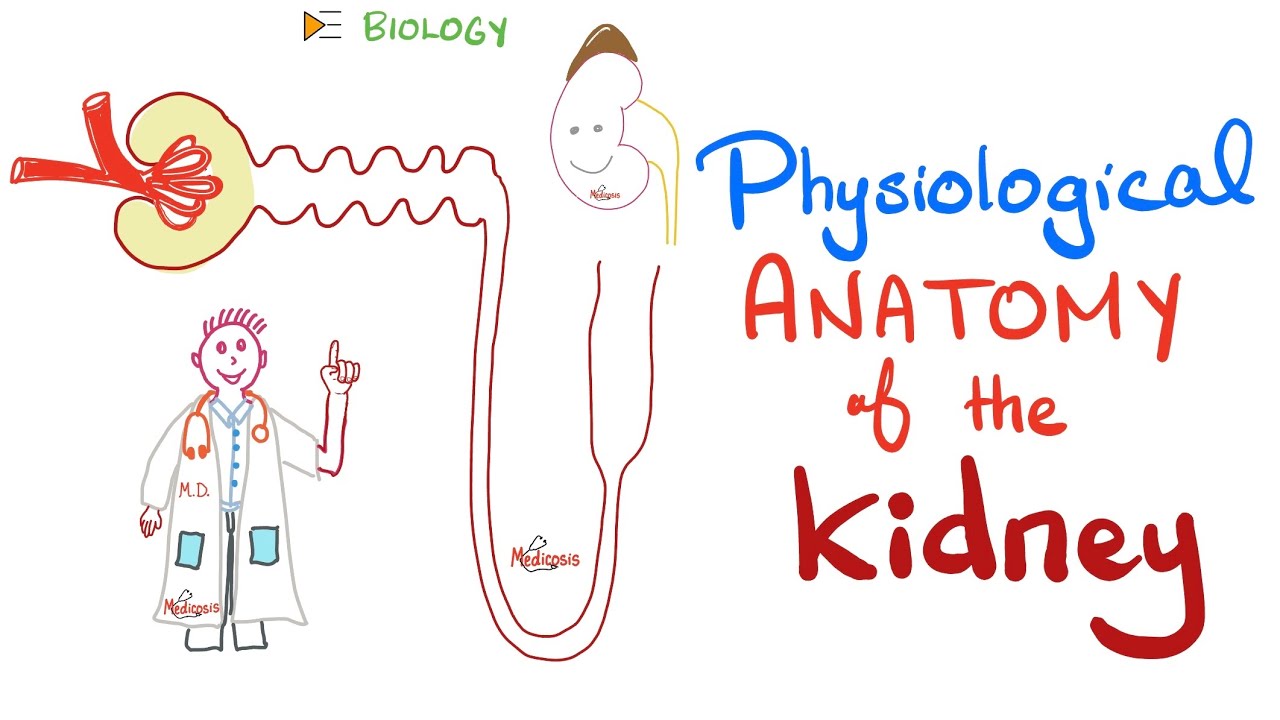
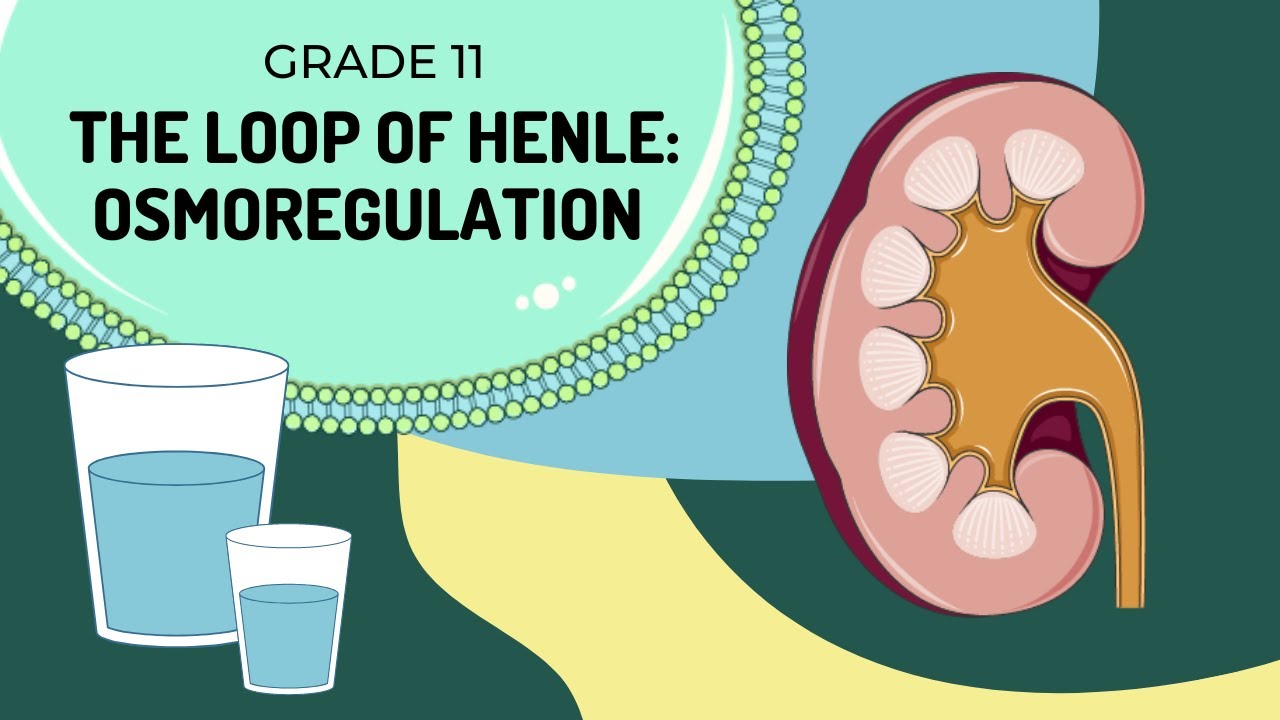
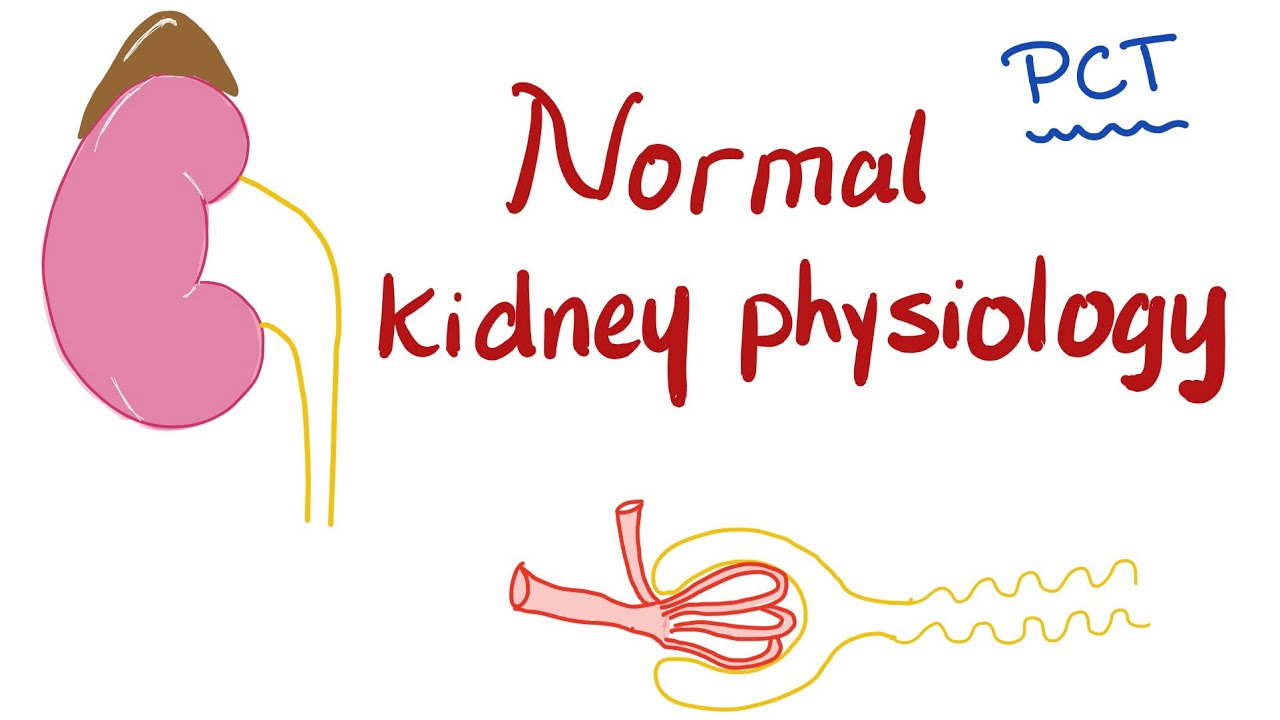
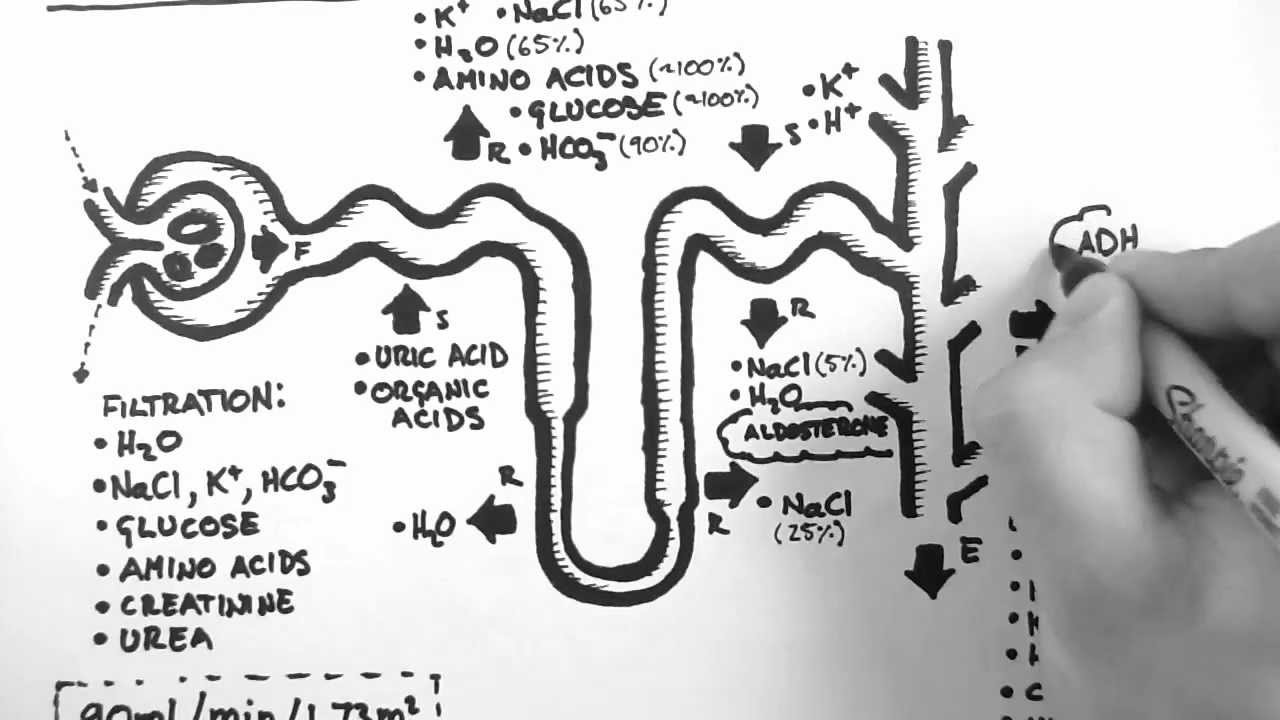
hi everyone welcome to bite size med where we talk about quick bite size concepts in medicine for study and rapid review this video is on the loop of henle with regard to solute transport for my video on the counter current mechanism you can check the link in the description box below the kidney has millions of nephrons and each nephron has a glomerulus and a renal tubule the first part of the renal tubule is the proximal convoluted tubule which then leads into the loop of henle the distal convoluted tubule and finally the collecting duct the loop
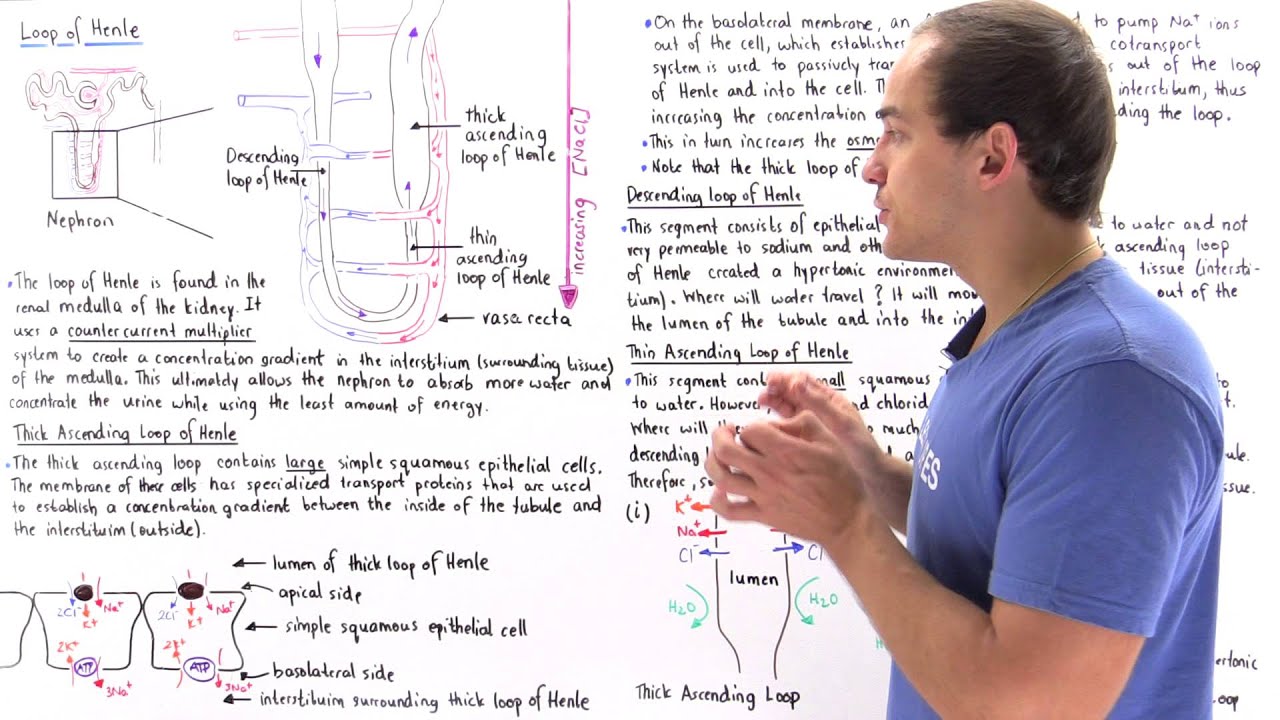
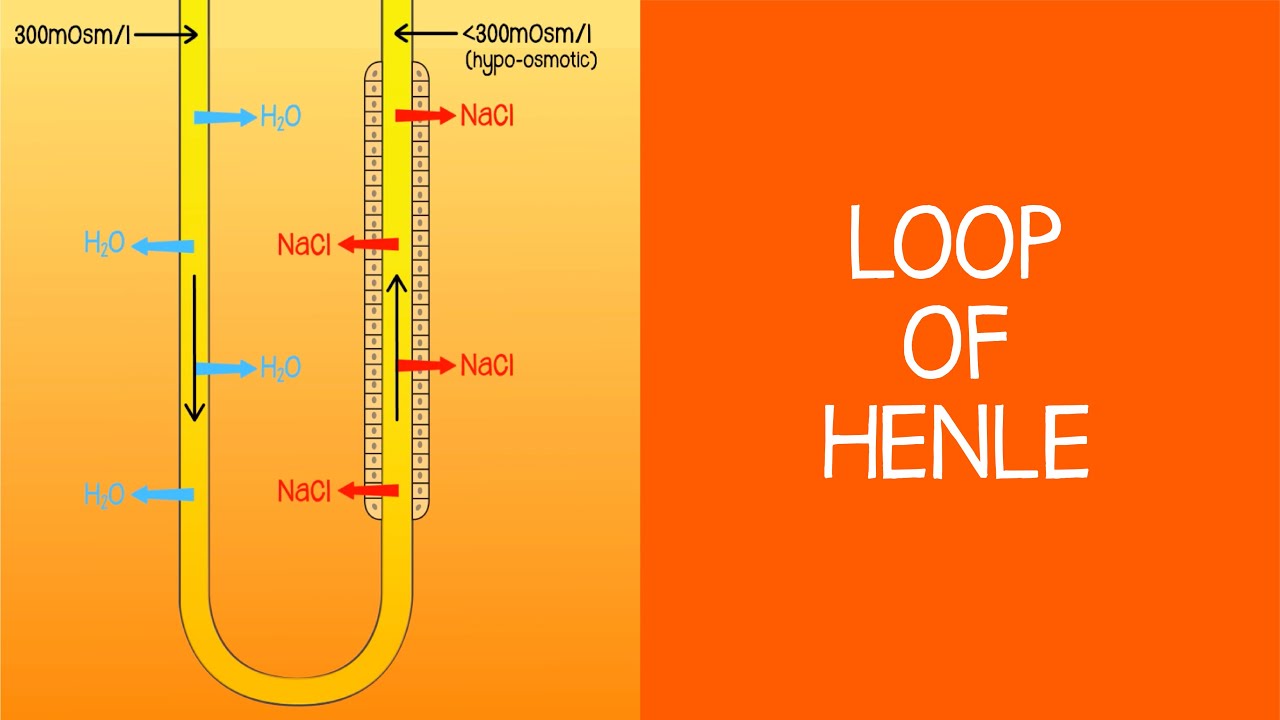
of henle has a thin descending limb a thin ascending limb and a thick ascending limb the thin and thick are related to the thickness of the epithelium rather than the diameter thinner versus thicker epithelium the thin portion has no brush border lesser mitochondria because it has lesser metabolic activity it's mainly involved in simple diffusion of water the thick limb on the other hand is more like the proximal convoluted tubule it has active reabsorptive functions so it's got thicker epithelial cells first let's look at the descending limb this portion is highly permeable to water but is
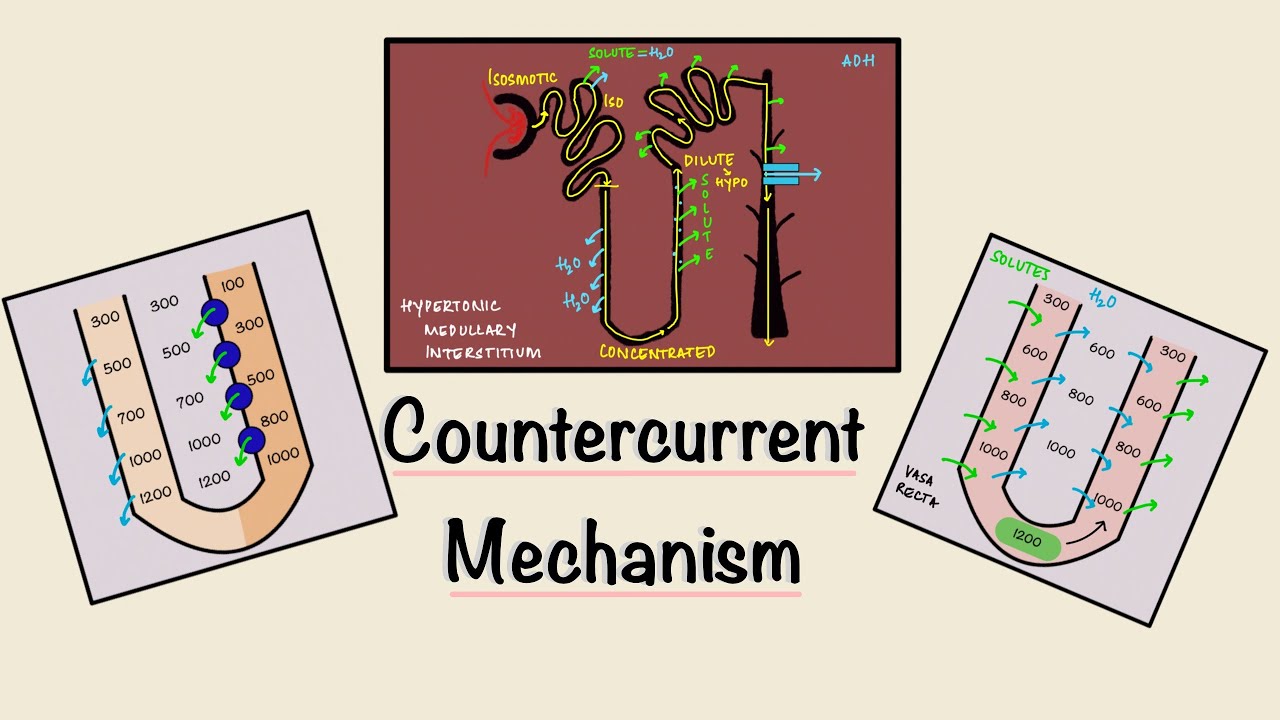
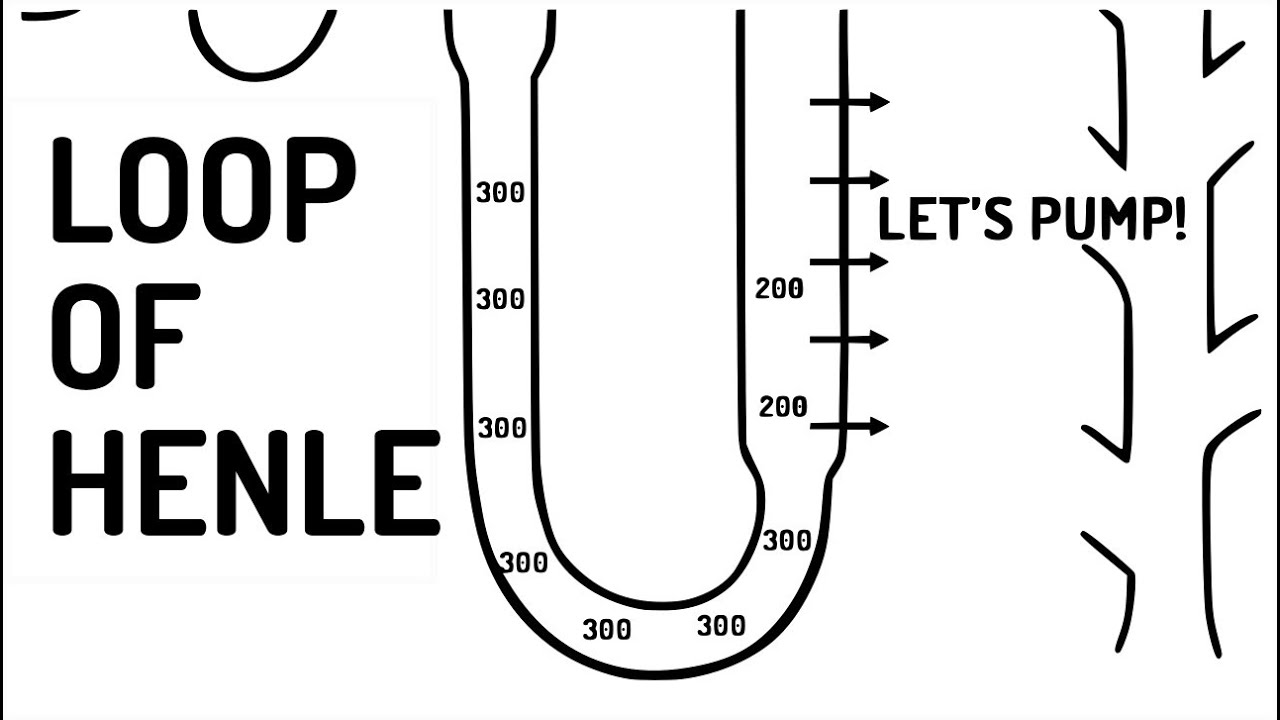
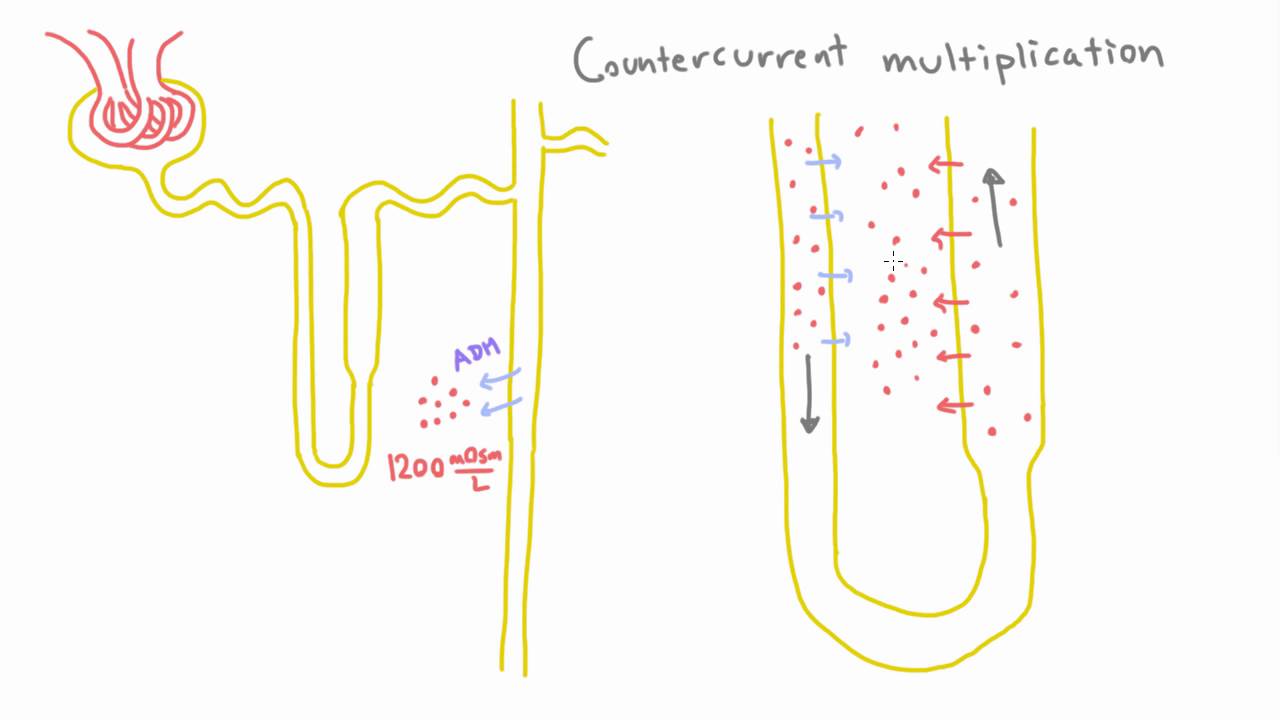
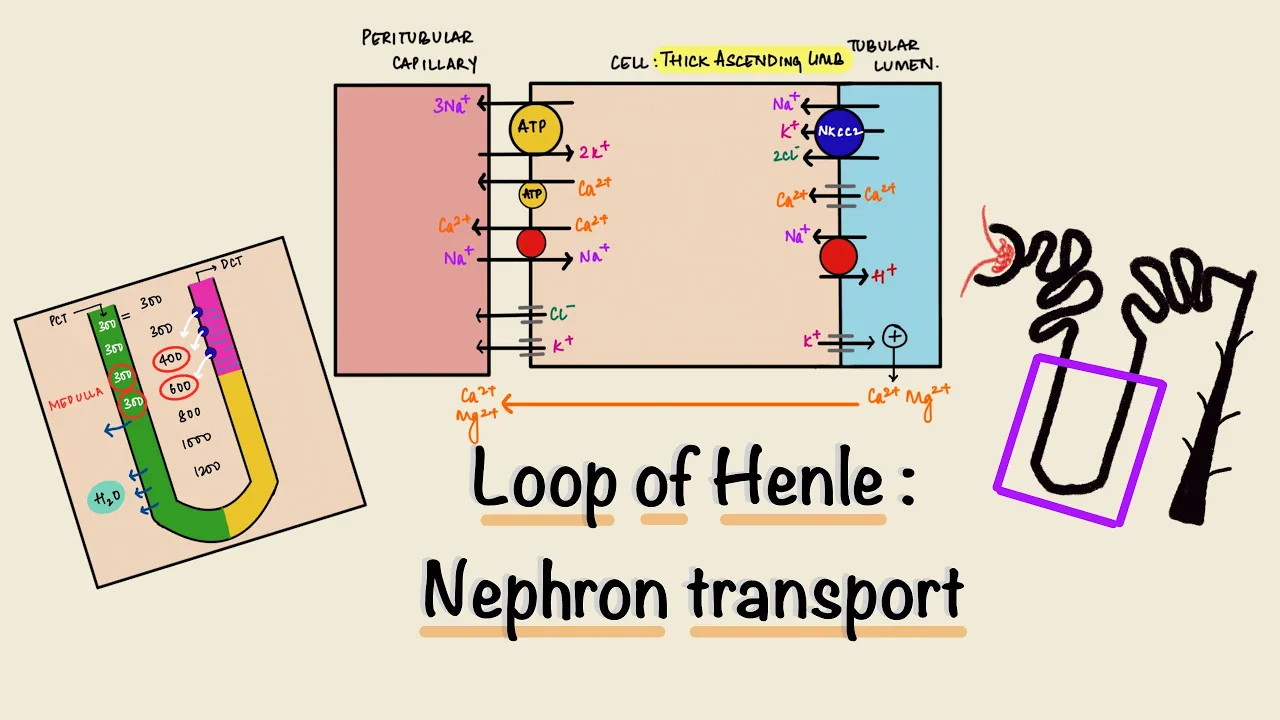
less permeable to other solutes so its main function is reabsorption of water by simple diffusion the loop of henle is in the medulla and the medulla is hypertonic and urine coming from the pct was isosmatic because of the cortical medullary osmotic gradient here the fluid inside the loop has lesser tonicity than the medulla so that encourages water to leave the nephron and get reabsorbed so this segment concentrates urine hence it's called the concentrating segment the ascending segment is impermeable to water so it's opposite to the descending limb both the thick and the thin portions are
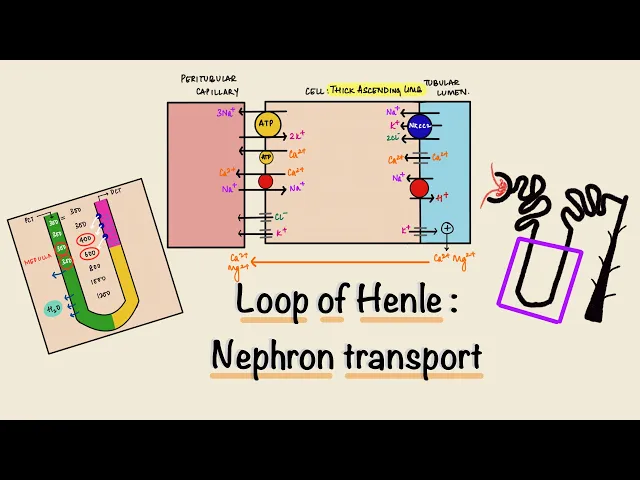
impermeable to water the thick ascending limb is more important than the thin portion it has a thick epithelium with the sodium potassium two chloride co-transporter on the luminal membrane that's the nkcc2 which brings one sodium one potassium and two chloride molecules into the cell where does it get its energy from similar to the pct the sodium potassium atpase on the basolateral membrane which takes sodium out of the cell creating a concentration gradient which brings sodium in from the opposite side and the energy generated brings potassium and two chloride along with it 10 to 20 percent
of sodium is reabsorbed here versus 65 percent in the pct so potassium and chloride are entering the cell against a concentration gradient so they passively exit the cell along the concentration gradient from high to low a slight back leak of potassium creates enough positive potential in the tubular lumen to transport other positive ions like magnesium and calcium paracellularly which means between the cells into the interstitium fifty percent of calcium also gets transported trans cellularly which means through the cell by a concentration gradient once it gets into the cell it enters the interstitium by the calcium
atpase and also in exchange for sodium this transcellular root is stimulated by parathormone so it increases calcium reabsorption there's also a sodium hydrogen exchanger the thick ascending limb has the sodium hydrogen counter transport so it mediates sodium reabsorption and hydrogen secretion contributing to acidification of urine so like i said this portion of the nephron is impermeable to water so the whole time it's only solutes that are getting reabsorbed which means the urine is getting less concentrated and more dilute as it goes up towards the distal convoluted tubule the most important function of the loop of
henle is the counter current multiplier system its main function is to concentrate urine make sure to check out my video on the counter current multiplier if you like this video give it a thumbs up and subscribe to my channel thanks for watching and i'll see you in the next one