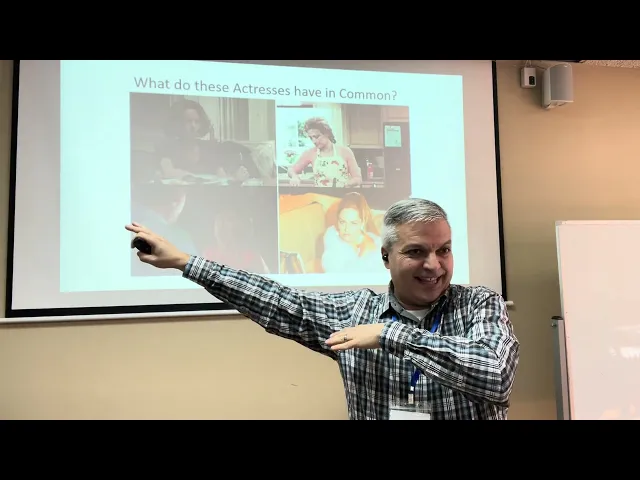
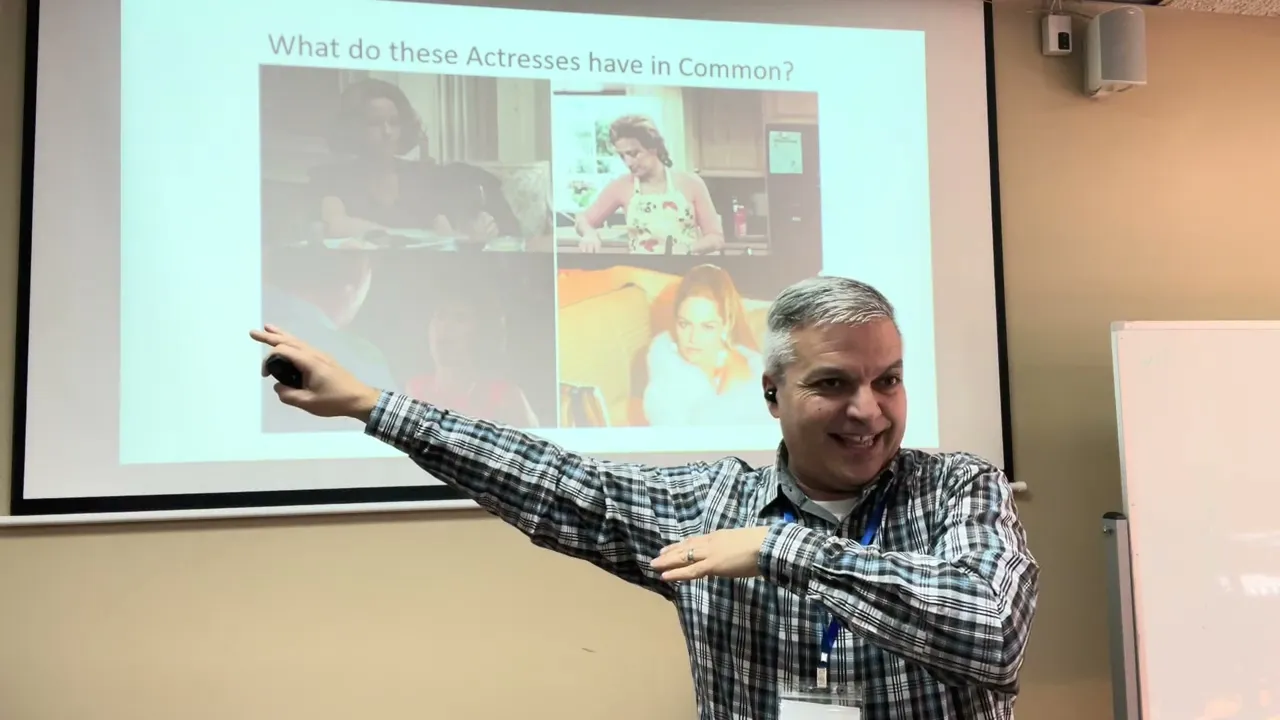
All right. So, welcome again to True Wealth, Money as a Test, a tool, test, and testimony of your Christian faith. Um, so to get us uh get get the ice broken here, what do these actresses have in common? Any idea? >> Maybe I'll give you a hint. I I am I am the son of Sicilian immigrants. >> Does that give us a hint? >> They are all housewives. They are. Yeah, They are all connected to Italians. What What are Italians notoriously known for? >> Yeah. Pasta, good food. Yes. Good. We're going to start with the
positive. >> These are all mafia wives, right? >> So, you got the Godfather, Good Fellas, Casino, and The Sopranos, right? And here's why I put up I put up these wives. Often mafia wives um love the lifestyle that comes with being in in the mafia circles so long as they don't know what's going on in the other room, Right? They love the benefits of the lifestyle, but they basically have to like be eyes closed, ears closed to know what's going on, right? And in many ways, it's actually an interesting parallel to what being a Christian
is when it comes to thinking about having an economic lifestyle. And hopefully today will give you at least some food for thought as far as thinking about what does our calling look like when it comes to being Responsible and honoring God in the way we handle our finances. All right, so let's get started then. I'm going to give you a quick little summary. Did you Did you realize there's over 2,000 verses in the Bible about money? It's staggering. There's more in the Bible about money than a lot of some of the big topics you'd think
about, right? But let me just give you a quick summary of what those verses basically try to convey. All right. So number one, Material possessions are good gifts from God meant to be enjoyed. He's calling us uh he's calling us to call him father, right? And he likes to take care of his kids, right? Number two though, material possessions misused can lead one away from God. And we're going to go into that later as to why money is often talked about as a threat to God's throne itself. All right. Number three, the way to wisely
use material possessions, generous stewardship, right? God is a giver, right? And he wants to bless his kids. And in turn, he wants us to be mini me, so to speak, to likewise be generous and be a blessing to others. Okay. Number four, there are extremes of poverty and wealth that are morally intolerable relative to one's time and place. All right. So, a lot of life is about finding the happy medium between not living in poverty and then being a burden on others, but also recognizing the problem of excess. And we'll get Into that a little
bit later. All right. And then number five, spiritual disciplehip, material stewardship, inextricably intertwined. Right? So, a wise person once said, "If you want to really know what someone believes, look at their calendar, look at their checkbook." Right? Any of us can talk a big game, but what you do with your time and what you do with your money basically tells the story. It's essentially your value Statement, whether you realize it or not. All right? So, let's go first off to money as a tool. All right? And I want to start by talking about the concept
of work. And I know some of you may have attended the the session across the hallway. Work is a very big part of life. Right? Essentially, we're all spending a third of our day, whether you're students or whether you're out in the working field doing work, right? So, let's try to get a handle on what work's All about because work is tied with what you do with your money, right? So, let's start with different perspectives on work. The first one, Greco Roman anthology. Anyone hear of Pandora and Pandora's box. Crazy. I actually didn't know the
details about the story till a couple days ago, but it's pretty fascinating because essentially, here's the deal. Pandora is the daughter of Zeus, right? And in Greek mythology, Their version of the creation story like we have in Genesis revolves around Pandora's box. So essentially what's going on here is the opening of this box unleashed not only sickness and plague but also toil or work as a curse of the gods. Right? Work ends up being a necessary evil in life essentially in the way the Greco Romans think about things. All right? So work is relegated basically
to the lowerass cats. Like if you're the elite, if You're in the in crowd, you're doing philosophy and thinking in the marketplace, whereas you got everyone else to do the work, right? You got the minions basically supporting your lifestyle. Now, before you think that sounds kind of crazy, have you guys heard of this acronym TGIF? What does that stand for? >> Thank God it's Friday, right? Back in the 80s when I was a little a little Guy, there was a song t calling about everybody's working for the weekend. >> Yeah. Love, >> right? Basically, it's
a matter of saying how quickly can I get out of my 9 to5 so I can go live. That essentially is what's going on in the way the Greeks and Romans thought about work. All right, let's take another take on it. Number two, purpose of work, profit maximization. All right. So, you got this cat here, Milton Friedman, saying the social responsibility of a business and by extension workers is solely to increase profits, right? It's all about the bottom line. Now, in co in pop culture, another movie back in time, Gordon Gecko in the movie Wall
Street famously saying, "The point, ladies and gentlemen, is that greed, for lack of a better word, is good. The purpose of business and work is essentially to create more cash. All right. So, two different perspectives on what work's about. Now, any office fans here? All right. So, I got some of my buddies to help us out today to think about how we as Christians think about work and by extension what we do with that money. Right. So, Stanley, help us out here. Was work given to us by God before or after the fall in the
book of Genesis? >> Work happened before the fall, not After. Right? So Stanley, sorry bud, I know we got your face here to uh to bemoone the fact. We know Stanley likes the TGIF. He he may have been the inventor of that acronym, right? But essentially, not only was work given to us before the fall, work's a central element of God's blueprint, his game plan for what for us. Okay. So, I got a guy here, Finny Kurilla. Brilliant dude. Talk about someone who's going to make you humble when it comes To thinking about your credentials.
This guy is a Harvard MD, biomed uh degree as well. Pretty brilliant dude. And God has called him, long story short, uh to a company called Even Tide in Boston where he's leading a group of people thinking about how do we bring a new vision of business and investment in the world. They they have their tagline for their company saying investing that makes the world rejoice, right? Bringing God's good to the world In the way we carry out good business, right? So he outlines a couple of good mission statements for business that then extend to
us as workers as well. Business exists to create opportunities to express aspects of our God-given identity or image in meaningful and creative work. Business exists to produce goods and services that enable the community to flourish. Biblically defined creation fall redemption. Right? You've heard that. You've heard that uh that mantra. By extension, any work you do in any field, so long as it's a reputable field where you're actually looking to serve other people, is a part of that redemption story where God wants to renew and make things well make all things new. So Tim Keller, if
you've heard of that name, Tim Keller, longtime pastor in Manhattan, actually served as a as a deacon at our church uh as part Of his uh upbringing in the ministry. excellent book called Every Good Endeavor. Highly recommend it. I'll actually part of the email list. If you send send your email uh with me, I'll send you a list of resources that I referenced today. But in this book, I love the way he puts it. The material creation was made by God to be developed, cultivated, and cared for in an endless number of ways through human
labor. But even the simplest of these Ways is important. Without them, all human life cannot flourish. So depending on your church background, you sometimes can fall into the trap of saying, you know what, unless I'm a pastor or a missionary or something church related, I'm kind of a secondass citizen when it comes to doing God's work. What I love about the way guys like Tim Keller put it, they're basically echoing one of the real themes of the Reformation where it was really uh an emphasis to say, you know what, regardless of what type of work
you do, if you're doing it with integrity, working hard, serving others, you're doing God's work. In fact, Tim in this book talks about imagine if everyone had a TGIF mentality where if we thought the good life was basically avoiding work, what kind of society would you be living in? Right? Think about all the levels of Work that happen on a daily basis that you're a recipient of and you're a part of. Work is intrinsic to the human experience. So, it's not a matter of if you work, it's a matter of what's your perspective and how
are you having a God-given perspective to be a blessing to those around you. Right? So, summary from money as a tool, we're God's fiduciaries. Give you a big word from the financial world. Right? A fiduciary is someone a person or Organization that acts on behalf of another person or persons putting their clients interests ahead of their own with a duty to preserve good faith and trust. Right? Essentially, let's keep it let's keep it simple here. You are working on behalf of others. Let's bring it down to a simpler level here. You're a FedEx delivery person,
right? So imagine or maybe maybe Amazon would be the better fit considering Amazon trucks being everywhere, >> but imagine the Amazon person uh comes to you and says, "Hey Ben, you know what? I've been serving your neighborhood for a long time. You may have noticed that there are occasions where you're not getting your packages. It turns out I've actually been enjoying some of those packages because I knew what was in them." How would you respond? >> Uh the eighth commandment, >> right? awkward, >> right? >> Amazon, your job is to deliver. Your job is not
to enjoy, >> right? And if you think about it, >> in God's kingdom, in God's economy, we work as delivery people where God pours his blessing out to you and he wants to basically say, "All right, what are you going to do with that blessing?" Now, from a biblical perspective, he wants us to be a blessing to those in our Immediate circles, right? Right? So if you happen to be in a family to obviously be a blessing to provide those around you and then certainly New Testament really makes a big emphasis on this where you
then be an extension to your church family, your brothers and sisters outside of your home, right? And then beyond that you're still a blessing to your community. There are these concentric circles of where his grace essentially flows in and through you. So let's go on then and talk about money as a test. All right. So, now we got my man Jim Halpert playing the role of Dwight here, right? We're going to avoid the Bears, Beats, Skip, Battle Star, Galactica references for now, right? But let's ask the next question here, right? Why is money such a
major topic in the Bible? Any idea? Over 2,000 references. Why such a big emphasis on money? >> Thoughts? It's the root of people. >> What's that? It's the root of evil. >> Ah, so the answer was it's the root of evil. Now, spoiler alert, we're going to actually get to that as as another question coming up here. Any other thoughts? >> Because it's like such a big part of our lives. Um because like that's kind of in America at least, like it's how we survive. >> Yeah, that that's a that's a great answer, right? So,
if you really think about your day-to-day experience, it's hard to not have money be in the equation somehow. I I think that's a good answer and I think that's getting to why in fact it's such a big emphasis and such a big topic. So, God knows that our hearts want to worship his gifts more than him. And along the lines of the question, the answer you just had here as far as money Being so prevalent when it comes to think about what's going to make you not be so anxious or on the other end maybe
be confident about how you're going about your dayto-day. What's your in your bank account or your net worth might give you a sense of confidence or might give you a sense of dread about how you go about living where you are. Okay. So, uh, let me share a, uh, couple of Verses here that I think are really relevant to this idea of how do you find that happy medium of not wanting it too much, but also being aware of what happens when you don't have enough. Okay, so this is from the book of Proverbs in
the Old Testament. Remove far from me falsehood and lying. Give me neither poverty nor riches. feed me with the food that is needful for me, lest I be full and deny you and say, "Ah, who is the Lord?" or lest I be Poor and steal and profane the name of my God. Right? So, think about a very interesting perspective there. So, neither do I want to be so full and so uh self-sufficient that I think uh God thanks, but I I'll take it from here, right? or you avoid the other extremist saying, "Man, I don't
know if I'm going to eat today. The temptation might be there for me to take matters into my own hands." Right? So, what does that look like Practically speaking as you guys are thinking about your future beyond college? Right? How do I think about the type of work I might be called to, the kind of lifestyle I want to live, right? What does that look like to find this middle ground of contentment? In fact, let me tell you a story about two guys who went to Harvard for their MBAs. So, they had wrote a book
called God and Money. How they found true riches at Harvard. And basically what they discovered is this. Got their degrees very successful in their fields. But basically within a very short time found themselves to be really empty >> and said, "You know what? I thought this was going to be the good life of like having these great careers, a lot of money, super comfortable, but I think there's more to life than just going this route. And sure enough, they took a journey into the scripture and basically Kind of saw across the spectrum here this idea
of contentment. And so here's what they did. They created for themselves basically a finish line, so to speak, as to this is what our lifestyle is going to be as a family. But anything above and beyond that God graciously gives us is now going to the people we love or the causes we love. So they basically try to tell themselves they're giving themselves guard rails to say you know What if this can be a danger for me and grab my heart I'm going to stop that now and plan such that I'm not going to be
a fat cat who forgets about God and him being the one who graciously gives. We're going to get to that a little bit more uh in a sec here. So, have you guys heard of the prosperity gospel, by the way? Okay. Uh for those of you that haven't heard about the prosperity gospel, it's a really insidious Uh false gospel that basically tries to say, "Hey, since you're a child of the king, right, being uh sons and daughters of the kingdom, come with some good bennies where you know what? If you have just enough faith, God
promises to make you healthy and wealthy and basically live a trouble-free life. How's that sound? Sounds tanalyzing, right? And you know, it's interesting how some of the most dangerous um errors throughout history Are ones that basically take some pretty good nuggets of truth and twist them, right? Because long term, does God the Father in the Bible promise health and wealth to every one of his uh kids? Absolutely. Right? If you're thinking long term and you're thinking about his full plan of creation, fall, redemption, guess what? We all have a guaranteed happy ending. That alone Should
give you confidence to to endure whatever is going on in your life now and down the road because you know that the story is already told. We're on the winning side all by God's grace. Amen. >> Right? That's great news. But guess what? In the meantime, we also have our Lord telling us, "Take up your cross and follow me." In this world, you're going to have trouble. It's not going to be all daisies right now. And part of that is basically walking in his Shoes knowing that he himself is the epitome of sacrificial love. So
with all due respect to folks who want to say, you know what, you're a child of the king, you can have it all now. Not necessarily the case. So at its core, this health and wealth go another another term for the prosperity gospel teaches that God rewards increasing levels of faith with greater amounts of wealth. Wealth and Holiness are intrinsically and linearly connected. The more holy you are, the healthier and richer you will be. I don't know about you, but I know plenty of people who are my spiritual mentors over time who have faith that
far surpass where where I've been and where I am now. who came down with disease, who had hardship in their life. Friends, make no mistake in this world, you're going to have trouble, Right? And guess what? When you identify yourself with our crucified and risen Lord, you're not immune from that. But take heart. God the Father has us in his un unshakable grip of grace. And whether you have a lot or a little financially, you can still be a blessing. Okay. So now I can't leave Dwight out of the mix, right? When it comes to
question, so this is interesting. Interesting Little take on things. Any idea how much you need to earn to be in the top 1% of income worldwide? This blew me away when I first heard it. Any ideas? I kind of give you a little little leading there as to what that answer might be. Any idea ballpark? >> I'd say maybe like 40,000 a year. >> Okay. 40,000 is one answer. >> I'd say maybe like 250. >> 250. >> Okay. All right. So, we have 40,250. Any Other ideas? >> Um 500K. >> 500K. All right. So, top
1% of income worldwide. And Dwight gives us the right reaction that I had as well. So very good. You're closer with the 40,000. $34,000 put you in the top 1% worldwide, right? I don't know about you, but that has a way of kind of giving you a reality check when it comes to thinking about how easy it is to not compare Yourself laterally, but always compare up. >> Right? If only I could live the way this person lives. Or if only I can have that, then I'd finally have the good life. Brothers and sisters, that's
not the plan. Here's here's the reality of things. God has graciously poured out his blessing on the church such that globally we have the resources in our hands today To be able to not only bring the gospel all over the place but to cure but to really put a major debt into hunger, disease, all sorts of injustice out there. It's not a matter of whether we have it. It's a matter of choosing what we do with it. And the way uh some folks put it in uh across time, often God's work in our lives when
it comes to money is taking the grip we have on what he's given us And helping us loosen those fingers a little bit to say, "Hey, I have poured out a waterfall of grace on your life." Put that eyeropper away when it comes to thinking about how generous you are. with all the resources I've I've given you. All right. So, true false. And back to your question here. The money says the Bible says money is the root of all evil. >> False. >> True. >> We have a false. >> Any truths? >> And we got
got a couple trs here. All right, let's see what we got. >> False. I love >> right and that's the key that's why I went bold here for the love of money is a root not necessarily the a root possibility of all kinds of evil it's Through this craving that some have wandered away from the faith and pierce themselves with many pangs let me give you a little global perspective on this as well so one of the habits I've uh come to do in my life is um have you guys heard of voice of the
martyrs voice to the martyrs is is a ministry that basically um is supporting folks who are ministering in some of the toughest places worldwide and they have a podcast that comes out every Friday or Saturday that for me has become required listening uh because of my Sicilian roots I'm a little bit of a foodie and so on the weekend I love cooking for my family on Saturdays and Sundays but here's what I've done I now listen to voice of the martyrs as I'm preparing the meals because frankly it's a reality check where I'm hearing from
folks in all different parts of the world talk about the challenges they have as they're bringing the faith to other to Other nations. And you'd be amazed at how often these folks talk about how well a couple themes. Number one, they don't they don't ask for less hardship, they ask for stronger backs. Talk about that for a reality check. Secondly, they talk about how you know what often what we find in our work is um the when we pray, when we bring the word out, folks get excited, they get changed. And you know what typically
Draws them away? Living their fat suburban lifestyles, right? and getting caught up with being like their neighbors and having that even in some of the remotest villages in the world. Even they play the comparison game when it comes if I only had that then I'd be happy, right? So this stuff is equal opportunity. We happen to live in the Disneyland of the world, right? 34 34,000 bucks, you know, a a vast majority of Americans Are in the top 1% worldwide. But make no mistake, regardless of where you are in your season of life, watch yourself
because it's very easy to compare in a way that's not helpful. Okay, the treasure principle. Love this. So Randy Alhorn, former pastor, wrote several books. One called heaven, huge book, but gamecher when it comes to thinking about what our eternal destiny is. in a book called the treasure principle where he talks about you can't Take it with you but you can send it ahead when it comes to uh he he quotes Jesus here saying store up for yourselves treasure in heaven all right so on the one hand we're saved by grace through faith in Christ
alone you can't do anything right to earn God's favor when it comes to belonging to the kingdom but guess what it comes to what life looks like in eternity. There are rewards and responsibilities that come for your Faithfulness. So, you haven't just been saved to avoid hell, right? You've been saved to basically train now to rule and reign in his kingdom. All right? So, he lays out a couple principles that are really helpful. God owns everything. I'm as money manager. We talked about that already, right? you are a manager on behalf of other people and
you're keeping some of that for yourselves as you need it. Right? My heart always goes where I put God's money. So again, this Idea that your checkbook is going to be a barometer, an indicator of what you really value. Heaven, the new earth, not the present one, is my home. All right. So again, that idea of having the happy ending of what your eternal destiny is shape what you do today. Very, very important. I love this. I love this concept. I should live today not for the dot but for the line. So here's what he
does. Imagine putting a Dot on the screen here and drawing a line that never ends. And that dot represents your time here on Earth. Right? And just logically speaking, doesn't it make sense to make decisions based on the line rather than the dot, right? Good, good food for thought there. Giving is the only dose to materialism. This is fascinating as well that regardless of what season of your life you're in, even now as you know, as College students, God's interested in your heart, not the amounts. So, he lays out things like the tithe. You may
have heard of the tithe in in in the Bible where it comes to this idea of giving 10%. Many folks have come to the realization that the tithe in many ways is the training wheels of giving. So if you learn how to ride a bike and have training wheels for a while until you're ready to go confidently on your own, That 10% mark is meant to be basically the starting place for what you're giving. Right? And God's idea of giving goes not beyond just what you're giving with your checkbook, but what's your time look like?
How are you using the abilities he gives you? Right? How are you matching your interests and your abilities and seeing the needs in the world? And how are you making decisions about how you spend your time and make career decisions based on, oh, I can Actually use what I've been given to meet a need out there. Right? Then lastly, God prospers me not to raise my standard of living but to raise my standard of giving. That idea again of creating a finish line where you establish what a a good reasonable lifestyle is and then look
to be generous beyond that. Okay. So let's summarize. Take the Bible's warnings about the tempting nature of money seriously. No one is Immune from this. Okay. do your part in avoiding the pitfalls of living in poverty and living with excess. Again, put yourself in a position where you're making good choices with what you're doing so that you again can provide as God has provided for you and then likewise be a blessing to others around you. So, this is a good good segue to the handout. By the way, uh we can uh this this is good
food for thought for you guys to come Away with to think about um how we actually live when it comes to um if I can grab this for a sec here. >> So, it starts with the heart, right? And the heart's critical because ultimately any decision you make comes from what it is that your heart really believes and those beliefs shaping your actual choices. If you go down to habits, those five principles foundational right in the middle. Spend less than you earn. No matter what season of life you're in, That's going to be a key
piece of the puzzle, right? You you're you're spending less than what comes in. Income, expenses, foundational, right? Um avoiding the use of debt. Now, in the Christian world, this one is an interesting one because some folks will say, "Don't use debt at all." period. And some folks will say, "Be careful and try to limit your debt to debt that might be on appreciating things." So, student loans, for example, or housing Debt, um, would be two of the big examples there. But be careful. It's very easy to fall into a trap where the borrower, the proverbs
say, become the slave of the lender. Setting long-term goals. Uh, it's funny working in the financial planning world, I often tell folks, we're professional planners, but we don't have the Sharpie. We use a pencil because we want to uh emphasize the idea that you have to be flexible. Plans are valuable, and you Want to be thinking about what's happening today and where the Lord's taking you long term. But make no mistake, life happens and things don't go the way you think they're going to do. However, there's still value in trying to be someone who like
God thinks ahead and is a planet. All right. And then lastly, plan for financial margin. And that's a good segue to the one on the bottom right as far as thinking about the value of what you do with um The excess in life. Uh the proverbs also say consider the ant you slugard who stores up when times are good so that when the winter comes and it comes every year they have they have stuff stored up the acorns available for the winter time. No different than us when it comes to thinking about um the wisdom
of saving and investing. Okay. All right. So lastly, money is a testimony. Right. So if profit is to business what blood is to the body. We Talked about earlier the idea that business is all about profits. Well, guess what? Profits is what blood is to the body, right? Is your life defined by your blood or your blood type? No. You need it, right? Your body cannot function without the blood, but it's a means to an end. Then it's on you to say, "What are you doing with the body God gives you to bring him glory?"
Right? How then do we individually and collectively honor God with our Financial choices? Right? So I refer to the handout to give you a perspective on that. Ultimately it's a question of your life is not your own. God has saved every one of us again to be a part of his kingdom work. You're not just a spectator. You're in the game folks. Right? He has a role for every one of us to be a blessing and extend that. So interesting uh perspective here when it Comes to thinking about uh the purpose of a business that
is really looking out for being a blessing to others. And by extension, this is going to be valuable to how you think about your role in carrying out the work that God calls you to and being a good steward of that money. Right? So when a business delights its customers, they become loyal patrons and go on to promote to their friends and family. How many of you ever had a great experience at a Restaurant or a great product or like you absolutely love your iPhone or whatever else and and no one has to tell you
but you can't stop talking about it, right? It's a very common thing when you've had a great experience with a product or a service. Let's go on. So, it supports it employees. They give their best to their work. Have you guys heard of Richard Branson, right? Very famous entrepreneur with Virgin uh Galactic. He has a great quote about this that I think would serve you guys well as you guys go out into the workplace. He says um something to the effect of um treat your employees um so well, right? So that they can go out
on their own. I I should train them so well go on their own, but treat them so they never would want to, >> right? Imagine that being the goal of where you want to Be working someday. They're training you. They're getting you ready to be your best. Bring your agame all the time. But the way they treat you and the atmosphere of the workplace, you say, "Why would I ever want to leave? What's going on here?" All right. So, sustainable humane supply chain suppliers and their workers delivering high quality goods and services. We're seeing a
train wreck of this right now In our global economy where if you're putting things like just the bottom line first and you're not thinking about how to do it sustainably among developed and un under developed countries, you basically have what's going on in the global economy right now. And so how are you actually thinking about even those middlemen along the way with every part of how business works? So respecting and investing in local communities. So often churches talk About wanting to be a uh in a community for the community. Well, guess what? Imagine if every
business has that perspective as well where they're here on the corner not just because they want to make a buck and they think they're going to get good money because they want to be a blessing to the community. How cool would that be to want to go to those businesses and say, "Hey, I appreciate your perspective that way." Caring, preserving for the environment, Right? This is a controversial one depending on where you are in the political spectrum, but the fact is um news flash, God is bringing heaven down to earth. He's making the earth new.
And so part of that redemption and restoration story is within your possible means here. What are you doing to be aware of the environment around you when it comes to how you're conducting your business? Okay. And then lastly, Satisfying an important need for society. people delighting in products and services growing the market. So, one of the things that I've actually been thrilled and very grateful to be a part of the past couple years is what's called this biblically responsible investing movement where companies like Even Tai, the one I told you about earlier, are basically saying,
you know what, how do we do investing in a way that not only brings value to our Shareholders as they buy their mutual funds and our stocks and what have you, but they're doing good things in the world. So often they'll do things like uh avoiding things like gambling, uh tobacco, pornography. I don't know about you, but I'm sick of seeing the online gambling uh commercials like every other commercial these days. And why is that? They know it's easy money now. It's in the palm of your hand. They're throwing money out there. They basically want
to Want to hook you to be into, you know, what this gambling scenario would look like. You then have embracing where the perspective of folks that want to embrace opportunity in the world is they're saying you know what how do we use biio medicine to be able to tackle the latest trends in disease and think about companies that are going about making doing good in the world a big part of their mission statement. Uh and then lastly engaging. So you have some Christians who are taking the approach to say, you know what, we're not going
to leave out some questionable companies in our mutual funds, but what we're going to do is we're going to encourage our shareholders to say, you know what, even if you hold one share of a company stock, you're invited to be a part of the uh the shareholder meeting every year. And there are examples of stories where by virtue of doing that, You have fellow Christians who are going to these shareholder meetings, the Amazons, the Microsofts, and so on, and are speaking up in such a ways to say, "Hey, it's not right for you guys to
be doing such and such." One one example that actually wasn't at a shareholder meeting, but in a store. So, one of the podcasts I'm going to recommend for you guys, the wife went to the her local Target and and was so bothered by the fact that here she she's Raising some daughters and this Target chose to put magazine displays with like some pretty racy cover photos on there. The wife goes to the manager and says, "Listen, with all due respect, you guys are making plenty of money. You you sell you have no problem selling things.
do you really need to go about doing that? And sure enough, here's here's his response. His response is, you know what? I'm so thankful you told me that because frankly, I've been kind of Embarrassed to have my employees put that put that stuff out every day. >> Seems like a little thing, >> but just imagine if every one of us had that perspective to say, you know what, we have a voice, right? And we have the ability to want to shape the way society works around us, right? That's a bigger picture of thinking about money
as a tool. Recognize the test, but boy, it can be a testimony with the way you go about Conducting yourself and thinking about what really matters. So, uh uh I'm going to reference something uh Joe Rogan mentioned in a podcast recently that that it it was more of a reminder to me, but I want to read you what what I thought was pretty fascinating. So, um, you guys, I'm sure all know Chick-fil-A, right? So, here's the headline. A couple years ago, Chick-fil-A likely loses out on more Than $1 billion in sales every year by being
closed on Sunday. Can you imagine that? $1 billion dollar they're leaving on the table by staying closed on Sunday. And one could say, "Yeah, you know, we're in the New Testament. Why bother? the Sabbath was, you know, do we really have to abide and go that far with the policy? Right? So, if you saw the end there and it's a brilliant business strategy, >> this is not Christianity today. This isn't business insider. Okay, >> so check this out. And and and the name of the guy cracks me up. >> Sean Hanberry. John Hamburger. Seriously? >>
Yeah. >> The president of Franchise Times described Chick-fil-A's decision to close on Sundays as a counterintuitive sales booster. Being open six days a week provides benefits to both the operators and the customers. Hamburger said, "The owner operator gets the time off. Closed on Sunday conveys a sense of caring and community to the customers." Right? They're basically living out that picture we saw earlier where when you're looking out for your people and you're understanding that God instituted the Sabbath as a cue for rest. And what that conveys is, hey, get after it for six Days. Be
a hard worker. Be excellent in what you're called to do. But trust me, take that rest. In many ways, it's an echo of the whole idea of the Jubilee in the Old Testament. Right. That year off was meant to basically be a chance for the earth to restore or renew, a chance for debts to be cleared, a reset essentially, and a chance to say, "Hey, trust me. I own it all Anyway. I got your back. It's not all about you." Right? So, think about examples like this. And I and we could be here for a
while telling you other examples big and small of how making decisions that are reflecting God's ownership of everything totally changes the dynamic of how you conduct what you do with your work and how you handle the resources he gives you. Okay. So couple slides and then we'll take Some Q&A. Okay. So this was fascinating. So, I'm a seminary grad and recently I dusted off one of my church history books because I wanted to get a feel for, you know, in some of the uh high times of the church during renewal and awakening times, what was
the uh correlation between what was happening with uh spiritual work, right? Uh so um things like uh prayer, evangelism, how the dovetail material activity doing deed ministry and Surprise surprise in every one of the times where the church was most alive and on its agame, you had both the word ministry, right, of bringing the word and bringing the gospel to people and deed ministry of meeting the practical needs around them, hunger, disease, slavery, you name it. The church was doing both those things and seeing that they're both spiritual activity. It's not just the prayer and
evangelism stuff. What you do with the work and Modeling God and being excellent with it. Boy, talk about a testimony of what who God is. You got it. So, last concept, the Bible on retirement. The only example we find in the Bible is an accommodation he gives to Levitical priesthood back in the Old Testament. He basically says, you know what, you can take a break from your priesthood and move on from there. But you know what? Throughout the Bible, people basically are valuable and doing Work until the day they die. So again, work is a
gift before the fall, not after it. It may not take the same form in your older years than it does today. Depending on the work you do after college, you may not be able to do the manual work right the way you're doing it now. But make no mistake, there's always work to be done and ways that you can be a blessing to others and bring meaning to yourself no matter where you find yourself in life. Okay, so I love this definition of true wealth. True wealth, everything you have that money can't buy and death
can't take away. If you believe that, what you're left with is relationships. Folks, brothers and sisters, it's who's in your life, not what's in your life, that ultimately defines what your wealth is. And so if that's true, be aware of the roles you're called to In life. So right now, student is a prominent one. So what does it mean to be excellent in what the work you're you're called to? And being aware of those around you, right? Respecting your teachers, being a good friend to those around you, and so on. And that principle applies in
every part of your life. You're away from your family in most cases. But how can you still honor your parents? How can you still be an encouragement to your Siblings, which isn't always easy, right? If you think in terms of who before what, it goes a long way to framing you being a manager and knowing what really matters in life. And then lastly, having the courage and confidence to not waste your life, but rather show the world God's greatness and grace in the way you handle your time, your talent, your treasure. All right. So, one
last thing, you got You may have noticed that house in the beginning there. This is a picture down in Galveston, Texas during a hurricane years back where this was the only home that basically stood up after a hurricane. H pretty wild, right? This house took the time to think about the value of foundations where when you recognize not if but when the storms of life come, are you ready? Right? All right. And hopefully what we talked about today has You thinking about and priming the pump to say, God, what does it look like to lay
a firm foundation on your truth so that the time, the talent, the treasure you give me can bring value to me and be a blessing to other people. All right, questions? Now, you notice I didn't get like super practical, which we can do now if you'd like. Um because ultimately you got to get the framework and worldview first to be able to then have The wisdom as to how you actually make the practical choices. That that worksheet though, that one pager will take a get you a long way going as far as thinking about how
to practically work it out. But have at it. Financial questions go. >> Yeah. >> Um you kind of mentioned a little bit about student debt and college students. I'm sure for many of us who have that >> student debt, not for the faint of Heart. >> Yeah. Coming out of college, like what do you I guess what's your personal recommendation? Are you more of a get it paid as soon as possible or are you kind of like spread it out so that you can also be giving and like living a comfortable life? >> Yes. >>
Yeah. So, yes, on the topic of how soon and how much you prioritize paying back student loans, big question. I've got a Junior right now and so I'm on the front end of getting ready for it. Um, yes. So, ultimately, here's how we like to think of that. So, in terms of getting your financial house in order the way we see on the screen here, it's always a matter of balancing four things. And the four things are the foundation is your cash flow or your budget. You know, how are you how are you balancing what
comes in, what goes out, right? It always starts there no matter where you find Yourself in life. Beyond that, the roof of the house, if you could imagine, is essentially your your protection or your insurance. So the concept there is to say, well, this is actually a really important question right now. It may it may not seem as relevant to you, but if if I had to ask you the question, what's your most valuable financial asset? How would you answer That? What is your most valuable financial asset aside from God himself? >> Your time. >>
Time is good. That that that might that might be a that might be a oneb, right? You know what it is? It's your god-given ability to create income. We started with work before, right? And if you took what your career is going to be when you graduate to the time you're done working for income, You're talking millions of dollars for most of you. So, it starts there. Think of it this way. Let's say rather than working for money, you had to go to Best Buy and grab a money-making machine. Okay? money maker machine gets sent
to your house and they ask you, "Oh, by the way, you can put some insurance on this on this machine that if it breaks down, we got your back because it's really complicated to fix it yourself." How Many of you would take that warranty? Yeah, the dads in the room certainly know know the drill. I'd imagine most of you would. Not every warranty is worth it, but that one is because without income, sooner or later you're running out, right? So whether it's car insurance, home insurance, life insurance, disability insurance, it all comes down to how
do you protect the income and also how am I loving my neighbor? I can I can tell you All sorts of different stories about insurance being a biblical concept because if I so back to this idea of income being your most valuable asset, if I go out today and pull out and I and I currently disable the other driver in a car in an accident and that person's making $50,000 a year, he's going to 20 years to work. His family's out a million bucks because he can't work, right? So insurance would be the roof of
the House. But now let's get back to exactly you're not not dodging the loans. It's a tough one. You then have a balance sheet of assets, liabilities where loans would be. So the question becomes, okay, you've made a promise to the lender to say, I'm going to repay you. There are ways to consolidate, right? And so being smart about taking advantage of those consolidation rules depending on your type of loans makes sense. Also, what kind of communication are you having with your parents when it comes to your share, right? And you're having skin in the
game. And frankly, with a lot of families we work with, even if they have the money to pay for their kids outright, a lot of them are wise to say, you know what, ultimately we're investing in you. What is your role in being a part of this package here? So having those rules laid out. So practically then getting Back to to brass tax here, some would say, you know what, it might make sense for you to like pause your giving for now as you're doing that. It it really is a wisdom call. I can't show
you a chapter and verse to say like you must do that, you know, and pause your giving or not. I would say when it comes to thinking about the way God thinks about giving, you know, it's are you familiar with the verse in Malachi where God says, "Test me in this." When It comes to giving, I will open the floodgates of heaven for you in terms of blessing. Now, again, caution back to that prosperity gospel. Some will go with that and say, "Oh my word, I I give him $10, he's going to give me $100
back." That's like God's that's like you're playing the slot machine with God. That's not the idea there. But the idea is there is to say, do you trust me? Do you trust me enough where you're recognizing that the money Belongs to me? Give me a portion back, right? But then be faithful with then fulfilling responsibilities. So that would be where my leaning would be on the giving side of things. But certainly then the other question becomes from a savings standpoint as you're thinking about what's next in terms of uh am I saving up for housing?
Am I starting retirement savings? There's a lot of different factors that go into comparing how do I balance that With my responsibility to pay the loan back? >> But certainly from a principal standpoint, you've made a deal with the lender, >> right? Don't sell out on making sure you're at least good on the minimum there >> while um knowing that if you're not careful that debt can swallow you up and you could be paying it years down the down the road. So There's there there's your classic it depends answer. >> So I'll give just my
own just testimony of someone that that had came out with some debt because I left Army RTC had to pay them back. Um, and I found that uh it really is just like you mentioned the insurance is the roof having a month or so of income in savings um is like insurance. Um, so when your car breaks, something happens. So people that live just paycheck to paycheck, um, Everything becomes an emergency. >> And so having a cushion of savings just helps you really be >> flexible and be able to, you know, not miss work because
I couldn't, you know, get my car fixed. I couldn't do those things. So So keeping a savings cushion. Yes. And I found that giving um the habits that you have as students in giving because you guys are probably a lot of you between co-op, summer jobs, everything you you have income that You're getting. Um the faithfulness of giving and the habits that you establish in giving um as students are going to serve you the rest of your life. Like so so to get into those habits early um not think hey once I get like million
dollars a year then I'm gonna like I'm going to give some money. this that um and no you won't >> because your lifestyle is going to go up to whatever income is um and so but if you start young and start early and my Wife and I worked with a church earned $6,000 a year terrible >> um income and we tithe and we and uh and God provided so so anyways just just that >> word of encouragement >> Steve that that was great that that was great that was a great a great supplement there because
it's so true it's not about the how much how many zeros are in your bank account, >> right? It's always about how faithful Are you with what you're given. >> Yes. >> And what is your vision of who this blessing is going towards? >> God, who are the people and causes you're putting in my life to be invested in? And as is the case with a lot of life, you ever find how counterintuitive but how glorious it is that when you take your eyes off yourself and you're legitimately serving others, how much Joy it comes
back to you? >> We have a good father who knows us better than we do when it comes to being faithful that way. All right, so I think that's a wrap. Um, hope this was helpful. Uh, let me pray as we uh as we close here. Again, if you want um I'm a little bit of a resource fiend, so I'm not going to like flood your inbox, but I I I will send you a number of the things related here that I think will serve you really well when it Comes to thinking about um what
is honoring God with my stewardship look like? Okay. So, Father, thank you so much for um your your faithfulness. Your grace is lavish and abundant and indeed is a waterfall on us. Um, and forgive us when we uh take those things for granted and lose perspective. Uh, we so regularly need to have our gospel lenses fixed and adjusted to be able to see uh your game plan for our lives. Thank you though that our story Comes to life when it's connected to your story. And as we think about the the glorious vision of heaven coming
to earth and our being workers and servants and co-ruling with you and your kingdom uh forever. May that be the catalyst then to think about how faithful we are with the time and the money and the talents you give us as we think about what we do inside of our homes and outside of our homes as sacred ministry work to be a blessing to Others the way you've been to us. Uh give us your biblical wisdom to frame those conversations to find the sweet spot of contentment where we're not seeking after riches um in an
idolatrous way and we're also not being foolish and squandering what you give us and thereby becoming dependent in a in an unhelpful way and thereby not being able to be a blessing to others um in the way we conduct our financial planning. Lord, you are good. Your love endures Forever. And uh may we model you um as as uh gracious and abundant givers in every part of our lives. We pray in your name. Amen. >> Amen. >> Amen. Thank you.