there is one thing i want to mention there's some very good physiology that can perhaps support the actual running effort part these are very new data and we have a study going on with david spiegel at stanford looking at how different patterns of breathing can affect heart rate variability heart rate variability is good there's this interesting mechanism i think most people might not realize but that medical students learn that your breathing and your heart rate and your brain are in this really remarkable interplay it goes like this when you inhale this isn't breath work we're
not going to do breath work but when you inhale the diaphragm moves down the heart gets a little bigger because there's a little more space in the thoracic cavity and as a consequence blood flows a little bit more slowly through that larger volume there's a category of neurons the sinoatrial node that sees that that recognizes that that slower rate through that larger volume sends a signal to the brain stem and the brain stem sends a signal back to the heart to speed the heart up so every time you inhale you're speeding the heart up when
you exhale the diaphragm moves up the heart gets a little smaller the volume is smaller blood flows more quickly through the heart signal sent up to the brain and the brain sends a signal back to slow the heart down this is the basis of heart rate variability so at any point if you feel like your heart is racing and you feel like you're working too hard per unit of effort focus on making your exhales longer or more intense than your inhales if ever you feel like you're truly flagging you do not have the energy to
get up it's like okay it's time to go and you're exhausted you want to draw more oxygen into the system get your heart rate going faster now some people when they hear this probably thinking well this is really obvious but there's so much out there about breath work and how to breathe and all this stuff but no one talks about how to do it in real time while you're exerting effort so this is something like almost like second by second you can adjust things to just in real time based on how you're feeling but based
on the heart rate that's right the experience of the heart rate that's right so one thing that could could be very efficient and we're doing some work with athletes now these are unpublished data but if you while you're running if you want to get into a nice cadence of heart rate variability do double inhales while you're running what this will do is when you do the double inhale has the effect of of reopening the avioli of the lungs your lungs are filled with tons of little sacs when you they tend to collapse as you fatigue
when you and carbon dioxide builds up in the bloodstream and that's when we start getting stress if you've ever been sprinting you start getting beat and you're going as hard as you can what what you really need to do is double inhale and reinflate these sacks in the lungs and then offload a lot of carbon dioxide so when you're at a steady cadence and you're feeling good double inhale exhale double inhale exhale is a terrific way to breathe while you're in ongoing effort by the way any recommendations or differences in nose or mouth breathing so
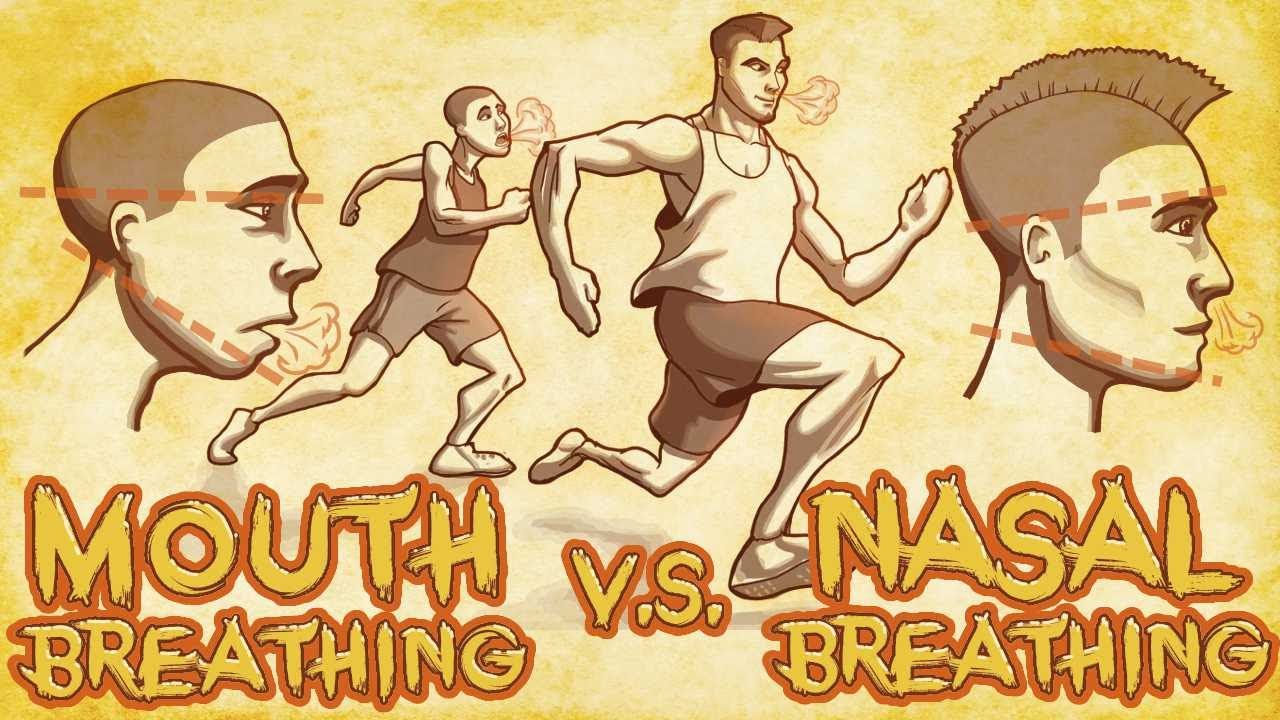
nasal breathing there's a lot of excitement now obviously about nasal breathing because of james nestor's book breath um there was also if people are going to know about that book that i do feel like out of respect for my colleagues there was a book by sandra khan and paul ehrlich at stanford both professors at stanford with a forward by um jared diamond and robert zapalski so some heavy hitters in this book and the book is called jaws a hidden epidemic and it's all about how nasal breathing is better for us especially kids than being mouth
breathers under most conditions for sake of improving immunity it turns out there's a microbiome in the nose like all sorts of good stuff about nasal breathing preferentially but when we exercise you can you can do pure nasal breathing but the problem is once you get up to kind of third and fourth and fifth gear effort you can't nasal breathe and be at maximum capacity unless you've been training it for a very long time so i would say double inhale through the nose offload through the mouth so double inhale exhale while you're in steady effort and
then if you really feel like you need to gas it and you're pushing the data show that then just use whatever's there right just go into kind of default mode because bringing too much concentration to something is also going to spend epinephrine the goal is to get into that i don't like the word but the flow state where you're not thinking too much you're just an exertion so these are so these are things that can help in the transitions um but i don't think there's any secret breathing technique you know anyone who's been in the
seal teams will kind of you know they'll tell you like there's no breathing technique right there's a there's tools that you can look to from time to time and these double inhale exhales can be great for setting heart rate ability in very quickly and getting into a steady cadence while you're exercising but if there's a sprint like if suddenly you guys are sprinting ditch the ditch the double inhale exhale and just sprint you