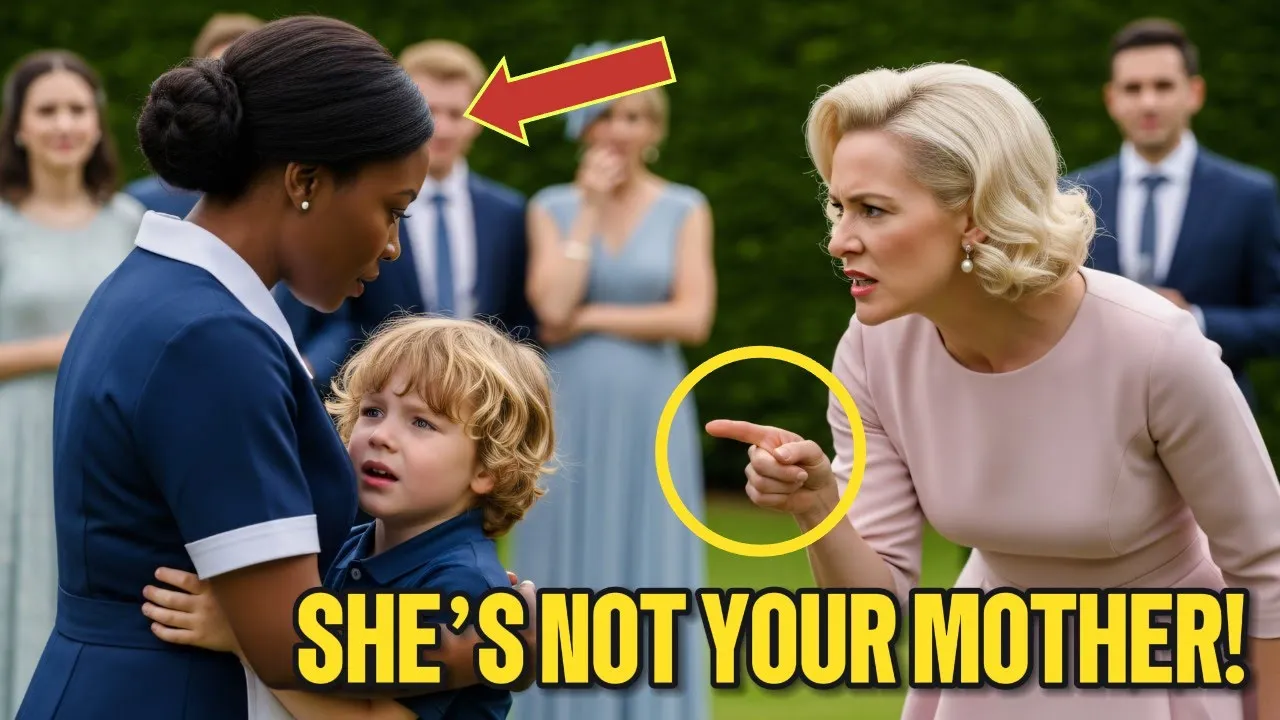
A wealthy mother planned the perfect party, but when her son called the nanny mommy, no one at the table was ready for what followed. The morning sun filtered through the tall, spotless windows of the Witmore estate, an architectural marvel nestled in a gated suburb where silence was golden and lawns were manicured within an inch of their lives. Everything about the house exuded luxury.
the white marble floors, the crown molding dusted weekly by a discrete cleaning staff, and the towering foyer chandelier that never missed a sparkle. But for all its grandeur, the home felt hollow, like a museum that had never known laughter. Down the hallway, in a soft toned nursery painted with pale blues and ivory, Grace moved with gentle purpose.
She hummed a lullaby under her breath. a a dune that didn't match the cold perfection of the estate, but wrapped the room in a warmth that couldn't be bought. Her hands, worn yet tender, expertly buttoned a tiny shirt on the squirming four-year-old in front of her.
"Hold still, baby," she whispered, brushing a curl away from Elliot's forehead. "The boy giggled. " "I'm not a baby," he declared, but leaned into her touch anyway, craving it like sunlight.
Grace smiled. She'd heard that same defiant tone for nearly three years, ever since he was barely out of diapers and terrified of the dark. She had been the one who rocked him through teething fevers, who stayed up all night during stomach flu, who recited the alphabet using cookie shapes on the kitchen counter.
She taught him how to hold a crayon, how to say please and thank you, how to calm his breathing when the nightmares came. But she wasn't family. Not in the eyes of the woman who signed her paychecks.
Victoria Whitmore descended the stairs precisely at 800 a. m. each morning, her heels echoing like punctuation across the tiled foyer.
A tall, willowy woman with immaculate blonde hair and a wardrobe curated by a personal stylist, Victoria was the type of person who believed perfection was owed to her. She never raised her voice it would wrinkle her face, but her words could cut with surgical precision. She entered the nursery and glanced at Elliot, already dressed.
Her eyes didn't linger on him long. "Grace," she said without greeting. "Please make sure he doesn't spill anything before the guests arrive this afternoon.
And I'd prefer it if you wore something neutral. " "Yes, ma'am," Grace replied quietly, her voice steady, her face unreadable. Victoria turned on her heel without another word.
To the Witmores, Grace was staff, efficient, quiet, replaceable. But to Elliot, she was the one who knew how to pack his lunch the way he liked, with crusts cut off and strawberries hald. She was the one who remembered which bedtime story made him laugh and which one made him cry.
When he got a scrape, he didn't run to Victoria. He ran to Grace. Still, Grace never overstepped.
She knew the rules. She smiled when spoken to, kept to the servants's quarters at night, and only used the back staircase. And every evening, when Elliot had finally drifted off, she would retreat to her small room beside the laundry hall and quietly open the top drawer of her dresser.
Inside was a worn photograph, edges frayed, color faded with time. A boy, no older than Elliot, with the same sparkle in his eyes. She never spoke of him to anyone in the house.
She never had to. The way she held Elliot, the way she sang to him in the dark, told a story no words could. And when the house was quiet, when the lights dimmed and the mansion returned to its pristine stillness, Grace would press her fingertips to the photo and whisper, "Good night, Micah.
" She wasn't just caring for someone else's child. She was carrying the memory of her own. The morning air buzzed with activity, not the kind born from joy or celebration, but the rehearsed panic of performance.
Victoria Whitmore was planning what she called a tasteful affair, a garden party that was less about joy and more about spectacle. Florists came and went like soldiers on a mission, arranging imported roses in precise formations. Caterers set out trays of orurves with tweezers.
The lawn was trimmed twice in one day. Everything had to be perfect. Victoria floated through it all like a conductor before a grand symphony, snapping instructions with a smile that never quite reached her eyes.
Her voice was smooth, polite, just sharp enough to remind everyone who held the baton. Grace had seen this before. The obsessive planning, the iron grip on image, the way Victoria introduced Elliot as our little gentleman to strangers while barely acknowledging the tantrums, the late night fevers, the real child behind the bow tie.
Grace, Victoria, said one morning, glancing up from her event checklist. You'll be present during the party, but only if needed. Please wear the Navy uniform, the simple one.
Nothing too attentiongrabbing. Yes, ma'am, Grace replied, her tone even. She didn't ask questions.
She never did. She had long ago learned that in homes like this, silence was the closest thing to survival. The uniform, high collared, shapeless, and the color of storm clouds, hung in her closet like a shadow.
Grace pulled it out without emotion. She pressed it carefully, her fingers moving with practiced ease. It was remarkable, she thought, how something could fit so well and still make you feel invisible.
Downstairs, Elliot was having none of the boundaries Victoria so carefully crafted. Moo me. He squealled, bursting into the kitchen with chocolate on his face and a crayon in his hand.
He barreled into Grace's legs and looked up, beaming. Victoria appeared a moment later, her heels clacking against the tile. She didn't smile.
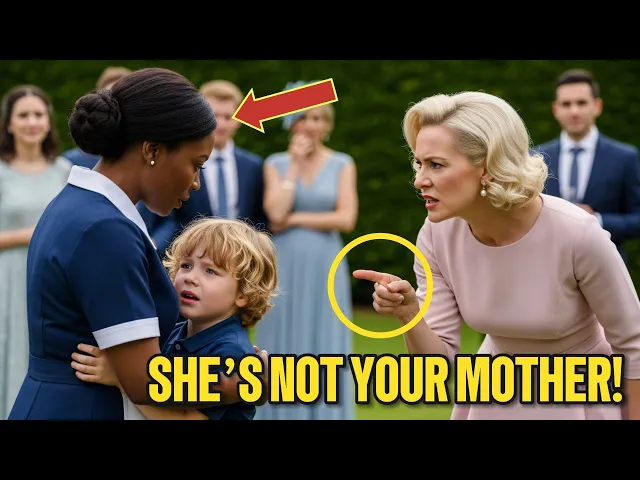
Elliot," she said sharply. "How many times do I have to tell you? Grace is not your mother.
" The boy looked confused. He turned to Grace, who said nothing. Her expression didn't change, but her hand rested gently on his back, rubbing small circles only he could feel.
"I'm sorry, Mommy Grace," he whispered. Victoria stiffened. "Enough of that.
" Later that afternoon, Grace stood in the kitchen preparing Elliot's lunch. A triangle cut sandwich. his favorite when the chef leaned over and spoke in a hushed voice.
"Sometimes," he muttered, glancing toward the hallway. "I wonder who really belongs in this house. " Grace didn't respond, but the comment lingered in her mind long after the dishes were clean and the child was asleep.
That evening, when the estate settled into its usual hush, Grace retreated to her room. She sat on the edge of her narrow bed, the uniform still clinging to her like a memory she couldn't wash away. She opened the top drawer and pulled out the photograph, its edges soft from years of quiet handling.
The boy in the picture smiled up at her. Round cheeks, wide eyes, a joy untouched by the world. "You'd be almost Elliot's age now," she whispered, her voice barely audible over the hum of the laundry machines down the hall.
Her fingers brushed the surface of the photo like a prayer. He's nothing like you, but he feels like something I lost. She laid the photo back carefully, as if returning a piece of herself to where it belonged.
Then she smoothed the navy dress on the hanger and closed the closet door, locking the silence. Back inside, by early afternoon, the Witmore estate had transformed into a portrait of high society. Sunlight bathed the perfectly trimmed hedges, and white linens draped every table like freshly pressed privilege.
Silver platters sparkled with canopes no one could pronounce, and crystal flutes danced in the hands of guests who sipped champagne with effortless grace. A soft jazz trio played near the fountain, their notes mingling with the clinking of glasses and the hum of polite conversation. Laughter rose in waves, delicate rehearsed, the kind that never reached the eyes.
The air was perfumed with roses and pretense. The guests had arrived in designer dresses and tailored suits. Pearls shimmerred on sun-kissed necks, and every smile was a subtle competition.
They were doctor's wives, tech executives, gallery owners, Victoria Whitmore's circle, and they were all white, flawlessly curated, like the guest list was built for a catalog. Inside the house, Grace moved quietly through the back hallway, smoothing Elliot's collar and brushing crumbs from his cheek. He tugged at the stiff bow tie, frowning.
"It itches," he complained. I know, baby, she said gently, adjusting it so it wouldn't rub his neck. Just for a little while, okay?
He nodded reluctantly, trusting her in a way that didn't need to be taught. Once he was presentable, she handed him off to the waiting parade of adults, then slipped away toward the kitchen. Her dull navy dress blended into the background like she was part of the architecture.
No one noticed the woman who had spent her morning wiping jelly off party shoes and folding tiny socks. From the shadowed edge of the hallway, Grace watched as Elliot joined the crowd, holding his juice glass with both hands like it was treasure. His eyes scanned the sea of unfamiliar faces searching.
Victoria moved with performative ease, gliding from one guest to another, her laugh liilting just enough to charm. She was all white teeth and curated anecdotes. She didn't speak about grace.
Of course, she didn't have to. In this world, some people were decoration and others were invisible. A guest leaned in close and smiled.
"Victoria, your little boy is such a darling, so well behaved. " Victoria smiled, glowing under the compliment. "We've worked hard to raise him right," she said, her voice full of practiced humility.
Not a single glance in Grace's direction. Grace heard the words from where she stood. She didn't react, not visibly, but her hand holding a serving tray curled just a little tighter around the silver handle.
Then it happened. Elliot, standing beside his mother, spotted Grace near the doorway. His face lit up like sunrise.
Mommy, he shouted suddenly animated. Mommy, Grace. Before anyone could stop him, he dashed through the guests, slipping between gowns and slacks and murmured gasps.
a cookie in one hand, frosting already. Smeared across his vest, he flung his arms around Grace's waist. The tray in her hands tilted slightly, but she caught it steady as ever.
He looked up at her, grinning. "I saved you a cookie," he whispered proudly, holding out the halfeaten treat. Behind them, Victoria's expression froze like a mask.
Guests turned, eyes wide, wine forgotten. Someone chuckled nervously. Victoria let out a brittle laugh, high and tight.
"Oh, he gets confused sometimes," she said to the crowd. "You know how kids are. Grace is just our nanny.
" But Elliot didn't let go. He nuzzled into Grace's dress, leaving a smear of chocolate across the carefully ironed fabric. He didn't care about the crowd or the rules or the dress code.
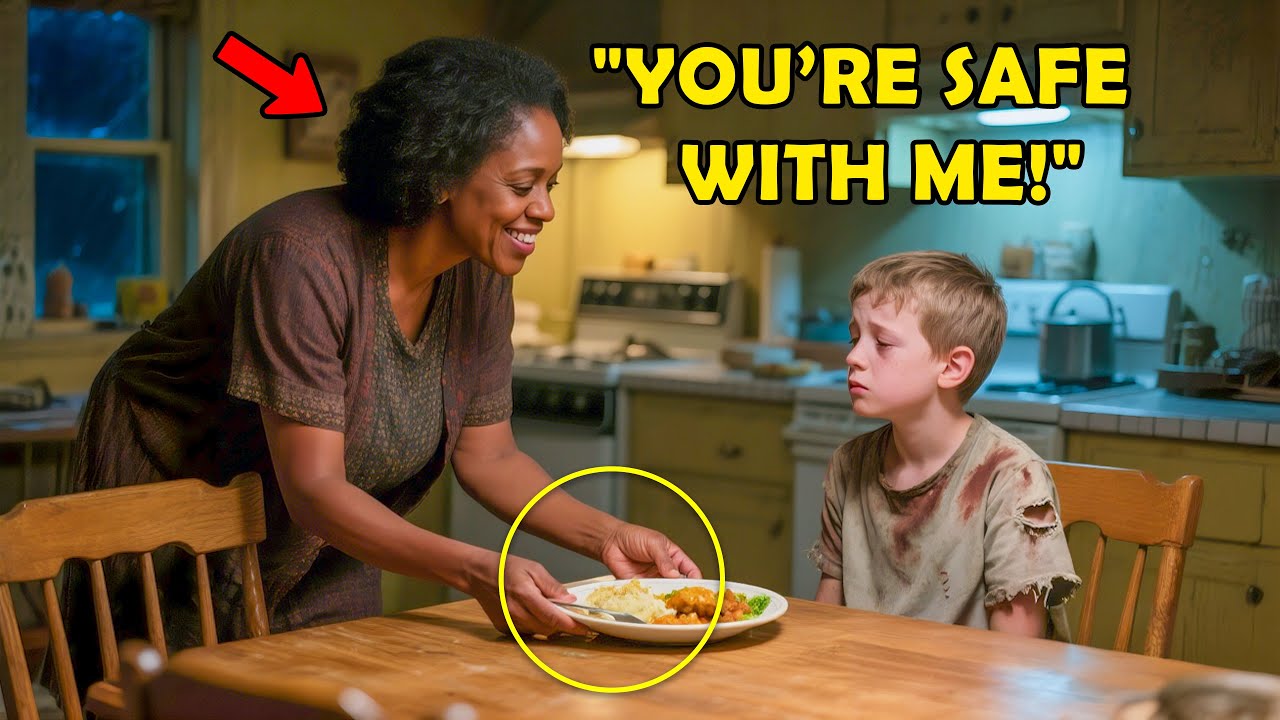
All he knew was who made him feel safe. Grace gently bent down to his level, brushing his cheek with her thumb. "I see you found your sweet tooth again," she whispered, her voice soft with love and something heavier beneath.
The jazz resumed. The party continued, but the warmth of that hug and the coldness of Victoria's forced smile left a tension in the air that no champagne could wash away. The late afternoon sun bathed the garden in a golden glow, casting long shadows across the white tablecloths and the crystal glasses perched at top them.
The string lights above flickered softly like stars trying to outshine the tension simmering beneath the surface. Everything had been rehearsed in Victoria's mind. The speeches, the smiles, the praise that would follow.
Now it was time for the toast. Victoria stood near the center of the garden, a glass of sparkling rosé in her hand. Her posture was impeccable, her chin slightly lifted, eyes scanning the circle of guests with curated warmth.
The pianist, sensing the queue, let the final note fade into silence. Conversations hushed. Champagne flutes were raised in anticipation.
Grace stood just outside the frame near the serving station beneath the pergola. She wasn't meant to be part of the moment, only to refill drinks, replace napkins, and disappear. Victoria cleared her throat delicately.
To friends old and new, she began to family, to beauty, and mommy, I want to sit with mommy. The words cut through the air like a crack of thunder, every head turned. Standing just beside the dessert table, Elliot's voice rang out with full unapologetic clarity.
His small arm pointed directly, unmistakably at Grace. A woman gasped. A man spilled a bit of champagne, forgetting to lower his glass.
Whispers spread like a breeze across dry leaves. Did he just say? Someone murmured.
Grace froze. Victoria's smile twitched, faltered. Her glass dipped ever so slightly as blood drained from her face.
She forced a light laugh high and brittle as if trying to sweep the moment under the rug. He's just confused, she said, turning to the circle of stunned guests. You know how children are.
Grace is the nanny, that's all. But Elliot wasn't confused. Not at all.
He walked right past his mother, right through the sea of pearls and tailored suits, and took Grace's hand in both of his. "You're my mommy, right? " he said, eyes wide and trusting.
You love me more than her. Gasps turned into pin drop silence. Grace's heart thudded in her chest.
She dropped to one knee, her hands trembling slightly as she held his. Her voice came out in a hush barely above a breath. Sweetheart, she said, eyes brimming, voice thick with emotion.
I love you so much. Victoria stepped forward now, her mask of composure cracking into tight-lipped fury. Her voice, though low, carried enough venom to silence the wind.
Grace, she snapped. Returned to the kitchen immediately. This is completely inappropriate.
The word inappropriate hung in the air like an accusation. Grace didn't move. Not right away.
She stayed there on one knee, holding the little boy who had spoken the one truth no one in the garden wanted to hear. Elliot clung to her, burying his face in her shoulder. And for one suspended moment, all the gowns, all the glasses, all the curated perfection meant nothing.
Only the boy, the woman who loved him, and a truth that could no longer be ignored. The party continued without her. Laughter resumed like a broken record, skipping back into its false rhythm.
Champagne flowed. The pianist played a lighter tune. And the guests did what they always did, pretended.
But Grace didn't see any of goodun. Her footsteps were quiet as she climbed the back stairs, her body stiff with restraint. Only when the door to her small room clicked shut behind her did the facade begin to crumble, she locked it, not because anyone would come looking for her, but because the weight in her chest needed a sanctuary.
Somewhere the pain could breathe without apology. The room was modest. A twin bed, a single dresser, a worn rug that had seen better years.
It smelled faintly of lavender and starch, a far cry from the grandeur downstairs, but it held what the rest of the house did not. Pieces of grace that had never been sold or silenced. Her breath hitched as she sank onto the bed, trembling hands fumbling with the top drawer of her dresser.
She opened it slowly, as though afraid of what might spill out. Not just the object she saw, but the memories that came with it. There it was, the photo, worn at the edges, soft from being held too often.
The image captured a moment frozen in time. Little boy, no older than four, beaming with uncontainable joy. Micah, her Micah.
His smile was crooked. One sock sagged on his ankle. He had been running in the grass when she snapped the photo.
Barefoot, wild, free. Grace brought the picture to her chest and closed her eyes. A tear escaped down her cheek.
"I couldn't save you," she whispered, her voice cracking like old wood. "But maybe I saved someone else. " Her mind drifted backward to the worst day of her life.
10 years ago, a hospital emergency room. Fluorescent lights too bright, her voice from pleading. Micah had a fever, a cough that rattled deep in his chest.
She had begged the staff to see him sooner, but they waved her off. Told her to wait, told her to sit down. The hours dragged.
By the time someone finally examined him, it was too late. Sepsis complications. Nothing they could do.
Grace remembered the moment they told her he was gone. The way the world went quiet and then exploded inside her. Her knees hit the floor.
Her scream was swallowed by the sterile white walls. She never fully came back from that. But somehow in the years that followed, she had kept moving.
She became a nanny. Not because she wanted to care for other people's children, but because she couldn't bear to stop mothering. Her love had nowhere to go, so she gave it to those who needed it, even if they weren't hers, even if they never would be.
And then came Elliot. He hadn't replaced Micah. No one could.
But when his little arms first reached for her, sticky with applesauce and curiosity, something in her cracked open again, not healed, not fixed, but open enough to let love back in. She turned her eyes to the wall beside her bed, where Elliot's most recent drawing hung crookedly from a piece of tape. A stick figure child held hands with a taller figure wearing what looked like a triangle dress.
Over their heads in shaky crayon handwriting were the words, "Mommy, Grace. " Her throat tightened. Grace touched the drawing, her fingertips barely, brushing the paper like it might disappear.
She had raised other people's children with the love she never got to finish giving her own. Every lullabi, every bedtime story, every scraped knee kissed and cradled, it was all for Micah. It was all for healing.
And yet, even now, even after being told to return to the kitchen like a misbehaving servant, she knew she hadn't stopped being a mother. She had just become one in secret. The morning after the garden party arrived, cloaked in uncomfortable silence, the kind that settles after a storm, everything looks intact, but something fundamental has shifted beneath the surface.
Victoria sat in the sun room, swirling tea. She didn't plan to drink. Her expression was unreadable, but the tightness in her jaw betrayed her fury.
She'd spent the night spinning the story for her friends, laughing it off as childish confusion. But inside, the shame burned. That woman, she thought, had crossed a line, and in front of her guests, no less.
Charles arrived midm morning, briefcase still in hand, as if he'd merely stopped by between business lunches. His presence in the house was rare and often unwanted. But today, Victoria needed a decision, one she couldn't bear to make alone.
"She's becoming too attached," Victoria said cooly, not even looking up from her cup. "It's unhealthy for Elliot, for our image," Charles raised an eyebrow. "Grace," she undermined me publicly.
and Elliot. He started calling her mommy like it's normal. This isn't what we're paying her for.
Charles, ever detached, leaned against the doorway. If it's bad for appearances, just let her go. We can find someone else.
That was all Victoria needed. Permission cloaked as indifference. Later that afternoon, Grace was summoned to the study, a room she rarely entered unless to deliver folded linens.
She stepped inside, hands folded, face calm as always, though her stomach turned with quiet. Drad. Victoria didn't mince words.
We've decided, she began, her tone clipped and professional, that your time with us will conclude at the end of this month. Of course, we'll offer a reference, but we feel it's best for everyone that we part ways. Grace didn't flinch, not visibly.
She simply nodded, her voice a soft echo. I understand. But from the hallway, a shriek pierced the air.
No, no, no, no. It was Elliot. He'd been listening, ears pressed to the door, heart too young to filter pain.
He burst into the room, face red, eyes wide with panic. You can't. I want mommy Grace.
I don't want her to go. He clung to Grace's leg, sobbing in the way only a child does. Messy raw with no regard for decorum or consequences.
Victoria moved to pull him away, her face red with a cocktail of embarrassment and frustration. Elliot, stop this at once. You're making a scene.
But the scene had already been made. From the kitchen entrance, the chef stood frozen, his hands flower dusted. One of the maids stood beside him, her eyes welling.
No one spoke, but the message was clear. They had seen everything. They knew what this was.
Grace gently knelt to meet Elliot's gaze, her hands cupping his tear streaked cheeks. It's okay, sweetheart, she said softly. You're going to be all right.
I promise. But I want you to stay, he whimpered, his voice breaking. You're my mommy.
Grace's heart cracked again. not for herself, but for him. For how the world would teach him far too soon that love didn't always win.
That sometimes the people who gave you the most had the least say," she rose, smoothing her dress. "I'll start packing my things," she said simply. Victoria gave a curt nod.
Charles had already left the room. The boy clung to the hem of Grace's skirt until she gently, lovingly unclasped his grip. And just like that, the woman who had filled the house with lullabibis and kindness walked away from the only child who had ever said the word mommy and meant her.
A week passed. The house had returned to its calculated order. Fresh orchids in the entryway, lemonscented polish on the banisters, and not a toy out of place.
Grace had begun packing her things in silence. No one spoke of Elliot's outburst, or the look on his face when she said goodbye. The Wit Moores moved on.
That was their specialty. Victoria, as always, redirected her energy into reputation. Today's distraction was a charity event, one she hosted annually, not out of passion, but for profile.
The estate brimmed once again with manicured guests, catered wherves and well-rehearsed speeches. Victoria wore a soft blush dress chosen not for elegance, but for how it photographed. The event's highlight was a guest speaker, Dr Lena Hayes, a rising star in pediatric medicine.
Young, brilliant, and recently featured in Forbes, she had a presence that drew admiration the moment she stepped through the gates. Her deep brown skin glowed in the afternoon light, her hair in a sleek twist, and her tailored suit carried both authority and grace. As she made her way through the crowd, nodding politely to hosts and donors, Lena's eyes caught a figure standing near the kitchen archway, partially obscured, almost unseen.
Grace, still in her uniform, still quiet, still carrying trays like she didn't shape the very air around her. Lena stopped midstep, her breath caught. She stared for a moment longer, then stepped forward, disbelief giving way to something more tender.
She broke through the circle of guests and walked directly toward Grace, who had just placed a plate of crustini on a serving table. Grace turned, confused, when she heard her name. Grace.
Lena's voice wavered. Grace looked up and for a split second her world froze. Then her eyes widened, lips parting in astonishment.
Lena, she whispered. The two women met in an embrace that collapsed time. I can't believe it.
Lena murmured. "I didn't know. I had no idea you were here.
" Grace pulled back, her voice soft with awe. "Look at you. You're all grown.
" Tears filled Lena's eyes as she held Grace's hands. "You were the first person who ever believed in me. When I was just another angry kid in the system, everyone gave up except you.
You used to bring us books, remember? You read with me every week, even when I didn't want to. You told me I was smart before anyone else did.
Grace smiled faintly. I always knew. I'm a doctor because of you, Lena said, her voice breaking.
Everything I have, everything I am, you started it. Grace blinked hard, but the tears came anyway. Around them, the chatter began to die down.
Guests turned, noticing the moment unfolding. Cameras lowered. Conversations stopped mid-sentence.
There in front of the same crowd that barely acknowledged Grace's presence a week ago, a renowned black physician was openly, emotionally embracing the woman they called the help. One woman leaned toward Victoria and whispered, "Who is she? " Victoria's smile faltered.
"I thought she was the nanny. " Lena turned toward the crowd now, still holding Grace's hand. "She's not just anything," she said, her voice rising slightly.
She's the reason I'm here at all. And just like that, the story everyone thought they knew about Grace shifted. No longer background, no longer silent.
In that moment, she stood radiant in the truth of what she had. Given not just to one child, but to many, and for once they all saw her. The clink of champagne glasses had long since faded.
Now all eyes were on the impromptu stage formed at the head of the garden, where Dr Lena Hayes stood, hand still gently resting on Grace's shoulder. The scheduled keynote had been forgotten. This moment, unscripted, raw, and charged, demanded attention.
Lena took a breath. Her voice was calm but resolute. I wasn't planning on speaking today, she began, scanning the polished faces before her.
But I can't stay silent. She glanced down at Grace, then looked back at the crowd. You see this woman right here?
Most of you probably didn't even notice her before today. Maybe you called her the help. Maybe you didn't call her anything at all.
But let me tell you something. People like her raised people like me. The air shifted.
A few guests exchanged nervous glances. Don't you dare, Lena continued, her tone sharpening. Don't you dare call her just a nanny.
Murmurss rippled across the lawn. She saw something in me when I was invisible to the world. When I had nothing, no family, no direction.
She gave me time, attention, kindness. She spoke to me with dignity when I didn't even know how to hold my own head up. Victoria stood frozen by the beverage table, her forced smile cracking under the weight of the truth.
The perfection she'd so carefully curated trembled like glass near a cliff's edge. "And I'm not the only one," Lena said. I've learned she's been quietly pouring love into other people's children for over a decade.
She's shaped lives while being ignored in rooms like this. A hush fell. Someone near the back began recording.
Phone held high, the red dot blinking. Moments later, another guest posted it on social media with the caption, "This woman just changed everything. " Within hours, the video exploded online.
People commented from around the country. Strangers, caregivers, children raised by women like Grace. Hashtags trended.
Stories emerged. A former student posted about how Grace had taught him to read when his own parents were too busy. A grown woman now living abroad shared a picture of her as a toddler on Grace's lap.
She gave me more hugs than my mother ever did. Victoria's inbox filled with requests for comment. The same socialites who once turned their backs now rushed to claim they had always admired Grace's work.
The hypocrisy unfolded in real time. Even Charles, barely present until now, approached Victoria with furoughed brows. Maybe we overreacted," he muttered, fidgeting, "All this attention.
Maybe we should keep her. " But Grace had already heard. She didn't raise her voice.
She didn't look angry. She simply stood with the quiet power of someone who had nothing left to prove. "I'm not staying," she said gently.
"Where I'm only wanted for silence. " Charles said nothing. Victoria's mouth opened, then closed again.
For the first time, it wasn't their house, their rules, their story. It was hers, and everyone was finally listening. The day Grace left the Whitmore estate, the skies were clear, as if even the weather knew this was no resignation.
It was a release, a quiet revolution. She didn't pack much. A single suitcase, a few keepsakes, and a folded drawing tucked carefully inside the pocket of her coat.
She hadn't cried, not when she walked through the foyer one last time. Not even when she passed the marble staircase where Elliot had once called her mommy in front of the world. But when she reached the gate, the stillness broke, footsteps pounded behind her.
A small voice, desperate and breathless. Grace, wait. She turned.
Elliot came running down the path, arms pumping, cheeks flushed. His tiny hands gripped her coat as he crashed into her legs. Don't go, he pleaded.
Please don't go. Grace knelt, cupping his face. The wind ruffled his hair, and her eyes shimmerred with the ache of every goodbye she'd never been allowed to say.
"You'll always be in my heart," she whispered, her voice soft and full. "But you belong to them now, sweetheart. Be brave, be kind, and remember what I taught you, especially when no one's looking.
" He nodded, tears brimming in his wide eyes. She kissed his forehead, then gently turned away, walking down the path with her head held high, dignity in every step. The gates closed behind her, not with finality, but with freedom.
A month later, a modest building opened on the corner of a quiet street, far from the glittering suburbs and gated estates. Its windows were painted with handprints in every shade. Joy, and the front sign bore five simple words in bold blue letters.
Micah's house, a place to heal inside. The air was filled with laughter, real laughter. There were crayon streaked walls, reading nooks shaped like treehouses, and rows of tiny shoes left near the entrance.
Children filled the rooms, some with shy eyes, some still learning how to trust again. Grace stood in the middle of it all, a clipboard in one hand, a stuffed bear in the other. Her gray sweater was speckled with glitter from the morning's art project.
She didn't wear a uniform here. She wore love like a second skin. She had received offers, big ones, publishers who wanted her to write a memoir, nonprofits who wanted her to lead grief support programs.
Even a city council member who offered funding for a larger center, but she started small on purpose because she knew what children really needed wasn't perfection. It was presence. At the back of her office hung a simple frame.
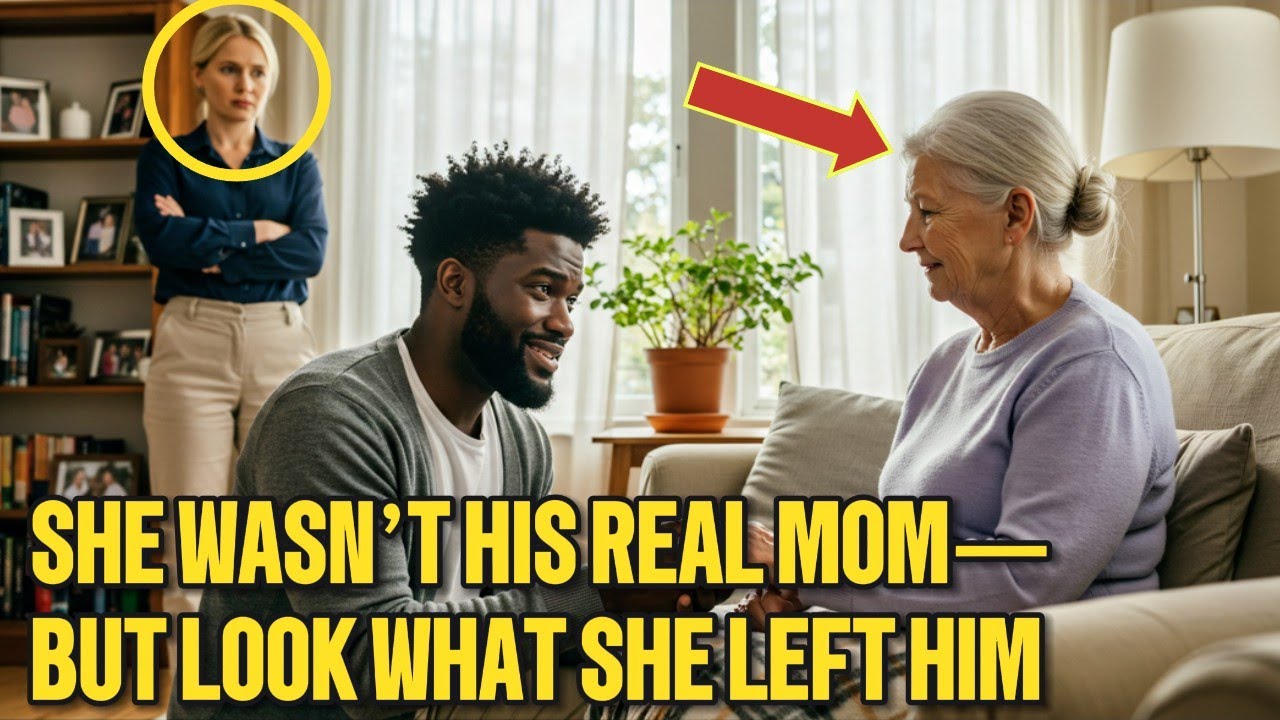
Inside it was a crayon drawing, wrinkled and torn at one corner. Two stick figures held hands under a sun. One was labeled Elliot, the other mommy Grace.
She'd hung it right above her desk so she'd see it every day. Not for validation, but for remembrance. Because Grace hadn't just left a house behind.
She'd built a home. One stitched from pain and turned into purpose. And now every child who walked through her doors didn't just get a caretaker.
They got someone who saw them, someone who stayed. The late afternoon sun bathed Micah's house in soft golden light. Its windows glowed like lanterns.
Each pain catching the movement of joy inside. Small hands waving paint brushes. Giggles echoing off the walls.
Shoelaces being tied by patient fingers. Grace moved through the rooms like a steady current. She crouched to listen as a little girl whispered a secret into her ear, smiled as a boy proudly showed her his first drawing of a house, comforted a quiet child who had flinched at a loud noise.
There was no applause, no spotlight, just love unfolding in a thousand unseen moments. She no longer wore the mask of restraint she once carried in the Witmore mansion. Here her laughter was unguarded, her presence complete.
She was no longer a silent figure in the background of someone else's story. She had become the heartbeat of many. As the sun dipped lower, casting long shadows that danced with the breeze, the children gathered around her in the main room.
One nestled against her shoulder, another tugged gently at her sleeve. She read to them in a calm, melodic voice, one hand turning pages, the other resting protectively across a child's. Bequite.
True motherhood is not measured by blood, but by the love, sacrifice, and unwavering presence that shapes a child's soul.