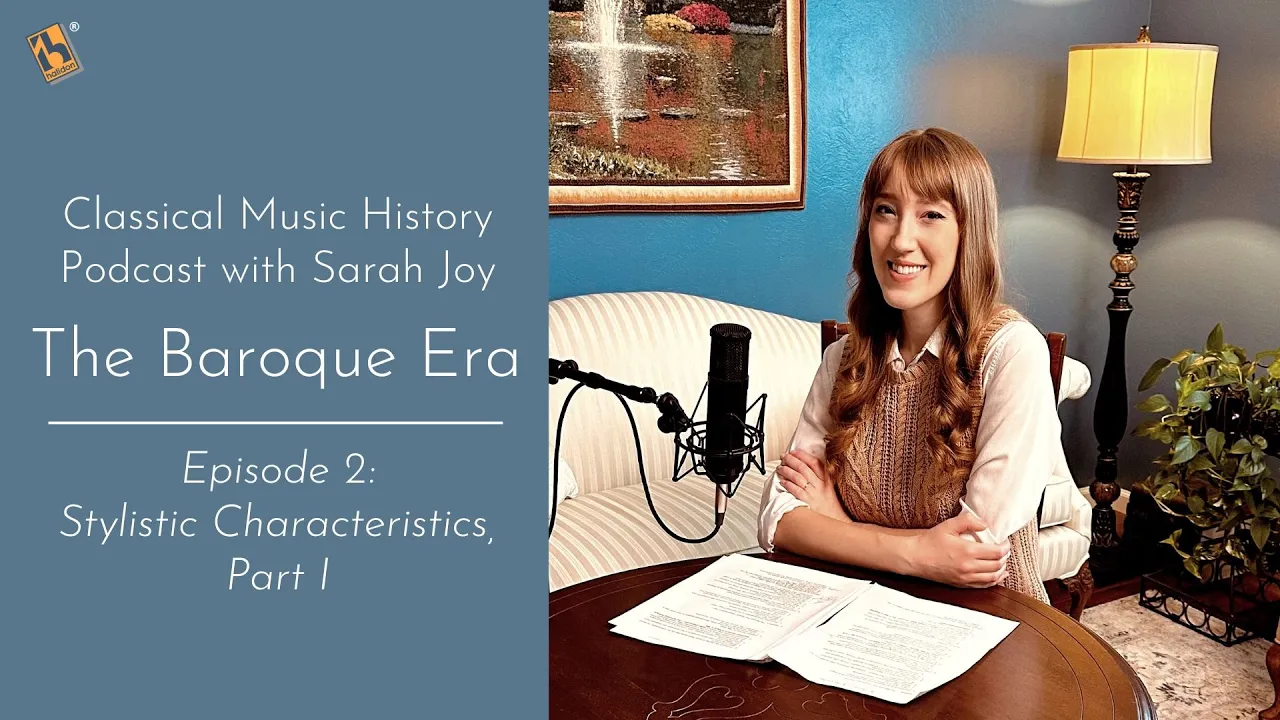
foreign [Music] thank you for joining me today my name is Sarah joy and you are listening to Haledon music's podcast series on the Baroque era in today's episode episode 2 will be discussing the stylistic characteristics that were unique to this time period which was roughly between 1600 and 1750. some notable composers that you might know from this period are Bach Handel Vivaldi monteverdi and many others that I will try to get to throughout this series before we get started I want to let you know that Halid and music created a wonderful Spotify playlist with the
complete pieces that are included in this series so in the podcast itself we just play cuts and clips from these pieces but if you would like to listen to the full versions you can visit that playlist now let's talk about what the word Baroque actually means and where it comes from the word is derived from the Portuguese word baroco which means oddly shaped Pearl which seems like a funny term to use to describe any kind of music or art and actually during that time period so 1600 to 1750 if someone used that word to describe
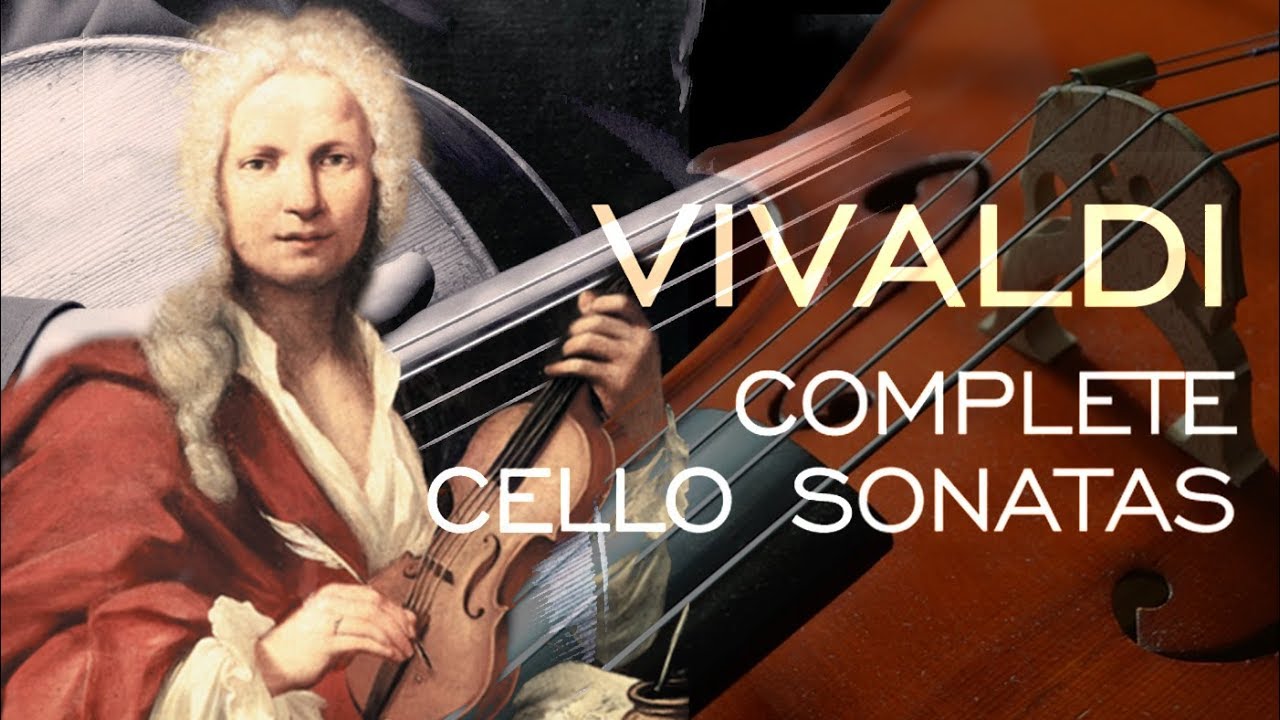
a piece of art they were basically saying that it was grotesque or distorted misshapen but many years later when people started using the word Baroque to describe that particular era it had lost those negative connotations and now the term is used to describe something that is Grand dramatic expressive lots of with lots of ornamentation now I want you to keep in mind the adjectives that I just used and we're going to listen to Vivaldi's concerto for two cellos in G minor Largo and this particular recording is arranged for cello and contrabasse and I want you
to hold those descriptions in your head as you listen and that might give you a better idea of what people mean when they use the term broke to describe this era and the music literature art everything art from this time period [Music] foreign [Music] foreign [Music] there are two main things that I want to talk about in today's podcast the first one is the distinction between monophony homophony and polyphony the second one is to talk about basso continuo or in English it just means continuous base let's start out by defining monophony monophony is just a
single melodic line without any kind of accompaniment or any other lines that are being played or sung along with it so it could be a melodic line that's played by multiple instrumentalists it could just be sung by a single person it could be whistled just a tomb that's being whistled basically just any melodic line that doesn't have anything else going on with it no accompaniment no additional lines homophony this is a Melody line that has an accompaniment underneath it so whenever you see someone sit down and sing accompanying themselves with a guitar or the piano
that's a great example of homophony single line with accompaniment underneath now polyphony and this was the main way of writing in the Renaissance period which was the period directly before the Baroque Period polyphony is when you have multiple independent melodic lines being played or sung at the same time and each of those lines pretty much is of equal importance so the top line is important middle lines super important and they each have their own personalities their own characters um they're yeah they're each their own character and then the bottom line again just as important its
own personality all right now I have a listening example for you which I think is really interesting it's the current from uh Sweet Six yes sweet six a box unaccompanied cello Suites and all of his unaccompanied cello Suites they are performed by a single cello player some people would say that that is a great example of monophony but I'm gonna argue that this is actually a great example of implied polyphony and you might be thinking well that's kind of confusing I don't understand if Monopoly is just a single line of Music which you just described
then how is that anything like polyphony which is multiple lines happening at the same time well that is what's so cool about this example and it shows some of box genius because he was able to condense multiple lines into a single line and you can say you know you could argue three to four voices are included in that single line the number depends on how you analyze it how you want to look at it but basically he had a Top Line and a middle line or some middle lines a low bass line and each of
those lines had their own personality they were each their own character and there was interplay between them um but then you might think okay well how did you do that well let's say for example there are two notes down here and then you jump up and you play two notes up here well yeah if you look at it like this it's just a single line right you're going no no and then you jump up nope nope but this voice these two notes down here are their own separate voice this voice has something to say down
here this voice up here these two notes up here this is a separate character it has something to say that's different and so it's a conversation somehow Bach managed to write this intricate conversation this interesting polyphonic conversation into a single melodic line which you know from The Outsider from from first listen you could think of well okay this is just monophony but again I would like to argue and I hope I did a decent job of presenting my case that this is indeed a fantastic example of at least implied polyphony so okay I digress let's
go ahead and take a listen and see if you can catch what I am describing [Music] now that you have at least a general understanding of what those terms mean I want to talk about how homophony and polyphony were treated and used in the Baroque Era especially in contrast to the previous period the Renaissance period so in the Renaissance Era polyphony was the way that composers thought about music that's how they wrote but then in the Baroque era the composers started showing interest in an interesting concept they they were attempting to recreate and reconstruct the
Greek ideal of music now there was a lot of discussion and debates on how to achieve this because they didn't have a lot to go off of there wasn't much documentation about what music was like back then so after a lot of discussion um a general consensus was that the text or what we would call the lyrics were of utmost importance you know how whenever you're listening to someone speak their voice has what is the word for that um a natural inflection there's kind of a Melody built into their speech unless they have a monotone
way of speaking composers of the time felt that the music underneath should enhance that because they wanted to make sure that the text was being articulated clearly that the audience could really understand what was being said now as you can imagine the use of polyphony was basically against it worked against this aim this goal of theirs because in polyphony let's say for example you have six singers all singing at the same time you can imagine that the waters would be a little bit muddied right in terms of being able to hear the words that they're
actually singing and the composers really they thought this was a problem and so what they did to fix it is that they did indeed start heading in the direction of homophony homophonic writing so instead of having six people singing all at the same time and kind of you know making it hard to understand they would have one person or I suppose multiple people singing a single melodic line that way the audience could clearly hear what was being said and the music underneath was just there to enhance and support that Main Line This was a huge
change an enormous change it was one of the foundational building blocks of Opera it's basically how our music works today you turn on the radio and you're gonna hear homophonic music this leads me to talk about the second thing basso continual or continuous bass which is um basically sorry um a single low line that isn't just a held note right it's not just a drone a single note where lots of stuff is happening on top it's an interesting independent line that goes somewhere has beginning has an end it takes you on it on on an
adventure so you have this Baseline and then from there you have chords stacked on those notes in the bass line this line was the harmonic foundation of the entire piece now as we wrap up today's podcast one of the main takeaways that at least I've personally gained from thinking about this topic I think that one of the biggest shifts was in the conceptualization of how we should analyze and compose music in terms of linear horizontal versus vertical and I don't know if I can make this make sense to anyone else but I'm gonna do my
best in polyphonic writing the emphasis truly was on horizontal linear movement of every single voice the change happened with the integration of homophonic writing and we went from horizontal thinking to more vertical thinking and so we're we're thinking and we're analyzing now instead of again this linear movement instead we're thinking in terms of chords and stacking stacking notes we're thinking harmonically rather than melodically not entirely it's not black and white but I think that there is certainly a shift in emphasis regardless of whether I was able to communicate my ideas clearly on that topic at
least you have gotten a sense of what these terms mean and how music was constructed during this era and the huge importance that these changes had on the music that we listened to today all right I think that I talked about everything I wanted to in today's podcast I hope that you're enjoying the series and I'm very excited for the next episode I'm going to be continuing to discuss the stylistic characteristics that were unique during this time period so I'm very excited about that and as always thank you for listening