Hello ! How is it going ? I'm fine, thank you very much!
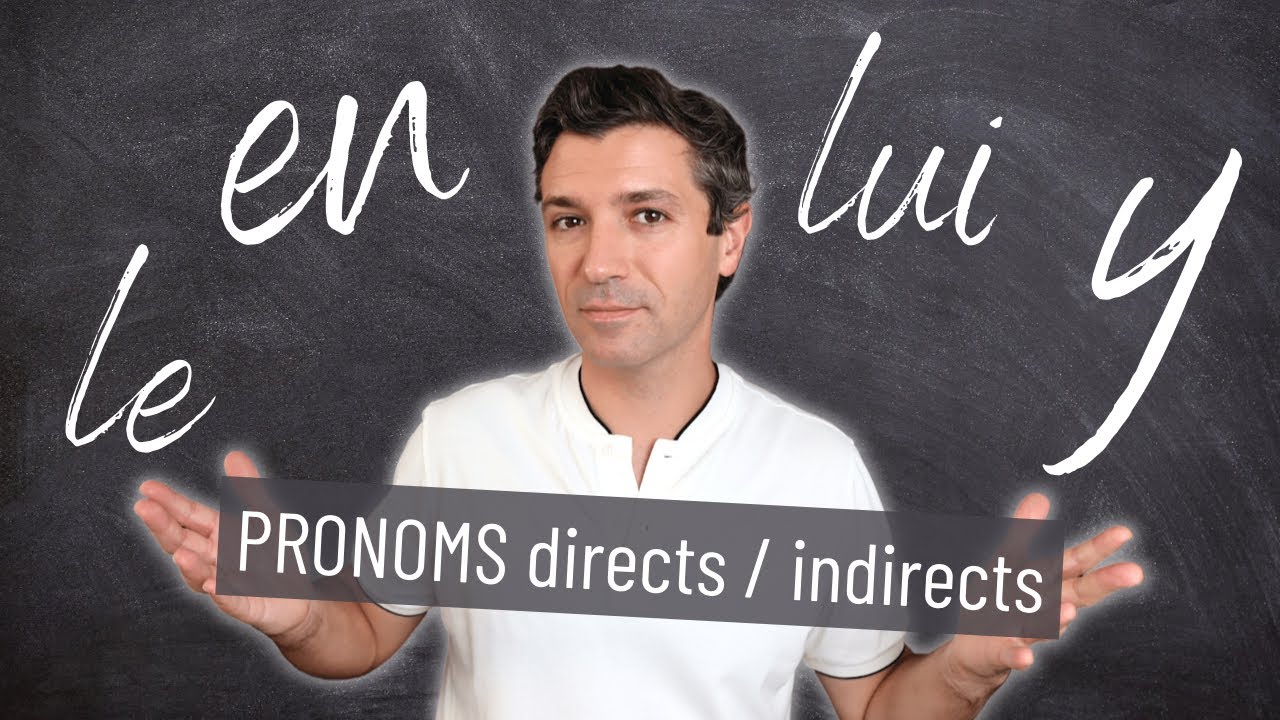
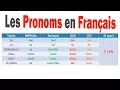
Today, I would like to present you the pronouns in French. So the pronouns is a rather vague theme, and it's, finally, very broadly, but what I would like to precisely do today, is a summary pronouns in French. And especially personal pronouns.
Okay ? So I put a little example that you see on your screen, he tells him a secret! We see that in this sentence we have two pronouns.
The pronoun he, which is a personal pronoun subject The pronoun he, which is a personal pronoun On commence. Et on commence par les pronoms personnels en français. We begin.
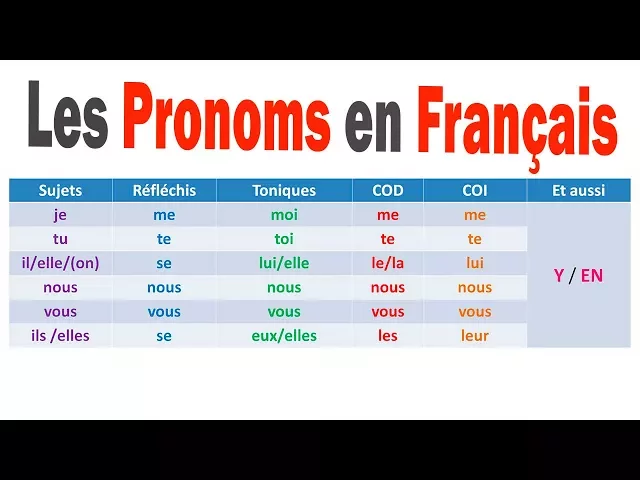
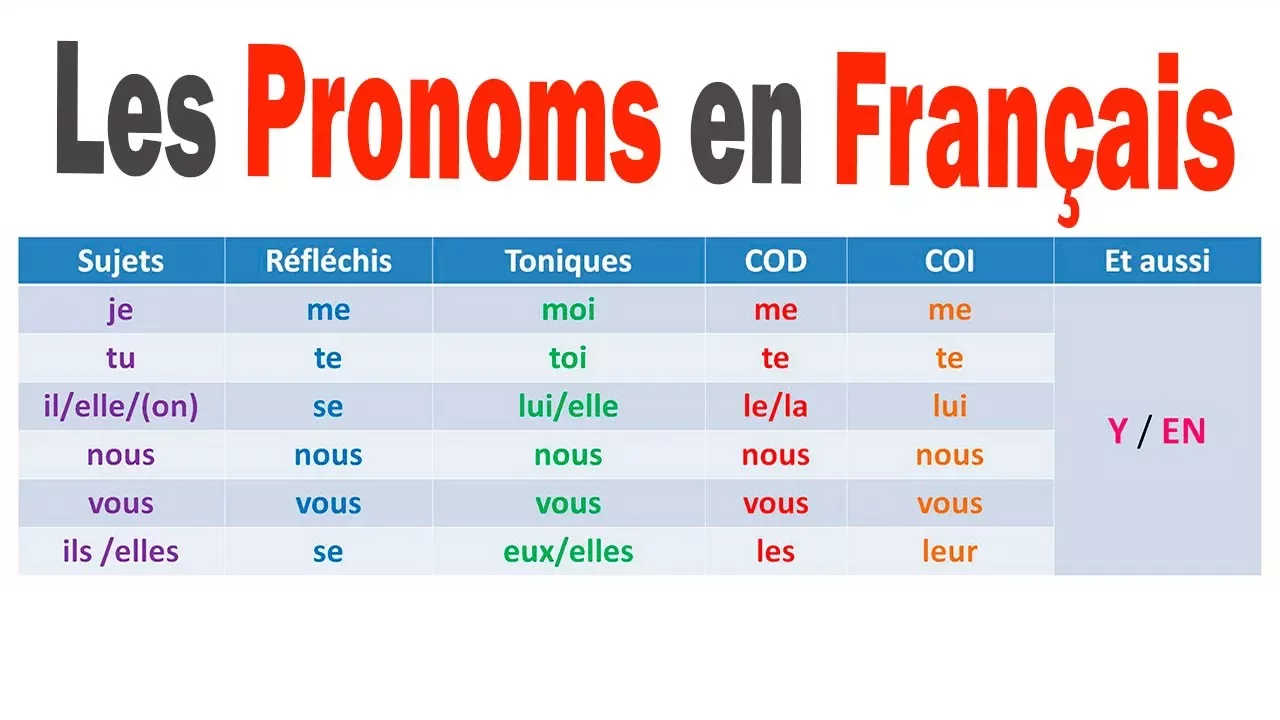
And we start with personal pronouns in French. and in addition they are often alike. Et c'est pour ça que je trouve que c'est important to see, at a moment, a summary, a general picture of all these personal pronouns in order to have clear ideas.
You'll see, I hope this video will help you. So, we start with the subject pronouns. So the pronouns subjects that's what we put before the verb generally, and they are mandatory in French, okay?
Do not forget. It is absolutely necessary to put it, unless there is another subject eh, but otherwise the verb must be accompanied by its subject, its subject pronoun. So I'm going to pronounce them, I, you, he, she, we, I will explain after us, you, they, they.
So, the pronoun can always replace us! That is to say, at the level of reality, it replaces several people, but the verb is going to be conjugated in the singular, ok? Well.
I remind you that he, she, singular, say the same as they, they, plural, ok? Come on, we continue, I do not go into details, huh, it's to make a summary. So then we have the reflexive pronouns.
Then, the reflexive pronouns are used when we use a pronoun verb. So a pronominal verb is a verb, when, for example, we do something about ourselves. For example, I wash, ok?
Something like that. Okay, so, let's see, these thoughtful pronouns are me, you, we, you, are, ok? Then we have the tonic pronouns.
So the tonic pronouns, often, they pose small problems to foreigners who study French because they are quite specific to the French language. So when do we use tonic pronouns? Good after we'll see an example, eh, we'll start seeing examples.
We use tonic pronouns when, for example, we want insist on his person. For example, I'm going to work, and you, you go shopping, ok? Often like that we designate two people, we tend to insist.
If we want to insist, we add a tonic pronoun before the subject pronoun. It also serves, we put them, always, the tonic pronouns, after the prepositions and after the conjunctions, to you, to me, you and me, him and her, ok? They are also used to show.
Him ! She ! Okay ?
I will not go into all the details, but roughly speaking, that's it. So the tonics, so me, you, him, her, us, you, them, them. So, we'll see two examples.
Me, I bathe and you, you shower. We, we love football. Soccer.
So, I'm bathing. We have the tonic, the subject and the reflected, ok? And you, you shower.
So here we have you, you, you, ok, but with the comma, because we have the tonic, the subject and the reflective, who have the same forms, the three. Then I put, we like football, to show that the pronoun tonic us is the one that corresponds to one. Okay ?
We, we love football. We, we love football, it's the same. Okay ?
Come on, let's continue! So after, we have the personal pronouns complements direct object. So, they will replace a direct object add-in.
For example, then I will pronounce them before. Me, you, the, the, we, you and the, the, ok? So, for example, I read this book.
I read this book. I read it often. It replaces the word.
It replaces this book, ok? And we see that it is a direct construction because after the verb read, I read, there is no preposition, it is I read this book. So that's why if we want to replace the nominal group "this book", it must be replaced by a personal pronoun direct object complement, so the.
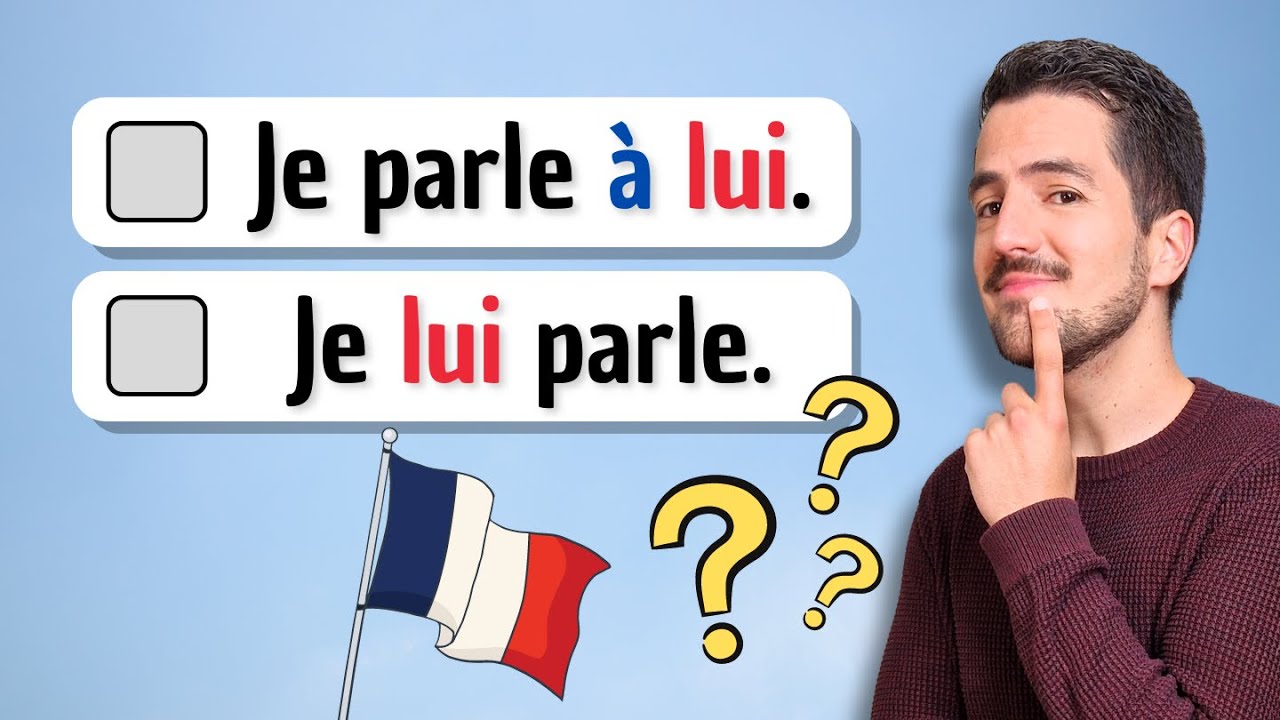
Ok, we will continue. So after we have the indirect object complements, personal pronouns complements indirect object, me, you, him, us, you, them. So I put an example.
He talks to his brother. He talks to him about his holidays. So here, it replaces "to his brother".
This is indirect because there is the preposition to. He talks to his brother. Why there is the preposition to?
It's the verb that says that. Because the verb speak needs the preposition to, okay? The verb also looks like, the verb phone, ok?
But it does not depend on the complement, it depends on the verb, ok? So as the verb uses the preposition to and after we have a person, we will use the personal pronoun complement indirect object, he talks to him about his vacation, ok? So what do we have after?
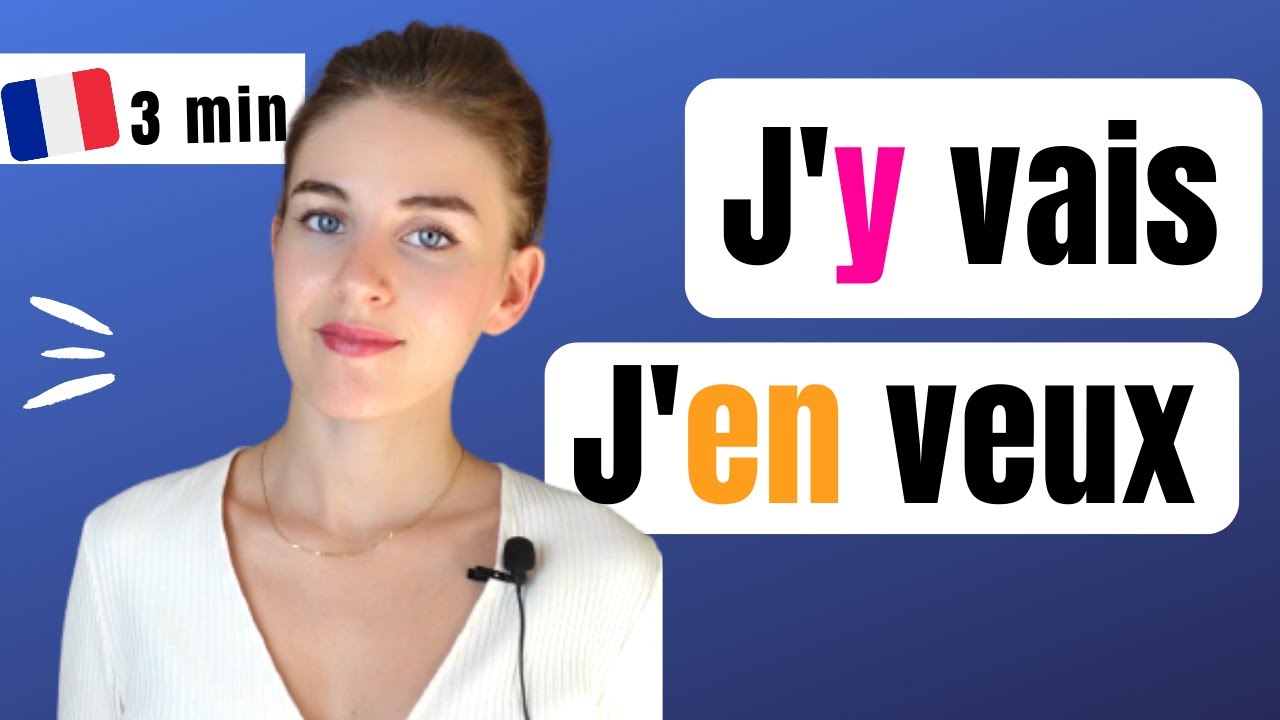
We have something that scares you, foreigners, when you learn French, it's the pronouns personal and in, they are sometimes called adverbial pronouns. Well, it's true that these pronouns are a bit difficult. They are very clean in French but in the end it's not that difficult.
So I started by putting as an example in, so I'll explain forward. So already, they do not replace natural persons, instead they replace things or concepts. Well there are exceptions but it is very rare.
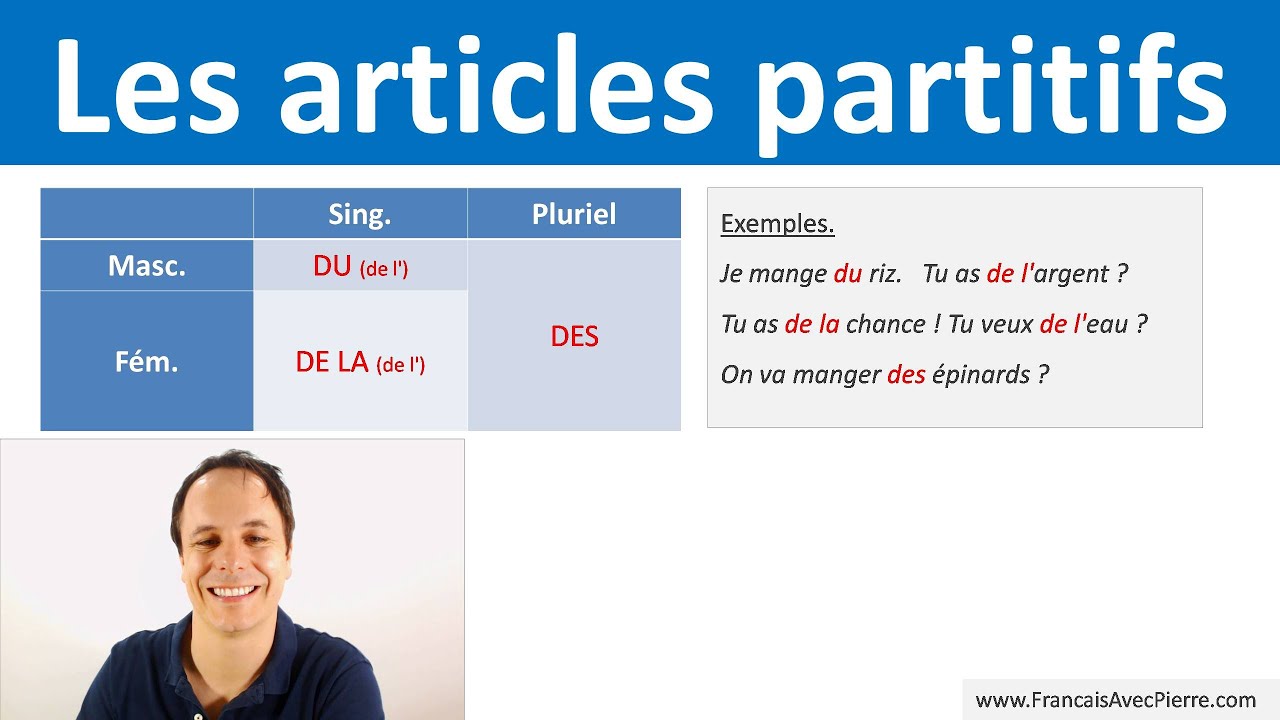
So for example, with in, I want cake, I want a lot! So, replace a group that is introduced in general by de, of, of, of, the, apostrophe. And usually it is very often partitives.
So generally, replace something that is introduced by a partitive article. What are the partitives? These are articles that we put when we introduce something that we express in an indefinite quantity.
For example here, I want cake, we do not mind if I want a piece of cake, a kilo of cake, two hundred grams of cake, I want cake, an indefinite quantity. And for that's the article, partitive, I want cake. Okay ?
So as it is introduced by here, if we want to replace cake, as it is introduced by a partitive, one must put in. I want a lot, ok? So it's a bit difficult, I will not go into details, explain all that about in and of y, but retain that it replaces things which are introduced by de, of, of, of.
The key, the thing, is the letter d, ok? Of, of, of, etc. , ok?
Then there. Okay, here it is, most of it cases, the majority of cases it replaces a place ok? In fact it is, it replaces something introduced by the preposition to.
Not a person, huh! Something. But the vast majority of cases, in the great In most cases, it replaces a place.
For example, I love France, I go there often, ok? So here it is not introduced by à, it is introduced by en, I go to France, but it replaces, which replaces anyway in France, it's there, ok? But very often it's through to.
For example, I'm going to Paris. I'm going there, ok? And very often it's with the verb to go, since it's a place where we go, ok so, I love France and I go there often.
So, remember that it mainly replaces a place, a place, ok? Come on, let's continue! So actually, I made this video not to talk only personal pronouns, even if this is the most important point, but I will quickly speak of other pronouns in French.
So in French we have other pronouns, we have, for example, relative pronouns, Who, where, in, where, to whom, etc. So, for example, the movie I'm watching, is great! Okay ?
So what is often a problem for you, the foreigners, that's the difference between who and who. So who replaces something that and subject, while, that replaces something that is direct object complement, For example, the movie I watch While, because I'm watching the movie, the movie is a direct object complement. I will not go into the details, where usually a place or an epoch and which replaces something introduced by de.
I continue, so we have the indefinite course, it replaces things indefinitely, as the name suggests, so for example, everything, many, none, everyone, something, someone, etc. For example, many left this morning. We also have the demonstratives of course, that, that, those, that, this, this one, etc.
, huh, there are others. For example, which dress do you prefer? This one?
Or that one? And then we have the possessive ones, mine, yours, yours, hers, yours, theirs, etc. I remind you that yours and ours, yours and ours have a circumflex accent when it comes to the pronoun.
Okay ? If it is the determinant, the possessive adjective must be not put a circumflex accent, ok, on our and yours. So for example, her dress is more beautiful than mine.
Interrogatives too, who, what, what, which, etc. Which ones? What is Marie doing?
And then we must not forget that there are also the numbers. So for example, one, two, three, etc. So, it can be numbers, huh, but it can also be pronouns, numbers, so for example, I want three.
So three replaces something, necessarily. It's three of something. So in this case, it is pronoun.
I want three. And in this case, we always have always accompanied by en, which goes before the verb, when there is a quantity at the end. Good.
The goal here was not to explain in detail how function the pronouns, but to do a little recap. Okay ? Especially personal pronouns.
Well, I hope you liked this video and do not forget that I give lessons French, French as a foreign language, free on the internet with videos, you can register, it's completely free. So, I leave the links to register at the bottom of this video, so do not hesitate, if you want you can follow me on Facebook, comme ça tu seras informé, tu seras au courant of all that I put as didactic material, and you can follow me on the Youtube channel and then you can also visit the blog of FrancaisavecPierre. com That's it, I hope you liked this video.
I kiss you ! Goodbye ! See you soon !