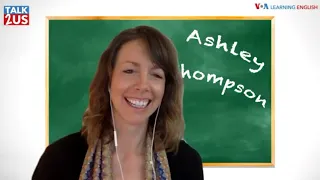
Welcome to Learning English, a daily 30 minute program from the Voice of America. I'm Ashley Thompson. And I'm Mario Ritter Jr.
. This program is designed for English learners, so we speak a little slower, and we use words and phrases, especially written for people learning English. On today's program, you.
Will hear reports. From Mario Ritter, Jr. Jill Robbins, and Bryan Lynn, Later Anna Matteo presents this week's education report.
Finally, we continue our national parks journey with a visit to California's Sequoia and Kings Canyon. But first. Protests in Bangladesh that involved many students have led to the longtime prime minister fleeing the country.
The developments in the South Asian country are among the most recent incidents in which students and other young people played an important part. They have brought down governments or forced them to change policies. Recently, the Associated Press listed some historic protests in Bangladesh.
Weeks of protests against the system that set aside government jobs for the families of veterans, with ruling party ties forced the prime minister from office. The demonstrations against the quotas for government jobs began peacefully last month. Students are said to have led the protests against the system for government jobs.
They said it unfairly favored those with ties to the ruling party. On July 15th, student protesters fought with security officials and pro-government activists. Former Prime Minister Sheikh Hasina fled last week after the unrest.
It is estimated that nearly 300 people died in the violence, including students and police officers. As in Bangladesh, young people took part in widespread protests in Sri Lanka in 2022. The protesters blamed president go to by Rajapaksa for the economic collapse of the country and corruption.
In April 2022, university students and other young people occupied an area next to the president's office in the capital Colombo. They demanded that the president and his government resign. They called the camp got to go Gama or got to go village.
A play on go to Bio's nickname go to the protest area grew. Gotabaya Rajapaksa held on to power until July when protesters stormed his official residence. He fled the country and later resigned.
In November 1973. Students at Athens Polytechnic University rose up against the military dictatorship that ruled Greece for more than six years. Student protests began peacefully with a strike on November 14th of that year.
The students stopped attending classes and occupied the campus at the University in Athens. By the next day, thousands from around Athens had joined to support the students, and the demonstrations grew. People called for an end to the dictatorship.
On November 17th, the military attacked the protesters, killing many students and injuring more than 1100. After a series of events, Greece, the birthplace of democracy, returned to that form of government in 1974. President Richard Nixon approved a tax on neutral Cambodia in April 1970.
That policy was an attempt to close enemy supply lines, but it expanded the conflict. American student had already been protesting the U. S.
involvement in Vietnam for years. On May 4th, hundreds of students at Ohio's Kent State University gathered to protest the bombing of Cambodia. Here, officials called in the Ohio National Guard to break up the protest.
The National Guard used tear gas as they moved forward. For reasons that are still not clear. Some National Guard members opened fire on the crowd.
Four students were killed and nine others wounded. The deaths were a defining moment for a nation divided over the long war, in which more than 58,000 American ans died. One result was a strike by an estimated 4 million students across the US.
About 900 colleges and universities closed temporarily. Historians argue that the event helped turn public opinion against the conflict in Southeast Asia. In the struggle against white minority rule in South Africa, an important moment came in 1976, in the Soweto area of Johannesburg.
On June 16th, black students began to protest against being forced to study in Afrikaans, the language of the country's white rulers. The country was ruled under a system of racial separation called apartheid. People in other areas of South Africa joined protest to express opposition to apartheid.
The government's effort to control the uprising led to deaths estimated to be in the hundreds. Worldwide attention and support for the protesters brought the end of apartheid. Years later, South Africa held democratic elections in 1994.
In 1989, the communist governments of Eastern Europe were beginning to fail. After riot police suppressed a student protest in Prague on November 17th, widespread demonstrations against the communist rulers started in what was then known as Czechoslovakia on November 20th. Many others joined the students, and an estimated 500,000 took to the streets of Prague because the protests were nonviolent.
They were called the Velvet Revolution. They led to the resignation of the Communist Party's leadership on November 28th. By December 10th, Czechoslovakia had a new government.
On December 29th, Parliament elected the writer Vaslav Havel, who had spent several years in prison. In 1992, Czechoslovakia peacefully split into two countries the Czech Republic and Slovakia. I'm Mario Ritter, Jr.
. And I'm Jill. Robbins.
Experts say a Chinese rocket that recently helped launch 18 satellites broke apart in space and created hundreds of pieces of debris. Space traffic observation organizations said data showed part of a Chinese rocket came apart soon after making the satellite deployments. State media in China reported the satellites were carried to space aboard a Long March 6th rocket and reached orbit on August 6th.
The satellites are part of a Chinese government backed effort that seeks to provide high speed internet services to people around the world. Such satellites operate from between 300 and 2000 km towers above Earth. The area is known as low Earth orbit.
The project is expected to become a competitor to American technology company Space-X, which offers its own satellite based internet service. Space-X has so far deployed about 5500 satellites for its Starlink service, Reuters news agency reports. Several groups that continuously observe satellite and spacecraft traffic said the Chinese rocket stage that broke apart in space created at least 700 pieces of debris.
The floating debris is also known as space junk. It can harm active spacecraft, other satellites, and even the International Space Station. The group that launched the satellites is state financed Shanghai Space.
Com satellite technology. The company did not answer requests from Reuters for comment about the situation. Some experts said the high level of debris had placed more than 1000 satellites and other orbiting objects at risk.
U. S. space tracking company Leo Labs told Reuters it estimates the number of debris pieces created is likely over 900.
The collection of debris sitting about 800km above Earth's surface is expected to last several years. Leo Labs added. Experts said it was not clear whether the rocket body's breakup was caused by a crash into another object, or by an explosion of unused rocket fuel.
The U. S. Space Command said early on, in the event that at least 300 pieces of debris had been created.
Audrey Schaffer is the vice president of strategy at space tracking company Slingshot Aerospace. She told Reuters her team had estimated over 1100 satellites and other space objects were likely at risk of hitting the Chinese rocket debris. Schaffer noted, however, that about one third of at risk objects are active spacecraft and could probably move out of the way.
The rest are believed to be uncontrollable pieces of existing space junk that would have no way of avoiding new debris. I'm Brian Lin. A class of third grade students in the American state of Georgia had just a few days left until summer vacation would begin, and lunchtime was only an hour away.
But the children who attend Roberta Smith Elementary School in the city of Rex were in no hurry to leave. They were ready for one of their favorite parts of the day. The children closed their eyes and moved their thumbs from their foreheads down to their hearts.
Listen to the chimes, said the teacher, Kim Franklin. Remember to breathe. Across the country.
Schools like Smith Elementary have been introducing mental health sessions that include yoga, meditation and mindfulness exercises. Students do these exercises in addition to traditional math, reading and science classes. More American students have faced mental health struggles following the Covid 19 pandemic.
In 2023, the U. S. centers for Disease Control and Prevention, or CDC, reported that more than one third of students were affected by feelings of long term sadness and hopelessness.
The agency suggested schools use mindfulness practices to help students deal with their stress and emotions. We know that our teenagers and adolescents have really strained in their mental health, CDC director Doctor Mandy Cohen told The Associated Press. There are real skills that we can give our teens to make sure that they are coping with some big emotions.
Research has found that school based mindfulness programs can help, especially in poor communities where students face higher levels of stress. Green Light Fund Atlanta helps school systems in the state of Georgia pay for a mindfulness program called Inner Explorer. That is, the program used at Smith Elementary, where more than two thirds of students are black.
Jolie Cooper is Green Light Fund Atlanta's executive director. Cooper said it was important to the group to support communities of color in the area. When you look at the numbers, unfortunately in Georgia, the number of children of color with suicidal thoughts and success is quite high, Cooper said.
When you look at the number of psychologists available for these children, there are not enough psychologists of color. Information from the CDC shows that black youth have the fastest growing suicide rate among racial groups between 2007 and 2020. The suicide rate among black children and teens between the ages of 10 to 17 increased by 144% nationwide.
Children in schools that serve mostly students of color have less access to mental health professionals than children. In schools that serve mostly white students. The Inner Explorer program guides students and teachers through 5 to 10 minute sessions of breathing, meditation, and reflection several times a day.
The program is used at over 100 school systems across the U. S. .
Teachers and administrators say they have noticed a difference in their students since they've added mindfulness into their daily activities. Nine year old Aniah Woods is a student in Kim Franklin's class at Smith Elementary. Anaya said the program has helped her calm down and not stress any more.
She added, it made me feel peaceful. Malachi Smith, also nine, has used his exercises at home. His father helps guide him through meditation.
You can relax and when I calm myself down, I realize I am an excellent scholar, Malachi said. I'm Anna Matteo. Anna Matteo joins me now to talk more about this week's education report.
Hi, Anna. Hello, Ashley. Thanks for having me.
There were two words that came up a couple of times in the report. Mindfulness and meditation. How are these two ideas different?
So mindfulness encourages someone to fully pay attention to their senses and their surrounding environment. It is about being fully present, on the other hand. A meditation practice aims to center the mind.
That might involve ignoring or quieting the noise that exists in our surrounding environment. Both can be very helpful to a person's mental health and well-being. Got it.
Thanks for that explanation, Anna, and thank you again for your report. You're welcome. Ashley.
Any time today on our National Parks journey, we visit a land of giants high up in California, Sierra Nevada mountains. Here you will find the largest living things on earth, as well as the tallest mountain in the continental United States. You will also find the deepest canyon in America.
Welcome to Sequoia and Kings Canyon National Park. The park gets its name from the area's ancient sequoia trees. They are among the oldest trees on the planet.
Millions of years ago, different kinds of sequoias grew in many different places. Only two kinds exist today. The redwood and the giant sequoia.
Both are found in California. Redwoods are taller, but the trunks of giant sequoias are much bigger. Sequoia National Park's forests are thick with giant sequoias.
Many of the trees are several thousand years old. The largest is called General Sherman. It is named after a U.
S. general in the Civil War, William Tecumseh Sherman. The tree is 31m around.
It stands almost 84m tall, and it continues to grow. It sits within the park's giant forest. The forest is home to over 8000 sequoia trees.
General Sherman is more than 2200 years old. It is the world's largest tree in terms of the amount of wood it contains. The National Park Service says if the tree were cut down, it would provide a huge amount of wood construction.
Planks. It says if they were laid end to end, they would stretch for almost 200km. In the late 1800s, people grew concerned about logging activity in the area.
They sought to protect the giant sequoias from being cut down for wood. One of those people was Walter Frye. In 1888, he came to the Sierra Nevada mountains as a logger himself.
He spent five days with a team of loggers trying to take down a single giant sequoia tree. Frye then decided to count the tree's rings to learn its age. The answer shocked and saddened him.
The tree they had cut down was more than 3200 years old. He and his team of loggers had ended thousands of years of growth. The experience led Frye to change jobs.
He became a naturalist. He studied the trees and measured the size of fallen sequoias. He also joined the fight to protect them from future loggers.
When a petition was created to urge Congress to create a national park in the area, fry was the third person to sign it. A Sequoia National Park was established on September 25th, 1890. It became the country's second national park after Yellowstone.
In 1940. Congress established another park near Sequoia, Kings Canyon. It and Sequoia National Park have been managed together since 1943.
Kings Canyon is home to the deepest canyon in the United States, as well as a famous sequoia forest called Grant Grove. Here you will find the world's second biggest tree, the general Grant tree. It is over 3000 years old, along with the world's biggest trees.
The area is also home to one of America's highest peaks. Mount Whitney. It measures 4414m.
It lies in the eastern part of Sequoia National Park. While many visitors travel here to witness the giant sequoias, some visitors also come here to climb Mount Whitney. The climbing trail itself begins at an elevation of over 2400m, already very high.
For some people, many hikers experience altitude sickness while trying to reach the top. More than 30,000 people try to climb Mount Whitney each year. Only about 10,000 reach the top.
Of course, the park offers less extreme hikes as well. One of the most popular is the Moro Rock trail. Moro Rock itself rises more than 2000m, but hikers only need to climb the final 90m to reach the top.
From there, they are rewarded with stunning views. The towering Sierra Nevada mountains and kilometers of giant sequoia forests. Climbers also get a view of the 90 kilometer long Kaweah River, which runs through a deep canyon.
Sequoia and Kings Canyon National Park is home to a richly diverse animal world. More than 300 species of wildlife live in the park. Mammals include the tiny white footed mouse, the gray fox, and the bobcat.
Race. Black bears are also common. Bird species include the California quail, the northern owl, and the acorn woodpecker.
There are also many animals that swim, slither, hop, or crawl. Visitors might see a Northern Pacific tree frog, a western pond turtle, or the colorful rainbow trout. If you are lucky, you will not run into one of the park's poisonous wild rattlesnakes.
But do not let bears and snakes scare you away. Sequoia and Kings Canyon National Park is two extraordinary to miss. The words of the late naturalist John Muir perfectly describe a visit to this great park.
Nature's peace will flow into you as sunshine flows into trees. I'm Katie Weaver. And I'm Ashley Thompson.
And that's our program for today. Join us again tomorrow to keep learning English through stories from around the world. I'm Ashley Thompson.
And I'm Mario Ritter Jr. Do do do do do do do do you?