All right everybody let's take our seats and we'll go ahead and get started today's lecture is on solving complex problems how do we do it so for those of you out there taking viewing this as a virtual course um couple of things I want to mention uh we're going to do several examples in class today today uh that'll require your participation so what I'll do is I'll let you know where we're at and let You know that you can pause the video at that point in order to uh read the screen or do the exercise
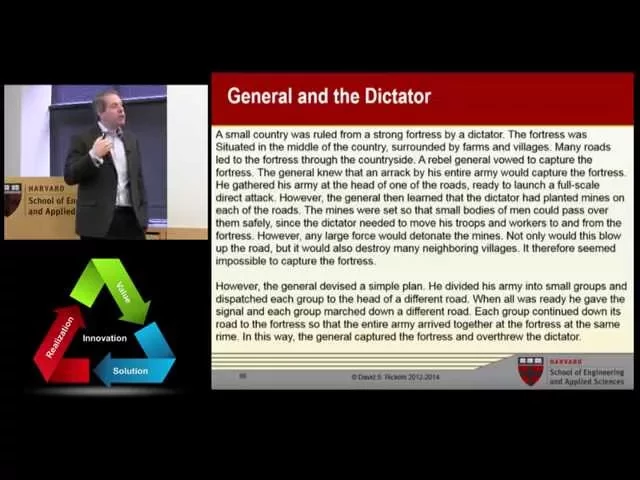
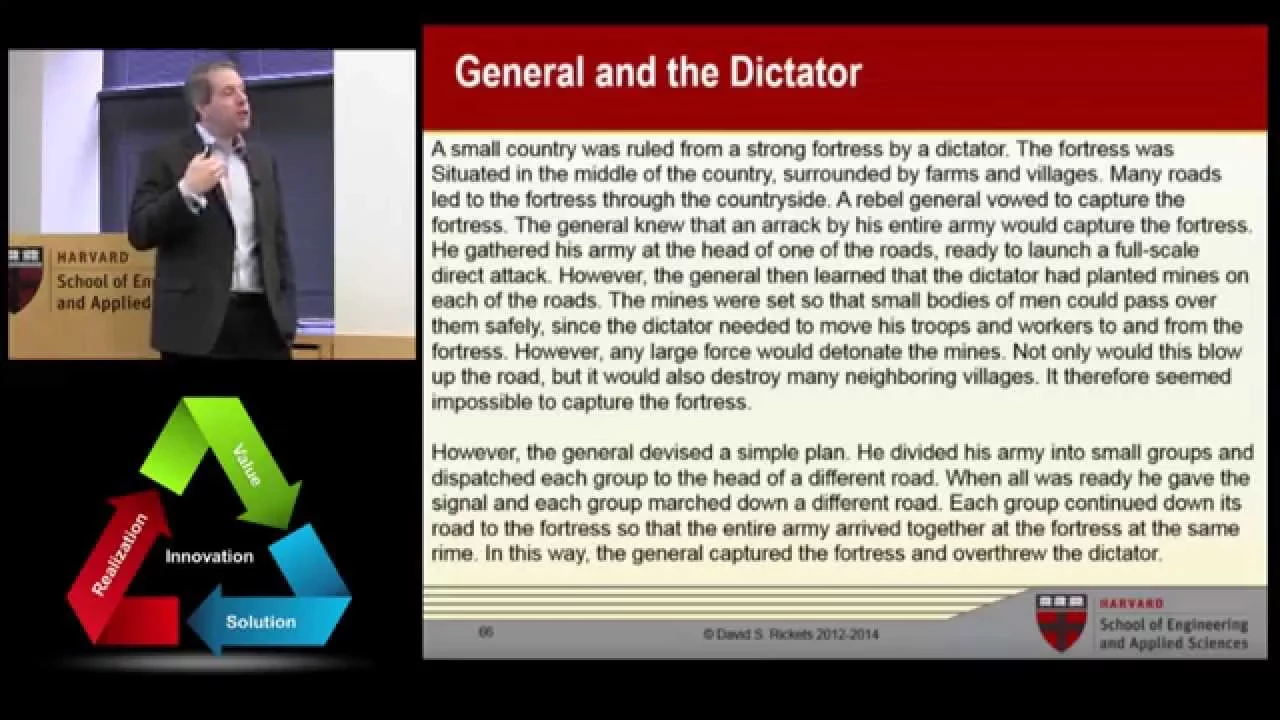
that's there um now before we start the actual lecture uh the next two slides each contain a single short story what I'd like you to do is uh read one of the two stories don't read both because that's going to diminish uh what you'll get out of the uh exercise that we'll do later in class so pick either the first one or the second one so I'm just going to Switch to these you can hit pause on the first one or the second one in order to uh to read so here's the first one about
Red Adair so those in class can read it now those at home can pause it and the second story is the general and the dictator so once again you can read that here in class or uh you can hit pause and read it uh uh while we wait okay so let's go ahead and get started now that you've read one of Those two stories so I want to talk briefly about an overview for problem solving what are the basic steps in problem solving to kind of give us a a little bit of a framework to
work on today uh the first one is the problem search and we're going to talk about this for those in class I gave out a uh a pre-assignment that we'll discuss here in just a moment uh problem representation uh this is actually where I've personally found the most uh impact in changing how I represent the problem I'm often able to solve a very hard problem in a short amount of time uh just by uh simply changing how I view it uh solution method we'll talk about uh solve uh is obviously once you have a method
you go to solve and then uh at the end of each as you always evaluate Your solution so this is the problem I sent out uh for those of you watching this Virtually you can hit pause and read it but basically you're the new CEO of a company and you've just returned from a business trip and you're tired okay so this is the problem I sent out to everybody ahead of time if you're doing this lecture virtually um you can pause here and read this or read along with us the new CEO of your company
has just returned from a business trip in a bad mood his luggage got lost and didn't he didn't get to his room until the Morning of his presentation to shareholders he had to take his suit straight from the suitcase and wear it and it was a complete mess and full of wrinkles on his way back he did some research and turns out there's 450 million business Travelers per year in the US and he's pretty sure many of them have the same problem so he's asked you in NCO to figure out a new product or service
to offer to solve i w say solve this problem I'll say a new Product or service to offer to I uh uh uh tap into this opportunity that he's seen so the task for the groups is is what is the problem that your group will find a solution for so this is the problem search your CEO's come back and he's given you an opportunity area but what's the problem you're going to try to solve where's the area of value that you want to kind of focus your product development and your marketing people on so in
a simple form what is the problem In a brief state statement um and you need to State it in such a form that your product development team could take it and start working on it so the idea is to State the problem in that it's obvious that I'm going to solve this and then I'll capture that opportunity so we sent this out to everybody ahead of time uh we got your feedback back and I'll share with you some of the results that we had now I did seed everyone with the following uh example so one
possible way Uh of posing a problem would say the problem is that the airlines losing luggage and we should develop a product that prevents lost luggage so this says the problem and the opportunity is in not having lost luggage the second example I gave out was the problem is with the expectations of the shareholders the company will hire a PR firm to start a campaign for casual attire at sharehold meetings as you can see each one of these problems as stated Leads to a different type of solution so let's take a look now at what
you guys came up with as products so this is how you defined the problem so team one said the problem in the situation is that the business traveler has to Lug his suitcase around everywhere that he or she travels okay so the problems with a suitcase second team the problem is the lack of wardrobe flexibility backup for business Travelers so it's a problem of not Having a backup there doesn't exist an adequate suitcase that stores suits without getting them creased once again back to the luggage the next group how might we improve the way in
which business Travelers bring suits and other formal clothing on airlines so this is about how they transport clothing the problem is that clothes are not packed so that they're ready to go without preparation so this went to the issue of When they came out of the suitcase they weren't ready the problem is that the CEO and all business Travelers are forced to carry luggage when they travel on brief business trips so once again back to the problem of luggage the problem in this situation is that the business traveler has to Lug his suit around everywhere
that he or she travels so this goes to the example I had given of um needing to wear the clothes let's go on a little bit further Uh let's see the problem is that people traveling on business cannot afford the delays caused by misplaced luggage we're back at luggage bringing formal attire for business travel is a hassle since luggage can be lost clothes can get wrinkled yet most Travelers need formal clothing because a majority of Travelers travel for high stakes business so once we get into sort of both the luggage and the issue that we
have to wear uh dress clothes in this team we believe the Problem that the suits get wrinkled in transit and here's some problems that a few of the staff members of the course brought up uh the problem is that the Garment is not stored without wrinkles the problem is that the Garment is displaced or wrinkled by a storage container and the problem is that the Garment does not retain memory or unwrinkled states and finally we have uh Team 10 came in at the last minute the problem is the ne necessity of Transporting expensive clothing that's
highly wrink okay um and here's two left the problem is luggage tracking and the problem is that suitcases wrinkle close so I want you to notice something I gave you two seed examples one had to do with the lost luggage and one had to do with the fact that we needed to wear clothing and so if you look at the non staff responses so basically from the Teams how many of them were really like the seed example I had given right there was no mention in the problem from the CEO about what the problem was
he didn't mention the luggage he didn't mention the airlines he didn't mention the actual clothing he didn't mention Transportation he didn't mention business meetings he just stated the problem he personally had and that he thought there was an opportunity there and if you look at the examples that I Gave you ahead of time they mentioned luggage Airline transportation and the need to wear dress clothes only one team out of all of you described a problem unrelated to these seed examples so this is a great example that we talked about before I gave you a general
problem and then I give you two specific examples and whether you knew it or not all the ideas the brainstorming you came up with was right around those two ideas there was a Little departure from those initial seats so right away in the problem search we've realized that we already tend to look and find and Define problems that relate to an already existing problem or a problem somebody stated and this can be dangerous because we've talked in previous classes that if you go and ask your customers what they need they probably can't tell you very
in a very articulate way what their true needs are And if they can it's probably a small value problem that they're telling everyone that's going to become a commodity remember the goal is for you to discover those unseen opportunities and what we see here is that it's likely that you're going to start initially to focus in on those problems that the customers or your Market segment bring up so I just thought this was interesting that only one team broke out of that initial Paradigm it seems but The other part I want to talk about is
now that you've stated the problems I want you to look at what Solutions come from those and that should show you how the initial problem statement really drives what kind of solution you're going to do so I uh put these together so the solution uh there was a number of solutions that resulted in a service so have your outfit or Choice delivered to your hotel or meeting rent a suit on-site rentals rent a suitcase with all You all the you in the airport and a bag tracking service so these teams saw their problem and the
solution came in the form of a service uh two teams looked at storage so dedicated hanging space on the airlines for a fee and custom suitcases that don't wrinkle clothing uh and a few teams came up with products um so the staff talked about a non-iron garment like Brooks Brothers has non-iron shirts that are very popular uh For men uh Team nine had a portable hair straightener for clothes I thought this was kind of a cool analogy uh Team 11 had a GPS tracker for luggage so once again back at the luggage and 12 had
a clothes fixer for quickly and effectively unwrinkling clothes that can be placed in hotel rooms I know that sounds ridiculous they actually sent a web page there is an appliance that will actually dry clean and some fashion your clothes in your room uh by taking the Hanger and inserting it in sort of a closet type of thing but as you can see each one of these are response to that initial problem statement so we see in our problem search that our problem search tends to unconsciously stick with examples we've already seen and if we want
to discover the Unseen opportunities we need to break out of that space and the second part is our Solutions come almost directly from how we State the problem And you can tell here we've got products here we've got storage on the previous slide we had services so there's a whole array of what your end product comes out to be that all starts with that initial problem search and so what you want to do is you want to focus initially on what problem it is you want to solve and you know kind of like we did
here come up with a long list of them map them out and try to figure out what problems are going to lead to the most interesting And innovative solutions all right so the key is to start with the problem search the next piece of problem solving is the representation and I want to do an exercise here on um selecting information uh for those of you who are uh attending virtually just take out a sheet of paper if everybody here just take out a sheet of paper too and I'm going to want you to write down
um I'm going to go through a series Of sentences and I want you want you to write down the words that you think are important okay now you're probably a little confused right now because you're thinking well how do I know what important to you know what how do I know what's important how do I measure importance well the point of this exercise we're going to go through is this is a lot like most problems that you experience in life you're receiving Information about the problem constantly often times before you actually really know what the
problem is and I want to show you how our minds are able to kind of form a representation our picture in our heads of what exactly is important and not important okay so just whatever judgment you want to use write down what you think is important or not important okay all right let's get started I went to tea yesterday with an old friend Mrs all Sports she has three daughters Amelia Bella and Celia on the doorstep I met another friend who remarked that her own daughter was spending a yacht in Holiday at sandville with one
of Mrs all sports girls over the teacups it turned out that all three of the daughters are on holiday their interests are Diversified one is at Mudville one is at Rockville and one is at sandville I'll go back so you can see See that again to make the thing more confusing one is playing tennis one is yachting and one is playing golf it is further transpired that aelia is not in sandville Celia is not in Mudville and the girl who plays golf is not at Rockville I tried to discover who the yachting Enthusiast is but
could only find out that she is not Celia who is playing golf and where all right so I'm sure as you're going through this you didn't have any idea how to judge what's important but you probably pulled out words on each sentence that you thought likely were important I sort of think about this as sort of a a murder mystery if you will if you watch a Murder movie or mystery movie throughout the entire movie facts and information is being given to you but you don't know what's important or Not and you pick up some
you don't pick up others and at the very end you then find out what was the important information so this is an exercise that was actually done as part of a research paper and what they did is they did exactly what we just did here and here are um the words and this is the percentage of people in the first reading of people in experiment one that thought the words were important okay now you'll notice there's a first Reading and a second reading the first reading and second reading are just what we did is the
first reading they just repeated exactly the same thing the second time but you'll notice you knew what the problem was after the first reading so if you look at experiment one as it moves down here under the second reading you can clearly see that for instance I went to te initially in experiment 1 30% of the people thought that was important the second time none Of them thought that was important because they knew what the problem was now in experiment two what was different is they told everybody at the beginning what the problem was they
wanted to know who was playing golf and where that was it and then they started exactly the same sequence so they knew what the problem was and had some framework to judge what was important and you can walk down the column for Experiment 2 during the first Reading and what you notice is that it's very similar to experiment one and if you go over to the second reading you'll notice that it correlates very well so what this showed the researchers was that we already have some idea of what's important and what's not important we can
already pick out and we do already pick out what information we think is important and not important and I just find it amazing that without Knowing the problem most people picked out the key piece pieces of information and that knowing the problem helped a little bit but only changed it in a small way and in fact the only significant differences between knowing the problem ahead of time and not are just these three points everything else basically said the person who did not know the problem was able to pick out the same pieces of important information
so as you're approaching a problem you Need to realize that all the information leading up to it you've already picked out what you think's important or not whether you know it or not but that's actually a bad thing because we as we develop over time for most problems we develop a sense of how to pick out what's important and what's not important as exampled in this paper um here all right the other thing is an interpreting information both direct and infert so here's another experiment I Want to do with you we can do this together
a room in which we find a father a mother a son and a baby okay the father says Pedro Wanita is crying please change her okay it's all the information you're given now I'm going to ask you a series of questions and see which ones you can answer and think after you figure out what you think your answer is how it is you knew that and whether that really is a reasonable way to come about the Factual knowledge that you use in problems so who is the father talking to is he talking to the mother
the son or the baby list the names of the father the mother the son and the baby well I assumed Pedra was the son Wanita was the baby and mom we don't know her name and we don't know Dad's name but there's nothing up here that tells us other than Pedro and W are likely not the Father we just assume Pedro is a boy therefore it should be the son and Wanita is crying we assume Mom doesn't cry so therefore it must be the baby but nothing in the problem is given that that's all framed
in how we've built our representation of the problem is the baby a girl or a boy most people think it's a girl why because we associate Wanita with being a girl's name and we've already chosen that Wanita is the Baby what nationality is the family well I think think given that the names are from a Spanish route we would assume they maybe from Latin America or maybe from Spain but none of that is stated up here so you see how with simple pieces of information we pull out a whole uh uh great deal of information
that's inferred that we just apply without even knowing it so I think this is kind of interesting because uh there's a lot that I think we would all Agree upon is true but there's nothing in the statement that actually said that was true so when we talk about representation what do we mean so I wanted to give you an example of some ways to represent 3:30 p.m. so we can do it in military time we can do it as a visualizing a clock here's a 24-hour clock we can actually think about where the sun is
as a way of thinking where 3:30 p.m. is we can think About 3:30 as being a fraction out of 40 8 half hours in a day what's going on here maybe 3:30 is when we take our medicine and here's another one maybe 3:30 is when we get home from school maybe this is what the day looks like at our house at 3:30 all of these are different ways of representing 3:30 p.m. and we develop these representations almost automatically and what we need to Realize is that not that this is bad but we need to realize
that we've done this and that we need to go back and check and see whether that representation really is the best one to be able to solve our problem so um I'll talk a minute about external and internal uh internal representations are what we generate kind of in our own Mind's Eye external representations are what we're going to develop outside of us what's important To realize is that all representations start inside of your mind um there was a great uh great talk by the founder of graffiti from the Palm Pilot and what he talked about
was the fact that um we actually don't know what the real world is all we know is how our brain interprets the sensor information we get from our eyes or ears and our nose we have absolutely no idea what the real world is all we know is the sensor Information and how we interpret that so our internal representation we think of as being the real world but it's not it's how we View and see the world and that often times doesn't really match what's out there so here's an example I'd like you to take a
look at this slide and the question is can you find the mistake in this right I'll give you a hint the colors don't have anything to do with the Mistake okay the numbers don't have anything to do with the mistake can you see where the mistake is about 90% of people don't catch it let me read it exactly as it's stated can you find the the mistake our mind doesn't see the second the it's because we know what it should say and that's immediately how we interpret it even though that is not factually what is
there in the previous Example about the mother the father and the son and the baby we had information and we inferred a representation of what everyone was here the information is right there in front of us and we ignored it because it didn't match our internal representation of what this sentence should be I think that's pretty interesting about how our internal representations really can change the way way that we see things for good or for Bad now I talked earlier about external representations and here's just a bunch of examples out here what externals representations do
for us is they allow us to first off uh collect information in a wider scale that we can keep in our memory so external representations are a way for us to basically we'll talk a little bit later uh extend our memories almost to an infinite pool the second piece is an external presentation allows you and me To talk about the same thing in a in a common context and so we start with our internal representations and we form an external representation but most of us that grow up in the same area the same socio economic
uh class maybe the same geographical region we tend to have the same biases in our internal representations and we'll actually generate external representations that to both of us seem perfectly fair but Are actually inaccurate all right so I want to show you why representation matters the before I really was just showing you how how your internal representation can be quite different than the real world let's look at an example okay this is an example out of a math science problem you are standing by the side of a river which is Flowing past you at a
rate of 5 miles an hour you spot a raft one mile Upstream on which there are two boys helplessly a Drift then you spot the boy's parents one mile Downstream paddling Upstream to save them you know that in Still Water the parents can paddle at the rate of 4 mil hour all right this sounds like a horrible problem that we remembered from uh seventh grade in algebra so you're given all this information and in your mind you're probably setting up a representation for how you're going to solve the problem well there's a couple different ways
to do this one is Actually hard and I think one is easy or easier I'll say so the question is how long will it take for the parents to reach the boys okay so here's a picture if you can imagine you're sitting right here that's you here's mom and dad here's the kids and so you need to figure out how fast the kids are moving down the water you need to figure out how fast mom and dad are paddling up the river you know the distance from you sitting on the Rock to The bottom and
you sitting on the Rock in the top then you could go and calculate this and write a bunch of equations and try to figure this out this is how most of us would do it in algebra class but this is the hard way to do this instead think about your sitting in Mom and Dad's raft you and the kids are on the water you're moving at the same speed with the current so the speed of the current Doesn't matter at all all you need to know is how far the kids are from you two miles
and how fast can you paddle 4 mil an hour so it takes you a half an hour to get to them so you can see this represent presentation of you sitting on the Rock and viewing it externally and you sitting in the center changes dramatically how difficult this problem is to solve and so this is a common example that scientists and engineers and anybody tries to do in Finding in solving hard problems is finding a representation that's easier to solve okay all right so here's another exercise that's uh kind of interesting so uh the exercise
as you can see in the upper left we have a and it's composed of of four match sticks each side is a match stick okay I have a diagram here of five boxes that are made up of 16 match sticks okay there's no match sticks sitting on top of one another all The match sticks are alone and so the goal of the problem is to move three sticks to form only four squares okay so we have five here we want to do four and we want to move only three match sticks okay so that's the
problem so I want you to take for a second and picture what what does the end result look like just what pops into your mind you need four squares what does it look like the question is what does it look Like here and we'll talk about the operators in just a second so here's two examples that any of you kind of think of these you know this one popped into my head immediately I didn't think about this one so you knew needed four boxes probably a picture of four boxes immediately popped in your head what's
the problem with these well let's just look on the uh the Boxes on the left let's just count the match sticks it's two on the top two on the sides two on the bottom two on the left so it's 2 4 68 and in the center there's only four match sticks so 8+ 4 is 12 right we don't have 16 match sticks that's because they're sharing match sticks in the center same problem with this so the initial representation we had actually doesn't fit the constraints we have in the problem and this is what often we
do is we get a Problem we immediately think of what the solution looks like and that immediate solution may not actually work here's another one of four squares okay this has exactly 16 match sticks what's the problem with this one well maybe a little bit harder but I can't figure out any way just to move three match sticks and get a picture like this so in both these cases you come up with a picture that meets some of the requirements and then you try to Force the match stick movement so um why don't you guys
go ahead and try this you can move three match sticks and you need to create four boxes you already know four pictures that don't work and it may help you try to visualize what might be a possible solution so I'll give you a few minutes here you can pause the tape if you want to do this okay let's go and see the solution all right so you can see there I just Moved sorry about that I just moved these three match sticks in Gray to get the answer that picture is not something that popped in
my head at all the first two did and so this idea of problem representation is is that once we're given a problem we immediately try to think about what looks like and so we look at the problem goal and I think one thing we should all do is not try to Envision the solution before we solve the problem because Sometimes we'll Envision a solution that isn't even possible so I want to talk about why problems are hard and this is uh some based upon uh the research I've done and some a little bit on my
own opinion here so our representations are incorrect like with the match tick problem the four boxes on the left it just wasn't the right picture of the final goal or maybe we pictured it as The raft problem where we were sitting on the Rock in that case it wasn't that it was incorrect it was just difficult we need to invent a new idea concept or connection so often times hard problems there's a piece of them that has to be created there is no method that we can just borrow and reuse they're combinatorial large we'll talk
about this in a second but sometimes problems just take a long time to figure Out the decision method is not clear there might be chance we might be confused due to complexity there might be competition going on like in a game of chess there may be multiple Solutions so finding a single solution is impossible and maybe it requires specific knowledge so if I needed to solve a problem in nuclear physics I would probably need to know something about nuclear physics which I Don't the last one is it requires memory and we'll talk about this a
little bit later but there's two fallacies that human beings have and one of them is memory is a problem for us okay so nice segue into the two important human advantages and disadvantages for problem solving we as humans are pattern matchers period that's what our brains do they don't solve complex problems in the way we think about a computer they solve them by matching patterns but we Can develop new patterns we experience thing we take in data we develop patterns we develop representations of the world and they grow with time I think there was a
great quote from Richard fean uh he always was a big fan of using intuition but the the quote I'm paraphrasing here was basically it's just fine to use intuition to solve a problem but if your intuition is wrong then you need to change your intuition and that's all About changing how we think and we see see the world so let's talk a little bit at pattern mattress I think this is pretty cool all right I'd like you all to read this it's pretty cool isn't it I bet you every one of you could read that
without much difficulty even though I don't know i't I haven't calculated maybe 50% of the letters are wrong this is why typos generally don't bother the people who are writing them because they form the Message in their head and they're just looking visually they just see if the general character Arrangement matches when you read something you hadn't written you're much more likely to catch these changes but this is this to me was really amazing all of us can read this there's no problem the reason is is that we don't read letters we read words and
phrases it gets even better on the uh the next page try to read this one it's pretty cool right I think 40% Aren't even letters we had no problem and it's interesting because it says halfway down now on the on on this line your mind is reading it uh automatically and it's true by the time you get down to there it's it's initially it was a little awkward but it gets super easy so this is a great two examples of how our minds are matching pattern they're not looking at the actual data that's there and
that is fabulous that is how we're able to make Connections analogies that's how we're able to be creative people talk about and some people may disagree computers can't be creative and part of that is because because they're not trying to make patterns and see some kind of overlap they're trying to logically process information the second piece is our memory is miserably small unless so we're going to look at a Little example to illustrate this so I'm going to give you a series of numbers okay are you ready 1 1 0 0 0 1 1 0
one 1 0 I think I said that correctly all right uh 10 and 10 numbers that's a little bit hard what if I were to do this for those of you not familiar all I've done is taken one Z 1 0 which are binary for two and in my mind I said okay this is 2 2 0312 so now I've gone from 10 to six so I guess actually there's 12 there sorry There's 12 and I've gone to six well they've played this game and they found that people uh have done tests like this can
actually go up to Beyond 80 uh random sequences by just continuing it on so now you do binary in terms of four so our actual memory can only hold a few pieces of information I think typically you hear seven plus or minus a couple but certainly it's not much greater than 10 and so what we need to do to increase our memory capacity is package this into A framework that contains seven or less items and so we build larger and larger representations and that's how we as humans are able to keep track of things if
a problem involves a great deal of memory we need a lot of data we need to basically data and accurately record it becomes very difficult to do in your head but computers can do that beautifully and so we see that our pattern making ability makes it optimal for us to be creative and see the Analogies that maybe a computer or logic algorithm couldn't but at the same time the lack of an immense memory makes it harder for us to keep track of things although we can as shown here find ways to do this so here's
a final one I want you to do I want you to memorize as many words as you can in the following okay I can maybe remember the last couple words whites eggs that's about it okay that's pretty hard to remember right what if I took exactly The same words and reordered them how many words can you remember from this all you probably have to do is remember one or two words of each phrase and the phrase comes right up so this is just another example of how our memories catalog information we form patterns we also
form stories we talked earlier about how story is important uh to developing ideas and part of stories is Our mind developing a sequence of patterns to store information by the way this is how um uh when they've done research on people with photographic memories or they talk about a photographic memory it really is just they're able to put together an algorithm a series of pictures or stories of patterns that catalog the data it isn't an ability to actually capture all the bits like the photographic memory would Suggest all right so we've talked about problem search
we've talked about representation which I think are the two areas so let's talk about solution method so there's really two areas of Sol Solution on the left you see is mono solution this is typical in science failure analysis some examples are why does an apple fall why does a bridge collapse who murdered Nicole Simpson I don't know if you know who that is but these are things where there's a single Answer to on the right are poly Solutions and these are very typical in design or engineering uh to use the bridge as a counter example
there's probably only one way for a bridge to collapse but you could build a bridge in many different ways all right so there's two types of solution methods the first are weak methods and these don't require any knowledge about the specific problem they use rule of thumbs or heris Discs and then what we have are what's called strong methods and these utilize some knowledge about the specific problem or the problem type and they can vary from General guidance as in I seen a problem similar to that to I know exactly how to solve that we'll
look at specific examples of this in just a second so let's focus initially on weak methods so um this is a binary search you know we start at the top we have four choices we choose one of those we Have choices and we can examine each and every possible solution to a problem and as you can see this gets pretty exhaustive unless the problem's small a great example is in chess depends upon where you get your data but um 10 the 50th possibilities is one estimate for the number of possibilities in a chess game to
put that in perspective there's only 4 * 10 17th seconds in the universe if you're not a math expert basically this is 17 that's 50 this is many if you did one solution possibility per second you'd be billions of times longer than the age of the universe to go through each and every one of those so the basic initial thing of trial and error for search it's a very inefficient method it's The Last Resort unless the problem is small I don't know how many of you have had a a combinational lock and you've forgot the
number right there's 10 on each there's A thousand different combinations here it would take about 10 or 15 minutes maybe a little bit longer but we could actually go through this and solve this if we've forgotten the combination if you took and made this 10 dials long it would be beyond our capabilities to do by hand but for a a three turn lock we could do our trial and error search the next one is proximity methods and here instead of being random you sort of look around you and try to figure out well There's all
these choices for me to do does any one of them look better than the others and you basically base it on some type of uh heuristic one heuristic is a hill climb and what you do in this is you choose the direction in your search that makes the greatest immediate progress toward your goal so the example I use here is to get to the top of the mountain you might sit here look around you and find the the tallest highest slope basically what's going up the Fastest and start walking up that direction but what's the
problem with that if any of any of you gone hiking uh you know here in New England the White Mountains Are Up In Vermont uh typically there's fog um often times it's just drizzly but sometimes you see what's called a false Peak from your perspective looking up you see a peak you get to the top of the peak and you find out nope you're not at the top the Top's much further off and much higher So the hill climb doesn't necessarily take you to the specific Peak and just imagine if you're sitting on a a
peak that's not the top this proximity this hill climb method doesn't really work for you because everywhere's down right another type is a means end analysis and here you basically start with where you are and where you want to go and look at what the difference is and uh here's one example we'll show you in a second you try to reduce each of The differences till you get to a solution that meets in the center uh maybe not in the order of time of importance so here's an example from Webber's book um I want to
take my son to Nursery School what's the difference between what I have and what I want it's one of distance what changes distance my automobile my automobile won't work what is needed to make it work a new battery what has new batteries an auto repair shop I want the repair shop to put in a New battery I apologize that was uh pasted pasted incorrectly there but the shop doesn't know I need one what's the difficulty with this one of communication what allows communication a telephone so the idea is he basically starts with what's the problem
from here to here and breaks it down and tries to work into the middle this is a little bit of a of an awkward one but at least takes you in this idea of I start with my main problem and I try to work in From the outside so we talked about this means end versus hill climbing um means ends allows you to look at multiple Dimensions hill climbing is just you have to pick one metric and choose what direction has improves that metric the most uh means and creates sub goals but it's still not
very very ideal um the problem with both proximity me methods are blind alleys if I get into an alley that doesn't have a a a better solution than where I'm at I Get stuck uh detour problems what if I take the wrong road and I'm off some some place that's totally away from where I want to be there really is no way to get me back and then the false Peak we talked about um earlier so these are sort of ways to do if you don't have any other uh ideas on how to solve problems
now the next one is uh what's called a fractional method and the basic idea is if you look here on the bottom you've got initial State a I want to go To state G which is my goal and there's something preventing it I don't know some kind of barrier and the idea with a fractional method is break this up in the sub goals that maybe allow you to get around that barrier or maybe it makes each piece a little bit simpler and so I want to share with you an example this is a very famous
uh puzzle that's used in Psychology and creativity it's called the Tower of handling and so on the left you see Three uh um sticks if you will and three discs of different size here is the initial State here is the goal it works really well for um uh for problem solving because it's clearly what the initial and the end is and the rules are that you can only move one disc at a time and a large disc must never be placed on a small disc okay so you can see as I start to move these
over I have two empty ones I got to figure out a way to get this over here I can't put the Big one on top of the small ones and I just want to mention um some of these problems seem kind of trivial and simple the reason why psychologists do them is is not because the people they're working with aren't bright most of these experiments are done by college professors on other college professors are college students the reason they use these simple problems is they eliminate a lot of the butt oh maybe that doesn't work
here this doesn't work here the Simpler the problem is the easier it is to make it clear and concise so that you're only measuring what you want so back to the problem so here we are and the question is how do I get from here what might be a subg goal well one one sub goal would be I know my end State needs the largest one here so I want to get my large ring there I know I got to do that and to get that there I know I need to get off the two
small ones so I might do a sub goal That gets the two small ones on this Peg because I know then I can go from this sub goal to that sub goal so these are examples of of trying to figure out how I can go from here to here by picking some intermediate States if you will and so we've got some data here and um it's kind of hard to read if you're look in close I'll try to read the numbers here but on the left here is the distance to the goal so this is
if you're just going to say I'm only going To take a move that gets me closer to my goal then you would follow this six you have six steps from the distance and you just want this to go down in number this is the distance to the sub goal and we'd like to reduce that two so let's just take a look we start at our initial position which is uh zero here distance to goal is six distance to First sub goal is four we move forward One Step we're we're now three steps to our sub
goal we move once More we're now one step to our sub goal we're three steps this is line two uh the third line down it's labeled line too uh we're Three Steps from our goal but we're one step from our subgoal and then on the fourth line down we're at our first sub goal so we're Zero from the sub goal but the distance to the goal the final is four and what's interesting here is if you look back at the third line the distance to the goal was three and then we moved to our sub
Goal and now we're at four so we're moving away from our goal and this is the reason why we do a fractional method is often times we always are trying to progress closer and closer to our goal and we don't realize that we need to step back in order to get away from a barrier that's there and so if we continue from the this fourth line down to the fifth we move uh the big ring from the leftmost to the rightmost now we're Two Steps from our end goal we're Four steps though now from our
sub goal and so the next line we move backwards so we go from two steps to the final goal back to Three Steps From the final goal but we move from four to three for our sub goal and as you walk it down we eventually work it down to the bottom line and you can look through this if you just go through line by line the basic idea is if you're trying to get just to your final goal you can't get there the sub goals Make us go back and if you look on the right
you can see what we're doing is we're starting up here and we're going to sub goal one which gets us around a barrier and then we get to sub goal 2 which gets us around the next barrier we get around and if you're a little confused about what are the barriers the barrier is this constraint that we can't put the big ring on the smaller ring so this is just an example about how a means end would always always try to get Us closer and closer to our goal but if there's a barrier we got
to find a way around and so a fractional method of setting a sub goal is a way to do this all right I want to talk about uh strong methods the weak methods we kind of use intuitively they're not real robust they're not something we focus a lot on uh but the strong methods are ones I think we're more accustomed to so I want to talk a little bit now about those they utilize some knowledge about the Problem or problem type and they can go from General guidance to an exact solution okay the first one
is what's called auxiliary problems and this is using information from a simpler smaller problem to solve a more advanced problem and an example I use here is I need to move 100 boxes from here to the next building every hour so that's my big problem but I'm not sure how to do that so I might pick an auxiliary problem and say how do I move one box right so the Idea is you just take the big problem you have and if you will you can think about it oh you're just breaking it up into pieces
and that's true but I'm trying to find pieces that represent the bigger problem it's not that I'm taking the big problem saying there's five steps I'll solve Step 1 2 3 4 I'm actually looking at what are the hard parts of the problem and is there a simpler problem like that that I could solve and that can give me some insight Into how to solve it the next one is uh analogous transfer and this is using similar problems and their solutions to solve a current problem all right I want you to take a second to
read this this and you can pause it if you're um if you're watching this virtually all right um let's go ahead and take a look does anybody know how you can solve this okay maybe a few People let me ask you a question does this remind you of anything that's happened to you today from the time you got up and came into school does this remind you of anything that's happened in this class does it seem familiar in any way I know some of you think you've got Solutions but for those who don't have a
solution or let me ask a question for those who have a solution is there anything during your Day or in this class that helped you get to that solution and for those of you that don't have a solution just think about this class is there anything that happened in this class that could help you figure out a solution to this problem for those of you that read the Red Adair problem if you look at it now and look back at the maligant tuner tumor it's really to do the same solution you can't Bring all the
energy to kill the tumor so you bring it in from different directions just as reded air had solved the water problem for getting the fire and the fire hose or the phone the general and the dictator same thing I can't march my entire Army over the one Bridge so I bring them in from different sides so what I noticed was that every one of you read one or either of these stories at the beginning of class yet probably three4 of you didn't Have a solution to the malignant tumor even though this is the exact solution
for this it looked like about half of you that got a solution realized that it did really relate to these so this was an experiment that was done uh and published on the ability for people to transfer analogies from one area to another so it was what 50 minutes ago that you read one of these two stories and I told you we were going to do an exercise later on that related to These but yet most of you couldn't put the connection in your mind together and by the way I I couldn't either it wasn't
uh it's something that most people cannot do let's see if I can get this to move forward um let's see there we go so these are the results of the uh paper up here on the top and what they did is um the first line is somebody read one of the two stories and Then went to solve the tumor problem um and they were told that the story had something to do with solving the tumor problem and so what they found is 92% of the people could complete it if they were given a story with
the solution in it and told that that story was or related to the solution of this the second line is same thing just exactly what you did here you read the one story and then sometime later you saw the malignant tumor but you weren't told Explicitly that there was a connection only 20% of the people completed the solution so then they did another one where they had People review read both stories and they actually did a discussion about the two stories the solution how it worked the similarities and then at a later time gave them
the tumor problem so they even talked about it and had them synthesize he might have thought well I wasn't paying attention To the story here they explicitly got them to pay attention to the story only 40% 39% were able to solve it so 60% of the people after going through an entire synthesis of the two problems that are exactly the same solution didn't get it and the last one was they gave you one of those two stories and then another story that had no relevance and they found you're back to the 21% so basically back
to the one story no hint so even though you're given a story You're told now I told you it had something to do with something later I didn't tell you what so unless somebody makes an explicit connection most people don't make those connections on their own and this is two things one this is what analogous transfer is you have a one situation you see an analogy with what you're trying to solve now and you connect the two but the problem is is that most of us don't make those connections so let's see if this will
Work for us yay I don't know what I did before but it works now um so the shortcomings is one it requires you to have solv a related problem you can't make an analogy to something you've never seen before it requires you to remember the related problem and it requires you to transfer knowledge to the new problem okay the two things that make analogous transfer difficult is uh remembering and transferring and so we're going to do a little bit of an Exercise here uh to show this explicitly to you um now that you've seen this
the next one makes it a little bit more concrete I think so here is problem one and we'll stop here for a second you can pause the video if you'd like and just read this problem okay if you look down at the bottom what you'll notice is it actually gives you the mathematical solution to solve this Okay so we've got Knights a jousting Tournament the eight Knights had to choose a horse and then we went through some random stuff this is once again a a bad memory from a uh random problems class okay let's go
look at problem two all right so take a few minutes to read this you can pause the video if you like all right so in this problem we've got 29 horses of the princes and they could talk that's kind of cool and they got to choose their nights and they go through some more Probability things is this similar to the problem you had before or is it different thank for a second all right let's go to a third problem all right once again take a chance to read the third problem you can pause the video
take a read all right so in this we have a puppy palace trying to find new homes for 29 puppies there's 24 children who are very excited about getting friendly Puppies uh they def fight over the puppies and they need to figure out how to make the choice how does this relate to the first two problems for those of you that sort of have picked up that there's probably a catch to all this you may have thought hm maybe they're the same all three problems are identical in structure sorry they all use the formula on
the Bottom in exactly the same way it's exactly the same statistics the difference is here the knights choose the horses here the horses choose the knights and the numbers are different and here we've got got puppies and kids and the numbers are different most people don't see a connection between the three problems even engineers and scientists college students don't see the connection and the reason is is that our ability to Transfer is based upon primarily our ability to remember details rather than Concepts so the problem is you probably can remember the first two had to
do with horses and knights and the third one had to do with puppy dogs but horse stories remind you of other horse stories they don't remind you of puppies don't remind you of a horse story there's also a relationship parody problem and that's because initially the Kns were choosing horses in the second problem the horses were choosing Knights now while you probably can think to yourself oh I see that there really is no difference it's really hard to connect the two problems you're more likely to connect the first problem with another problem where somebody's choosing
a horse then you are a problem that has exactly the same mathematical Foundation most people cannot transfer the problem if it isn't similar both in The details and in the construction that means we have horses and knights and the Knights are choosing the horses if you give me another problem with with knights and horses and knights are choosing something or another story where people are choosing horses I'll make the connections but if you swap who's choosing who or you change the identity to puppies and kids I can almost never recall and connect that or at
least it's difficult for me To uh so here's a point I'll make a little bit later we can identify incline problems in physics if they look like incline problems if you're not familiar with incline problems it's basically any problem in math or physics you've seen at one point if it looks exactly like the same as a problem you solved before you make the connection if it's changed a little bit it gets really hard to make that connection so now I want to talk about something called uh isomorphs and This is a big word but all
it means is it's things that are the same but are changed in some way and so um here's a carnival game uh and the carnival game goes as following we have numbers one through nine and uh you put down nickels I put down gold dollars I'm the carnival master and whoever is the first to cover three different numbers that add to 15 gets all the money on the table Okay so why don't we try to play again okay here we go all right sorry I had to go out of uh presentation mode so you guys
decided you want to go first and you're going to put one on an eight okay I'm going to come through and I'm going to put my gold dollar on three you are then going to say you know what what' you guys say you want to put it on um so you've already got eight so What are you thinking you're going to put it down on oops I got the wrong one there you guys are going to put it down on five there we go all right so you got one on five and eight I've got
one on three but five and8 make 13 so I need to block you on two okay so there we are and now you're thinking you've got eight you've got five what are you going go to next one Okay okay now you've noticed you just have to have three that add up to 15 you've got sorry you've got one five and eight so one and five is six one and8 is nine so you got to figure out a third one that's going to get there and 1 and 8 is nine and ah if you uh um
if you pick six I think I would lose so I'm going to go here and I'm going to choose six and now I've got 2 three and six that's five 11 all right And so um is there anything you guys can do next you've got eight you've got one I blocked you on six five do three and you guys choose nine and so you've got 9 10 16 none of these three add up to 15 and I'm going to choose four and we don't have to go through this you can choose seven and what you'll
see is nobody wins all Right okay so that was a quick little game to play and you might be thinking okay so why is it so important does this game remind you of anything anything you've played before I've never played this carnival game but this is an isomorph of a very popular game that I'm sure everybody here has seen or most of you have seen here so let's go look at what are all the options for putting these together or what are the possible solutions oops Wrong button here are all the solutions that add to
15 okay now I didn't initially see much of a pattern in this but you can actually arrange these numbers in an easy to remember way so you can sort of play the game and this is how the carnival guy plays the game and by the way I didn't mention it before but the carnival guy will always win or tie you will never Win the game okay never and I'll explain why in just a second have you already seen the title if you arrange the numbers this way you can see this is just Tic-Tac toe so
you already know how to play tic tac toe and if I play a game of tic Taco I'm sure you would never lose but the way that the carnival guy morphed the problem into what looked like a totally different problem they changed how it was played but the whole structure and all the rules and Everything for the solution was identical and this is what an isomorph is and the reason why isomorphs are so important is you go back to problem representation often times we just need to change if I took the carnival game and said
let's play for Tic Tac Toe none of you would put your money down but initially when I gave you the game it would seem like I'm putting down you're putting down nickels it seems like I could lose big ton but in reality I Can't and so isomorphs are a very cool way uh to think about a different way of viewing problems in a different representation so I think this is a pretty cool uh pretty cool example of that all right uh we're going to talk a little bit of pattern matching you can find a solution
path based on past experience and knowledge of patterns so this is a solution method where basically I've seen something like this there was a pattern before I'm going to Apply that pattern again so for instance in a maze if you've been through it several times you figured out how to get around right like in a building you know how to get from one office to the next because you've gone through it a few times you figured that out you can just match the pattern that you've done um so let's look as an example of Chess
so deg grut did a um a famous paper in 1965 and he asked the important question why are Masters Better chess players than weaker players and I got to say I've always wondered I just I don't know I just figured they were smarter seen the movie Bobby by Bobby Fisher I always thought there was something they possessed that that maybe I didn't and so what dgr did is he went and he looked and said do Masters examine more Alternatives than novices okay maybe they can see more things than we can do they examine deeper meaning
Are they thinking 10 20 30 moves ahead and I can only think two moves ahead or I added this one are they just smarter they're just smarter than you and I are and that's why they're able to be Masters and we're not the other thing is do they have better memories they always talk about I can see the board and I always thought that was because they just had better memories than I they were able to Envision the board they had this visual Memory that the rest of us don't and so the group went and
did a very interesting experiment what he noticed in his experiment was that Masters and novices searched about 30 to 50 moves before making a decision Masters and novices both uh searched two to three moves deep meaning only a couple moves ahead but Masters always made much better moves than Novices why they're not searching broader they're not searching deeper what is the difference and so here's his experiment on the left is a board that's in the middle of a chess game that was actually played on the right is a board but the chess pieces aren't in
legal places meaning you couldn't have gotten to this point by taking legal chest points and what he did is he had a uh novice an a Class A Player which is a very good player and a master player look at the board on the left walk away come back and try to reconstruct it also look on the board on the right go away and come back and reconstruct it and here's the data if you look closely you can sort of see on the left is um the top is the middle games meaning we're in the
middle of a game that was the picture on the left that's a real game and what you notice is that The Masters the M here they have a much higher number of correct pieces and the trials is they get to go back many times and see it so they go back they come back try to reconstruct it they see it again they come back and you can see that the Masters get better and better but they're clearly better than the class A and the class B so maybe they really can just see it better the
memory is better but what's interesting is when you look at when the board is random It's not a valid play the Masters have fewer correct pieces pieces than both the class A and the class B players the reason the Masters were able to reconstruct the board was because it was a pattern that they recognized if it's not a pattern that they recognize they actually were hindered because it didn't match something they were trying to match it they couldn't handle something that was random because they Were trying to fit it into a box and what this
showed very clearly is it's not that Chess Masters have a better or photographic memory it's not that they're able to see something they've got it they've IED it no it's that they've learned in their mind all of the different chess moves and it's if they see a chess move or chess uh situation they just recognize it on the right is the same kind of data for uh end game so this is basically where you Have a Checkmate and once again um if it's a correct endgame the Masters are better able to reconstruct and if it
is random uh no one is able to be do any better the Masters aren't any better at reconstructing uh the problem so this was really uh I think I think for me quite interesting so here's an analogy I'll draw for you I don't speak Chinese uh but if you do this may make perfect sense to you right I just Googled Innovation this is the Chinese Characters that came up so roughly 3,500 Chinese characters cover 99.5% of the Chinese language in common use but there's over 80,000 characters Chess Masters are are are um uh they expect
they know roughly 50,000 boards so the analogy here is when a chess master looks at a board it's just like somebody who can speak and write Chinese can look at a Chinese character and immediately see it for what it is Chess Masters just simply Have a larger vocabulary it's not that they're able to dumb do some superhuman uh photographic memory it's just that they have learned 50,000 board characters if you will and they've learned also a strategy to work with those and that's why they say it takes at least 10 years to become a chess
master because it takes that long to learn 50,000 pieces and 50,000 is not that much uh we here probably know 20,000 Words some of you maybe know 50,000 words it's not too tough over your lifespan to learn 50 60,000 of uh a certain set um this was an interesting I'll go back sorry about that this was an interesting result uh they went and asked they want to know what the difference between experts and novices were this is sort of like the chess master so we showed that the difference between a Chessmaster and a novice was
Really this Encyclopedia of moves that they've memorized over 10 years but if you go to a freshman physics student you go to a physics professor and ask them to classify different problems the results are kind of interesting it kind of goes back to this problem of the horses and the Knights and the puppy dogs and the children if you look at at all the problems on the left uh it's kind of a little bit hard to read in here but the the novices Cataloged all of these as things that deal with blocks on an incline
plane to them these were all incline plane and block problems all of the experts all the professors looked at conservation of energy work energy theorem what they noticed was it wasn't that the problem solving methods of the experts and the novic were really different it was that the experts had built a larger more encompassing View and classification so they didn't look at The details they could actually see the underlying pattern and that's how they classified them and so that's really when you get somebody who's an expert an expert is really somebody who's gone out and
learned enough of the patterns where they're able to classify them at higher levels and that allows them to make those uh analogies that we weren't a mathematics professor would immediately see those three problems about horses Knights Knights horses children puppies immediately see them as the same problem somebody who's never studied probability would look at them as totally different problems so I this was a very interesting result of what separates them is that experts are just better able to make this uh anal analogous transfer uh than novices are in their field because of experience then finally
uh this is something I've saved towards the end There's algorithms for how to solve problems uh for those that are mathematics uh if we're given this problem here a x^2 plus BX plus C we've learned in school if you haven't learned in school there's a solution you just plug and chug and you get your answer so this is what school teaches us School teaches us an algorithm to solve a specific problem and I want to share with you one of my favorites algorithms that I didn't Know until I did some reading recently so here's a
maze now we said earlier if you go through a maze a dozen times you'll eventually figure out the pattern to get through but is there an algorithm to get through a maze that's 100% successful turns out there is if you put either your right or left hand on the wall and never take it off you'll get through the maze just start here on the left and envision yourself with one hand on the wall and What you notice is that if you keep one hand on the wall you basically go into a dead end and you
walk right out and you'll never return to the same spot again so it's really cool it really an algorithm that gets you to solve mazes 100% of the time even though I got to tell you I've played mazes you know in the crossword puzzles many times uh in the papers and um I never figured out that is an algorithm for that all right so this is to summarize Today problem search and representation are key parts of problem solving problem search leads to the type of problem you're going to solve and what the solution looks like
so it's the it's the biggest impact if you will problem representation two things one is some representations are easier to solve than others so you want to find the easy one and two we form representations without even knowing it and that's what we have to watch out for we have to figure out How we're representing the problem and what I do often is I actually stop and come back and try to describe it in a different way and see if I can find a different way to represent the problem that's maybe easier we talked about
weak and strong information information helps in the solution most of the time sometime we talked in some of the early classes about creativity information can be a blocker but here we talked about it does in general help you solve problems And the two biggest human advantages and disadvantages are that one where pattern matchers we're able to solve problems it's what leads to creativity in my opinion but the downside of our mind is that our memory is very limited unless we package it together in a hierarchical form in a pattern if you will so basically leveraging
how our mind works all right that's it for today on complex problem solving feel free to email me if you have any questions um and we'll see You next time