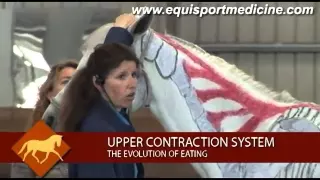
we start with the horse eating a meal that contains protein fat and carbohydrates including starch and fiber chewing is the first stage of digestion mechanically grinding the food making it more available for digestion as it progresses through the tract and the horse chewing also stimulates the production of saliva which lubricates the feed as it slides down the esophagus notice that the horse does not chew up and down like humans but chews in a grinding motion dental care is vital in horses to help maintain this proper chewing motion the horse swallows the feed and the feed
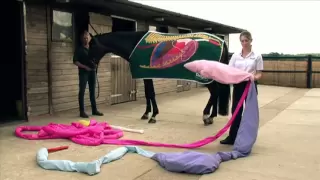
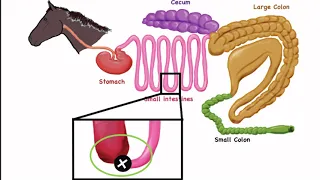
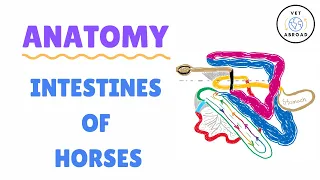
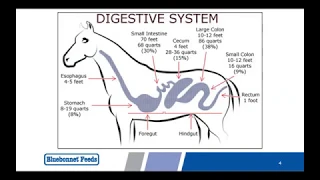
bolus flows down the esophagus and into the stomach due to the sharp angle where the stomach and esophagus meet and the strength of the esophageal muscles horses are not capable of vomiting in the stomach feed is broken down into starch the yellow beads fiber the green beads protein the red blocks and fat the white globules notice a digest of enzymes release from the pancreas as nutrients enter the small intestine the horses small intestine is 70 feet long and feed flows through it for roughly 45 minutes this is the primary site of enzymatic digestion starch protein
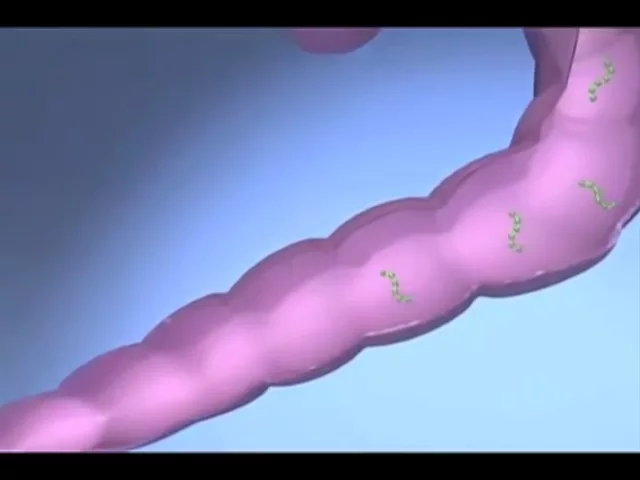
and fats are all digested here as well as the absorption of amino acids normal digestion and absorption carbohydrates in the upper gut first let's follow starch the yellow strings of beads and fiber the green strings of beads alpha amylase enzymes from the pancreas entered the small intestine and break starch molecules into disaccharides which are two glucose molecules bound together notice that the fibers flow on intact through the small intestine there are no enzymes produced in mmm million digestive system capable of breaking the bonds between the sugar molecules in fibers as a disaccharide continue flowing through
the small intestine they bind to amylase enzymes in the lining of the intestine these enzymes catalyze the reactions to break the disaccharides into their simple glucose components glucose is then absorbed through the intestinal wall into the vast blood capillary network that surrounds the gastrointestinal tract in the blood vessels glucose molecules the yellow spheres are transported to body tissues that will utilize them immediately for energy or to store for later use insulin is released from the pancreas in response to rising glucose and stimulates the movement of glucose out of the bloodstream into tissues insulin binds to
receptors on the plasma membrane and allows glucose to move from the blood into tissues where it will be used for energy or other metabolic purposes such as being stored as glycogen or used in the synthesis and storage of fat normal digestion and absorption fat's in the upper gut digestion and absorption of fats differs from other nutrients because fats are not water-soluble unlike most species horses do not have a gallbladder but they're very efficient at digesting fat bio produced in the liver is continuously secreted into the horse a small intestine bile salts surround and emulsify the
fat making it available for enzymatic digestion by lipase from the pancreas the resulting lipid products combine with bile acids and other molecules to form micelles which then diffuse into the cells of the intestinal lining the absorbed lipids are then repackaged with cholesterol and proteins into kilo microns kilo microns are too large to be absorbed into blood capillaries so instead they're expelled from the cells and are taken up by the intestinal lymphatic vessels they travel through the lymphatic system and finally reach the bloodstream via the thoracic duct where the lipids can be used as fuel incorporated
into other compounds or can be stored as fat normal digestion and absorption proteins in the upper gut enzymatic digestion of protein begins in the stomach with the enzyme pepsin which breaks protein into shorter chain peptides in the small intestine pepsin trypsin and several other enzymes from the pancreas and stomach further breakdown peptides into the specific amino acid building blocks and these amino acids are absorbed through the intestinal lining into the blood capillaries amino acids are carried through the blood to the tissues where they are used to build proteins for many functions including building and repairing
tissues components of enzymes antibodies hormones and blood normal digestion and absorption fiber digestion in the hindgut the hindgut of the horse is about 25 feet long but represents about 60% of the volume of the horses digestive tract the primary digestive role of the equine hindgut which includes the cecum and large intestine is the digestion and absorption of fiber the cecum is located at the junction of the small and large intestines and contains billions of microbes such as bacteria and protozoa these microbes produce the enzymes that break the linkages between glucose molecules and fibers the end
products of microbial digestion or fermentation in the hindgut are volatile fatty acids these volatile fatty acids or VF phase are absorbed through the lining of the large intestine and are an important source of calories to meet maintenance energy requirements of the horse excess starches and sugars that are not digested in the small intestine are also fermented by microbes in the hindgut but again the results are volatile fatty acids not glucose molecules the only way to get glucose from fermentation in the hindgut is for one VFA propionic acid to be repackaged into glucose in the liver
this process is called gluconeogenesis proteins are also digested by microbes in the hindgut but microbial digestion does not result in absorption of intact amino acids microbial protein digestion produces nitrogen and carbon skeletons that may be used by the body or excreted as ammonia for horses to meet requirements for essential amino acids they must be supplied by the diet in proteins digested and absorbed in the upper gut normal digestion and absorption completion of digestion in the large intestine as muscular contractions move the digest on through digestion and absorption of nutrients continues as well as the reabsorption
of much of the water from the food mass the microbes also produce some nutrients such as B vitamins some of which may be absorbed from the large intestine the muscular contractions and reabsorption of water in the large intestine and colon results in somewhat tri rounded fecal balls which you then clean out of your horses stall it may be roughly three days before everything you feed makes the trip through the digestive system and on to the floor of your stall