I dress. In an age where image has supplanted truth, where faith has become a consumer product and many altars have been corrupted by human pride, one of the most forceful warnings from the Lord Jesus Christ to his church emerges. because you are lukewarm and neither cold nor hot, I will vomit you out of my mouth.
He didn't say it to the unbelieving world. He said it to a church, a congregation that bore his name but had lost his presence. The Leadian church represents the most silent and lethal danger, spiritual lukewarmness.
They were not false teachers. They did not worship idols, nor did they persecute the righteous. They had simply become comfortable, self-sufficient, indifferent, and that was enough for Christ to reject them.
They thought they had everything, but in reality, they owned nothing. They claimed to be rich, but they were miserable. They saw themselves clothed, but they were naked.
They thought they were wise, but they walked blindly. And this same spiritual tragedy is repeated today in many altars where repentance is no longer preached. In gatherings where the glory of God has been replaced by lights and entertainment.
In congregations that measure success by the number of followers and not by fidelity to the truth. In believers who no longer tremble at sin, who are not broken in prayer, who live a comfortable, uncompromising faith that doesn't bother the world, but doesn't transform it either. This message is not a superficial criticism.
It is an urgent cry from the heart of God because he does not tolerate lukewarmness. He does not condone it. He does not ignore it.
He rejects it. And the verb to vomit is not a gentle metaphor. It is the expression of the deepest rejection.
The sign that this church not only does not please God but also causes him spiritual repulsion. Dear listener, in this video we will contemplate the church that God is vomiting out. not through human judgment, but through the reflection of his word.
We'll examine it in light of the book of Revelation and compare it to many churches today. And we'll discover why it's vital to repent before the sound we hear is that of the door closing. Let's get started.
One of the harshest admonitions in all of scripture was not directed at Pharaoh, Nebuchadnezzar, or the Pharisees. It was directed at a church, not to an atheist group, nor to an anti-Christian empire, but to a congregation that claimed to belong to the Lord. And this is not a poetic figure.
It is a direct statement pronounced by the glorified Christ himself. Let's read Revelation 3 15 and 16. I know your works that you are neither cold nor hot.
I would that you were cold or hot. But because you are lukewarm and neither cold nor hot, I will vomit you out of my mouth. These words were not spoken to an idol temple, but to a so-called Christian assembly, not to Rome, but to Leadyia, not to the enemies of the gospel, but to those who preached it with their lips, but denied it with their lifestyles.
And the Lord didn't say, "I'm disappointed," but something infinitely more serious. I'll vomit you out. That image is profound.
The Greek verb used is emo which describes an involuntary violent rejection like someone who can no longer tolerate something within themselves. It is the strongest expression Christ ever used to refer to his church. But why so much rejection?
To understand we must look at the context. Leodysia was a city located in the Lus Valley in Asia Minor present day Turkai. Famous for its wealth, its banking trade, its textile industry and its athalmic medicine.
It was an influential, modern, and comfortable city that didn't need outside help. But there was a geographical problem. It didn't have its own drinking water.
The water came from distant hot springs through aqueducts. And when it finally reached the city, it was no longer hot or cold, but lukewarm, neither comforting like the hot water of Hierropolis, nor refreshing like the cold water of Colasse. Simply unpleasant, useless, tasteless.
Jesus uses this well-known example to describe the spiritual state of the church residing there. Just as the water you drink is worthless, so is your faith to me. They weren't cold, they weren't completely alienated, but they weren't hot.
They weren't consecrated either. They were in between, comfortable, indifferent, self-sufficient. And that's what God doesn't tolerate.
Because God doesn't want a church that lives halfway. He doesn't want believers who follow him only in words. He doesn't want hearts divided between the altar and the world.
He wants passion. He wants dedication. He wants fire.
Because just as a husband doesn't accept love halfway. Nor does a father tolerate the indifference of his children, nor does God accept a church that names him without living for him. Leodysa said, "I am rich.
I have become wealthy and I have need of nothing. " And that is what many churches speak today. We have a temple.
We have screens. We have members. We have ministries.
But Christ responds, "You do not know that you are wretched, miserable, poor, blind, and naked. " The worst thing wasn't their sin, but their blindness. Sin can be repented of.
But how does someone repent who doesn't see their condition? Jesus vomits out the lukewarm church because it contradicts everything he is. He is a consuming fire.
He is light in the darkness. He is absolute truth. And a church that lives without warmth, clarity, and truth cannot represent him.
God's desire for his church is clear. Holiness, dedication, and fervor. He wants a church without stains, without duplicity, without masks.
He wants a people who love him more than the world, who preach his word without fear, who live in obedience and reverent fear. He doesn't seek spectacles, but surrendered hearts. He doesn't want Christian celebrities but faithful servants.
He doesn't like altars filled with artificial smoke but rather broken hearts burning for him. The Holy Spirit doesn't fill cold temples. He doesn't anoint superficial things.
He doesn't move where there's no hunger. The church of Leodysia had money but no presence. It had a structure but no fellowship.
It had a name but no life. And that's how many churches are today. full of events but empty of the spirit.
Full of attendees but empty of prayer. Full of motivational speeches but without a breaking word. And the most heartbreaking thing about this passage is found in verse 20 of chapter 3 of Revelation.
Behold, I stand at the door and knock. If anyone hears my voice and opens the door, I will come into him and dine with him and he with me. Jesus is knocking on the door of a church that bears his name.
That means he's no longer inside. They drove him out with their indifference. They replaced him with lukewarmness.
And he in his mercy keeps knocking. The church that God vomits out is not the smallest, nor the poorest, nor the most persecuted. It's the one that has become indifferent.
It's the one that no longer seeks him. It's the one that has made faith an accessory, not a cross. But there is still hope.
Because Christ calls, Christ warns. Christ rebukes. Yes, but he also restores.
He wants a church ardent, awake, enkindled by the spirit, enamored with his presence, firm in the truth, separated from the world. The message is urgent because what's at stake isn't an ecclesiastical reputation, but God's pleasure. Either we're cold or we're hot.
But if we're lukewarm, we already know what's coming, being vomited out of his mouth. A lukewarm church isn't recognized by the size of its temple or the number of activities it undertakes. It's recognized by its spiritual temperature.
Cold to repentance, devoid of passion, without fire or zeal for God. Jesus identifies her not by her lack of structure, but by her lack of fervor, not by not having a program, but by not having a presence. And today, the symptoms of lukewarmness have multiplied, even if they are disguised as modernity, relevance, or ministerial success.
Let's look at how to recognize a lukewarm church. And first place, spiritual self-sufficiency. I don't need anything.
In Revelation 3:1 17, it says, "For you say, I am rich and have become wealthy and have need of nothing. and you do not know that you are wretched, miserable, poor, blind, and naked. This is the voice of many churches today.
They no longer cry out for the anointing. They no longer pray for direction. They no longer wait for God's voice.
They feel capable with their own resources, with their ministerial manuals, with their theological knowledge, with their years of experience. Dependency has been replaced by professionalism. Spiritual urgency has been replaced by managerial agendas.
Leadership has shifted from relying on the altar to relying on statistics. They rely more on a well-designed agenda than on well-directed prayer. The advice of a coach is preferred to the conviction of a prophet.
The algorithm is consulted more than the Holy Spirit. And so, week after week, efficient but illustrious services are held. The implicit message is clear.
We don't need anything. Neither prophetic direction nor profound consecration because after all, we already know how to do church. The lukewarm church has traded dependence for self-sufficiency.
It has replaced clamor with production. Their security lies not in the revealed word, but in the show's script. It lies in the LED lights, the well-produced music, the live broadcasts, the Instagram followers, the viral events, and the current trends.
Everything works except the altar. And not only that, they also boast about their healthy finances. They say God is with us because we lack nothing.
They flaunt their bank accounts, boast about their airond conditioned temples, their luxurious buildings, their state-of-the-art auditoriums. They confuse material prosperity with divine approval. But Christ says with a voice of judgment, "Do you not know that you are wretched, miserable, poor, blind, and naked?
For what impresses men often saddens the spirit. What fills auditoriums does not always fill heaven. What shines brightly on the internet doesn't necessarily burn brightly on the altar.
A church can have the best of technology, talent, and visibility, yet still have lost its cloud of glory. Because where there is no brokenness, there is no fire. Where there is no hunger, there is no fullness.
Where there is no humility, there is no presence. In second place, spiritual blindness. Not seeing your true state.
Jesus said to the church of Leodysa, "You do not know. " And that is perhaps the worst spiritual tragedy. Being lost and not knowing, being rejected and still singing, being empty and feeling full.
This is the condition of many churches today. They are convinced they are in revival when in reality they are in apostasy. They speak of glory, but there is no destruction.
They proclaim victory, but live in spiritual defeat. Today there are churches that call themselves revival centers, but what they have is emotionalism. There are tears, yes, but not because of sin, but because of manipulative music.
There are cries, but they are not outcry, but rather fruitless euphoria. What was once discerned as carnal is now promoted as anointed. What was once corrected is now tolerated in the name of grace.
Spiritual blindness has turned the pulpit into a platform for Christian influencers. Preaching is done to please the public, not to please God. Success is measured by YouTube views, social media followers, and the aesthetics of the stage.
The message is tailored to avoid discomfort. Words like sinheld, judgment, and repentance are eliminated. Instead, they prefer to talk about destiny, dreams, and personal success.
The gospel is disguised as self-help. This blindness has led churches to become centers of religious entertainment. The altar is no longer a place of fire, but of lights.
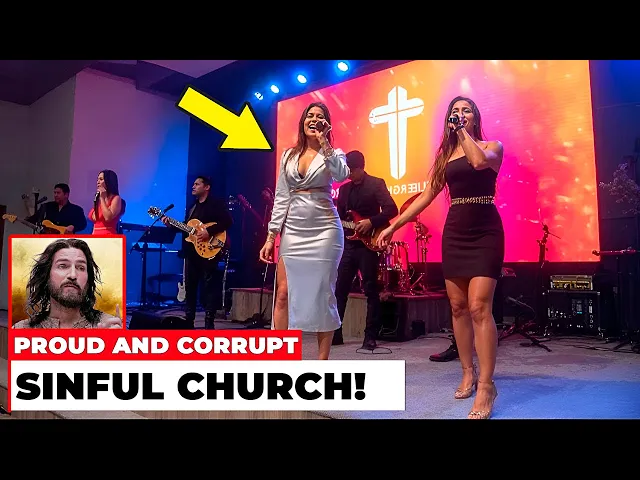
Worship is no longer vertical, but horizontal. Singing is for the listeners, not for God. There are concerts disguised as cults, carefully rehearsed choreography, performances with costumes and artificial smoke, but not a single tear for sin.
The sacred has been profained under the guise of being relevant. But what the world wants to see is not a church that resembles itself, but a church that shows it the holy face of Christ. Carnal people are allowed to minister at the altar, musicians without a devotional life, leaders living in secret sin, preachers without real communion with God.
And all of this is justified by charisma, by gifts, by appearances. But God doesn't anoint the flesh. God doesn't endorse the show.
The Holy Spirit doesn't dwell where there's a double life. And as if that weren't enough, this blindness is reinforced among them. Blind leaders applaud other blind leaders.
They invite each other, promote each other, and give each other titles. A closed system is formed where the truth has no entry and where anyone who denounces is called religious, old-fashioned, or legalistic. But Jesus continues, "You do not know that you are wretched, miserable, poor, blind, and naked.
The worst state of a church isn't being in crisis. It's being lukewarm, empty, and unaware of it. It's having the reputation of being alive, but being dead like the church at Sardis.
It's celebrating multitudes, but having no salvation. It's talking about the Holy Spirit, but not bearing any fruit. It's filling auditoriums, but emptying heaven.
Spiritual blindness has led to what in heaven is apostasy being called revival. The movement is applauded, but its source is not discerned. The fashionable speaker is listened to more than the prophet crying out in secret.
Meanwhile, the Holy Spirit weeps outside the church because a church that has lost its spiritual vision is already heading toward judgment. In third place, a lack of fervor in worship and prayer. A lukewarm church sings with emotion but without devotion.
It lifts its hands but not its heart. Raise the volume but not the spirit. There is sound but no fire.
There is movement but no presence. Worship has been reduced to a sensory experience, a musically beautiful but spiritually empty moment. There is no longer sacred silence, no longer trembling before the glory of God.
We no longer weep at the altar, nor do we tremble in its presence. There are those who sing about the cross without having surrendered to it. Today the Holy Spirit is sung to but without giving him a place.
His name is invoked but the clock is imposed on him. The movement is programmed, the clamor is planned, the glory is timed. Empty phrases are repeated that sound good but don't come from the soul.
Pour out your fire but the altar is dry. We pray, "Come, Holy Spirit. " But there is no room for him in our hearts.
Because where there is lukewarmness, worship becomes a spectacle. And this isn't an exaggeration. It's reality.
There are congregations that invest thousands of dollars in sound, LED screens, special effects, smoke machines, and highdefinition cameras, but not one hour a week in real worship. Musical rehearsals are long, but prayer time is brief or non-existent. Stage preparation takes priority but spiritual preparation is ignored.
The visible is prioritized but the eternal is neglected. Aesthetic excellence is sought but not spiritual depth. The altar is no longer a place of surrender but of performance.
The musicians are no longer seen prostrate but rehearsing the perfect solo. The leader is no longer seen crying for sanctity but honing his voice to captivate the audience. Secular festivals are imitated.
The aesthetics of world concerts are adopted. Themed services are held that resemble carnivals, neon nights, color parties, themed Sundays. But the Holy Spirit does not descend at feasts of the flesh.
God does not dwell in an environment where attention is focused on man and not on his son. Spiritual lukewarmness has turned worship into entertainment. Singing is done to please those in attendance, not the king.
It pleases the human ear more than the heart of God. We sing on our knees, but with proud hearts. We cry, yes, but out of emotion, not repentance.
Volume has replaced anointing. Rhythm has replaced reverence. Showmanship has replaced glory.
And the same thing happens with prayer. The lukewarm church prays, but without fire, without urgency, without burden, without tears. There is no longer desperate prayer for lost souls.
There is no longer intercession for the nations. There is no longer groaning for holiness. We pray out of habit, out of formality.
We say, "Let us pray, but don't expect a response. " Prayer has lost its essence. We no longer pray for presence, but for presentation.
We no longer seek the face of God, but rather the program itself. But God is not fooled. He doesn't seek music.
He seeks worshippers. In John 4:23 it says, "But the hour is coming, and now is when the true worshippers will worship the Father in spirit and truth. For the Father also seeks such to worship him.
" God doesn't look for talent. He doesn't look for good productions. He doesn't look for the best scenery.
He looks for broken hearts, broken souls, surrendered spirits. A church without fervor in worship and prayer has already begun to die because the fire of the altar is not kept alive by instruments but by surrendered hearts. And when the altar goes out the glory is gone.
In fourth place, preaching without a cross, without repentance, without fire. One of the most alarming symptoms of a lukewarm church is the emptying of the pulpit. Not because there's a lack of preachers, but because the message is lacking.
Today, sermons, conferences, and inspirational messages abound. But the living word that breaks, that cuts, that sanctifies, is lacking. It's preached to please the ear, not to confront the soul.
The uncomfortable is avoided. The radical is eliminated. The gospel is adapted to the consumer's taste.
And that's not the gospel. It's spiritual commerce. In many churches today, the cross has been replaced by charisma.
The preaching no longer focuses on sin, but on self-esteem. The preaching no longer focuses on repentance, but on personal fulfillment. The call to bear the cross is no longer being made, but rather to reclaim the double portion.
Message series are being presented with titles such as discover your purpose, your best version, activate your promises. But holiness, brokenness, and the fear of God are never mentioned. What used to be the pulpit has become a coaching platform with verses as scenery.
The Bible is used, yes, but as an excuse to motivate. Verses are mentioned but not expounded upon. Advice is given, but there is no call to repentance.
The message has been stripped of its prophetic edge. It no longer confronts, shakes, or transforms because the purpose is not to make the listener feel good, but to lead them to recognize their profound need for Christ. Let's read 2 Timothy 4:3.
For the time will come when they will not endure sound doctrine, but after their own desires shall they heap to themselves teachers having itching ears. That time has come. Today, believers choose preachers who make them laugh, who entertain them, who speak of unconditional promises.
And many pastors instead of standing as watchmen have become entertainers of the crowds. In the lukewarm church, sin is minimized, justified or ignored. The adulterer is invited to preach.
The proud or elevated as role models. The leader who lives a double life is excused as human. The pulpit becomes a platform for emotional and commercial manipulation.
It is preached to obtain offerings, not to achieve conversion. It is preached to attract crowds, not to prepare a holy remnant. And worst of all, preaching is done without fire, without action, without prayer, without tears, without authority from heaven.
A message is prepared like someone preparing a TED talk. You download a sermon from the internet. You copy an outline, but you don't spend hours before God crying out for direction.
And so the pulpit becomes an echo of the world, not the voice of heaven. And without a living word, the church dies. God doesn't anoint entertainment.
He doesn't endorse motivation without holiness. He doesn't honor the messenger who hasn't passed through the altar. Because the true message of the kingdom is cross before glory, brokenness before promises, death to self before authority.
The fire does not fall on talent, but on sacrifice, not on rhetoric, but on dedication. A church that has lost the cross in its preaching has lost its calling. And if there is no cross, there is no gospel.
And if there is no gospel, there is no salvation. In fifth place, worldliness. When the church wants to be like the world, one of the clearest symptoms of spiritual lukewarmness is worldliness within the church.
It is not just about outward appearances, but a profound attitude of the heart that seeks to please the world more than God. It's a constant attempt to make the gospel attractive, current, friendly, but at the cost of diluting its power. In the name of relevance, reverence has been betrayed.
In the name of attraction, confrontation has been abandoned. Today we see churches that no longer strive to resemble Christ, but rather to resemble festivals, television programs, and entertainment platforms. Language is the world's language.
Music is the world's music. Clothing, attitude, social media, everything is shaped by the patterns of culture. And the message is tailored to avoid offending, to avoid sounding religious, to avoid seeming old-fashioned.
But in the end, there is no longer any difference between the church and the world. Worldliness has transformed the altar into a stage. It has replaced holiness with popularity.
It has removed prayer to make room for entertainment. Themed nights such as glow party, impact Sunday, and blackout service are promoted, all wrapped in neon lights. Artificial smoke, laughter, contests, and motivational phrases.
But where is the fear of God? Where is the trembling before his word? In 1 John 2:15, it says, "Do not love the world or the things in the world.
If anyone loves the world, the love of the father is not in him. " But today, we love the world and we want God as a compliment. We talk about the kingdom, but we live by fashion.
We sing about holiness, but we dance like in a disco. Freedom is preached, but people live in slavery. Christian language is used, but with a secular heart.
And the most alarming thing is that this worldliness is celebrated from the pulpit. There are leaders who allow and even promote vulgar language, double antandras, viral challenges, jokes with double meanings, sensual choreography, and provocative clothing at the altar. All under the guise of reaching young people.
But Jesus never needed to resemble the world to change it. He confronted it. He shook it.
He transformed it. The church that impacts is not one that blends with the world, but one that sanctifies itself before God. Worldliness is a betrayal of the calling.
It is a contempt for the cross. It is a mockery of the blood of Christ. For Christ did not die for a cool or trendy church, but for a holy, pure, and separate church.
Without holiness, no one will see the Lord. This isn't about legalism. It's about identity.
We can't proclaim a crucified Christ while dancing with the world that crucified him. When the church resembles the world, it loses its authority. When it imitates the world, it loses its power.
When it loves the world, it loses the spirit. Because God does not share his glory with the idols of culture. And where there is mixing, there is no presence.
And where there is no presence, the church has been vomited out. And sixth place, tolerance of sin. when grace is used as an excuse for disorder.
One of the most evident characteristics of the lukewarm church is its ability to coexist with sin without being confronted by it. These are not sinners who come seeking forgiveness, but leaders, musicians, pastors, and congregants who persist in their sin and whom no one dares to correct. Sin is no longer denounced.
It's justified. It's no longer confronted. It's normalized.
It's no longer mourned. It's celebrated. It's no longer disciplined.
It's covered up. In the name of love, holiness has been lost. In the name of inclusion, discernment has been lost.
And in the name of grace, fear has been lost. But grace is not a license to sin. It is the power to overcome sin.
Let's read Romans 6:es 1 and 2. What shall we say then? Shall we continue in sin so that grace may abound?
Certainly not. For we who died to sin, how shall we still live in it? The lukewarm church preaches forgiveness without repentance.
It promotes leadership without holiness. It elevates ministers who live in fornication, adultery, greed, and pride. And no one corrects them because God sees the heart.
What the Bible clearly says about purity at the altar is ignored. People without a spiritual witness are still allowed to minister simply because they are charismatic or because they attract people. But God doesn't favor talent over character.
Today we see churches where practiced homosexuality is tolerated in the name of inclusion. Where unmarried people are allowed to live together and serve without correction. Where leaders have hidden addictions, double lives and dishonest practices and everyone knows it but no one says anything.
Because priority is given to movement, not to cleaning the altar. And the most dangerous thing is that the spirit withdraws in silence. As in the time of Samuel when the glory departed from Israel, but the routine of worship continued.
The church without fire continues to function. It preaches, it sings, it offers, it proclaims, but heaven no longer responds because God doesn't bless what doesn't cleanse. He doesn't endorse what doesn't honor his word.
Jesus was clear with the church in Thotira. I have a few things against you. That you tolerate that woman Jezebel who calls herself a prophetus and teaches and seduces my servants to commit sexual immorality.
The problem wasn't just Jezebel, but tolerance. Sin was within and nothing was done. And that's what a lukewarm church does.
Tolerate what God hates. God loves the sinner, but he hates unconfessed and unrepentant sin. His love never erases his holiness.
And if the church does not distinguish between the holy and the profane, between the clean and the unclean, then judgment will begin at home. A church that tolerates sin loses its anointing, authority, and protection. Hidden sin opens doors to the enemy.
It extinguishes the fire. It chills the spirit. It pollutes the body.
A lukewarm church may endure for a time in appearance, but it won't survive the day of visitation. When Jesus comes looking for a blameless bride, that church will be left out. In seventh place, Jesus is outside.
The presence has been replaced. Finally, the most tragic symptom. Jesus is outside.
Behold, I stand at the door and knock. He's not in the pulpit, nor in the music, nor in the program. He's outside and he keeps playing.
Because they removed him with their indifference. They replaced him with the structure. And even if his name is sung, they no longer live for him.
A church can have everything. Followers, screens, events, fame. But if Christ isn't there, it's not a church.
It's an organization, a spectacle, a gathering of lukewarm souls who have not yet felt the divine vomit, but who are at risk of being spat out against their will. Now, after issuing one of the harshest statements in the New Testament, I will vomit you out of my mouth, many would expect a final judgment. But surprisingly, Jesus doesn't close the door.
Instead of a definitive judgment, he offers a merciful invitation. He doesn't destroy. He calls.
He doesn't abandon. He knocks. Because even when lukewarmness provokes rejection, the heart of Christ still longs to restore his church.
Let's read Revelation 3 19. As many as I love, I rebuke and discipline. Therefore, be zealous and repent.
Here we see Christ's true desire, a church burning with spiritual zeal and turning to him in true repentance. The zeal Jesus demands is not a passing emotionalism, but a holy passion born of a profound love for God. True zeal moves us to seek his presence above entertainment.
It compels us to defend the truth even when it's uncomfortable. It makes us weep for sin, yearn for holiness, and reject everything that quenches the spirit. In the Old Testament, God is described as a jealous God.
He does not share his glory. He does not tolerate infidelity and he demands the same of his church. He wants a church that doesn't sell out to the world, that doesn't surrender to fashion, that doesn't compromise the truth.
He wants a church that defends him with holy zeal, that worships him with fervor, that lives with integrity. But many churches have lost that zeal. They've embraced a dangerous neutrality.
They've traded prayer for strategic planning, brokenness for comfort, witness for image. And Christ says, "Be zealous then. Wake up.
Arise. Burn again. You can't keep living half-heartedly, mixing my name with your interests, my words with your conveniences.
" God also wants repentance, which is the key to restoration. It's not just about feeling bad, but about changing direction. It's about recognizing the error, confessing it, and returning to the center, Christ.
Jesus doesn't say, "Reganize your program. " He says, "Repent. Change your mind.
Change your attitude. Return to the basics. Stop pretending.
Return to the altar with real tears. " Repentance involves closing doors that should never have been opened. Cancelling pacts with the world.
Stopping justifying the unjustifiable. It's recognizing that even if there's a lot of noise, if Christ isn't the center, all is vanity. It's saying to him, "Lord, we have built without you.
We ask your forgiveness. Come back in. Take control.
Restore what we have damaged. " In many places today, repentance is no longer preached. Instead, it's about affirmation, identity, and purpose.
But what good is all this if your heart remains lukewarm? What good is knowing who you are if you don't know where Christ is? What good is your prophetic destiny if you haven't been restored by his blood?
Christ isn't looking for titles, positions, or personal achievements. He's looking for a repentant people who will say, "Rekindle the fire, Lord. Behold, I stand at the door and knock," said the Lord.
This phrase is one of the most striking in the book of Revelation. Jesus, the Lord of the church, is outside knocking. How could it be that they left him out?
Because lukewarmness cast him out because his presence was replaced by structures because he was no longer necessary. But still, he calls. He knocks.
Christ's desire is to dwell among his people again. He doesn't want to be left out. He wants to enter, to fellowship, to restore, to heal.
But the door only opens from within. He won't force it. He knocks.
And his call is tender but urgent. Because if we don't open, if we continue to ignore his voice, the time will come when the door will no longer open. In Revelation 3 21, Jesus promises, "To him who overcomes, I will grant to sit with me on my throne, just as I also overcame and sat down with my father on his throne.
" Christ's desire is not only to restore us, but to make us reign with him. He calls us to intimacy, to communion, to spiritual authority. But to do that, we must first overcome lukewarmness, overcome comfort, overcome indifference.
We cannot reign with him unless we have first enthroned him as king. And he cannot sit in a church where he is just a name on the sign, but not the owner of the altar. He doesn't share the throne with anyone.
If he doesn't reign, then that church is in rebellion. Now, when Christ says, "I will vomit you out of my mouth," it is not a symbolic figure, but a real sentence on spiritual lukewarmness. Throughout biblical history, God has turned away from his people when they persisted in indifference, idolatry, and religious pretense.
In Ezekiel, we see the spirit withdraw from the temple desecrated by impurity. In Malachi, God rejects worship offered without reverence or holiness, preferring to have the doors closed rather than receive empty fire. Jesus himself wept over Jerusalem because it did not recognize the time of his visitation.
It had a temple but had no faith. It celebrated feasts but ignored his voice. That same scene is repeated today in churches where the spirit no longer dwells even though activities continue.
The most fearful thing is not external destruction but divine abandonment. When God stops speaking, correcting and revealing himself, that is the most severe judgment. Lukewarmness is dangerous because it seeks to please God and the world at the same time.
But Jesus was clear. He who is not with me is against me. In the kingdom, there is no such thing as neutrality.
When glory is gone, all that remains is appearance without power, worship without presence, a temple without God, and Christ vomits out that church. Dear listeners, this is not a message addressed to the world, nor to unbelievers, but to the church, to a church that bears the name of Christ, but has left him out. A church that has services, but no glory, activities, but no altar, ministries, but no brokenness.
Christ doesn't enter by force. He calls, but not forever. His voice continues to sound.
There is still hope. But time is running out. The door doesn't open with programs or events, but with real repentance, with surrendered hearts, with leaders who return to the secret, and congregations that abandon lukewarmness.
Leodysia was the last church of the apocalypse. Its message is the hardest and also the most urgent. It is the final call.
Those who don't heed it today may not have the chance tomorrow. The question now is not whether Christ wants to come in. The real question is, will you open the door?
This is the moment. This is the hour. Repent.
Surrender your heart. Return to the altar. Don't keep leaving Jesus out.
Because when Christ vomits, communion is broken. And what remains is not grace but judgment. And so we come to the end of this video.
We sincerely hope it has been a blessing, helpful and deeply edifying for your life. See you in the next video. God bless you.