[Music] Hi Mauro, it's really a pleasure to meet you, I've heard a lot about your work. It is a pleasure for me and I thank you for hosting me in your home. You're welcome.
It's a pleasure to meet you. When you were a journalist. .
. at the Economist. .
. Yes, I was an East Africa correspondent. I was based in Nairobi, Kenya and some neighboring countries.
They were countries I covered regularly. And one of these countries was Ethiopia. I took a research trip to Ethiopia shortly after seeing the movie "Raiders of the Lost Ark" with Harrison Ford and realized that the Ethiopians claimed to have this object.
Obviously I was interested in it, this powerful and mysterious object is hidden in the mountains of Ethiopia. I had never heard of this before and so I began to investigate this claim. Now, at that time, it was the year 1983, it was the early 80's and I had no particular interest in history, prehistory or archaeology; my interests were much more in current affairs.
But I also had the feeling, which I think any journalist would have, that there was something interesting. . .
Because the archaeologists rejected Ethiopia's claims, they said there was no truth to it, it was a complete fantasy. Instead, I understood that it was important for Ethiopian culture , it was fundamental for Ethiopian culture, the presence of a community of Ethiopian Jews called Bet Israel, the house of Israel. They are known in Ethiopia as Falasha and practice a very ancient form of Judaism.
They only knew the Talmud thanks to the missionary activity of Israel, they did not have the Talmud but they had the Torah, therefore they profess a very ancient form of Judaism. They practiced sacrificing rams and this belief has been prohibited in Judaism since the destruction of the First Temple. They practiced ram sacrifice and had a rich history that told of how they arrived in Ethiopia and brought the Ark of the Covenant with them.
It is a different story than the one told by the Ethiopian National Epic. The Ethiopian National Epic is called Kebra Nagast, the Glory of the King and in it it is claimed that the Queen of Sheba was an Ethiopian queen. The queen made her famous visit to Solomon's court and, according to the Ethiopian version, was impregnated by Solomon.
She returned to Ethiopia and gave birth to the child; his name was Menelik, son of the sage. The story goes that at the age of about 20 or 21 he returned to Jerusalem and was recognized by his father and after a year in Solomon's court he managed to steal the Ark of the Covenant. This is written in the Kebra Nagast, and he took her In Ethiopia and in the Kebra Nagast we are told that Solomon agreed because it meant that God wanted her to be in Ethiopia rather than somewhere else.
This story however does not take into account the mysterious presence of a very ancient Jewish community in Ethiopia and their story of how they arrived. They say they arrived via Egypt, that their ancestors spent a few hundred years on an island in the Nile. That island, we're pretty sure what the island was, was Elephantine Island because a Jewish temple was built on it.
The Jewish Temple was built in the same period as the First Temple. Can I say something? Yes.
There they knew the wives of Yahweh, they were actually a variant of the Jewish religion. Just like that, just like that. And here we come to the interesting point where the story connects with this tale because the Jewish temple on the island of Elephantine is a fact, it existed: there were communications between it and Jerusalem, the temple was the same size as the Temple of Solomon.
When I look in the Bible for an explanation for the construction of the Temple, the only explanation I find is as a shelter for the Ark of the Covenant of the Lord, it is a place where the Ark of the Covenant must be kept and then suddenly while the First Temple is still there we have another one in Egypt of the same size. Ethiopian Jews say their ancestors were driven from that island. This is also true: we know from Egyptian history that this happened; there was a Jewish community there and There was a conflict with the Egyptian authorities because the island of Elephant is dedicated to the Egyptian god Khnum.
Khnum is a ram-headed deity. And the tension was caused precisely by their sacrifice of rams. So the Falasha say, long story short, that their ancestors fled south.
They didn't go north through a hostile Egypt to return to Jerusalem, they went south and followed the Nile river system, the branch of the Blue Nile and ended up in Lake Tana. Lake Tana which is the source of the Blue Nile. And suddenly I realized that this story made sense because how do you connect Jerusalem and Ethiopia?
Once they enter Egypt in the Nile Valley, what connects them is the Nile River and it was logical that Lake Tana was where the Falashas established their homeland. Once I learned all this, I began to think that Ethiopian history deserved serious investigation and I did so in depth. In that period there was a transition in my life: from investigating current issues I moved to investigating the past, it led me down that path.
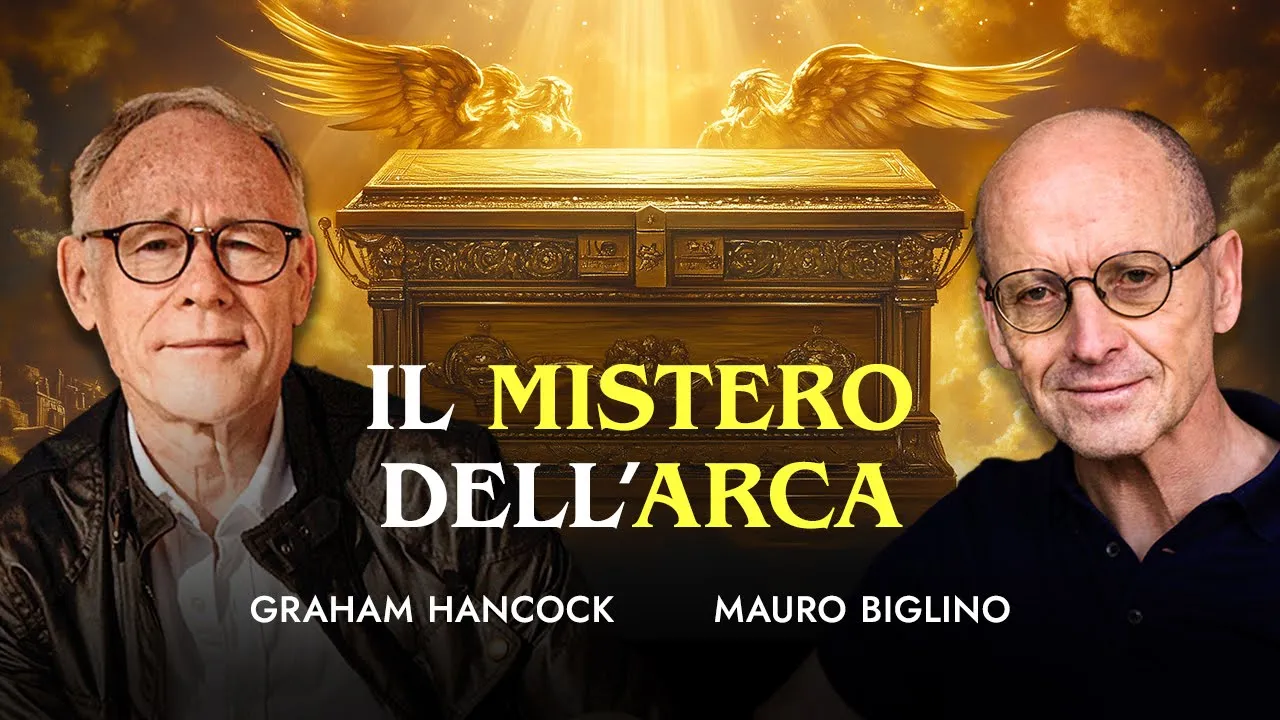
And the first thing I felt about the Ark of the Covenant as I read all the descriptions very carefully is that this thing looks like a technological tool, it was carefully constructed, there is a design, there are instructions on what to do. There is gold, there is wood, there is gold. There are these mysterious tablets that are placed inside it, whatever they are.
And it opened my eyes to the possibility that there is a forgotten technological period in humanity's past. I would not have written my books about the possibility of a lost civilization if I had not first encountered the mystery of the Ark of the Covenant. Certain.
I think the Ethiopian claim is quite intense for many reasons. However, his role in my life has been to educate me about the mysteries of the past that archaeologists completely ignore and dismiss with contempt. They are not interested in myths, traditions, anything like that.
They just dismiss them. And in doing so, as they say in English, they throw the baby out with the bathwater. They miss out on important things in their desperate attempt to be scientists.
For me it was an important lesson: there are mysteries in the past that have not been explained, which certainly cannot be explained with the current model of history and that model therefore must be questioned. And that's what I dedicated my life to, it was an amazing adventure for me and it opened my eyes and set me on the path that I'm still on today. I believe it is impossible to understand the human condition in the present if we have only one view of the past.
We have to have a diversity of views, we have to be open to all, and that's the main problem I have with archaeology. . .















![Antico Egitto in (quasi) 20 minuti [SilverBrain]](https://img.youtube.com/vi/Dcocpnz3qu8/maxresdefault.jpg)