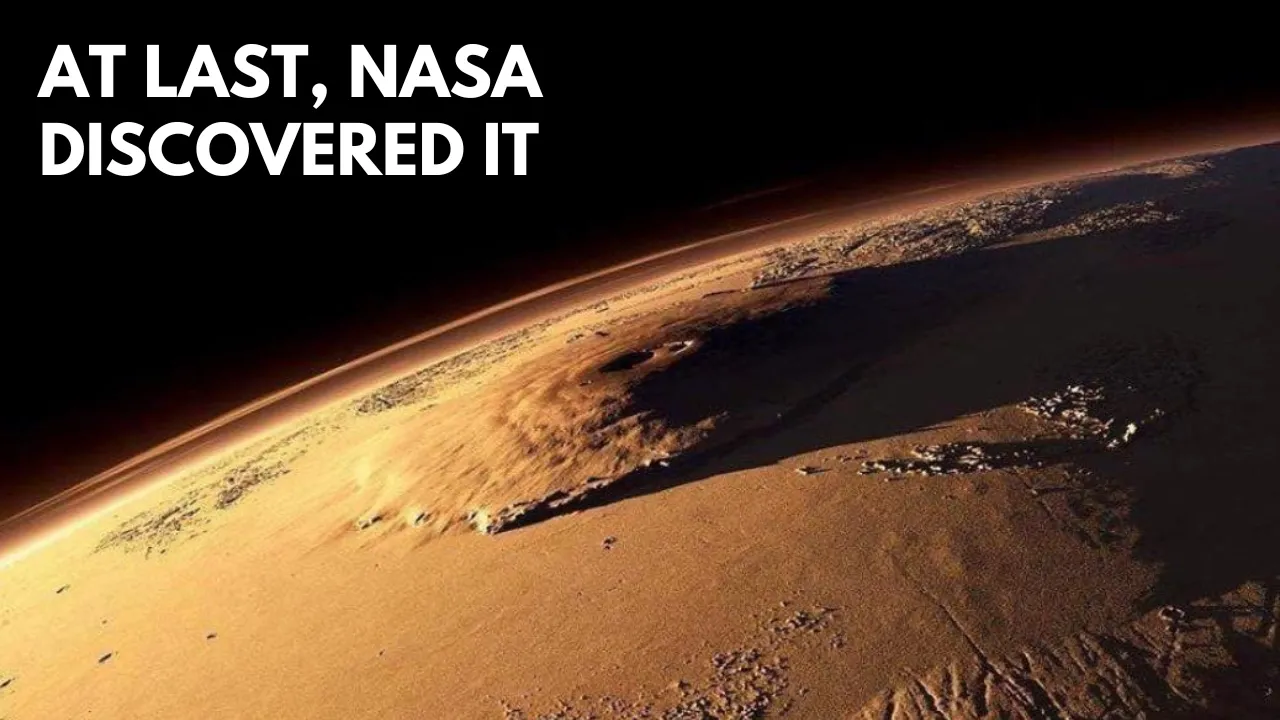
this video is sponsored by War Thunder in the past few weeks NASA has made three groundbreaking discoveries on Mars the first is from the perseverance Rover while exploring the jezo crater it stumbled upon a strange rock that suggest it might have once hosted microbial life there were strange leopard spots on the rock that had never been seen before anywhere on the red planet this rock is a big deal because its features provide the most substantial evidence yet hinting that Mars supported life in the past the second intriguing Discovery was made thousands of miles away from
perseverance while performing routine drilling operations the Curiosity Rover accidentally cracked open a rock surprisingly it turned out to be entirely made of a chemical element that was least expected again this type of rock formation has never been seen on Mars finally the third and most recent discovery came from NASA's Insight Lander using four years of seismic data collected by the Lander scientists have discovered that Mars has oceans of liquid water beneath its surface this Reservoir is so large that it could cover the entire planet with water up to a depth of 1 to 2 km
or about a mile even though these discoveries are different they can revolutionize our understanding of our neighboring Planet so so what did perseverance really see in that rock that led NASA to believe that it is the most compelling piece of evidence that Mars hosted life in the past how does curiosity's discovery of a strange rock change our understanding of the red planet finally and most importantly how does NASA AIM to bring a sample of the perseverance Rock home for further analysis the perseverance Rover affectionately known as Percy is Central to NASA's Mars 2020 Mission its
main goal is to explore and study jezero crater a site carefully chosen for its geological significance scientists believe that about 3.5 billion years ago this crater was home to a lake and a river Delta creating an environment that could have been suitable for microbial life this makes it an ideal spot to search for signs of ancient Martian life since its Landing in February 2021 has achieved three significant Milestones the first is the discovery of ancient river Delta deposits confirming that water once flowed in the region Additionally the Rover has collected samples of Martian Rock and
soil these samples are being carefully stored in sealed containers to be returned to Earth in future missions the third Milestone is creating insitu oxygen on the red planet perseverance have been conducting an Innovative experiment with its Moxy instrument which produces oxygen from the Martian atmosphere it's a crucial step for supporting future human missions to Mars however one of the most exciting recent developments is the perseverance Rovers discovery of what might be signs of ancient Life on Mars the Rover has come across a strange Arrowhead shaped Rock named Shava Falls which could hold valuable Clues to
Mars's past using its Sherlock instrument perseverance detected carbon Rich organic molecules in the Rock compounds that are essential for Life as We Know It the rock also featured white veins of calcium sulfate indicating that water once flowed through it this further supports the idea that jezo crater was a watery environment billions of years ago adding to the Intrigue perseverance observed small millimeter siiz marks surrounded by black rings that resemble leopard spots these spots are rich in iron and phosphate and on Earth similar formations are often linked to fossilized records of microbes that live below the
surface this discovery adds to the growing evidence that Mars might have once supported life the exact spot where this rock is lying on Mars is of interest to astrobiologists Shava Falls is located at the edge of an ancient river valley that likely formed when water once flowed into jezero crater carving the channel along its inner wall in this context one possible explanation for the features observed is that mud rich in organic compounds was deposited in the valley and eventually solidified into the rock that perseverance discovered later another episode of water may have seeped into the
rock forming the calcium sulfate veins and the distinctive black ring spots that caught the Rover's attention while the discovery of organic materials is intriguing and hints at the possibility of ancient microbial life it's essential to consider that non-biological processes could also explain these features the black ring spots for instance might have formed from chemical reactions that have nothing to do with life such as when calcium sulfate entered the Rock at extremely high temperatures possibly during a volcanic event nearby to investigate Shava Falls researchers have employed laser X-rays and taking extensive photographs pushing perseverance to the
limits of its capabilities the Rover has done everything possible to study this fascinating Rock but scientists are eager to bring a sample back to Earth here with access to Advanced instruments that perseverance doesn't have researchers hope to fully unravel the mysteries of what happened in this ancient river valley billions of years ago NASA's plans to return these samples are are still in the design phase so it will be a few more years before this detailed research can take place but that doesn't mean there's a lack of excitement about 2300 km from Percy the Curiosity Rover
which has been exploring the red planet since 2012 cracked open a massive Rock and found something completely unexpected this discovery reminds us of the unpredictability and strategy required in Exploration whether it's on Mars or the battlefield speaking of strategy have you ever tried War Thunder it's the most comprehensive vehicle combat game ever made and it's available now for free on PC and consoles allowing you to control over 2500 different tanks planes helicopters and ships from 10 major countries every vehicle is highly detailed and you can navigate through intense battles in War Thunder with stunning graphics
and realistic sound effects one of the best things is that you don't need extra Hardware you can drive any vehicle with nothing but your mouse and keyboard or controller you can play War Thunder for free on PC Playstation or Xbox right now by clicking the link in the pinned comment or video description if you're a new player or haven't played in the last 6 months you'll receive a huge bonus pack across all platforms this pack includes multiple premium Vehicles the exclusive Eagle of Valor vehicle decorator 100,000 silver lions and and 7 Days of premium account
access this offer is only available for a limited time so join a global community of over 70 million players today now back to the red planet curiosity is a car-sized Rover exploring Gail crater and mount sharp on Mars although curiosity was initially planned for a 2-year Mission it has been studying Martian climate geology and potential habitability for over 12 years shortly after landing in Gail crat in August 2012 curiosity found evidence of an ancient streamed indicating that water once flowed on Mars another significant Discovery was the detection of organic molecules in rock samples suggesting that
Ancient Mars had a more complex chemical environment than previously thought curiosity identified key elements essential for life such as carbon hydrogen nitrogen oxygen and phosphorus these findings suggested that Mars could have supported microbial life billions of years ago over the years curiosity's drilling operations have uncovered clay minerals further confirming the presence of long- lasting water in Mars's past the Rover also detected seasonal methane fluctuations in the atmosphere which could hint at possible geological or biological activity to add to the findings curiosity recently made a groundbreaking discovery this time quite literally on May 30th the Rover
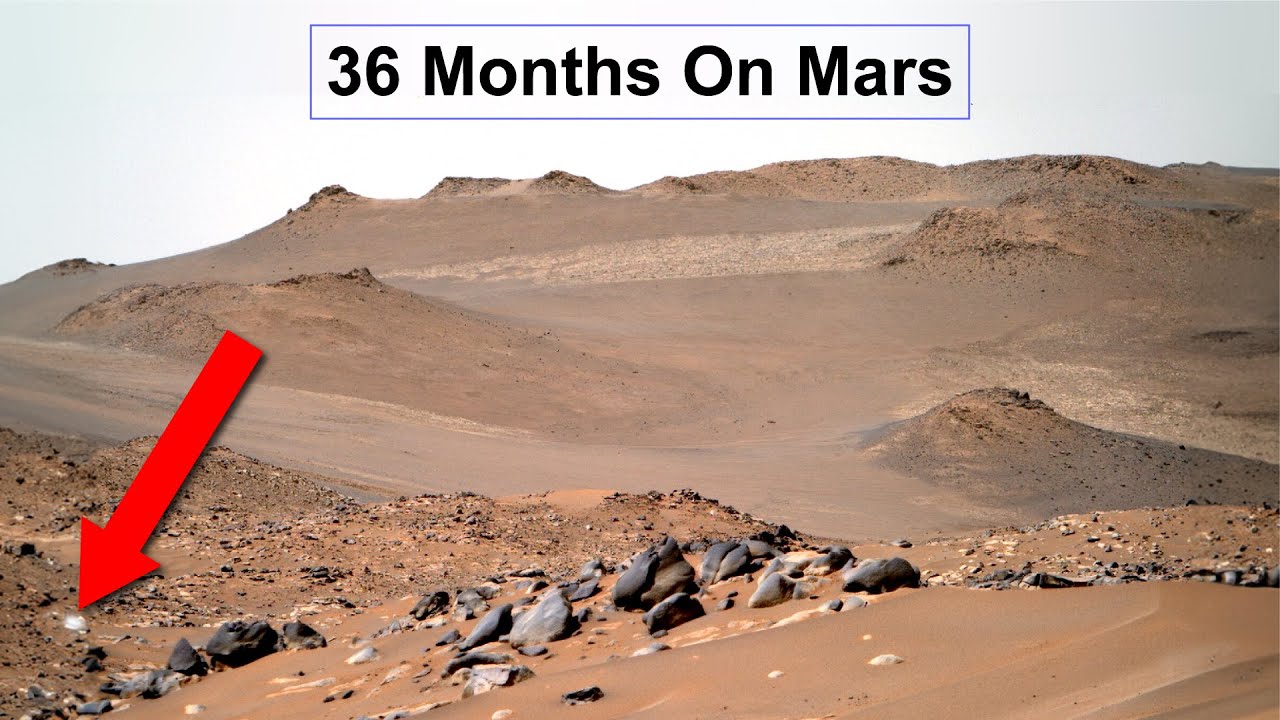
made an unexpected Discovery while exploring giz valis a channel likely formed around 3 billion years ago by a mix of flowing water and debris G valis is carved into part of the 5 km tall Mount sharp the central peak of gal crater which Curiosity has been gradually climbing since 2014 as the Rover ascends it passes through different surface layers each representing a distinct era of Mars's history and potentially holding Clues to its past habitability during its Journey the Rover accidentally ran over a rock causing its wheel to crack the Rock open to the team's surprise
pure Elemental sulfur Spilled Out displaying a vibrant yellowish green color while the stones were visible from a distance the mission scientists were eager for a closer look to get the right perspective they commanded curiosity to make a 90° turn positioning it perf perfectly for its cameras to capture a mosaic of the surrounding landscape when the Mosaic images were analyzed researchers noticed a crushed rock lying in the Rover's Wheel tracks a closer photograph taken a week later confirmed what was initially suspected it was pure sulfur curiosity had previously discovered sulfates on Mars these are salts containing
sulfur that form when water evaporates researchers have also observed bright white white calcium sulfate or gypsum within cracks on the Martian surface indicating hard water deposits left behind by ancient groundwater flows however this recent find marks the first time pure sulfur has been discovered on Mars in its yellowish green crystalline form this discovery is even more exciting because it was completely accidental no one was expecting to find sulfur there unfortunately the crushed rock samples were too small and brittle for curiosity's drill to sample directly leaving researchers uncertain about the formation of sulfur on Mars however
they soon discovered a larger Rock named Mammoth Lakes using its 7-ft robotic arm curiosity successfully extracted powdered Rock for analysis this sample is expected to provide valuable insights into the materials that make up the Martian surface while detailed analysis is still ongoing science are already making some preliminary guesses about its significance on Earth and other volcanically active bodies like Jupiter's moon IO pure sulfur naturally forms in volcanic emissions or hydrothermal vents this type of sulfur is less common than those found in minerals and is typically associated with volcanic or geothermal areas however it can also
form through other processes for instance sulfate minerals might have broken down under specific conditions in ancient Martian lakes or Seas leaving behind pure sulfur through evaporation it's worth mentioning that Mars is not the only place beyond Earth where the detection of pure sulfur has surprised scientists in 2023 India's chandrian 3 mission made a historic landing at the South Pole of the Moon one of the most important discoveries of the mission came from the pragian rers laser induced breakdown spectrometer or Libs Libs fired laser pulses at a sample to analyze a substance which then vaporized the
substance into a plasma the instrument then picks up the light emitted from that plasma and analyzes the wavelengths to determine what elements lie within Libs detected aluminum calcium chromium iron oxygen titanium and silicon but the element that caught everyone's attention was none other than sulfur one Theory regarding the presence of water on the moon involves a process called called cold trapping in the extreme cold and shadowed regions of the moon's polar craters temperatures can drop so low that water vapor can migrate and become trapped as water ice on the lunar surface when water ice freezes
it can capture small amounts of other molecules including sulfur high energy radiation might then cause the breakdown of this water ice releasing sulfur in the process also sulfur is closely associated with vol volcanic activity which is key to understanding the moon's geology and history what makes this detection even more intriguing is that despite many orbitor missions crossing over the moon South Pole none had ever detected sulfur in this region before this discovery adds a new layer of mystery to our understanding of the moon's composition and past while chandrian 3 failed to detect water ice on
the moon's South Pole directly there has been a recent breakthrough in our search for water on Mars after analyzing years of seismic data from the inside Lander on the red planet scientists have concluded that there's a hidden ocean of liquid water 11 to 20 km or 7 to 13 Mi beneath the surface of the planet this Reservoir is so large that it could cover the entire planet with water up to a depth of 1 to 2 km or about a mile although it's too deep for future astronauts to reach this discovery has solved a long-standing
mystery about Mars where did all the water go Mars wasn't always the dusty Barren world it is today over Decades of exploration we have found plenty of evidence that billions of years ago Mars was a very different place it had a thicker atmosphere and a warmer climate allowing liquid water to flow across its surface however unlike Earth Mars lost its magnetic field quite early in its history with the magnetic field gone Mars's atmosphere was left vulnerable to the persistent solar wind over time this solar wind Stripped Away much of the atmosphere causing the atmospheric pressure
to drop significantly as the atmosphere thinned it became increasingly difficult for liquid water to exist on the surface water that might have once been present in liquid form began to evaporate and Escape into space the thinning atmosphere also led to a weakened greenhouse effect resulting in a sharp drop in temperature Mars transitioned from a warm and wet environment to the cold dry world we see today as the planet cooled any remaining liquid water froze becoming surface ice or permafrost hidden beneath the surface however according to our theories even after accounting for the water lost to
space Mars should still have a significant amount of water the frozen water in the polar ice caps wasn't nearly enough to account for it all and now we may have finally found the missing Water Deep beneath the Martian crust when we think we've uncovered all the secrets of our red neighbor Mars surprises us again while the Martian rovers are doing an extraordinary job of revealing the planet's Mysteries future missions that aim to bring samples collected by the perseverance Rover back to Earth will be a major Leap Forward these missions will significantly enhance our understanding of
Mars's environment climate history and potential to support life laying the groundwork for future human exploration we may have to wait several years for these missions to become a reality but the weight will certainly be worth it so thank you for watching and thanks to War Thunder for sponsoring this video play it for free on PC Playstation or Xbox by clicking the link in the pinned comment or video description new and returning players will receive a massive Bonus Pack which includes multiple premium Vehicles the exclusive Eagle of Valor vehicle decorator 100,000 silver lions and 7 Days
of premium account access it's available for a limited time so don't miss out