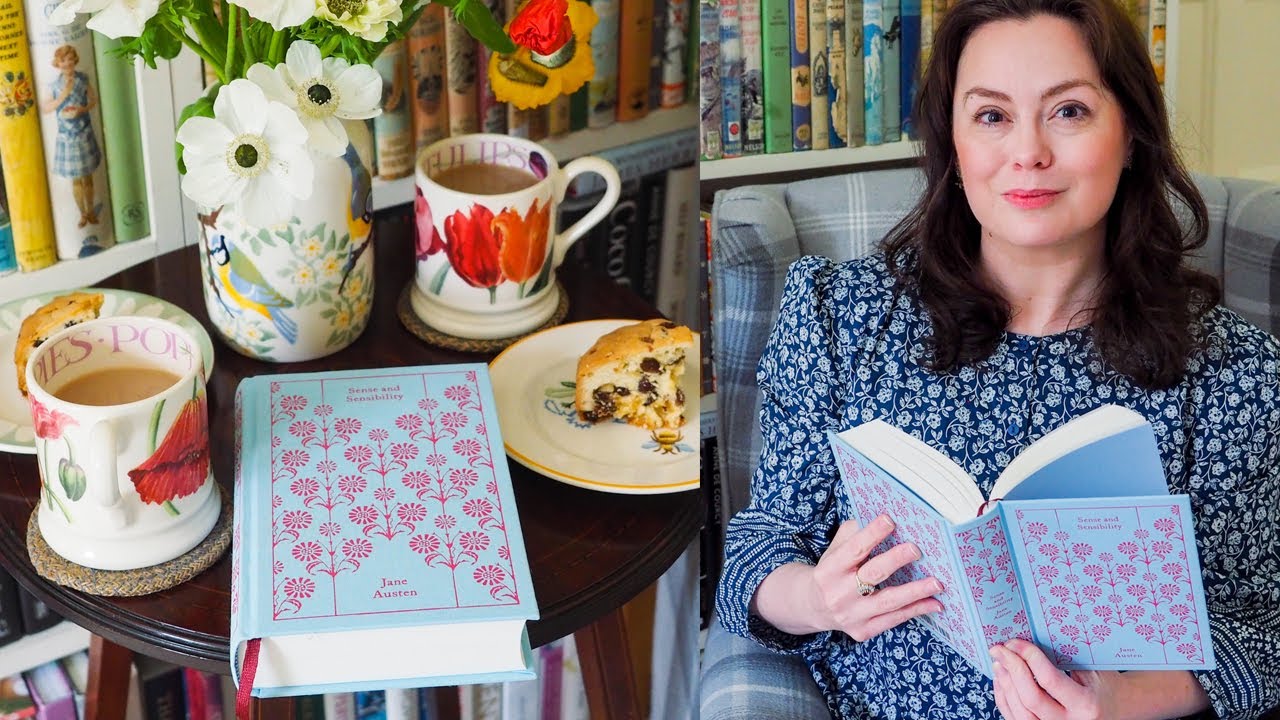
hello my name is john mullen i'm professor of english at university college london and fairly recently i've been the editor of the oxford world's classics edition of sense of sensibility which is a novel i'm going to talk about the first topic i'd like to talk about is money money in the novel money is particularly important in sense and sensibility and we know that it matters very much in the novel because marianne one of the two sisters who are the lead characters in sense and sensibility and a character who's very often mistaken in her strong opinions
tells her sister that actually money matters hardly at all and that's a short guide to the fact that it does matter and quite early on in the novel they have a discussion a kind of argument really which is playful on eleanor's part but deadly serious on marianne's part and one of the things about marianne is that she is usually deadly serious and uh she asks elena um a question what have wealth or grandeur to do with happiness grandeur has but little said eleanor but wealth has much to do with it eleanor for shame said marianne
money can only give happiness where there is nothing else to give it beyond a competence it can afford no real satisfaction as far as mere self is concerned marianne here is all indignation and she's very prone to exclamation so here she exclaims for shame um a competence beyond a combatant she says it can afford no real satisfaction a competence is the early 19th century word for what we might say is enough to live on but how much is a competence and that's actually a question that gets asked elena says to marianne come what is your
competence about eighteen hundred or two thousand a year not more than that eleanor laughed two thousand a year one is my wealth i guessed how it would end now we no longer know what two thousand pounds a year uh in 1811 when the novel was published would be worth um but i think we already know enough about these two characters to infer that it's a lot of money um austin's first readers of course would have known exactly how much two thousand pounds a year was and therefore just how absurd marianne is being and she's making
herself more absurd by defending this this necessary sum i'm sure i'm not extravagant in my demands a proper establishment of servants a carriage perhaps two and hunters cannot be supported unless hunters meaning horses that you use for fox hunting and of course by this stage she's got to know willoughby a bit and he's very keen on riding and hunting and so she's influenced by this a carriage by the way requires a lot of money if you're going to keep a carriage and a jane austen novel you've got to have carriage horses stabling you've got to
be able to feed those horses you've got to have special servants to look after the horses to drive the carriage so possession of a carriage is a really crucial sign of wealth in austin novels and you might remember that earlier in sense and sensibility eleanor actually has to persuade her mother who's nearly as foolish as marianne about money that they're not going to be able to keep a carriage in devon they simply don't have enough so marianne's idea of what a competence is is to the contemporary reader but i think also to the shrewd modern
reader absurdly extravagant she is in a way a hypocrite about money because she says it doesn't really matter but in fact she has very high ideas about how much money she expects or she needs and austin's very good at inviting us to hear characters hypocrisy about money think about lucy steele who tells elena and she's talking here about her secret engagement to edward the man that eleanor loves and the difficulties that stand in the way of of them of lucy and edward getting married and those difficulties are to do with the lack of money and
lucy says this i have been always used to a very small income and could struggle with any poverty for him but i love him too well to be the selfish means of robbing him perhaps of all that his mother might give him if he married to please her and of course it's completely disingenuous characters in austin novels who claim that they don't care about money invariably care very much about it and of course lucy is angling to get back in the good offices of edward's rich mother so that she can benefit from her largesse money
shakes the story in sense and sensibility giving men and women different degrees of power or powerlessness and when we think about men and women and money and sense and sensibility we might notice how complicated and subtle it is about whether money follows gendered lines it doesn't always edward ferriss is a man but he's financially utterly dependent on a woman his mother who has all the money she's a widow and has considerable power because of her wealth mrs jennings on the other hand is a woman but has money to burn apparently again she's a widow and
is independently wealthy there are impecunious men and wealthy women in this novel as well as the opposite the opening chapters of sense and sensibility are painstakingly precise about the financial situation of the main characters the dashwood women the widowed mrs dashwood and her three daughters mr dashwood who dies in the first chapter left seven thousand pounds jane austen names sums the girls the three of them have a thousand pounds each the interest on that total ten thousand pounds would have been 500 pounds a year the standard rate of return for investment in government stocks in
uh the early 19th century was 5 and the readers knew this so 500 pounds a year is what they all had to live on and that is just enough to get by on when uh jane austen's father the reverend george austin retired from his job as a clergyman and went to live in bath with his wife and two daughters jane and cassandra they were living on about 650 pounds a year bath quite an expensive place to live and they just managed to do that with a couple of servants but there's evidence they had to kind
of move a couple of times to cheaper lodgings because that kind of income was only just enough to maintain gentility um this 500 pounds a year the dashwoods have to live on would have been understood by the reader to be only just enough to get by on we should note that in the second chapter of the novel um mr john dashwood eleanor and marianne's half-brother accurately names specifies the income of his stepmother and his three sisters in that extraordinary chapter mrs john dashwood reveals her true avarice and meanness as she dissuades her husband from keeping
the promise that he made to his father on his father's deathbed to look after um uh his father's daughters um financially mrs john dashwood did not at all approve of what her husband intended to do for his sisters to take three thousand pounds from the fortune of their dear little boy would be impoverishing him to the most dreadful degree and those are her words impoverishing him to the most dreadful degree because of course mr john dashwood is hugely wealthy he has an income of four thousand pounds a year plus his wife's money uh uh and
some more money that uh he's been left so um he is hugely wealthy and his gift his proposed gift of a thousand pounds to each of his sisters would have hardly made a dent in his fortune but it would have made a huge difference to the annual income of those girls in this chapter mrs dashwood successfully talks her pliant husband down from this proposed uh these proposed gifts of a thousand pounds uh to each of the his half sisters to eventually the idea of just giving them the odd bit of leftover fish or game in
season um but what we should note in that extraordinary second second chapter is something that is important for the whole novel and indeed for all jane austen novels which is that characters know about each other's money when jane austen tells us this information it's not just information in her world the money that people have is almost public information characters you might think have labels around their necks declaring their monetary value so incomes are the ways in which characters in the novel label and judge each other money is not just background information it's the very voltage
of people's exchanges with each other



![The Making of Sense & Sensibility 1995 [FULL] | Emma Thompson, Kate Winslet, Alan Rickman](https://img.youtube.com/vi/SGNPv77l9hQ/maxresdefault.jpg)