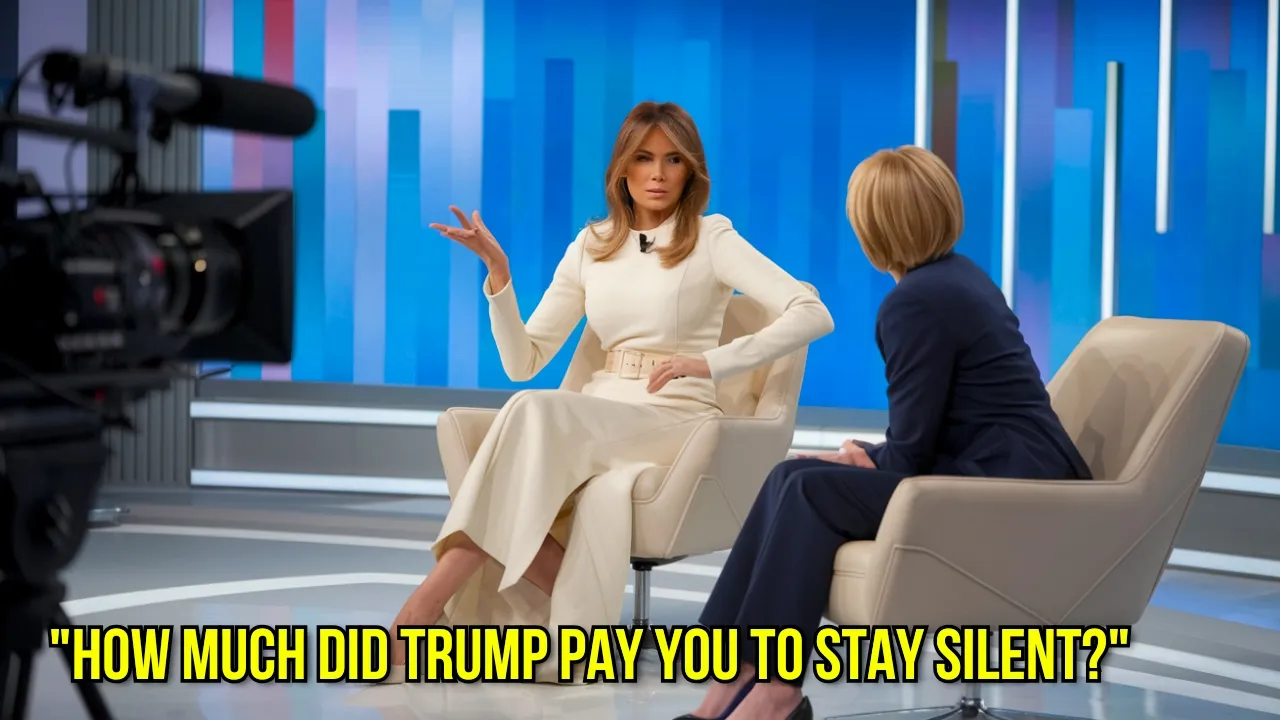
You can't imagine what happens when a talk show host tried to make a fool of Melania Trump; the response shocked the world. The camera panned in as the 15th of October dawned crisp and clear over Manhattan, the kind of autumn morning that made the city feel alive with possibility. Inside the gleaming tower that housed the ZNN studios, executive producer David Cohen paced the length of his office, phone pressed to his ear.
"She's actually coming? You are absolutely sure about this? " He paused, running a hand through his graying hair.
"No, no, I understand the conditions. Just make sure security is airtight; we can't have any surprises today. " Down in the lobby, head of security Mike Torres was already briefing his team.
"Listen up, people! Our guest arrives in exactly 90 minutes. I want every entrance covered, every ID checked twice, and absolutely no unauthorized personnel beyond the second-floor checkpoint.
" "What about the usual audience screening? " asked Sarah Lopez, a junior security officer. "Triple-check everything!
Anyone showing even a hint of potential disruption gets politely redirected to another taping. The network can't afford any incidents today. " The morning show crew bustled about with unusual intensity.
Makeup artists prepared their stations, sound technicians performed extra microphone checks, and the cleaning staff made one final sweep of the already spotless green room. In her dressing room, Sarah Mitchell stood before the mirror, adjusting her navy blazer with practiced precision. Twenty years in broadcast journalism had taught her to trust her instincts, and something about today felt different.
Her producer, Rachel Yang, knocked and entered without waiting for a response. "Here is the latest revision of the questions," Rachel said, handing over a thick folder. "Legal went through them again; we had to modify the section about the—" "I know what I am doing," Rachel, Sarah interrupted, her eyes still fixed on her reflection.
"I've interviewed three presidents, two prime ministers, and more celebrities than I can count. This isn't like those interviews. " "Sarah, the network wants ratings, and they'll get them.
" Sarah finally turned to face her producer. "How many journalists have gotten her to agree to a sit-down in the past two years? None.
You know why she chose our show? " Rachel shook her head. "Because we have a reputation for being tough but fair.
She respects that, even if she might not like it. Now, what's the status of the audience? " "Fully vetted.
We've got a mix of demographics, just as requested. Though I should mention that three of the people in the front row—" A commotion in the hallway interrupted their conversation. Both women stepped out to investigate.
"What do you mean the teleprompter is acting up? " a technician was arguing with the floor manager. "We checked it an hour ago!
" Sarah felt her stomach tighten. In all her years of broadcasting, technical issues before a big interview always made her uneasy. She turned to Rachel.
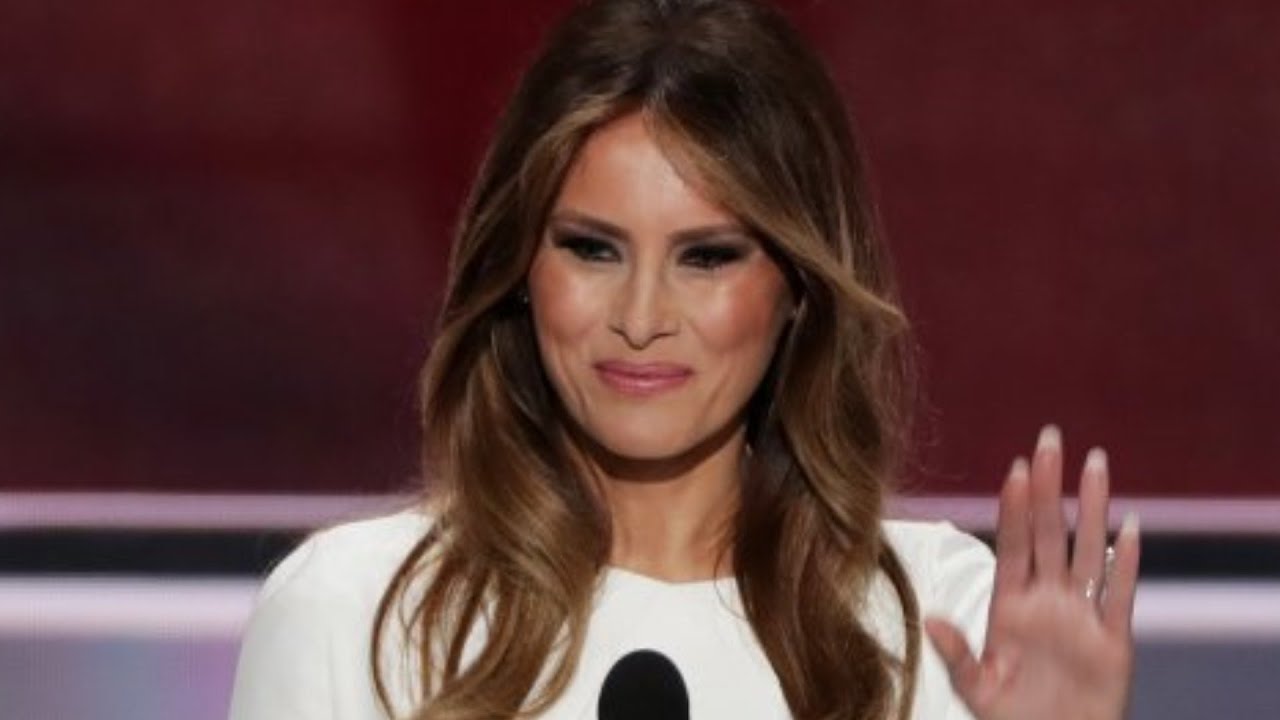
"Get it fixed now. " Meanwhile, across town, a sleek black SUV navigated the morning traffic. In the back seat, Melania Trump reviewed the morning's briefing materials, her face a study in composed concentration.
Her assistant, Maria Chen, sat beside her, tablet in hand. "The studio called again," Maria reported. "They want to confirm if you'll take questions about the new book that just came out.
" Melania looked up from her papers. "That wasn't in the agreement. " "No, it wasn't.
" Maria made a note on her tablet. "Should I remind them of the terms? " "No need," Melania returned to her documents.
"They will try anyway; they always do. " The car fell silent, save for the soft rustle of papers. Maria watched her boss from the corner of her eye, marveling at her composure.
She'd worked for Melania since 2018, through some of the most intense periods of the Trump presidency and beyond. While the media often painted her as aloof or disconnected, Maria knew a different side of her. "You know they'll try to provoke you," Maria said softly.
"Sarah Mitchell has a reputation for getting under people's skin. " "Let her try. " The hint of a smile played at the corners of Melania's mouth.
"I didn't survive four years in the White House by being easily provoked. " The SUV turned onto Broadway, joining the stream of yellow taxis and delivery trucks. In the front passenger seat, head of personal security Jack Thompson spoke quietly into his radio, coordinating with the studio security team.
"Package on route," he murmured. "ETA 15 minutes. Confirm entrance protocol.
" Melania's phone buzzed. She glanced at the screen, her expression softening slightly. "Baron sends his regards; he has a math test today.
" "He'll do well," Maria assured her. "He always does. " "Yes.
" Melania typed a quick response, "But he worries too much about what others think—like his mother. " Perhaps the car slowed as they approached the studio building. Already, a small crowd of photographers had gathered, their long lenses trained on the private entrance.
Jack spoke again into his radio, his voice tense. "We've got paparazzi on the south entrance. Request clearance for an alternate route.
" Melania continued reviewing her papers, seemingly unaffected by the commotion outside, but Maria noticed her grip on the folder tightened slightly. Inside the studio, the audience was beginning to file in. Sarah Mitchell's show typically drew a mix of tourists and local professionals, but today's crowd seemed different—more polished, more deliberate in their movements.
Security guards checked and rechecked IDs, comparing faces to approved lists. In the control room, David Cohen watched the monitors with growing anxiety. "Where are we on that teleprompter issue?
" "Fixed! " called out a technician. "It was just a loose connection.
" "Good, and the backup ready to go? " "Sarah's earpiece testing now. " David leaned back in his chair, trying to release the tension in his shoulders.
In 30 years of television production, he'd handled everything from breaking news to natural disasters, but something about today felt… Unprecedented, the SUV finally pulled into the private garage beneath the studio building as the security team took their positions. Maria handed Melania a small mirror. "Would you like to check your makeup before we go up?
" "No need," Melania gathered her papers. "Everything is exactly as it should be. " The elevator ride to the studio floor was silent.
Jack and two other security officers flanked Melania while Maria checked her tablet one final time. As the doors opened, they were met by Mike Torres and his team. "Mr.
Trump," Torres nodded respectfully, "if you'll follow me, we've secured a private route to the Green Room. " The corridors were unusually empty, cleared of the typical morning show bustle. As they walked, Melania could hear the distant murmur of the audience being seated in the studio.
Maria watched her employer's face carefully, looking for any sign of nervousness, but found none. The Green Room was elegant but not ostentatious, with comfortable seating and good lighting. A makeup artist waited discreetly in the corner, but Melania shook her head slightly.
The woman quietly gathered her things and left. "The show begins in 45 minutes," Maria announced. "Would you like to review the key points again?
" "Number," Melania sat down, smoothing her dress. "Tell me about Sarah Mitchell. " "Not what's in the briefing.
What do you know about her personally? " Maria blinked, surprised by the question. "Well, she's been with the network for 15 years.
Started as a field reporter in Chicago. She's known for being tough on both sides of the aisle, but especially hard on conservatives. She has two children, divorced 3 years ago.
She's been pushing for this interview for months. " "And what does she want from it? " "Ratings, obviously.
Maybe a viral moment. Some people say she's being considered for the evening news anchor position. " Melania nodded slowly.
"So she needs this to go well. " Before Maria could respond, there was a knock at the door. Rachel Yang entered, her professional smile firmly in place.
"Mr. Trump, welcome to ZNN. I am Rachel, Sarah's producer.
I just wanted to check if you need anything before we begin. " "Everything is fine, thank you," Melania's response was polite but final. "Wonderful!
And just to confirm, we'll start with some questions about your current projects, then move on to the agreed-upon topics, yes? " Maria stepped forward slightly. "We have the outline.
" Rachel's smile didn't waver. "Of course, though I should mention, given recent developments, Sarah might need to address certain current events. " "The agreement stands," Melania's voice was calm but carried an unmistakable note of authority.
"Shall we proceed with the interview as planned, or should we reschedule for another time? " The producer's smile faltered slightly. "No, no, of course not.
We'll stick to the agreement. I'll come back in 30 minutes to escort you to the studio. " After Rachel left, Maria turned to Melania.
"They're definitely planning something. " "Of course they are. " Melania stood and walked to the window, looking out over the city she'd called home for so many years.
"They always do. But today will be different. " "Different how?
" Melania turned back to her assistant, and for a moment, Maria saw something in her eyes she hadn't seen before— not determination exactly, but something closer to certainty. "Because today," Melania said quietly, "I have something to say. " In the studio, the audience was now fully seated.
Sarah Mitchell stood offstage, listening to the buzz of conversation. She could pick out snippets here and there: speculation about what would be asked, whether there would be any dramatic moments, what Melania Trump was really like in person. David Cohen's voice came through her earpiece.
"5 minutes to places. " "Sarah, are we clear on the strategy? " "Cystal clear," she responded, straightening her blazer one final time.
"Trust me, David. This isn't my first rodeo. " "No, but it might be our most important one.
The network president is watching this one personally. " Sarah smiled to herself. After 20 years of fighting her way up through the ranks of broadcast journalism, she knew an opportunity when she saw one.
Today could change everything for her career, for the network, for the political landscape itself. Back in the Green Room, Melania stood as Rachel returned. The producer's eyes widened slightly at the sight of her.
Somehow, in the brief time since she'd last seen her, Melania seemed to have grown even more composed, more regal. "It's time, Mr. Trump.
Are you ready? " Melania gathered her things, nodding to Maria as they walked toward the studio. The sounds of the audience grew louder.
Just before they reached the stage entrance, Melania paused. "Maria? " "Yes?
" "Remember what I said about today being different? " "Of course. " "Watch carefully.
Sometimes the most important messages are in what isn't said. " With that, Melania Trump stepped forward, ready to face whatever Sarah Mitchell and her audience had in store. The stage lights beckoned, and somewhere in the control room, a countdown began.
The morning's main event was about to begin. Though none of them—not Sarah Mitchell, not David Cohen, not even Maria—fully understood just how different this interview would truly be. The studio lights blazed as Sarah Mitchell's signature opening music faded.
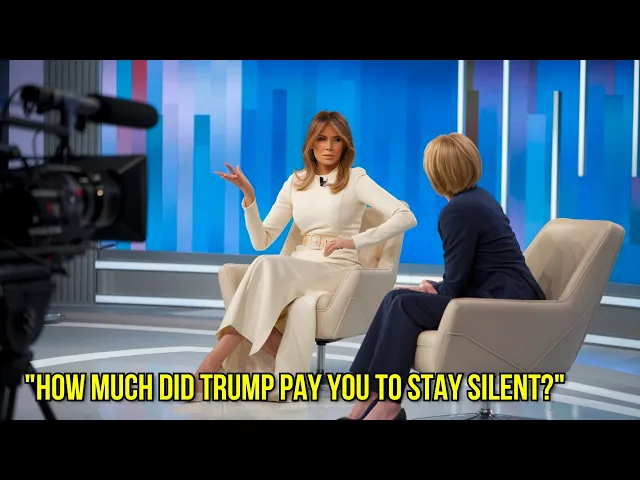
The cameras panned across the audience before settling on the host's familiar face. "Good morning," Sarah began, her practiced smile firmly in place. "Today's guest needs no introduction, but protocol demands one anyway.
She’s been First Lady, a model, a businesswoman, and perhaps one of the most enigmatic figures in recent American history. Please welcome Melania Trump! " The applause was polite but measured as Melania walked onto the set.
She moved with practiced grace, acknowledging the audience with a slight nod before taking her seat across from Sarah. "Mr. Trump, welcome to the show!
" "Thank you for having me," Melania responded, her accent precise and controlled. In the control room, David Cohen leaned forward. "Easy does it, Sarah.
Start with the softballs. " It's been two years since we've seen you in a formal interview setting. "Sarah began, what made you choose this moment to break your silence?
" Melania adjusted slightly in her chair. "There is a time to speak and a time to observe. I believe now is the time for certain things to be said.
" "And what things would those be? " "My work with Children's Charities continues. We have made significant progress with the B Best initiative, especially in cyberbullying prevention.
" Sarah nodded, glancing at her notes. "Yes, let's talk about B Best. Some critics have suggested perhaps we should discuss the actual results.
" Melania interjected smoothly, "Last month alone, we helped implement anti-bullying programs in 50 schools across five states. " In the Green Room, Maria watched the monitor intently. She recognized Melania's subtle strategy: redirecting without confrontation, maintaining control without appearing defensive.
Sarah tried a different approach. "Your work with children is commendable, but surely you must be aware that many people are more interested in your perspective on recent political events. " "Are they interested in truth or in creating headlines?
" Melania's question hung in the air for a moment. In the control room, David spoke into Sarah's earpiece, "Push harder, but keep it professional. " "Speaking of truth," Sarah leaned forward slightly, "your recent absence from public events has sparked considerable speculation.
" "Some suggest you are distancing yourself from. . .
" "Speculation is not fact," Melania cut in, her voice still measured but carrying a new edge. "What would you like to know specifically? " Sarah shuffled her cards.
"Well, for instance, your decision to skip certain high-profile gatherings. " "You mean the private family events that were portrayed as political statements? " A hint of emotion crept into Melania's voice.
"Tell me, Sarah, does your network always assume the worst about private family choices? " The audience stirred. This wasn't the defensive response they'd expected.
"Mr. Trump," Sarah tried again. "Surely you understand public interest in your actions given your unique position?
" "My position? " Melania raised an eyebrow. "And what position would that be?
Former First Lady? Immigrant? Mother?
Wife? Which label would you like to discuss first? " In the control room, David muttered, "Stay on track, Sarah.
Don't let her control the narrative. " Sarah took a deep breath. "Let's talk about your former Chief of Staff, Stephanie Grisham's book.
She made some rather striking claims about. . .
" "Let's discuss what's real," Melania interrupted, her eyes flashing. "You mention a book written for profit, but did you investigate the children's hospitals I visited without cameras? The families I still help privately?
" The producer frantically signaled Sarah to go to commercial, but both women remained locked in their verbal sparring. "Our viewers have a right to know. " "Your viewers have a right to truth," Melania countered.
"But truth requires context, doesn't it? " In the audience, a man in the third row whispered to his companion, "This isn't going how they planned. " Sarah glanced at her notes again, visibly regrouping.
"You speak of truth and context. What about your silence during crucial moments? Many interpreted that as.
. . " "Interpreted?
" Melania's accent grew slightly stronger. "Yes, let's talk about interpretations. When I wore a certain jacket, your network spent weeks interpreting.
When I decorated the White House for Christmas, there were interpretations. When I chose to focus on my son's well-being, more interpretations. " The tension in the studio was palpable; even the cameramen exchanged glances.
"Mr. Trump," Sarah tried again. "Your role as First Lady.
. . " "My role?
" Melania's voice carried a note of steel. "Let me tell you about roles. While your network was interpreting my silence, I was working.
While pundits analyzed my expressions, I was meeting with families affected by the opioid crisis. While commentators critiqued my accent, I was helping children. " In the Green Room, Maria smiled slightly.
This was the Melania she knew: composed but unwavering, polite but unmistakably strong. Sarah touched her earpiece, listening to David's increasingly urgent instructions. "Perhaps we should take a brief break?
" "No," Melania said firmly. "Let us continue. You wanted to discuss silence.
There are many kinds of silence, Sarah. There's the silence of choosing one's battles carefully. There's the silence of protecting one's child from public scrutiny.
And then there's the silence of media bias when certain stories are conveniently ignored. " The audience was completely still now, hanging on every word. This wasn't the practiced political dance they'd expected.
Sarah tried to regain control. "You mention bias, but surely you understand that public figures must expect scrutiny. " "Scrutiny?
" Melania's smile was slight but pointed. "Is that what you call it when your network ran stories questioning my intelligence because of my accent? Is that scrutiny when photographers waited outside my son's school, when every gesture, every expression was twisted to fit a predetermined narrative?
" In the control room, David was nearly shouting into Sarah's earpiece. "Cut to commercial! Cut to commercial now!
" But Sarah, a veteran broadcaster and skilled interviewer, found herself in unfamiliar territory. For perhaps the first time in her career, she wasn't leading the conversation; she was reacting to it. "Mr.
Trump, no one is questioning your intelligence. . .
" "Aren't they? " Melania's voice was quiet but carried to every corner of the studio. "Then let us be intelligent together.
Let's discuss the actual work, the real issues, the things that matter beyond headlines and book deals. " The tension in the studio had shifted. What began as an attempt to probe and provoke had somehow transformed into something else entirely.
The audience, initially divided in their sympathies, now sat in rapt attention. Sarah glanced at her producers, who were making increasingly frantic gestures, but before she could redirect the conversation, Melania continued, "You know, Sarah, I've watched your show many times. You pride yourself on asking hard questions, on seeking truth.
So let me ask you something: in all your research for this interview, did you look into the actual results of the initiatives I've supported? Did you investigate the lives changed, the families helped, the children protected? " The question hung in the air, heavy with implication.
Sarah Mitchell, known for her quick responses and sharp retorts, found herself momentarily speechless in The Green Room. Maria whispered to herself, and there it is—the interview had reached a turning point, though not the one the network had anticipated. The carefully crafted questions, the planned provocations, the hoped-for gotcha moments—all had somehow been turned back on themselves.
But this was only the beginning. As Sarah Mitchell gathered her thoughts for another attempt, neither she nor her producers realized that the real revelations were yet to come. The next segment would shake not just the studio audience, but the entire narrative that had been built around one of America's most misunderstood public figures.
The studio air felt electric as Sarah Mitchell reached for her phone, her last resort move in what had become an increasingly challenging interview. "Perhaps we should address some recent social media commentary," Sarah began, her finger scrolling through her screen. "Here is a tweet that went viral last week regarding your silence during—" "You want to talk about silence?
" Melania's voice carried a new intensity that made even the camera operators pause. Her accent, usually carefully moderated, became more pronounced. "Let's talk about silence.
" "Sarah, real silence," in the control room, David Cohen gripped the edge of his console. "Stay with her, Sarah. Don't let this spiral.
" "I stayed silent," Melania continued, leaning forward slightly. "When your network claimed my son was autistic—a child, Sarah—my child. " The audience shifted uncomfortably in the third row.
A woman whispered to her neighbor, "I remember that story. It was awful. " "I stayed silent," Melania went on, her eyes never leaving Sarah's.
"When protesters sent letters with white powder to my family, did your network cover that story with the same enthusiasm they showed for analyzing my Christmas decorations? " Sarah glanced at her producer, who was frantically signaling from the sidelines. "Mr.
Trump, surely you understand that public figures—" "Public figures? " Melania's interruption was soft but decisive. "Let me tell you about being a public figure.
I stayed silent when your colleagues mocked my accent while I was reading to children in hospitals. Silent when fashion magazines blacklisted me, despite my background in the industry. Silent when every gesture, every expression was twisted to fit a narrative.
" In The Green Room, Maria watched the monitor with growing amazement. She'd known Mia for years; had seen her strength in private moments, but this was different. This was years of calculated restraint finally finding its voice.
Sarah tried again, tapping her phone. "These tweets suggest your—" "Tweets or your truth? " Melania's question cut through the studio like a blade.
"Where were your cameras when I spent Christmas Eve with terminal children at Walter Reed? Where were your fact-checkers when false stories were printed? " The studio audience had grown so quiet you could hear the air conditioning humming.
Even the usually stoic security personnel were watching intently. "We have covered many of your charitable works," Sarah attempted to defend, her voice lacking its usual confidence. "Have you?
Then perhaps you can tell me about the family in Ohio. " Sarah blinked. "I am sorry, what family in Ohio?
" "The one I visited last month. The mother working three jobs, her daughter fighting leukemia. No cameras, no press releases—just help where it was needed.
" Melania's voice softened slightly. "But that doesn't make good television, does it? " In the control room, David was frantically reviewing their research files.
"Sarah, we don't have anything about an Ohio visit. Redirect the conversation. " But Sarah Mitchell, veteran of countless high-stakes interviews, found herself increasingly off balance.
The prepared narratives were crumbling, the careful traps springing empty. "Your work with children is commendable," Sarah tried. "But the public's interest extends beyond—" "The public's interest?
" Melania's smile held no warmth. "Or the media's agenda? Did the public demand to know why I chose certain Christmas decorations, or did your network spend weeks analyzing them while ignoring the charity events they represented?
" From the audience, a murmur of agreement rippled through the rows. In the front row, an older woman nodded vigorously. Sarah touched her earpiece, listening to increasingly urgent instructions from the control room.
"Perhaps we should take a break. " "No," Melania said firmly. "You wanted honesty, Sarah.
You wanted to understand the silence, so let me tell you about the nights I spent comforting my son after he saw what your colleagues wrote about him. Let me tell you about the immigrant women who write to me asking how I stay strong when my accent is mocked on national television. " The studio grew warmer as the intensity built.
A makeup artist moved to approach with powder but was waved away by both women. "Mr. Trump—" Sarah attempted to regain control.
"Your experiences are certainly valid, but—" "Valid? " Melania's accent grew stronger with emotion. "Is that the word we use now?
Tell me, Sarah, when your network ran stories questioning my intelligence because of my accent, was that valid journalism? When photographers stalked my son's school, was that valid public interest? " In The Green Room, Maria whispered to herself, "They never saw this coming.
" Sarah glanced at her notes, but the carefully prepared questions suddenly seemed inadequate, even foolish. The narrative they'd planned to craft was being systematically dismantled, replaced by something far more raw and compelling. "Your passion for these issues is clear," Sarah tried.
"But surely you understand why people question—" "Question what exactly? " Melania's voice remained measured but carried an unmistakable intensity. "My commitment?
My intelligence? My independence? You speak of questions, Sarah, but let me ask you one: in all your research for this interview, did you find a single story about the scholarship program we started for foster children?
Did you investigate the mentoring initiatives we've launched in underserved communities? " The silence that followed was deafening. In the control room, David Cohen had stopped giving instructions.
Through Sarah's earpiece, transfixed by the unfolding scene, I wasn't aware of those programs. "Of course not," Melania said, her smile sad but knowing, "because good work done quietly doesn't drive ratings, does it? " The audience stirred, several members nodding in agreement.
The atmosphere in the studio had shifted dramatically from the beginning of the interview. What had started as an attempt to provoke and expose had transformed into something entirely different—a moment of raw, unfiltered truth. Sarah looked at her phone one last time, then slowly put it down.
"Mr. Trump, you've given us a lot to think about. " "No," Melania interrupted gently.
"I've given you the truth. What you think about it, what you do with it—that's your choice. Just like my silence was my choice.
Not weakness. Not submission. Not lack of understanding.
Choice. " In the control room, David Cohen had stopped trying to direct the interview. He sat back in his chair, running a hand through his hair.
"This isn't what we expected," he muttered to no one in particular. The studio light seemed to grow brighter as Melania continued, her composure absolute despite the emotion in her voice. "You invited me here to understand who I am, so let me tell you.
I am not a politician's wife who reads prepared statements. I am not a former model who married into privilege. I am a mother who saw her child's name trending on Twitter with cruel hashtags.
I am an immigrant who loves America despite its media's judgment. And I am a woman who chooses her battles carefully. " The control room erupted in chaos as producers argued about whether to cut to commercial, but something kept them from making the call.
Perhaps the same something that kept the audience leaning forward in their seats. They kept Sarah Mitchell uncharacteristically silent, that made even the most jaded camera operators pause in their movements. But before the director could respond, something unprecedented happened: three audience members stood up, their applause breaking the tense silence.
Then a dozen more joined them. The spontaneous response rippled through the studio like a wave. Sarah Mitchell sat frozen in her chair, her usual sharp retorts and quick comebacks entirely absent.
Twenty years of broadcasting experience hadn't prepared her for this moment. "We need to wrap this up," she managed to say, her voice barely steady. "Yes," Melania agreed, her composure intact despite the emotion still evident in her voice.
"But first, let me say something to your audience—to all audiences. " In the Green Room, Maria leaned forward, watching the monitor intently. This was the Melania she knew, the one the cameras rarely captured.
"For years," Melania began, "I have watched as media networks like yours crafted narratives. Some painted me as a victim, others as an accomplice, still others as someone too simple to understand what was happening around her. " She paused, allowing her words to sink in.
"None of them bothered to see the truth. " Sarah shifted uncomfortably in her chair. "Mr.
Trump, I—" "Please," Melania held up her hand slightly. "Allow me to finish. This isn't about you, Sarah, or even your network specifically.
This is about something much larger. " The audience remained standing, their attention completely focused on the former First Lady. "You see," Melania continued, "while your cameras were searching for controversy in my Christmas decorations, I was working with children who had never had a Christmas celebration.
While your commentators were analyzing my facial expressions, I was holding the hands of mothers who had lost children to opioids. While your network questioned my intelligence because of my accent, I was using five languages to connect with immigrant children who felt lost and alone. " In the control room, David Cohen had stopped giving directions.
He stood transfixed, watching the monitors. "This is either going to make us or break us," he muttered. One of the producers whispered, "Should we cut the feed?
" "It's too late," David replied. "It's already trending on social media. " Indeed, phones throughout the studio audience were lighting up as clips from the interview began circulating online.
The hashtag #MelaniaSpeaks was already trending. Sarah Mitchell made one final attempt to regain control of her show. "Your perspective on these matters is certainly compelling, but—" "Compelling?
" Melania's slight smile carried years of unspoken thoughts. "No, Sarah. The truth doesn't need to be compelling.
It simply needs to be heard. " From the audience, someone called out, "We hear you! " The studio security team exchanged nervous glances, but the atmosphere wasn't hostile; it was transformative.
"Your producer tried to warn you earlier," Melania continued, addressing Sarah directly. She knew this interview wouldn't go as planned, but sometimes, Sarah, the most important stories are the ones we didn't plan to tell. " Sarah's producer, Rachel Yang, stood off stage, her clipboard hanging loosely at her side.
"This is going to change everything," she whispered to no one in particular. The studio lights seemed to grow warmer as Melania rose from her chair. "You invited me here hoping for headlines.
Instead, I hope I've given you something to think about—about judgment, about empathy, and about the cost of treating people as characters in a story rather than human beings. " The applause grew louder; even some of the crew members had stopped their work to watch. Sarah Mitchell remained seated, her usual confident demeanor completely dissolved.
Later, media analysts would point to this moment as a turning point in her career, though not in the way she had hoped. "We're getting calls from every major network," one of the producers announced in the control room. "They all want to know if we're going to release the full unedited footage.
" David Cohen ran his hands through his hair. "Of course they do. This isn't just an interview anymore; it's a moment.
" Outside the studio, social media was exploding. Clips were being shared and re-shared, commented on, and analyzed. But unlike the usual online chaos, a strange consensus was emerging.
People from across the political spectrum were sharing the same observation: they had never seen anything quite like this. As Melania prepared to leave the studio, Maria approached with her coat. "That wasn't what they expected," she said quietly.
"No," Melania replied, a hint of satisfaction in her voice. "It was what they needed. " The network executives were already gathering in emergency meetings.
The show's scheduled afternoon rebroadcast was now a subject of intense debate. Some argued for editing; others insisted it needed to be shown in its entirety. Sarah Mitchell left the studio early that day, avoiding the usual post-show briefing.
Her producer found her in her dressing room, staring at her reflection. "Sarah," Rachel began cautiously, "the network president wants to speak with you. " "Of course he does," Sarah’s laugh was hollow.
"We just had the highest-rated morning segment in three years, and I looked completely unprepared. " "No one could have prepared for that," Rachel offered. "That's just it," Sarah replied, gathering her things.
"We should have. We had all the information; we just chose to focus on the wrong story. " Meanwhile, at a children's hospital fundraiser across town, the organizers were being overwhelmed with calls.
Word had spread that Melania Trump was scheduled to appear at their next event, and suddenly everyone wanted to attend. "We sold out! " the event coordinator announced, looking stunned.
"We've never sold out this far in advance. " The impact of the interview continued to ripple outward. Media critics scrambled to analyze what had happened; political commentators tried to fit it into their usual frameworks and found they couldn't.
This had been something different, something real. Later that evening, as Melania sat in her study reviewing the day's events, Maria brought her a summary of the media coverage. "They're calling it a watershed moment in political interviews," Maria reported.
"Are they? " Melania didn't look up from her papers. "And what are they learning from it?
" "That's the interesting part," Maria smiled. "They're not quite sure what to think. You didn't fit into any of their usual categories.
" "Good," Melania replied, finally looking up. "Perhaps now they'll stop trying to categorize and start trying to understand. " The next morning, Sarah Mitchell's show recorded its lowest ratings in three years.
The audience, it seemed, had seen something they couldn't unsee—the difference between manufactured drama and authentic truth. But perhaps the most significant change wasn't in the ratings, or the social media trends, or even the political analysis. It was in the quiet conversations happening in homes and offices across the country, where people began to question their assumptions, to look past headlines, to consider the human cost of public judgment.
As one media critic would later write, in an age of carefully crafted sound bites and political theater, Melania Trump didn't just break the script; she revealed why the script existed in the first place. And in doing so, she may have changed the way we think about public figures, about media narratives, and about the power of choosing when to stay silent and when to speak. The story could have ended there, but its ripples continued to spread.
In the weeks that followed, several major networks revised their guidelines for covering public figures. Social media platforms saw a marked decrease in hostile comments about accents and immigrant backgrounds. And perhaps most significantly, there was a subtle but noticeable shift in how the media approached stories about public figures' children.
As for Sarah Mitchell, she would later describe that interview as both the lowest and highest point of her career. "I thought I was going to expose someone's weakness," she wrote in her memoir. "Instead, I was shown the weakness in my own approach to journalism.