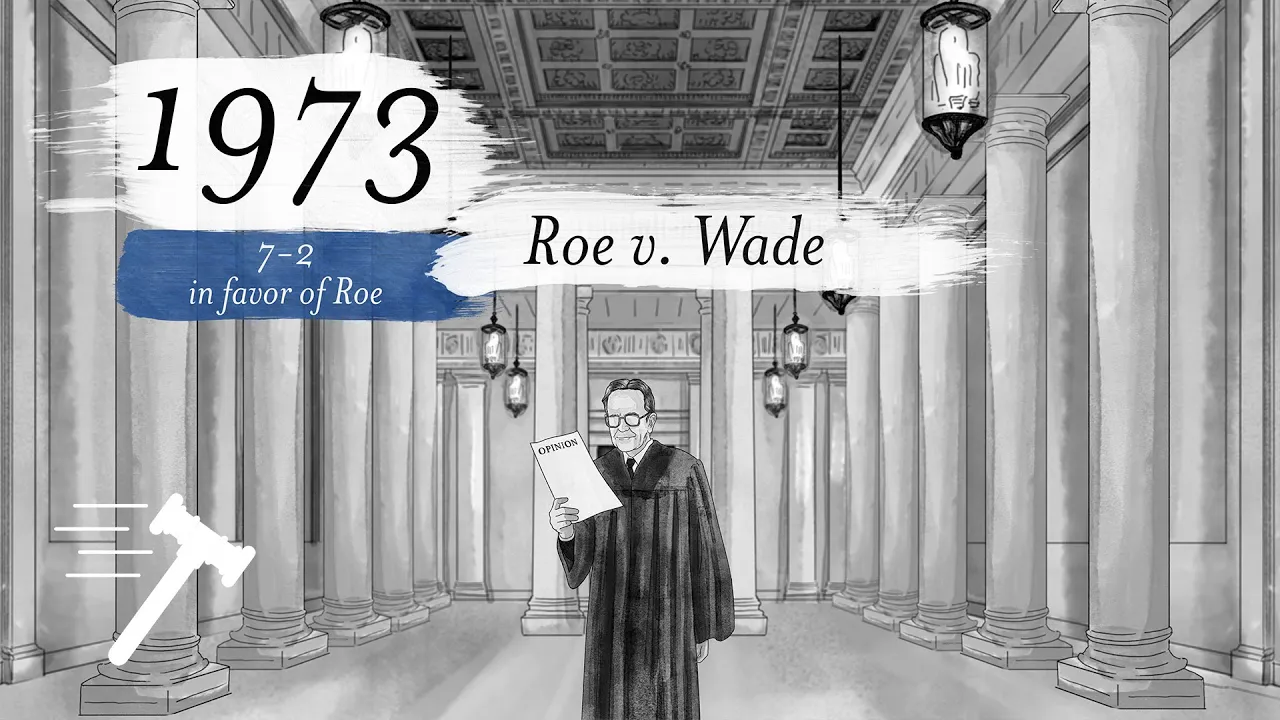
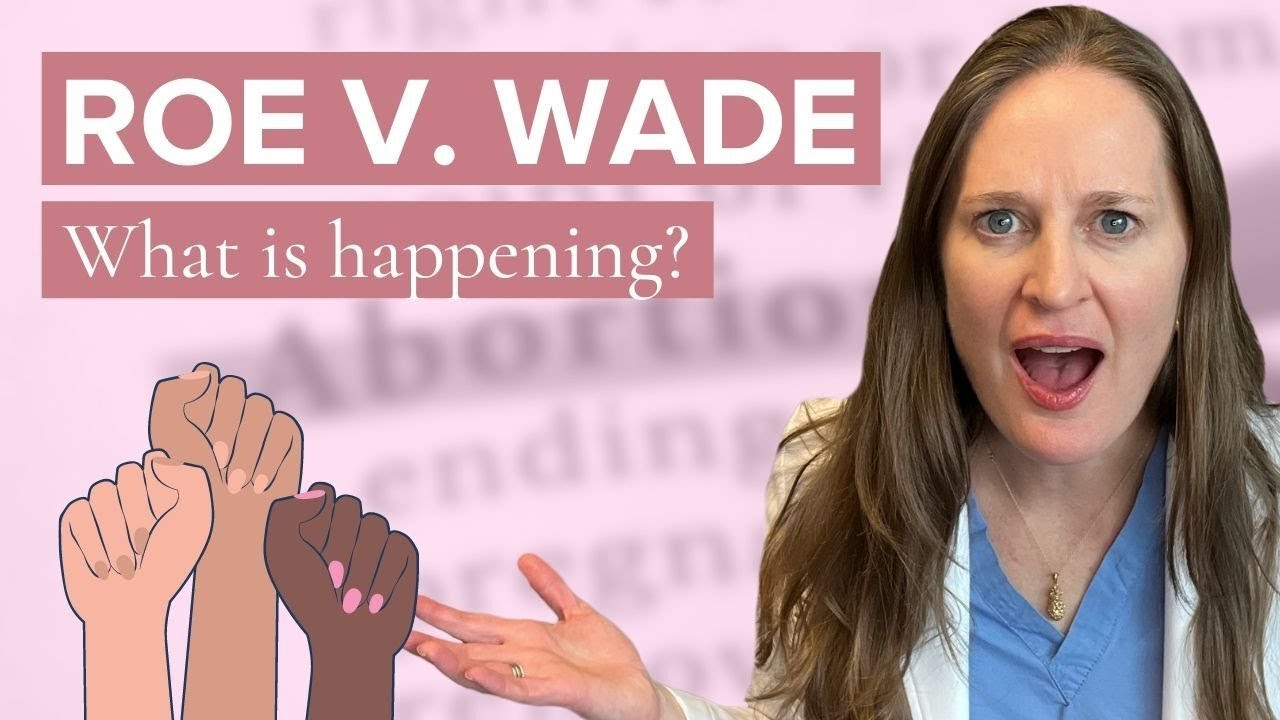
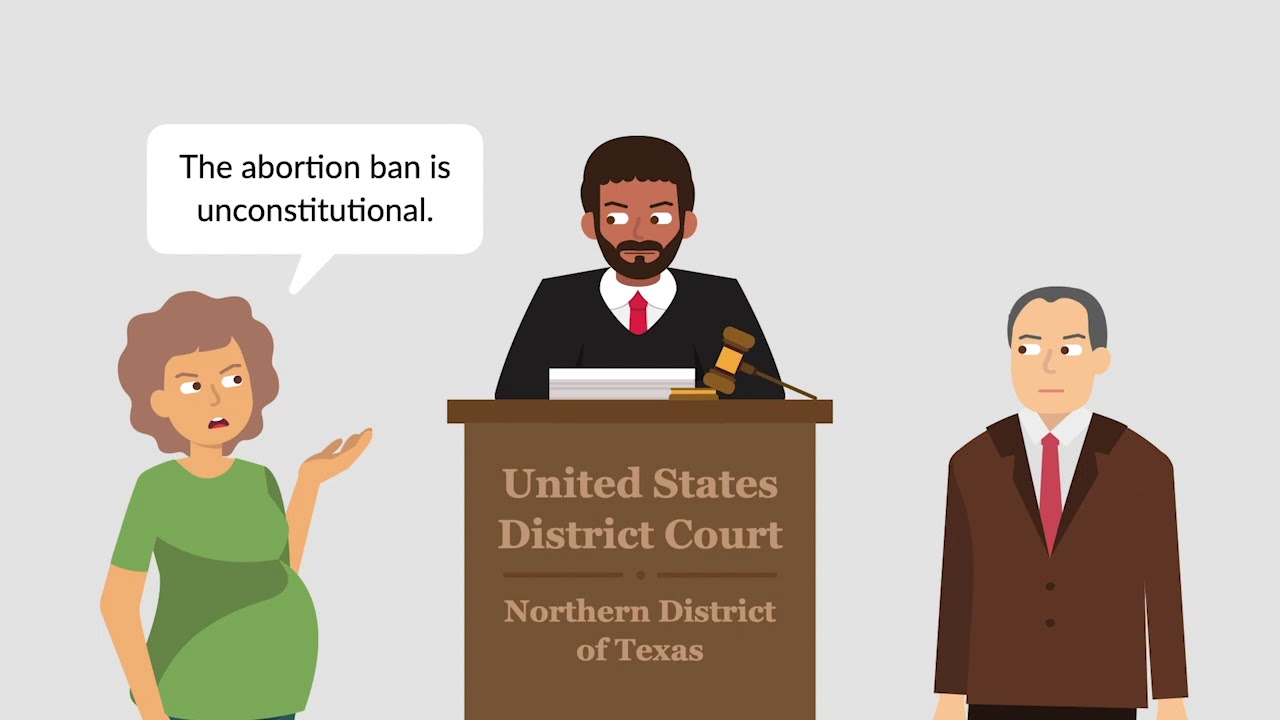
Dobbs v. Jackson Women's Health Organization, decided in June 2022, addressed the constitutionality of Mississippi's Gestational Age Act. Enacted in 2018, the law prohibits abortions after the fifteenth week of pregnancy, except in cases of medical emergency or severe fetal abnormality.
In imposing significant restrictions on abortion prior to fetal viability, the Mississippi law directly conflicted with the Court's two leading precedents on abortion rights, Roe v. Wade and Planned Parenthood of Southeastern Pennsylvania v. Casey.
The Supreme Court, by a vote of six to three, upheld Mississippi's law. Five justices went further. In his majority opinion, Justice Samuel Alito held that the Constitution does not confer a right to abortion and that Roe and Casey must be overruled.
Justice Alito explained that five factors weigh strongly in favor of overruling Roe and Casey: the nature of their error, the quality of their reasoning, the workability of the rules they imposed on the country, their disruptive effect on other areas of the law, and the absence of concrete reliance. Decided in 1973, Roe had found that the Constitution guaranteed broad abortion rights and that the state held only limited powers to regulate abortions before fetal viability. Finding that the right of personal privacy includes the abortion decision, the Court in Roe pointed to several constitutional provisions as sources of abortion rights, most importantly, the Fourteenth Amendment's due process clause.
In Casey, handed down in 1992, the Court stated it was reaffirming Roe's core holding, which it construed to include a right to choose abortion before fetal viability without undue government interference. This right to choose, the Casey Court maintained, was essential to the liberty guaranteed by the due process clause of the Fourteenth Amendment. In Dobbs, the Court rejected the constitutional analysis of both Roe and Casey, ruling that abortion rights do not fall within the Fourteenth Amendment's protections.
The Court maintained that abortion rights are neither found in the constitutional text nor deeply rooted in the nation's history and tradition. According to the Court, Roe had ignored constitutional text, history, and precedent, and Casey perpetuated Roe's errors. The result was an unworkable area of constitutional law that distorted many unrelated legal doctrines.
The Court also rejected claims that overruling Roe and Casey would upend substantial reliance interests. In addition, it declined to follow suggestions that even if standard stare decisis factors do not support retaining Roe or Casey, the Court might nonetheless opt to do so out of concerns about its public approval. Writes Justice Alito, "We do not pretend to know how our political system or society will respond to today's decision.
And even if we could foresee what will happen, we would have no authority to let that knowledge influence our decision. It is time," the Dobbs majority concluded, "to heed the Constitution and return the issue of abortion to the people's elected representatives. " Going forward, laws regulating abortion, like other health and welfare laws, will be entitled to strong presumptions of validity.
The Court in Dobbs emphasized that its holding is a limited one. "Nothing in this opinion should be understood to cast doubt on precedents that do not concern abortion. " The Court stated that controversies over abortion rights involve what Roe and Casey termed "potential life," and thus differ materially from other rights controversies, including ones involving contraception and same sex relationships.
In a concurrence, Justice Clarence Thomas explained that in his judgment, the due process clause does not secure any substantive rights, including rights to abortion. He argued that in future cases the Court should reconsider all its substantive due process precedents. Justice Thomas noted the possibility that other constitutional provisions, such as the Fourteenth Amendment's privileges and immunities clause, guarantee some of the myriad rights that the Court's substantive due process cases have generated.
That said, he expressed the firm view that the Dobbs majority opinion conclusively demonstrates that even if the privileges or immunities clause protects unenumerated rights, abortion is not one of them under any plausible interpretive approach. Justice Brett Kavanaugh also wrote a concurring opinion, stressing that in his view, "The issue before this Court is not the policy or morality of abortion, but what the Constitution says about abortion. " Justice Kavanaugh concluded that the Constitution is neither pro-life nor pro-choice.
Rather, the Constitution is neutral and thus entrusts the issue of abortion to the people and their elected representatives to resolve through the democratic process in the states or Congress. Chief Justice John Roberts concurred only in the judgment of the Court. The chief justice argued that the Court could uphold the 15-week line drawn by Mississippi's Gestational Age Act without overruling Roe and Casey.
"As a general matter," he argued, "if it is not necessary to decide more to dispose of a case, then it is necessary not to decide more. " In a joint dissent, Justices Stephen Breyer, Sonia Sotomayor, and Elena Kagan charged the majority with having held that under the Constitution, from the very moment of fertilization a woman has no rights to speak of. They rejected the idea that Dobbs would have no ramifications for other constitutional rights, arguing that the right Roe and Casey recognized is an integral part of a long line of precedents protecting from government intrusion sensitive private choices about family matters, child rearing, intimate relationships, and procreation.
In addition, the dissenters chided the majority for what they termed its cavalier approach to overturning this Court's precedents, maintaining that Roe and Casey have been the law of the land for decades, shaping women's expectations of their choices.








![Pierce v. Society of Sisters [SCOTUSbrief]](https://img.youtube.com/vi/vEd78X3kjdo/maxresdefault.jpg)
![Gideon v. Wainwright, EXPLAINED [AP Gov Required Supreme Court Cases]](https://img.youtube.com/vi/P-Ry5axDF40/maxresdefault.jpg)