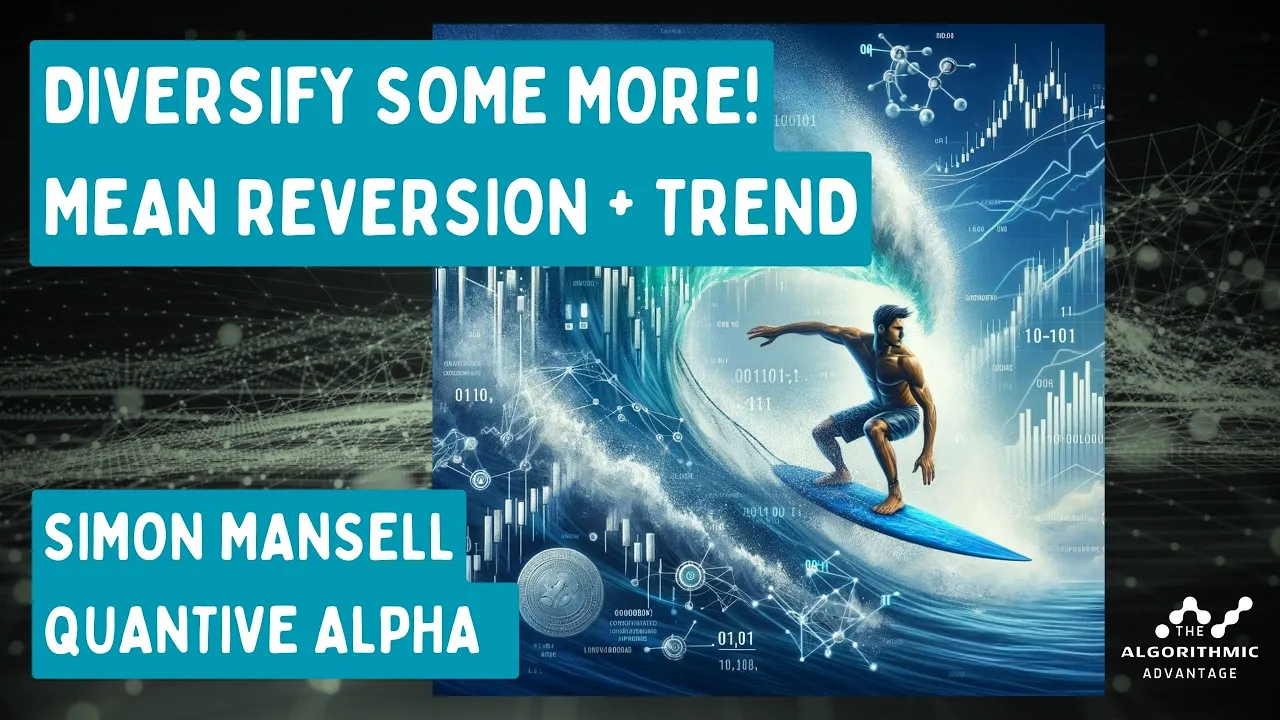
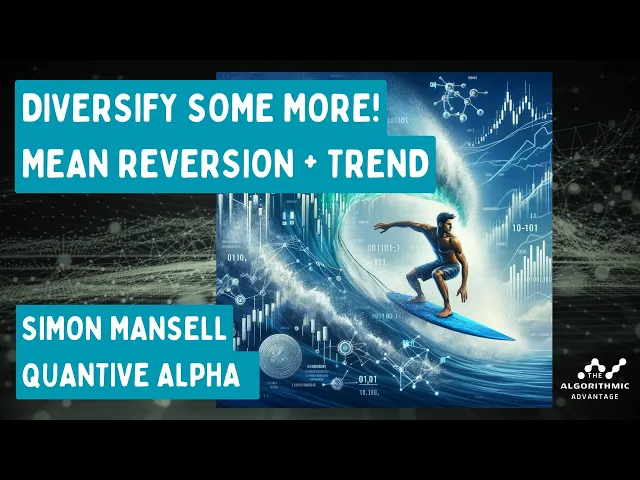
welcome to the algorithmic advantage we're here to expand the toolkit of the Quant trading community and introduce investors to the many advantages of systematic trading our goal is to educate and Inspire as we embark on a captivating journey into the vast knowledge and experience of leading portfolio managers and other experts in the field we hope you enjoy the show and if you do please subscribe leave us a review or even buy us a coffee via the link on the algorithmic advantage.com we really appreciate it [Music] well good day from Australia everyone it's Simon and Richard
back again for the algorithmic advantage podcast Simon announced with an introduction in the last podcast about what what the process we're going to be involved in over the numerous podcasts coming and in this sequence of podcasts gives an opportunity for me to interview Simon and for Simon to interview me before we get into the serious part of interviewing our guests so in this podcast we're going to learn a bit about Simon so Simon welcome great to be here how are things thanks Rich I'm doing well looking forward to it we've had a few technical issues
today but uh pushing pushing ahead as amateur podcasters loving it lovely Simon all right so do you mind if we get straight into it that's the best way let's do it all right we've got a lot to cover so we're going to try and keep this in uh you know within a sort of an hour or so and see how we go so let's start introducing with a bit of a background so Simon can you give me a couple of minutes on your background and what got you into trading and anything in particular that has
really helped you develop your skills in the market and who or what has been the biggest influence on your trading and investing Style sure thing Rich um so my brief bio is that I studied economics and finance at University at the time I did quite enjoy that but I wasn't exactly sure which way I was going to take it what kind of career path I was interested in necessarily when I finished uni I did the Gap year thing and being a slow learner it took me two years I put a backpack on spent all my
money on a video camera which back then was extremely expensive for a little digital though the first digital cameras and so I worked my way around Europe and I did summer in the Greek Islands and winter snowboarding in Austria um and so on and so forth until I ran out of money ended up in London as many Aussies do and having my degree and and I'd worked in a bank while I was studying I had a little bit of experience and I got lucky to to get a job in London on a very large trading
floor just as an assistant but um of course there was the wow factor of the the size of the floor and the people in there and what was going on and it was um I just absolutely loved it it fell in love straight away uh so I talked to a lot of smart people in there obviously and um uh uh garnered as much advice as I could as to you know how I should progress in this um in this field and and particularly in and around the trading but I thought the first thing and best
thing to do was to really um upskill and I'd learned from the risk management side of things there that those guys really knew the that they knew the math they knew exactly how products worked how they were priced um they they knew a lot more detail than than sort of the Traders this you could say so I that quite interested me and um I ended up coming back to Australia moving to Sydney and got lucky to get a job in risk management at the Sydney Futures Exchange um now I got there just moments too late
I think it was sort of months after they it might it was about months after they closed the the the pit the trading floor the open outcry trading system that they had prior to going electronic which um Australia did long before the US in fact um so the paper and mess was still all over the trading floor and it was a great site to behold my boss of course was off the off the floor and he knew the whole sign language blood was still on the floor blood was still on the floor there was dead
bodies strewn around it was it was it was a it was really cool it's sad that I missed that um that era but it does speak to the fact that I was of that era that straight away began in the electronic trading space so to speak and and there was the Old Guard was was changing you either moved and adapted or died at that point um so you're beyond the Gordon gecko era that's right moving into the new era and of course we were especially being in risk and in futures um the likes of Nick
Leeson and and so on were all that those stories were all fresh in our memories as well and our training ground that a source of endless fascination of course um so I I really learned a lot there about exactly how the markets work and and how instruments are priced and what the risks are and margins and and and and that the industry as a whole because we're dealing with regulatory issues where we're bringing new products to Market in the marketplace we need to have discussions with The Regulators with with banks who would act as market
makers make sure we weren't uh bringing in systemic risk into the marketplace um and we engaged a lot with the other Futures exchanges around the world and did similar projects with them so yeah it was really uh that that gave me a big um a really big uh I guess Step Up in terms of how I thought about trading and it influenced me a lot because um you know unlike a lot of say retail Traders I had risk management at the Forefront of my mind from the beginning and and I knew that it was a
dangerous game um but I was still very excited about it so from there my career for the most part remained in Investment Banking uh stayed in risk management for a while before ultimately doing um many um contract and Consulting roles where I would usually sit between the Traders trading floor on one side and Technology on the other and be building software that integrated those two or helped the trading trading floor whether or there was new regulation that needed to be adhered to or new systems required or trading strategies um and so between the risk and
the technology and the business side I kind of sat in the middle um which I I really thought was a good place to be to to again as a background to getting more into the technology side I could see how Tech how technology driven these things were so I also did a number of entrepreneurial things I I didn't quite just I didn't quite fit the um the corporate mold in some ways I still liked traveling I still liked running away from time to time I spent a year in Spain and I traded Futures full time
while I was there for myself and really started to learn how um you did the different styles of trading whether the one was shorter term longer term Futures options stocks and so on and I did some entrepreneurial things as well started a health business and I really really enjoyed that so long story short um that kind of very diverse background the entrepreneurial Gene the fascination with the strategy and the trading and the technology all just came together and fit perfectly so when I um although I was trading all through that period because I'd been interested
in it and just trading small amounts here and there along the way by the time I got into systematic and quantitative trading the stars all aligned for me and I was very happy with that and have not done nothing since nothing but that sense and um and so my sort of world operates or revolves around either my own trading now or um still continuing to do some uh consulting or helping others in the industry worked for funds around the place and um and also delivering some software that that we create as well well you've dived
into a very deep pool and you've had a lot of explosion of sort of a multi-disciplinary exposure which is fantastic so I can see where you're coming from so obviously sort of that multi-disciplinary approach looking at things from all different angles from risk from different strategies systems methods all of these things that's obviously shaped your philosophical way of thinking so let's get on to that and talk about the the broader philosophy behind your trading and so how would you describe your trading philosophy and why do you think you can beat the markets um so definitely
being quantitative now being systematic first and foremost that is my My overarching Philosophy in the markets if you like if you can say it that way so I say that because I feel like if I'm taking a scientific and statistical approach then um it's the it's the right way to do it and and so long as I am taking a scientific approach then I'll I'm open to to various Avenues and various trading Styles and strategies and time frames if I if I think that it if it that it checks out um so my philosophy in
that sense then is that I'm I'm a little bit of a um jack of all trades master of none perhaps where I like not necessarily being just a trend follower as I know that you are not necessarily just a day trader or or this or that but but just overall a system Trader and um and I trade a a range of different styles different strategies different time frames and I try to take the diversification about as far as I can take it so across all of those things across different strategies and time frames and um
one thing that I I'm yet to do so next steps would be to diversify even into different markets and and contracts so at the moment I'm primarily focused in on equities and that's U.S equities um and you know I'd like to soon broaden that into into Futures and and and other um other jurisdictions as well so Australia for example you remind me a lot of Nick Raj uh he's got a very broad approach to training a lot of different system Styles isn't particularly 100 focused on any one style but Diversified in this approach to many
different styles so I see a lot of similarities here for you yeah I mean um I guess we all know Nick is in around this area so he has been um you know I've sort of seen from a distance what uh he's done here and there and that's probably had some influence although um my primary influence has come from a mentor having a trading Mentor that trades in a similar fashion to the way that I do runs a fund and and um has a lot of experience in the markets and technology and um you know
I do I do think that's been a huge leg up and I encourage everyone to find um mentorships or or help in whatever way they can to sort of Fast Track their Journey if you like yeah I know mentors are incredibly important for me I know that um you know we get focused on a particular area of research we're investigating it thoroughly but it's great to have you know a mentor sitting to the side who can bounce ideas off and see if we're on the right path and see what they've experienced as we've gone down
similar paths you know those sort of things so well absolutely mentorship yeah because that plays into another part of the philosophy really which is that whilst um whilst I I do like being systematic and quantitative about things there really is a human element to all of this I do think that it takes a certain kind of person to make this work so I mean I think anyone can do it but you've got to be willing to put the work in to to build up those skills and even personality types that or traits that that will
help you succeed so I think there's a real Art Plus science thing going on with trading um because no matter how rigorous your mathematics there's so many decisions that are made by the individual rights so there's you're deciding which systems you're going to trade how you're going to test them how you're going to build them which markets you're going to deploy them on whether it's for your retirement account or a growth account and um you know whether you're in Australia or the US you might have access to different markets that kind of thing so I
do feel like um one has to balance the the pure Tech encoding side of this with a that sort of commercial side of things where you you need to develop some intuition around what makes sense because when we're starting out obviously um it's all it's all roses and we've got a very blue sky approach but um you know the School of Hard Knocks teaches us that um yeah we we we're subject to the same human biases as everyone else even though we're taking a quantitative approach we might be taking the wrong one and we might
spend too much time on the wrong thing or um you know we might we might build a great system and then turn it off and we shouldn't have so we we're still able to make these decisions and there's a there's a training ground I think there as well perfect so in a nutshell broad diversification of approach not a one-trick pony lots of different opportunities in the market empirically based science drives you a huge Landing environment mentors very important that that's your broad philosophy so let's now start looking uh let's bring this down now to practical
application so what kinds of trading strategies do you employ and what's your specific objective so you know what are the markets and time frames you trade with how automated are you what instruments do you trade and how do you manage risk all of those practical outcomes of that philosophy the more practical stuff so as I mentioned I do primarily trade the US equities markets at the moment and I do think that despite the fact that that's a homogeneous group in some respects that you can extract many different kinds of alpha out of trade getting a
board range of liquid US Stocks whilst you know correlations can tend to go to one at the worst time and and this kind of issue on a day-to-day basis obviously the the stocks don't all go up and down at the same time so there's quite a that quite a few thousand instruments um all trading there so that's a lot of data for that can be used for back testing and validation which which I also like so used the right way um you know one can also use Aussie data and European data and US data so
you can bring together a lot of instruments with a lot of data to to do testing that's more and more um not fit and and applicable to sort of broad broad approach across you know instruments so um in terms of the strategies that I trade as I mentioned I trade a little bit of um well I guess I sort of basket things into mean reversion and Trend following if you like and then longer and shorter terms so I do a little bit of all of those four quadrants if you like um the more interesting thing
of course to to talk about because there's a lot that is uh is talked about on the trend following side is the mean reversion um it's the it's it's the more fun bit people um are attracted to the main reversion uh profile if you like because it's a high frequency trading strategy in as compared to um assume longer term strategies obviously not not uh in an intraday basis and you generate a lot of Trades so you've got a lot of sample size you've got a lot to to to test on and um and you can
really benefit from the compounding of those those um returns of course the downside of mean reversion as we all know is that they are subject to to negative skew and you have to invest a significant amount of time in making these strategies profitable over the longer term um if you want to avoid some of that extreme tail risk because mean reversion is a bit of a catch a falling knife a strategy where you can really give back all your gains overnight if you're not trading at the the right way so in terms of the risk
management for that um I mean first and foremost uh on the on the stock side of things I like to trade a good balance of of long and short systems so that um I'm trying to always be in the market with some Longs and some shorts so that if there is a sell-off um the the short positions will act as as something of a hedge but secondly and really important is um I think you need a broad range of systems you need to be diversifying over a broad range of parameter sets so that you can
be in a position where you're constantly averaging in and averaging out of the market so really the key is you don't want to expose too much Capital at once um you know sell-offs can occur very quickly and make you insolvent very quickly in this kind of approach so you've the the answer has to be that you um you really want to slice and dice things down to um you know it's a very yeah the minimum amount of exposure that you can at any one time and that you're really diversifying even within the mean reversion uh
side of things so that you're you're really not exposing all of your hard-earned Capital all at once yeah um so I mean any other point 100 automated are you discretionary and automated or how would you class yourself yeah so once the once the systems are designed everything's 100 automated so we've got our own uh order management system built in Python that will handle all of the connectivity to the broker handle all of the trades the position sizing the reporting um and Reconciliation and so on helps with the the monitoring and the risk as well so
if I need to be if I'll get an email if something's gone wrong for example so that's that's really valuable it's an advantage of the systematic trading because it frees me up to um to to do more research really because I'm not operationally involved in a day-to-day basis with that and would you say your approach is seeking absolute returns are you or are you trying to approach the returns of a benchmark how would you classify your your style yeah definitely an absolute returns person I mean that's really goes back to the um my background in
and around the industry can looking at at other managers around the place and just being completely unsatisfied yeah being frustrated with the the um the way that they approach things but also the the motivations are different it's a very large fund the portfolio manages on a very large salary that he gets to keep even if the the fund goes horribly wrong he may not even be invested in his own um portfolio and of course there's then a um uh definitely a bias toward hiding with your peers and and comparing yourself to your peers so I
do I just thought from the outset that I wanted to do it myself and as you've said validate it myself and um you know I guess you have to have a you have to have something inside you that says well you can do better right you can yeah you're sure there's a better way so you get about doing it yourself and then it's just hard work and put the hard yards in and um and go from there yeah okay so let's now move on to some fun stuff let's talk about uh strategy ideation or strategy
creation and also the balance we need to meet um in terms of robustness so you know where do you begin with strategy creation um what's your approach and do you have a defined approach and then how do you avoid curve fitting and over optimization because the systematic Traders that's one of our big fears is uh propensity in too much Reliance on it of data where we can over optimize our model so how do you make sure a strategy is robust enough to handle the future which is uncertain so I think that um in terms of
both strategy creation and it helps with um with with not over optimizing is I don't have an approach of letting a machine learning approach just run over data and find solutions for me so I start with an idea that I think has Merit maybe it's got academic research backing it or maybe I've seen discretionary Traders successful with it or I've had some success with it in a in a discretionary environment and then I use the data to validate the idea um so I used the first before you allow the machines to take over and test
it absolutely and I I think so given my you know skill level I feel like I have to do it that way like there's really just um there's just not enough data in the stock markets and not enough I guess smarts within any AI or ml approach to to really make statistically valid um you know searches doing you know one pass sweep of the data and hey look I found a pattern um you know to to Really qualify for a big data or you know purely statistical approach I I think you need an enormous amount
of data so we do we do really focus on um as much getting as much data as possible as I said we could use data from around the globe also with shorter time frame trades then there's a lot more trades in the in the sample size um but if you're relying on on just that alone I think it can fool you in in a thousand different ways so yeah um you have to well you could do it that way if you were smart enough um but the reason why I take the approach that I do
is to really force myself not to curve fit if you like so there's some some hard boundaries up against which I I just don't want to really peek over and get tempted by um and because having done that kind of thing in the past I know that it's um it tends to um it tends to mislead so I guess I I start with often start with you know some of the academic side so the the whole field of Behavioral Finance for example now speaks to the the human biases that are that are within people and
I think that drives a lot of the um the trading on both ends of the spectrum on the long term heard mentality crowd following uh behavior that leads to long-term trends and then in the short term the overreactions and fear and greed uh knee-jerk reactions that you that lead to to mean reversion in a much shorter time frame so I try to um I try to capitalize on on both of those if you like but um so you're creating this like a science experiment where first you say what is the edge that I'm seeking you
look at their research papers you say all right behavioral Finance is an opportunity where I think an edge lies so once you've scoped that out in your in your mind and through your research you then design the rules regarding that hypothesis you have and then that's when you let the machines take over to validate or test that hypothesis you're not allowing the machines to preempt and do all of the hard research first without you being in control of it is that how you see it that's right yeah I'm too much of a control freak [Laughter]
um yeah that's just that's my that's my safety precaution so that way I get to build things up from a risk management perspective from a logical perspective from a um a a scientific and academic perspective if you like and then I'm overlaying all of the advantages that having data and and having the back testing software and so on all of the advantages that can that can bring us essentially and I and I do think so it's it's like it is trying to bring a very um systematic approach to the testing as well so that it's
like these are the rules that we follow and therefore you know we are doing something repeatable and we can we can try it again the next day on on on another idea or or whatever so it's not always easy to to to be um like I know you have a very systematic uh process to in how you review the strategies and update them and so on um but the more I guess the more you do it too then the more you develop you do develop a few tips and tricks and that's where I think the
art comes in a little bit okay so listen uh now that we're getting on to the topic of Edge and how you um Define an edge before you explicitly test whether that edge is valid let's talk about Edge and can you comment on what you think your particular Edge is with your process [Music] um so I think that being systematic is an edge in itself I think that the that many newer Traders could probably get consistently profitable quicker that path than any other path if if done right especially for the right with the right Mentor
um and um I think the other there's a there's just talking about the art and the science too I think this is a big um a big Advantage if you like I see it as an advantage that that diverse background that I've had and that entrepreneurial side meets you know technical and and rigorous kind of sciencey side um allows a certain um I guess productivity to the to the to the process so that you know I'm not um I am less inclined to to chase uh the wrong thing or spend time on the wrong wrong
piece of uh research because I'm thinking commercially I'm thinking about you know where my time gets spent um the other um the other part of the edge I think in in being just systematic is that one becomes an expert more in systems than in any one particular trading style so you can you can really Master many styles and um and that's that's that's very Advantage advantageous it brings in a whole new level of um of portfolio optimization that you can do you can you can mix two strategies that make um 10 each and rather than
get 20 you can get 25 if you if you look at the mathematics of it so there's some um just a whole extra layer of things that that can go on but um apart from that I do tend to try and focus on strategies that don't necessarily appeal to the biggest end of town the the guys trading many many millions um I try to find things that are that might swim against the tide a little bit or that play into the the background knowledge that I have around just how the markets work and the infrastructure
within the markets um and uh yeah I think there's a there's just uh overall it's about having that Blended approach which which is also part and parcel with staying you know healthy and happy and mindful in general and you know improving yourself and constantly um seeking to to learn to develop and you know you because you've got to be quite disciplined to to to exploit the the systematic trading Edge is it's a discipline it's it doesn't doesn't mean that just because you're systematic you're not going to be so undisciplined about it that you that you
wasted so to speak so yeah um yeah it takes a lot of it takes a lot of uh hard work and I think that being in some sense commercial about it you've got to think about it as a business um then you know you're going to plan for it properly and you you're gonna study for it properly as well gotcha look I know that um in future podcasts we're going to be going into instructional videos about how to specifically apply some of these principles we discuss here but I know that a lot of listeners are
eager to get down for the nitty-gritty the practicals so uh let's look at one of your your favorite strategies mean reversion for example can we dive a little deeper into this strategy and can you give some insights into controlling risk and mean reversion how do you measure performance what are you looking for for a good mean reverting strategy do you build strategies for specific regimes or that are applicable to all markets you know what are some of the specific techniques and risk management methods sure Rich um so yeah as I mentioned obviously the performance profile
of main reversion is something that a lot of Traders are looking for right they they like the high win rates there's plenty of Trades you can generate a smoother Equity curve um and um and and the research does tend to suggest that in the shorter time frames mean reversion is is dominant just like in the longer time frames Trend following is and so if we're doing that short-term trading we can really compound returns and that's that's very appealing so the I guess some of the specifics um like I said it really the first part in
in even entertaining the idea of trading this way is you've got to have a risk management up approach [Applause] um mean reversion subject to the that negative skew those fat tails where you can have those big give backs so if you at least as a starting point you've got to look back over all of the um you know the big sell-offs and Flash crashes or badge markets or or other stress test events in the markets over history and you've got to look at how those strategies perform over that time before you do any curve fitting
to avoid them you've got to know what that looks like and um so the you know the key is to really be prepared for anything like that but then even anything beyond that so it's all about the unknown unknowns really um so uh how what shall I what shall I say so the um the way that I approached that as I said is I think I might have mentioned the long short and and the application of lots of parameter verification variations and lots of strategies working together to to just um carve out little bits of
that um in in in in a various in with diverse sort of entries and exits I guess buying in and selling out at at uh at different times uh and so kind of internally diversifying within mean reversion and uh regarding the the the sort of regime approach um or the regime thinking um indeed short mean reversion does tend to work well in both Bull and Bear markets long mean reversion is is potentially subject to um you know big sell-offs in in Bear markets so um I do tend to be very mindful of uh so yes
the strategies are assessing on a daily basis the the kind of Market that we're in the kind of um volatility that's going on and we are dynamically sizing positions or or even really reducing risk or trading less or trading more depending on the the kind of conditions that we think whether it's appropriate or not um so you're getting all of this information in consistently incrementally and you're iteratively solving for that additional information as you go along step by step uh yes and not not that it's overly complicated necessarily but there are there are conditions that
clearly you know where things could get worse and and we'll just lighten up at the the first hint of that so um you know we don't want to um we don't want to sort of flirt with any danger but we're really for as for the most part as much as we can we want to really be running that all-weather portfolio where everything is low risk enough that it can more or less survive anything I think that's the ultimate safety valve and um and and then you've got to sort of maximize your returns in all the
other all the other ways and be creative about that and really utilize your Capital properly um so yeah the the the the risk management is the framework in terms of the demeanor version itself I mean there's many just all the the classic ways to to measure it as I mentioned with Trend I mean I even bring Trend into my mean reversion strategies to try and trade stocks that are in themselves strong uh or good well-performing stocks um I always love to hear that word trapped but keep going yes yes the rest we're not going to
make you really that happy in this interview which we're just laying the foundation for plenty of future arguments to come um exactly and but you know that's what that's what makes it fun so um so what else can I say I know something you I know something you strongly agree with me on and this is this importance of systematic trading so let's get into that let's get on to something that we can fully hopefully agree on how do we educate investors about systematic trading so if you are talking to an investor who didn't allocate any
of their portfolio to say quantitative strategies where would you suggest it could fit in their broader portfolio so you know what amount to allocate as a percent things to look for what what should investors be asking that manager versus you know other stock and commodity trading Styles such as value investing so basically how how to convince investors that this style of investing holds Merit yeah and and it's a subject near to my heart especially in Australia where I think the the level of understanding uh around the kind of trading that we do is is a
lot lower so I think education is the key I think most of those investors out there would have no idea that the most successful hedge funds of all time have been quantitative funds and of course you think of Jim Simon's Renaissance fund earning 66 per annum until it got so big that um you know they they had to shut it down to new investors actually I recently read the book uh written about uh Jim Simons which was quite a good read book it was right I think yes yeah um yeah so I think it's education
I think that um I think that there's probably a little bit of hesitation there because of uh yeah really really that that people like to use big words and um and and and they think they're they're sounding smart if they confuse people with the the tech side of uh of quantitative trading and then people assume perhaps that it's a bit of a black box and and they don't really know what's going on in there but I think I think of of of regular funds as more of a black box like with with my trading you
know exactly what you're going to get here are the rules they're written on the pack you're going to get what's in the you know it's gonna yeah what am I trying to say it does what it says on the passage fully transparent yeah yeah it really is clear and then you know that those rules are the rules that are going to be adhered to and they're the rules that have been back tested on and you can view the back test results when uh if I was giving my money to to another fund manager and look
I've got a deep respect for any kind of um fund really like there's there's there's great skill in um in managing money in any way you choose to do it but I see that as more of a black box where I don't know what exactly they're going to do um I don't know whether they're going to wake up on the wrong side of the bed one morning or how their team works together or whether they're going to change plan halfway through or come up with better ideas and just change their strategies so the fact that
from our perspective we can we can be clear about that and then show a back test and um you know we can we can have some at least scientific Merit to um to why we've chosen a particular strategy because we've um we've actually uh we've actually applied those rules on data in many different ways and um you know we've got we've we've had it validated the best way that we can I mean the other thing is that that technology just gives us tools that would be mad not to use I mean the machines can process
vastly more data and make more decisions than and trade more strategies than than I could as a portfolio manager on my own um so there's a there's a lot of um there's just a lot more heavy lifting that that can be done um and you know for example in in in trade you've got a cat there Rich I've got a cat there who's getting a bit hungry desk soon um remove the cat now so then there's uh you know the fact that you can trade all of those non-correlated systems so you can you can diversify
over markets and time frames and geographies and and create create some really incredibly consistent return profiles that uh you just wouldn't have the bandwidth to do any other way so I think um with a a bit of an education which hopefully this podcast could uh could help with then um yeah I think that uh we can raise the profile of this kind of investing and the amount of diversification that that can be done with it which has has been said is really the only uh free lunch in the market right is that diversification so there's
that's something that we've really um we can we can specialize in so I do think a small allocation to this makes it makes a lot a lot of sense particularly when um we we're in an uncertain time an inflationary period now we're in regime shift things are are things are changing so uh when there's uncertain times ahead you want to be less predictive and less confident in um your predictive power I think and and rest more in your non-predictive strategies um and especially those that that are designed to to you know attempt to make profit
in in crises as well so that you've got not just a fighting chance but you could really come out on top um when when there are sort of dramatic shifts or sell-offs and and that kind of thing so as for what should people be asking their managers they should be asking them those questions like well how do you know this works yeah um you just couldn't even ask that question for most uh uh usually so I I think that with a bit of Education we'll see the uh the continued uptake of this kind of investing
gotcha Simon all right well I I think I put you through the Hoops with a number of the deep questions but so now it gets to the easier part this is where we do some quick fire questions and see if there goes so uh first one first personal habits that you think have contributed to your success your biggest strengths I think for me it's been persistence that's just the the reality of of how long I've put into into it and um how I've continued on with it even though there have been so many um just
throwing things at the cat all right the cat's welcome on the show it's probably great the YouTube audience will love it um uh cat videos that that's where we'll go if all of this doesn't go well we've got a backup plan I've got a dysfunctional household lots of dogs lots of cats it's a menagerie uh so yeah I've um I've nearly given up many times so it's been a long-term um a long-term Endeavor where I've just sort of persisted with it I think marrying the art with the science is um is valuable so so not
only just is it is it good to invest in learning to code and so on but listening to others um learning from the experts uh reading as much as you can but the podcasts are already out there are fantastic they've been a great learning curve a thing to learn from so yeah I think for me it's the the discipline and the um and and persistence and and so if you could give one piece of advice to a a youthful investor who's sort of entering the market for the first time what would that be start a
cafe it's lack of confidence it's uh it's it's a tough road I think and um you know you could get lucky but it took me a long time and um you you've really carved out your work for you because you're competing have you ever heard it said you need to start trading it's not like there's a um a training ground right you're immediately competing in the market we're thrown into the deep all of the best so it's really very arrogant of us to think that that's going to be easy um so you're going to be
fish food for the first few years of your life yes I think so right and then you've until you learn what the what the sharks are doing um and you and take it from there but in all seriousness I would say um for a start take a quantitative approach learn about the software and the data and just start with some simple systems and from there I think that's a really good platform to work out the the how the markets work from a from a much more academic and scientific way than than paying some uh paying
someone for a uh a flashy trading course because the YouTube ad had him in a green Lambo the best way to go in the systematic path is there any preference like python that sort of thing um I think I think python I think python is probably the way to go to get a good overall um uh coding skill set that that's going to be applicable to a lot of different things that you do and it's fairly easy to pick up uh not that I'm a coder really but um I think that that's really the way
to go unless you really are so if you're not if you're not already studying computer science and you're not learning C and C plus plus and whatever I think I think Java is a fantastic starting point okay so look I can hear from what we have discussed that you're a fairly humble person so let's talk about humility as a final question so uh how how humble do you have to be in trading these markets how important is that yeah I think it's very important to be honest if you if you if you are humble enough
at the outset and and um yeah like I said I I thought I could beat the market for for many years I mean not just beat the market I thought I was going to make good couple hundred percent a year consistently without any down days especially when I was back working at the sfe watching the charts and and watching what other people are doing but um I think there'd be some a really valuable starting point that if you're um if your expectations are tempered you're waste less time if you're not shooting for the moon and
go in and do something that's consistent and basic and simple and then keep building on that that's a win if you've got that that's that's a win you'll you'll slash your your time to success I think yeah no definitely so look that about wraps it up for me is there anything I've missed that you'd like to discuss oh I think um I think we're good uh Rich yeah I've um probably uh talk too much anyway so I'm happy with that very enlightening I see your approach now and your philosophy it gives me a lot of
ammunition in our coming debates so yes that's great so look what I'll do Simon is I'm handing it back to you um and saying um you know goodbye from me for you to take on um and uh yeah you close the show all right she'll do well really that's it then guys well thank you very much thanks to Rich and if you want to be in touch of course just jump on our website the algorithmic advantage.com and we'll see you on the next one [Music] on this show informal and for entertainment purposes only certainly any
general advice you may hear is obviously not specific to your needs goals or objectives so nothing discussed on the show should be considered as investment advice if you want that you'll need to actually do your own research and speak with your financial advisor remember trading can be extremely risky and past performance is not necessarily indicative of future returns if you enjoyed the show Please Subscribe or leave us a review and if you have any questions or feedback we'd love to hear from you bye for now foreign
![[Blueprint] Create a Simple Trend Following System · Nick Radge](https://img.youtube.com/vi/EUUd2kq1Mh4/maxresdefault.jpg)