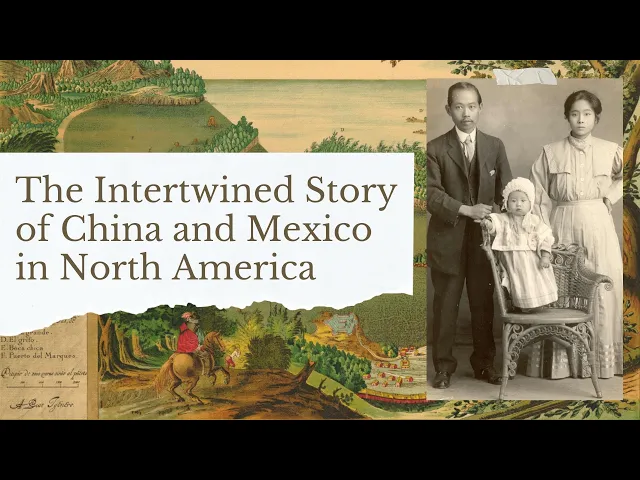
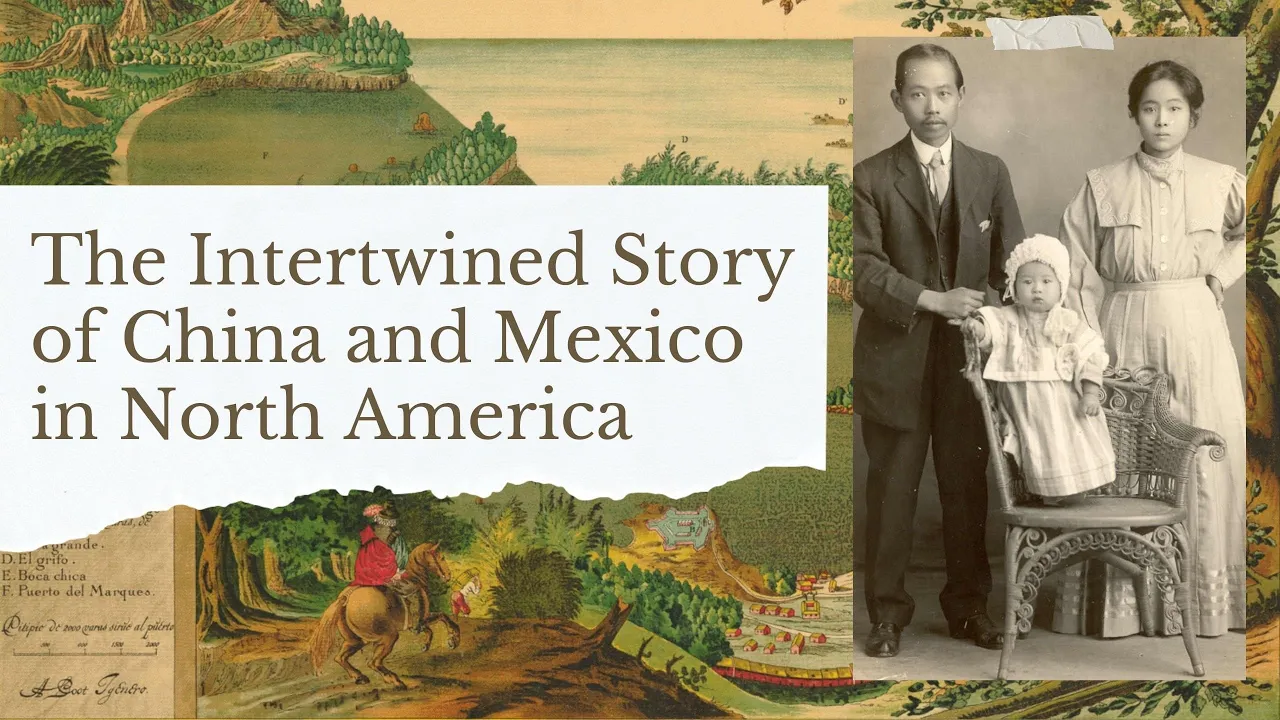
[Music] thank you for uh your interest on the chinese in mexico i am evelyn who de heart i'm a professor of history and asian american studies at brown university brown as you may know is a wonderful old university a private university that attracts a very diverse group of students including students from mexico and mexican-american students or students of mexican heritage some of whom have chinese heritage so i work on a broad topic called the chinese diaspora in latin america and the caribbean and diaspora is just a fancy word for mass immigration from one point of origin in this case china to many destinations around the world over a long period of time so i will share with you some of my work my insights my thoughts on this topic of chinese in mexico now let's start from the beginning when did it all start when did mexico develop a relationship with china the answer may surprise some of you because it goes back four centuries of time to the main dynasty the ming dynasty is a second to the last dynasty in chinese history after the main there was the qing dynasty or the manchu dynasty which lasted until it was overthrown and the chinese republic was established so how did mexico become connected to china in the ming dynasty and i'm talking about the middle of the 16th century a long time ago but let me start actually even before that with 1492 because if you remember when the spanish empress is the catholic kings we call them uh commissioned an italian or genoese sailor and adventurer to discover a new route to las indias which was the way the spaniards then called asia the indies because the old land route across what we today would call the persian gulf iraq iran that area of the world was blocked by the ottoman empire and europeans could no longer reach china by land so what did columbus do he said well i can get to las indias if i sail west so he got on three boats and sailed west however his knowledge of geography was not very good nobody's geography was good because they didn't know about a huge landmass in between asia and amer and europe a landmass that we have come to call america america well the the the upshot of columbus landing in america instead of reading las indias is that he created or helped give rise to the spanish empire in the americas spain quickly colonized what we now call north america the united states and mexico of course mexico at the time of the spanish empire was much bigger than it is today in fact twice as large because mexico extended into what is today's california and texas and new mexico and arizona california remember that because all of that belonged to spain and spain's empire in america which was named new spain not very creative you might think well guess what the spaniards who settled in new spain said look we can reach asia from here we haven't forgotten our dream of reaching asia so under the leadership of a mexican who had long settled in new spain therefore i call him a mexican his name is miguel de legaspi he led a entourage of not just sailors but missionaries and navigators and they crossed the pacific and they reached an archipelago that is a group of islands over a thousand of them actually that they named after their emperor felipe segundo of philip ii and thus was created the spanish colony of las philipinas which we say in english in the plural the philippines because of the multitude of islands and they established their capital in the city of manila which was already settled by many muslim native filipinos so what happened in manila and why were the spanish interested because the spaniards had long known about the beautiful luxury merchandise that china was producing and producing in great volume because china was the most advanced economy of the world with a very advanced productive capacity of manufacturing and manufacturing all kinds of beautiful objects notably silk of all kinds fabric for making clothing of all different kinds and also porcelain barcelona no or ceramics as we say in english as well but you know in english we also call fine porcelain china right so the spaniards were interested in beautiful chinese objects but what did the spaniards have to offer well they had something very valuable which the chinese also desired because the chinese under the ming were in the process of converting their currency to a silver based currency but china did not produce silver they got some silver from japan but japan is a small country compared to china didn't produce enough silver but guess what the span is new they had lots of silver in their american empire not just mexico but even more so in the southern empire of peru and bolivia in the mines of potosi which is today bolivia so a huge amount of silver was being produced in these mining regions of the spanish empire in america and the spanish crown and those spaniards in mexico that i call mexicanos or mexicans quickly figured this out in fact legaspi already had silver when he made the first voyage across the pacific and the chinese in manila there were only a few quickly sent word back to china to the province very close to manila called fujian province and what's important about fujian is that fujian happens also to be the province of primary silk production and ceramics production so fujian had both of these luxury items which they produce in huge quantities so the silver sent by the spaniards to manila quickly attracted a lot of chinese merchants from the province of fujian which was only six days by by ship to manila and from that beginning every year for 250 years the spaniards in mexico taking off from acapulco which was a port no on the um atlantic uh from the pacific side no from the pacific side uh if you look at the map you will see acapulco and north of acapulco on the u. s today u. s side is california right so up down that pacific coast the spaniards started sending one to three huge ships called galleons to sail across the pacific to manila to buy prodigious huge amounts of chinese luxury goods silk was the primary and most voluminous amount of trade but lots of ceramics lots of barcelona but also many other beautiful objects like lacquer like furniture and other forms of textiles which the chinese traded throughout what we today call southeast asia and india no the indian ocean trade okay so a lot of goods were sent to manila by many merchants predominantly chinese but also guess what arabs japanese no uh and merchants from india and merchants that we call armenians or armenians no the armenians were active traders all over the indian ocean world and the southeast asian world and i would not be surprised if researchers were found that among these armenians were so-called were jews in fact we know that jews had already made their way to china before columbus so you can see what a diverse global group of merchants were hanging out in manila exchanging silver for the merchandise they brought that not just the rich people but even middle class and even some working people in mexico new spain in peru down there down into south america and of course a lot of these merchandise was sent from acapulco on the pacific coast to whether cruz a mexican port on the atlantic coast and from there to europe and from europe these chinese products were sent all over the european world so this was the first of what we would call globalization and global trade every part of the inhabited world was touched by this trade that began i'm going to emphasize this began by mexicans in early mexico in colonial mexico that we call new spain and this trade attracted lots of spaniards a chinese from fujian province to make their home permanently in manila even as merchants were coming and going from the chinese mainland to manila just like merchants from mexico would come and go across the pacific but mexicans also settled in manila and they intermarried with the local people and formed a new population that they call mestizos so did the chinese there were two groups of mestizos chinese mestizos and spanish mestizos but anyway that's this beautiful story of what many historians now call the first modern globalization and it began in mexico and this is a part of mexican history that sometimes we forget to tell no to locate and pinpoint i mean pinpoint the first of modern globalization to mexico now let me finish the story then what happened is that the spanish crown said to the viceroy and the other authorities in new spain mexico you will be in charge of this new colony which you discovered called las filipinas and you will be the administrator of this colony so by that decision new spain itself expanded across the pacific to include las philipinas to include manila so that mexico right the definition the political definition of mexico included the pacific at this time by the same token i also assert that america also became expanded to become a trans-pacific geography no a trans-pacific space and i think we don't always talk about the connection of asia to america in this way and i hope to as a scholar as a teacher as a historian to keep rectifying that history so now imagine these big galleons or galleons these are the big ships and you know everybody knows what a galley looks like if you've watched pirates of the caribbean if you've watched uh johnny depp and the pirate movies because those pirate ships those big ships with the three masks these are the galleons they're big right uh anyway when the galleons sailed back and forth across the pacific one to three times a year minimally once a year they of course carry passengers from europe to america from america to manila and they were colonial administrators they were the big merchants they were the soldiers to be sure because soldiers were important in colonial enterprises no in empires and um missionaries no because missionaries in the spanish empire followed the conquistadors followed the conquerors followed the political personnel no because the missionaries went to missionaries to convert the peoples that they colonize this was part of the spanish imperial ideology but the ships the galleons also carry passengers when they went from manila back to mexico back to acapulco and from acapulco to europe and who were among these passengers well they were returning colonial administrators they were returning missionaries they were returning merchants very importantly although we don't call them passengers exactly they were the laborers on these galleons because we're talking about what we're talking about before steamship we're talking about before tech uh engine ships we're talking about galleons that were powered by people power by hundreds of um galley slaves we call them nope literally human power who had to propel these ships forward by rowing the ships below deck and these people you could say were also among those quote passengers and then in addition there were chinese artisans and um and many other kinds of people from asia who sailed on these ships many of them this is also not well known many of them were slaves that were they were enslaved people people who were bought and sold and taken by their masters on board these galleon ships across the pacific to mexico to peru and a few of them even ended up in spain itself in sevilla in cadiz no the main ports of southern spain that received the merchandise from asia through mexico so how many of these immigrants from asia came over in the 17th and 18th century we don't know exactly but we estimate and again you're going to be surprised between forty thousand and a hundred thousand which is not insignificant right and who were they well let me say at the at the uh at the front end of this brief introduction they were not mostly actually ethnic chinese but they were asians now they were not ethnic chinese from china but i think and scholars who work on this topic we think that most of those asians who came over were actually native filipinos and because they were native filipinos the term that the spanish or mexican authorities used for them is a term they use for the native peoples of mexico they called the native peoples of las filipinas they called them indials so these were india's in manila no there are native peoples of manila but another term that was often used which is what causes confusion is the word chino so sometimes they were called chinos de manila or chinos now chino is a broad category at this time which during this early history of mexico did not signify ethnic chinese or people from china itself but referenced all asians or asians no japanese were called chinos right filipinos sometimes were referred to as chinos and the chinese themselves were chinos as well so sometimes you hear this curious term induced chinos so they combine the two sometimes just induce sometimes just chinos so but we know they're from asia because they were on these galleon ships that was the only mode of transportation from asia from manila to america to mexico at the time no now other europeans from europe could get to china but they had to go a different route they had to go around south africa from the atlantic around south africa through india or the indian ocean to enter asia that's an alternative route but the mexicans in and the spaniards the spanish crown monopolize the trans-pacific route so only the ships from acapulco could legally cross the pacific and so what i want to emphasize is that many many passengers on these ships and many workers on these ships the galley roars no were asians predominantly filipinos we think with a smattering of other asians for sure we know there were japanese there why because we have documents with japanese signatures on them because these japanese who settled in guadalajara entered into business relationships with local mexican partners to make what to make tequila and those of you who know mexico know that guadalajara is the home of tequila making no so that's a different story one day i'll have to come back and tell you about the japanese in mexico who also were mexican has settled into mexico but the asian story is the big one that is the large really i think significant number of asians included among them too were many of these high-skilled chinese artisans because these chinese artists were sent over to teach their skill their pottery skill for example to local artisans and today in mexico there is a famous pottery design called talavera no the talavera pottery which is what white and blue and if you know about chinese pottery you will know that this talaveta pottery is a direct imitation of chinese pottery which they had come to know since this very early contact and through the manila galleon trade well we know about the talavera pottery we know that there was among those chinese and asian early immigrants to mexico were highly skilled artisans and that mexican artisans learned about the blue and white pottery and developed their own version of it the talavera no coloretta pottery is different from chinese blue and white but it is a clearly it is a clear imitation or better put it was clearly inspired by chinese pottery no so uh that's one the other kind of really important exchange i think was in um food and plants and agriculture lots of exchanges back and forth but let me just name a few of of of clear significance and the one i want to point out more than anything is a very native american plant called the sweet potato no boniato or yams we say in english sometimes in spanish you hear the way yama but it's a sweet potato now the sweet potato was brought over very early on the manila galleon to manila first and then from manila the back and forth traffic between manila and china meant that the sweet potato was brought to china very early okay now what is the significance of sweet potato the sweet potato is a very nutritious plant and it is very easy to cultivate and it produces a very bountiful harvest so not only is it easy to cultivate and produce sweet potato which is also pleasurable to eat because it's sweet right in china from the time it learned about the sweet potato and began to cultivate it chinese demographers have ascertained that the sweet potato was planted throughout china during times of famine and that sweet potato was able to last the famine the the a lot of the natural disasters that produced famine no and that hungry people in china would also cultivate and grow sweet potato because it grows so easily it grows fast it's nutritious and it's good to eat and sweet potato therefore has been attributed as the savior of hundreds of thousands of chinese people during times of fema famine and beyond that the sweet potato has also been credited with huge demographic increase in china in the 18th and 19th century today we think of china as a place full of people and that population growth began in the period of globalization and part of their growth has been attributed to high nutrition food that survives bad harvests and one of those nutritious food is the sweet potato the other crop that is everywhere in china and that is clearly american in origin is what the maize the corn you know and we can add also the chili pepper now where would some chinese cuisine be without the hot chili pepper no the chile so many kinds of exchanges back and forth and from china uh also many products came to america one of which um is um many many foods potatoes there's a is a potato is a new world product that's another story from peru to europe okay but tomatoes tomato is another product that made its way across the pacific and which the chinese learned to use in their cuisine including making this universal sauce called ketchup no we can't ketchup what ketchup comes from the chinese words spoken in cantonese cats up tears up means tomato sauce so here's a good example of syncretism no of a product that made its way around the world to many parts and the people in indonesia the people in china they all came together and created this wonderful sauce that we now claim as a universal palette now everybody in the world uses ketchup everybody in the world enjoys ketchup but it has its origins in this original exchange of products natural products no so we could go on and on the cultivation of rice you know sugar cane came from the old world and um some sugar came technology across the pacific because the chinese and the indians in the indian ocean were already cultivating sugar cane which they in turn got from africa you see so this is just a small way of encouraging you to think of globalization as a real exchange exchange of goods exchange of merchandise exchange of technology exchange of culture so let me pick up that story again about chinese migration or asian migration to mexico i mentioned how as many as as many as a hundred thousand across the pacific during that very early period what happened to this population is that most of the merging to the local population and by the 18th century they were no longer a distinctive community they have merged into the local population along with other indios and mestizos of mexico which as you know mexico itself is a multi-racial multi-ethnic society right so these asian immigrants these filipinos this handful of chinese and japanese all merged through into marriage through intimate relationships no they merged into the local population and no longer was a distinctive separate community now what happened however is that in the late 19th century during the dictatorship of povio diaz who came to power in 1876 governed mexico for 75 years until he was overthrown by the mexican revolutionaries in 1910 during that long period asians started arriving in mexico in huge numbers again and this time we know for sure that they were chinese and japanese and a small number of koreans now why the chinese this is a very interesting story that connects not only china to mexico but mexico to the united states because by the time povidio diaz came to power in mexico mexico itself entered a period of what we call liberal reforms after mexico had lost half of its national territory to u.
s imperial expansion let's call it for what it is it was manifest destiny in us history books as if god willed the americans to take what is not theirs but from a global history point of view and certainly from the mexican point of view this was just a clear-cut case of u. s territorial expansionism or we can put it also quite clearly as the example of an american empire no that american empire was built how at the expense of mexico and the caribbean and other neighboring countries as we will see but also clear across the pacific in what way well first of all the united states after taking over half of mexicans territory in 1848 in the treaty that we call guadalupe hidalgo after the u. s invaded mexico in 1846 badly beat up mexico because mexico itself was still organizing itself into a coherent country and most of all the united states started moving people to the mexican border and what further stimulated that movement out west was a discovery of gold in california right the treaty of guadalupe ngo taking half of mexico's territory 1848 gold was discovered in california when 1849 practically at the same time right but 1849 the west coast and the east coast of the united states were not yet connected there was no transcontinental railroad yet so and slavery was confined to the southern states to keep growing cotton we're talking about the 1840s into the 1850s so who was going to help mine the gold and provide the labor to produce food for these white immigrants flocking to california flocking to the west to get rich they turned the u.
s the americans of the united states turned across the pacific and say hey let's bring over chinese immigrants right there are plenty of them now and they themselves are engaged in turbulent social movements and suffering from famines and and floods and all kinds of natural disasters and sure enough many chinese were willing to go across the pacific to seek their fortune to support their families and these were predominantly male of male migrants of working age no from teens to the 40s maybe the 50s but not much older and they were almost all men in the 1850s so anyway 50s they came to help with the gold fields 60s they were largely valued as railroad construction workers to begin the construction of the transcontinental railroad connecting east and the west of the united states and the president who authorized the transcontinental railroad was none other than abraham lincoln we remember that fact because abraham lincoln was also busily engaged with holding the north and the south of the republic together in and in doing so uh felt the need to abolish slavery no so slavery therefore was on its way out and slavery could not be extended to the west enslaved africans could not be brought to the west since enslavement itself was being sharply criticized and on its way out now the chinese then after the railroads after the gold what did they do they helped develop agriculture in california the whole central valley of california the people who went there to build to grow food potatoes rice oranges the chinese were great orange growers in fact the florida orange industry was developed by a chinese immigrant another little known history that i'm putting in the books for all of you to hear and to remember but what happened when the chinese did all these things to develop the united states economy to build the railroad you know to put in place the agricultural bases of california the white immigrants of california led by the irish who themselves were being badly treated by the british and the other european immigrants the irish were at first maligned as a racialized group they said to prove ourselves as white we're going to take on people who are black and people who are yellow what was called the yellow peril began that is these chinese immigrants we're not just hard-working immigrants it's an invasion and we need to get rid of them and how that happened was the enactment of the first immigration law of the united states called the chinese exclusion act in 1882 now here's where the connection to mexico comes in you can see why i'm a world historian right because i keep seeing connections everywhere the mexicans learned about mexico and said well if we can't go to the united states we go to mexico and we'll go to the border area with the united states which was itself fast developing because this border area the states of chihuahua and sonora and other states on the border were also states rich in minds in minerals in this case no longer just gold and silver or even predominantly gold and silver but copper and copper was really interesting for electricity and for electric electrification and for a lot of industrial purposes so the chinese went to mexico and they said we'll try to sneak across the border and guess what the chinese were the first to sneak across the sonoran desert to the united states and i have graphic images of those chinese border crosses but they were illegal they were the first to be tagged as illegal aliens or undocumented workers crossing the border because of the chinese exclusion act mexicans in contrast could cross the border back and forth pretty freely during this time there's no restriction against mexicans but the chinese were restricted and after a while they said hey we don't have to cross the border we could just stay on the mexican side because look mexicans are building railroads mexicans have mines and we are already very good at these jobs but guess what in mexico the chinese soon quickly realized they didn't actually have to do the hard labor of railroad construction all mining because there were plenty of mexicans on the border south and attracted from inside mexico in the interior provinces to migrate to the borderlands to the northern borderlands to take up these good industrial jobs in the kananea mines in building the sonoran railroad et cetera but what did the chinese do see they were such an advanced culture and civilization earlier i told you that they had the most advanced economy they knew better than anybody how to manufacture things beautiful things in high quality and massive quantity well here we have the chinese using their experience and their culture to figure out what would be their niche in modern in northern mexico in the mining and railroad towns of northern mexico because the chinese from the part of china they came from which is canton province no different from the province that sent the early migrants to manila these migrants to mexico came from canton province and ten time province was also a highly developed economy in china and by developed we're looking at something quite interesting we're looking at um a part of china that had long been engaged in um local commerce in buying and selling in what we call market town economies so even the the peasants who were organized in their own small villages all over canton province no they organized their lives around twice weekly market towns where they would take the goods to sell in the market towns and to buy things they don't make themselves they go there also to pay rent to the landowner they go there to drink some tea and enjoy some chinese opera and they go there to borrow money from the money lenders if they need some extra cash and they go there to gather all the news from around the world because people were coming and going to canton province from throughout the world you know and so these chinese were you were already very adept at what we call the commercial economy the trade economy on a local level and very adept at a monetized economy where they knew about the exchange based on monetary values no they weren't just um bartering goods they were buying and selling in fact the chinese word for commerce for trade is a combination of the two words to buy and the sell no my my in chinese means commerce no local commerce to buy in the south so the chinese were already very adept at buying and selling and that's what they did the niche they developed throughout mexico in the late 19th century and into the 20th century was local commerce they became the shopkeepers all over mexico they knew where to source material they knew how to distribute the material among their own co-ethnics or paisanos to their little shops all over mexico so i have documented you know this demographic spread of chinese in every maid in every mining town big or small in every railroad town the chinese were there as shopkeepers and and sometimes they were the only shopkeepers and so by the time of the 20th century the chinese were the predominant what i call petty bourgeoisie the small capitalists the the merchants and the shopkeepers what does that mean that means all the mexicans had to deal with them because they were at every corner eltino de la schema we call them the chinamen at the corner no every mexican had to deal with them and not only had to deal with them because that's where they know they can buy something they need or exchange something no there were some pawn activities as well but they know they could borrow money they could borrow credit from these chinese shopkeepers because the mexicans themselves as they leave their villages to work in the mining towns and the railroad towns were becoming what we call proletarianized they themselves started entering this cash economy but their pay was such that it oftentimes didn't last them the whole month not enough to support themselves and their families some of them remained in the villages right so the chinese shopkeeper would say because this is how they did business back home you don't have enough money for the rest of the month but your children are starving are hungry or just take what you need and i'll record it in my account book this is called giving credit right so what that meant was a very close intimate relationship developed between mexican working class people even middle class people and the chinese merchants the chinese shopkeepers well that seems all very well right and at this time too the chinese who were still predominantly male started forming families with local mexican women and what did the local mexican women think about these chinese men they said look they're good providers they have steady they they have a steady income because they have a good business they will be a good husband and a good father what that didn't sit very well with some mexican men as you can imagine right but you say why did i our women want to marry these foreigners but you know women think differently about marriage and family because they think about who's going to provide for us anyway so we have the beginning the emergence of a mixed mexican population we have the emergence of their mestizo children but most of all we have very intimate relationships because the chinese lived among everybody they were not an isolated community off by themselves they were in the towns in the cities in all kinds of businesses you know not not not just a grocery business or food business but they also manufacture shoes they manufacture clothes but they're not fancy shoes they're not fancy clothes they're working people shoes working clothes and and and a range of activities and manufacturing that almost all mexicans have something to do with okay so that that was a situation in mexico at the time of the early 20th century well the story of the chinese in mexico had a rather sad ending and one which mexicans themselves uh i'm not just you know and we in the united states of course have to be aware of this but mostly mexicans themselves are becoming increasingly aware of because mexican historians and activists are asking for that story to become visible and present in mexicans own history and education no you know all history is everywhere in the world there's a tendency to bury the part of the history you would rather not have to remember because it brings up things that are not necessarily very flattering or laudatory no and as we progress in time we uh acquire new values we don't want to think about the things that we've done in the past that we're not proud of right so there's a bit of that in mexican history when it comes to the chinese because as i said the chinese provided this incredible service to a fast developing mexico on the northern borderlands where they provided the service the everyday consumer goods and they intermarried and interacted with the local population and in fact the relationship i characterized with the word intimate intimate in the sense of daily transactions right intimate in the sense of credit you know of of of working with the mexican working class who may not have enough cash to tie them over and intimate in the most intimate sense of intermarriage right and forming families but all that came to a head during the mexican revolution when the mexican people rose up they rose up for good reasons they rose up because they finally felt the brunt of american imperialism on their backs and in their daily lives they rose up because the jobs in the american mining towns and railroad stations were inadequate to take care of their families and they rose up because a revolution like the mexican revolution stirs up nationalist sentiments that's a part of a revolution oh what is mexico it should be for the mexicans then the question is well who are mexicans right who are mexicans if you wonder about that question just ask the same question of the united states today at this very moment we are asking the same question who is an american and who deserves the protection and the privileges and the rights of the american constitution okay well mexico had a sort of a period of their own when they asked no who's a mexican right what should the mexican revolution deliver to the mexican people so they had the slogan mexico for mexicans so the chinese kind of got in the way of that complicated question are they mexicans or are they a foreign group do they deserve mexican nationality and mexican protection see and mexico went through a long period from the beginning of the 20th century through the revolution and well into the 1930s and we'll come back to the 30s to conclude our discussion today about who is a mexican and the question about the chinese was not easily settled was not easily settled so during the period of the revolution part of the national sentiments can be characterized by what we call xenophobia the fear and even the hatred of foreigners or those perceived to be foreigners so the xenophobia against the chinese was becoming evident the xenophobia against other foreigners like north americans was also there but guess what the north american imperialists and capitalists and owners of these mines and the railroads they were not present in person the mexicans couldn't see these mexican owners and capitalists they were safely in their own homes and offices on the other side of the border right all they could see and was visible to them were people that they considered somehow allied with these foreign exploiters and that came to fall very heavily on the chinese because they were just so visible because they were everywhere because they looked foreign no and so what happened during the revolution is that that very intimacy and closeness that mexicans developed with chinese was used to turn against the chinese for example the credit that many of these mexican working class who joined the revolution the various factions they said we want to go into these chinese shops and tear up our credit slips so that became a point of contention in addition the various revolutionary armies whether it's francisco madeira's army or pancho villa's army or alvaro obregon's army these are all the great revolutionary generals they all have their followers and their armies their military when they need food who do you think they go to who had food the chinese shopkeepers and the chinese truck farmers the chinese who were also growing a lot of the food that they sold to the mexicans during good times and peace times were viewed therefore as fair game no we're going to go to these chinese subs and we're going to take what we need to feed our troops and we will leave them a credit slip and in the mexican archives i have found long credit slips where they tell chinese shopkeeper okay we're gonna take a hundred pounds of rice 50 pounds of potatoes no you just keep this slip when the revolution is over you can come and we'll pay you back so they turned the credit system on its head right but mainly the chinese were viewed as a pernicious foreign spanish no and that led to repeated attacks on the chinese their businesses their communities because they were just easy targets and because they represented a much broadly uh kind of xenophobia but they were the most immediate the most visible the most easy targets and among all these many attacks on chinese individuals groups communities businesses was the most shocking one in the town of torreontorion is not on the west coast but closer to the atlantic coast uh south of texas not quite on the border in the state of coahuila which is actually the state that the first revolutionary leader the madero family francisco madero and his brothers they're from coahuila no they're from torreon near there today was a highly developed city of two railroads uh a a guayu a rubber plant a very very prosperous city its population growing by leaps and bounds and they also had a large vibrant chinese community and the chinese community like chinese everywhere they own the small businesses but they also owned um a hotel or two which is kind of unusual and they owned they were building a steam uh a tramway uh a tanamiya it's called a tramway can you imagine chinese capitalists went to toriyon and say we're gonna build a tramway a local transportation infrastructure no but most of all the chinese under a few entrepreneurial chinese businessmen with capital bought up lots of land urban land that they used to grow food they called the gardens canton garden was one of the names and they then brought in their compatriots other chinese to come and work these gardens they grew the food they grew the fruits they grew the rice they fed the local population so they were everywhere these gardens they could we call them urban gardens or truck gardens no they're earth they're everywhere we call them truck gardening because after they grow it in the urban in the urban area then they were trucked to the metranos to the markets to be sold you know it's kind of vertical integration right you grow what you sell see so the chinese community uh was highly visible and in may of 1911 uh an army under um madero's uh brother uh entertoreon by that time there were a couple of local mexicans who were already stirring up in speeches this animus no agitation against the chinese and so in one afternoon in torreon 303 chinese were massacred massacred in cold blood their bodies strewn in the public on the streets and um it really was a horrific event and one of the i think incidences of anti-chinese violence anywhere in the world of 303 just literally killed uh in one afternoon and that that however uh did not stop anti-asian violence throughout mexico during the revolution but here's the amazing thing it's the resilience of the chinese community so that happened in taureon there's nothing anything comparable to that i would add happened anywhere else in mexico there were attacks on them there were casualties but nothing in the order of 303 anywhere else in mexico no so in spite of toriyon in spite of revolutionary violence in spite of of of having to surrender their their property to revolutionary armies the chinese community prospered during the mexican revolution and continue to grow somewhat now until things settle down in the 20s and into the 30s when a very progressive president came to power by the name of lazaro cardenas cadonus was a progressive what we call populist he appealed to the masses of mexico to the workers to the peasants and he promised to deliver to them the the revolutionary promises no of good jobs and good protection and land to grow food to feed their families a massive land reform program and a massive labor reform program mexico under continuous not only condoned but in some cases the government actually stimulated strifes no organized workers into unions encourage them to strike et cetera et cetera so you know from the mexican point of view these years of the 30s were you know really wonderful years of revolutionary fervor and revolutionary promise no but guess what these were also the years of the great depression these were also the years of the great depression so it was difficult for mexico's economy to really pick up and the economy hit the united states hard as well so what happened is that beginning in the early 30s the u. s government began rounding up mexican workers and their families who have been migrating to mexico since the revolution to escape violence at home and deprivations at home they got to the us and they immediately found employment in u. s agriculture and as far inland as chicago where they found jobs in the meatpacking plants and in some other industries and they were also recruited to places like kansas where they were the tarakeros they worked the railroad tracks repairing the tracks rather than building them because the tracks were already laid right but these mexicans already also formed families in the u.
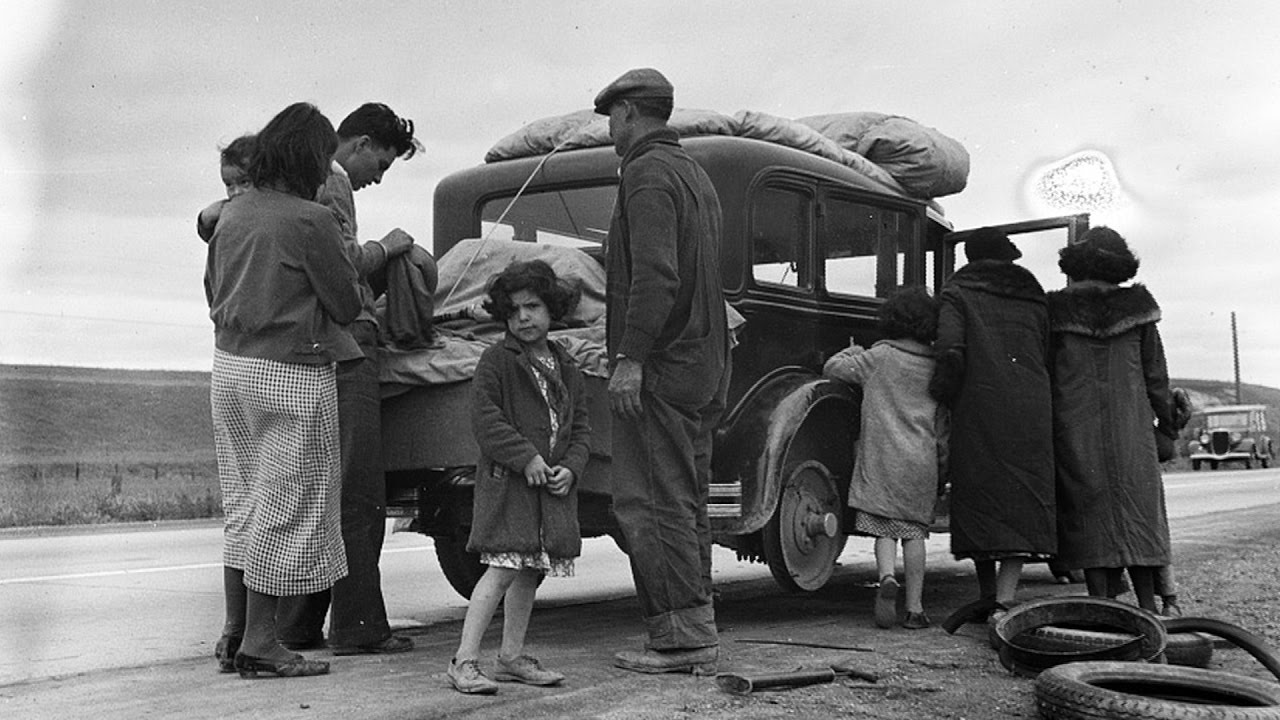
s and they had children born into u. s citizenship because the united states by the 14th amendment had birthright citizenship what did the united states do in the 30s they rounded up over a million maybe as many as 2 million of these mexican and mexican american families and deported them to mexico as a response to white worker agitation in the us that they are these migrants are taking these foreigners are taking their jobs when most of them were not even foreigners they were u. s citizens but that happened in mexico received these immigrants but guess what mexico itself had its own organized anti-chinese movement by this time during the depression there were many what they called anti-nista ligas ligas resistencia that's the names they called them anti-chinese leaves you know variations of that all over the border states the borderlands but especially virulence in sonora which had the largest concentration of chinese people and families and the upshot was beginning about 1934 i believe these chinese in sonora and in some of the neighboring states were rounded up their properties confiscated and they too were depart deported so as mexicans were deported into mexico chinese were deported out of mexico these two happening at the same time this this story about the chinese in mexico had many other facets to it and ramifications because they were on the borderlands right um they had lots of relationships with family and business partners on the other side of the border for example the shopkeepers the retailers even some of the handful of wholesalers they began to get a lot of the provisions and merchandise from merchants in california merchants in los angeles so we have lots of correspondence that shows a closed uh commercial relationship right um we also have wonderful stories about the chinese in mexico who like many other mexicans have businesses on both sides of the border in other words they built what we would today call transnational lives or trans-borderline lives they had a brother on the u.
s side of the border and he had a shop one brother had a business on the mexican side of the border with a similar business and these brothers would uh go back and forth those in mexico of course had more restrictive movements because of the chinese exclusion act but i have wonderful photos of how some of them disguised as mexicans dressed in a western suit took on a mexican name had a mexican friend testify oh cs es mexicano miguellas mexicano and they crossed the border that way and of course guess what it wasn't so hard to bribe border agents at this time no you just shove a little bit of money uh una mon leader to the custom agent and they let you cross because they were not harming or threatening anybody they were just doing business on both sides of the border but they were important because these transnational families transnational businesses helped to a very large extent the development in mexico of its cotton industry in mexicali and um because cotton was also grown by chinese entrepreneurs on the u.