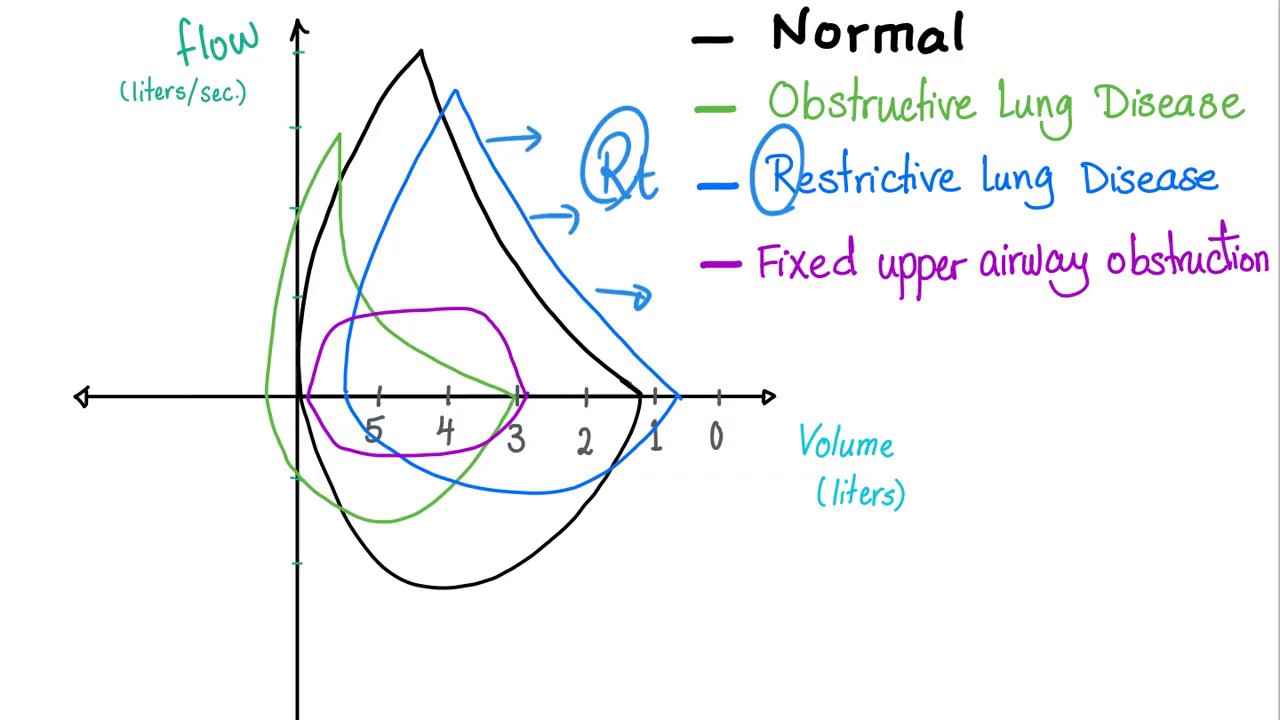
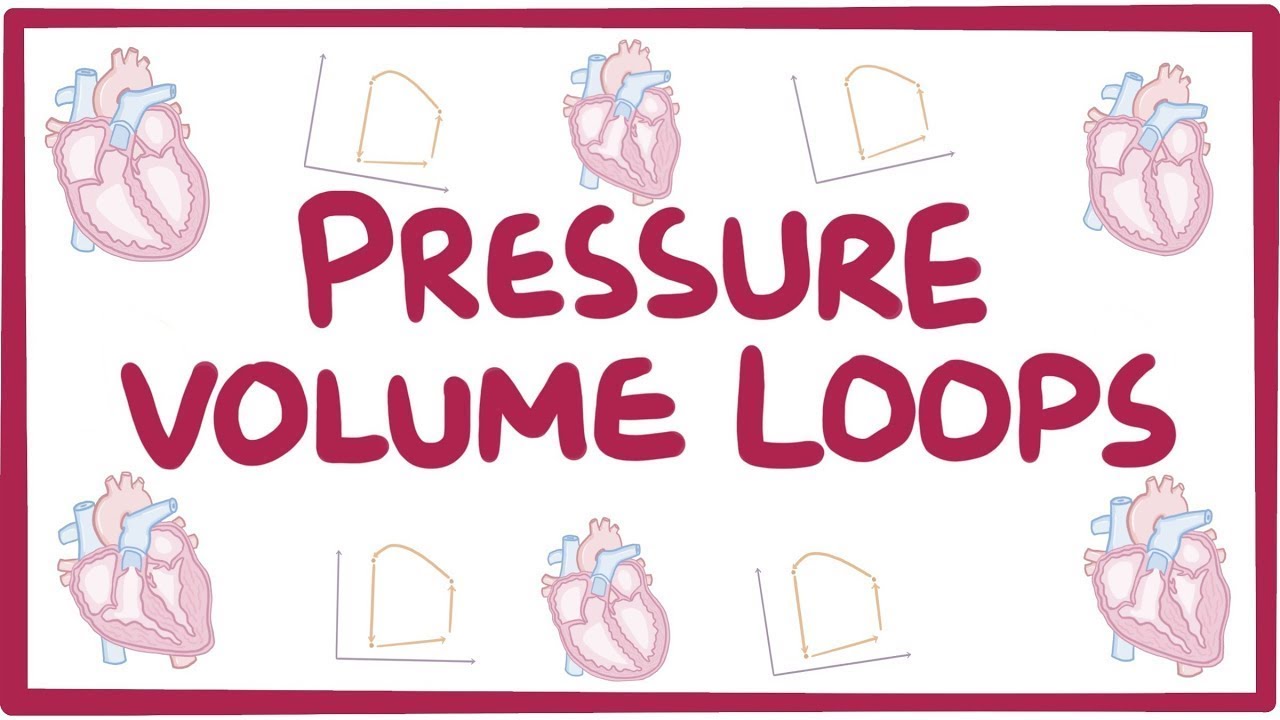
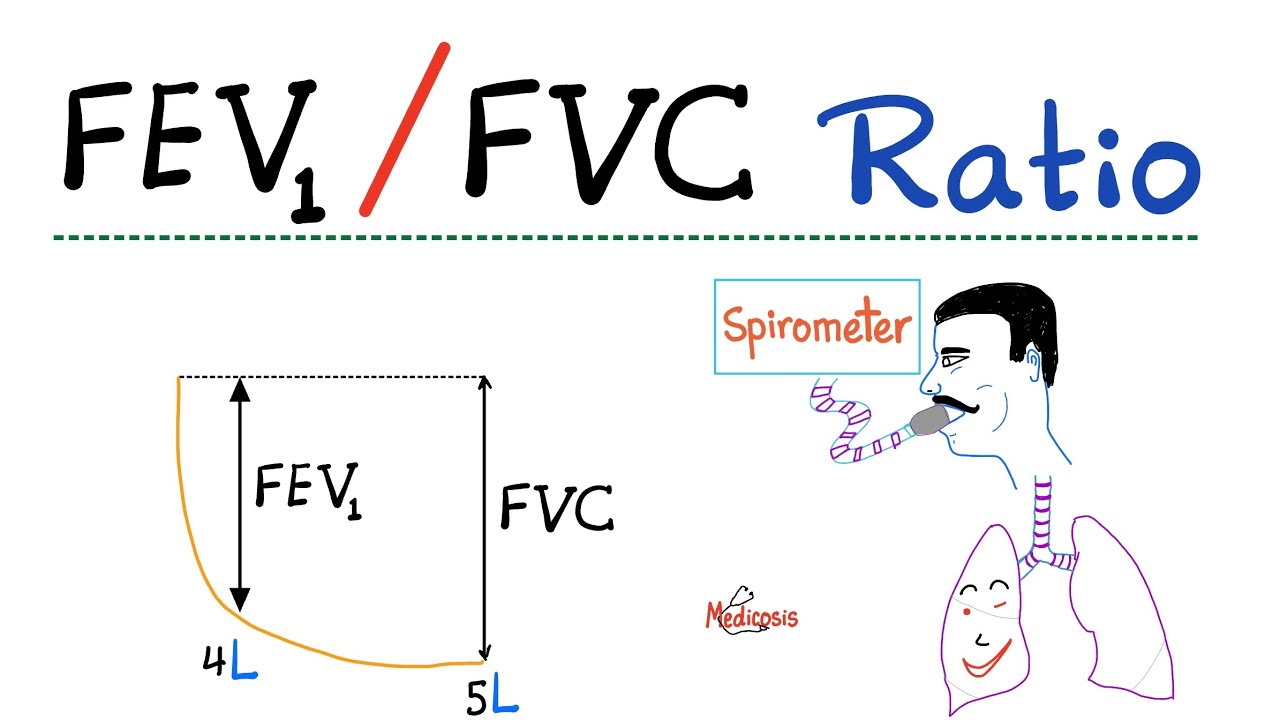
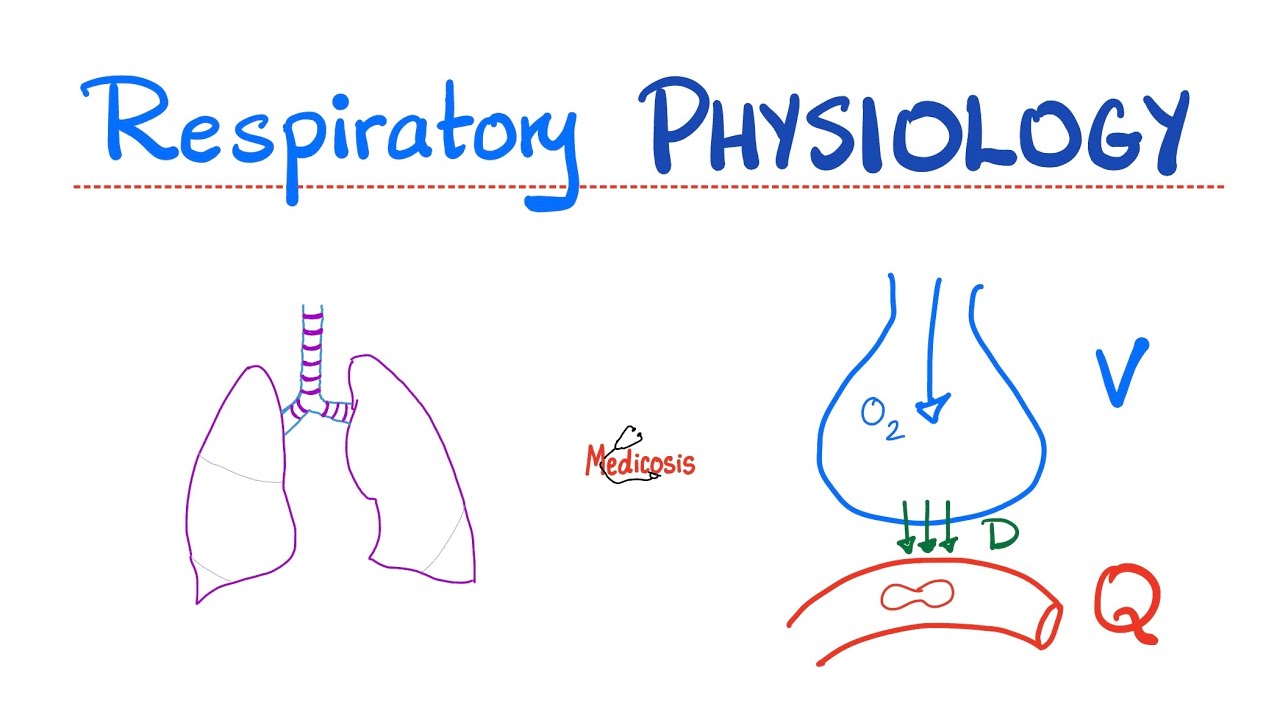
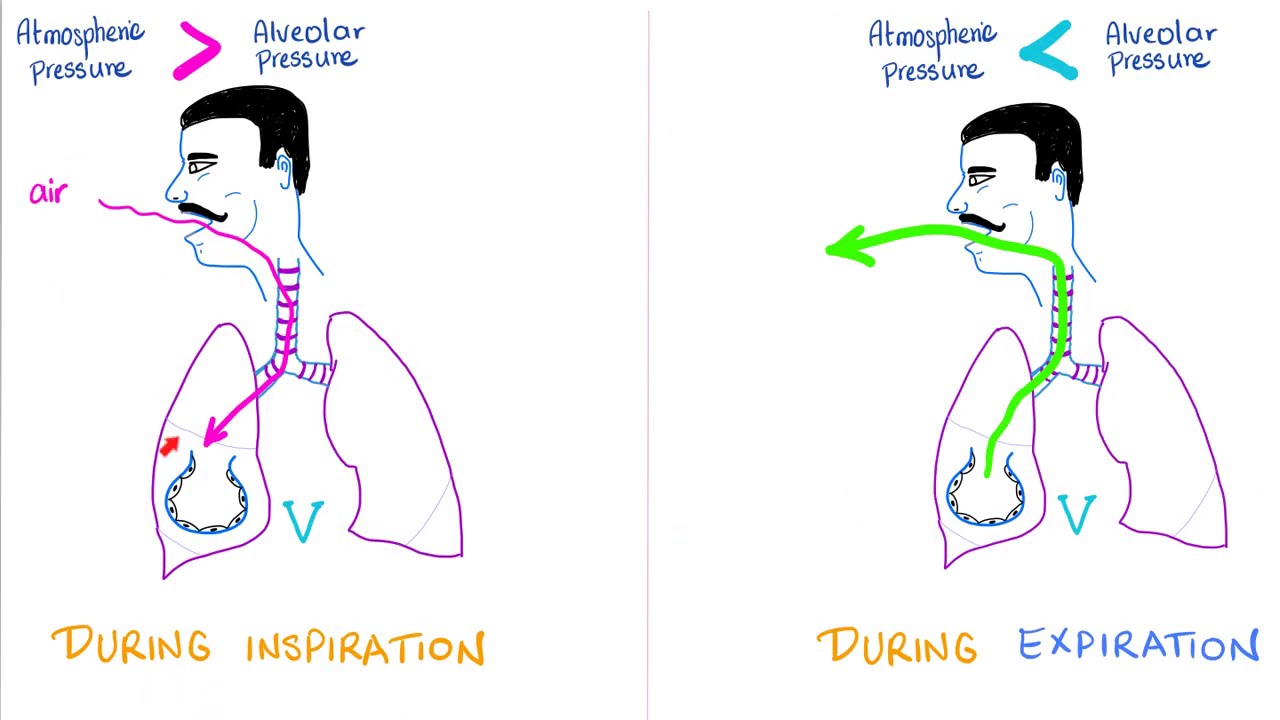
hey guys it's medicos is perfection was one more time your favorite Medical Channel resuming our discussion about our topics about pulmonary medicine there is a playlist on my channel called pulmonology so please make sure to save this playlist and try to watch my videos in order in the previous two videos we talked about pulmonary function tests and the fev1 - FAC ratio it's more complicated than that and we dive deeper in the future today we'll talk about pressure volume loops don't confuse pressure volume loops with flow volume loops how do I know the difference it's
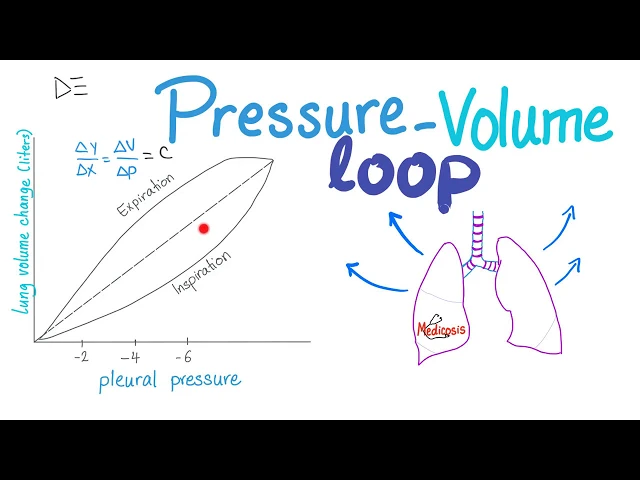
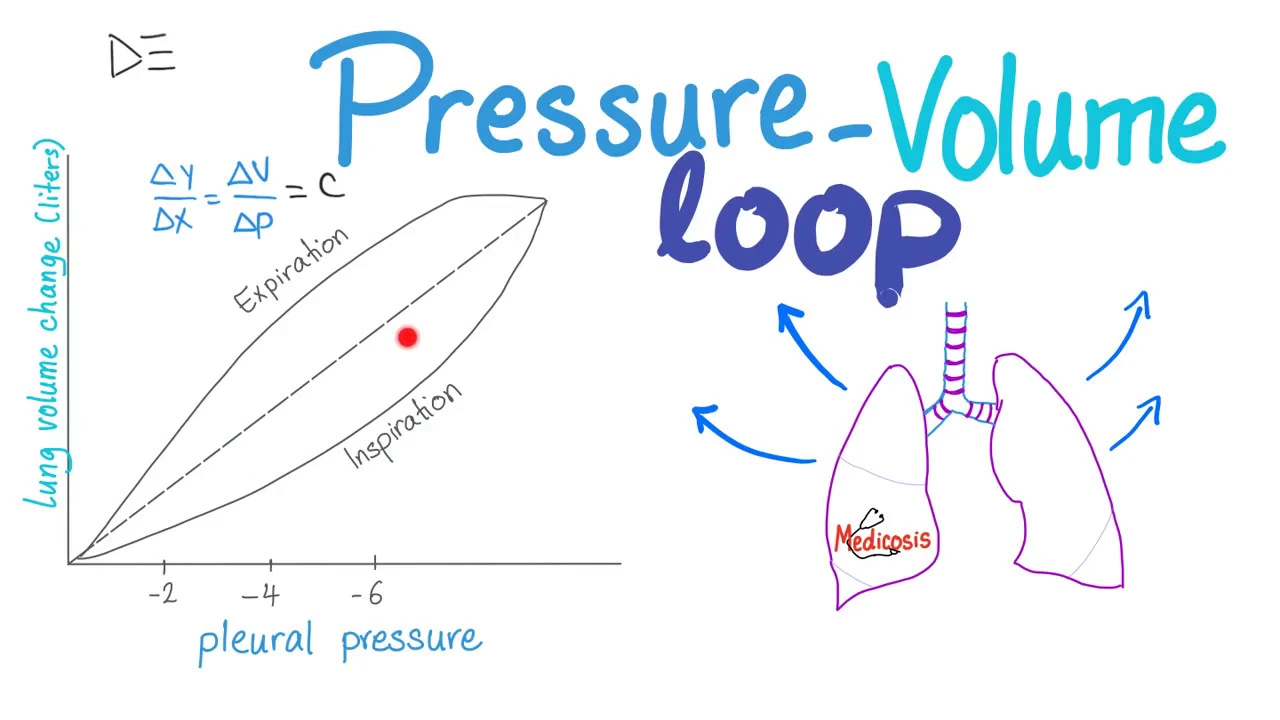
easy look at the axes here is pressure and here is volume that's the first thing you do when you look at the graph second thing is you look at the slope as you know the slope of the straight line equals the change in the y-axis over the change on the x-axis which happens to be equal Delta V over Delta P do you know Delta V over Delta P equals compliance so pressure volume loops are actually talking about the compliance the slope of this straight line is the compliance with their being said now let's get started
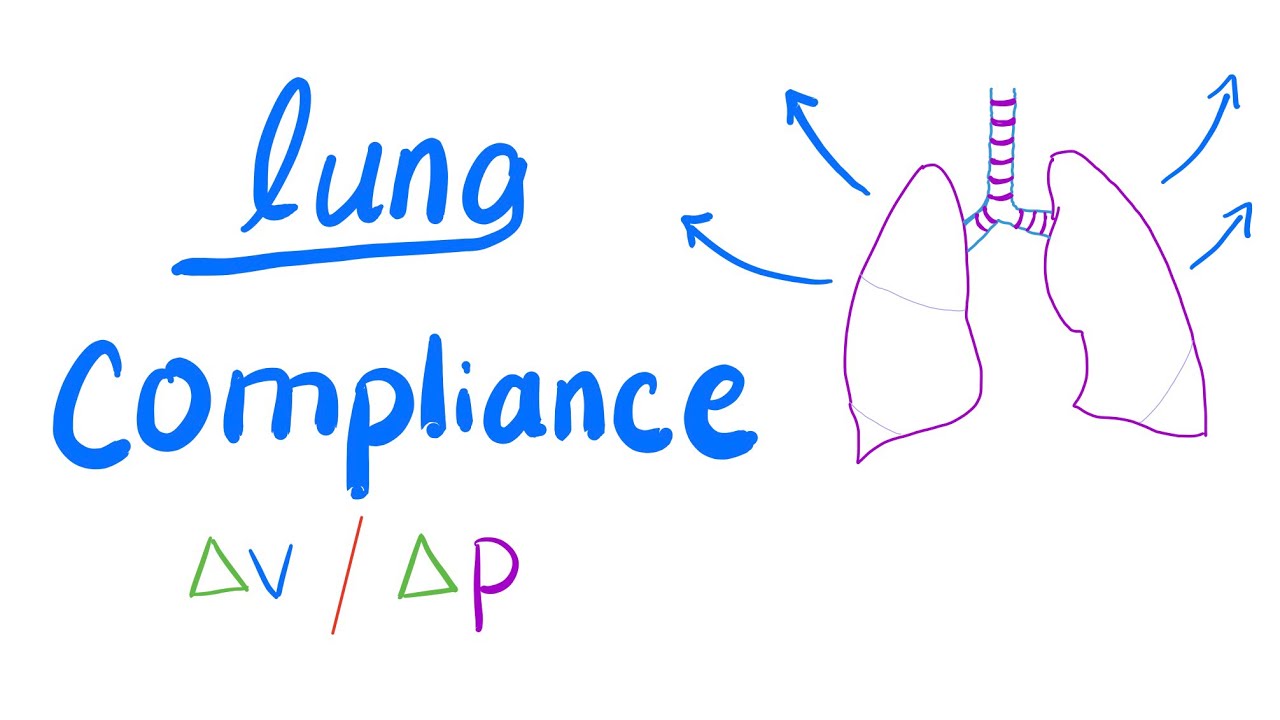
so in my previous video called lung compliance we actually talked about compliance Delta V over Delta P if you haven't already watched this video it's very unlikely that you will understand this video to the fullest so please go ahead to the this previous video and watch lung compliance first again it's in the same playlist called pulmonology compliance compliance is expansive ility is distance ability I know that they are not actually the same if you are very sophisticated but let's keep it simple stupid if you remember compliance is Delta V over Delta P okay what Delta
P are you talking about what pressure I talked about the pressure that actually descends the lung also has transmural pressure okay we get it transmural pressure is in trouble with our pressure - intrapleural pressure and if you remember transmural pressure was equal to the intrapleural pressure in the amount but it had the opposite charge transmural pressure is positive trans or intrapleural pressure is negative so if the intrapleural pressure was negative five the transdermal pressure is gonna be positive five same amount different charge compliance is opposite to the surface tension compliance is opposite to elasticity surface
tension wants your lungs to collapse compliance wants your lungs to expand elasticity wants your lung to collapse compliance wants your life to expand emphysema is like you're very old socks with elects rubber band it's very easy to expand this stupid socks but if you leave it alone it's not gonna recoil this stupid socks with useless rubber band is like emphysema with destroyed elastin fibers you have increased compliance which means it's easy to expand this lung but decrease elastic recoil on the other hand pulmonary fibrosis is like a very strong socks with very strong rubber band
and when you put it in the laundry washing machine it shrinks why trinks because it had very strong fibers when you have very strong fibers you have increased recoil but decreased compliance it's very hard to expand this socks so here is everything you need to know all of the words in green mean the same thing and all of the words in blue mean the opposite thing lung expansion is the same thing as compliance as expence ability same as distance ability same as saying surfactant same as saying elastase example is emphysema on the other hand here
the lung expands here the lung collapses lung collapse is the same as recoil which is opposite to compliance elasticity is the same as recoil which is opposite to expanse ability elastic recoil is opposite to this Sensibility surface tension is opposite to surfactant that's why her surfactant it is anti surface tension elastin is opposite to elastase elastase wants your lung to expand elastin wants your lung to collapse example here is fibrosis so in cases of pulmonary fibrosis your lungs tend to collapse you have increased recoil increases increase elastic Rahul increased surface tension increase elastin on the
other hand in cases of emphysema it's the opposite your lungs tend to expand it has greater compliance greater expense ability greater distance ability greater not so much greater spectrum but you get the idea and greater elastase which has destroyed the elastin fibers that's how your lung expand what causes the elastic recoil of the lung if you leave your lungs alone they will collapse they will recoil why number 1 surface tension then surface tension then surface tension then the elasticity by lesson comes surface tension is the most important force why surface tension because in the alveolus
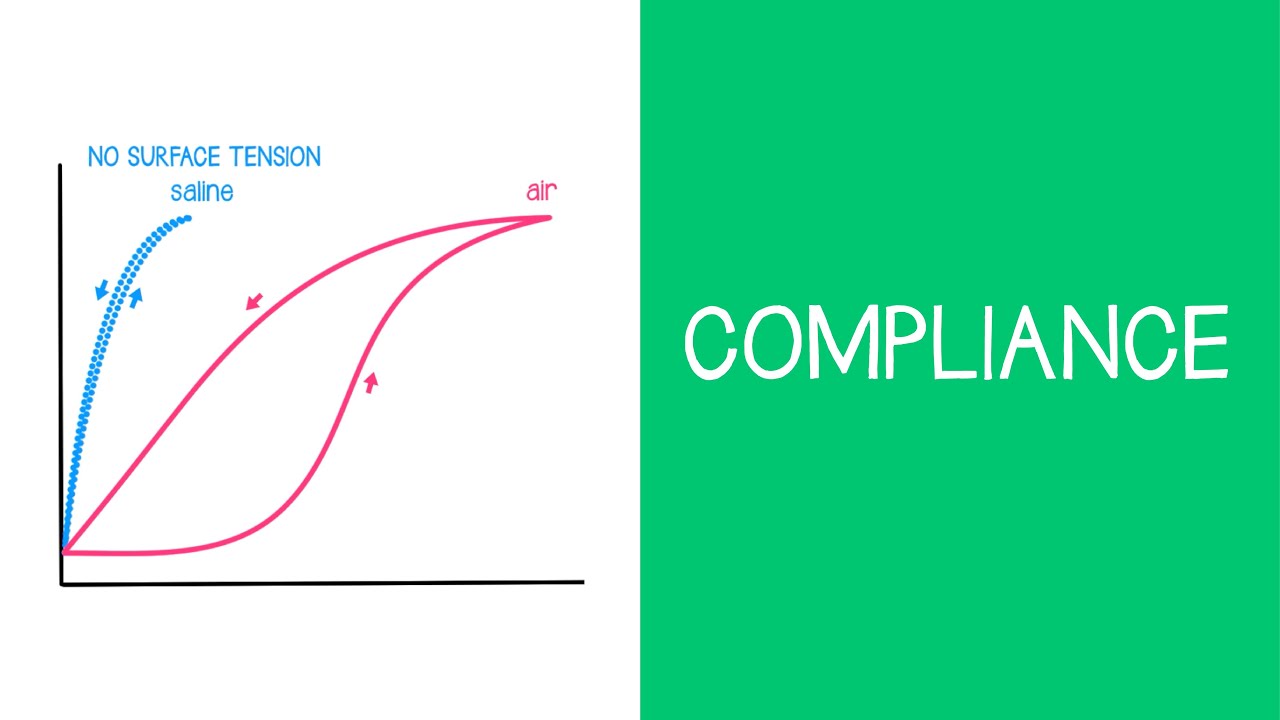
you have an interaction between air and fluid which is water vapor inside your alveoli when air and fluid made their surface tension that forms thanks to the attraction between the molecules of the air fluid interface let's replace this air with saline now we have a fluid fluid interface will this create surface tension and the answer is no oh no I'm not a physicist so please don't be super sophisticated on me I'm talking if you fill it with saline it's gonna have very low surface tension it's negligible it's trivial so forget it so let's say that
we have a lung which is filled with air and another lung which is filled with saline now let me ask you this which one is gonna have greater compliance the answer is the one that's filled with saline because the one it which is filled with saline has greater compliance thanks to a lower surface tension as you know surface tension wants your lung to collapse okay if you have less surface tension by definition you have increased compliance your lung that's filled with air has an air fluid interface so it has surface tension that's greater than the
other lung and this will lead to decrease compliance I hope this is clear what causes the negative entropy Laurell pressure okay any two surfaces that are moving away from each other creating negative pressure that's it and breathe so easy the opposite is also true any two surfaces and closer to each other create paths of pressure but we're talking about negative interpolar pressure because the two surfaces are moving away from each other because the lungs tend to recoil they move to the inside your chest wall tends to expand it moves to the outside moving away from
each other they create a negative intrapleural pressure in between which try to pull them back together and prevent them from moving apart okay those are pressure volume loop snot flow volume loops they are pressure volume loops what is the slope so first thing is Delta V from the vertical axis over Delta P from the horizontal axis in both curves and this slope equals the compliance I've told you before that if your lung is filled with saline it has less surface tension and more compliance your normal lung has air fluid interface therefore it has a surface
tension therefore it has a lower compliance okay if compliance equals Delta V over Delta P therefore the relation between compliance and pressure is inverse the greater the pressure the lower the compliance okay so let's take like the same volume and see the effect on pressure here we need it like four but here we need it less than four let's say three okay this is the saline-filled link and this is the normal line which one needed a greater pressure and the answer is than normal lung therefore the normal lung has a lower compliance there is another
way to do it okay the slope equals 10 theta theta is the angle here and it's the angle here which angle is greater and the answer is saline this angle is closer to 90 okay this is smaller if the angle is bigger the slope is bigger and the compliance is higher so quick review compliance change in volume over change in pressure the slope of the straight line is the compliance because it's Delta V over Delta P a saline filled lung has less recoil because it has less surface tension therefore more compliance that's why the slope
is greater that's why the angle is bigger the intrapleural pressure needed to expand an air-filled lung is triple triple that which is needed to expand a saline filled lung if the pressure is triple the compliance is about one third it's called common sense and this is the huge effect of surface tension that's why you are lucky if your lungs have surfactant but in case of the sad case of immature babies who are born without surfactant their lungs are at risk of recoiling that's why we give them something to boost the surfactant such as cortisol what
else hi Ruxin what else prolactin but on the other hand insulin will inhibit the production of surfactant that's why you are at a greater risk of neonatal respiratory distress syndrome if your mommy is diabetic please don't forget that in this video we are talking about pressure volume loop please don't confuse this with low volume loops pressure volume loops are the same as compliance and this is not the same as the flow volume loop let's talk about inspiration exploration if you look at this and you remember what I've told you about the angle let's talk about
the angle here this is the angle of the straight line this is the angle of inspiration and this is the angle of exploration which angle is bigger exploration which one has more compliance expiration let me explain during inspiration the alveoli expand so the surface tension particles become less concentrated instead of just like here is the normal alveolus they are close to each other but when you inspire they get away from each other surfactant is anti surface tension this gives the surface tension and ability and a chance to increase when you increase surface tension you increase
recoil but you decrease compliance that's why inspiration has a lower compliance than expiration expiration is the opposite the alveoli contract the surfactant become more concentrated surface tension decreases therefore recoil decreases but compliance in Croesus what gives your lung the ability to recoil on its own number-one surface tension which is by far the most important factor and then elasticity thanks to elastin collagen and thanks to the anti ill estate which prevents us from being destroyed by the illest ace okay so here's compliance here are the conditions that raise the compliance and here are the conditions that
reduce the compliance first let's talk about compliance it's the change in volume over change in pressure so Delta V over Delta P it's the slope of the curve it's proportional to the angle it's the tan theta there are two things that cause your lung to recall and collapse one surface tension two elasticity so in order for you to have greater compliance it's either due to decrease elasticity or due to decrease surface tension but for your lungs to have a reduced compliance and increased recoil you have to increase elasticity and increase surface tension so let's talk
about increase in compliance due to decrease elasticity old-age as you get older it's like your socks is getting older your pair of socks are now having a very relaxed rubber band therefore it's very easy to expand they have greater compliance but it's difficult to recall they have decreased recoil or decrease elasticity also another example is emphysema which is very close to old age but this is like natural this is due to smoking increase compliance or decrease surface tension a salient language is impossible for us to do it for you it's just a theoretical thing that
you do in the lab for your for those sophisticated scientists and of course expiration has a greater compliance conditions that decrease compliance which makes it harder for you to expand your lung first you to increase elasticity intrinsic languages such as fibrosis or extrinsic restrictive lung disease such as chest wall disease if you have kayfa scoliosis it's very hard for you to expand your lung makes perfect sense okay decrease compliance you to increase surface tension there is a very famous condition called neonatal respiratory distress syndrome causes premature babies in c-section because they are not exposed to
stress because if you are born through bad you know normal delivery you are squeezed through the vaginal canal when your head is squeezed this is stress which stimulates the famous stress hormone called steroids when we have lots of steroids you will have lots of surfactants but if you have low steroids you have no surfactant and you are more liable to neonatal respiratory distress syndrome what else causes neonatal RDS low steroids low thyroxine low prolactin because those three stimulates surfactant production if you don't have them you don't have a surfactant you're more likely to get new
interest-rate syndrome high and so on because insulin inhibits the surfactant if you have lots of insulin you have no surfactant you have increased surface tension you have decreased compliance work of breathing if you remember physics work equals Force Times distance or EE equals FD if you are super sophisticated W equals F times D times cosine theta and since we are talking about flat surface theta here is 0 and cosine 0 is 1 when you multiply anything by one you can just remove it and put it simply W equals FD since inspiration is an active process
it needs muscle if it needs muscle it's gonna have it's gonna need a greater force if the force is higher the work is higher so for a normal person the work of breathing is the same as work of inspiration how about work of exploration exploration is a passive process but if you have an obstructive lung disease and you cannot get the air out you need abdominal muscles you need accessory muscles of exploration during exploration this is gonna lead to force and it's gonna lead to work so we have work and inspiration and work of expression
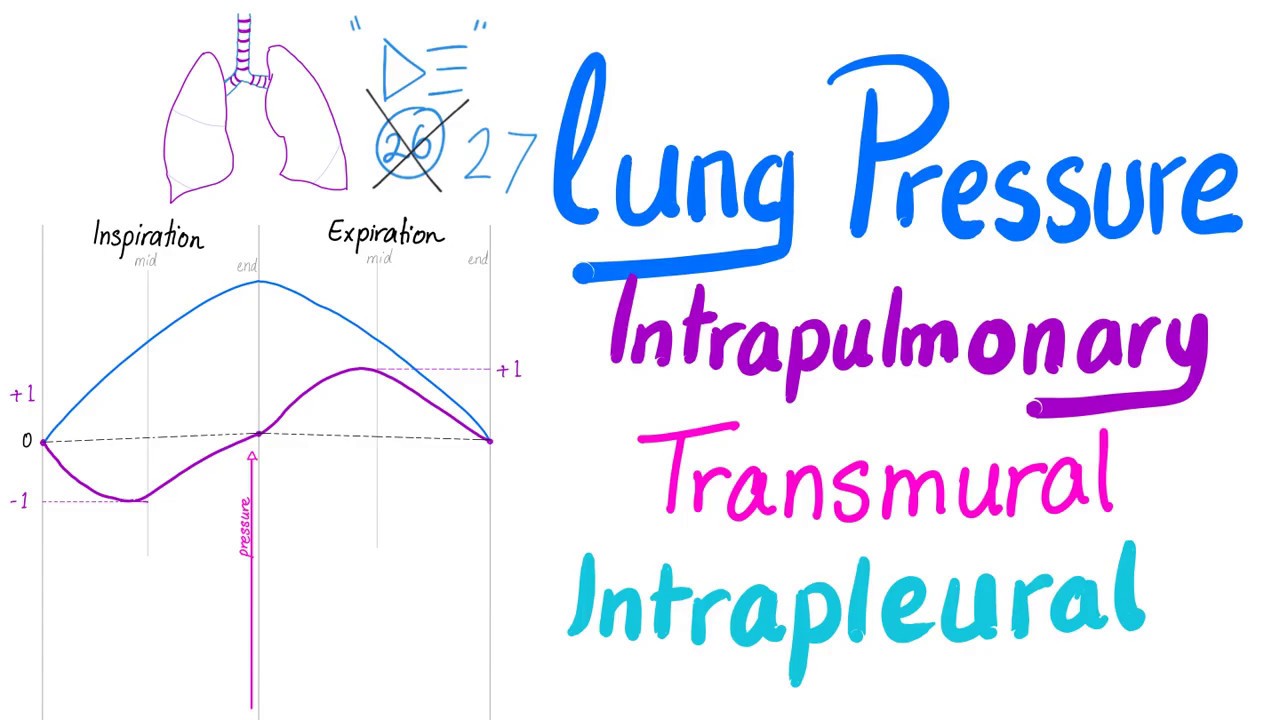
of course this is abnormal that's why it's an obstructive lung disease so an obstructive lung disease you have increased your work of breathing that's why you have respiratory fatigue that's why you can show signs of intercostal retractions so if you look at the patient's ribs like the chest wall the skin in between the ribs is moving inwards on his inspiration exploration that's the blue below tur as you know I'm spitting wisdom all over the place the negative intrapleural pressure is due to the dynamic harmonious antagonism between the chest wall which wants to expand and the
lungs which want to recoil creating a negative pressure in between which prevents them from moving apart next the chest wall is confining the lung and the lung is confining the chest wall because if you leave it to your lung to have it its way it's gonna recoil the chest wall is preventing there if you leave it to the stupid chest wall although it's gonna expand into oblivion and jump out of your thorax your lungs prevent that and also this is thanks to that negative inch of pressure okay that's interesting again pressure here volume here so
the slope is the freaking compliance we get it this curve is the same instead of pleural pressure put transformed eye pressure and just instead of negative make it positive piece of cake the slope of any of these curves equal compliance so let's see which one has the greatest compliance let's take a common pressure and go upward so the lung only has the lowest compliance then lung plus chest wall is the in-between and the chest wall has the greatest compliance if it's alone because I've told you before that if you leave it to the chest wall
it's gonna expand into oblivion translation it has the greatest compliance if you leave it to the lung alone it's gonna contract and recoil until it collapses that's why it has the lesser compliance or the least compliance and if you combine the lung and chest wall together like normal human beings it's gonna be in between because if you remember my first word of wisdom the dynamic harmonious antagonism is between what the chest wall which wants to expand and the lungs which tend to recoil now let me tell you what's gonna happen if we removed a lung
called pneumonectomy the chest wall initially will expand because of the dynamic harmonious antagonism now there is no longer just wall is free to expand and then this is gonna increase the volume of the chest wall according to Boyle's law that relation between the volume and pressure is inverse therefore when you increase the volume of the chest wall you decrease the pressure of the chest wall creating more negative intrathoracic pressure negative pressure pulls the diaphragm upwards and pulls the trachea towards the side of the pneumonectomy and eventually this is gonna pull water into the post pneumonectomy
space leaned to a pacification on the x-ray so let's say that we had a patient with two lungs in the beginning then we removed one lung he is just having this left lung right now the right lung is gone either as the chest wall expands volume increases pressure decreases creating a negative pressure pulls the diaphragm up pulls the mediastinum towards the side of the pneumonectomy and eventually it's gonna pull water in that's how you end up with a pacification on x-ray on the right side on the same side of the pneumonectomy this was the story
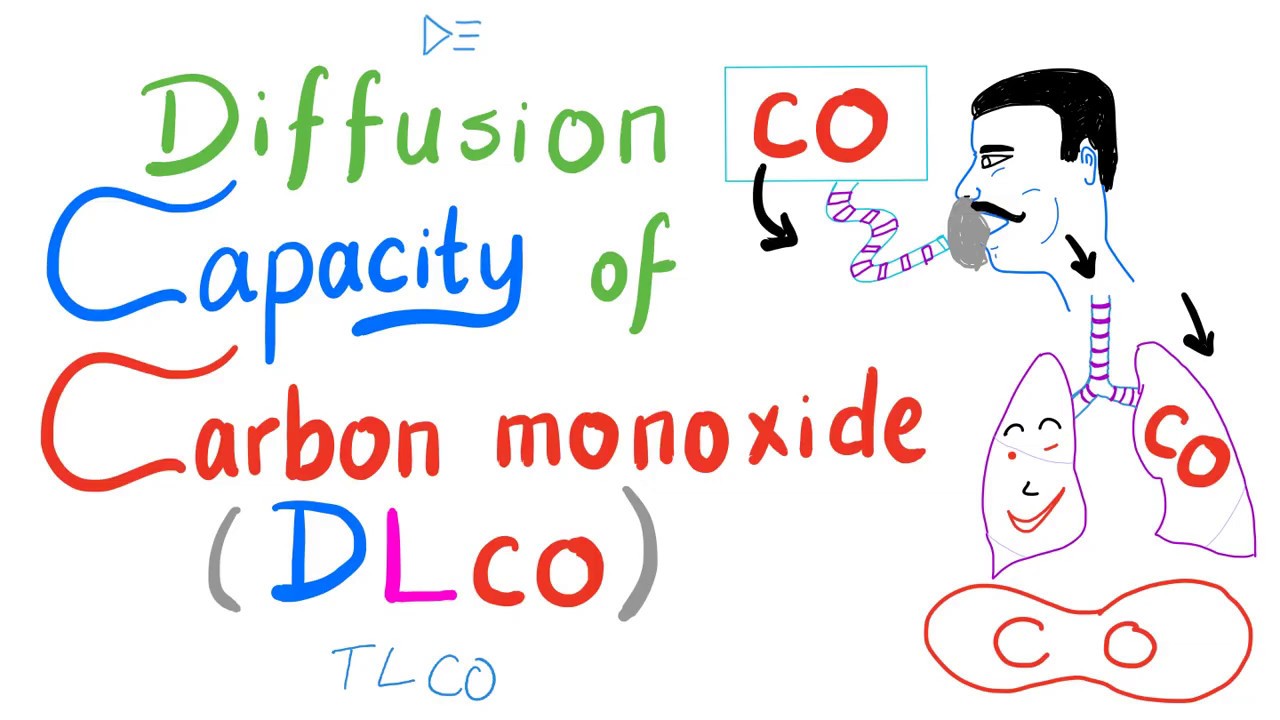
of the pressure-volume loop please don't confuse it with the flow volume loop in the next video we'll talk about diffusion capacity of carbon monoxide also known as dlc oh let's be honest you're struggling to learn about Legionella mycoplasma Pseudomonas rhinovirus staph stripped a coli Klebsiella check out this website called pic Manik they have animated mnemonics and pictures for medical students please check the link in the description below they are freaking amazing thank you so much for watching please subscribe and join the tribe hit the bit to be notified follow me on Facebook I have 100
cases there and you can support this channel please do it even one dollar helps me produce more videos in the future and I'll send you my organized notes they are organized in Dropbox folders that you can just download including the notes of my pulmonology playlist thank you so much for watching as always be safe stay happy and study hard this is medicals perfectionist where medicine makes perfect sense