the king crab is one of the largest and most sought-after crustations in the world its white sweet and tender meat is considered a delicacy but did you know that every time you eat King Crab you're helping protect the planet even though a pound of king crab can sell for hundreds of dollars there was a time when it was considered an ecological disaster king crabs are not native to the Waters of Norway they were introduced to the baren Sea by the Soviet Union in the 1960s as part of an economic development project how however with no
natural Predators they multiplied at an alarming rate causing severe ecological imbalances these crabs prey on other marine life destroy the food chain and threaten biodiversity in the region in Norway where king crabs are abundant strict rules are in place to mitigate their harmful impact once caught king crabs cannot be released back into the sea if you don't comply you might find yourself stepping on their carcasses is underwater sounds like a good reason to visit Norway doesn't it despite their Regal title as king these crabs are quite different from typical crabs While most crabs have eight
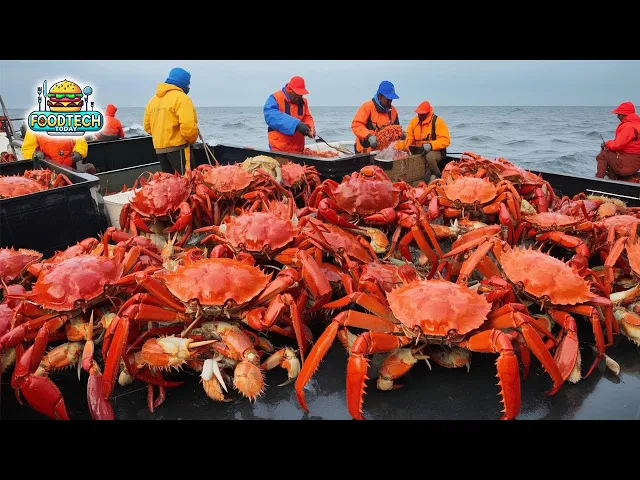
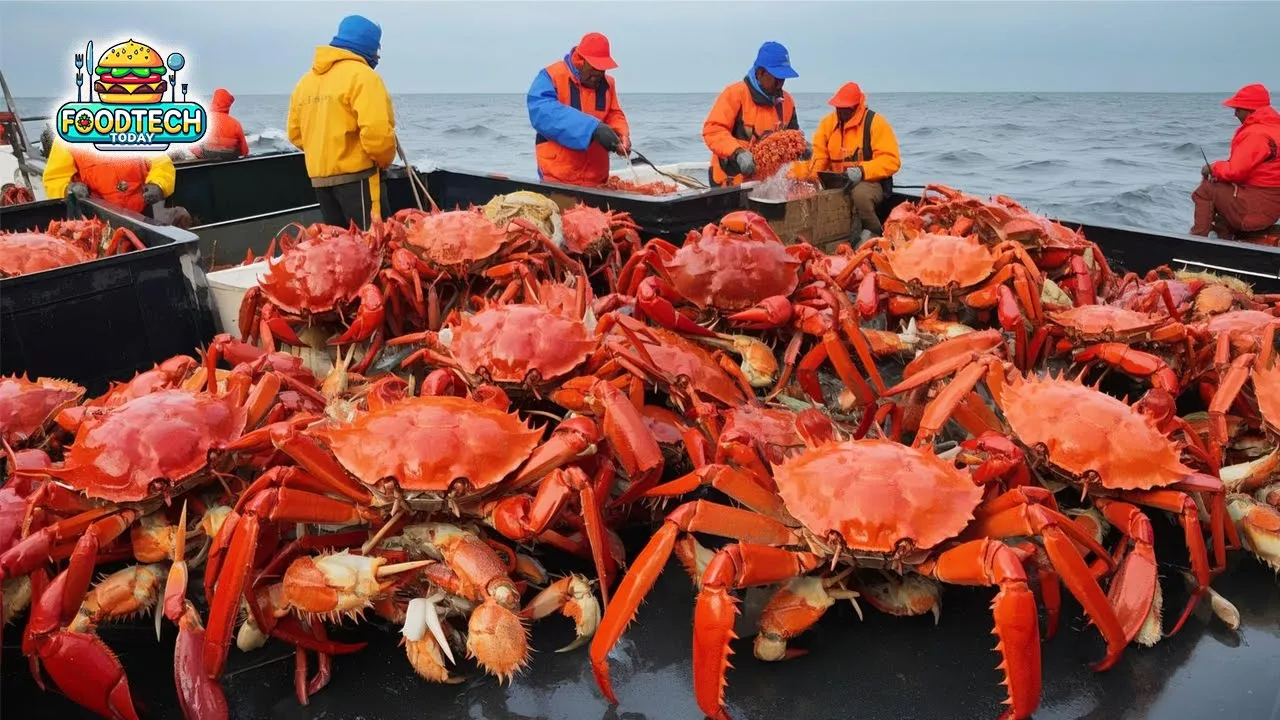
legs king crabs only have six making them a unique member of the crab World female king crabs made only once in their lifetime the male sperm is carefully stored in a specialized organ inside the female and is gradually used to fertilize multiple batch of eggs this is an efficient reproductive strategy to say the least but how do they catch and process thousands of tons of the world's largest crabs to find out we visited one of the fishing grounds in Alaska the largest US state by area here fishing vessels are equipped with metal trap systems reinforced
with Nets showcasing a blend of creativity and a commitment to conservation the smart design of these traps allows fishermen to selectively catch crabs based on size the specially designed entrances only permit crabs of commercial size to enter while preventing other fish species from getting caught Additionally the traps feature an integrated Escape mesh system that allows Juvenile and undersized crabs to safely Escape using traps offers significant advantages over traditional net fishing methods which are increasingly showing their limitations especially as the seafood industry places more emphasis on sustainability and conservation crab fishing is far more effective than
any other method regardless of who is fishing or how much competition exists fewer small crabs being pulled up means better outcomes for the environment and the method's effectiveness is evident when considering the broader picture of the fishing industry after inspection these traps are hoisted onto the boats and prepared for the next Expedition Crossing hundreds of miles of open ocean braving the notoriously harsh Bearing Sea with sudden storm and towering Waves King Crab Fishing vessels head toward the North Pacific this region about 200 Mi off the coast of Alaska is home to one of the richest
fishing grounds on the planet Autumn marks the start of the king crab fishing season as the first cold winds begin to blow courageous fishermen embark on their journey to hunt this Royal species they face the challenge of treacherous waves and unforgiving weather to reach this abundant fishing ground the king crab season is a brief window lasting only 2 to 3 months each year typically from October to January during this time fishermen deploy specially designed traps filled with bait that has started to rot usually Herring or Cod the distinctive scent spreads through the water acting as
an irresistible invitation to the king crabs hiding in the depths of the sea the process begins with deploying massive traps to the ocean floor each trap weighs between 600 and 900 lb and is lowered to an average depth of 656 to 984 ft the traps are connected by ropes with buoys floating on the surface to mark their locations however these traps come with significant risks even a small mistake during Transportation or deployment can result in serious accidents on Deck to mitigate these dangers every fishing vessel is equipped with flexible crane systems that play a crucial
role in safely and efficiently moving and lowering hundreds of traps into the sea the traps are strategically placed on the ocean floor at optimal distances forming an impenetrable Network to capture king crabs these traps remain underwater for 24 to a maximum of 48 Hours providing enough time for the crabs to catch the scent of the bait and willingly crawl into the traps drawn by the irresistible Aroma after soaking for the required time and filling up with king crabs the traps are hauled back up using a winch system installed on the fishing vessels these winches either
hydraulic or electric reel in the ropes and lift the traps from the depths every movement must be carefully coordinated to prevent accidents or damage to the traps and the crabs inside once the traps now brimming with crabs are brought on Deck see [Music] the fishermen begin the meticulous sorting process this is where strict selection criteria come into play each crab is carefully inspected to ensure it meets the fishing regulations only crabs that meet the minimum size requirements are kept while undersized crabs are returned to the Sea allowing them to continue growing and reproducing the average
weight of a king crab ranges from 6 to 11 lb but some can grow to over 22 lb with a leg span of up to 5 ft after being freed from the weight of their valuable catch the traps are neatly arranged at the bow of the ship ready for the journey back to shore the strong and skilled fishermen work in harmony with the modern cranes carefully organizing the traps with the Crane's assistance and the coordinated efforts of the crew the traps are efficiently stacked and secured ensuring everything is in order for the return trip to
preserve the pure Exquisite flavor of this Royal crustation Alaskan fishermen have adopted a special preservation process that sets king crab apart from other Seafood the crabs are kept alive on the boat in specially designed tanks that replicate their natural habitat however each fishing vessel has limited storage capacity allowing only a certain number of crabs to be kept alive once the tanks are full of these fresh Treasures the fishermen must end their trip and return to Port to unload the catch as a result king crab fishing trips are typically very short lasting only 3 to 4
days this ensures the crabs remain fresh and their natural flavor is preserved delivering the highest quality product when the ship docks the live king crabs are carefully unloaded the fishermen meticulously sort the crabs by size ensuring Precision crabs of similar sizes are neatly arranged into bright yellow plastic crates once each stack of crates reaches six High a crane gently lifts them onto the dock and places them onto specialized transport trucks long lines of trucks loaded with fresh king crabs head toward processing plants ready for the next steps in the supply chain in addition to the
yellow crates another method of Transport is used to unload king crabs from the ship large bins capable of holding up to 600 lb of crabs fishermen also sort the crabs by size and carefully place them into these large bins if a bin is full but hasn't reached the required weight the crane temporarily lifts it off the ground creating space for fishermen to continue sorting and adding more crabs this process is repeated until the bin meets the weight requirement at that point the crane officially releases the crabs from the bin lifting them onto the dock and
transferring them to processing plants this large bin method is an efficient way to save time and effort in handling the catch at the processing plants a unique aspect of the king crab handling process is that the crabs are processed only once while they are still alive all sorting and sizing are completed during the initial packaging stage completely eliminating the need for reprocessing Frozen products the advanced processing systems are specially designed to maintain a consistent temperature throughout the handling process preserving the crabs pristine freshness this ensures that the product reaching consumers is of exceptional quality fresh
as if it were just caught while meeting the highest hap food safety standards what we're observing here is the second step in the king crab processing procedure known as The Crab breaking station at this station workers carefully place the crabs onto the blade of the machine to separate the shoulders and legs from the body if not done properly there's a risk of tearing the legs away from the shoulders at this stage the gills remain attached to the crab legs workers handle this by simply rubbing the legs against a rotating Gill remover machine which quickly and
effectively removes the gills after the gills are removed the crabs are weighed sorted by size and the claws are detached next the crab legs move to The Cutting station where the legs are separated without breaking any of them the workers here demonstrate great skill ensuring the crabs are processed with precision and Care in an ongoing effort to improve production efficiency and attract younger workers one pioneering project focuses on developing automated machines capable of precisely and quickly separating crab Parts while manual labor still dominates in processing plants today the adoption of automation technology in the near
future represents a significant step forward addressing the challenge of an aging Workforce a major concern in the crab processing industry with the average worker age reaching 55 attracting younger workers has become a pressing need technology is seen as the key to capturing the interest of the younger generation who are techsavvy and passionate about innovation ideas like a crab computer that could play Minecraft or perhaps instead of playing Minecraft it could play crab cutting or integrating Wi-Fi connectivity might just be the kind of Creative Solutions needed to draw young Talent into the crab processing sector by
viewing Factory workers as skilled technicians and creating more efficient assembly lines the future of the crab processing industry looks bright even for those who might not particularly like crabs the cooking stage is one of the most critical steps in processing king crab as it determines the delicious flavor and premium quality of this delicacy after undergoing thorough preparation and sorting the plump robust king crab legs enter a special heat processing phase first the legs are carefully arranged in large mesh baskets stacked meticulously to ensure proper handling these baskets are then slowly immersed into massive industrial boiling
tanks filled with water maintained at a temperature of 185° f the crabs are cooked for about 30 minutes just enough to ensure the meat is evenly cooked achieving an ideal tender sweetness while retaining their signature firm texture once the crabs reach perfect dness they are immediately chilled by plunging them into cold water tanks this rapid cooling process locks in the fresh flavor and prevents bacterial growth next the crab legs are transferred into smaller smartly designed baskets that optimize air flow ensuring even and efficient cooling the subsequent step is deep freezing the crab legs are placed
in brine tanks at an ultra cold temperature of 0° F within just 35 to 40 minutes the legs are completely Frozen preserved in their Peak condition to ensure long-term preservation the legs are coated with a protective glaze by dipping them in fresh water this thin glaze acts as a natural Shield preventing dehydration and protecting the legs from environmental impacts thereby extending their shelf life finally the frozen crab legs are removed from the baskets carefully packaged in bags and cartons and then stored in cold storage facilities under optimal conditions at this point the king crab legs
are ready to make their way to Market and dining tables delivering a culinary experience like no other it takes approximately 3 to four king crab legs to weigh 2.2 lb and the price for this premium delicacy can reach as high as $300 per 2.2 lb catering to the growing demand in the market processing plants now offer an exciting new Option alongside traditional whole king crab legs ready to eat canned king crab meat after the legs are cooked and cooled skilled workers carefully remove the hard shells by hand the process is done gently to preserve the
pristine tender and flavorful crab meat without any damage this premium crab meat is then meticulously packed into cans offering consumers especially those who love the taste of king crab but dislike the hassle of cracking the shells a convenient and sophisticated option with just a simple Twist of the lid customers can immediately enjoy the full rich flavor of the king of the sea saving time while still indulging in an exceptional culinary experience that's the entire process of how king crab is processed in the factory do you enjoy king crab how do you like to eat it
share your thoughts in the comments below if you're still curious and want to dive deeper into the fascinating world of production don't miss our video on how sandwich bread is made in a factory the link is included in the description and pinned comment thanks for watching and and see you on our next adventure [Music] [Applause]