Have you ever walked out to your GMC Sierra and thought, "I wish this truck had 300 less horsepower and it was a Subaru. " The 1980s, a decade of big hair, questionable fashion, and even worse car designs. While automakers were busy experimenting with futuristic looks, they somehow managed to create vehicles that look like rejected sci-fi props or poorly assembled Lego sets.
From boxy nightmares to design disasters that make you question humanity's sense of aesthetics, these 17 ugly cars prove that not everything from the 80s deserves a comeback. Whether they resembled oversized toasters, alien spacecraft, or just mistakes on wheels, these automotive eyes left a lasting impression, just not the kind anyone wanted. So, join us as we explore the 17 ugliest cars of the 1980s nobody wants back.
Number 17, 1980 Dodge Omni. The Dodge Omni, a car so dull that even your grandpa's old lawn mower had more personality. Designed to be Chrysler's answer to the fuelefficient hatchbacks of the time, the Omni boasted a 1.
7 L Volkswagen sourced engine that wheezed out a whopping 70 horsepower. Perfect for thrilling 0 to 60 sprints and 13 seconds. Its boxy, uninspired design looked like someone sketched it onto a napkin during lunch and forgot to refine it.
aerodynamics. Who needs those when your car is shaped like a fridge on wheels? But wait, it gets better.
The Omni was notorious for its exceptional build quality, meaning door handles broke, painted, and if you were lucky, the car didn't disassemble itself while driving. Number 16, 1980 Plymouth Horizon. If the Dodge Omni was a fridge on wheels, the Plymouth Horizon was its off-brand, slightly uglier cousin.
Chrysler, in a stroke of sheer laziness, decided to slap a different badge on the same exact car and pretend it was something new. Spoiler alert, it wasn't. Under the hood, the Horizon offered the same 1.
7 L Volkswagen sourced engine, turnurning out a breathtaking 70 horsepower, just enough to make merging onto highways a near-death experience. It had frontwheel drive, which was progressive for the time. But let's be real, when your car looks like a cardboard box with wheels, handling isn't your biggest concern.
Inside, the design was as bland as a hospital waiting room. With plastic so cheap it felt like it would disintegrate in direct sunlight. The horizon was unreliable, slow, and as visually appealing as a microwave meatloaf.
While Chrysler sold plenty, nostalgia for this disaster remains at a firm 0%. Number 15, 1980 Ford EXP. Ford had a brilliant idea.
Take the already slow and uninspiring Escort, remove two seats, and call it a sporty coupe. What could go wrong? Well, uh, everything.
The 1984 Ford EXP looked like a car that had just received terrible news. Its droopy headlights, oddly stretched hood, and awkward proportions made it seem permanently confused. Powered by a 1.
6 L 4-cylinder engine, it wheezed out 70 horsepower, making acceleration an exercise impatience. A tortoise with a jetpack could outrun this thing. Ford marketed it as a fuelefficient sporty car for young drivers.
But with a 0 to 60 time of over 12 seconds, it had all the excitement of watching paint dry. To make matters worse, the suspension was as soft as overcooked pasta, ensuring that any attempt at spirited driving felt more like riding a trampoline. Number 14, 1980 Yugo GV.
The Yugo GV wasn't just ugly. It was a four-wheel catastrophe that redefined the phrase, you get what you pay for. Imported from communist Yugoslavia, it was marketed as a affordable car for budgetconscious Americans.
Translation, it was a cheap tin can on wheels that barely functioned. Under the hood, the 1. 1 L engine produced a mind-blowing 55 horsepower, ensuring that 0 to 60 mph felt more like a long-term goal than an actual acceleration time.
If you were lucky, the car would start. If you were really lucky, it wouldn't break down mid drive. The transmission was clunky.
The electrical system was a nightmare. And rust formed faster than you regrets after buying one. Its styling, well, imagine a box with wheels and none of the charm of a classic hatchback.
The interior felt like a punishment with plastic so flimsy it seemed like it was made from recycled soda bottles. Number 13, 1980 Subaru Brat. Was it a car, a truck?
A poorly executed joke? Well, nobody really knew, and neither did Subaru. The B drive recreational all-terrain transporter, Brat, yes, that's really what it stood for, featured a 1.
6 6 L flat 4 engine producing 67 horsepower barely enough to haul groceries, let alone anything useful. But the real highlight, the rear-facing plastic jump seats in the truck bed, added purely to dodge the US chicken tax on imported pickups. Because nothing says safe and practical, like strapping passengers into plastic lawn chairs in the open air at highway speeds.
Aesthetically, it looked like someone glued a truck bed onto a station wagon and called it a day. It wasn't quite rugged. It wasn't quite stylish and it certainly wasn't desirable.
Number 12, 1980 Renault Fuego. The Renault Fuego. The car that desperately wanted to be a futuristic sports coupe, but ended up looking like it had had an identity crisis.
With its weirdly stretch proportions, sloping rear, and an unfortunate resemblance to a melted bar of soap, the Fuego was proof that not all French designs are elegant. Under the hood, it came with a 1. 6 L or 2.
2 a 2 L engine producing anywhere from 64 to 110 horsepower, which meant its performance was about as exciting as watching grass grow. Renault bragged about its aerodynamic shape, but in reality, it just looked oddly bloated. Inside, you were treated to an interior that looked like it was inspired by a 1970s disco lounge.
Plasticky, cheap, and certainly not aging well. Number 11, 1980 AMC Eagle. The AMC Eagle was what happened when someone at American Motors looked at a station wagon and thought, "You know what?
This needs monster truck ambitions. The result, a lifted four-wheel drive oddity that looked like it had been pieced together from leftover car parts. " Mechanically, the Eagle was ahead of its time.
It was one of the first passenger cars with all-wheel drive, featuring a 4. 2 L inline 6 engine producing 110 horsepower. But let's be honest, no one remembers it for its engineering.
They remember it for looking like a station wagon wearing hiking boots. The chunky fender flares, awkward proportions, and confused identity made it clear that even AMC wasn't sure if this was a family hauler or an off-road warrior. Number 10, 1980 Pontiac Phoenix.
If there were an award for most forgettable car of the 1980s, the Pontiac Phoenix would win without even showing up. It was supposed to be Pontiac's version of the Chevrolet Citation, but instead it looked like someone started designing a car, got bored halfway through, and just hit print. The Phoenix came with a 2.
5 L Iron Duke inline 4 producing 90 horsepower, which meant acceleration was best described as eventual. If you were feeling particularly brave, you could opt for a 2. 8 L V6, but it didn't make the car any more exciting, just slightly less embarrassing.
Build quality. What build quality? The Phoenix was notorious for brake failures, suspension issues, and transmissions that quit life unexpectedly.
The styling was as bland as a plain oatmeal breakfast with zero redeeming features to make it stand out. Number nine, 1980 Austin Montego. If you've ever wondered what pure boredom looks like in car form, feast your eyes on the Austin Montego.
It was the automotive equivalent of unseasoned mashed potatoes. Bland, forgettable, and just sitting there, existing without purpose. Powered by a 1.
3 L to 2. 0 L engine, the Montego wasn't just slow. It was the kind of slow that made you question whether it was actually moving.
Handling. Imagine trying to steer a sofa down a winding road. The suspension was so soft it felt like the car was actively trying to rock you to sleep.
And let's talk about that styling or lack thereof. The Montego had all the design flare of a governmentissued office chair. Straight lines, zero personality, and a face only an accountant could love.
Number eight, 1980 Austin Maestro. If the Montenko was the automotive equivalent of unseasoned mashed potatoes, the Maestro was cold leftover mashed potatoes. It was British Leland's attempt to take on the VW Golf, but instead of creating a stylish, reliable hatchback, they delivered a car that looked like it was designed using a ruler and zero enthusiasm.
Under the hood, you got a 1. 3 L or 1. 6 L engine, which produced just enough power to make driving slightly more exciting than watching paint dry.
The performance was sluggish, the handling was vague, and reliability, well, let's just say the Maestro spent more time parked at the mechanics than on the road. In the end, the only thing it mastered was being forgettable. Nobody wants this one back, except maybe scrap metal dealers.
Number seven, 1980 Aston Martin Laganda. Imagine a child drawing a futuristic car with nothing but a ruler and unearned confidence. That's the Aston Martin Laganda.
It was supposed to be a luxurious high-tech sedan for the ultra wealthy, but instead it looked like a brick that had been stretched out and photoshopped. Under the hood, it had a 5. 3 L V8, which sounded impressive until you realized the car was heavier than a small moon, making acceleration more of a suggestion than a reality.
But the real disaster, the electronic dashboard. A cutting edge idea that turned out to be as reliable as a weather forecast from a psychic. Touch sensitive controls failed.
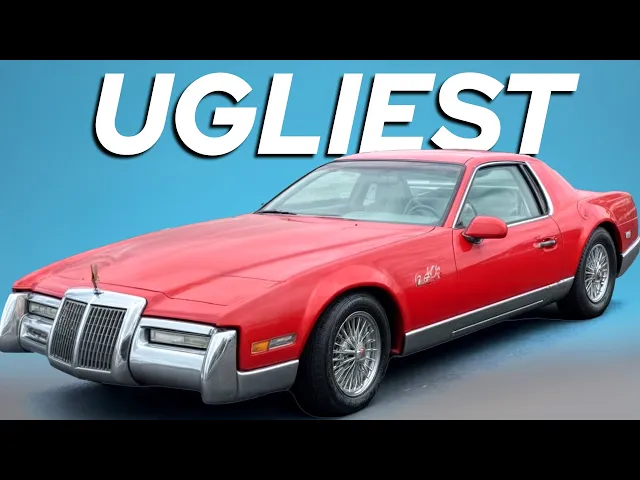
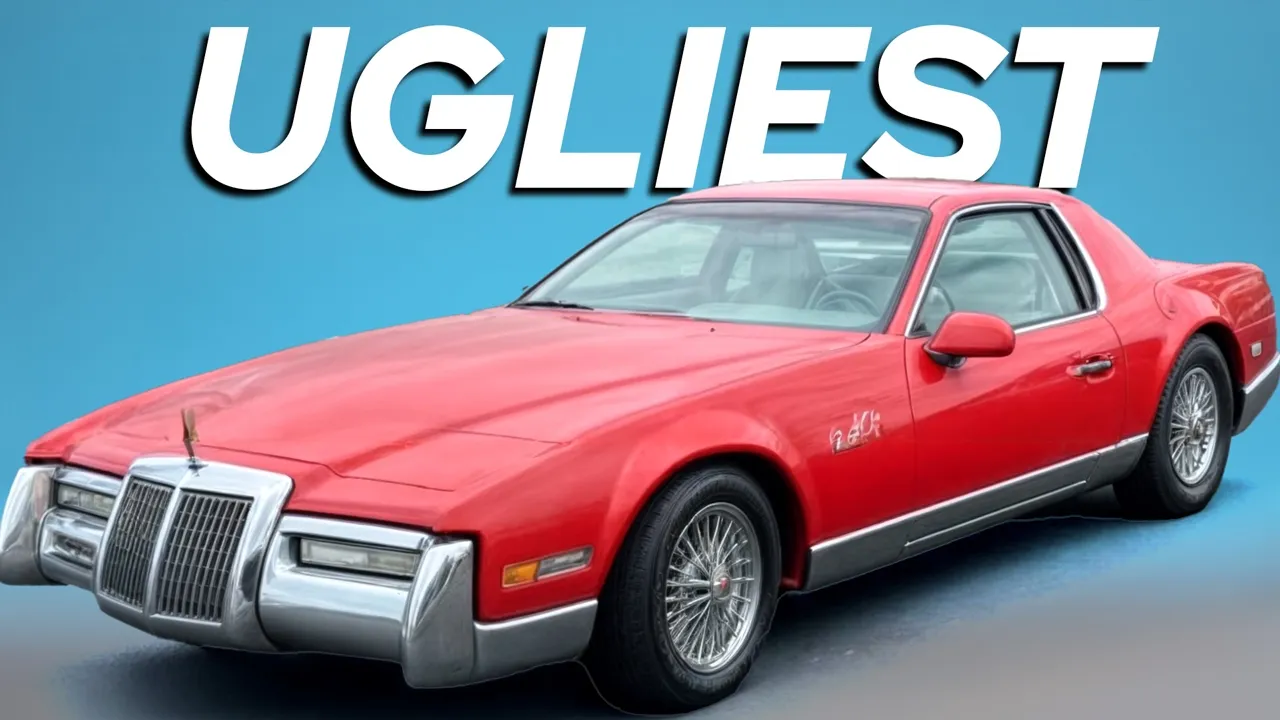
LED screens flickered like a haunted house, and owners were left wondering if they'd bought a car or a malfunctioning arcade machine. Number six, 1984 Zimmer Quicksilver. Now, take a Pontiac Fiero, stretch it awkwardly, slap on some fake luxury details, and you get the Zimmer Quicksilver, a car that tried way too hard to be fancy, but ended up looking like a cheap kit car ordered from a late night infomercial.
Zimmer, known for making retrostyle luxury cars, decided the Fiero needed a longer wheelbase, more chrome, and a weirdly droopy front end. The result, a disproportionate mess that looked like it was melting in slow motion. Despite its attempts at elegance, it just screamed midlife crisis on a budget.
Under the hood, it kept the Fiero's 2. 8 L V6 producing 140 horsepower, meaning it had all the performance of a car that looked this bad. None.
Inside, faux wood and leather tried to convince you it was high class, but let's be real, it was all flash, no substance. Number five, 1983 Glen Frome Facet. If someone tried to design a car using only a protractor and blind optimism, they'd end up with a Glenfro Facet, a vehicle so painfully angular, it could double as a medieval torture device.
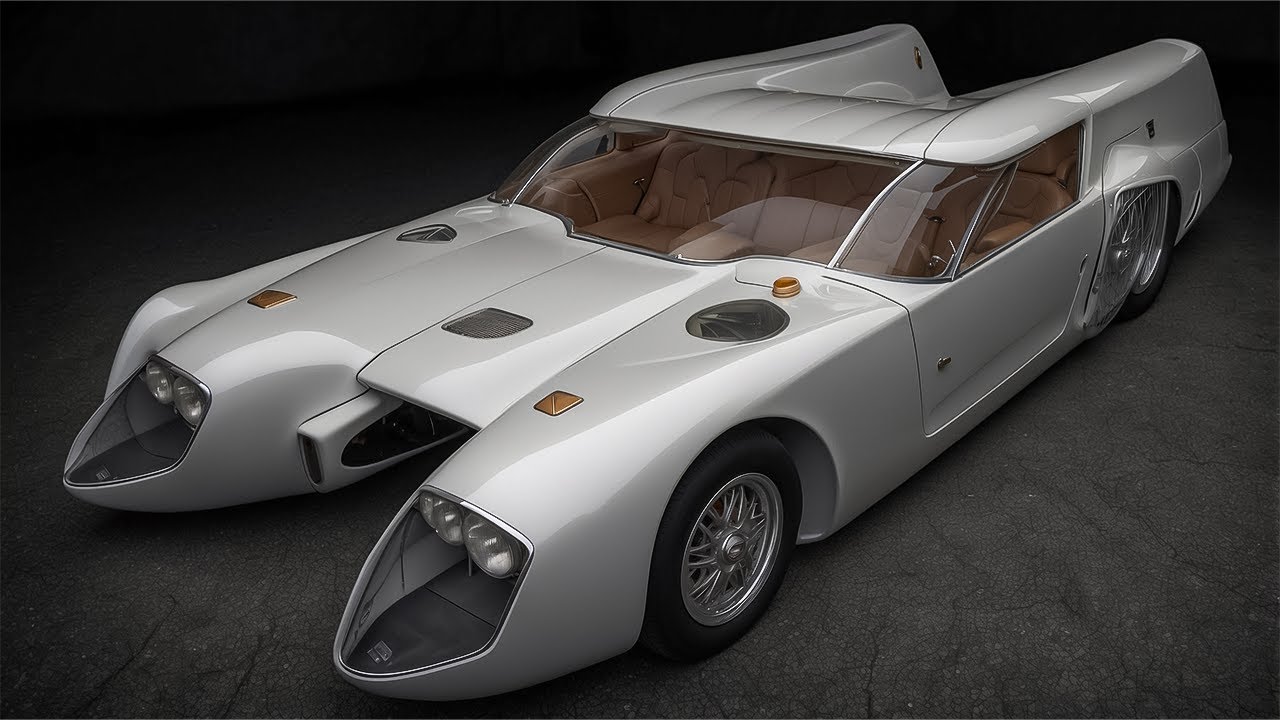
Built by British coach builder Glenfro, the facet was an attempt to create a luxury off-roader, but instead it looked like a Lego brick on oversized wheels. The body was all straight lines and sharp angles, making it appear more like an unfinished prototype than a finished product. It was supposedly based on a Range Rover, but you'd never guess that, unless someone swore on their life that it was true.
Under the hood, it kept the 3. 5 L V8 engine, meaning it at least had some power. But let's be real, no one was buying this for performance.
The only people who wanted a Glen From Facet were those who thought looking like a rejected sci-fi movie prop was a good idea. Spoiler, it wasn't. Number four, 1980 Toyota Tursel.
If cars had personalities, the 1980 Toyota Tursel would be that guy at a party who talks about accounting software for fun. It wasn't just boring, it was aggressively boring. Toyota introduced the Tursel as its first front-wheel drive car, which was exciting for engineering nerds, but did absolutely nothing for its looks.
It had a 1. 5 L inline 4 engine, producing a thrilling 60 horsepower, which meant merging onto a highway felt like a life ordeath decision. And the design, well, imagine a refrigerator on wheels, but less stylish.
The Tursel was so boxy, you could probably store leftovers in it. Its squared off headlights and uninspired lines made it look like Toyota had designed the entire car in Microsoft Excel. Sure, it was reliable because Toyota never lets anything die, but that didn't make it desirable.
Even Toyota seems to have erased this one from its memory, and honestly, we can't blame them. Number three, 1980 Excalibur Series 4. Some cars try to capture classic elegance.
The Excalibur Series 4 tried to do that, too, but ended up looking like a dollar store knockoff of the 1930s. Designed as a neocclassic luxury car, the Series 4 took inspiration from pre-war Mercedes-Benz models, but executed it with all the grace of a drunken costume designer. The result, a car that looked like someone threw together leftover auto parts and called it vintage.
The fake wire wheels, oversized fenders, and cartoonishly long hood made it seem like it belonged in a theme park, not on the road. Powered by a 5. 0 L or 5.
7 L GM V8, it had some muscle, but that didn't make up for its sheer ridiculousness. It was also massively heavy, meaning you got all the fuel consumption of a classic car without any of the charm. Number two, 1980 Chevrolet Citation.
If cars had yearbook superlatives, the Chevy Citation would win, most likely to disappoint. It wasn't just ugly. It was a rolling disaster wrapped in a boxy, uninspired shell.
Chevy's first front-wheel drive compact car. The Citation was meant to be revolutionary. Instead, it was recall central with problems ranging from brake failures to transmissions that quit life unexpectedly.
The 2. 5 L Iron Duke inline 4 produced a thrilling 90 horsepower, making acceleration a test of patience. And the design, imagine a cinder block with windows.
The Citation had all the visual appeal of a DMV waiting room with lifeless angles and a look that screamed designed in 5 minutes. And at number one, the 1980 Cadillac Sevil. And now, the grand champion of ugly, the 1980 Cadillac Seville.
A car that looked like it couldn't decide which decade it belonged to. Cadillac, in all its wisdom, decided that the best way to make the Seville stand out was to chop off the rear and glue on a miniature trunk. The result, the infamous bustle back design, which made the car look like it was dragging an old suitcase behind it.
Supposedly inspired by 1920s European luxury cars, it instead resembled something a mad scientist built from spare parts. Powered by a 6. 0 0 L V8.
It was supposed to be luxurious, but instead it was just slow, heavy, and prone to mechanical headaches. Even worse, the V8 64 cylinder deactivation system was so unreliable, it practically invented modern engine failure. The 1980 Civil wasn't just ugly, it was a bad idea executed poorly.
And that, my friends, is why nobody is begging for a comeback. And there you have it, the creme de la cringe of 1980s automotive design. From cars that looked like melted shoe boxes to those that seemed to be designed by someone who had never actually seen a car before, these monstrosities remind us that bad ideas on wheels were very much a thing.
Sure, some might argue they had character, but let's be real. So does a dumpster fire. Now, we want to hear from you.
Did we miss any other rolling disasters from the 1980s? Do you secretly love one of these ugly ducklings? Let us know in the comments.
Just don't try to defend the Pontiac Aztec.