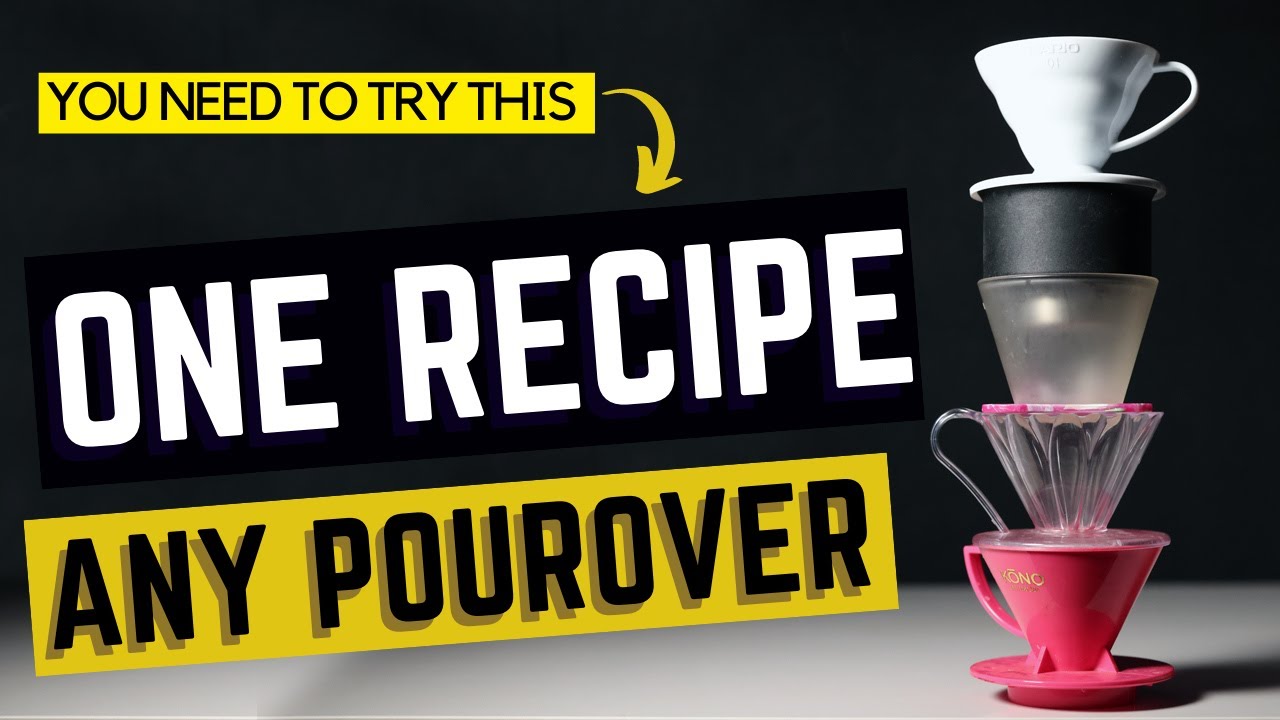
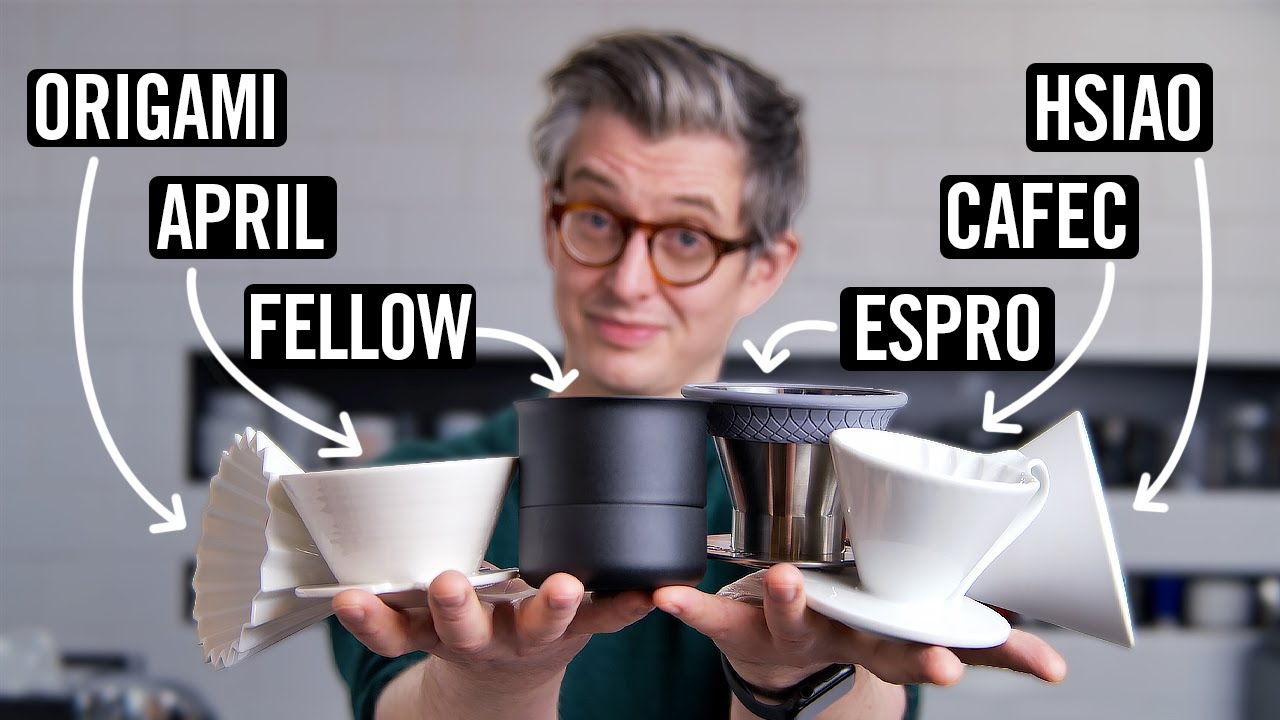
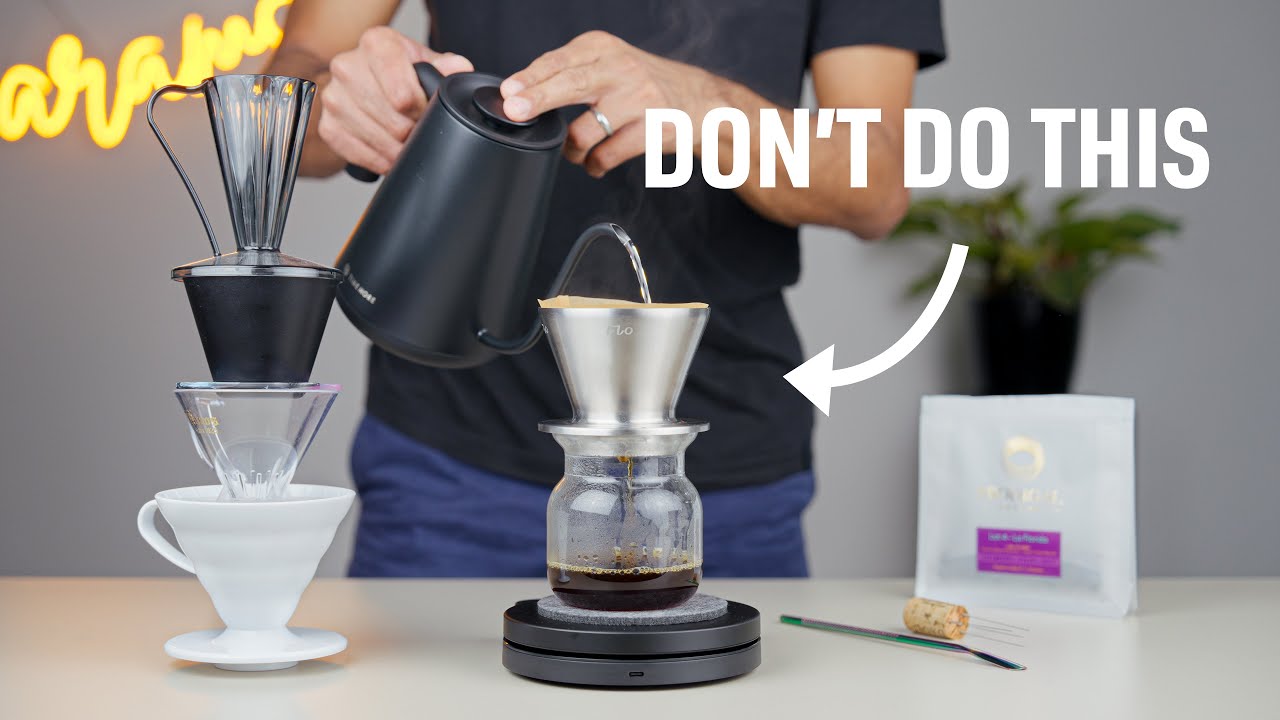
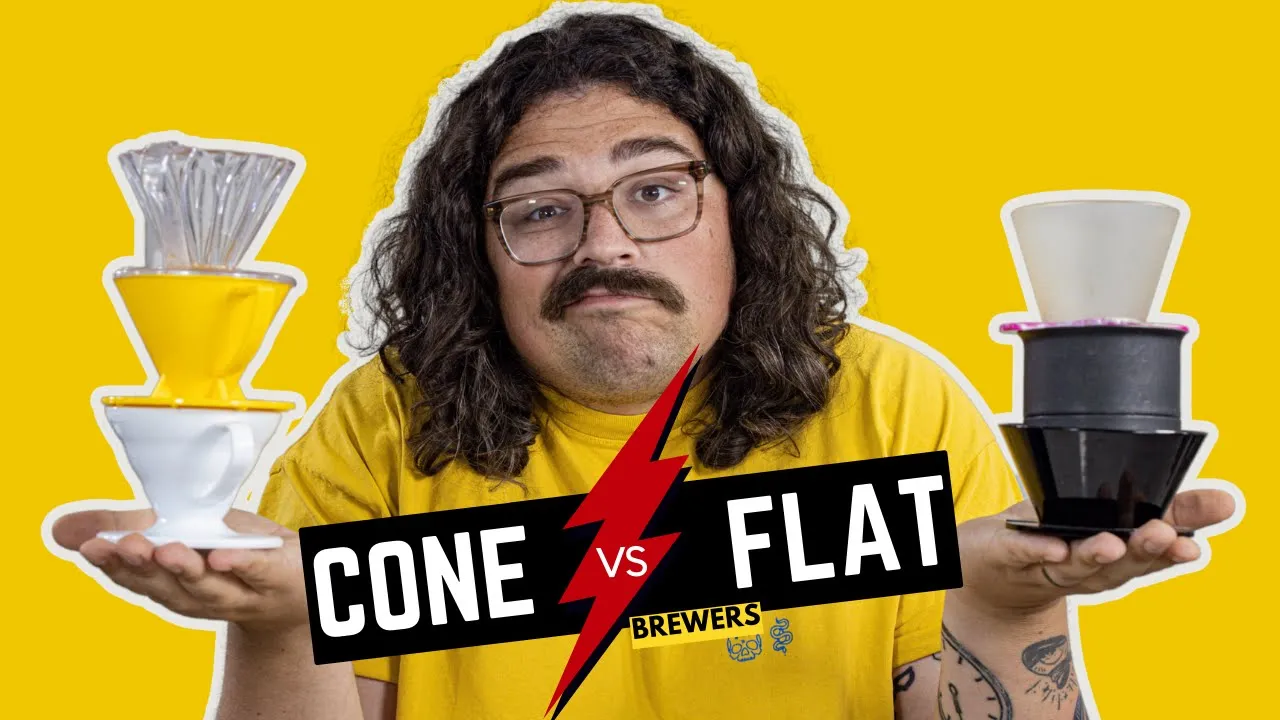
Darcy's law is the first step to understanding the physics of percolation it was first derived directly from observations to describe how fluid flows through a porous medium such as ground coffee when placed in a cylindrical container as Illustrated at the oh hey everyone today we're going to gear up to talk about something that a lot of you have been asking about flat bottom trippers versus cone drippers [Music] laughs we're going to talk today about the differences between flats and Cones which is better which is worse which is best for you which is not best for
you or if we can even tell those differences so instead of making you read something as convoluted and highly esoteric as the physics of filter coffee which actually I recommend you buying in readings it's great by Dr Jonathan gagne but I'm going to go ahead and I've absorbed some of this information I'm going to regurgitate some of it for you along with a study that was conducted at the University of California at Davis it started in like 2017 they published it in about 2019 thank you Hugo for taking the book away but before we get
into that I'm going to ask that you would take a quick second hit the like hit the subscribe on this video those things I cannot tell you enough how much they help me uh driving my video on the algorithm helping me with subscribers all that stuff really helps me I'd appreciate it bagging bagging you all right that was weird first I'm going to discuss the results of this massive test survey type thing that was done by UC Davis headed up by the likes of Peter Giuliano out in California this study was uh funded by Breville
because they have their Precision Brewer and it comes with both a flat bottom filter and a semiconical filter and they were wanting to know if there were objective differences between the two that you could actually Trace scientifically chemically Etc they set up over three weekends this massive test with over 100 participants that are non-expert tasters every weekend they tried nine to ten coffees overall over these three weekends they hit 29 coffees 118 different people so over 3 000 coffee samples were served and they of course had a lot of different methodology on how they were
to approach this but we won't get into that I'll link it below if you're curious about how they got into it they kind of finalized the top six things that really affected the perception of flavor to the majority of these people tasting it and of course they were they were airing on the side of things that were statistically significant so to begin I'm going to say what was not statistically significant was Brew temperature so they only tested in these specific temperatures 87 degrees 90 degrees and 93 degrees Centigrade people weren't really recognizing the differences between
temperatures so that's not even really a part that out of the six variables they had that as the lowest variable because it just did not matter they weren't able to find any type of change which I made a video about that right here I don't really play with 96 verse 97 or 95 versus 95.5 which I hear a lot of people debating about oh this tasted better half a degree higher no it didn't get out of here they do speculate that perhaps a larger variance in temperature would have been noticed by the people tasting but
at least between the 87 and 93 there were no real differences what they did find is the number one thing that these participants were tasting were able to articulate the difference between was by and far roast level it didn't matter what the origin was it didn't matter what the present acidity was and what concentration it didn't matter about the brew recipe didn't matter about the Brute temperature the grind size or anything the first thing to do is make sure you're getting the right roast level for you now sadly we don't really have a great way
of generalizing roast levels for the most part a dark coffee doesn't even have oils on it that would be for me like a different conception of coffee and so like for me I would have to say oily dark so for people who have oils on their beans that's a darkness that doesn't really even live on my Spectrum so that's like super super dark and for me and for where I live and a lot of people are like that dark to them or charred or anything like that may not even be to the point of what
a lot of you are drinking which is absolutely fine if you like really dark coffees you like the Woody the ashy the you know the the tobacco e the Smoky that type of coffee that's valid if you're on the other end of the spectrum you like the really light the fermenting the floral whatever it might be that's completely valid if you like really really thin types of coffees where it's a really low TDS that's valid if you like really thick chewy coffees that's out there is no such thing as one recipe one coffee one style
of Brewing to rule them all they took coffees they have like nine that they would set up you would have three different tds's and three different extractions extraction yields were sixteen percent twenty percent and twenty four percent the tds's were one 1.25 and 1.5 there was a greater ability across the participants to distinguish between lower and higher TDS and find their preference there than there was between 16 20 and 24 extraction yield so the extraction yield actually paled in comparison to TDs now that doesn't mean that the extraction yield meant nothing it just means that
there was a higher correlation between people picking specific cups when it came to concentration than it did extraction now yes that study did focus on the semiconical Brewer and the flat bottom Brewer of the Precision Brewer but I think we can extrapolate the data and the the kind of conclusions to fit somewhat the conical Brewer itself so something like a flower Kono V60 Etc and same can be said about a drip coffee with the flat bottom versus something like the April the Stag the Oreo the second most important thing was your brew recipe not your
poor pattern not the poor pattern not the temperature not not any of that but your ratio essentially so more coffee or less coffee to a given amount of water which essentially is the concentration right then the third most important thing was actually the the basket itself so whether it was semiconical or flat all things staying the same same grind size same temperature same pulses same everything people were able to distinguish pretty pretty regularly between a flat bottom Brewer and a semi-cone brewer then after that you had grind size so they found their testing people were
more easily able to tell the difference between the basket geometry versus different grind sizes of the same coffee I don't change grind size that much with four rivers unless it's like a big change I I understand a lot of people want to have this insane granularity and believe that it does a ton to their cup I've never really noticed that and instead I tend to focus on some other variables and kind of keep that static when it comes to pour overs there's probably some methodological flaws throughout this test that can be worked out with future
iterations of this but I do think it's a great place to start especially when we're looking at what is potentially the most important thing when dialing in a coffee [Music] foreign [Music] so with the flat bottom Brewer they were tasting florals chocolates they were tasting like dried fruits they had like black tea and things like that whereas with the conical Brewer or the semiconical Brewer they tasted more citrus Berry sharp acidity sometimes they would say it was a little uh like brown roast uh maybe a little astringent in comparison to the flats so these were
the most common kind of phrases used when describing cups that came from either of these obviously blindly are there issues in some of the methodology sure do I know about the coffees they used no so honestly it could be with those types of coffees these are the results maybe if we had a wider span of different styles of coffee it could be different because I know that one of the big things that they said about their light coffees that they had they did a light a medium and a dark say for switching out samples often
on the light a common note that was given as fermenti which makes me think that they were using heavily processed coffees for the lightly roasted coffees because I don't think a really lightly roasted washed coffee is going to be very fermenty but that's beside the point so at the beginning I was reading an excerpt about Darcy's law and that is an important equation when looking at water flowing through any of these drippers over here so Jonathan gagne talks about it and he kind of messes with the equations in order for the for them to fit
different drippers and to take into account coffee inside of it but before we get into that let's take a look at some of these different drippers and some of the peculiarities between them so we're going to start with cone drippers [Music] foreign most of us know the V60 the Hario V60 it's very famous a lot of times these equations are assuming kind of smooth ridges and unperturbed flow through the the the cylinder itself uh which this is obviously a cone but you can manipulate the formula to to take into account a cone shape as opposed
to cylinder but if we look inside we have these ridges now you may be asking what are those ridges for it's very simple when you put a filter inside of here the ridges are going to push the filter off the side which gives more surface area for the coffee to go through now what that obviously means is wherever these ridges are pushing the filter off there's now a gap between the filter and the wall which will allow water and coffee to make it through and go around the bed of coffee which is commonly referred to
as bypass and Brewing this is an obvious phenomenon that happens there are people who put push against it but something that is very convincing is Garnier realized that if he were to map this out against Darcy's law which would assume that it was that water was going through without bypass it should be a linear style of an equation if graphed out but what he realizes the more water you pour if you put a column of water over the bed of I believe he did eight centimeters in his study where he was measuring the output uh
the flow rate output he noticed that whereas Darcy's law was like this on a graph just very linear what was happening when he poured that much water in is as he was pouring water the speed of the outfall increased rapidly exponentially almost which shows that there is water coming out of other places that Darcy's law doesn't account for and so this kind of shows that the more water you put above your bed the more potential bypass is going to occur now where it occurs how much it occurs and what space is not really knowable at
least at this point but we do know that bypass will happen so again what that means is if you have your cone dripper and you have coffee right here water goes into the coffee and it starts to flow through but as it builds up over the bed it's going to want to go through the filter and because there's negative space behind the filter between that and the wall it can go behind it go around the filter itself and exit the Bottom now I know that you know when you look at a cone filter when you
look at this you want to think that everything kind of comes out just right here but if that were the case you would have a stalled Brew so quickly that it would take you 15 minutes to drain that's not nearly enough surface area for the water to escape the filter the filter goes all the way up to the top of the wall meaning you can use more surface area if needed as you fill the cone up more and more more of that water is going to be bypassing which gives you a nice fast flow rate
but it doesn't really give you a very even extraction now that being said you're not going to get much more of an even extraction in something like the auria or the Stag X or the April because flat bottom drippers have problems on their own so if we're looking at them side by side when you have something like a cone dripper you have water that's going down through the middle and it tends to kind of favor the middle as it's going through and extracting because the mass gets smaller and smaller so the middle gets extracted more
than the edges for the most part so you have a really nice gradient from north to south on the V60 where it's not as even from side to side it's more even from top to bottom but when you get something that's flat bottom so it's completely fine on the bottom and you have a more truncated bed what you're going to get is much more even extraction on top and there's going to be a gradient going down what happens there is water is hitting the top of a flat bottom Brewer and then you now are extracting
the rest of the bed with coffee because there's nowhere else for it to kind of go around however when you have this cone the concentration of the coffee gets less and less as you go down and it's easier for the middle to extract so you have two different extraction Dynamics going on and when you think about it even if they extract even if the evenness of extraction once you look at all of it and you kind of quantify each level as extra extracted medium extracted less extra attracted even if they have the same amount in
both they're going to give you different flavor profiles and that's because you're going to be extracting different parts of each part of the coffee differently let me try to explain that just a bit whenever we are extracting more in the center obviously as you're going down the water is picking up extractants solubles and is going to continue extracting down here in the middle it's going to be a different phase of extraction by the time it's getting extracted with water that already is saturated and whereas with this one the majority of that top layer is getting
heavily heavily extracted and as it goes down it's extracting with extract so you have two different styles of extraction going on even if they hit a similar extraction yield which is what the study we mentioned earlier confirmed now if we look again at another cone just to kind of understand the filter to the wall Dynamics this is the Kono a very old very traditional dripper it's smooth on the top part and then has Ridges at the bottom so at this this means is if you have if you situate the paper filter really well you're going
to get complete suction against the smooth walls and then down here is where the filter is going to stick off of the wall so you're going to have most of that Bypass or partial bypass more like down here up here water can't get around the bed so this would be a lower bypass option than this but when you think about it this is going to have a lot more surface area for the coffee to to for the fines to be absorbed into and to kind of stick to as the water is going down so it
has a essentially a higher capability of fines absorption because it's using more of the filter more of the surface area before releasing in the Kono of course you just have this bottom part where the coffee is actually escaping so you're going to get a slower Brew in a Kono than you would a V60 because of this flat surface here okay now the flower is another option where it has kind of like finger width grooves in here but it's giving you essentially a similar thing as the V60 whereas the V60 however kind of gives you a
spiral type of pattern which is kind of moving the liquid and a Spire away this one kind of just pushes it straight down as these petals or kind of finger-like indentions are are pushing the liquid down past the bed as well so both of these are going to give you a really quick Brew you're going to have kind of uncontrollable bypass but there are ways to mitigate that a very important thing that a lot of people Overlook when they're doing pour overs is how their filter is situated not wetting your filter is a big mistake
by the way I recommend just dousing it with your faucet water that way it situates it really well with water weight kind of pushing it into all the crevices you can actually lessen bypass by doing that in these types of Brewers you're still going to have some but you're going to be able to really push it against those walls with that water I'm not telling you to rinse your filter because it helps with paper taste I'm telling you you're not going to have consistency from Brew to brew if you put a dry paper filter in
there and you start brewing you're going to have folds happening as it's getting wet you're going to have differences in the body bypass you're gonna have differences in the flow now something that has been recently discussed online is could I take like a blade grinder or a cheap grinder and sift out the really small particles and essentially have the same style of grinds or of grounds that a really nice grinder has the answer to that is no the interaction of the Burrs or the blades with the beans are producing the different types of particles some
Grinders give you rougher particles than others which are going to affect the flow rate in different ways others are going to give you more spherical or more elongated or just different styles of grounds that are going to be fit in here now when you think about it if you have parts of the bed that have a lot of fines or a lot of funky funky shaped particles then water is going to flow through those areas differently than other areas of the bed which is going to cause channeling yes there's channeling in every coffee extraction ever
it doesn't matter what your bed looks like it doesn't matter if your espresso extraction looks beautiful there's no sprays there is always uneven flow through the bed regardless a more even flow through the bed will give you a more even extraction so I always tell people when dialing in porovers or espresso start coarser and go finer until you find what you like because the more coarse you can ground the more uh unperturbed flow the water can experience the more even the extraction likely the better cup of coffee you're going to get but if you have
a really nice grinder obviously you can go finer and finer without giving much perturbation to that flow but it's still better to go coarser in order to achieve the cup that you're wanting to achieve Brew time and the Brew temperature or the bottom variables people were not able to tell the difference between a six minute brew and a three minute Brew it just didn't matter the only issue with the long Brew times is if you have a lot of channeling going on which of course you can't really know so grinding coarser is always your best
bet especially when you have a cheaper grinder it's always better to grind a bit coarser foreign bottom Brewers flat bottom Brewers you get those frilly styles of filters like the Kalita filter the Stag filter things like that that have Frills around the edges now the reason for this is twofold first it's much easier to make those styles of filters to fit in here otherwise how are you going to make a filter to fit other than when you have to fold yourself so you can take just a normal Circle filter and they have machines that crimp
them and it's very easy just fit straight in wet it and you go the other thing is is those are used in Labs often to filter things out the thing is is in labs they don't need evenness of filtration in the same way that you do in coffee so those filters actually despise they promote a lot of bypass and when you pour around those edges those flower edges you're going to bypass whatever doesn't hit the coffee is bypassing the bed there's been a trend in recent years to fit other styles of filters into these Brewers
themselves or you created you know The Negotiator which is a tool that you kind of put in and twist and it fits it shoves a filter in there and fits it against the walls really well now you're never going going to get no bypass by using a negotiator you'll still have minimal bypass but that's actually okay you have different hole patterns on the bottom and this is kind of what dictates the flow rate coming out because of course whenever you wet your filter since it's flat the filter is going to get stuck to the bottom
and then that's the only release points that we have are these little slits right here and the hole in the center the more open surface area we can have the better or if we can situate the filter onto something that will hold it away from clogging it we can open up the surface area more so I know that Jonathan gagne has suggested using a t-mesh to April have these ridges inside to keep the filter from clogging that hole and that way instead of having just this surface area to release you have the whole bottom of
your filter as well as maybe the sides if they're not connected to the walls with the Stag X you have these teeny tiny holes and because their perforations are very small if it's seated perfectly it will cover these holes and then literally your only surface area is this hole plus this whole plus this this this this all that combined is a tiny tiny tiny surface area for water to escape which can stall or choke your Brew you need something holding the filter up in order to allow the maximum surface area for water to flow through
properly increasing the weight of your water the the height of your water column will also increase the weight which can both compact the bed and it can increase the flow rate because you have more weight pushing it through if you have grounds that are coming out with a lot of fines and it may not be ideal to pour a massive water column because those can smush together a lot easier if you have a very wide particle distribution it's easier for grounds kind of fit close up next to each other compress more and disallow water from
going through nicer Grinders is not as big of a deal some people assume that if you have like a wider distribu like a wider Brewer you'll get a faster drawdown and you will with a constant weight of coffee inside of a constant dose but if you increase the dose in order to make it efficient in extraction then you're going to have the same draw down if if you were to systematically decrease it so let's say let's say we have a three centimeter bed in this Oreo here and then we increase the Oreo to something this
size and we get a three centimeter bed again you're gonna have the same draw down in both one that's what Darcy's law dictates and that's also what just happens in in real life um assuming everything the same right the percentage of fines Etc et cetera we made sure we had that minimum bed depth I put a kind of a nest in the center to really help quickly saturate all of those grounds and keeping with again What gagne suggests in his book and then I brewed him the same exact way with the same flow rate the
same pulses the same time same everything everything's the same right here I have the three cone and here I have the three flats and so on the bottom of the flats this marker on the bottom of this is nothing there's going to be in one of these will be two Flats one cone the other one will be two cones One Flat make sense don't listen if you don't like slurping because I'm about to go to slurp City I swear I think this is right I'm wrong aren't I uh this was a lot harder than I
thought it was gonna be I've done these in the past and they weren't this hard this one however was the hard I think these are flat and these were cones this section seemed easier because these two are really bright acidity and up to this one it just tasted muted the this was harder and I'm very confident this is the one that has the Two Flats I'm thinking it's these two but with the with the two flat bottoms or the flat or one I'm assuming is the flat profile is not as bright not as acidic more
rounded more uh chocolatey more sweetness these seemed like that but they kind of all melded together and it's kind of a crap shoot so we'll go ahead and check these out that's a flat bottom and that is a cone so that's that is the flat that's flat so that means these are definitely cones I don't have to check I just measured the TDS of both of these samples I took a sample at the beginning to let them cool I didn't want to know the TDs is prior to tasting so it wouldn't mess with my mine
but I just measured them and they were both identical down to the hundredth using a VST refractometer that's crazy the fact the matter is they did taste it different so it's obvious that different components are being extracted differently in each of them the ones that both Hugo and I were able to differentiate were the cones we did pull those out and paired them both so we both were able to tell when it was two cones versus a flat it was it was an apparent change like that was that was an easy change uh it's when
it was two flats and a cone that made it a little difficult because the Two Flats kind of I don't know maybe it messed with our palette I don't I don't want to speculate or we just suck at tasting but what I do know is they extracted essentially at the same exact extraction you know the same exact TDS which is crazy because we use the same recipe in two different drippers but that shows that the extraction is kind of similar going on as far as the hitting of different parts of the bed the biggest difference
is how that extraction is occurring because of the shape of the bed if you're at home and you have a flat and a cone I would highly suggest you doing this Brew or this test doing this everything the same just pick a grind size pick a recipe and just stick to it on both and if you can try to use the same filter paper I just took a circular a piece of paper like so a lab piece of paper and I made it fit in the flat bottom made it fit in the cone Brewer so
that I could have the same porosity of paper filter for the Brew itself the biggest thing I think we can take away from it more objectively than the flavor notes they attributed to both the flat and The Cone because I I take issue with some of the flavor notes there instead of that because that's more granular that's a little bit more I think you need more professional tasters for that but what we can for sure take away from that in my opinion are those variables that they said in the matter of importance the top importance
regardless of what you're brewing with is going to be your roast level the second most important is going to be your recipe or essentially your ratio your concentration your TDS and then the third most important is going to be the basket geometry so the Brewer itself so for us those are the same TDS they were hard to differentiate fourth is grind size so take into account your basket shape your ratio and your roast level before you think about changing your grind size and then you have Brew time and then you have Brew temperature all right
so it's keep those in order of importance right there if you think that there's something different let me know below because I'm going based off this study and based off of some personal experience that's kind of what I've observed I don't really change basket geometry as much maybe I will do it more often now but I'm curious what your thoughts are is this video helpful are you going to integrate some of those things into your workflow or these things that you have noticed generally what I've noticed is just more balanced Brews out of flat bottoms
more acidic and stratified bruise out of cones but does this change your thoughts on that let me know in the comments below thanks again for watching make sure you hit that like to subscribe if you enjoy my content it all really helps my patreons below check that out but anyway I hope that you brew something tasty today and cheers