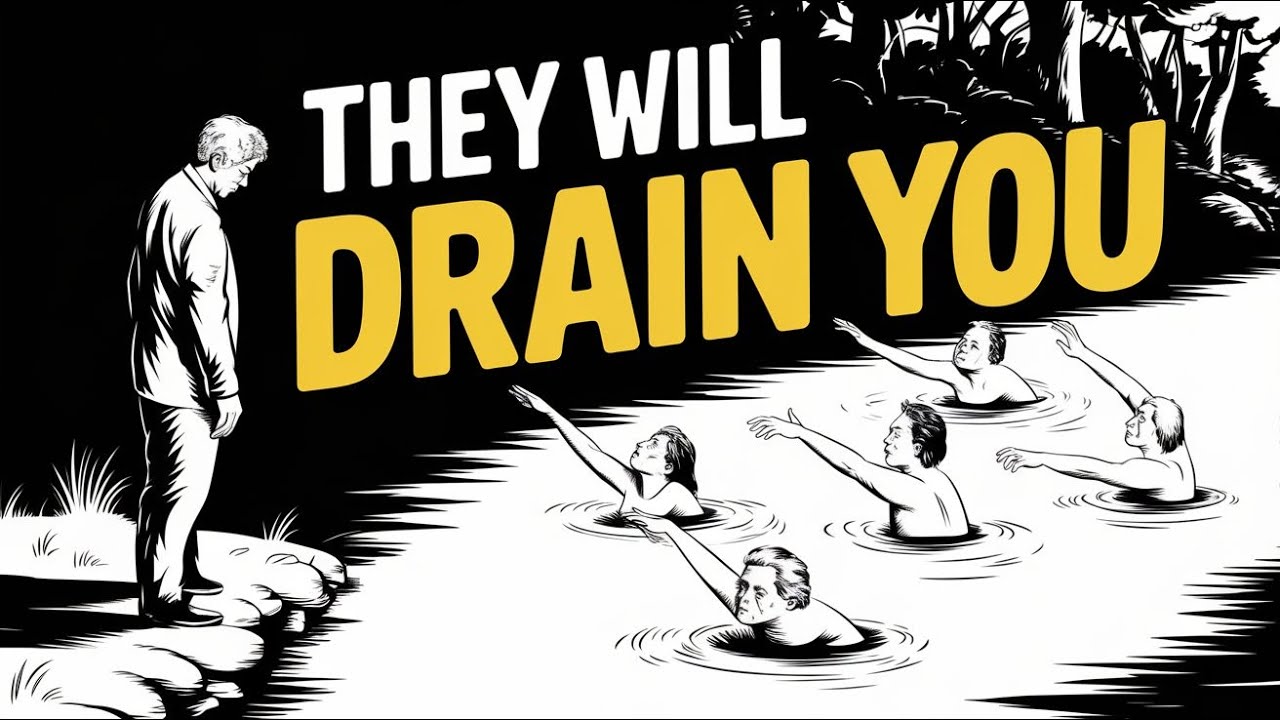
Picture yourself standing at the edge of a wide Rushing River on the other side is everything you've ever wanted your dreams goals and the future you envision for yourself the current is strong and the crossing won't be easy but you're ready to face the challenge as you contemplate your next move two of your closest friends stand beside you both eager to offer advice on how to get across the first friend John steps Forward confidently he's always the optimistic one full of energy and positivity it's not that deep he says with a smile just go for
it you're smart and capable once you start swimming you'll be fine in fact you'll probably make it to the other side faster than you think Jon's words fill you with excitement and for a moment you feel an urge to dive in his energy is infectious and his belief in your abilities is reassuring but as you look at the Churning water doubts creep in is he oversimplifying things is this River really as easy to cross as he makes it seem before you can decide your second friend Sarah chimes in she's the cautious one always looking out
for your safety wait are you sure this is a good idea she asks her brow furrowed in concern that current looks dangerous you could get swept away and who knows what's lurking beneath the surface you should stay here it's safer there's no Need to risk everything when we can wait for a better time or find an easier path Sarah's words are filled with care but they also make you second guess yourself what if she's right what if Crossing this River really is too dangerous and you end up failing you stand there caught between Jon's boundless
optimism and Sarah's protective caution both are your friends and both want the best for you but their advice pulls you in opposite directions stoicism teaches That moments like these when we Face decisions that could shape our future require discernment not all advice even from well-meaning friends is helpful in fact sometimes the wrong advice can hold you back from achieving your potential John the eternal optimist represents a type of person who though encouraging often oversimplifies challenges stoicism reminds us that life's obstacles like the river in front of you are not to be underestimated Marcus aelius the
great Stoic philosopher often spoke about facing reality as it is not as we wish it to be while it's important to believe in yourself and take action stoicism teaches us to approach challenges with a balanced mindset one that recognizes both opportunities and risks Jon's blind optimism might push you to LEAP without proper preparation which could lead to failure his advice though well-intentioned lacks the grounded realism that stoicism values then There's Sarah whose cautious nature stems from Fear stoicism warns against letting fear especially the fear of failure govern our decisions epicus another stoic philosopher taught that
external events are not inherently good or bad it's our perception of them that shapes our experience in this case Sarah's perception of the river is clouded by anxiety she sees only the potential dangers not the rewards that lie on the other side if you listen too Closely to Sarah's advice you might never take the leap remaining stuck on the shore safe but unfulfilled the the stoic approach to advice is one of balance you must weigh the perspectives of those around you but ultimately rely on your own judgment and reason Jon's positivity can Inspire action but
without the grounding of thoughtful planning it risks leading you into situations you're unprepared for Sarah's caution can help you avoid Unnecessary dangers but taken to the extreme it prevents growth by keeping you stuck in a place of comfort and fear as you stand at the edge of the river stoicism encourages you to look inward what can you control in this situation your preparation your mindset and your actions are within your control while the strength of the current and the exact outcome are not the river represents life's uncertainties and no amount of advice can eliminate that
However stoic wisdom teaches that we must be ready to face those uncertainties with courage and rationality rather than letting optimism or fear alone guide our decisions in this moment the most valuable advice is not the words of John or Sarah but your own internal Compass shaped by careful thought and reason the stoics would argue that while it's good to listen to others you must guard against advice that is either too Reckless or too Fear-driven both extremes can lead you away from your true path so as you prepare to cross the river remember this the journey
will have its challenges but you have the tools to face them trust in your ability to make sound decisions grounded in reality not swayed by the voices of unchecked optimism or overwhelming caution the stoic way is to walk the middle path informed by wisdom and ready for whatever lies ahead in Today's video we'll explore eight types of people you should avoid taking advice from through the lens of stoicism some individuals can unknowingly hinder your progress by imposing their limitations on you stoicism teaches us to stay focused on our own values purpose and Inner Strength understanding
who to listen to and who to avoid is key to maintaining a clear mind and following your true path let's dive in and uncover the types of Advice givers you should steer clear of one the pessimist in life there will always be people who under the guise of giving advice subtly undermine your confidence and ambition one of the most dangerous types of people you should avoid taking advice from is the pessimist a pessimist tends to focus so on potential problems worst case scenarios and reasons why something won't work out while they may claim to offer
a realistic perspective Their advice often reflects their own fears and insecurities rather than an objective assessment of the situation in the framework of stoicism pessimism is an attitude that opposes the stoic principle of focusing on what is within your control and accepting what is not when you allow a pessimist to shape your decisions you risk adopting their negative world view and losing sight of your own potential stoicism teaches us the Importance of resilience and Clarity in facing life's challenges a pessimist however views challenges as insurmountable obstacles they highlight every possible failure amplifying the likelihood of
things going wrong the stoic on the other hand acknowledges that while obstacles may arise they are opportunities for growth and learning pessimists lack this Vision their focus on what could go wrong leads them to shy away from risks and encourages others to Do the same they often couch their negative advice in terms of concern for your well-being but in reality their advice is rooted in their own fear of failure by taking their words to heart you you may end up paralyzed by indecision afraid to take even calculated risks because of the negative possibilities they emphasize
one of the core teachings of stoicism is the concept of amor Fati or the love of Fate this stoic mindset teaches us to embrace Whatever happens and to recognize that all events even those that seem challenging or negative are part of a greater whole that can lead to personal growth grow pessimists however do not believe in this idea they resist the notion that anything good can come from difficulty often pushing the idea that avoiding risk is the best way to avoid pain this mindset is in direct opposition to the stoic idea that embracing challenges is
essential to Building resilience and strength of character when you take advice from a pessimist you are led to fear challenges rather than fa them with confidence and acceptance this avoidance of difficulty ultimately prevents personal growth another harmful aspect of taking advice from a pessimist is that they often strip situations of nuance where a stoic sees multiple potential outcomes and prepares mentally for each the pessimist sees only one outcome failure pessimists Often use phrases like that's just the way things are or the odds are against you which discourage any attempt to change or improve the situation
the stoic however believes that while external events may not be fully controllable your response to them is always within your control a pessimist's advice dismisses this agency urging you to resign yourself to defeat before you've even tried in stoicism you are encouraged to take full responsibility For your actions and responses whereas the pessimist would have you believe that you're powerless in the face of adversity stoicism also values the cultivation of inner peace which comes from accepting what cannot be changed and focusing on improving oneself pessimists however disrupt this piece by introducing constant worry and doubt
into the equation they often dwell on hypothetical problems that may never even materialize encouraging you to do The same by by focusing on what could go wrong pessimists draw your attention away from what is going well and from the progress you're making this leads to unnecessary Stress and Anxiety which stoicism teaches us to avoid taking advice from a pessimist also hinders your ability to maintain a growth mindset stoics believe in constant self-improvement and learning even through failure the pessimist on the other hand View use failure as something To be avoided at all costs they often
advise you to stay within your comfort zone suggesting that it's safer not to take risks because the outcome might be uncertain stoicism teaches the opposite that we must face uncertainty with courage and use it as a tool for growth the pessimist does not recognize the value of discomfort and challenge by listening to their advice you may shy away from opportunities that could have taught you valuable lessons this Avoidance prevents you from becoming the best version of yourself as you're never pushed beyond what you already know pessimists tend to undermine confidence both in themselves and in
others one of the most damaging aspects of taking advice from a pessimist is that over time their constant negativity can erode your belief in your own capabilities they may point out potential weaknesses in your plans or imply that you're not equipped to handle The challenges ahead in stoicism self-confidence is built through understanding that while you may not control every outcome you always control your response the stoic believes in their ability to adapt and grow through hardship while the pessimist believes it's better not to try at all by internalizing the pessimist's negative Viewpoint you begin to
lose faith in your ability to handle life's uncertainties This lack of confidence leads to inaction which ultimately results in missed opportunities and stagnation two the unsuccessful many people find themselves taking advice from individuals who despite having good intentions have not achieved success in the areas they are offering guidance on these individuals the unsuccessful often dispense advice rooted in their own failures shortcomings and limited Understanding while they may be offering this advice with the hope of helping stoicism teaches that you should be mindful of where your counsel comes from relying on guidance from those who have
not succeeded in their own Pursuits can lead you astray causing more harm than good in stoic philosophy wisdom and virtue are Central to living a good life wisdom in particular refers to practical knowledge an understanding of how to live Effectively in the world but this wisdom must come from those who have demonstrated their ability to navigate challenges and achieve their goals when someone who has not succeeded in a particular domain offers advice they are often reflecting their own experiences of failure which can distort their view of what is possible their advice may be colored by
regret bitterness or a lack of perseverance and their counsel might discourage you from taking risks or Pursuing your Ambitions taking advice from the unsuccessful often results in being led toward mediocrity these individuals frequently suggest taking the safer path avoiding risks that could lead to failure or discomfort however stoicism teaches us that adversity is not something to be avoided but embraced the stoic understands the challenges and difficulty are necessary for growth and that through hardship we Develop resilience and strength of character the unsuccessful having been defeated by their own challenges may tell you to avoid discomfort
at all costs steering you away from the very experiences that will make you stronger one of the dangers of taking advice from the unsuccessful is that they may project their own limitations onto you they often believe that because they could not not succeed you will likely face the same fate this mindset is Rooted in a sense of helplessness and a belief that success is Out Of Reach the stoic however knows that while external circumstances may be beyond our control how we respond to them is always within our power stoicism teaches us to focus on our
efforts and our Inner Strength regardless of the outcome the unsuccessful often fail to recognize this believe in that failure is final and unchangeable if you take their advice to Heart you may begin to adopt their world viw convincing yourself that certain Pursuits are impossible or that you lack the ability to overcome challenges furthermore the unsuccessful tend to offer advice based on fear not wisdom their failures often lead them to believe that the world is an unforgiving place where risks are dangerous and the odds are stacked against you as a result they may advise you to
avoid ambitious goals warning you about the dangers of Stepping out of your comfort zone stoicism in contrast teaches us to be indifferent to fear rather than being ruled by anxiety over potential failure the stoic remains focused on what can be controlled effort attitude and the ability to persevere in the face of adversity when you take advice from someone who has been consumed by their fears you risk allowing those fears to dictate your own actions preventing you from achieving your full Potential another issue with advice from the unsuccessful is that it is often devoid of insight
into what success truly requires while they may offer cautionary tales of their own failures they often lack the perspective to understand why they failed or how to succeed their advice might Focus on avoiding mistakes rather than proactively building the habits discipline and mindset necessary for Success stoicism teaches us to focus On self-improvement and to practice the virtues that lead to a fulfilling life courage wisdom Justice and Temperance the unsuccessful may not have cultivated these virtues in their own lives and as a result they may not be able to offer the kind of guidance that helps
you develop into a stronger more capable individual taking advice from the unsuccessful can erode your confidence when someone who has not succeeded tells you what you should or should not do it Can create doubt in your mind you may begin to question your abilities wondering if you are setting yourself up for failure by pursuing your goals however stoicism reminds us that confidence comes from within by focusing on your own efforts and understanding that external outcomes are often beyond your control you can build inner strength that is not dependent on the opinions or advice of others
the unsuccessful often lack this internal Confidence and their advice reflects this insecurity if you allow their doubts to infiltrate your mind you may find yourself second guessing your decisions and losing sight of your goals three the people pleaser there are many types of people from whom we seek advice but one type to be cautious of is the people pleaser a people pleaser is someone whose primary concern is gaining the approval of others and their advice Often reflects this mindset while they may appear kind helpful and considerate the guidance they offer is frequently shaped by their
desire to avoid conflict and make others happy in stoicism the focus is on seeking wisdom living according to Virtue and not being swayed by external opinions or emotions taking advice from a people pleaser can lead to decisions that are not aligned with your true values and goals the advice of a people pleaser Often lacks depth because it is designed to make you feel good in the moment rather than guide you toward long-term fulfillment imagine you're a captain of a ship steering through Rough Waters you need direction based on reality but instead of giving you the
accurate coordinates a people pleaser might tell you what they think you want to hear perhaps that the storm will pass soon or that your current course is fine even if it's leading you into danger this kind Of advice is comforting But ultimately unhelpful because it's not rooted in the truth similarly a people Pleasers advice may lead you astray because it doesn't confr the challenges or hard truths necessary for personal growth stoicism teaches us to confront reality however uncomfortable and to focus on what we can control which includes seeking out the truth no matter how difficult
it may be people Pleasers are often motivated by fear fear of Rejection fear of disappointing others and fear of conflict as a result their advice tends to avoid add addressing difficult situations headon for example if you're facing a decision that requires taking a tough stand or going against popular opinion a people pleaser might advise you to take the path of least resistance they may suggest compromising your values or delaying important decisions to keep the Peace this is in Star contrast to stoic teachings which emphasize courage integrity and the ability to remain steadfast in the face
of opposition the stoic philosopher remains indifferent to the opinions of others and does what is Right regardless of external pressures people Pleasers on the other hand are highly attuned to the opinions of others and often encourage you to make decisions based on external validation rather than internal conviction the People Pleasers Behavior can be found in the story of a traveler who encounters a for in the road One path is smooth and well trodden while the other is Rocky and steep The Traveler asks a passerby which path to take and the passer by wanting to please
The Traveler recommends the smooth path saying it is easier and more pleasant however unbeknownst to The Traveler the smooth path leads to a dead end while the rocky path leads to the Traveler's Destination the people pleaser in this analogy chooses the easier more comfortable option in the short term but ignores the long-term consequences this is the danger of taking advice from someone who prioritizes Comfort over truth stoicism teaches us that the difficult path while challenging often leads to growth wisdom and fulfillment while the easy path may lead to stagnation or failure taking advice from a
people pleaser can also Lead to inconsistency since their primary goal is to avoid conflict and maintain Harmony they may offer advice that changes depending on who they're talking to or what they think you want to hear at that moment this lack of consistency can cause confusion and indecision you may find yourself constantly second guessing your choices because the advice you received was not grounded in principle but rather in the FL uating emotions and desires of the people pleas her stoicism on the other hand values consistency Clarity and reason the stoic approach is to make decisions
based on reasoned judgment not on the whims of others or the desire to be liked by following advice from a people pleaser you risk losing sight of your own values and becoming entangled in the shifting tides of others approval people Pleasers also o tend to avoid giving constructive criticism even when It's necessary they fear that being honest may cause tension or hurt feelings so they offer praise and encouragement even when it's unwarranted while positivity is important unearned praise can prevent you from recognizing areas where you need to improve stoicism teaches the importance of self-reflection and
accepting criticism as a tool for growth a stoic welcomes feedback that is honest and aimed at Improvement even if it is uncomfortable To hear when you take advice from a people pleaser you miss out on the valuable insights that come from honest critique and may continue making mistakes that could have been corrected with the right guidance ultimately people Pleasers can lead you to make decisions that are not in alignment with your true purpose they may steer you toward choices that make others happy but leave you feeling unfulfilled because those choices are not based on Your
own principles or desires stoicism teaches us to live according to our values focusing on what is within our control and not being swayed by the opinions or desires of others taking advice from someone whose primary concern is pleasing others undermines this stoic principle it encourages you to place external validation above inner conviction leading to decisions that may be easier in the short term but leave you Questioning your own Integrity in the long run while people Pleasers may have good intentions their advice is often more about avoiding discomfort than seeking truth stoicism encourages us to be
Discerning about where we seek guidance focusing on those who offer wisdom rooted in principle and integrity rather than the desire to be liked by avoiding advice from people Pleasers you remain aligned with your values and make decisions that lead to long-term Fulfillment rather than momentary Comfort four the overly critical there are certain individuals whose advice should be approached with caution and one of the most problematic types is the overly critical this type of person always finds fault in everything offering advice rooted in criticism rather than wisdom stoicism teaches us to seek wisdom from those who
practice reason and virtue not from those who nitpick and undermine others When we rely on overly critical people for advice we risk internalizing their negativity and losing sight of our own values and strengths the overly critical person is like a carpenter who only sees flaws in the wood without recognizing its potential imagine a Craftsman inspecting a block of of wood and pointing out every imperfection the knots the uneven grain the slight cracks instead of shaping the wood into something useful They focus solely on what is wrong ultimately abandoning it as worthless this is how the
overly critical person operates when offering advice they point out all the flaws in your ideas decisions or plans but rarely offer constructive Solutions or insights on how to improve stoicism in contrast teaches us to accept that imperfections exist in everything and to focus on what can be improved the stoic is solution oriented while the overly critical Person is problem focused which makes their advice often unhelpful and discouraging people who are overly critical often have a distorted sense of perfectionism they hold others to impossibly high standards that even they themselves cannot meet this creates an environment
where any effort no matter how good is never good enough in a workplace setting for example an overly critical manager might constantly highlight minor mistakes in an employee Work without ever acknowledging the progress or accomplishments made the result is that the employee begins to doubt their own abilities and feels Paralyzed by the fear of making mistakes stoicism however ever teaches us to embrace imperfection as part of life it encourages us to focus on what is within our control our efforts and intentions rather than trying to achieve unattainable Perfection when you take advice from someone who
is overly Critical you may find yourself chasing an impossible ideal which ultimately leads to frustration and a loss of confidence a gardener who is constantly pulling up plants to inspect their roots never giving them the time or space to grow just as The Gardener's impatience stunts the plant's growth the overly critical person's constant judgment prevents you from developing your ideas skills and confidence they are quick to tear down your efforts often leaving you Unsure of whether to proceed or to abandon your plans altogether in stoicism growth comes through perseverance and the understanding that progress is
gradual the overly critical person on the other hand expects immediate Perfection and their advice reflects this unrealistic expectation if you rely on their guidance you may find yourself hesitant to take risks or try new things fearing their harsh judgment the overly critical Person often masks their criticism as helpful advice but in reality it is often rooted in their own insecurities or dissatisfaction but by tearing others down they may feel a sense of superiority or control this is particularly harmful because their advice is not given out of genuine concern for your well-being or success but rather
as a way to project their own negativity stoicism teaches us to be Mindful of the intentions behind advice and to seek wisdom from those who are grounded in virtue not those who are driven by their own issues the overly critical person may appear knowledgeable or experienced but if their advice comes from a place of negativity it can do more harm than good it's important to recognize this Dynamic and distance yourself from such influences taking advice from someone who is overly critical can also cause You to lose sight of your own progress because they focus so
heavily on flaws and shortcomings it becomes difficult to see the strides you've made this is akin to someone climbing a mountain who is constantly being told that they are not moving fast enough or that their technique is wrong over time the climber May begin to feel discouraged even though they are steadily making their way to the summit stoicism reminds us to take stock of our efforts and Acknowledge our progress even if it is slow the overly critical person however dismisses any progress that doesn't meet their exacting standards leaving you feeling like you're not moving forward
at all this can lead to a sense of stagnation and hopelessness an overly critical person may also stifle creativity and Innovation imagine an artist presenting a new piece of work only to have it picked apart for every small detail Colors that aren't quite right lines that aren't perfectly straight or a concept that is too unconventional the artist in turn May begin to doubt their creative instincts and conform to more conventional safer choices stoicism values authenticity and encourages individuals to live according to their true nature and values not to conform to the opinions of others when
you take advice from someone who constantly criticizes your original Ideas you may find yourself compromising your creativity and originality in order to meet their narrow expectations the overly critical person offers advice that hinders rather than helps while it is important to be open to feedback and self-improvement it's equally important to recognize when criticism becomes destructive stoicism teaches us to remain centered on our values and to seek wisdom from those who are virtuous and balanced in their approach to life The overly critical person by focusing only on flaws and failures encourages you to lose faith in
yourself and your abilities to follow stoic principles is to distance yourself from this type of advice and instead cultivate resilience confidence and a focus on growth despite imperfections five the inconsistent inconsistency in advice is dangerous because it reflects an unstable Foundation leaving you confused and misled stoicism teaches us to rely On wisdom that is stable and grounded in virtue not swayed by emotions Trends or external influences taking advice from an inconsistent person can cause you to stray from your path constantly doubting your own choices imagine you're a traveler who is trying to navigate a difficult
terrain and you come across a guide one day the guide tells you to head north assuring you that this is the right direction The next day the same guide insists you should go south claiming that North was a mistake as a result you spend days wandering aimlessly never making progress toward your destination the inconsistent advice not only wastes your time but also erodes your confidence in making decisions for yourself this is the danger of following advice from someone who is inconsistent they Lead You In Circles without a clear sense of direction An inconsistent doctor May
give a patient contradictory advice regarding their treatment one week the doctor might recommend a specific diet or exercise routine only to change their mind the following week offering a completely different approach the patient who relies on the doctor's expertise becomes confused and unsure of what to do their health could deteriorate as a result of the constantly shifting guidance similarly In life when you rely on someone whose advice changes frequently you may find yourself unsure of which path to take constantly second guessing every decision inconsistency often stems from a lack of personal conviction or an inability
to make decisions based on firm principles an inconsistent person is like a Weather Vein constantly shifting Direction depending on the Wind one day they may encourage you to take bold risks while the next they may Caution you to be overly conservative stoicism however teaches us to remain steadfast in our values and to make decisions based on reason and virtue not on external circumstances or fleeting emotions when someone's advice changes based on their mood or the situation around them it becomes unreliable and can prevent you from staying true to your own values inconsistency in advice can
also be damaging in business imagine you're an entrepreneur starting a new Venture and you have a mentor Whose advice you trust initially your Mentor encourages you to pursue aggressive growth strategies advising you to invest heavily and expand quickly but a few months later when you've followed their advice and made those Investments the mentor suddenly tells you to scale back play it safe and focus on cutting costs this contradictory guidance not only confuses you but also leaves you in a precarious position where you're unsure Which direction to take in stoicism one is taught to make decisions
based on what is rational and grounded in wisdom rather than reacting impulsively to changing circumstances an inconsistent Mentor can lead you astray by constantly shifting their guidance without offering a stable Foundation imagine an athlete who trains under a coach whose methods change constantly one week the coach insists on a high-intensity training regimen Focused on strength only to switch to a completely different approach emphasizing endurance the next week the athlete trying to follow the advice ends up confused and overworked without seeing real progress in their performance the constant changes in strategy hinder the athletes development leaving
them frustrated and unsure of how to improve stoicism encourages a steady consistent pursuit of goals focusing on gradual progress and Remaining true to one's principles inconsistency whether in sports or in life leads to confusion and stagnation the inconsistent person also undermines trust when someone's advice is constantly shifting you begin to question whether they truly have your best interests at heart or whether they are simply reacting to their own uncertainties stoicism teaches the importance of trusting those whose wisdom is rooted in virtue and stability Not in whims or changing external circumstances an inconsistent advisor creates doubt
leaving you uncertain about whose counsel to follow over time this erodes your confidence in both them and yourself making it harder to make decisions independently ultimately the stoic path is about cultivating wisdom consistency and integrity in all aspects of Life by relying on advice that is grounded in these values you are more Likely to make decisions that align with your true purpose and lead to fulfillment the inconsistant person by contrast leads you astray with advice that is unreliable leaving you feeling lost and unsure to avoid this it is essential to seek out those whose wisdom
is steady and Whose advice is consistent helping you stay true to your path and your values six the envious the envious person is someone whose advice is often motivated by Jealousy making it unreliable and sometimes harmful stoicism teaches us to focus on virtue and reason which means avoiding guidance from those whose emotions Cloud their judgment Envy by its very nature distorts the perspective of the envious person making them more likely to give advice that serves their own interests not yours seeking counsel from someone who is envious can lead you down a path that undermines your
success rather than fostering it consider a Situation where you're an artist gaining recognition in your community you seek advice from a fellow artist who hasn't received the same level of Acclaim on the surface their advice may seem well-intentioned but it's laced with subtle discouragement they might say it's great that people are noticing your work but don't let it go to your head you still have a lot to improve while this might sound like humble guidance their Envy prevents them From fully supporting your success they downplay your achievements to keep you from rising above them in
stoicism we are taught to focus on our own path and avoid the negative influence of others the envious person gives advice not to help you but to keep you at their level or beneath them their words are rooted in their own insecurity and following their advice can cause you to question your abilities unnecessarily imagine you're an athlete On a winning streak consistently improving and gaining recognition you turn to a teammate for a advice someone who hasn't been performing as well instead of offering genuine support they suggest you take it easy or not get too ahead
of yourself while this might sound like friendly advice their real intention is to keep you from outshining them they feel threatened by your progress and want to slow you down in sports as in life success comes from Consistent effort and confidence stoicism emphasizes is the importance of maintaining focus on what is within your control your training discipline and mindset the envious teammate however tries to plant doubt in your mind undermining your confidence in your abilities their Envy leads them to give advice that hinders your progress instead of helping you reach New Heights imagine you've started
a new company that's rapidly gaining traction while a Peer struggles with their own startup you turn to them for advice on your next steps hoping for some insight from someone who understands the industry instead they caution you against expanding too quickly suggesting that it's better to play it safe while caution is sometimes necessary in business their advice is not rooted in genuine concern for your success rather it stems from Envy they can't bear to see you succeed where they have failed Their advice is designed to slow your moment to keep you from reaching a level
they have not achieved stoicism teaches us to be wary of those who offer advice out of selfish motives the envious person's guidance is Tainted by their desire to keep you from surpassing them which makes it unreliable and counterproductive the envious person is often subtle in their approach masking Their jealousy with concern or humility they might frame their advice as a way to protect you from failure when in reality they're trying to protect themselves from the discomfort of seeing you succeed stoicism teaches us to be mindful of the motivations behind the advice we receive it encourages
us to seek wisdom from those who are virtuous and detached from Envy rather than from those whose feelings of jealousy distort Their perspective the envious person might not openly admit their jealousy but their advice is is designed to keep you from achieving more than they have and this can limit your potential the envious person's advice can also take the form of dissuasion from taking risks picture a scenario where you have an opportunity to take a bold step in your career such as moving to a new city for a promotion or starting a new Venture you
ask for Advice from someone who has never taken such risks themselves and they tell you it's too risky you're better off staying where you are on the surface this might seem like cautious advice but it's fueled by Envy the person giving this advice is projecting their own fears and limitations onto you they don't want you to succeed where they didn't have the courage to take action stoicism teaches us to trust our judgment and focus on what we can control our actions choices And efforts take seing advice from someone who is envious of your willingness to
take risks can keep you stuck in a place of inaction preventing you from pursuing opportunities that align with your goals stoicism emphasizes the importance of seeking advice from those who are grounded in virtue wisdom and rational thinking the envious person by contrast offers advice that is Tainted by their own feelings of inadequacy their Jealousy prevents them from giving you honest helpful guidance and instead leads them to offer advice that holds you back whether in your career personal life or creative Endeavors the envious person's advice is designed to keep you from achieving what they feel they
cannot recognizing this and distancing yourself from their influence is essential to maintaining your focus and achieving your goals seven the risk averse When navigating life seeking advice from others can be beneficial but not all voices are worth listening to one type of person you should be cautious about taking advice from is the risk averse these individuals often prioritize safety and comfort over potential growth and opportunity their aversion to risk can stem from personal experiences a desire for stability or fear of failure while their intention may seem good their mindset can prevent You from pursuing meaningful
goals leading to missed opportunities and stagnation in stoicism we learn the importance of weighing our options carefully but also embracing the uncertainties of Life avoiding advice from risk averse individuals can help you maintain focus on your objectives and growth consider the story of a young entrepreneur Sarah who has a vision for a startup that aims to disrupt the local food delivery Market excited about her Idea she seeks advice from a friend Tom known for his conservative approach to life and business Tom immediately points out all the reasons why Sarah should play it safe emphasizing the
potential pitfalls starting a business is risky you could lose all your savings and what if it fails while these concerns are valid they reflect Tom's risk averse nature instead of encouraging Sarah to explore her innovative ideas he instills fear and Doubt in this situation Tom's advice may lead Sarah to abandon her dreams or settle for a less ambitious plan which could hinder her growth and potential success stoicism teaches us to embrace the unknown and recognize that growth often comes from step outside our comfort zones Sarah would benefit more from advice that acknowledges the risks but
also encourages her to take calculated actions toward her goals in the realm of personal finance risk Averse individuals often take a conservative approach that can limit their wealth building potential take for instance a young investor Mark who is eager to build his Investment Portfolio he seeks advice from his uncle who is always always been cautious with money his uncle advises him to stick to low-risk savings accounts and government bonds warning him about the volatility of the stock market why would you risk your hard-earned money in stocks when You can earn a guaranteed interest while there
is wisdom in being prudent with finances this advice fails to consider the long-term growth potential of riskier Investments stoicism encourages us to weigh our choices wisely and take responsibility for our financial future by avoiding advice from someone who is excessively risk averse Mark can explore opportunities that align with his financial goals and risk tolerance Investing in stocks even with inherent risks could lead to Greater returns over time whereas staying solely within the confines of safe Investments may result in missed opportunities for wealth accumulation in the context of personal relationships the risk averse mindset can also
stifle emotional growth and fulfillment imagine a scenario where a woman named Lisa is contemplating ending a long-term but unfulfilling relationship she confides in her close Friend Jane who is known for her cautious nature instead of encouraging Lisa to reflect on her true desires Jane advises her to stay in the relationship for the sake of stability you've invested Ed so much time it's safer to work through the issues rather than risk being alone while Jane's intention may be to protect Lisa from potential heartache her risk averse perspective limits Lisa's ability to pursue a happier and More
fulfilling life stoicism emphasizes the importance of understanding our emotions and making choices that align with our values even when they involve risks by taking Jane's advice Lisa may find herself stuck in a situation that prevents her from exploring new opportunities for happiness and growth choosing to take calculated risks in relationships can lead to deeper connections and a more authentic life moreover the risk averse individuals Tendency to focus on potential negative outcomes can lead to a paralyzing fear of failure this mindset can be especially damaging in professional environments where Innovation and adaptability are crucial for example
in a tech company a product manager named Kevin wants to launch an Innovative feature that could significantly enhance user experience however he seeks advice from a colleague Sam who has always favored The status quo Sam cautions him against the potential backlash from existing users what if they don't like the changes it could hurt our reputation while it's essential to consider user feedback Sam's risk averse mindset can prevent the team from embracing Innovation by focusing solely on the fears of failure Kevin may choose to abandon the project altogether stoicism teaches us that embracing uncertainty is part
of the human Experience by recognizing the potential for growth and learning Kevin can pursue innovative ideas while remaining open to feedback and iteration ultimately benefiting the company and its users the risk averse persons influence can be pervasive creating an environment where fear of failure overshadows ambition they often frame their advice around the idea of playing it safe prioritizing security over growth however stoicism encourages us to take calculated risks Learn from our experiences and accept the unpredictability of Life avoiding advice from the risk averse can help you cultivate a mindset that Embraces challenges and opportunities for
growth instead seek counsel from those who understand the value of calculated risks those who have ventured into the unknown and learned from their experiences surrounding yourself with individuals who Embrace challenges rather than shy away from them can Empower you to pursue your goals with confidence remember that the risk averse person may genuinely care about your well-being but their Fear Can Cloud their judgment and limit your potential by recognizing the limitations of their perspective you can make more informed decisions that align with your Ambitions and values in doing so you Foster a mindset that Embraces growth
opportunity and the journey of life itself eight the know Itall the know-it-all is a common figure in Social and professional circles they project an air of certainty and confidence often believing they have all the answers however seeking advice from this type of person can be misleading and detrimental their overconfidence often blinds them to Alternative perspectives and leads to misguided guidance stoicism teaches us the importance of humility and the recognition that no one can Truly know everything when you encounter a know-it-all it's essential to consider the potential pitfalls of their advice and approach consider the story
of Emma a recent graduate entering the tech industry eager to make her Mark she seeks guidance from her uncle a self-proclaimed expert in technology and business with a wealth of experience he confidently provides her with a road map for success claiming that his methods are foolproof he insists you need to Follow these steps exactly that's the only way to succeed Emma eager to impress and prove herself takes his advice to Heart without questioning it however as she navigates her first projects she realizes that the industry is far more complex than her uncle's simplistic road map
suggests the know-it-alls approach while seemingly authoritative lacks the nuance and adaptability required in a rapidly evolving field in Stoicism we learn to recognize that wisdom comes from understanding the limitations of our knowledge and being open to new ideas and experiences furthermore the know-it-all often has a tendency to dismiss the thoughts and opinions of others in a team setting for example imagine a project manager named Alex who prides himself on his extensive experience he leads team meetings with an air of superiority often cutting off team Members who attempt to share their ideas I've been in this
industry for years I know what will work he asserts disregarding the valuable insights of his team the know-it-alls behavior not only stifles collaboration but also creates a toxic environment where creativity and Innovation struggle to flourish stoicism emphasizes the value of collective wisdom and the importance of listening to others by taking advice from someone who believes they have all The answers you risk missing out on diverse perspectives that could enhance your understanding and decision making in navigating life's challenges it's essential to recognize the potential pitfalls of the know-it-all mindset their confidence often overshadows the humility necessary
for genuine learning growth stoicism teaches us to embrace uncertainty and recognize that we cannot possibly know everything the know-it-all May provide advice with conviction but Their limited perspective can lead to misguided decisions it's crucial to approach advice with a Discerning mind and an understanding that no one possesses a monopoly on Truth moreover seeking guidance from a variety of sources can enrich your decision-making process instead of relying solely on the know-it-all consider Consulting individuals with different experiences and perspectives this approach aligns with Stoic principles emphasizing the importance of continuous learning and growth by embracing diverse viewpoints
you can cultivate a more nuanced understanding of your circumstances and make informed decisions that reflect your values in essence avoiding advice from the know-it-all is a crucial lesson in stoicism their overconfidence can Cloud judgment leading to decisions based on incomplete or outdated information recognizing the value of Humility and the importance of diverse perspectives can Empower you to navigate life's challenges more effectively by surrounding yourself with individuals who are open to growth and willing to learn you can foster an environment that encourages collaboration Innovation and personal development the Journey of life is filled with uncertainty and
by embracing that uncertainty you can cultivate a more resilient and fulfilling path Forward as we've explored today stoicism reminds us that not all advice is worth taking and the wrong guidance can derail us from our path whether it's from the pessimist the know-it-all or the overly critical understanding who to avoid taking advice from is crucial for staying true to our values and goals these people project their own limitations and fears onto us and following their guidance can lead to self-doubt and Stagnation by applying stoic principles we learn to cultivate inner strength and focus on what
truly matters remember it's essential to listen to yourself and Trust in your ability to discern the right path the wisdom you seek comes from within and stoicism teaches us to pursue progress with resilience and self-awareness if you found this video helpful and want to continue your journey toward a stoic mindset don't forget to like subscribe and hit the Notification Bell for more content on how to apply stoic philosophy to your everyday life join us here at stoic strength Quest where we explore how to strengthen your mind Body and Soul through the Timeless teachings of stoicism
stay strong stay focused and keep pushing forward