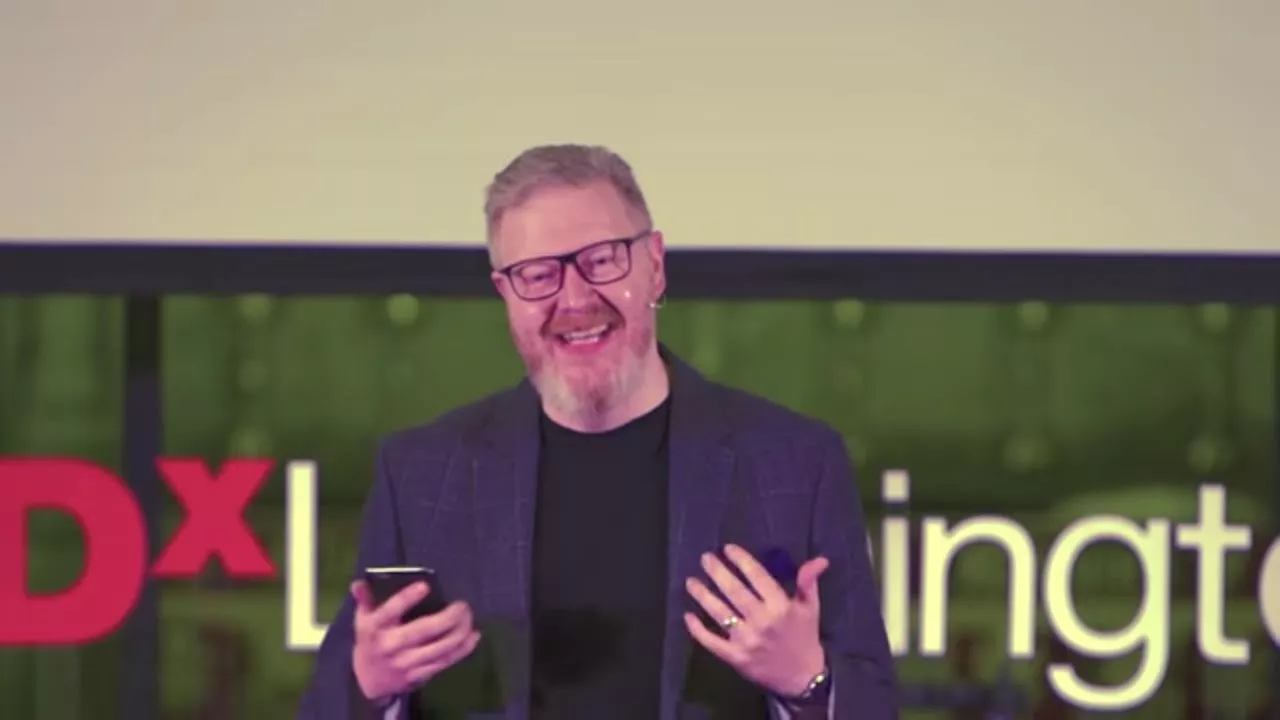
[Applause] [Music] I'd like to introduce you to a new word that explains what I we're just doing then it's called phubbing that's phone snubbing using my device in public and ignoring the people around me or I could have said that it was techno Ference the interference of technology in our daily lives and the interruptions and intrusions that has or I could have said that I was an honorary member of details ow which in China means the bowed headed tribe or maybe as I walked onto the stage shuffling away my eyes glued to my device you
might have called me ass mom bee that's a smart phone zombie now all these new words have come into our language in the last 10 years and that's directly correlated to the launch and the phenomenal growth and adoption of the smartphone today there's over two and a half billion people in the world with a smartphone and that's predicted to rise to five billion by 2020 and what we've done is we've effectively created two and a half billion new homes because we live and we laugh and we love and we cry and we work in the
reflected glare of this five inch screen it is our virtual home but all these words notes mombi and phubbing I mean they're not very positive about our virtual homes in fact they're rather negative at best they're talking about them being antisocial at worst they're saying realistically you dehumanized your zombie now I'm not the person to stand up here today and damn the smartphone I'm in fact one of its biggest advocates I think it's an amazing empowering enriched device for the last 20 years of my life I've worked in digital media and the last 10 years
I've worked with smartphones creating products and services for them I've always tried to use technology to make people's lives better to improve them to make them simpler to make them easier but I'm worried I'm worried because when I look around at POW people are using their smartphones and that's not just people on the train or strangers in the street that's my colleagues and my friends and my family and my teenagers we seem to be spending an increasing amount of time looking down glued and obsessed with this virtual home let's see how you feel hands up
if you think that you spend too much time with your smartphone wow look around lemming ttan no keep him up keep mark him up that's amazing so that's way way higher than the national average on average in the UK 39% of people say that they spend way too much time with their smartphone and that rises to 55% of people who are 16 to 35 so the younger you are the more likely you are to think that you are spending too much time with your smartphone and if you are one of those people you're actually trying
to change that because 74% of people who think they spend too much time on their smartphone are trying to reduce that time and time is a really finite commodity we cannot make any more of it it might surprise you that on average you spend 2 hours 25 minutes a day on your smartphone and if you're considered to be a heavy user you will double that to 3 hours 45 minutes and the time the time that we spend in our virtual homes is at the expense of interaction in our real homes in the real world give
me some examples a third of us a third of us use our smartphones with our friends and our family whilst eating 50% of us wander along the streets looking down at our smartphone 11% of us say that we actually crossed the road with our smartphone looking down at it a third of us will wake up and within five minutes reach for our smartphone and in one study amazingly one in 10 of us said that we responded to our smartphone whilst having sex it's amazing isn't it at best it is alienating at worse this is antisocial
behavior now I don't want to blame the device it's not the smartphone's problem the problem comes down to our behavior with the smartphone and that is a good thing because we can choose to change our behavior we can choose to act differently we can choose to stop looking down and start looking up so in preparation for this I did a lot of reading I talked to a lot of experts psychologists anthropologists scientists to try and find out what are the things that we can do to start to actively change our behavior with our virtual homes
and five insights came out can across the board a consensus opinion and I want to share those with you today in order to be able to assess how we might begin to start looking up again so the first insight is about usage if you know how you use your smartphone and what you use your smartphone for you can begin to understand whether that you're using it for the right types of things there are apps that you can download such as moment or quality time from the app stores and they will actually track your smartphone usage
and replay that back to you let me tell you it is a sobering wake-up call and I decided to go on a significant smartphone diet when I use one of these apps and the reason was was I found that I was spending five hours a week playing candy crush what I thought was just a couple of minutes here on the commute or a couple of minutes and I was bored it's half a working day spent playing a game so if you can understand the amount of time that you spend then you can begin to assess
whether that time is valuable to be spent in our virtual homes versus our real homes the second area is about living in the present and making a conscious decision that when we're with people with our friends with our colleagues to live in the present and ask don't know we put our smartphones away we turn them off we put them into our pocket or into our bag and that's really important because the very presence of a smartphone actually can reduce our cognitive mental ability it just sitting there on a table never mind us actually interacting with
it it can make us dumber so with your smartphone put away when it turned off you have the ability to be able to pay people attention you have the ability to be able to talk to them you can live in the present with that person that's really important for the third insight is that you can ask other people to do exactly the same when you meet someone they've got their smartphone out just say look fantastic I can't wait to have this conversation but do you mind putting your smartphone away because I don't want there to
be a distractions when I'm talking to you and your behavior can become infectious and you can help change how other people feel about their smartphones the fourth insight that came up was one which is around not sleeping with your smartphone now I'm not talking about the one in ten of you who might respond to smartphone during sex although I really do think please do stop that and what I mean is that when our virtual home is by our bedside it's the first thing we look at in the morning and it's the last thing that we
look at night and shockingly one in three of us wake up during the night and check our smartphone if it's there in our bedroom so that is going to deprive us of sleep and depriving us of sleep know is it affects our mental and our physical well-being so take the smartphone out of the bedroom buy an alarm clock if you need a wake-up call even better give yourself a curfew with your smartphone and stop using it a certain amount of hours before bedtime give yourself some screen free time some decompression time some time in the
real world and the fifth insight is about this Pavlov's dog type of reaction that we have when we see a notification ping onto our phony fantastic notifications scientifically have been shown to increase our inattention and our hyperactivity in fact it's all to do with FOMO our fear of missing out we must have things right now know something right now when in fact it's probably just a a like' or retweet or something quite insignificant coming up as a notification so the best thing you can do here is to turn your notifications off yeah put your phone
on airplane mode I now say I'm not going to check my smartphone for an hour I'm gonna leave over there I'm not gonna look at it and in doing so I will feel better because of it because I'm not constantly being distracted and interrupted in my life so it's these five things which help us to learn to look up again and if you can change your behavior to do these things I can promise you that you will be more centered more social and more enriched and more harmonious with your virtual world your virtual home and
your real home so if you think that you spend too much time on your smartphone here's the guide to be able to change it you can make a positive choice to not look down and you can choose to look up today thank you very much you