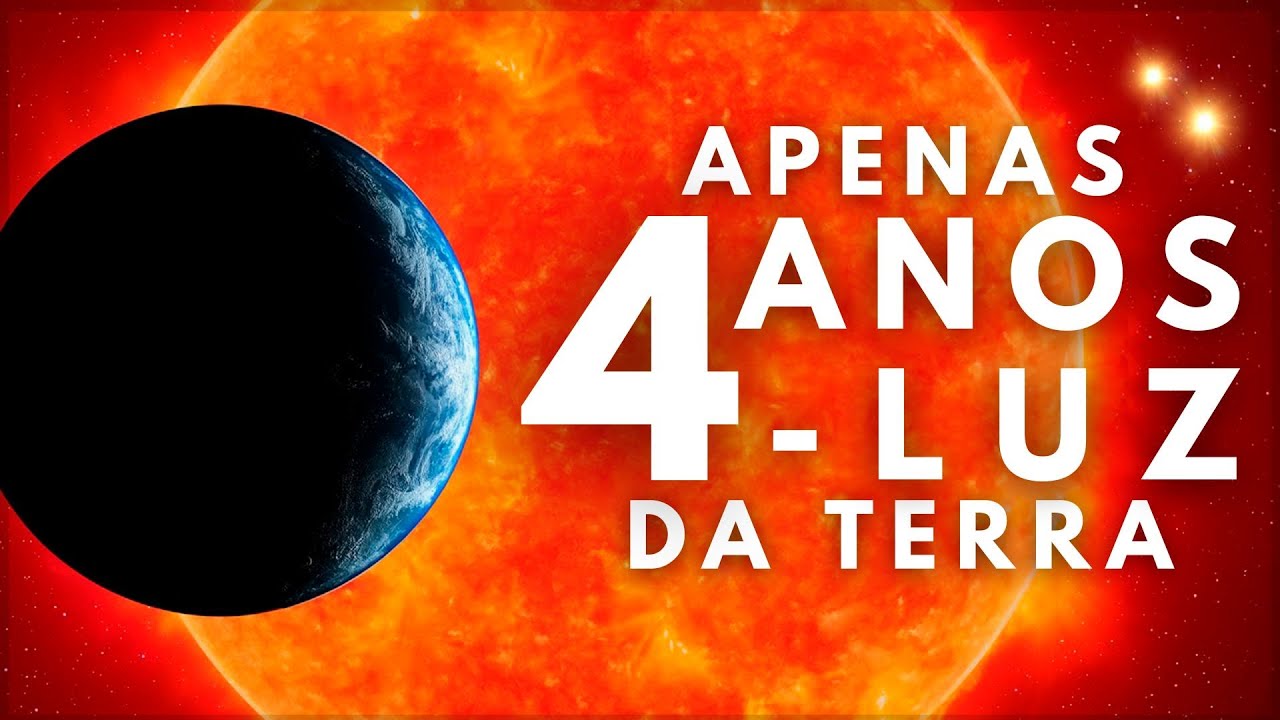
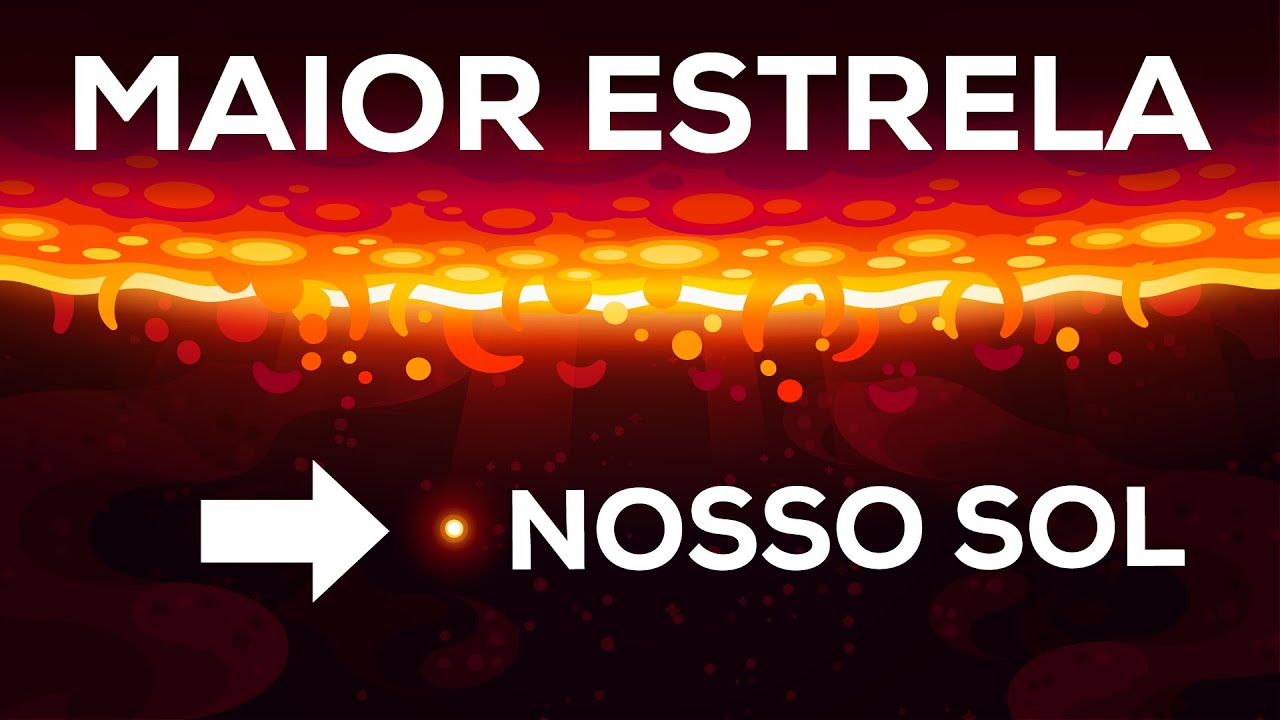
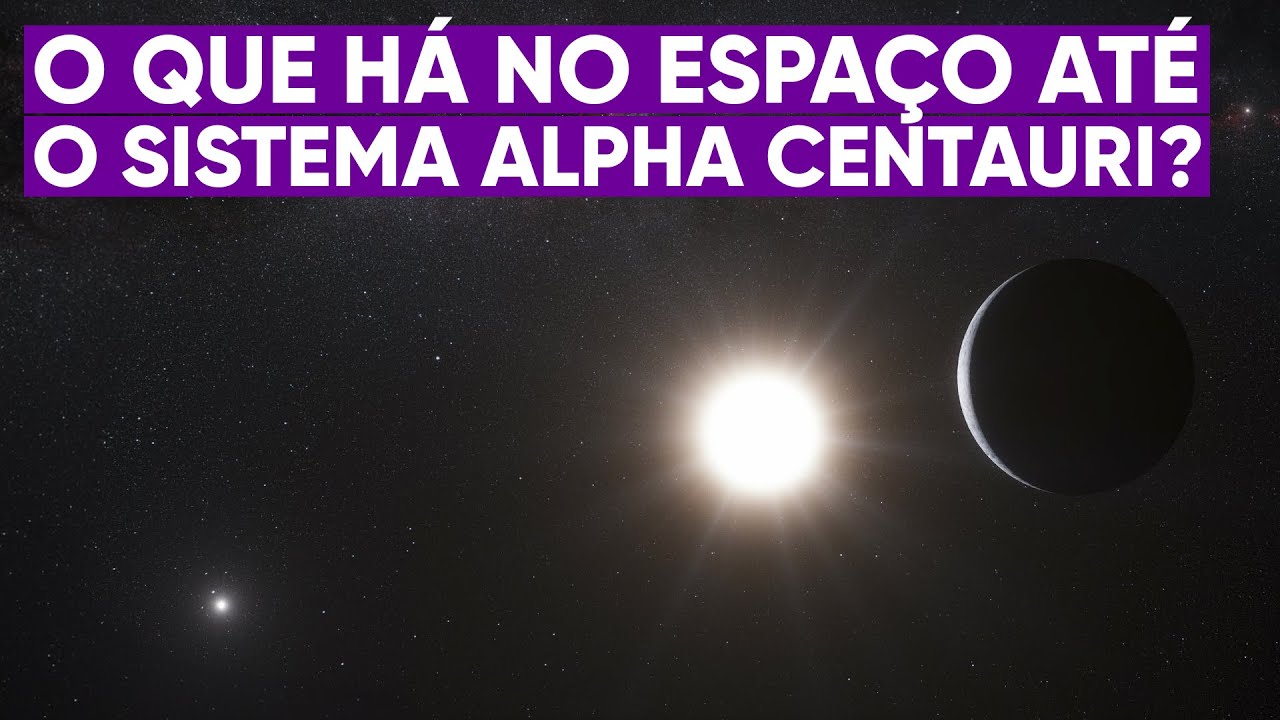
Have you ever thought that the other stars out there could be someone's Sun? The closest star to the Solar System, or rather stars, are 4 light years away, the Alpha Centauri system. In this triple star system, two stars similar to the Sun orbit each other in a binary pair, and are called Alpha Centauri A and B.
Alpha Centauri A is the largest and most massive in the system, as well as being the brightest. Being a main sequence star with a color and temperature similar to the Sun. Alpha Centauri B is a slightly smaller and cooler orange star.
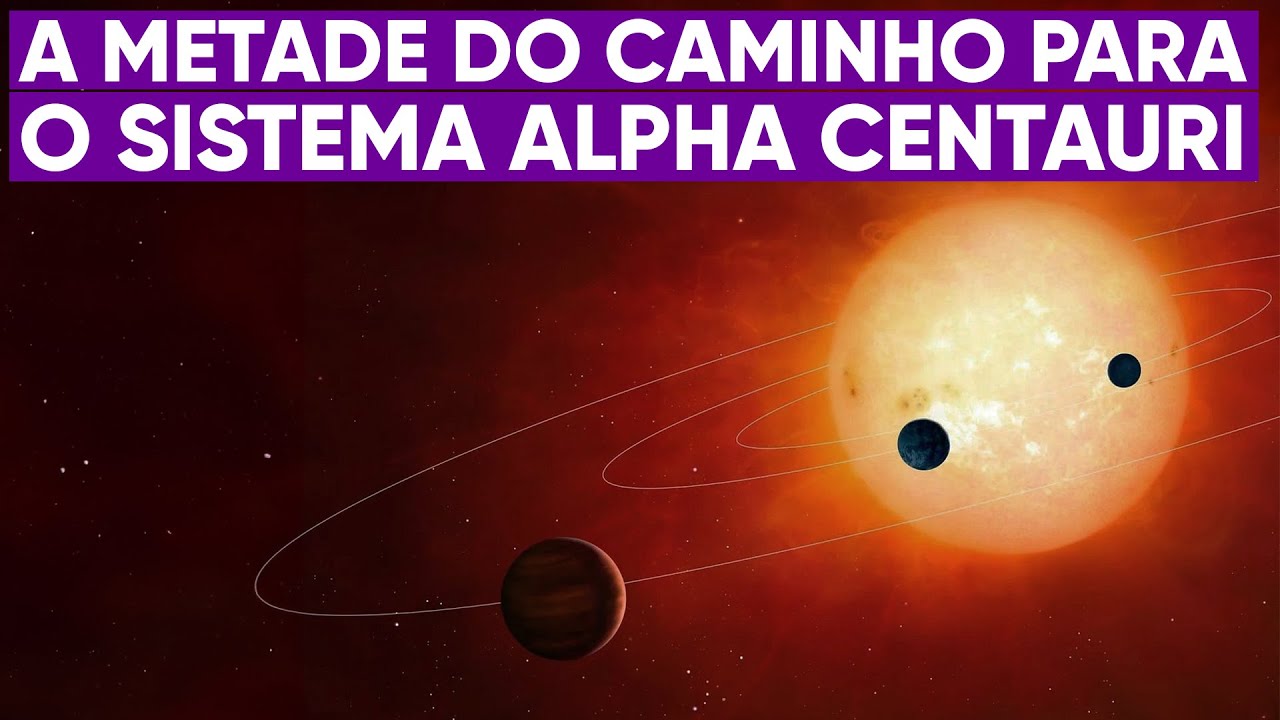
It is believed that these two stellar sisters do not have any planets that could call them suns. But a little further away, still orbiting these stars, there is a red dwarf called Proxima Centauri, and in its orbit there are the three exoplanets closest to Earth. Seeing its mother star in the sky of one of them would be really cool, a small star with a reddish appearance.
However, as they are our closest neighbors, is our Sun visible in their skies? If so, anything alive and intelligent there would not even imagine that a certain bright spot in the sky is home to a planet full of strange beings. I'm Gabriel Souza, and you're very welcome here, and if you like the video, consider subscribing to the channel and leaving a like, for more topics about the Universe.
Proxima Centauri is a red dwarf star, and the closest to Earth. However, even though it is only 4 light years away from us, it is not visible to the eye, as it is a very small star and its luminosity is much lower than its two larger sisters. It has three known planets, called Proxima b, the second planet from it, Proxima c, the outermost, and Proxima d, the innermost world.
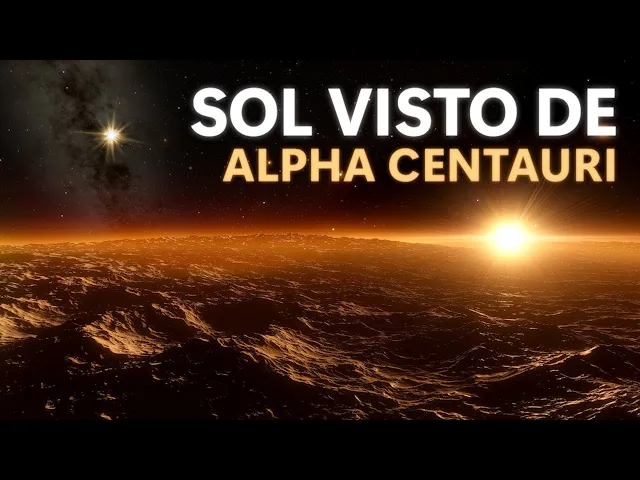
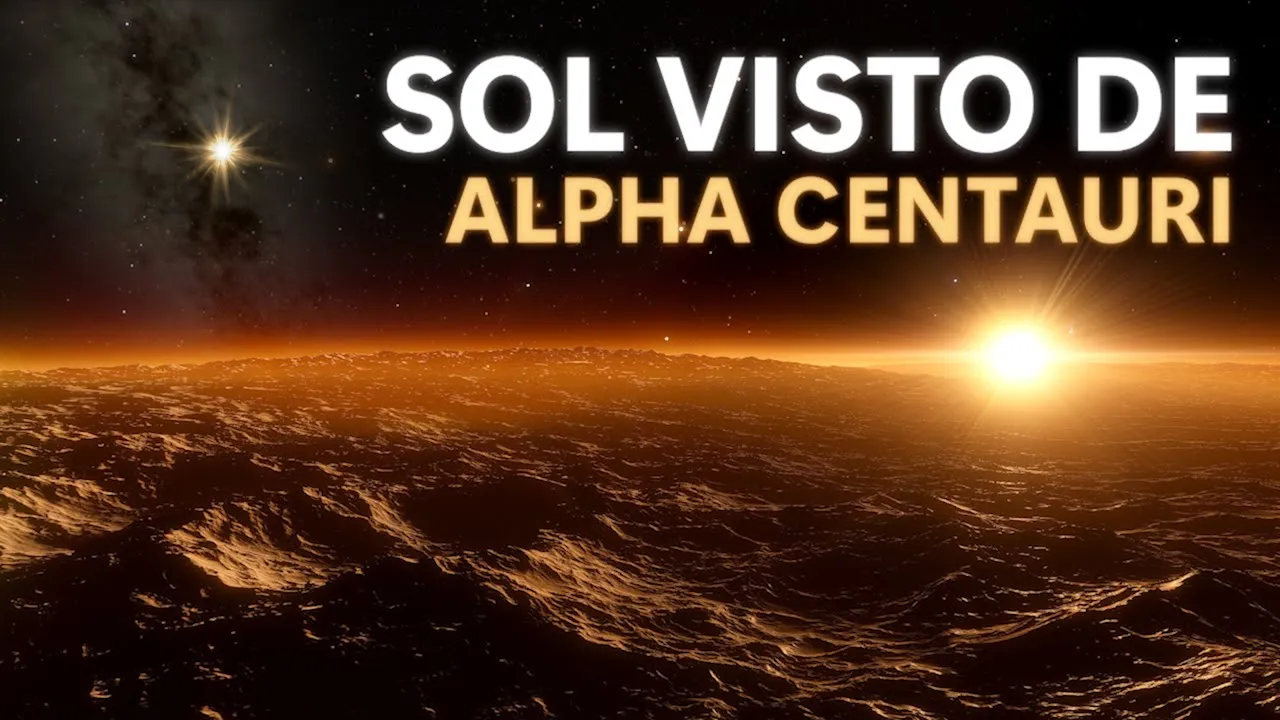
Being our neighbors, the sky of one of these planets would not be very different from what we see here, however, something special could be seen: The Sun. If we think about it, the Alpha Centauri system is visible here from Earth with the naked eye, although if If you look at this system, you will only see one star, Alpha Centauri A, as it is brighter. But even so, as we can see Alpha Centauri, would the Sun on any of the three planets in nearby B be visible and very bright?
The answer is yes! The Sun would be one of the brightest stars in the sky of some planet there. But perhaps, on each of these planets you could see the Sun at different brightness levels.
In other words, on one of these three planets, the Sun looked like a slightly brighter star. And this would depend on the atmosphere of each planet. For example, if some planet in nearby b had a very thick atmosphere, few stars would appear in the sky, and our Sun would not be as bright.
This could be the case for Proxima d, the closest planet to the star. It is theorized that a large greenhouse effect is being caused by a thick atmosphere, which traps heat and limits your view of the sky. On the other hand, the outermost planet, Proxima c, is believed to have a thinner atmosphere, which would allow you to see more stars in the sky.
And since the star Proxima Centauri isn't that bright, its view wouldn't be too dim. That would be the Sun. But is it possible for the Sun to be so bright that it rivals the two main stars of the System?
In this case, no. Well, the luminosity of any object in space is measured by something called the Apparent Magnitude. Apparent Magnitude measures how luminous an object is from Earth's perspective.
And for this, positive and negative numbers are used. For example, the star Sirius - being the brightest in the night sky - has an apparent magnitude of -1. 46.
This negative number means that it is very bright from Earth. However, the Star VY Canis Majoris, one of the largest known stars in the universe, has an apparent magnitude of 7. 9.
This is a high positive number, which means that this star is less luminous as seen from Earth, practically invisible to the naked eye. The lower the value, the brighter the object will be. Another example is our own Sun, with a magnitude of -26.
74. It's the brightest thing you can see in the sky. Even on Pluto, the Sun would still be the brightest star, with a glow similar to a full moon in the sky.
There is another scale called Absolute Magnitude, and if you already knew the first one, you have certainly heard of this one. But absolute magnitude does not measure the luminosity of an object from Earth, but rather if you were 32 light years away from it. For example, if you were 32 light years from the Sun, your absolute magnitude would be 4.
83. Totally different. But don't worry, because it's not this magnitude that interests us, just the apparent one.
The Sun seen from Alpha Centauri, at a distance of 4 light years, would already begin to lose out badly to other bright stars. Overall, it would be only slightly brighter than Betelgeuse there, as the red supergiant star Orion shines here at an apparent magnitude of 0. 45, so our Sun would be at a magnitude of 0.
4. The constellations would not change much on any planet in Proxima Centauri, and our Sun would be rising close to the constellation of Cassiopeia. If any living thing on Proxima Centauri's most potentially habitable exoplanet, Proxima b, were looking at the Sun, they would see our star as just one of many other bright stars.
Sirius would still remain the brightest star in the night sky. Well, if you pointed a telescope from there to the Sun, you wouldn't see any planet, but Jupiter could be detected by special techniques through the gravitational effects it exerts on the Sun. Even though 4 light years doesn't seem like such a distance large, on universal scales of course, for us it is almost incomprehensible.
Four light years is equivalent to 37 trillion km. But even this distance is still not enough to extinguish the light from our Sun. An alien being there might not recognize how special a particular bright dot in the sky is and is home to a blue planet full of life.
But if humans ever managed to travel to Proxima b, those visitors could look up and see Proxima Centauri and its two sister suns. And on a clear night, our own Sun, a distant glimpse of home.