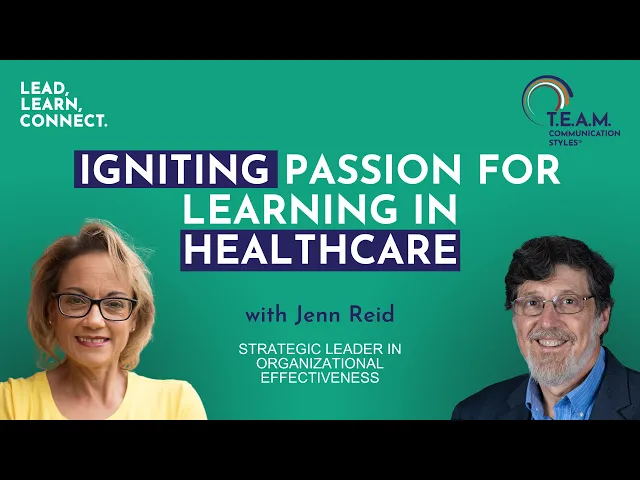
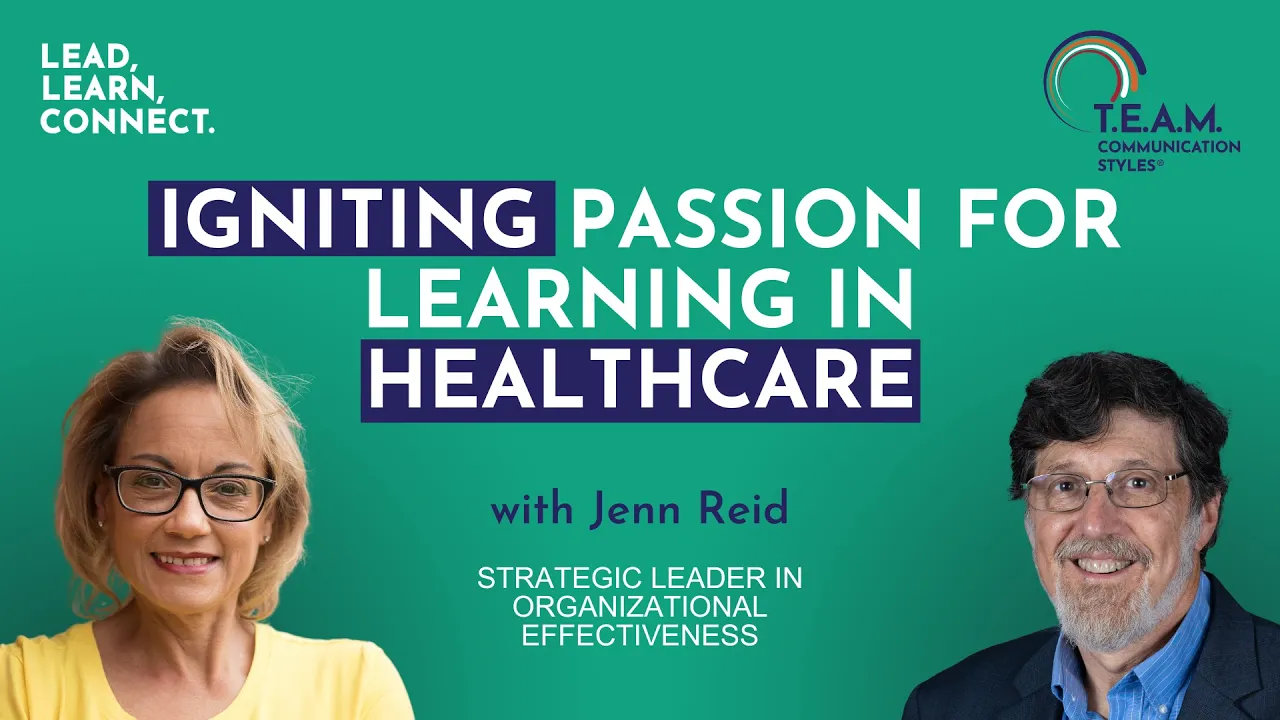
Hello and welcome to Lead, Learn, Connect, where we explore the worlds of training, coaching, and powerful leadership. I'm your host, Alan Kger, and on this show, we talk about not just the how of helping others grow, but the behind-the-scenes work of overcoming challenges and staying connected to what's really important. My guest today is Jen Reed, who has more than 25 years of experience in organizational development in healthcare and management consulting.
She arrived in learning and development from a non-traditional background. She began as a coach with high performance athletes and has transferred that to driving high performance work with individuals and teams. Whether you're a new trainer, a seasoned facilitator, or just curious about what it takes to thrive in this world, this episode is for you.
[Music] Welcome, Jen. >> Hi, Alan. How are you?
>> I'm good. Thanks for joining us. I appreciate having you on our show.
It's a pleasure to be here. >> So, you had an unc unconventional path. Talk a little bit how you got started.
You were an athlete yourself, then you moved into coaching. And how did that land you in uh healthcare training? >> Well, yeah, it is a little bit of a kind of squiggly path, but I'll try to make it uh a little bit more direct as I talk about it today.
But I've always been a I guess an aspiring polymath as I've heard other people talk about that uh term meaning I love to learn and as a child I engaged in a lot of different pursuits. I was music sports reading u I electronics I was uh computers I started coding when I was 12. So I've always been a person who's just seized learning for just I want to grow new skills and as a result I did notice certain patterns of learning different disciplines and therefore even when I started my uh my uh career as a squash player.
I started relatively late compared to other players on the circuit. In fact, I was very late. Um, started in the juniors, but was able to uh get to a national level within a couple of years.
I think partly because I was able to understand certain ways of how to acquire skills quickly. So, as a result, I also started doing a coaching certification and was able to coach younger players while I was in university and just to, you know, I loved the game. So, it was a a passion of mine.
And as I was going through university, I still wasn't clear about what my direction would be in life. I love to do everything. And every conversation I'd have with someone, suddenly I was following their passion because I like that sounds interesting.
My curiosity gets the better of me. And I ultimately landed up in I will tell you uh Accenture uh partly because I did have a bit of skills just self-development but with my own um teaching myself computers and coding I was able to be one of the few people hired there that did not have an undergraduate degree with at that time they were always hiring people from you know Ivy League or the big four universities in Canada and I was able to get in the door because I was able to prove myself based on some of the skills and the unique way I had of going about uh learning and sharing what I learned with others. So a common uh sort of like I guess a common assessment people make of me is like oh you really think differently and I think part of it is because I didn't have a lot of the traditional background and sort of paradigms to march me through a certain way of thinking but I learned how to feel through it experientially and build through that and and make a lot of mistakes along the way but also a lot of gains.
So as a result, I ended up at management consulting. Did that for about 7 years and then was called by a friend of mine to come over to a healthcare position. Uh she recognized I was probably a little bit um uh not burned.
Well, I was a bit burned down and it was just right at 911. I actually resigned on 911 um that day because I just the in and out of town with a small young family was not uh conducive to you know growing my family. So I moved into an organizational development position which seemed to tie together all the threads of my polymathic being so to speak of um loving to learn knowing a lot of disciplines and it really started to coales around that systems thinking because I had more of a I guess a broader sense of of how things are are put together based on like I say the patterns I've been noticing versus being deeply um schooled in one discipline and and sort of on that channel of a narrow focus.
So that's how I came to learning and development, training and development. And along the way, I've always uh you know looked at mentors and people that you know read a lot like I read I have 2,000 books in my room here. Um, I would I just love to learn from other people and just assemble the data points in there and and try to share what I've learned with others and really more or less instill the passion for learning in others because I think that's what actually ignites the ability to to perform.
>> Yeah. So talk a little bit more about that igniting passion in others because that's one of the challenges with training is that sometimes you're teaching people who don't really want to be there uh or people who are very busy have a lot on their mind. So how do you get training to stick?
How do you get people engaged so that they um that they take away what you're trying to deliver? >> Yeah, I think there's a couple of aspects to it. You know, first of all, just the idea of being really invested in what is it that you're trying to learn and not for the superficial gains of, oh, I'm, you know, I want to monetize this or I want to make my career like I mean, it is a bit about career development, but sometimes if you're just looking at training as a means to get to another goal of I want to get that position, then I think you're looking at training in the wrong way or that learning mentality.
I want people to be excited about the value that they can contribute to the team and you know that sense of wonderment that you have when you discover something new that or or bring in a new idea that nobody had thought of or or you're building on other people's ideas. that type of dopamine hit that you get or the you know that euphoria you get from just those insights gathered or the sense of community connection to others but also being powerfully aligned to uh you know a very maybe a difficult task of you know at your office I mean most things probably are challenging that you're trying to solve that to me is what should be the foundation to the learning because again if you're just looking at this as badging I can tell the people who are sitting in a classroom and and I'm and I say sitting in a classroom because I wouldn't really want to put people just sitting in a classroom but who are taking training just to get a badge do not learn how to continuously learn or learn how to learn so that they keep that uh I guess learning edge or human edge especially now very important in this world of AI you know that's the type of uh mentality or mindset you need to build you can't really teach someone that but I think you can lead them to some of the perhaps like a maybe like a tour guide in uh you know you go to a new country and you might have somebody who's really knowledgeable about some unique things about the country and they can expose some of those things to you and then suddenly the most mundane becomes fascinating because you've got somebody who's just shown their own passion and curiosity and ability to put some sense making to something that you've just maybe casually observed or maybe just didn't even think about. And that to me is where the stickiness starts.
Of course, there's a lot more that goes on after that. And you know, in trying to encourage and reinforce and to ensure the conditions are there for feeling safe to make mistakes, but also knowing a little bit about the fact that you have to struggle a bit to learn. This is not like streaming a Netflix or you know YouTube and just thinking okay I'm going to learn everything just by sitting here and watching this or an audio book.
Very nice entertainment but that's edutainment in my mind and what we want are people who want to actually have the two hands like start to experientially absorb that feeling even into their body. So, it's getting back to even my sports roots where there's somehow I feel and I don't have the the uh schooling or sort of the the language right now to to talk to it. But I'm saying there's something about the physicality that gets into when you've learned something even it can be um something very, you know, abstract or knowledge, but I feel like your body starts to understand it a little bit too.
And you'll notice it sometimes when you and I think that's what we call intuition perhaps and building those intuition skills. So I think that's where I I'm I'm thinking about learning in a whole mind and body and then there's that you know the hands and sort of you know getting into into practically applying the the motor skills or the cognitive thinking skills to to uh march forward with that. So you mentioned early on in your answer there that um you didn't want to just put people in a classroom.
So how do you how do you structure this in a large busier health care busy organization lots going on. How do you get kind of continuous learning going or get people to after you've had them in the classroom, you've done the presentation, gotten them interested, how does that continue and what's the role of the learning and development team with that? I think really the role is so here's one of my maxims the wisdom is in the room is already in the room most of the professionals there have come by their uh roles through you know obviously their own learning and hard work and and and experiences and I feel that there's not me I'm there to facilitate that uh that aha moment for them that that's already within them uh so there's I would say the classroom is maybe just the vessel to perhaps establish a bit of a okay, here's where we're going with this, but it's outside of the classroom.
It's it's making sure that their leaders also understand what they're learning about so that they're able to reinforce it. So, in some modules I've done in the past, what I've done is given the executives a preview, if not an actual version of it themselves, so that they can then help reinforce like the the habits or the the the terms, the the vocabulary that helps to cement these concepts that we're trying to to get leaders to think about. I also think it is about creating connections and those um the dialogue.
So at the I am there's you know in organizational development there's a diagnostic OD there's also dialogical OD where really the talking and sharing and communicating with others is a way you actually come to thinking out loud and that's like the thought partners uh so creating a mentorship programs that support a leadership program is important to me I think with technology nowadays it's so easy now to create those venues for people to also collaborate both virtually as well as making the connections for interpersonal because I do think being in person is is also very helpful. But uh in a previous organization, I created a portal for leaders that had various topics that they could research and look at, but they could also have a a venue for them to pose questions to each other or out uh or share their own wins. and then templates and tip cards and you know toolkits so that people at various levels could enter into the uh application of the learning based on either a are they brand new or are they someone that needs a refresher or are they someone that just wants to be able to help reinforce someone else's so the tip card might be a way of them okay let's you know make sure we're following these principles so I think it's about uh again create creating an ecosystem of of learning and a learning organization itself that becomes the way you have people uh learn and and continuously learn and also build that into their workflow dayto day.
>> Wow. So I I love what you're saying. It's a very comprehensive approach to to training and to learning.
Um it's drawing from all the resources in the organization, peers, mentors, leaders, uh leaders of the participants. Um and it sounds great. The the the question that kept ringing in my head as you talked and the more you talked, the more it rang especially healthc care where you've done a lot of work.
It's a very busy, high stress place. People work long days. They're short staffed.
Um getting anyone into training. I remember once I had to teach a class and I I designed it really short, 45 minutes. I thought that was great and they told me, "No, we only have 15.
" Right? So, everything's compressed. How do you make the case to senior management to open up this level of uh accessibility and resources?
If you're going to do an executive briefing, like you said, to senior management, um again, my experience is, you know, just email it to us. We'll read it. you know, we don't have time to come to a meeting.
It's always a always a a challenge to get people into a room, get people allocating resources, and you're asking for a lot more than a typical trainer. Just I'll come in and teach them, give me two hours, and uh so how what's your approach to senior management? How has that worked out?
>> Well, yeah, that is the that is the challenge for healthcare. I will admit it is not always easy. And I I have to say I was blessed in my one of my first uh key roles in healthc care back in the early 2000s with a president and CEO who really had a vision of creating a learning organization.
So for them that was the actual paramount concern for them to advance that agenda. and they also had a very strong belief in servant leadership and building informal leaders. So I was able to have access to that president and CEO as an individual contributor.
They had recognized my work on a few things and then was able to uh meet with them on a weekly basis and start to advance and influence within an agenda and I shouldn't say an agenda. It is well it is an agenda but you know to to see that we both had a a very uh similar mindset around what what the possibilities for learning could be it is and I also had a very strong VP that uh of people and culture who also embraced that same mentality. So we had the correct leadership for the organization in place at that time for me as an you know individual contributor to actually contribute.
So I think that's part of it and I will say I've struggled in some places where it maybe hasn't been the same conditions and it's been very hierarchical and so therefore to advance that influence up as you go from layer to layer it does get to that point where let's just you know yeah let's just get it done checkbox I don't you know I we don't have time for this you know time off task for people costs money and so I think it's figuring out how to demonstrate sometimes in small tiny experiments the power of this. So uh if you can have per you know let's say beg for permission later sort of like you know ask for forgiveness later or something but basically try to do incubators of some of these solutions. So for instance, I you know was in a situation where I knew I wouldn't have the agency to launch maybe full scale but I had some client work to do and then I was asked to support them with those cookie cutter solutions like yeah we want and I said well let's do something different and how would you like to be involved in actually co-creating a solution for your team of leaders and we can work together in dialogue and start to build these uh something that could be very exciting to share with others later on.
So they had the value proposition of being able to see the process. So for those who are engaged in learning even the process itself is what they want to hear about as well as inform what they wanted to learn about and also be a part of shaping that and and just the the reward of of of you know there's something tangible that comes out of it. So that's to me the more the sub the the subversive way of getting into it and and still actually quite effective because it then adopts a lot of the principles of you know an agile learning environment where you really are uh looking at a human- centered approach that's looking at the microculture that you're trying to to work with and building a solution for them that will then again it doesn't necessarily look like a PowerPoint presentation it can come in many different forms of activities.
Uh to your point about that 15 minutes, I often have that. One of the key artifacts I probably bring to training is puddle scripts. Ways that people can bring in a 15minute conversation with some guided prompts on a certain topic, but creating a series of that so that they have that spaced repetition over time to really reinforce that concept or build on those concepts in those short instances where they can only hold space for for that.
So I I I think there's a few things to do but I the people are always the most important part of it. Um leadership and we go know time and time again you know the leadership in an organization is really critical to the the success that it can you know make towards getting to its vision as quickly as possible. >> Yeah.
So in the beginning you were blessed with a great leadership team to to develop this kind of training with but after that I like your approach where you're trying to engage with the leader helping them offering them the opportunity to design the training obviously that you're going to do the majority of the work but now you've got buy in you've got input and hopefully they see where you're going and why you're going this way and that maybe their pain point they need people to be more communicative or more collaborative and you kind of can take it apart in the room with them. I I I like that. It's a really nice approach.
Um you mentioned agile uh training. Talk a little bit about what that is and why you think that's uh important way to go. >> Yeah.
And I I'm I'm going to say I'm losing using the term loosely right now because I actually did pick up a really great book recently and it was called Agile L & D. And I know it's backwards now in the view, but it is by Natal D. And I'd written I read one of their previous books on agile HR.
I'm very uh big on that type of approach. Agile meaning getting sometimes the minimum viable product out there. When I worked in programming, I did work as a a junior programmer early in my career when I was in university.
shows and you know in in a computer programming environment you've got to you know code and you yes you could put all the features in but if you don't deliver a product you don't have software people use you have to look at adding those features in later on or fixing some of those bugs and um I think that the idea of trying to sort of get to the perfe to to perfection immed you know on the first go isn't very helpful to to us in this day and age because ANI AI is just going to you know pull together something much more quickly and and disrupt whatever wherever we're going. So we have to be ready to pivot uh quickly. And so for me the agile learning is something I'm trying to blend in more with human centered um like design thinking which is something that I got on to about seven eight years ago and I thought this is really fascinating because it is really the type of exper experiential learning that I've already done but now it's a system.
So you look at the idea of divergence like you're looking at ideiation you're looking at all sorts you're sitting in and observing and and sort of looking at analogous industries or or or or metaphors to work from and then you're converging on some solutions and and and ideas and testing and prototyping and seeing how that lands before you go to market so to speak. Um, you know, as an internal trainer, it's very easy to spend a long time in your bubble or your vacuum doing all your training and then launching it and then people be like, "What? That's not what we asked for.
" Um, so I'd rather know that they are already in agreement with the table of contents that we've got. And if they're not, if that journey isn't going the way they want, let's figure out how we're writing like chapters 10, 11, 12, and 13 for the journey that you guys have now. and also be ready to choose our own adventure as we go along the way.
So I'm speaking of agile learning in that manner where and I think we've tal we talk about it sometimes in microlearning or workflow learning where we're really building it into the systems and processes and habits and rituals that we have on a day-to-day basis and incorporating that back into the system so that it becomes that virtuous cycle of increasingly better performance. >> Okay. Wow.
Yeah. So again, um a a new approach to training rather than I'm going to design this and I'm going to deliver it, but it's part of a whole environment uh of uh of learning that that takes place in multiple levels and and stopping and checking along the way again engaging the the customer uh early and often so that we don't end up like how did we get here? This is not where we wanted.
So great. Well, thank you for that. And uh we're about out of time.
So, thank you so much for being part of today's episode of Lean Lead, Learn, and Connect. A huge thank you to Jen Reed for sharing her experience and knowledge. If you found this helpful, please be sure to subscribe, share it with a colleague, and leave a review.
You can also find out more about Jen on the uh show notes and how to get in touch with her. And if you're ready to strengthen how you teach or coach communication, click the link to our website to learn more about the team model of communication and follow us on LinkedIn. Until next time, keep leading with intention, keep learning, and keep connecting.
Thanks for listening.